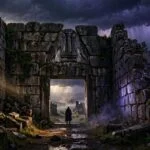

Limnos is the island that the gods fell to.
Hephaestus, the divine blacksmith, was thrown from Olympus by Hera in one account and by Zeus in another, and in both versions he fell to earth on Limnos. The island’s volcanic soil and the quality of its mineralogy were understood by the ancient world as the physical evidence of the divine forge beneath it. The Lemnian earth, the reddish volcanic clay that ancient pharmacology used as a treatment for wounds and as a protection against poison, was sealed each year by a priestess in terracotta tablets and exported across the Mediterranean as one of the most valued medicinal substances in the ancient pharmacopeia. Galen, the most influential physician of the Roman period, traveled to Limnos specifically to observe the sealing ceremony and to evaluate the clay’s properties, which he described in his treatise on simple medicines as genuine and significant.
The island that received Hephaestus, the island whose volcanic geology produced the clay valued by ancient medicine, the island where the Kabeiroi had their sanctuary before Samothraki’s became more prominent, and the island where the Argonauts stopped on their outward journey and where the tragedies of Philoctetes began, was remembered as a place of the tangible rather than the abstract. Limnos in the mythic imagination was the island of the physical world. The divine presence expressed itself in the mineralogy of the soil, in the smoke from the volcanic vents that the ancient world read as the smoke of Hephaestus’s forge, and in the episodes of heroic lore that located themselves on this particular piece of volcanic ground in the northern Aegean.
Hephaestus and His Island
The Hephaestus lore on Limnos is the body of myth that most directly connects the island’s physical character to its mythological significance. The god of fire and the forge, the divine craftsman whose creations defined the heroic world’s most important artifacts, was linked to Limnos not through an arbitrary placement but through the volcanic nature of the island, which the ancient world recognized as the appropriate landscape for the divine forge.

The volcanic geology of Limnos, which produced the mineralogy of the Lemnian earth that the ancient pharmacopeia used and exported, also produced the ancient hot springs and the volcanic gas emissions that the ancient observers read as the physical evidence of Hephaestus’s subterranean activity. The island of Mosychlos, whose volcanic activity the ancient sources describe in terms that correspond to what the geological record documents as actual volcanic emissions from the northern Aegean’s active geological zone, was the site that the ancient tradition associated most directly with the forge: the smoking ground of Mosychlos was the smoke of the divine workshop made visible in the landscape.
The ancient city of Iphaestia, in the island’s northeastern region, was the city named for the god and the cult center where the island’s Hephaestean devotion was most formally organized: the archaeological remains of the city, which include the theater, the sanctuary precinct, and the residential areas that the excavation has partially exposed, document a prosperous city-state whose divine association shaped its material culture in ways that the excavated finds reflect. The votive offerings recovered from the sanctuary, the small terracotta figurines and the bronze objects and the ceramic vessels that the worshippers deposited, are the material record of the community of devotion that the Hephaestean cult on Limnos sustained across the centuries of the sanctuary’s operation.
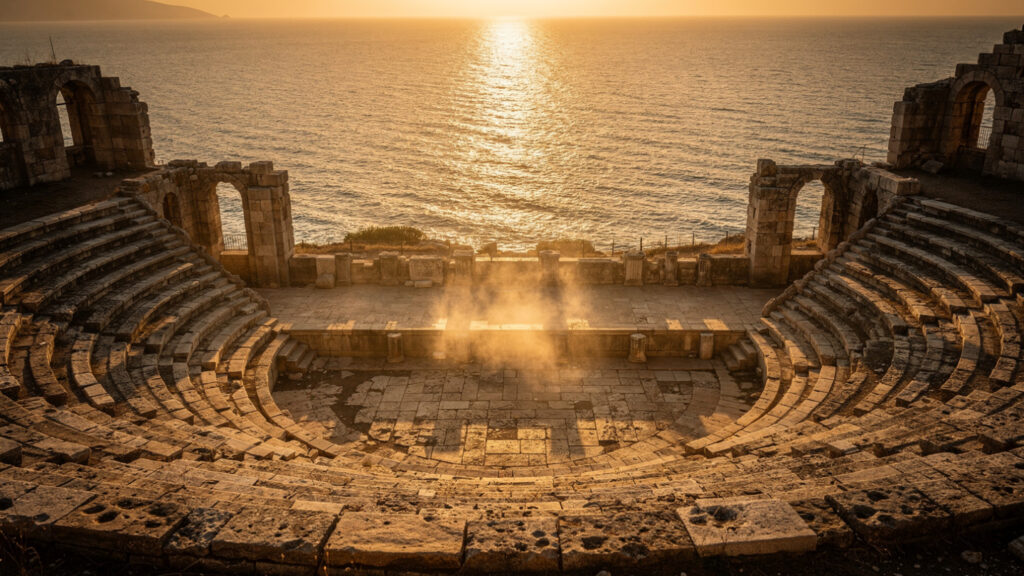
The Kaveiria sanctuary, the Temple of the Kabeiroi at the island’s northeastern corner above the sea cave associated with the abandonment of Philoctetes, is the second major sacred site of ancient Lemnos and the one whose chthonic and mystery‑cult character distinguished it from the Hephaestean worship at Iphaestia. The Kabeiroi of Limnos were related to the Kabeiroi of Samothraki but distinct from them. Both sanctuaries served the same category of divine beings, the pre‑Greek chthonic powers whose rites promised protection and fertility, yet each island maintained its own ritual identity. The Argonaut narrative that placed Jason’s crew on Limnos before their initiation on Samothraki linked the two sanctuaries in the mythic geography of the heroic journey.

Philoctetes and the Island of Abandonment
The Philoctetes tradition gives Limnos a dimension in the mythological landscape that the island’s other associations do not provide: Limnos is the island of abandonment, the place where the Greek expedition to Troy left the greatest archer of the heroic world to suffer alone for ten years because the wound he carried, inflicted by a divine serpent at a sacred site, produced a stench that the other warriors could not endure in close quarters.
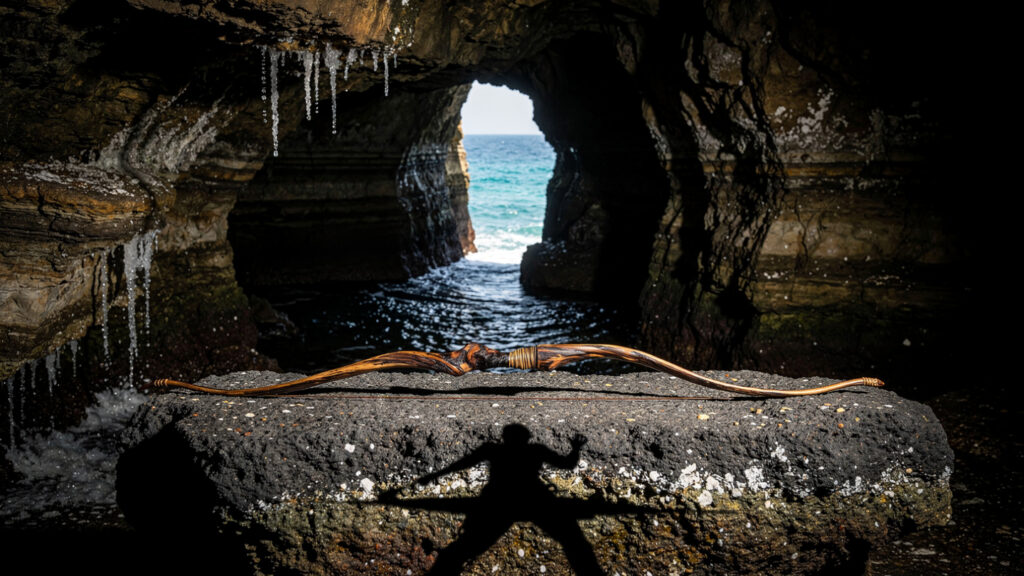
Philoctetes possessed the bow of Heracles, the divine weapon that was the tool required for the fall of Troy, and the oracle’s instruction that Troy could not be taken without the bow determined that the abandonment of Philoctetes was simultaneously a practical necessity and a betrayal of the injured man: the Greeks needed the bow badly enough to set aside the man who carried it for ten years, and when they needed the bow badly enough they had to return to Limnos and face the consequences of the abandonment.
Sophocles’ Philoctetes, performed in 409 BCE and the only surviving Greek tragedy set on Limnos, is the dramatic treatment of this situation: the young Neoptolemos sent to retrieve the bow from the bitter and abandoned Philoctetes, the moral problem of whether the bow can be legitimately obtained through deception, and the resolution that Heracles himself descends to provide. The play is the ancient Greek drama’s most sustained engagement with the moral problem of using someone whose suffering you caused to serve your subsequent need, and Limnos as the setting is the setting whose character, the isolated volcanic island where the abandoned man has survived alone through the resources his exceptional skill provided, gave the drama its physical grounding.
The sea cave below the Kaveiria sanctuary that the local tradition identifies as the cave where Philoctetes lived during his decade of abandonment is accessible by boat from the northeastern coast: the cave’s position in the volcanic cliff face above the water, sheltered from the prevailing northern winds by the cliff’s overhang, and accessible from the sea in the small boats that the Aegean’s island communities used for coastal travel, gives it the physical character that the Sophoclean drama describes as the wounded man’s shelter.
The Amothines and the Volcanic Landscape
The Amothines, the sand desert of Limnos’s northern region, is the most immediately surprising feature of the island’s landscape for the visitor arriving with the expectation of the typical northern Aegean coastal scenery: a field of genuine sand dunes, up to thirty meters in height, covering approximately eight hundred hectares of the island’s northern interior in a landscape whose visual character is entirely unlike the rocky limestone or the fertile plains that the island’s other regions present.
The Amothines were produced by the combination of the volcanic geology of the island’s northern region, which produced the siliceous sand that the dunes are composed of, and the wind regime of the northern Aegean, where the meltemi that blows strongly and consistently from the north through the summer months has worked the volcanic sand into the dune formations over geological time. The dunes are living geomorphological features that move in the wind, their crests shifting seasonally in the direction of the prevailing wind’s current movement.
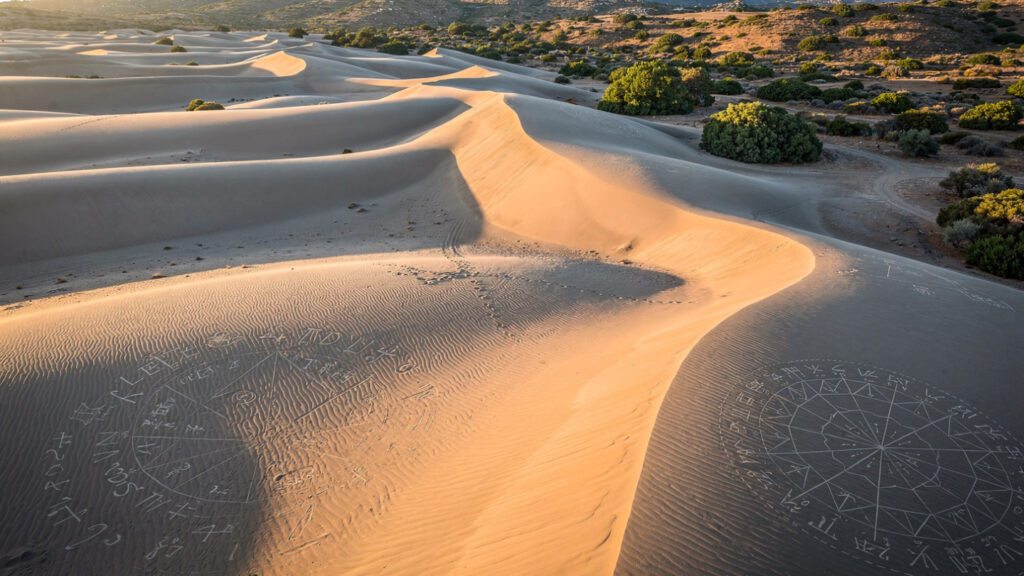
The quality of the Amothines in the early morning before the summer heat has built, when the dune surfaces carry the texture of the night wind’s work and the Mediterranean flora that borders the desert on its landward edges is at its most fragrant, is the quality that most completely surprises the visitor who has traveled to Limnos for the archaeological sites and the beaches and discovers in the northern interior a landscape whose character belongs to no other accessible Aegean island.
Keros and the Wind
Keros Beach on the island’s northern coast is one of the most reliably windy beaches in the Aegean, which is the quality that makes it internationally significant in the kite and windsurfing community: the meltemi that blows from the north through the summer months, consistent in direction and strong in force, creates the combination of wave conditions and air movement that the kite and windsurfing disciplines require at their highest level of practice.
The beach itself is a long arc of golden sand backed by the low dunes and the dry northern vegetation of the Lemnian coast, without the development infrastructure of the major Greek windsurfing destinations but with the wind quality that the sport’s practitioners consistently identify as the best available in the Aegean for the discipline of kitesurfing in the summer meltemi conditions.
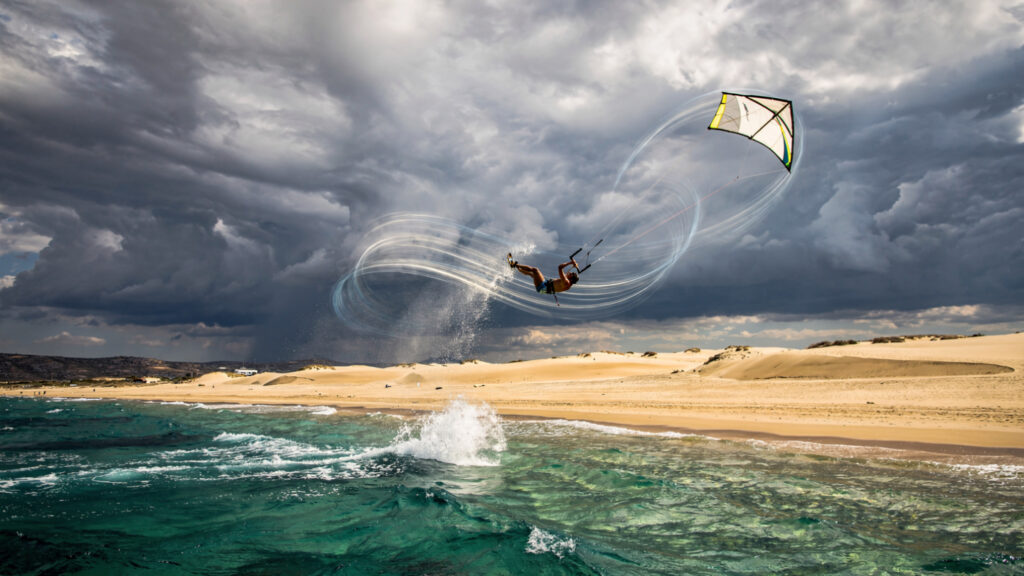
Keros is approximately forty minutes from Myrina by the road that crosses the island’s interior, and the remoteness of its position in the northern coastal zone that the road only recently connected to the island’s main road network is part of what has maintained the beach’s character as a place organized around the sport rather than around the general beach tourism infrastructure.
The Food and the Soil
The agricultural life of Limnos reflects the character of the island’s volcanic soil with a directness that the food cultures of most other Aegean islands, now shaped by the import economy of mass tourism, no longer preserve.
Kalathaki Limnou, the Protected Designation of Origin sheep’s milk cheese produced in the soft fresh form created by the traditional basket molds, the kalathakia, carries the volcanic minerals of the Lemnian grazing land in the milk drawn from the vegetation of the island’s hills. The cheese is at its best in spring and early summer, when the wild flowers and aromatic herbs of the Lemnian slopes are at their fullest expression in the grazing plants and therefore in the milk and therefore in the cheese.
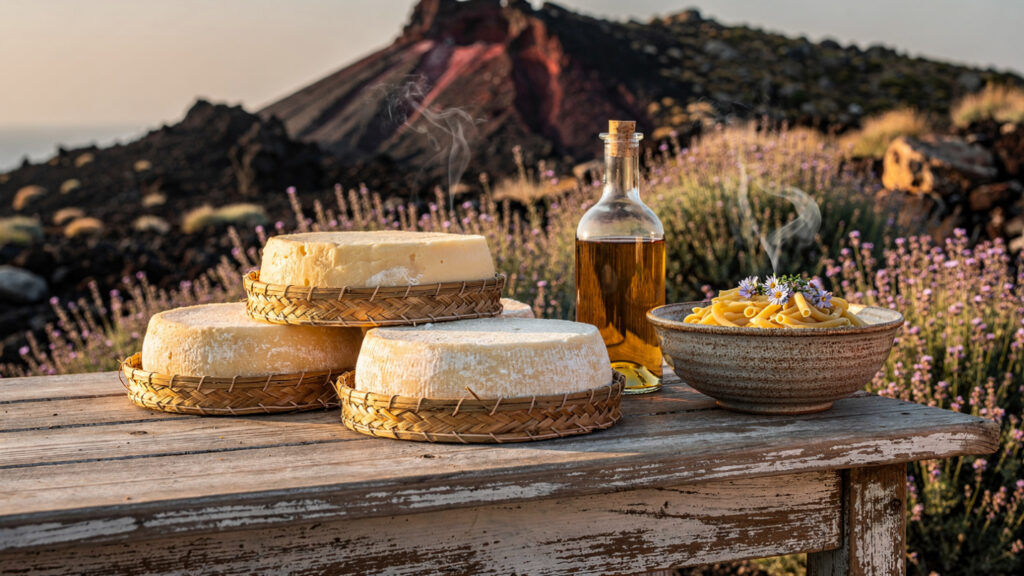
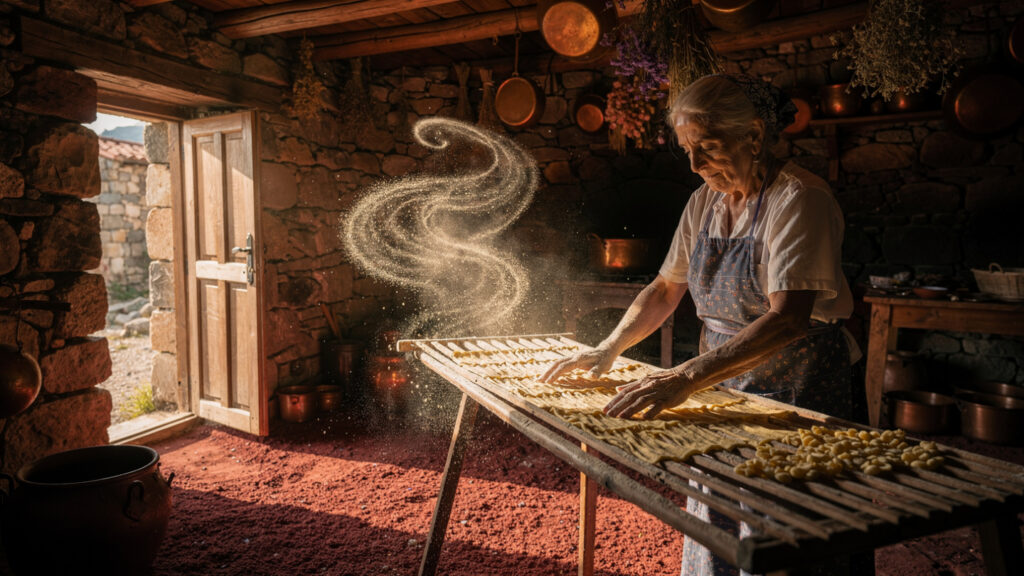
The flomaria, the yellow egg-and-milk pasta that is the island’s most distinctive contribution to the Greek pasta tradition, is the preparation that the Lemnian kitchen has developed around the agricultural products of the island’s interior: the egg from the island’s chickens, the milk from the island’s livestock, and the durum wheat that the island’s fertile volcanic plains grow with the quality that the Lemnian soil’s mineral composition produces. Served with the braised lamb or the goat ragù that the island’s pastoral tradition provides, the flomaria is the island’s most completely local preparation, dependent on the resources of the landscape in a way that the universal Greek dishes of the tourist taverna are not.
The Muscat of Limnos, the PDO white wine produced from the Muscat of Alexandria grape that the island’s viticulture has preserved, is the sweet and aromatic wine whose character reflects the volcanic soil’s influence on the vine in the same way that the Santorini Assyrtiko reflects the pumice of the caldera. The volcanic ground of Limnos gives the Muscat a mineral dimension that the same grape expresses less clearly in the calcareous soils of the mainland regions.
The thyme honey of the Lemnian hills, produced by the island’s bees from the wild thyme, oregano, and other aromatic plants that grow on the dry volcanic slopes, is the island’s most concentrated expression of the landscape in edible form. The honey carries the aromatics of the Lemnian flora in the intensity created by the bees’ work from hillside plant to hive, and its flavor profile differs from the thyme honey of Hymettos, Kythira, and the other islands that produce thyme honey in the Greek world in ways that both the beekeeper and the attentive consumer can discern.
Myrina and the Venetian Castle
Myrina, the island’s capital, is the settlement that the visitor first encounters after the ferry docks in the harbor, and the quality of the Myrina approach, the castle on the headland above the harbor visible against the Aegean sky before the ferry has fully entered the port, establishes the island’s layered history in its most immediately legible form.
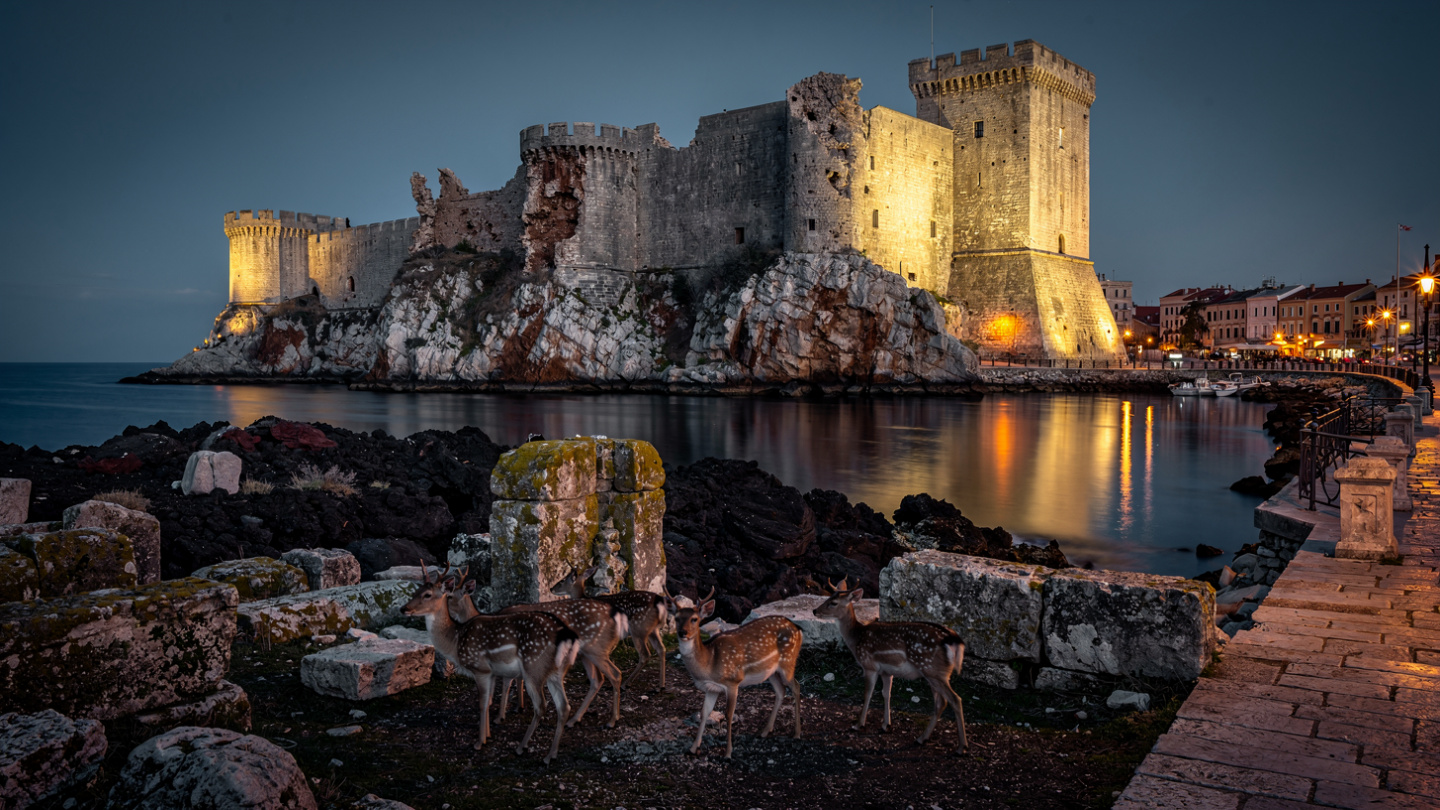
The Venetian castle that occupies the headland above the harbor was built on the site of an ancient acropolis, using material from the earlier structure and following the defensive logic of the position that the ancient builders had already identified: the headland commands the approaches to the harbor from the sea and the approaches to the harbor from the land simultaneously, which is the strategic quality that makes the position the natural site for the fortification regardless of which power is fortifying it. The current structure reflects primarily the thirteenth and fourteenth century Genoese and Venetian construction periods, with the architectural features of the Venetian defensive tradition visible in the gate design and the tower configurations.
The deer that the castle grounds shelter, a small population of fallow deer whose presence within the castle walls has become one of the more idiosyncratic features of the Myrina visit, are the occupants of the castle’s interior spaces that make the visit to the fortification something other than the standard archaeological monument encounter: the deer grazing among the Byzantine and Venetian ruins produce the quality of the unexpected that the island consistently provides when the visitor arrives with the expectation of the familiar.
The harbor promenade that the town extends along the waterfront below the castle, with the fishing boats moored along its length and the tavernas and cafes occupying the ground floors of the neoclassical buildings that line the promenade’s inland edge, is the Myrina that the contemporary traveler inhabits rather than simply visits: the evening walk along the promenade, in the quality of the Lemnian summer evening when the meltemi has dropped and the harbor is calm and the castle above is illuminated against the sky, is the Myrina experience that most completely expresses the island’s combination of the ancient and the contemporary in a single view.
Practical Considerations
Limnos is accessible by air from Athens on Olympic Air and Aegean Airlines, with the flight taking approximately one hour. Ferry connections run from Kavala on the mainland, approximately four hours, and from Alexandroupolis, approximately six hours, with less frequent connections from Piraeus and from the eastern Aegean islands that the ferry routes serve seasonally.
The island’s size, approximately 477 square kilometers, and the distribution of the sites across the island’s different regions make a rental car the most efficient way to see the major archaeological sites, the Amothines, and the northern coast beaches in a single visit. The distances are not extreme but the road connections between the island’s different regions require the flexibility that public transport on the island does not provide.
The optimal visiting months for the combination of the archaeological sites, the Amothines, and the Keros wind sports are June through September. The spring months of April and May are the optimal months for the wildflower landscape and the cheese production, and October maintains the swimming weather that the northern Aegean yields later than the central Aegean.
At Olympus Estate, Wanderlust Greece guides you across the sacred and storied terrain of the Hellenic world. Hephaestus fell to Limnos and built his forge in the volcanic ground beneath it. The Kabeiroi held their rites on the northeastern cliff above the cave where Philoctetes waited for ten years for the Greeks to return for his bow. The Argonauts stopped here. The Lemnian earth that Galen traveled from Rome to evaluate is the same volcanic geology that produces the flomaria pasta and the Kalathaki cheese and the Muscat wine and the thyme honey of the Lemnian hills. The landscape explains the mythology. The mythology explains the landscape. Go with both in mind.