Samothraki is the island where the most beautiful object in the Louvre was found.
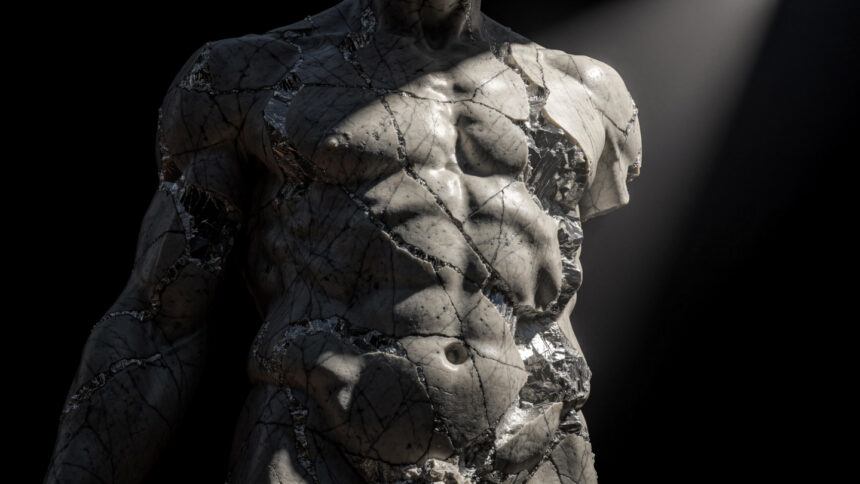
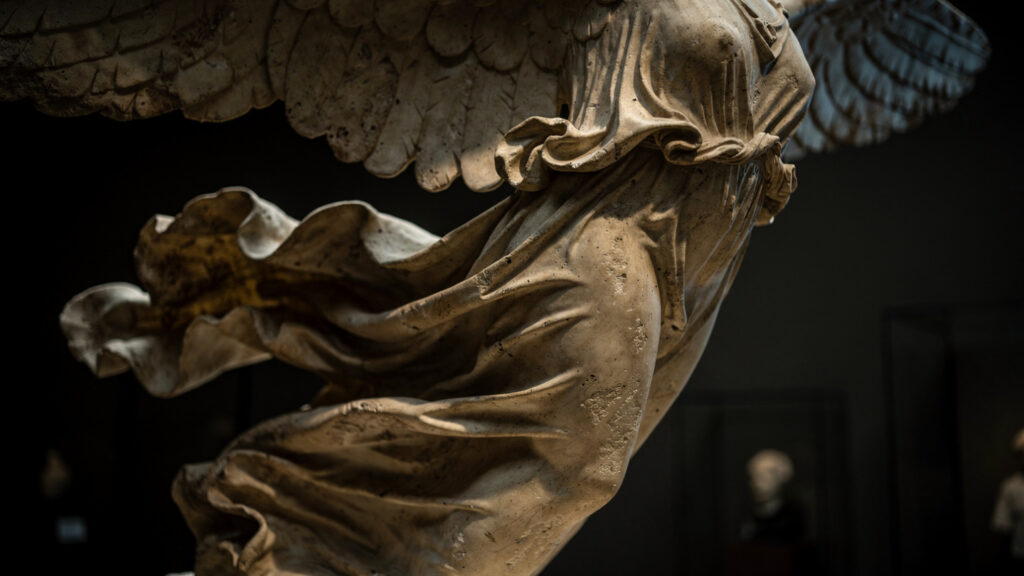
The Nike of Samothrace, the Winged Victory who stands at the top of the Daru staircase and who has occupied that position since 1883, was discovered in 1863 in pieces in the Sanctuary of the Great Gods on the island’s northwestern coast by the French vice-consul Charles Champoiseau. She had been created approximately 190 BCE to commemorate a naval victory, most probably the Rhodian victory over Antiochus III at the Battle of Myonnesus in 190 BCE, and she had been placed in the sanctuary on a ship’s prow of marble carved to suggest the vessel had just run aground in a breaking sea. The sculptor had given the marble drapery of her robe the quality of fabric blown back against the body by the wind of forward motion, a technical achievement that remained unsurpassed in the sculptural representation of fabric and air until the Renaissance and that is still the most vivid expression in stone of the experience of speed and wind and divine presence simultaneously.
She is not on Samothraki. A cast of her stands in the sanctuary’s small museum at Palaeopolis, and the original is in Paris. The removal of the Nike from Samothraki to Paris is among the most consequential acts of archaeological extraction in the history of Mediterranean classical sites, and the island’s current relationship to the most famous object it produced is the relationship of a community to something of its own that is somewhere else. This is part of what Samothraki is: an island whose most celebrated product was taken away and whose sanctuary fell into ruin and whose Mysteries were discontinued and whose religious tradition survived only in the fragments that the ancient sources preserved and the excavations recovered.
What remains is genuinely extraordinary.
The Sanctuary of the Great Gods
The Sanctuary of the Great Gods at Palaiopolis, on the island’s northwestern coast in the valley of a small stream that runs from the slopes of Mount Saos to the sea, was the most significant mystery cult sanctuary in the northern Aegean for approximately six centuries, from the archaic period through the late Hellenistic and early Roman period when the Samothracian Mysteries were among the most widely attended initiatory rites in the Mediterranean world.
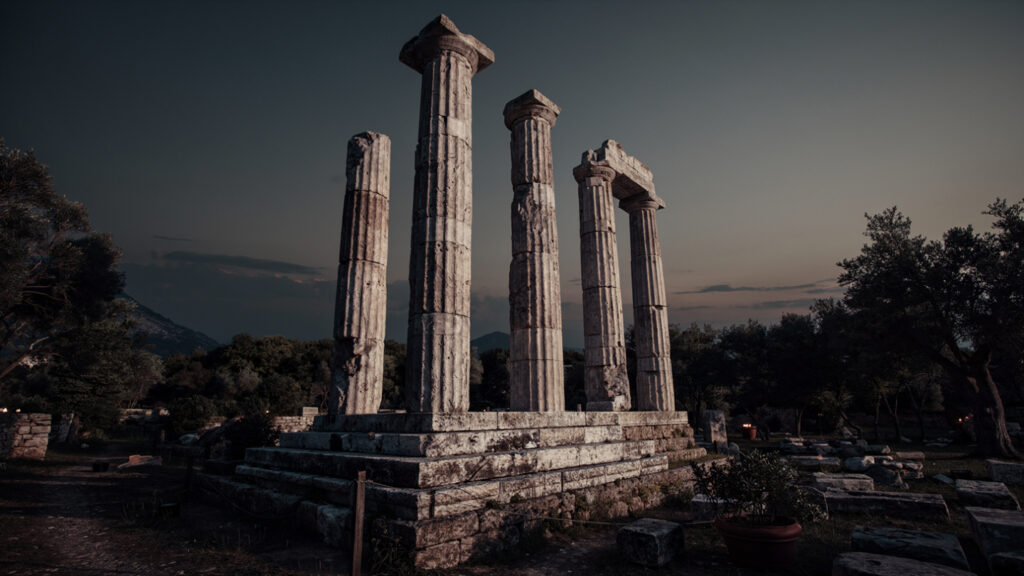
The Kabeiroi, the deities of the Samothracian cult whose names and precise identities were among the secrets that the initiation protected, were a category of divine beings whose pre-Greek Thracian or Phrygian origins the ancient tradition consistently maintained: they were the Great Gods of the island’s indigenous population, whose divine functions were subsequently accommodated within the Greek pantheon through a series of identifications with Olympian and chthonic deities that the ancient sources describe imprecisely because the precision would have constituted a revelation of what the initiation was supposed to protect.
What the ancient sources consistently say about the Kabeiroi’s functions was what made the Samothracian Mysteries uniquely appealing in the ancient world: unlike the Eleusinian Mysteries, which were exclusively for Greek-speaking free persons and had complex requirements of preliminary purification and prior initiation, the Samothracian initiation was available to all, regardless of citizenship status, gender, or social position. Slaves could be initiated at Samothraki when no other major Greek mystery cult admitted them. This feature of the Samothracian initiation is what drew the range of visitors that the sanctuary’s dedicatory inscriptions document: the inscribed list of initiates includes names from virtually every ethnic background and social category that the ancient Aegean world contained.
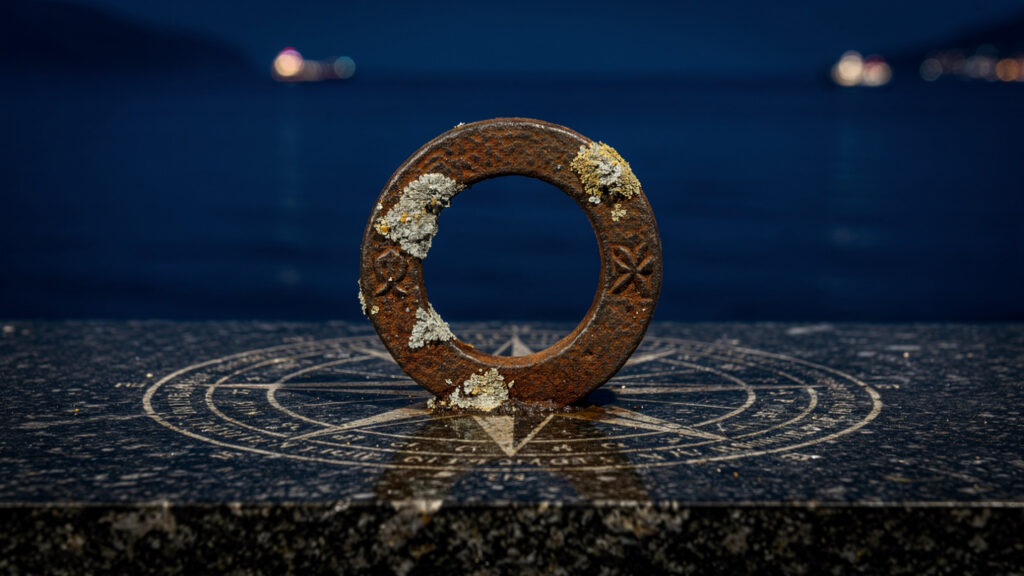
The protection that the Samothracian initiation was understood to confer was primarily maritime protection: the initiates who had received the sanctuary’s ring, the iron ring that the tradition identifies as the token of Samothracian initiation, were understood to be under the Kabeiroi’s protection at sea. In a world where naval travel was the primary long-distance transportation method and where shipwreck was a genuinely common cause of death for anyone who traveled by sea, the promise of divine protection at sea was the promise of the thing that the ancient world most concretely needed and most concretely feared to lose.
Philip II of Macedon, who would become the most powerful ruler in the Greek world before his son Alexander superseded him, was initiated at Samothraki and met his wife Olympias during the initiation ceremonies, which is the historical note that most dramatically illustrates the range of the sanctuary’s importance: the dynastic connection between Philip and Olympias, which produced Alexander the Great, was formed in the context of the Samothracian Mysteries.
The Archaeological Site and What It Preserves
The Samothraki archaeological site is not organized with the visitor management infrastructure of Olympia or Delphi: the site is partially enclosed, and the visitor moves through it with less guidance than the major Peloponnesian sanctuaries provide. This is not simply a deficiency in the site’s development. It is part of the site’s quality: the sanctuary in its current condition, partially excavated, partially overgrown, with the surviving architectural remains distributed across the valley floor in the arrangement that the excavation revealed, is an encounter with a place that has not been fully reclaimed from the landscape that covered it.
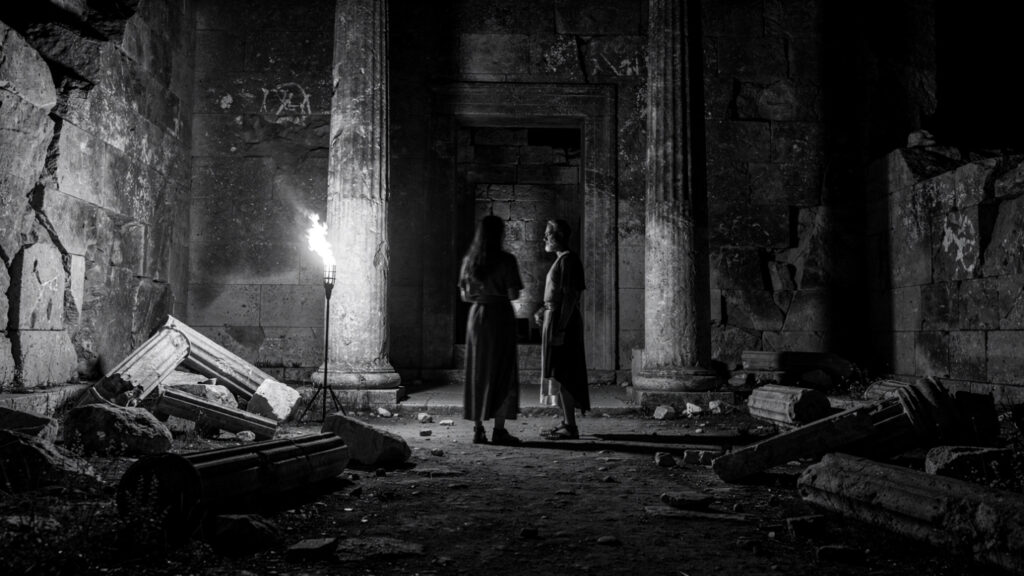
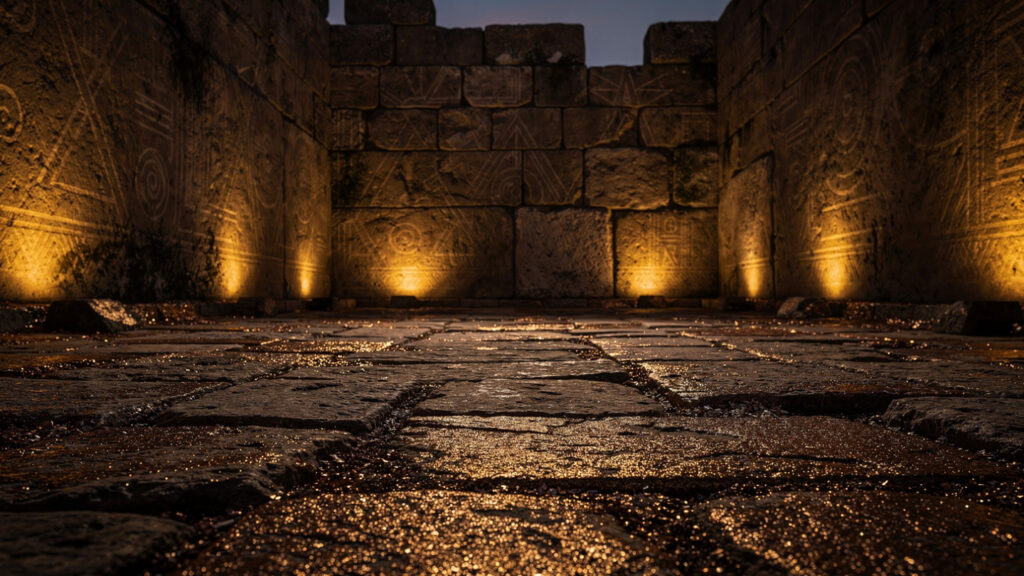
The Anaktoron, the long narrow building that served as the hall for the first stage of initiation, is the building whose function the excavation most clearly documented: the remains of clay seal impressions and the distribution of finds within the building identify it as the space where the preliminary initiation took place, before the initiates were admitted to the deeper levels of the mystery. The building’s orientation and the spatial relationship between its interior and the surrounding sanctuary buildings reflect the ritual logic of the approach to the initiation: the Anaktoron was the boundary between the uninitiated world outside and the initiated world within.
The Hieron, the large Doric temple whose partially surviving columns are the most visually prominent surviving architectural element of the sanctuary, is the building that housed the second and higher stage of initiation, the epopteia that gave the initiate the deeper level of the Samothracian revelation. The temple’s architectural quality, the combination of Doric exterior and unusual internal features adapted for the mystery rite rather than for conventional cult worship, reflects the demands of a religious function that had no exact parallel in the Olympian cult architecture of the mainland.
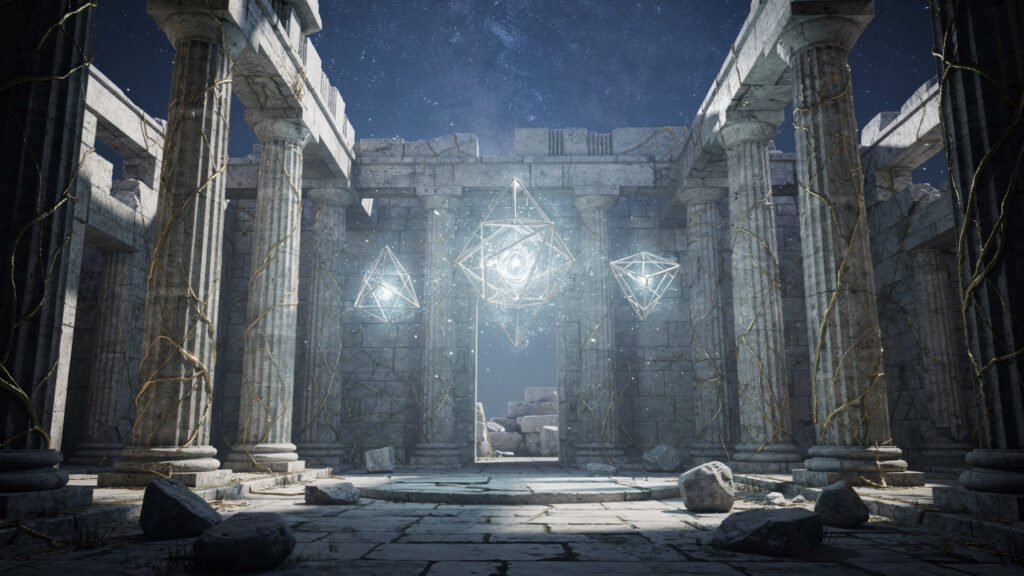
The Nike monument that originally displayed the marble ship’s prow and the Nike statue in the position that gave the Nike her visual power, the goddess alighting on the prow in the moment of touchdown, occupied a prominent position in the sanctuary’s spatial organization: the monument was visible from the sea approach to the sanctuary, which was the approach that most visitors would have made, arriving by ship and seeing the Nike on her prow above the sanctuary before they entered it. The monument’s theatrical quality, the ship’s prow carved in the way that made it appear to be moving through the water from the perspective of the approaching vessel, was designed for the maritime visitor rather than for the land visitor, and understanding this design intention changes the reading of the Nike from simply a magnificent sculpture to a specifically maritime dedicatory statement calculated for the perspective of the person approaching from the sea.
Mount Saos and the Landscape
Mount Saos, whose summit is called Fengari, the Moon, and whose 1,611 meters make it the highest point in the Aegean, is the dominant geographical fact of Samothraki: visible from a very long distance at sea, it was the landmark that guided navigation in the northern Aegean and that the ancient tradition remembered as the mountain from which Poseidon watched the Trojan War.
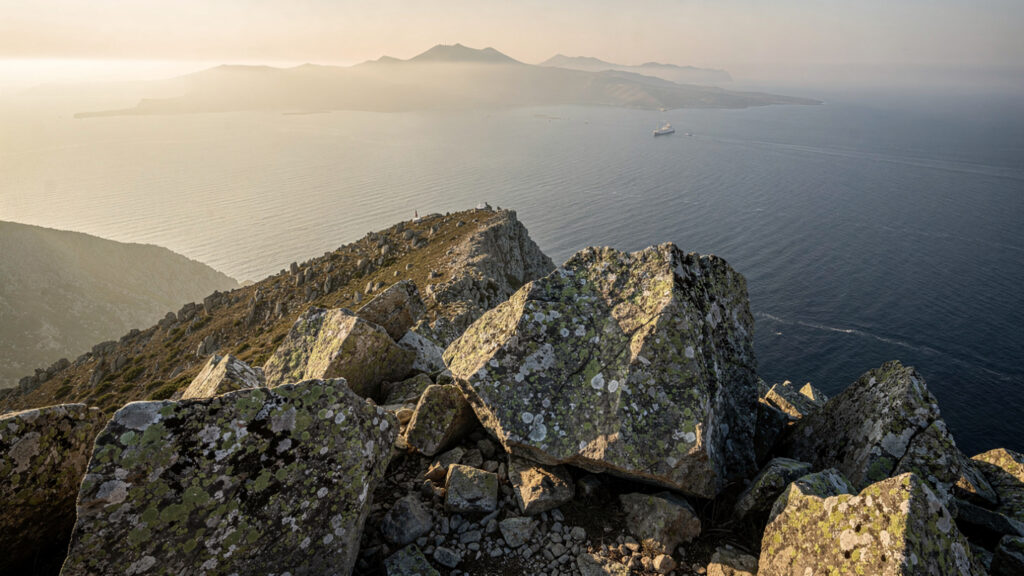
The Homeric reference is specific: in the thirteenth book of the Iliad, Poseidon sat on the summit of Samothrace looking across the Aegean toward Troy, watching the battle that he could not directly participate in because Zeus had forbidden it. The geographical relationship between Samothraki and the Troad, the region of Troy, is the geographical relationship that makes the Homeric reference accurate in the way that the ancient tradition’s best geographical references were accurate: from the summit of Mount Saos on a clear day, the Turkish coast and the entrance to the Dardanelles are visible on the eastern horizon, and the position that Homer gives Poseidon is the position from which the god could have seen what Homer says he was watching.
The mountain’s summit is reached by a trail from the village of Therma that climbs through the forest zone, the chestnut and plane trees of the lower slopes and the oak and heather of the middle zone, to the bare granite of the upper mountain above the tree line. The trail is marked but demanding: the elevation gain is substantial and the upper section on bare rock requires careful route-finding. The summit rewards the climb with the panoramic view that the Poseidon reference encodes: the Aegean islands visible to the south and west, the Turkish coast to the east, and the quality of the elevated air above the northern Aegean on a clear day that the summit produces.
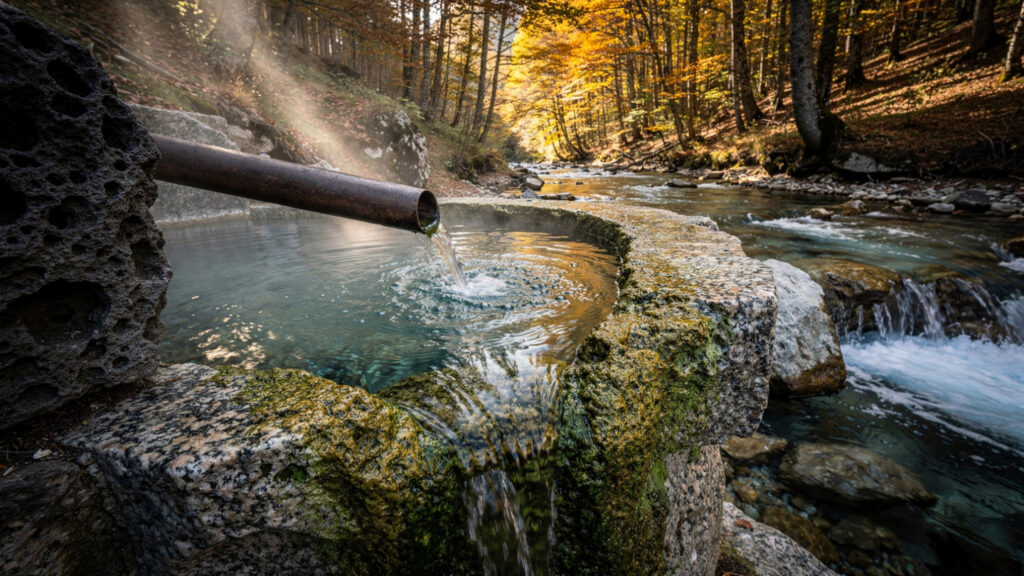
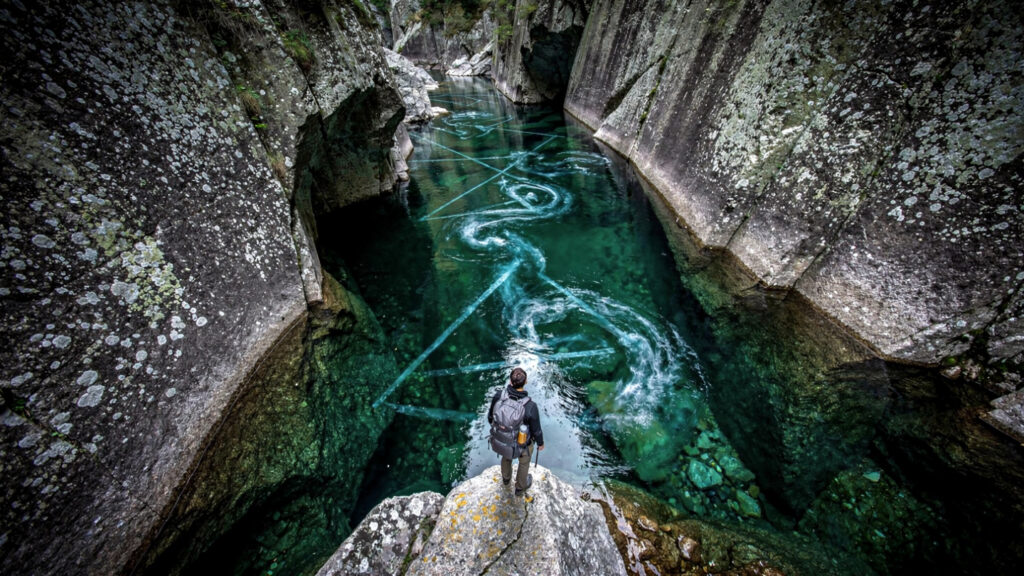
The waterfalls and natural pools of the mountain’s stream systems, the vathres that the island is most widely known for in contemporary Greek summer culture, are the consequence of the combination of the mountain’s height and the rainfall that the elevation intercepts: Samothraki receives substantially more rainfall than most Aegean islands of comparable size, and the streams that drain from Mount Saos through the gorges to the sea create the aquatic landscape of the Fonias gorge and the pools above Therma that the island’s visitors have been seeking since the alternative travelers of the 1970s first established the island’s reputation as a destination for those who sought something different from the beach club circuit.
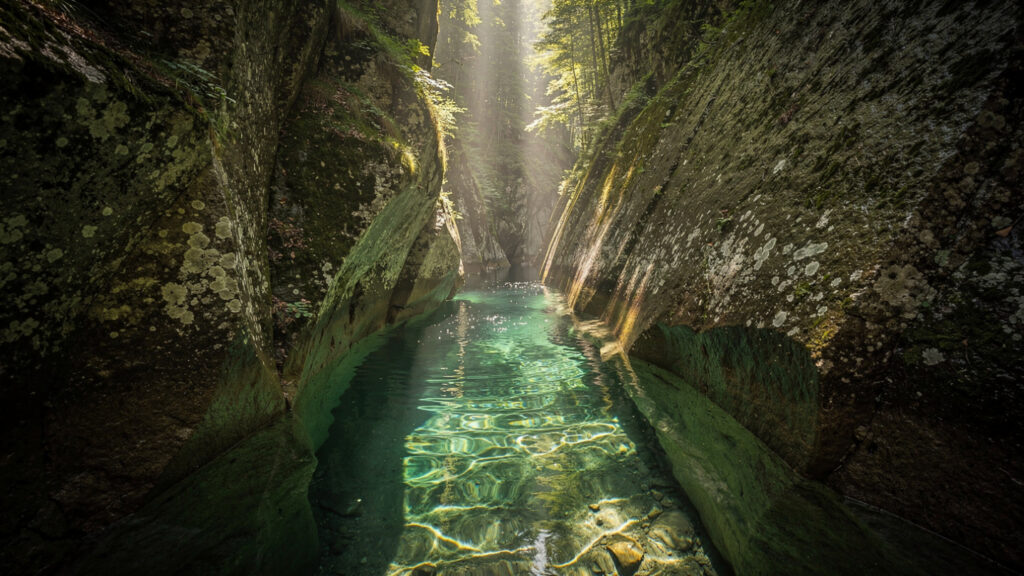
The Fonias gorge, whose name means killer in reference to the dangerous flood conditions that the gorge produces after heavy rain, is the most dramatically beautiful of the island’s gorge systems: a narrow cut through the granite of the mountain’s lower eastern slope, with the waterfall at its head falling into the largest of the natural pools and the quality of the Samothrakian water, cold even in summer because it descends from the mountain’s snow-fed upper reaches, producing the physical encounter with the landscape that the island’s reputation is built on.
The Contemporary Island
The Samothraki that the contemporary visitor encounters is the island that the combination of its archaeological significance, its geographical remoteness, its natural landscape, and its alternative cultural identity has produced across the decades since the Greek state opened the archaeological site to organized study in the 1930s and since the broader European alternative travel culture discovered the island in the 1970s.
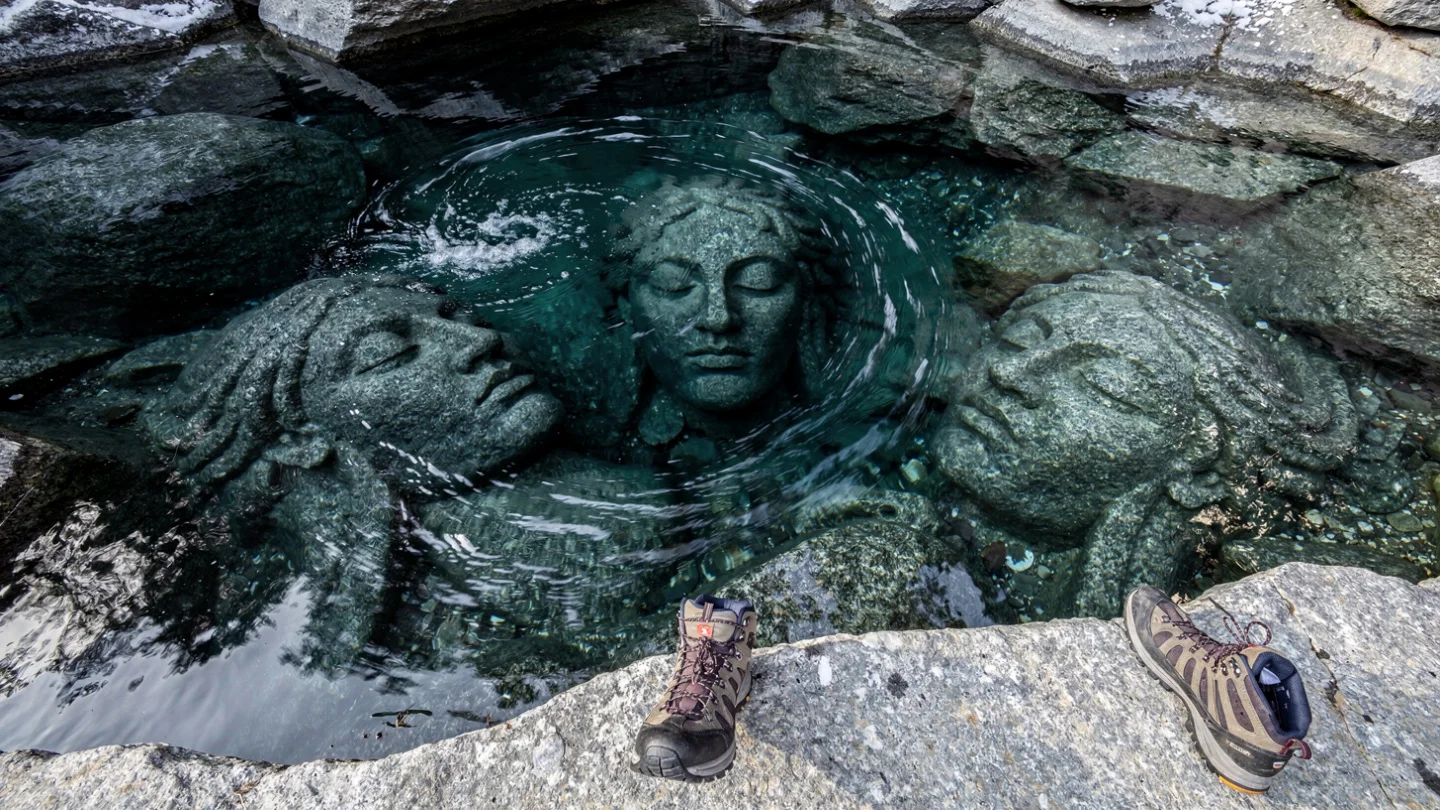
The village of Therma, on the island’s northwestern coast adjacent to the archaeological site, is the contemporary center of the island’s alternative culture: the natural hot springs that emerge from the mountain’s volcanic geology, the camping areas in the chestnut forest above the village, and the social character of the community that the hot springs and the camping and the Fonias gorge attract have made Therma the place where the island’s alternative identity is most concentrated. The hot spring baths, where the thermal water at 40 degrees Celsius flows into stone basins adjacent to the cold Samothrakian streams, are the combination of heat and cold and mineral water and landscape that the island’s geology produces and that no other accessible Aegean destination provides in the same form.
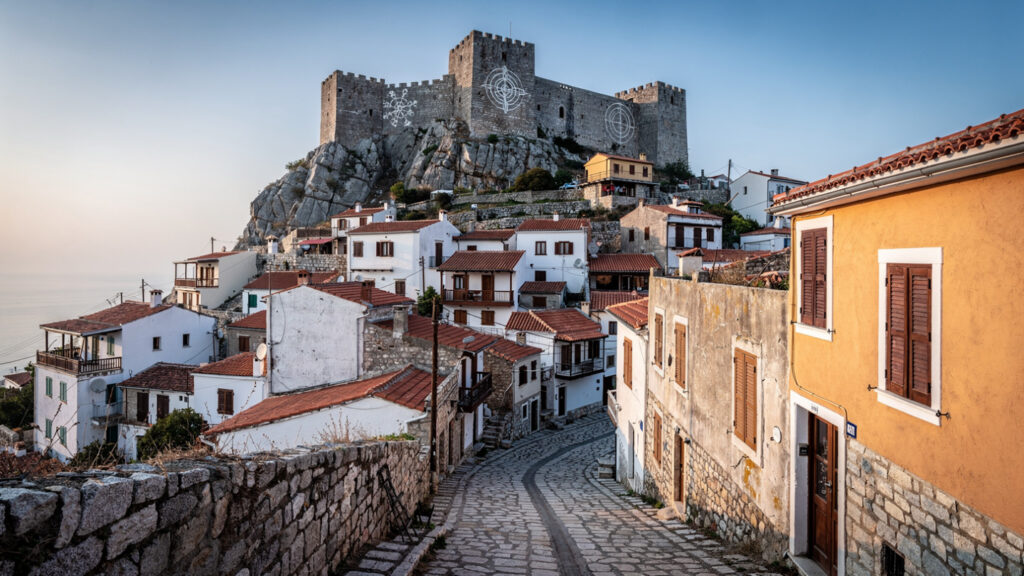
Chora, the island’s capital on the slope above the port, is the settlement that carries the island’s historical and architectural character: the medieval settlement that developed around the Genoese castle on the ridge above the modern village, the quality of the Aegean island capital whose architecture reflects the decades and centuries of its gradual construction rather than the single period of a planned development. The castle’s position on the ridge, commanding the view across the northern Aegean to the Turkish coast and down across the port to the sea, is the strategic position that the Genoese chose for the same reason that Poseidon chose the summit of Mount Saos: the visibility across a very large area of sea from a single elevated point.
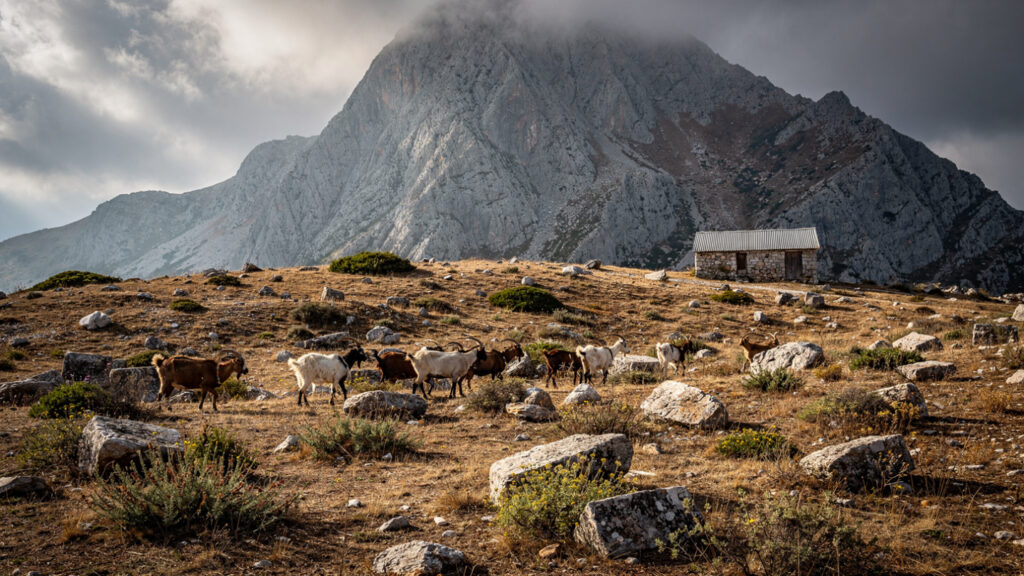
The island’s food tradition, centered on the local goat meat and the cheeses that the mountain grazing produces, is the food tradition of an island that is primarily agricultural and pastoral rather than maritime in its economy: the terrain of Mount Saos, which supports extensive goat and sheep grazing rather than the olive and vine cultivation of the more accessible Aegean islands, produces the flavors of the Samothrakian table that are not available elsewhere in the northern Aegean.
Getting There
Samothraki is accessible by ferry from the port of Alexandroupolis in northeastern Greece, with a crossing of approximately two hours by the fast catamaran and approximately two and a half by the conventional ferry. The summer service runs more frequently than the winter service, and the ferry is the only connection: there is no airport on Samothraki and no bridge. The island’s inaccessibility is part of its character and part of what has maintained the quality of its visitor culture: the people who arrive on Samothraki have made a decision to come to an island that requires an effort to reach.
The best months to visit for the combination of the archaeological site, the mountain, and the Fonias gorge are June through September for the swimming in the natural pools and July through September for the summit ascent in the optimal weather conditions. The archaeological site is open year-round in reduced form. The ferry service in October and November continues on a reduced winter schedule for the island’s permanent population of approximately 2,700.
At Olympus Estate, Wanderlust Greece guides you across the sacred and storied terrain of the Hellenic world. Samothraki is the island where the Nike stood on her ship’s prow above the sanctuary that admitted everyone, slaves and free and men and women, and promised them protection at sea in exchange for initiation into secrets that no initiate revealed. Philip of Macedon met Olympias here. The Nike is in Paris. The sanctuary is in the valley below Mount Saos. Poseidon watched the Trojan War from the summit. Go to the summit if you can. The Turkish coast is visible on a clear day. Homer was right about the view.