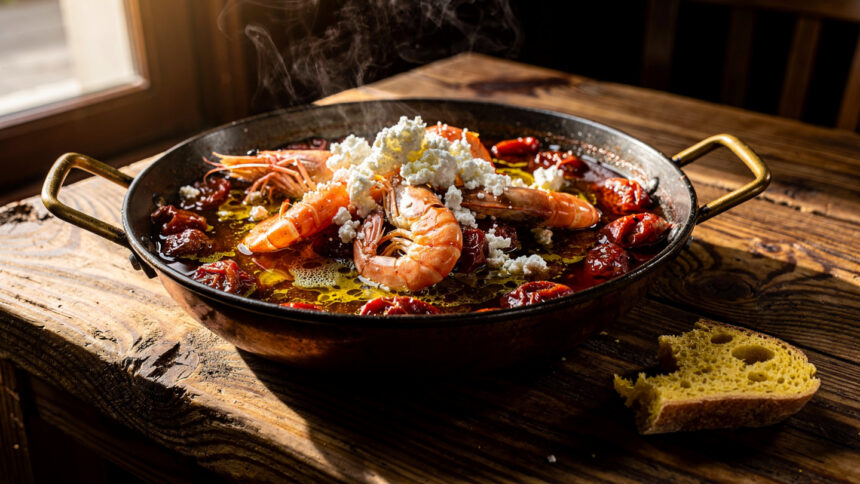




Greek food is not mythology-themed. It is mythology-descended.
The distinction matters. A mythology-themed feast is a modern entertainment organized around decorative associations, the blue cocktail for Poseidon because the sea is blue, the golden tart for Apollo because the sun is golden. It is a costume party where the costumes happen to be edible. What actually descends from mythology is something else entirely: the agricultural calendar and the ritual food practices ancient Greek religion organized around the deities whose domain was the food cycle itself, foods that survived in the Greek kitchen because the ritual occasions requiring them survived too, transformed but continuous, through the Byzantine period, through Ottoman rule, and into the contemporary Greek table.
This connection is nothing like a themed cocktail menu. It is the Lenten fast whose fasting foods descend directly from the purification foods of the Thesmophoria. It is the honey the contemporary Greek kitchen still uses the way the ancient bee sanctuaries recorded. It is the wine of the Greek wine regions, whose ancient varietals the Dionysian cult identified with the theological properties of divine wine itself.
None of this is metaphor. These are food practices the ancient world shaped and that the contemporary table still maintains, in forms recognizable as continuous with the ancient ones once you know what you are looking at.
Demeter and the Fasting Foods
Demeter was the goddess of the grain, and the religious occasions built around her cult most directly connected the Greek community’s ritual life to the agricultural year’s own cycle. The Thesmophoria, the ancient all-female festival held in late autumn at the time of the grain sowing, was where the connection between female ritual practice, the grain’s fertility, and the foods of the purification fast came together most completely.
The Thesmophoria required real fasting: the women who attended the three-day festival abstained from meat and wine, eating instead foods considered appropriate for the liminal state between the ordinary world and the sacred encounter. Pomegranate seeds, whose connection to Persephone and the underworld the myth of the six seeds encodes, were eaten at the festival. Cereal offerings, grain preparations whose symbolic tie to Demeter’s own domain made them the appropriate food for the festival’s sacred context, were the preparations the Thesmophoria required.
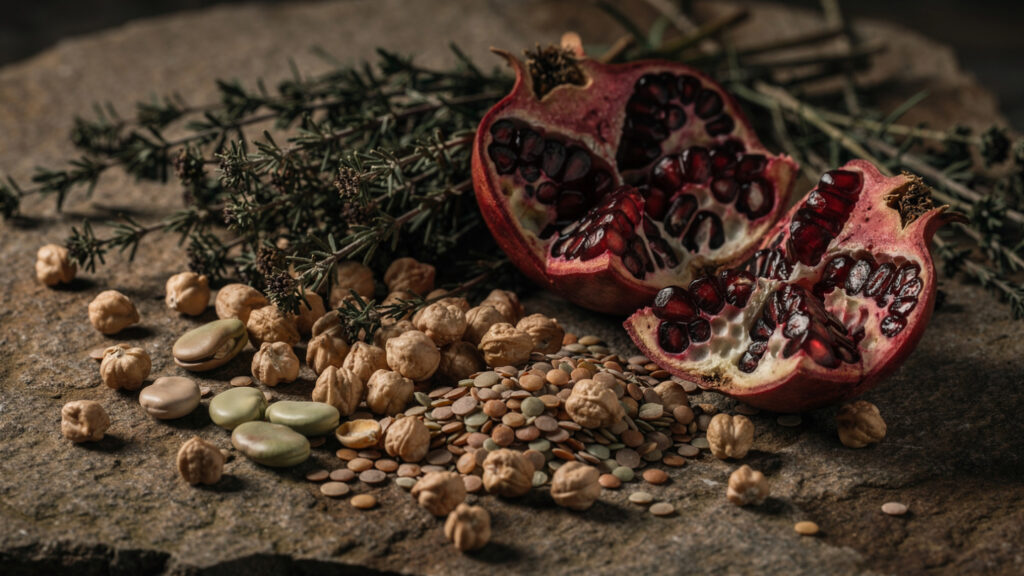
This fasting practice survives in the contemporary Greek kitchen most directly through the Greek Orthodox Lenten calendar. The Lent and Easter article in this collection develops the Lenten fast in full, and the parallel between the ancient purification fast and the contemporary Lenten one runs through the actual foods both periods identified as appropriate for ritual abstinence: legumes, grains, wild greens, olive oil. What makes the contemporary Lenten fast a genuine cultural descendant rather than a superficial parallel is the ritual character shared by both: a deliberate withdrawal from the ordinary table in order to enter the purified state the sacred encounter requires.
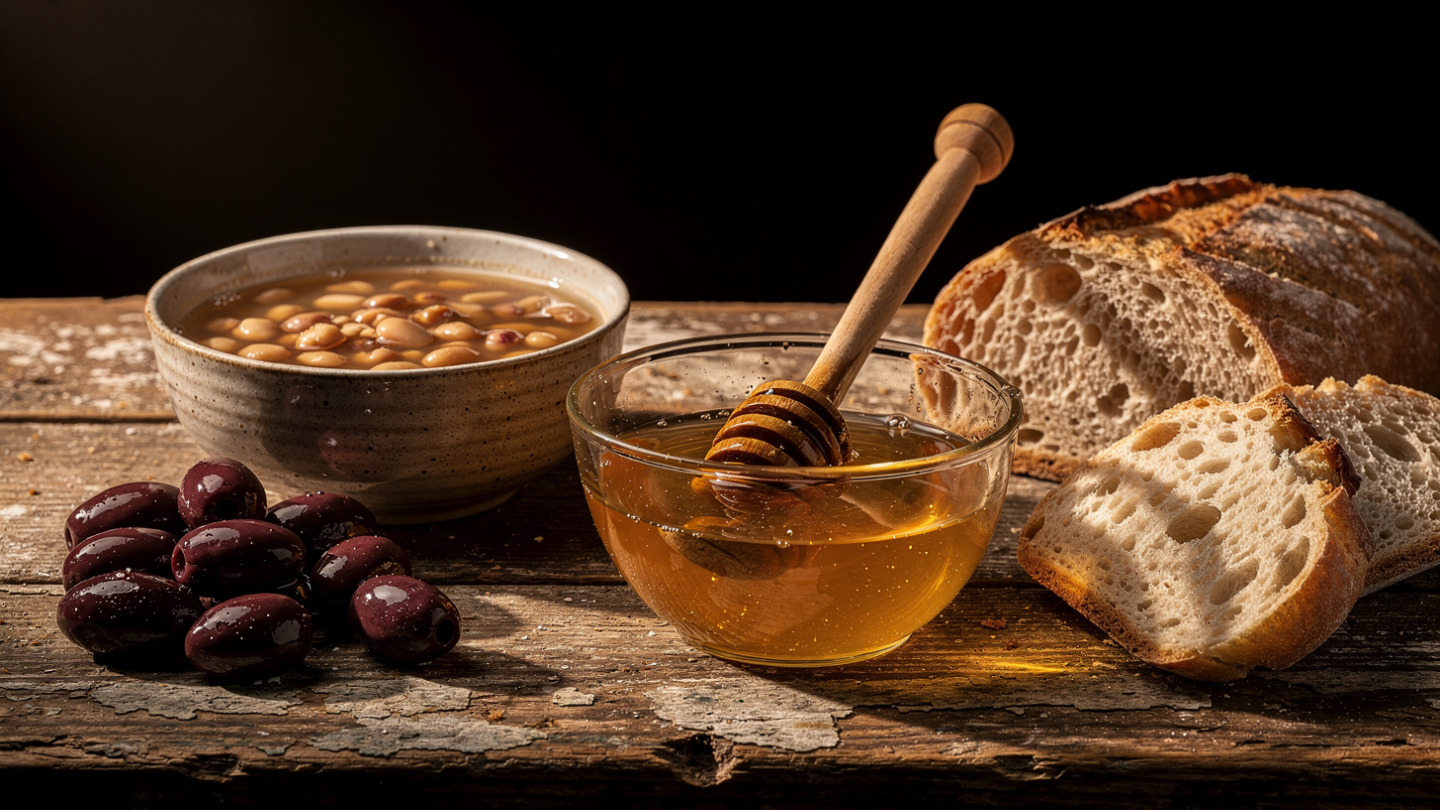
The fasolada, the bean soup the contemporary Greek kitchen calls its national dish and the Lenten table requires, carries an association with the dead and with chthonic deities that ancient sources record directly, in the Pythagorean prohibition on beans and in their role at the Anthesteria, the festival of the dead. The fava beans, chickpeas, and lentils the contemporary Lenten kitchen uses were, in the ancient world, considered fitting for exactly the ritual occasions that moved closest to the boundary between the living and the dead, and the Lenten fast, whose purpose is preparing the self for the encounter with the Resurrection, is precisely the occasion in the contemporary Orthodox calendar that moves most directly toward that same boundary.
Dionysus and the Wine Regions
Of all the divine associations, Dionysus is the one whose contemporary presence in Greek wine culture is most directly traceable, because the Greek varietals ancient practice most valued are the very varietals whose continuous cultivation across the ancient, Byzantine, Ottoman, and modern periods has kept them rooted in the wine regions the ancient world first assigned them to.
The Agiorgitiko of Nemea, the red grape whose name means the grape of Saint George and whose cultivation in the northeastern Peloponnese ancient sources recorded as among the most significant in classical Greek viticulture, remains the primary red variety of the Nemea PDO region today. Its flavor, ripe dark fruit against an earthy quality the Nemea limestone lends the wine, was already understood by Dionysian festival practice as a fitting expression of the wine god’s own character in this particular corner of the Peloponnese.
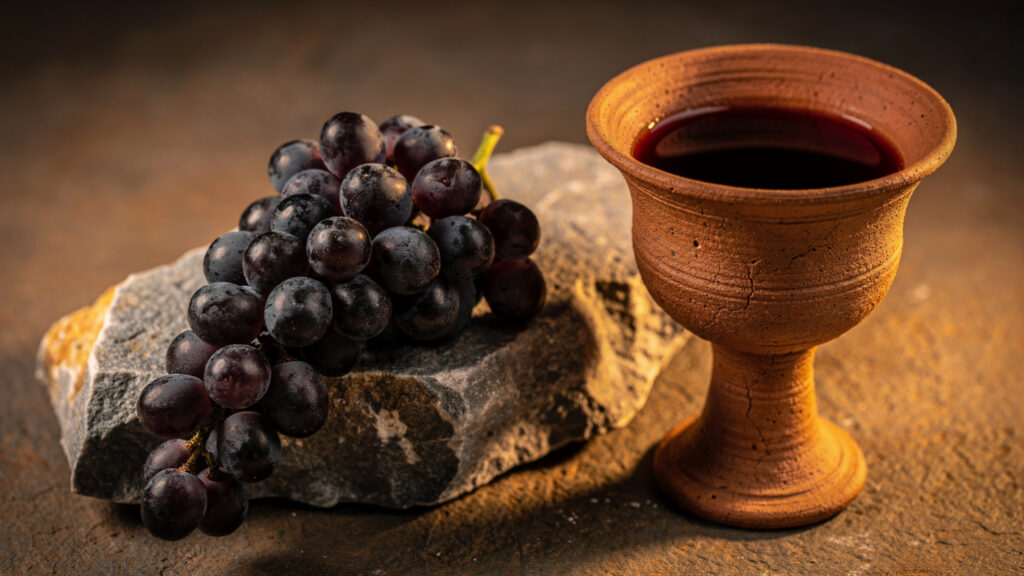
The Assyrtiko of Santorini, the white grape grown on the volcanic soils of the Thera caldera the Lava article in this collection develops through the link between the island’s volcanic geology and the wine’s mineral character, still grows on the most dramatic geological substrate anywhere in Greek wine country. Its extreme acidity paired with that volcanic minerality makes it among the most distinctive white wines produced anywhere in the Mediterranean.
The Roditis, the Muscat of Samos, the Robola of Kefalonia, and the Xinomavro of Naoussa round out the other Greek varietals whose ancient cultivation is well documented and whose contemporary wines still carry the regional character each landscape gave them long ago. The Muscat of Samos has kept its sweetness and floral quality since the archaic period, and the Xinomavro, with its high acidity and the tobacco and tomato notes the Macedonian climate gives it, ranks among the most age-worthy of Greek reds. Both varietals, in their continuity across the centuries, preserve the same viticultural map Dionysian festival practice once shaped.
The Dionysian cult’s real theological claim about wine was never simply that it was pleasant or fitting for celebration. It was that wine was the medium through which mortals could actually experience divine presence: the controlled intoxication of the symposium, whose symposion article in this collection develops the ritual and intellectual structure of Athenian wine-drinking, was understood as the altered state in which that divine encounter actually happened. The wine was the god’s own vehicle, and each region’s wine carried, in its own particular character, the character of the landscape the divine presence had moved through to reach it.
Melissa and the Honey
The bee-priestesses of ancient Greek sanctuaries were called Melissai, from melissa, the Greek word for bee that is also the name of the honey-bee plant, lemon balm, named for its own attractiveness to bees. The ancient connection between bee and sacred rite gave the Melissai both their name and their function: women whose ritual knowledge organized honey production and honey offerings at the sanctuaries of Demeter, Artemis, and other deities whose domain included the natural fertility the bee’s own pollination work embodied.
Ancient religious life engaged with honey across the full range of surviving sources. It was poured in libations to the dead and to chthonic deities, worked into ritual food preparations, documented in Hippocratic medical texts for its use in wound treatment and digestive care, and served, without fail, among the tragemata, the dried fruits, nuts, and sweets that closed a symposium’s deipnon.
Contemporary Greek honey production is simply what ancient beekeeping became once it passed through Byzantine monasteries, whose role in preserving ancient botanical and agricultural knowledge made the medieval monastery a genuine repository of the practical natural sciences. The monastic garden and the monastic beehive were the actual institutions that carried ancient botanical and agricultural knowledge through the disruption that followed the classical world’s own collapse.
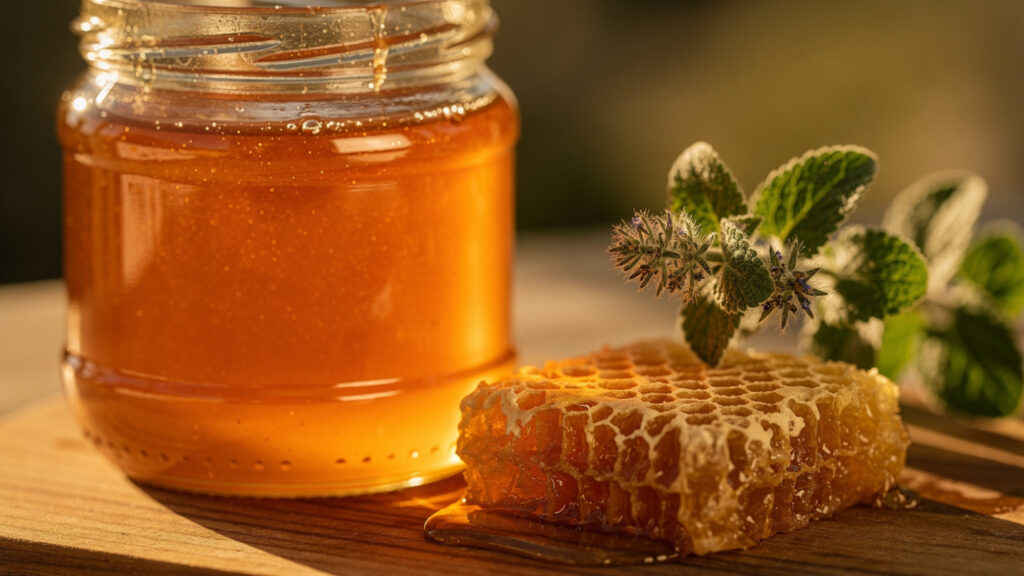
The regional honeys still produced across Greece carry the botanical character of the landscapes that produce them, which is what makes Greek honey among the most botanically diverse anywhere in the world. Thyme honey from the Aegean islands, whose flavor reflects the aromatic intensity limestone soil and an intense Aegean summer give the island thyme, still carries the reputation Hymettus honey held as the finest in the ancient Mediterranean. Fir honey from the mountain forests of Arcadia and Epirus, produced not from flower nectar but from the honeydew of aphids feeding on fir trees, carries a dark, resinous character that reflects the identity of the ancient Greek mountain forest itself. Pine honey, chestnut honey, heather honey, and the wild herb honeys of different regions are all expressions of that same ancient botanical diversity, rendered in the sweetness the bee makes of it.
The Ikaria longevity research the Ikaria article in this collection develops names the herbal teas the island’s population drinks daily as one of four factors most strongly linked to Ikaria’s exceptional cognitive health in old age. The herbs Ikaria’s mountain vegetation produces, brewed as a daily tisane whose mild diuretic properties research has documented as a mechanism for the lower blood pressure Ikarian elders consistently show, belong to the same botanical world the ancient Melissai once organized their sanctuary’s honey production around. The contemporary Ikarian kitchen’s daily relationship to its own mountain herbs is simply the modern continuation of the same relationship the ancient bee sanctuaries maintained between botanical knowledge and the landscape’s own therapeutic diversity.
The Olive and Its Theological Status
The olive tree’s mythological origin in the contest between Athena and Poseidon for Athens, developed at length in the sacred trees article in this collection, gave the olive tree a theological status no other cultivated plant in the ancient Greek world shared: the goddess’s own gift to the city, whose miraculous resprouting after the Persian burning Herodotus documents as evidence of divine presence still committed to Athens, meant its cultivation was simultaneously agricultural labor and theological affirmation of the bond between a community and its patron deity.
This theological status shaped real agricultural practice: ancient sources document purification requirements for the olive harvest, offerings the harvesting community made to Athena before beginning it, and a strict prohibition against harvesting the sacred olives of the moriai, the trees the Athenian state maintained as direct descendants of Athena’s original gift tree, without the state’s own authorization.
The contemporary Greek kitchen’s relationship to olive oil is the relationship of a food culture whose entire cooking practice was shaped around a single fat that the olive tree’s theological status protected from substitution across centuries. Where every other European cuisine reaches for butter, lard, or animal fat, the Greek kitchen reaches for olive oil, and this is not simply a health preference or a regional accident of available fats. It is the direct, traceable effect of the protection the goddess’s gift gave olive oil in Greek food culture.
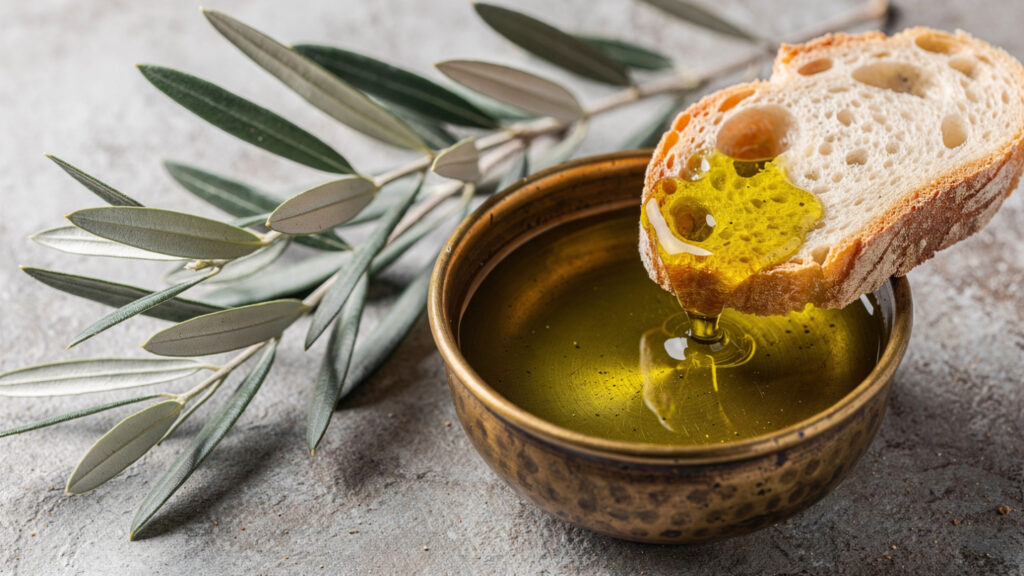
The ladolemono, the olive oil and lemon emulsion the ladolemono article in this collection develops as the simplest, most elemental preparation in Greek cooking, reduces the whole olive oil story to its purest culinary form: oil as the primary flavor, lemon as the acid that brightens and balances it, the combination dressing the grilled fish, steamed vegetables, and boiled greens that fill both the Lenten table and the everyday one. Ladolemono is olive oil’s theological status expressed in the simplest form a kitchen could give it.
The Feast the Calendar Organized
The ancient Greek calendar organized the ritual occasions whose food requirements gave the whole food culture its structure: the Thesmophoria’s purification fast, the Thargelia’s first-fruits offerings, the Anthesteria’s chthonic foods for the dead, the Panathenaia’s communal sacrifice and the meat it distributed to the citizen population.
Each festival’s food reflected its theological content rather than simply whatever happened to be in season: the Thesmophoria’s pomegranate seeds were eaten not because pomegranates ripen in late autumn but because the pomegranate was Persephone’s fruit, and the festival’s connection to the underworld demanded exactly the food that marked the boundary between the living and the dead. The Thargelia’s first-fruits offerings were never simply a harvest celebration. They acknowledged the divine origin of the agricultural abundance the offerings addressed directly.
The contemporary Greek food calendar carries this same ancient ritual structure through the form the Greek Orthodox liturgical calendar gave it once it absorbed and transformed these occasions across the Byzantine period: the Lenten fast as purification before the Resurrection, Clean Monday’s foods marking the fast’s first day, Holy Week’s foods tracing the sacred week’s progressive austerity, the Easter Sunday feast as the explosive return of everything the fast had withheld.
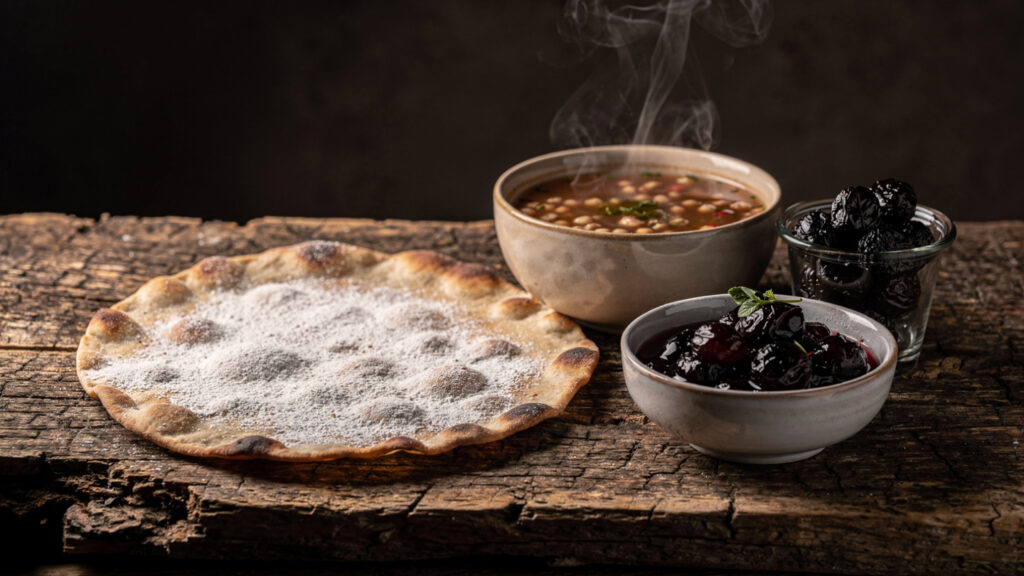
The Greek food calendar is, in effect, the ancient ritual calendar still operating through a Byzantine and Orthodox liturgical frame, still using the foods the ancient world designated for each occasion, still holding the link between food and calendar moment that the ancient world first built.
This is what the Greek kitchen knows that a mythology-themed cocktail menu never will: that its foods carry the actual history of the occasions they were made for, that the bean soup of the Lenten table, the Easter lamb, the Clean Monday flatbread, the Christmas honey cake, and the August spoon sweets are not simply what the Greek table happens to produce at certain times of year. The calendar requires them because ancient practice required them, and ancient practice required them because the deities governing each moment of the agricultural and ritual year needed acknowledgment in the one medium every household already had: food.
The table is the theological document. Read it accordingly.
At Olympus Estate, Food and Seasonal Life traces Greek cuisine as a living calendar and a living history. Greek food is not mythology-themed. It is mythology-descended. The bean soup of the Lenten table descends directly from the chthonic foods of the ancient purification fast. The thyme honey of the Aegean islands still carries the quality the ancient bee sanctuaries once maintained. The olive oil the Greek kitchen uses instead of butter is the direct consequence of the theological status Athena’s gift gave the olive tree. The fasting foods, the feast foods, and the wine of the Greek wine regions all carry the history of the occasions they were made for. The mythology is in the food. It was always in the food.