



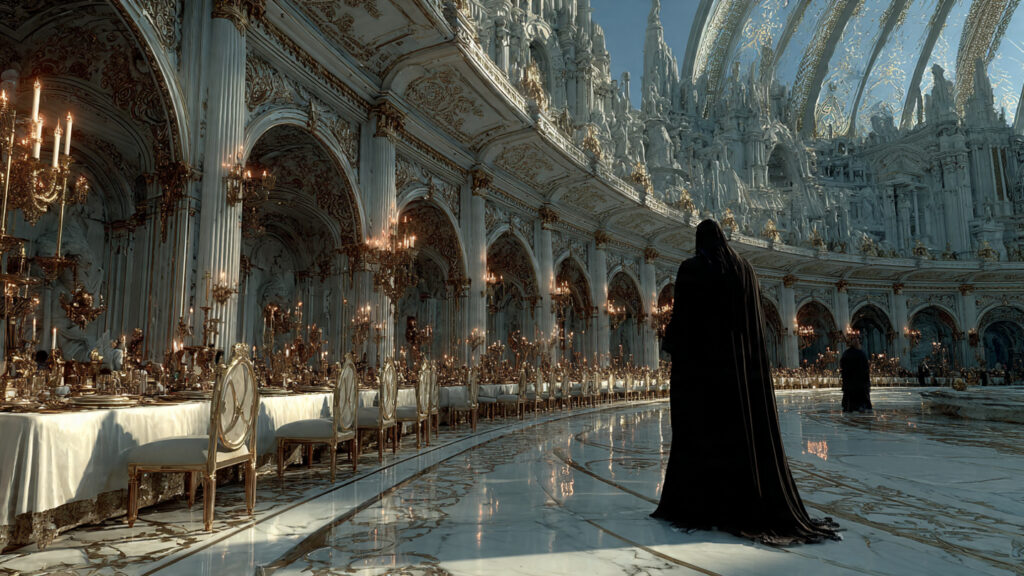
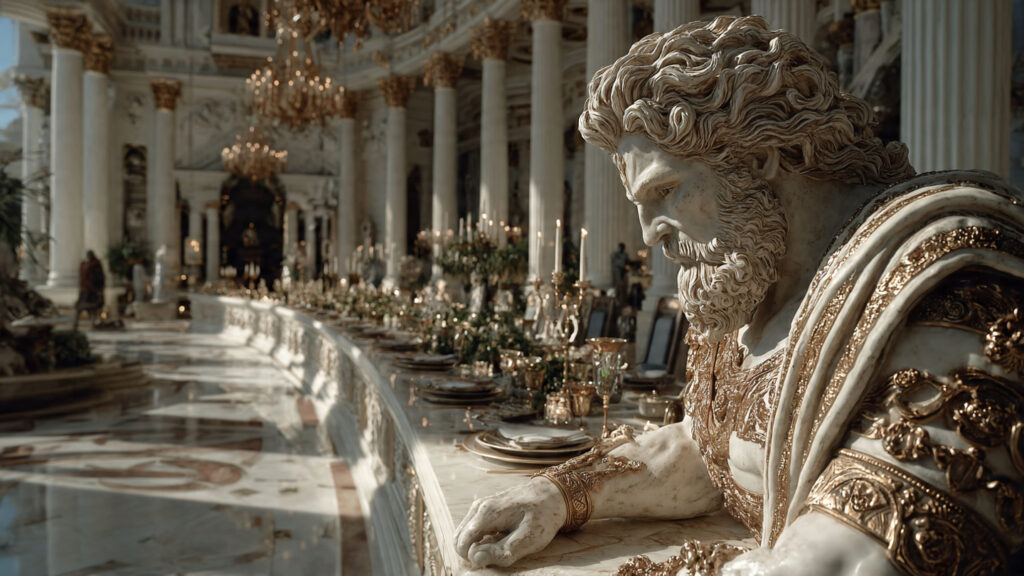
In the high marble halls of Olympus, where the gods gathered to feast on ambrosia and govern the rhythms of the cosmos, there moved a figure who did not share in the general radiance. This was Momos, son of Nyx, the primordial goddess of Night, and the divine embodiment of mockery, blame, and unsparing criticism. While the Olympians celebrated the completion of the world and the ordering of its seasons, Momos moved through those luminous spaces with a narrowed gaze, searching always for the fracture beneath the surface and the imperfection beneath the craft.
His was not a minor role in the ancient mythological order. The Greeks understood that the act of judgment, of weighing and measuring and finding wanting, was itself a divine function, one with genuine power over the reputations of gods and mortals alike. What set Momos apart from the wisdom of Athena or the discernment of the Delphic Oracle was not the sharpness of his perception but its singular direction: he saw only what was broken, and never what was whole.
The myth of Momos is, at its deepest level, a meditation on the discipline of judgment itself, on where honest observation ends and where the hunger for fault becomes its own form of blindness.
The Critiques of the Gods
The legends that survive around Momos, preserved largely through the Aesopic tradition and later through Lucian, concern his assessments of the greatest creative works produced by the Olympians, and each critique reveals something essential about the nature of his perception.
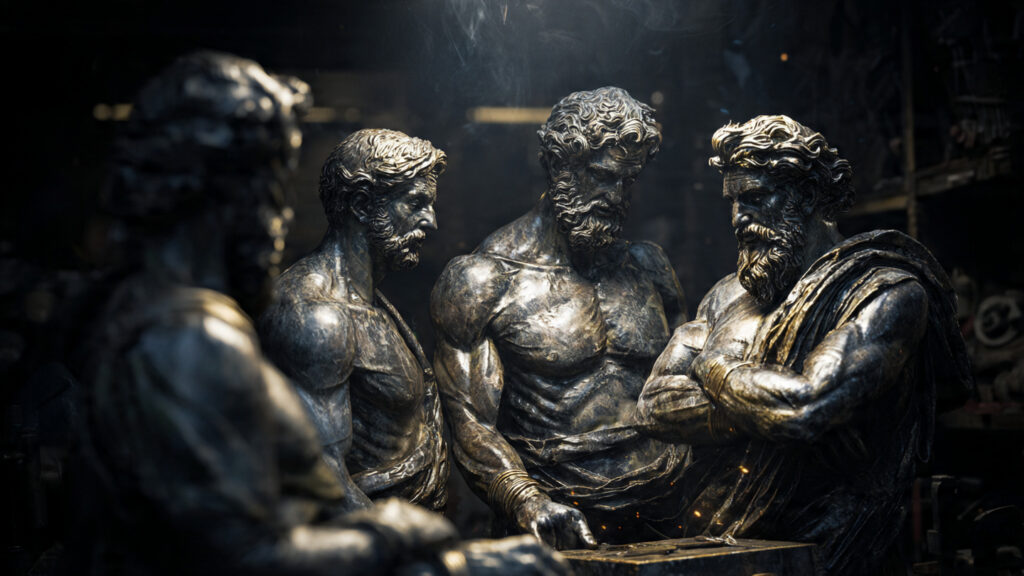
When Hephaestus, the craftsman god, completed his most ambitious work, the fashioning of the first human form, the assembled gods marveled at its intricacy: the articulation of bone and muscle, the economy of the senses, the architecture of the breath. Momos, however, found a fatal design flaw. The blacksmith had neglected, he argued, to fit the human chest with a window. Without such an opening, one could never look directly into the heart and verify the honesty of its contents. The inner life of a person would remain permanently concealed, its motives inaccessible to external scrutiny.
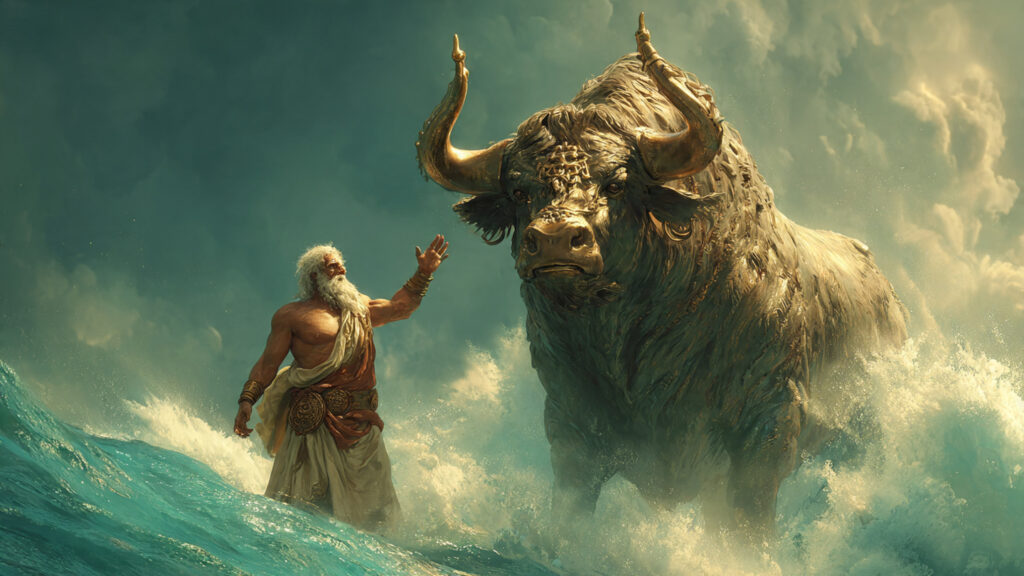
The critique of Poseidon’s bull was equally precise and equally cold. The god of the sea had positioned the animal’s horns above its eyes, and Momos found this arrangement structurally unsound: the horns should have been placed lower, closer to the line of sight, to allow for a more accurate and forceful charge. The animal was powerful and well-formed, but in his accounting that ceased to matter.
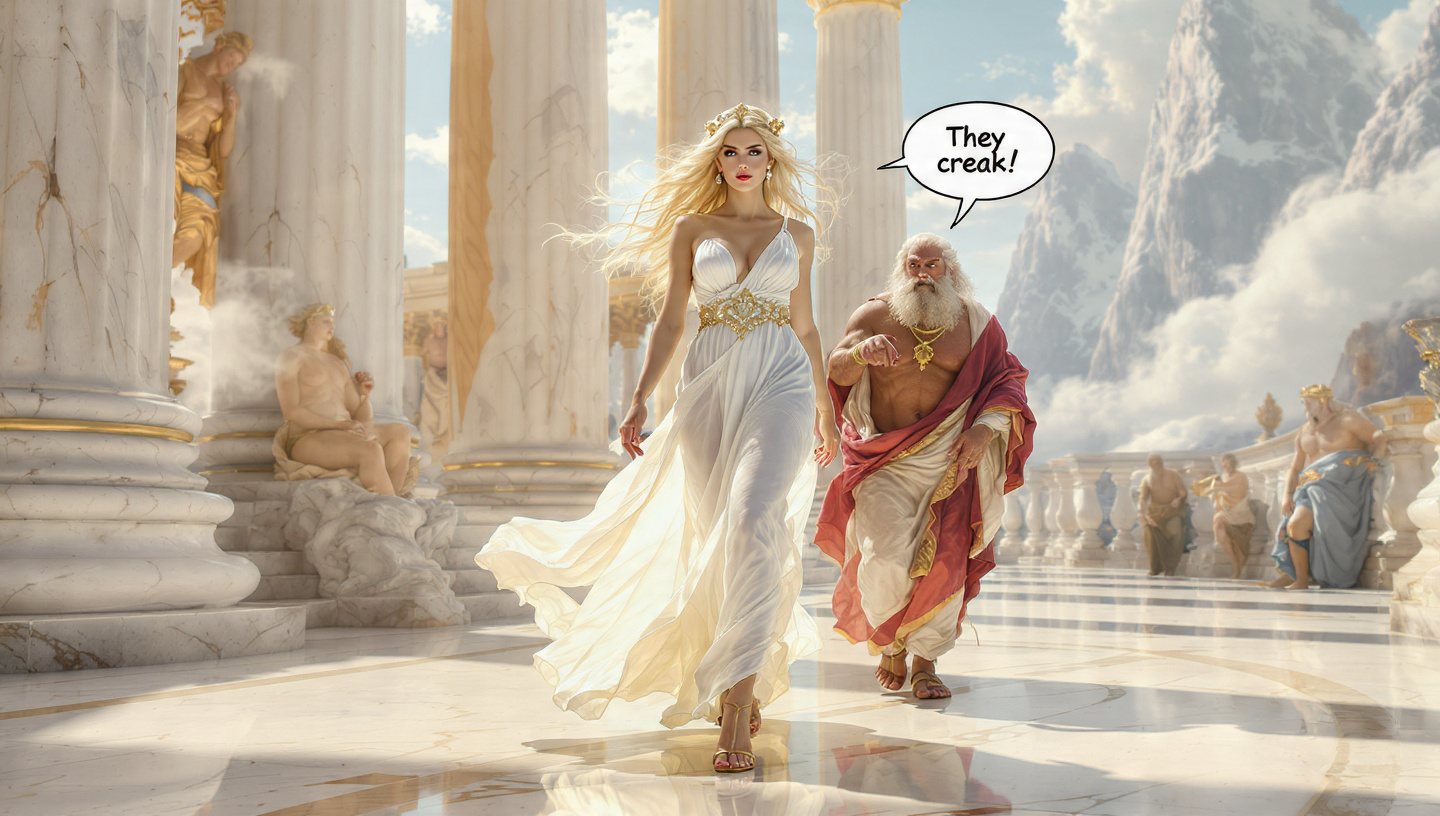
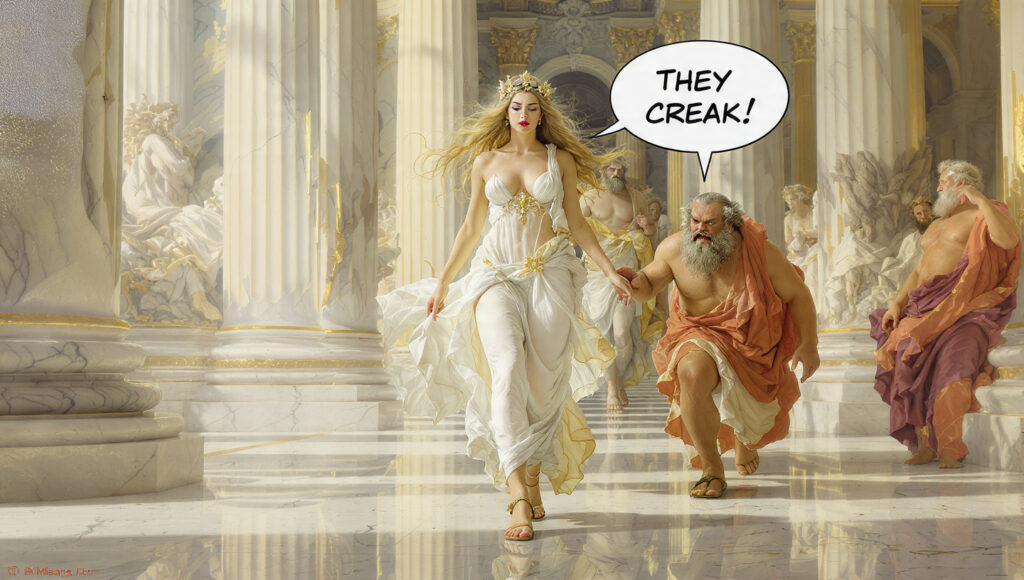
His most famous judgment was directed at Aphrodite. Unable to locate a single flaw in the goddess of beauty, her form, her bearing, the quality of her light, he turned at last to the sound of her sandals as she walked across the marble floor. They creaked, he declared. The most beautiful being in the divine world could be diminished, in the accounting of Momos, by the noise her shoes made on stone.
It was this final critique, its pettiness, its refusal to be satisfied even by perfection, that exhausted the patience of the Olympians. Weary of a perspective that offered only shadow where there was light, they exiled him from Olympus entirely, casting him down to the mortal world where his habit of finding fault would meet a landscape already worn by time, already imperfect by nature, already full of the small failures that give human life its texture and its truth.
The Ethics of the Unfinished
In the culture of Classical Athens, the exile of Momos carried a clear moral weight. It was a recognition that the critical faculty, when it operates without the counterweight of appreciation, becomes a habit of negation, and a habit of negation slowly destroys the capacity to recognize value at all.
The Greeks were not a people who avoided difficult truths or who confused comfort with wisdom. The tradition of honest judgment ran deep in their practice of rhetoric, their philosophy, their theater, and their athletic contests, where failure was public and the standard was absolute. What the myth condemned was something more specific: the gaze that has made criticism its sole occupation and, in doing so, has severed itself from the practice of creation. It is the same exclusion that the tradition preserved in the Symposium, where the disciplined banquet of thought left no place for the corrosive voice of Momos. To find fault in everything is, in the end, to build nothing.
The window in the chest that Momos demanded of Hephaestus is the most telling image in the whole myth. What he sought was the elimination of interiority, the complete exposure of the hidden life, the dismantling of the private self. The Greeks understood privacy and interior depth as conditions of dignity. The concealment of the heart is what makes trust possible, and trust is what makes continuity possible. A world in which everything is visible and nothing is withheld is not a world of greater clarity. It is a world from which the conditions of relationship have been stripped.

The placement of the bull’s horns and the creak of Aphrodite’s sandals follow the same logic. They are observations that are, in isolation, accurate, but that have been elevated by the temperament of Momos into judgments that displace the whole. The bull was powerful. Aphrodite was beautiful. These facts were not diminished by the imperfections Momos identified, but in his accounting they ceased to matter at all. This is the mechanism by which fault-finding becomes a form of blindness: not the inability to see flaws, but the inability to hold a flaw and a whole in the mind at the same time.
Craft, Imperfection, and the Memory of the Hand
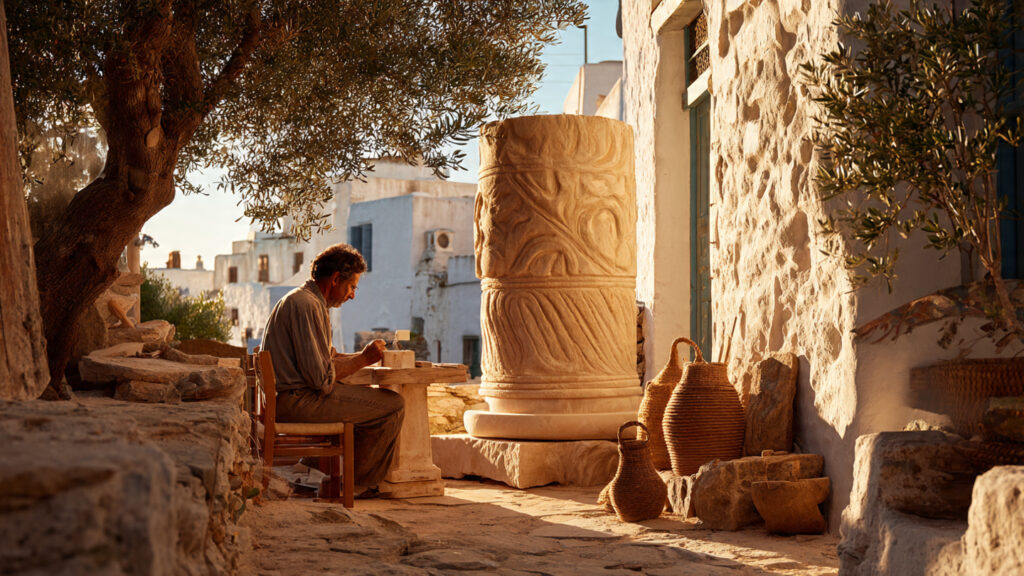
Across the landscape of Greece, the evidence of human craft is inseparable from the evidence of human imperfection. A wall built by hand in the hills above Mycenae does not run perfectly straight. The joints of a handmade Minoan vessel carry the slight asymmetries of the fingers that shaped it. The columns of a provincial temple, raised by craftsmen far from the great centers of architectural refinement, tilt marginally, their proportions adjusted by eye rather than instrument.
These imperfections are the record of the effort, the trace of a human being working in a place and season, with the tools and materials available to them. The creak of Aphrodite’s sandal, read in this light, is not a flaw but evidence of use, of a goddess who walks, who moves through the world, who lives in time and place. Movement makes sound. Craft shows age. The hand that made the thing was mortal, or close enough to mortal that the distinction, in the quality of the work, does not matter.
Momos demanded objects and beings that showed no sign of having existed in the world, no evidence of the friction and passage that constitute a life. That demand, carried far enough, leaves nothing worth looking at, because the wear is not separate from the thing. It is part of how the thing has lived.
The Stoic Inheritance
The Stoic philosophers, writing in the centuries after the height of Greek myth, returned repeatedly to the problem of the critical mind and its relationship to contentment and practice. Central to Stoic thought as it developed in Athens and later spread through the Mediterranean world was the concept of the inner citadel, the interior space that remains one’s own regardless of external circumstance. What threatened the citadel was not hardship from outside but the undisciplined movement of the mind within: its tendency to obsess over what it cannot control, to measure the world against an ideal it has constructed, to find the present moment perpetually insufficient.

The spirit of Momos, in Stoic terms, is precisely this tendency made divine and then expelled, recognized by the tradition itself as incompatible with the conditions of a livable life. The discipline the Stoics advocated was the practice of observing what is present with clarity, distinguishing what lies within one’s own power from what does not, and finding in the ordinary details of the world a quality of attention that nourishes rather than depletes. This is the link between the myth and the philosophy that came after it: both arrive, by different routes, at the same conclusion, that the unexamined hunger for fault is not a sign of superior perception but a failure of one.
The Lasting Mark of the Maker
Momos may have been technically correct about the horns of the bull, the window in the chest, the creak of the sandal. Every observation he made was, on its own terms, accurate. But he left nothing behind. He built no forge, shaped no sea, walked through no hall in sandals that wore down from years of use.
Hephaestus, Poseidon, and Aphrodite are the ones whose work endured, not because their work was flawless, but because they kept making it. The bull still charges. The human form, window-less chest and all, still walks the earth and somehow still manages, against every prediction Momos might have made about its design, to build, to trust, to love, to create things that outlast the maker.
The critic speaks into the air. The maker leaves a mark upon the earth. The myth of Momos does not argue that judgment is worthless. It argues that judgment which has forgotten how to also see the whole, the bull’s strength alongside its horns, the goddess’s beauty alongside her sandals, the human heart’s privacy alongside its capacity for honesty, has stopped being judgment at all. It has become only noise, echoing in a hall that someone else built.
At Olympus Estate, Mythic Essays traces the deeper currents of Greek myth. Momos, son of Night, was exiled from Olympus for finding fault even in perfection, faulting Hephaestus for the human form, Poseidon for his bull, and Aphrodite for the creak of her sandals. The myth endures as one of the sharpest ancient meditations on the difference between honest judgment and the hunger for fault that has lost the capacity to see anything else.