

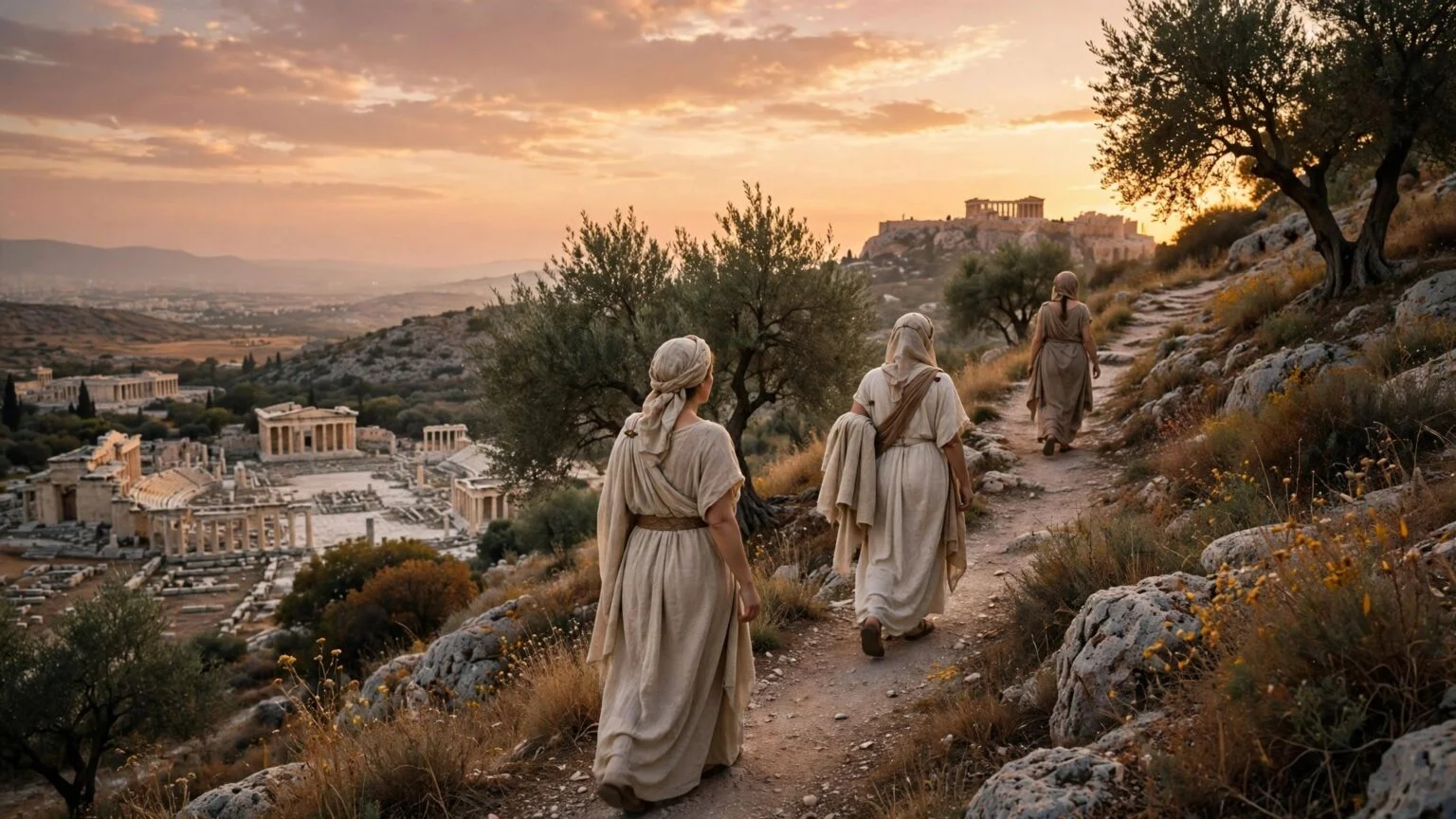
Every October, the women of Athens climbed a hill, and the men were not permitted to follow.
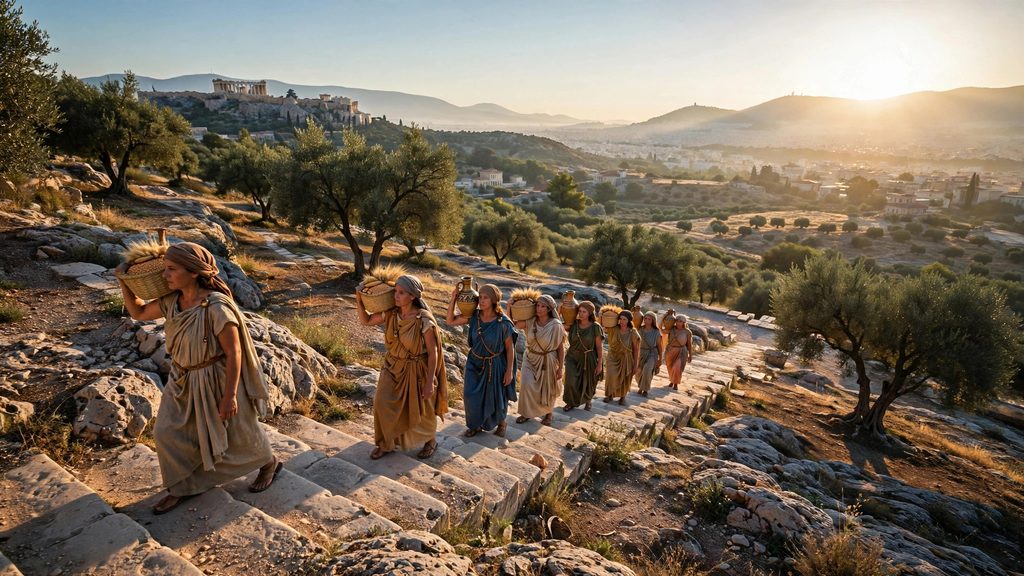
The hill was the Pnyx, the same hill where the Athenian democratic assembly gathered in the open air for the male citizens of Athens to vote on war and peace, to call generals to account, to exercise the most famous participatory democracy the ancient world produced. For three days each October, that same hill belonged to someone else entirely. The citizen wives who were excluded from the assembly, who had no vote and no political standing in the institution that met on this ground, climbed it themselves and set up tents and conducted, without a single man present, the most important religious festival in the Athenian agricultural calendar.
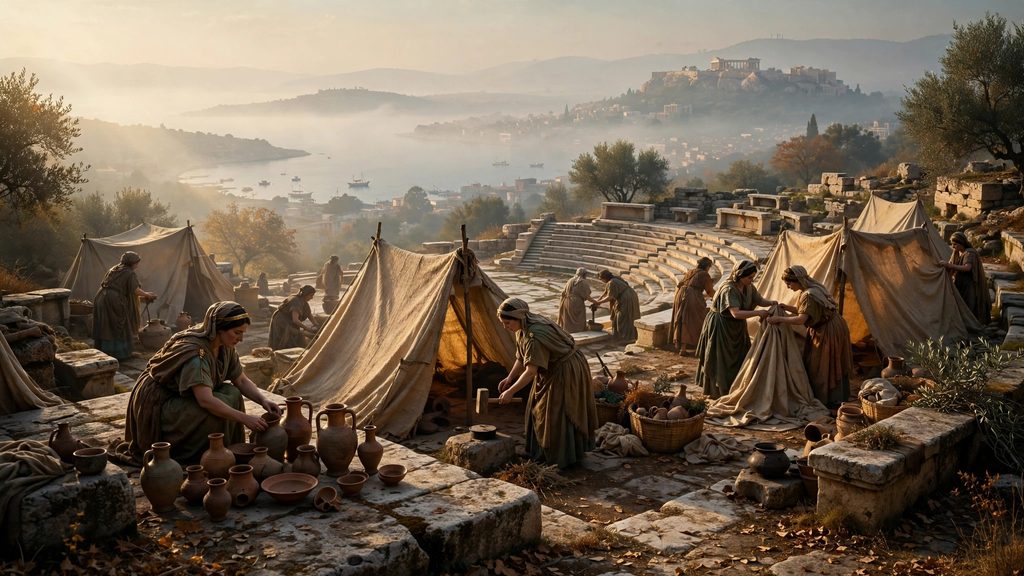
The city’s survival depended on what they did there. Athens could replace a general. It could survive a political faction’s dominance. It could not survive crop failure, the specific agricultural catastrophe the Thesmophoria’s magic was designed to prevent. The women on the hill were not conducting a private devotional. They were doing the work the city needed done, in the only institutional form available for work of this kind, in the three days of every October that Athens had formally set aside for it.
The festival was not unique to Athens. It is attested in more than fifty cities across Greece, Asia Minor, Sicily, southern Italy, and North Africa, the most widely celebrated women’s festival in the ancient Greek world, conducted almost everywhere with the same autumn timing, the same exclusion of men, and the same underlying agricultural purpose.
What the Festival Was Named For
The name Thesmophoria derives from the thesmoi, the deposits, the specific objects brought to the festival, buried in it, and retrieved from it in the agricultural magic that formed the ceremony’s central act. If a farmer mixed a portion of these retrieved remains into his seed corn, the tradition held, he would get a good crop from it, a piece of agrarian magic old enough on its own to suggest the festival’s roots reach back well before the classical Athens that documented it.
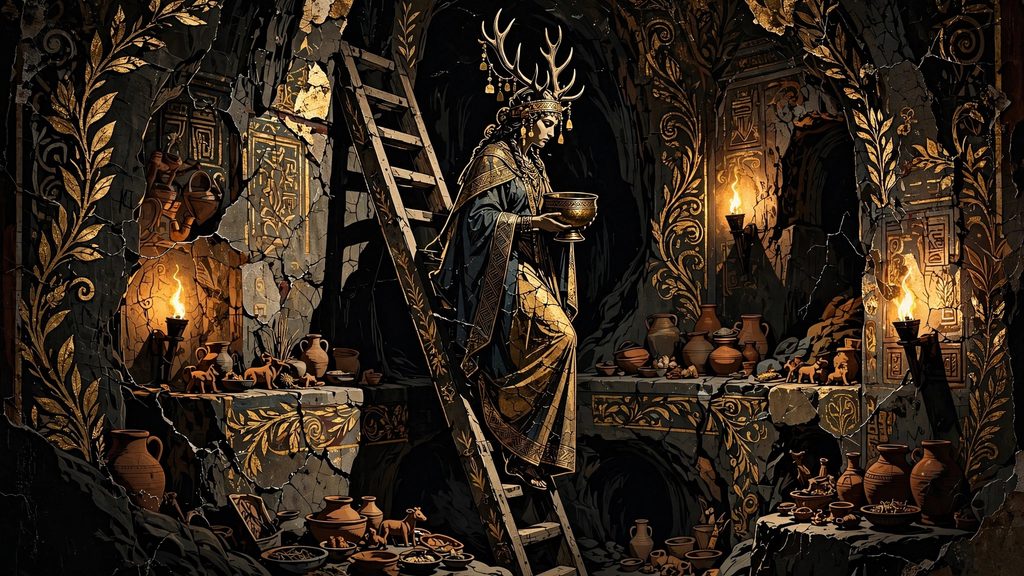
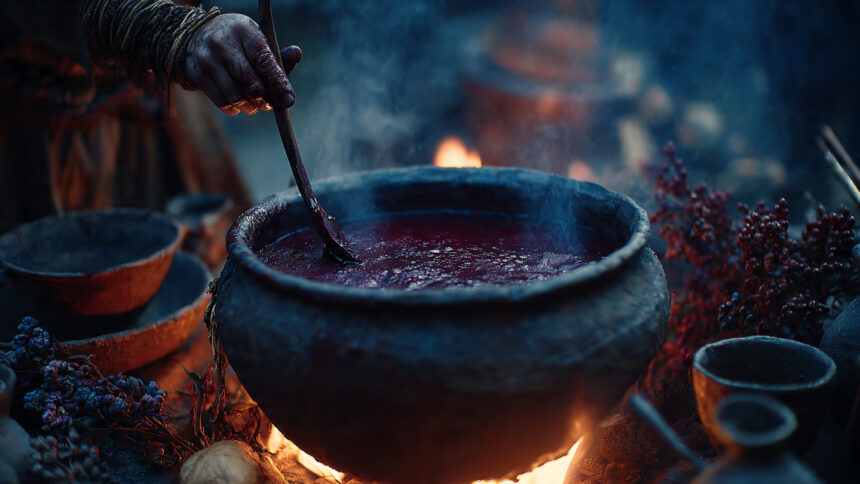
The deposits were the decomposed remains of piglets buried in the previous year’s festival, retrieved by specialized women called the Antleriai, who maintained ritual purity for days beforehand and climbed down into underground pits, the megara, to bring up what the previous year’s women had left there. The piglets themselves were explained by a specific myth: when Persephone was carried away by Hades as she gathered flowers, a swineherd named Eubouleus happened to be grazing his pigs on the same ground, and his animals were swallowed into the same chasm that took the goddess. In his honor, piglets were thrown into Demeter and Persephone’s chasms every year afterward, and the ritual re-enacted that original disappearance, sending the pigs into the ground in the same autumn month Persephone herself descended, and bringing their remains back up the following year.

The agricultural magic and the mythological commemoration were the same act: putting something into the earth and trusting it to come back transformed, the same principle at the heart of Persephone’s own transformation, examined at length elsewhere on this site. The Thesmophoria was, in effect, the public and annual version of what the Eleusinian Mysteries kept as a permanent, sworn secret: the same community of women, addressing the same mythology, without the elaborate initiatory structure the Mysteries required.
The Three Days and Their Logic
In Athens, the festival ran for three days, the eleventh through the thirteenth of the month Pyanepsion, corresponding to late October. Each day performed a distinct ritual function, and the sequence encodes a real theological argument about the relationship between descent, mourning, and renewal.
The first day, Anodos, the ascent, named for the women’s climb to the Thesmophorion on the Pnyx hillside, and simultaneously, in the mythological register the festival operated in at the same time, for Persephone’s own ascent from the underworld. The day the women went up was also the day the goddess came up, and the Antleriai’s descent into the megara to retrieve the previous year’s buried remains enacted the same movement in miniature: descent into the earth, and return.
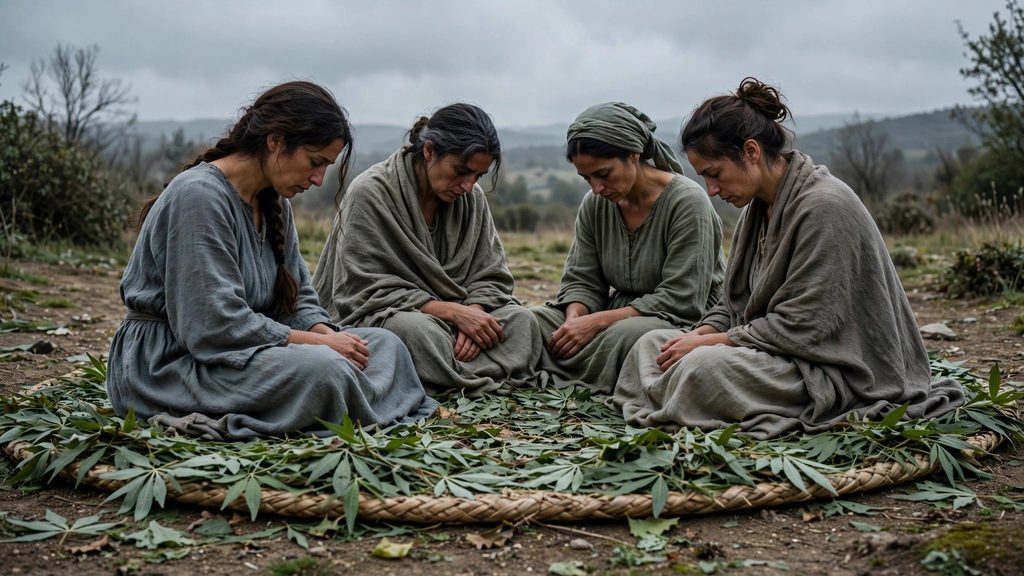
The second day, Nesteia, the fast, was not simple abstinence. It was re-enactment. The women sat on the ground without solid food, doing what Demeter herself had done when she abandoned Olympus and wandered the earth in grief, refusing to eat, refusing to return to her divine functions, sitting in mourning rather than tending the grain. They sat specifically on woven agnus castus, the chaste tree, whose leaves carried a traditional association with the suppression of sexual desire. The fast being enacted was not only a fast from food. It was a fast from the body’s ordinary pleasures altogether, eating and sexuality both, the same pleasures Demeter’s grief had made inaccessible to her. This is what distinguished the Thesmophoria from a commemorative ceremony: it was not a performance about Demeter’s mourning. It was that mourning, enacted in the bodies of women sitting on the same hill where their husbands, in other months, voted on the city’s political life without them. The festival did not resolve that juxtaposition. It simply inhabited it, for three days, every year.
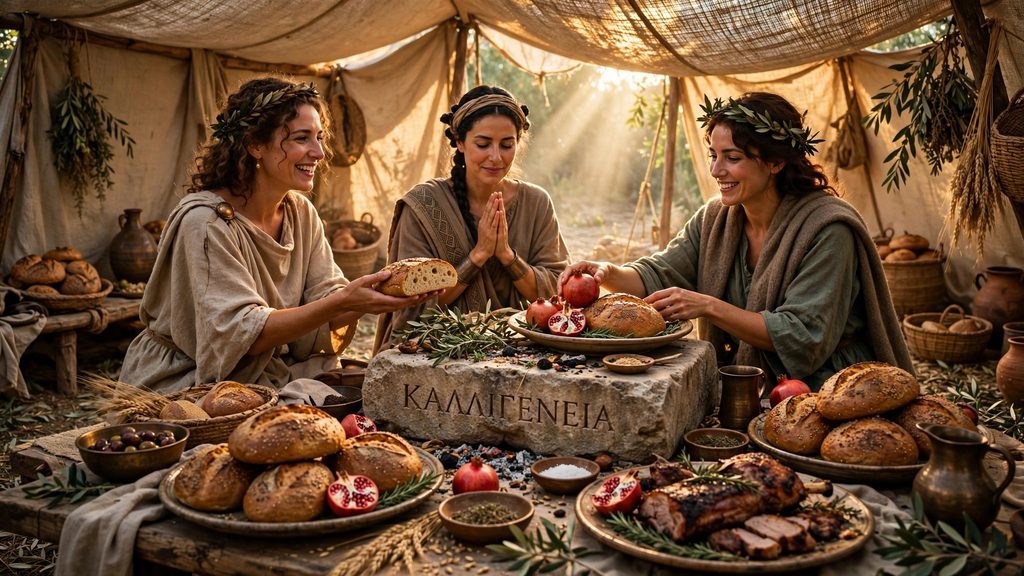
The third day, Kalligeneia, the beautiful birth, marked the turn from Demeter’s grief to her recovery, the same arc Persephone’s own return encodes, from the withdrawal of the earth’s fertility to its restoration. The women who had sat without food now feasted and prayed to Kalligeneia, an Eleusinian nurse of Demeter, for their own fertility. Athenian law required a husband with a fortune of three talents to provide the dinner his wife would take to this feast, the clearest legal acknowledgment of what was actually happening on the hill: a city that formally excluded women from political governance formally required their husbands to fund the religious work whose failure would cost that same city its harvest.
The Ritual Obscenity and What It Was For
At least part of the festival was carried out by torchlight and accompanied by aischrologia, ritual obscenity among the women, a practice modern accounts consistently handle with visible discomfort, either omitting it or noting it as a scholarly footnote that would rather be elsewhere. It deserves its full treatment, because its theological logic is precise and runs directly through the festival’s own central myth.
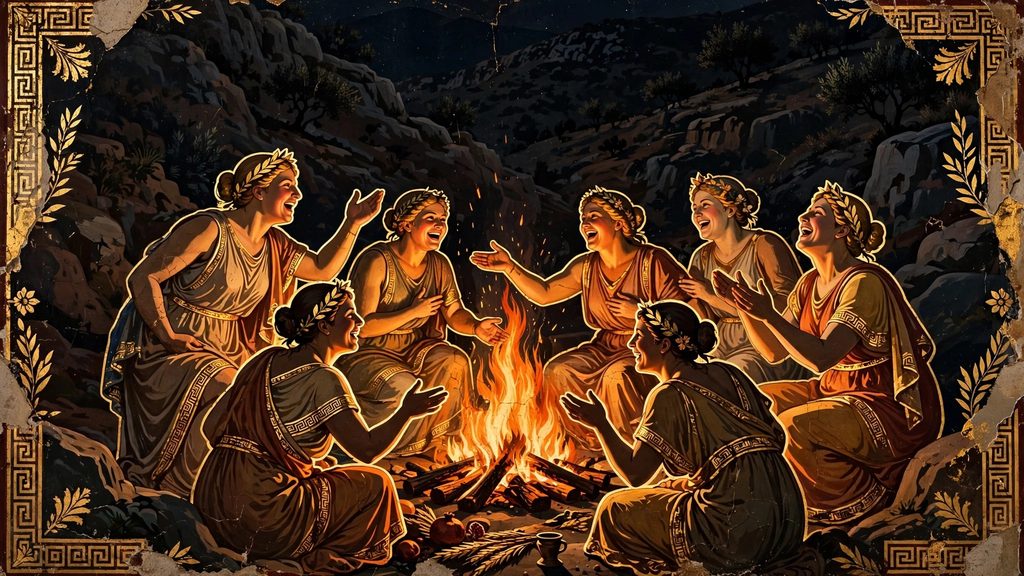
The explanation the ancient sources give runs through the story of Iambe. When Demeter, grieving and wandering, arrived at the court of King Celeus at Eleusis, she refused food and refused to speak, locked in the silence of her grief. A servant woman named Iambe made her laugh with obscene jokes, and the laugh broke the silence. The goddess who had been refusing every ordinary pleasure accepted, through that specific portal of laughter, her first re-entry into the world’s ordinary life. The women of the Thesmophoria ended their own fast with the same kind of derisive language, in direct imitation of Iambe: the same joke that had broken Demeter’s grief, told again, by the same community of women enacting her story, at the same point in the ritual sequence, for the same purpose. Laughter as the end of mourning. Obscenity as the portal back into the body’s pleasures after the fast, the grief, and the sitting on the ground.
Who Was There and Who Was Not
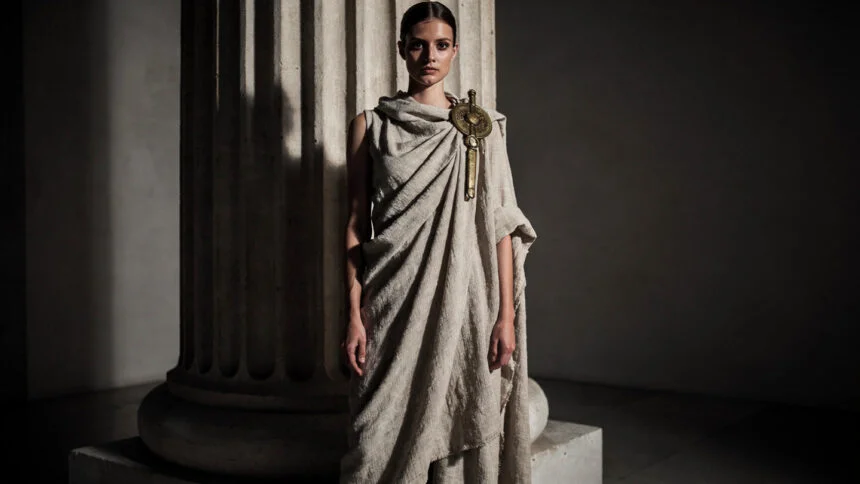
The Thesmophoria was not a festival for women in general. It was restricted specifically to the married wives of Athenian citizens, the women whose social function was the reproduction of the citizen body, whose management of the household economy was the domestic complement to their husbands’ management of the civic one.
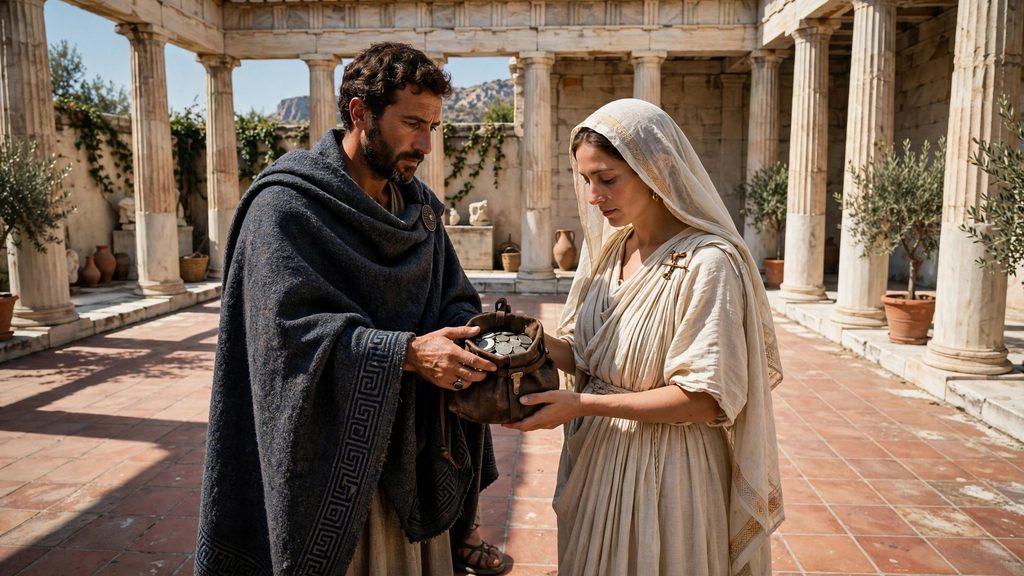
The same legal and social category that confined these women to the household was the category that gave them their authority in the Thesmophoria. As the women responsible for producing citizens, they were held responsible for the fertility magic the festival enacted, agricultural and human fertility treated as the same domain, governed by the same goddess, on the same hill where their husbands exercised the political authority denied to them by that same legal framework. The men who voted on the Pnyx could decide to go to war. The women who camped on it in October decided, in the terms the culture itself accepted, whether the grain would grow.
Aristophanes and the Question of Mockery
The Thesmophoria was significant enough in Athenian civic life that Aristophanes built an entire comedy around it, the Thesmophoriazusae, performed in 411 BCE, in which a man disguises himself as a woman specifically to infiltrate the festival and report on what happens there.
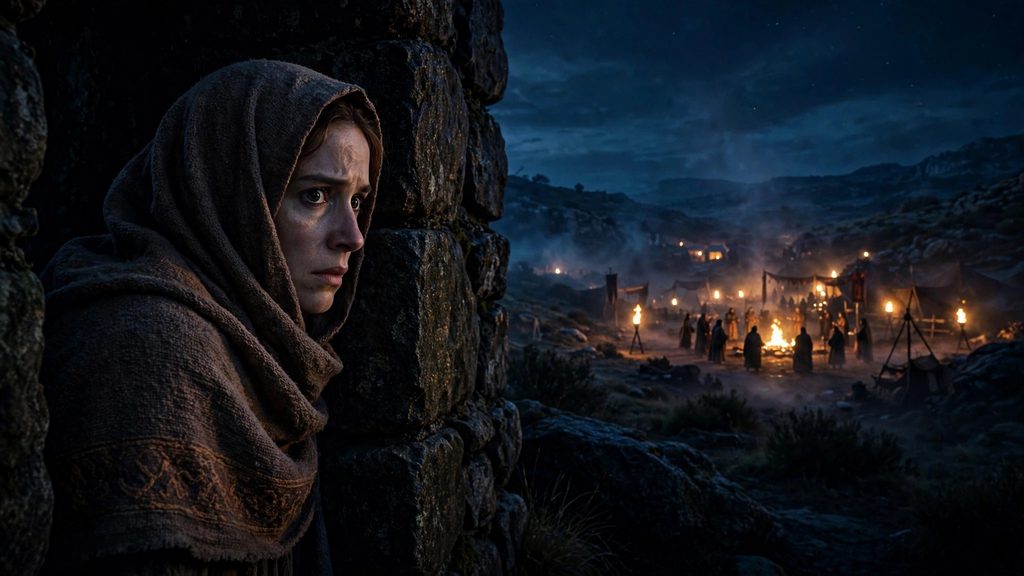
The play’s premise is exactly what the festival’s rules forbade: male access to the women’s ritual space. Whatever Aristophanes invented for comic purposes, the theatrical premise depended on the audience believing the festival was genuinely closed, genuinely conducted without male observation, genuinely producing rites the women on the hill kept to themselves. The comedy is the only surviving literary description of the festival’s proceedings from a source close enough in time and place to have known something real about it. It is also the only surviving literary description written by a man who was not actually there. Both facts have to be held at once.
What the Women Kept
The ancient sources are unusually candid about how little they actually know. The Thesmophoria was not a mystery religion in the formal sense of Eleusis, with sworn initiates bound to permanent silence about what they had seen. But its exclusion of men meant its proceedings were known to women and transmitted by women, while the surviving literary record was produced almost entirely by men who had no access to any of it.
What survives: the three days and their names, the fasting and the feasting, the piglets and the megara, the ritual obscenity in imitation of Iambe, the temporary encampment on the Pnyx, the husband’s legal obligation to provision the feast. What does not survive, whether because it was never recorded or because the women who knew it chose not to write it down: what was actually said in the tents over those three days, what the prayers to Kalligeneia actually contained, what the women understood themselves to be accomplishing that their husbands could not have accomplished without them. This is a real gap in the historical record, not one that any amount of careful scholarship can fully close, and the honest account of the Thesmophoria says so rather than presenting a completeness the evidence doesn’t support.
October Still
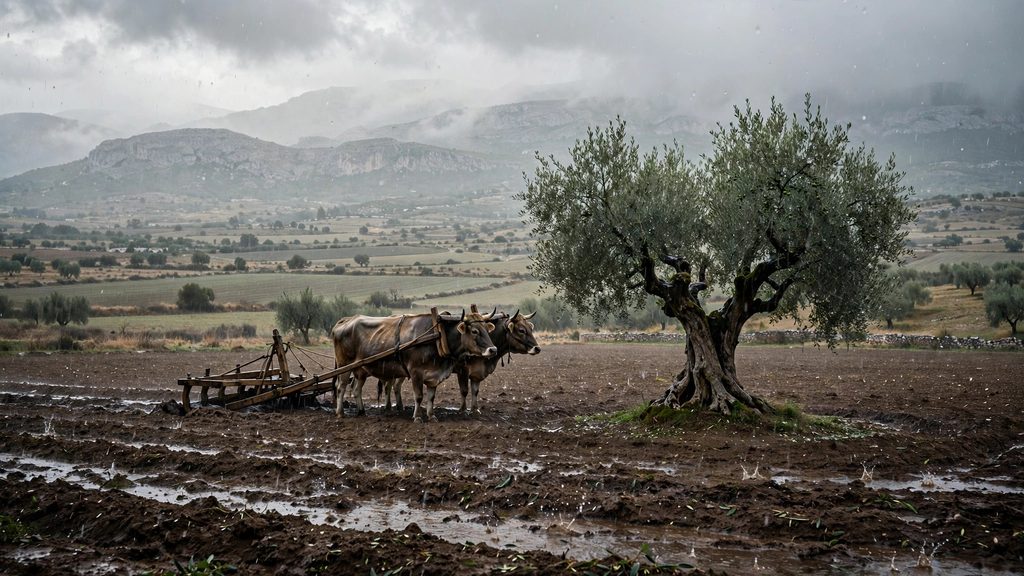
The eleventh to the thirteenth of Pyanepsion corresponds, in the modern calendar, to the same October moment when the autumn rains arrive in central Greece, when the ground softens after the summer drought, when the ploughing season is about to begin, the same agricultural turning point examined from a different angle in this site’s own account of how Demeter’s calendar survived into the modern Greek year, and in its companion piece on the Byzantine grain tradition that carried the same calendar through winter. The agricultural moment that required the Thesmophoria in the fifth century BCE still arrives every year, the same first rains, the same softened earth, the same ground opening for a seed that will spend the winter in it.
The Pnyx still stands above Athens. The exact location of its Thesmophorion remains debated among scholars, but the women who camped there each October occupied the same ground where the democratic assembly met and from which they were formally excluded. That juxtaposition has not resolved itself across two and a half thousand years. The hill is now a monument to both the democracy and its exclusions, and the specific tension between political authority and domestic confinement that the Thesmophoria navigated is still visible in the gap between what the hill commemorates today and what actually happened on it every October.
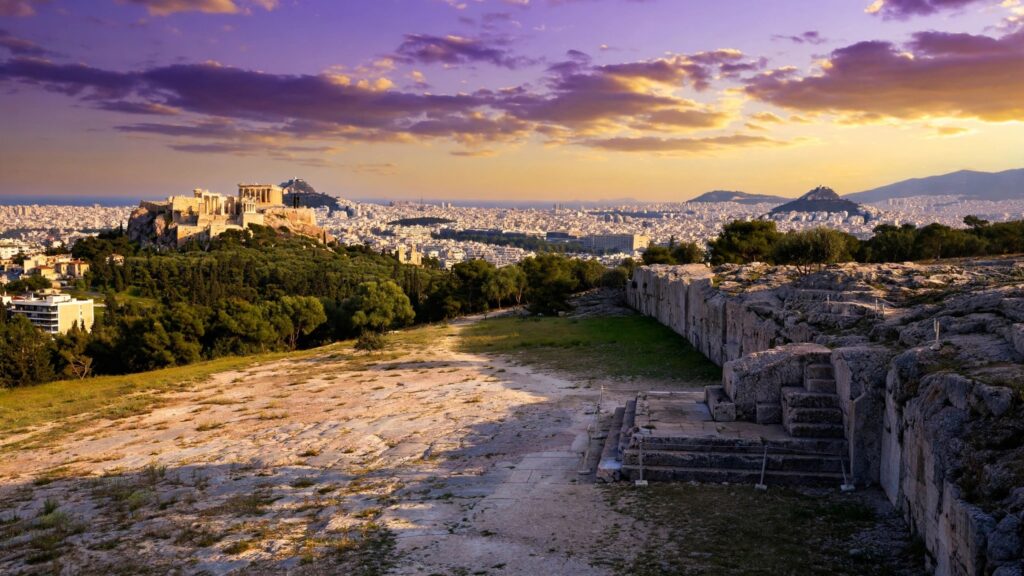
The piglets went into the earth and came back mixed with grain. Demeter fasted and was made to laugh. The seed went into the ground and came back as harvest. The women climbed the hill, descended, returned to their households, and the city ate. This was the governance the Thesmophoria enacted, not the governance of war and political faction that the men managed on the same hill in other months, but the governance of the earth’s fertility and the city’s food supply, managed by women, without the men, for the three days that Athens had formally decided the hill belonged to someone else.
At Olympus Estate, Cultural Chronicles gathers the rituals, festivals, and ancestral memory that shape the Hellenic world. For three days each October, the wives of Athenian citizens climbed the Pnyx, the same hill where their husbands voted on war and peace, and conducted the most important women’s festival in the Greek world entirely without men. The Thesmophoria’s rites, buried piglets retrieved a year later and mixed into seed corn, a day of fasting on chaste-tree branches in imitation of Demeter’s grief, obscene jokes told in memory of the servant Iambe who once made the goddess laugh, enacted the agricultural magic the city’s harvest depended on. Athenian law required husbands to fund the feast their wives could not otherwise attend, a legal acknowledgment of exactly what was at stake. The festival’s proceedings were kept by women and recorded almost entirely by men who were never there, a gap in the record this account treats honestly rather than filling in with invented certainty.