
The fifteenth of August is the most important day in the Greek religious year after Easter.
This is not a claim about theology, which would place Easter first by an enormous margin and the Dormition of the Theotokos second by the logic of Orthodox liturgical hierarchy. It is a claim about lived experience across Greece and the diaspora: the day when more Greeks are in church, more villages hold their panigyria, more family reunions happen, and more of the combination of religious solemnity and communal celebration that defines the Greek Orthodox calendar concentrates into a single date than at any other point in the year outside Holy Week and the Anastasi.
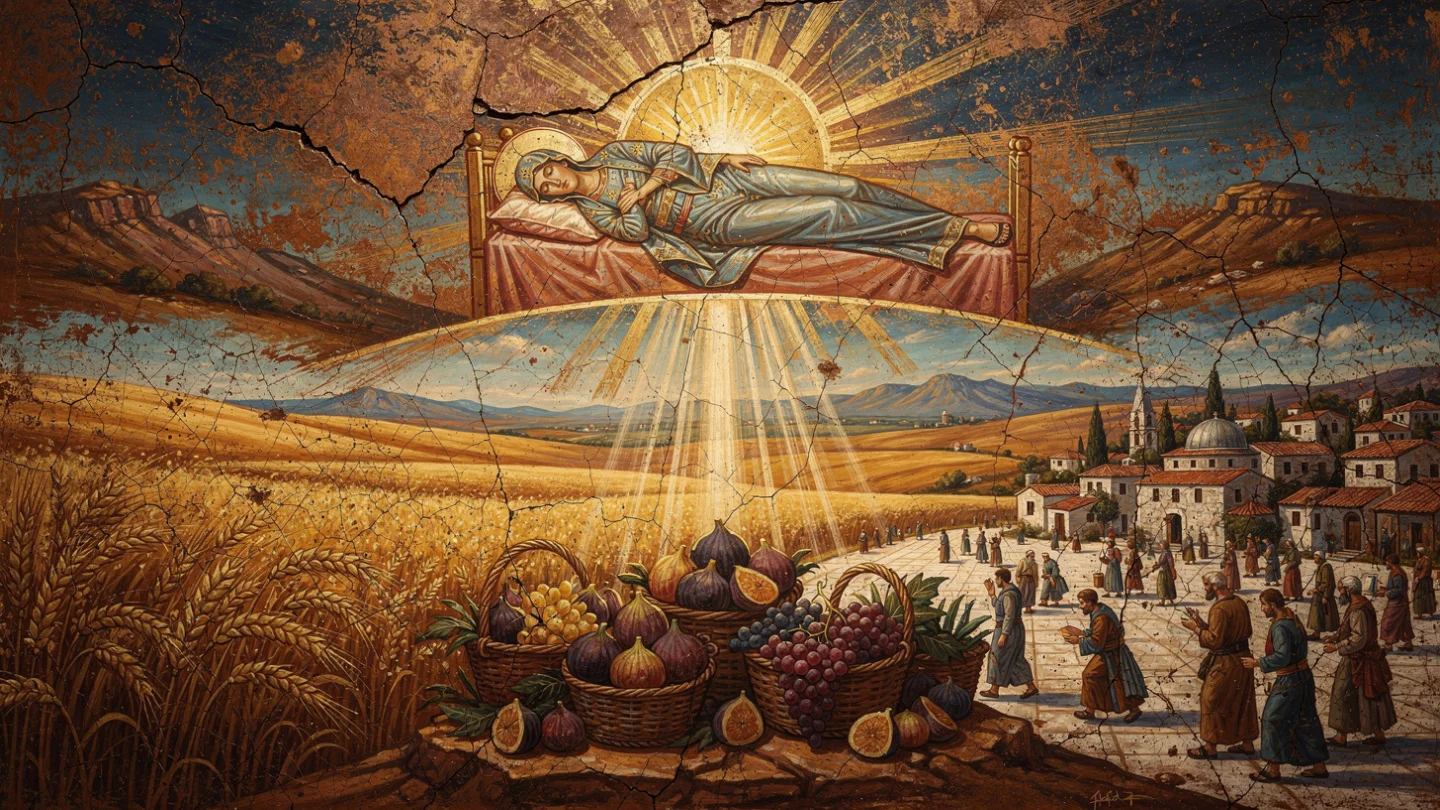
The Koimisis tis Theotokou, the Dormition of the Theotokos, commemorates the death, or the falling asleep, as the Orthodox term koimisis literally means, and the assumption of the Virgin Mary into heaven. Orthodox understanding of the event differs from the Roman Catholic Assumption: Orthodoxy never defined the Dormition dogmatically the way Catholicism defined the Assumption in 1950, and the feast in the Orthodox calendar treats the complete event, Mary’s death and her bodily reception into heaven, as the natural consequence of her status as Theotokos, God-bearer, the woman whose role in the incarnation carries the glorification the feast celebrates.
The feast’s timing, August 15th, the height of the Greek summer, the moment when the grain harvest is complete and the first figs and grapes begin to ripen, connects this Christian feast directly to the agricultural calendar ancient Greece placed under Demeter‘s management.
The same seasonal rhythm the Persephone myth encodes governs this feast’s placement: the cycle of descent and return that structured the ancient understanding of why the earth yields and withdraws in turn.
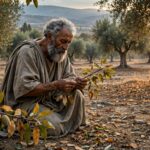
This same theological calendar governed far more than a single feast day, shaping even how ordinary households preserved grain for winter.
The Calendar That Did Not Change
The Greek agricultural calendar has organized itself around the same seasonal moments for as long as farming has existed in the Aegean landscape, and the religious occasions built around those moments have changed their theological content entirely while keeping their calendar position fixed, straight through the transition from ancient practice to Byzantine Christianity to the contemporary Orthodox calendar.
The Lent and Easter article in this collection develops the most complete surviving example of this continuity: the ancient Anthesteria festival of the dead and the Thesmophoria harvest festival of Demeter, both built around agricultural calendar moments the Orthodox fasting calendar and Easter feast would later occupy, are ancient occasions whose ritual character Byzantine Christianity absorbed and transformed while leaving the underlying calendar structure untouched.
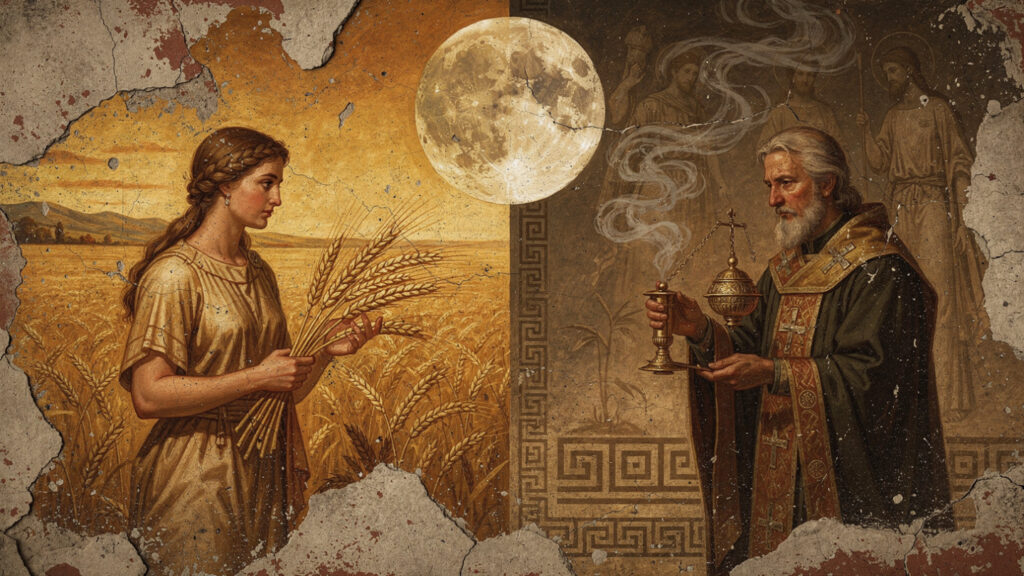
The August 15th feast occupies exactly the moment of the agricultural year ancient practice identified for the first-fruits offering: the grain harvest complete, summer heat at its peak, figs and grapes just beginning to ripen, the transitional moment between summer’s height and the approaching autumn harvest the ripening fruit already signals. The ancient first-fruits offerings of the Thargelia and the Proerosia, festivals whose whole ritual content was offering the harvest’s first products to whichever deities governed its success, occupied precisely the calendar position the August 15th feast now occupies.
Blessing the first figs and grapes at the August 15th liturgy is the contemporary form of that ancient first-fruits offering, an agricultural logic unchanged across three thousand years of Greek farming: the ripening harvest’s first products are brought to sacred space and offered to whatever divine presence’s blessing secures the abundance those first fruits announce. The deity receiving the offering has changed. The offering itself has not.
This is not the superficial continuity of a casual comparison, the mere observation that both ancient and modern Greeks brought agricultural products to sacred spaces. It is the continuity of a calendar structure agricultural reality itself imposes: the harvest happens when the harvest happens, and whatever religious occasion gets built around that calendar moment occupies it regardless of which theology happens to be managing the occasion at the time.
Tinos and the Miraculous Icon
The Tinos pilgrimage is the most significant Marian pilgrimage in Greece and among the most significant anywhere in the Orthodox world, and its combination of healing sanctuary, national votive offering site, and a discovery story tied directly to the Greek War of Independence gives it a depth standard pilgrimage-destination descriptions rarely convey.
The icon of Panagia Evangelistria was discovered in 1823, following a vision the nun Pelagia experienced that directed excavation of a specific spot on the island, where the icon turned up buried beneath the ruins of an earlier church. The discovery happened during the Greek War of Independence, two years into the uprising against Ottoman rule, and the national significance of a miraculous discovery at exactly that moment gave the Tinos icon its particular resonance as a symbol of divine support for the national cause: the Panagia who appeared to Pelagia and directed the finding of her own buried icon was understood as the heavenly protector of the Greek nation at its moment of greatest danger.
The August 15th pilgrimage concentrates roughly one million visitors on an island whose permanent population runs around eight thousand, a demographic intensity that requires real organization, ferry schedules, overnight crowds sleeping on the harbor’s marble pavement, a constant procession from harbor to church up the marble-paved street pilgrims cross on their knees, just to keep the island’s infrastructure from being completely overwhelmed.
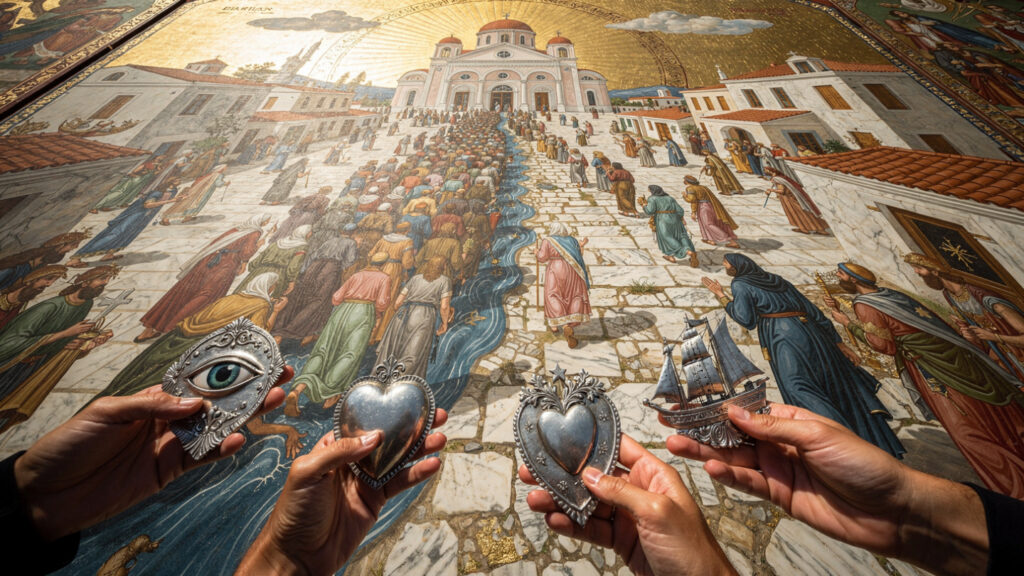
Pilgrims crawl on their knees from the harbor to the church of Evangelistria, roughly four hundred meters up a steep, marble-paved street, the physical difficulty of the act being the whole content of the devotion: a body crawling four hundred meters of marble under the August sun has accepted physical cost as the expression of an urgency that cost itself demonstrates. The votive offerings lining the church’s interior, silver and gold ex-votos shaped like eyes, hearts, ships, infants, limbs, houses, and cars, form a material archive of individual human catastrophes their owners believed the icon’s intervention had resolved.
The healing-sanctuary practice Tinos maintains has a real ancient Greek precedent in the Asclepion, the healing sanctuary where the sick came to sleep and receive divine healing through the dream incubation the Oropos Amphiaraus article in this collection develops. The ancient Asclepion and the contemporary Tinos pilgrimage are not the same institution: their theological frameworks differ completely, their understanding of the healing mechanism differs, and the divine beings invoked are entirely different. But the human need that brings someone with an untreatable illness, a lost child, or a sinking ship to the sacred site where divine presence feels most concentrated and most available is the same need across the three thousand years separating the two.
The Panigyria and the Village Feast
The panigyri, a village festival built around a local church’s patron saint or one of the Orthodox calendar’s major feasts, reaches its widest and most communally intensive expression anywhere in the Greek religious calendar on August 15th.
Nearly every village in Greece, and a significant share of city neighborhoods, has a church dedicated to the Panagia, and August 15th is when every one of those churches holds its panigyri. The feast coincides with school summer holidays and with the traditional month Greek urban workers take their annual leave and return to their family villages, which makes August 15th the single date a village is most fully populated by its own diaspora: Athens residents who have returned to their Cretan, Epirot, Macedonian, or island village for the summer are exactly who fills the village church at the August 15th liturgy and stays on for the panigyri that follows.
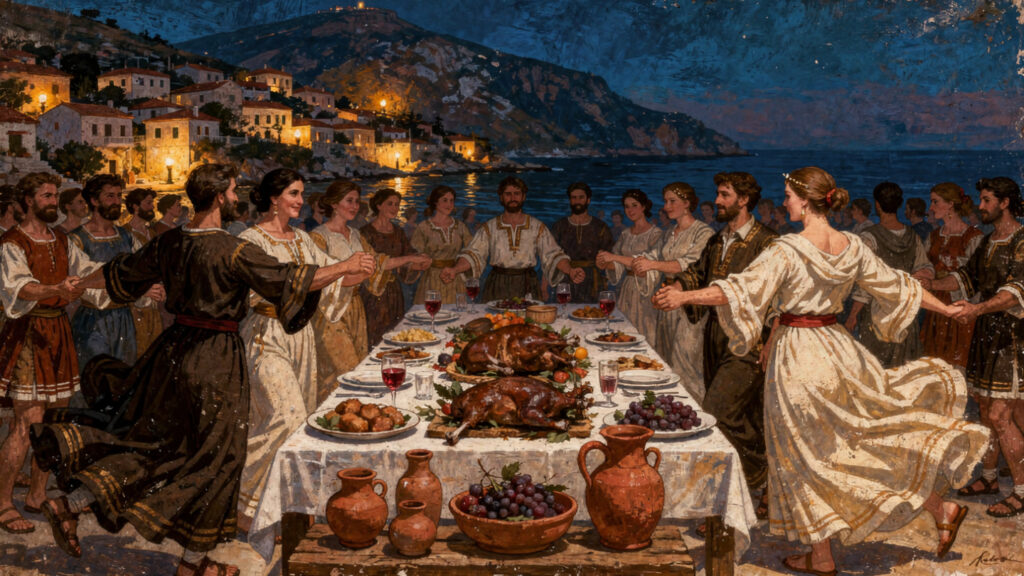
The panigyri’s own structure, liturgy followed by communal meal, communal meal followed by music and dancing that runs through the night, matches exactly the sequence the ancient symposion, which the dining article in this collection develops, identified as sacred meal followed by communal celebration: sacred eating in the divine presence, followed by the communal drinking and music that presence sanctioned. The August panigyri is the contemporary form of the oldest style of communal religious celebration in the Greek world, built around the identical sequence of sacred meal and communal celebration ancient festivals maintained.
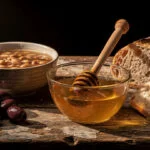
The panigyri’s food reflects the agricultural moment directly: roast lamb or goat, fresh figs, the first grapes, local cheeses, local wine, and the region’s own tsipouro or raki. Blessing the first figs at the liturgy, whose ancient parallel in the first-fruits offering the previous section develops, is followed by eating those same figs at the feast: the blessed first fruits of the harvest enter the community through this same sequence of offering and communal consumption.
The Kefalonia Serpents
The single most unusual religious phenomenon connected to the August 15th celebrations in Greece is the appearance of snakes at the village of Markopoulo on Kefalonia.
Every year, in the days before and during the August 15th feast, small snakes with cross-shaped markings on their heads appear in and around the church of Panagia Fidousa, the Virgin of the Snakes, at Markopoulo. They move through the church during the liturgy, climb the icon of the Panagia, are handled by the congregation without aggression, and disappear once the feast concludes. In years when the snakes fail to appear, local interpretation reads their absence as a sign of coming misfortune.
The snake’s religious significance in ancient Greek practice is exactly what the Hekate and sacred sites articles in this collection develop from multiple angles: the snake as symbol of the chthonic, the underworld, the boundary between the living and the dead, a creature whose periodic skin-shedding made it the ancient emblem of a renewal that had to pass through the old form’s apparent death before a new form could emerge. Asclepius’s sanctuaries kept sacred snakes. The Erechtheion on the Athenian Acropolis housed the sacred snake of Erechtheus. The snake in ancient sacred space was the material presence of the chthonic divine that space existed to manage.
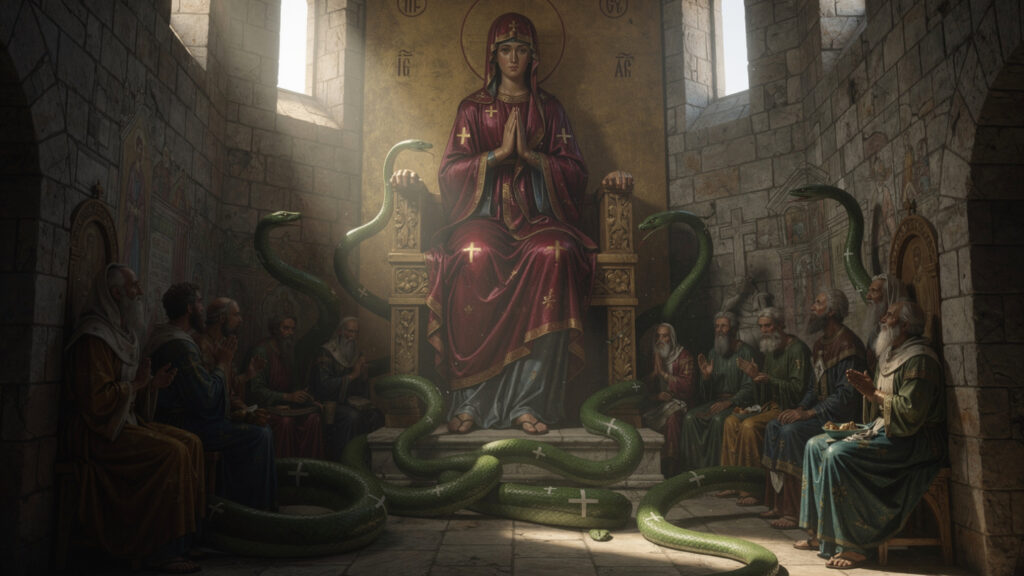
The Markopoulo snakes belong to Telescopus fallax, the cat snake, a non-venomous species whose distribution across the Ionian islands and whose docile behavior when handled together give the annual appearance its particular character: snakes that don’t bite, that move through a church mid-liturgy, that climb an icon and let a congregation handle them, are behaving unusually enough, in exactly this timing and this location, for the community observing it to read the whole combination as a genuinely miraculous phenomenon.
Local legend connects the snake phenomenon to the Panagia through a story about an earlier church on the same site, attacked by pirates, whose nuns prayed to the Panagia for protection and were transformed into snakes to escape, their annual return to the church site read as the transformed nuns returning to the site of their own prayer and transformation. This legend uses the same transformation-narrative mechanism ancient religion used to explain unusual animals appearing at sacred sites.
An honest account of the Markopoulo snakes needs no choice between miraculous and purely naturalistic explanation. The snakes appear. The timing is consistent. The behavior is well documented. Local interpretation of their appearance and absence belongs to a community whose sacred geography includes this annual visitation as a genuine part of the August 15th feast. Whether the phenomenon is miraculous, naturalistic, or some combination the available categories don’t fully capture is a question the annual appearance doesn’t answer and doesn’t need to. The community that handles these snakes during the liturgy and reads their absence as an omen has been doing exactly this for longer than any documentary record extends.
The Mountain Dormitions and the Island Dormitions
The geographic variety of August 15th celebrations across Greece reflects the different regional cultures the feast draws together.
Island celebrations, most concentrated at Tinos but present throughout the Cyclades, the Ionian islands, and the Dodecanese, carry the character of a maritime religious culture whose relationship to the sea gives the Panagia’s role as protector of sailors its most direct local expression: the August 15th vigil in an island church whose icon faces the harbor and the sea is exactly what fishing and maritime communities have organized around, a request for protection from the element their daily life most directly confronts.
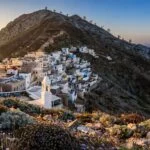
In Olympos on Karpathos the feast is also a homecoming, as families return from Athens and America and the square fills with the slow Kato Choro.
Mountain celebrations, most complete in Epirus, the Pindus villages, and the mountain communities of the Peloponnese and Crete, carry the character of a transhumant pastoral culture whose August calendar moment marks the return from summer mountain pastures: shepherds who had moved their flocks to high summer grazing in June were returning by August, and the August 15th feast became the calendar marker for that return, its communal celebration organizing the community’s own reassembly after summer’s pastoral dispersal.
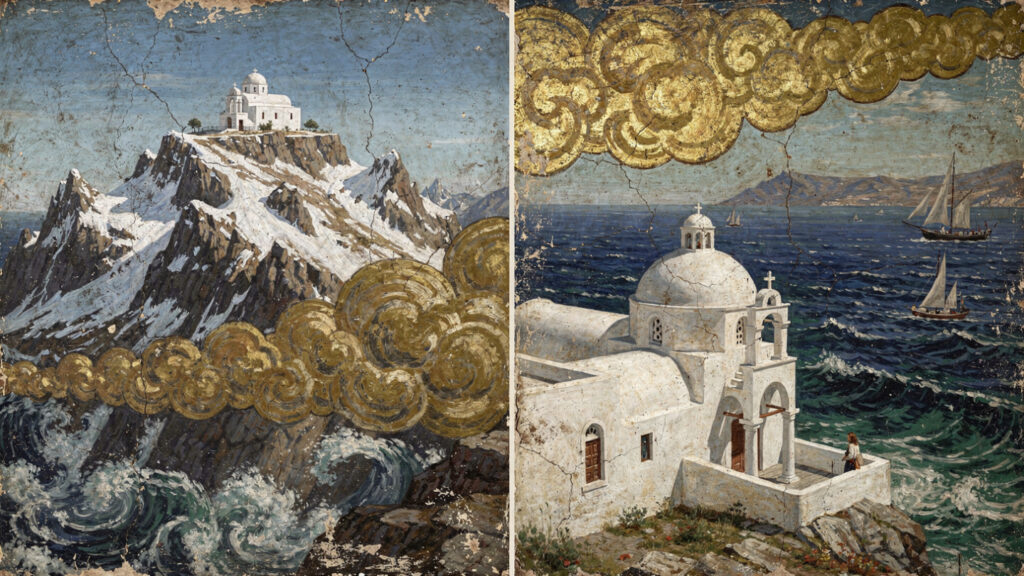
Mount Olympus’s own August 15th celebration, a pilgrimage to the chapel of the Prophet Elijah at the mountain’s highest accessible point, combines a mountain pilgrimage with the Panagia feast to give it the most dramatic landscape expression of any version of this feast: pilgrims climbing to the highest point of Greece’s highest mountain on the Panagia’s own feast day are performing an act of devotion whose physical difficulty is the devotion itself, in exactly the way Tinos pilgrims crawling on their knees up the marble street perform an act whose physical cost is the devotion’s own expression.
What the Fifteenth of August Is
The fifteenth of August in Greece is the date when the most ancient and the most contemporary dimensions of Greek religious life are simultaneously present in the same occasion.
The ancient dimension is the agricultural calendar moment the feast occupies: the first-fruits offering at the height of summer harvest, the communal feast following the sacred meal, the all-night celebration whose continuity with the ancient panegyris the word itself still preserves, the combination of solemn and festive that ancient festival practice had already developed as the right expression of a community’s gratitude for the divine abundance the harvest represented.
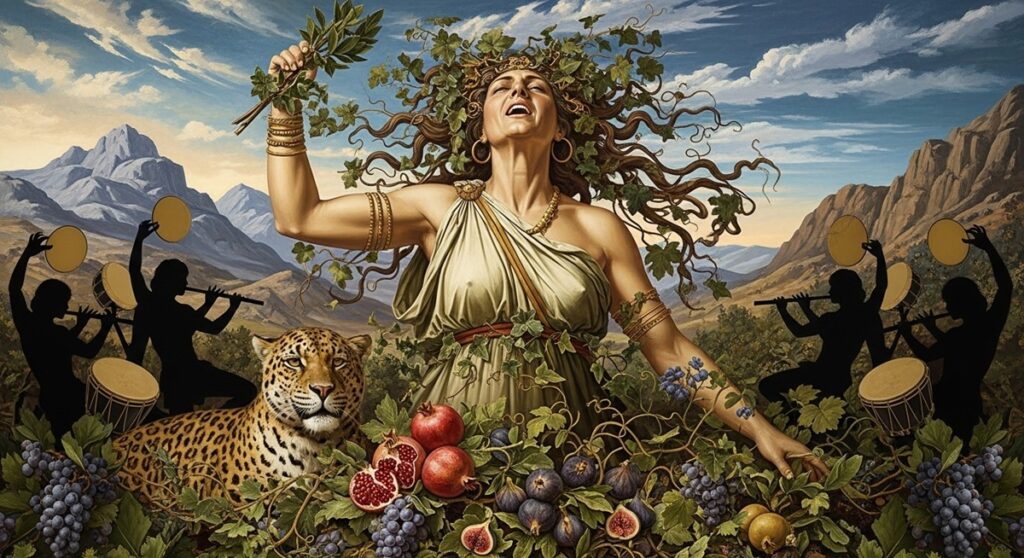
The contemporary dimension is Orthodox theology’s own understanding of the Theotokos, the human person whose fiat, whose yes to the Annunciation, made the incarnation possible: the woman whose willingness gave the incarnation its condition, and whose role in it earned her the relationship to the divine the Dormition feast celebrates, giving the ancient maternal divine figure her contemporary Orthodox expression.
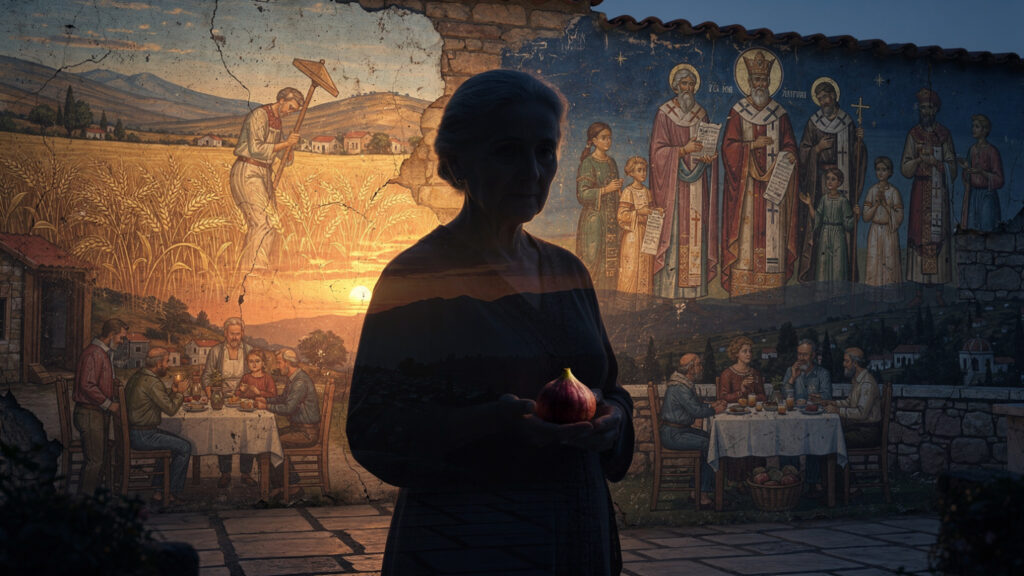
The Greek who attends the August 15th liturgy in their family village, receives the blessed figs and grapes after the service, joins the panigyri feast and the dancing that follows, and looks out from the village square at the summer evening’s landscape, is inhabiting three thousand years of continuous religious practice built around the same calendar moment and the same human need at once: the need to acknowledge the divine presence in the abundance summer has produced and autumn will complete, expressed through communal celebration, shared eating, shared music, shared dancing, all of it the community’s own gratitude expressed in the medium of the community’s own existence.
The calendar did not change. The acknowledgment did not change. The medium changed. The divine name changed. The theology changed entirely. And the August 15th panigyri, with its blessed figs, its roast lamb, its music running through the night, is what that continuity looks like when you actually attend it rather than just reading about it.
At Olympus Estate, Cultural Chronicles traces the practices and institutions that defined Greek civilization from the inside. The fifteenth of August is the most important day in the Greek religious year after Easter. The blessing of the first figs at the liturgy is the contemporary expression of the ancient first-fruits offering whose agricultural logic has not changed in three thousand years. Approximately one million people come to Tinos, population eight thousand, for the pilgrimage. The pilgrims who crawl on their knees up the marble street in the August sun are the pilgrims whose physical cost is the devotion’s content. The snakes appear at Markopoulo every year before and during the feast and disappear after it. The panigyri ends at dawn. The calendar did not change.