




Smyrna is now Izmir, and the people who cooked this dish in Smyrna are gone from there.
The exchange of populations that followed the Greco-Turkish War of 1919 to 1922, formalized by the Treaty of Lausanne in 1923, moved approximately 1.2 million Orthodox Christians from Anatolia to Greece and approximately 400,000 Muslims from Greece to Turkey. The Smyrnaeans who arrived in Greece brought with them their material and cultural inheritance from three millennia of continuous Greek presence on the Anatolian coast: their music, their vocabulary, their family recipes, and the flavor combinations that the particular character of the Smyrna kitchen had developed in a city where the Greek, Armenian, Jewish, Levantine, and Ottoman culinary traditions had been operating in proximity for centuries.
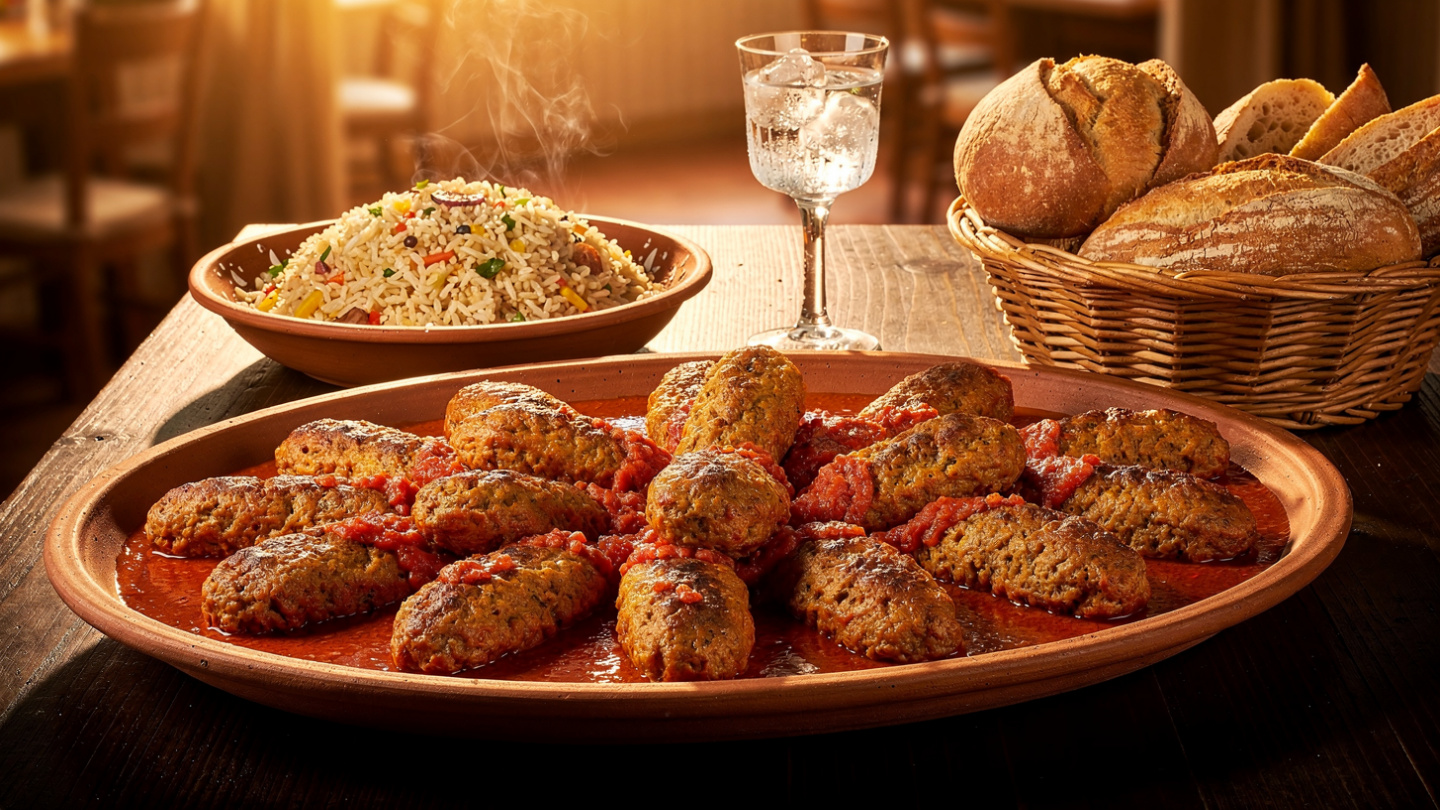
Soutzoukakia Smyrneika were among the dishes that crossed the Aegean with the refugees. The name itself is a composite that reflects this history: the root is Turkish, from sucuk, the spiced sausage of the Ottoman table, and the Greek diminutive suffix makes it mean the little sucuk things. The dish the refugees made from this culinary inheritance, oblong meatballs of minced beef seasoned with cumin, garlic, fresh mint, and a measure of ouzo, fried and then finished in a rich tomato sauce, became one of the most beloved preparations in the Greek domestic kitchen.
The cumin is the key to understanding why. It is not a spice that the standard Greek kitchen uses with any frequency: the Greek culinary culture, at its mainland and island core, is built on the aromatics of the herb garden, thyme, oregano, dill, mint, and bay, rather than the ground spice cabinet. Cumin in a Greek dish marks a lineage that came from somewhere else, from the kitchens of Anatolia where the Ottoman spice vocabulary included cumin as a standard seasoning for ground meat preparations. In soutzoukakia, it is not a foreign element awkwardly inserted into a Greek dish. It is the marker of the dish’s origin and the reason it tastes the way it does.
The ouzo is the Greek addition, the distillate made from the grape marc and anise that became the national spirit after the Smyrna refugees brought their dishes to the mainland and the mainland contributed what it had to offer. The ouzo in the meatball mixture adds a botanical complexity beneath the cumin and the mint. The ouzo in the sauce does what wine does in a French braise: it deglazes the tomato paste caramelization, lifts the fond from the pan, and adds an acidity and herbal depth that tomato alone cannot achieve. It is not a trick or a novelty. It is the ingredient that turns a good meatball in tomato sauce into soutzoukakia Smyrneika specifically.
The Dish and Its Architecture
Every element of soutzoukakia has a function, and the functions are interconnected in the way that the best traditional recipes are interconnected: none of the components is decorative, and removing any of them changes what the dish is in a way that can be felt in the eating.
The stale bread soaked in milk is the binder and the tenderness agent simultaneously. Soaked bread, squeezed of its excess milk and worked into the ground beef mixture, carries moisture into the meatball that the cooking process would otherwise drive out. The bread proteins stabilize the fat in the meat as it heats, preventing the meatball from becoming dry and dense. Stale bread works better than fresh because the dried crumb structure absorbs the milk more fully and releases it more evenly into the mixture during cooking. A soutzoukaki made without bread will be denser and less tender than the dish requires, regardless of the quality of the beef.
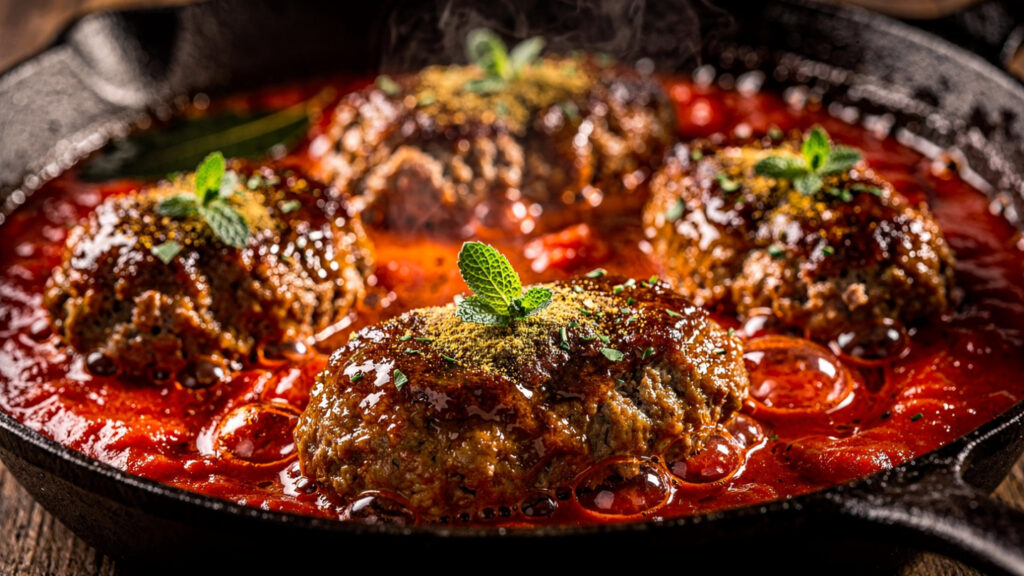
The grated onion, which releases its liquid into the mixture rather than remaining as a textural element, serves the same moisture function as the bread while adding sweetness and the aromatic quality that raw onion contributes to any meat mixture it is incorporated into. The grating rather than chopping is important: grated onion becomes part of the meat mixture in a way that chopped onion does not, distributing its flavor and moisture evenly through the mass rather than creating pockets of concentrated onion flavor.
The refrigeration step, at minimum one hour after mixing, is the step that separates a considered approach from an impatient one. The flavors of the cumin, mint, garlic, and ouzo need time to move through the fat and protein matrix of the meat. A meatball cooked from freshly mixed meat will be noticeably less flavorful than one that has rested overnight. The overnight rest is the better option for anyone preparing the dish for a dinner the following day.
The flour coating before frying is not a breading in the sense of producing a crunchy exterior. It is a light dusting that prevents the ouzo and the meat proteins from sticking to the pan during frying and that produces a thin skin on the meatball surface that holds the shape during the subsequent sauce cooking. The flour dissolves partially into the sauce during the final simmering and contributes to its body.
The final simmer in the sauce, fifteen to twenty minutes after the initial frying, is where the dish becomes what it is. The browned exterior of the meatball, which the frying produced, begins to soften in the tomato sauce. The sauce penetrates the outer layer of the meatball. The meatball releases its accumulated fat and spice flavor into the sauce. The two components cook together into a single thing, and the result cannot be produced by making the sauce and the meatballs separately and combining them at the table. The final simmering is not a serving step. It is a cooking step.
The Sauce and Its Logic
The tomato sauce for soutzoukakia is not a marinara or a sugo. It is a Smyrna-inflected tomato preparation whose character comes from the combination of the caramelized tomato paste, the bay leaves, the ouzo deglaze, and the final absorption of the meatballs’ spiced fat.
The tomato paste caramelization, the step in which the paste is added to the softened onion and allowed to cook in the oil until it darkens slightly and its raw acidity sweetens, concentrates the tomato flavor and produces the depth that distinguishes a sauce built on caramelized paste from one built on fresh or canned tomato added without this step. It is the same logic as browning flour for a roux: the color indicates a chemical transformation, not merely heat application, and the transformation produces flavor that the un-caramelized original does not contain.
The ouzo deglaze lifts the caramelized residue from the pan base into the liquid, preserving the flavor that would otherwise remain stuck to the pan and burn. The alcohol evaporates within the first two minutes of simmering, leaving the anise and grape marc complexity of the distillate behind in the sauce without the sharpness that raw alcohol produces.
The bay leaves are a connecting element between the Smyrna tradition and the broader Mediterranean kitchen: their herbal bitterness moderates the sweetness of the tomato and the sugar that the recipe adds to balance the tomato’s acidity, producing the equilibrium between sweet and savory that the sauce requires.
The chicken stock cube, which the recipe uses for convenience, can be replaced with actual stock for a richer result: a ladleful of chicken broth in place of the cube and its water produces a more complex sauce background without changing the dish’s essential character.
The Recipe
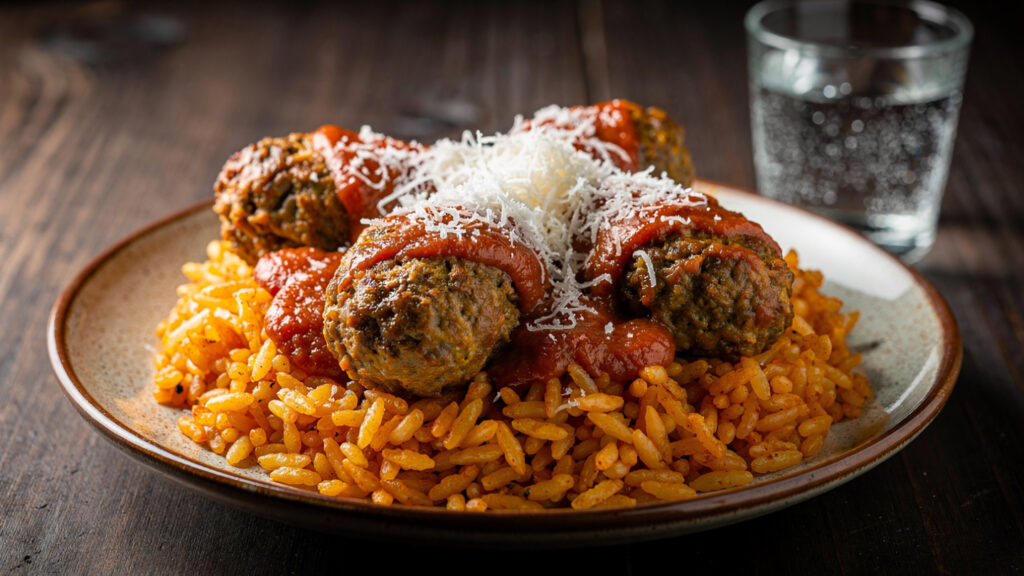
Soutzoukakia Smyrneika are served with spaghetti in the most common tradition, the sauce spooned over the pasta and the meatballs placed on top, with grated kefalotyri or parmesan for the table. Rice, particularly a pilaf-style long-grain rice whose individual grains absorb the sauce from the plate without becoming sticky, is the alternative that suits the dish’s Smyrna heritage more directly: the rice preparations of the Anatolian table were the natural accompaniment before pasta became the standard Greek vehicle for this kind of sauce.
The dish improves the next day. The meatballs have absorbed more of the sauce. The sauce has thickened overnight and the flavors have deepened in the way that braised preparations consistently improve with resting. The soutzoukakia that the Smyrna refugees reheated the morning after they were made were a different and arguably better version of the dish than the freshly cooked one, and the recipe is designed to be made in the quantity that produces leftovers rather than in the quantity that produces a single sitting.
The ouzo on the table at the end of the meal, the small glass that the Greek table produces as the natural closing gesture of a dinner of this weight, completes the circle: the anise that the distillate contributes to the meatball and the sauce is present again in the glass, and the connection between the dish and the drink it is associated with is a reminder that soutzoukakia Smyrneika is a dish that carries its own world with it, the world of a city that no longer exists in the form that produced it, preserved in the cumin and the ouzo and the oblong shape of the meatball that the Smyrna kitchen sent across the Aegean a hundred years ago.
Olympus Estate · Food & Seasonal Life
Soutzoukakia Smyrneika · Spiced Meatballs in Tomato and Ouzo Sauce
The dish brought from Smyrna to Greece in 1922. Cumin, mint, and ouzo in the meatball. Ouzo in the sauce. A preparation that crossed the Aegean and stayed.
Ingredients
For the meatballs
- Minced beef (80/20 lean to fat)500 g
- Stale bread, crusts removed200 g
- Whole milk (for soaking bread)100 ml
- Eggs2
- Onion, finely grated1 medium
- Garlic cloves, minced2
- Ground cumin2 tsp
- Ouzo20 ml
- Fresh mint, finely chopped2 tbsp
- Extra virgin olive oil60 ml
- All-purpose flour (for dusting)200 g
- Corn or sunflower oil (for frying)as needed
- Salt and freshly ground pepperto taste
For the tomato and ouzo sauce
- Onion, finely chopped1 medium
- Garlic clove, minced1
- Tomato paste2 tbsp
- Canned chopped tomatoes400 g
- Water or chicken stock300 ml
- Ouzo30 ml
- Sugar1 tsp
- Bay leaves2
- Olive oil (for sautéing)3 tbsp
To serve
- Spaghetti, rice, or mashed potatoesas needed
- Fresh mint or parsley for garnishto taste
- Grated kefalotyri or parmesan (optional)to taste
Method
-
1
Soak the bread — 10 min
Break the stale bread into pieces and submerge in the milk. Leave to soak for 10 minutes until fully softened, then squeeze firmly with your hands to remove as much liquid as possible. The drained bread should be compact and moist but not wet.
-
2
Mix and rest the meatball mixture — 1 hr minimum
In a large bowl, combine the minced beef, soaked bread, grated onion, minced garlic, eggs, cumin, mint, olive oil, and ouzo. Season generously with salt and pepper. Mix thoroughly by hand until the ingredients are fully combined and the mixture holds together. Cover and refrigerate for at least 1 hour, overnight if possible, to allow the spices to develop.
-
3
Make the sauce — 25 min
While the meat rests, warm olive oil in a saucepan over medium heat. Sauté the chopped onion and garlic until soft and translucent, approximately 8 minutes. Add the tomato paste and sugar, stir well, and cook for 2 minutes until the paste darkens slightly. Pour in the ouzo and let it simmer for 1 to 2 minutes until the alcohol evaporates. Add the canned tomatoes, water or stock, and bay leaves. Simmer uncovered for 20 to 25 minutes, stirring occasionally, until the sauce thickens and deepens in color.
-
4
Shape and fry the meatballs — 15 min
With damp hands, shape the meat mixture into oblong meatballs approximately 7 to 8 cm long, like a small thick sausage. Roll each one lightly in flour, shaking off the excess. Heat corn oil in a frying pan over medium-high heat. Fry the soutzoukakia in batches until golden brown on all sides, approximately 3 to 4 minutes per batch. Do not overcrowd the pan. Drain on kitchen paper.
-
5
Finish in the sauce — 15 to 20 min
Transfer the browned meatballs to the simmering sauce. Turn them gently to coat all sides. Cover partially and simmer on low heat for 15 to 20 minutes, turning once at the halfway point. The meatballs will absorb the sauce and become fully tender. Remove the bay leaves before serving.
-
6
Serve
Serve over spaghetti, rice, or mashed potatoes, with the sauce spooned generously over everything. Finish with fresh mint or parsley and grated kefalotyri if available. The dish improves the next day: reheat gently in the pan with a splash of water to loosen the sauce.
At Olympus Estate, Food and Seasonal Life traces Greek cuisine as a living calendar, from the summer harvest table to the winter dishes that carry a history longer than their recipes. Soutzoukakia Smyrneika crossed the Aegean with the refugees of 1922. The dish arrived with them and stayed. It is still on the table.