

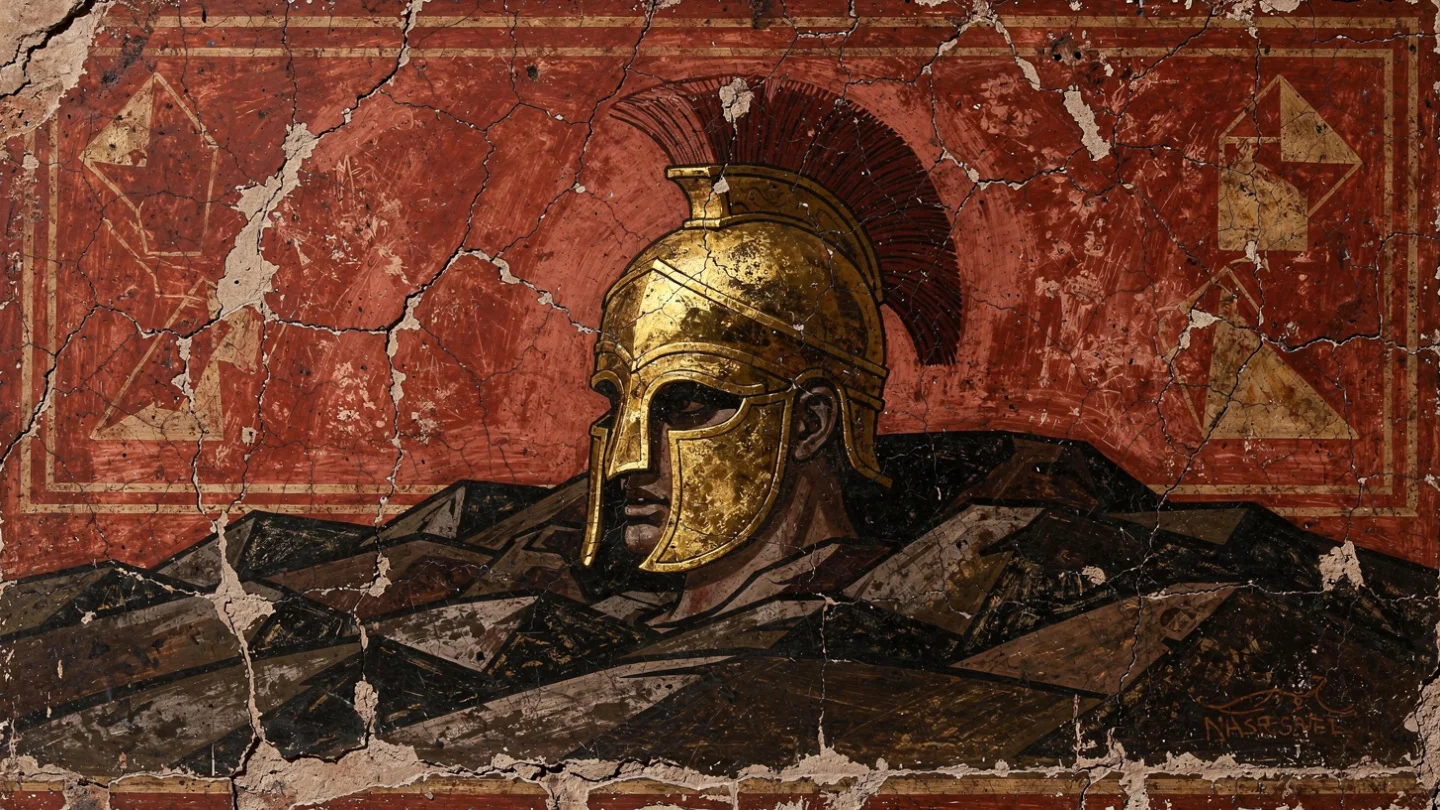
The wrong question has been asked of Greek mythology for most of the last two centuries.
The question was: did it happen? Did Achilles fight at Troy? Did the Minotaur exist? Was there a Labyrinth? The question seems reasonable. It has the form of a historical inquiry, and it has produced a great deal of interesting archaeology in pursuit of its answer. But it is the wrong question because it assumes that the myths were intended as historical reports, that their original purpose was to record events that occurred, and that their relationship to reality is therefore to be measured by how accurately they describe what happened.
The myths were not historical reports. They were the primary medium through which the ancient Greek world encoded its understanding of the forces that governed human life: divine, natural, political, psychological, and cosmological. The question of whether a particular event narrated in a myth occurred in the external world is not the question that the myth was designed to answer. The question it was designed to answer was always something else: why does the sea behave as it does, what happens when a city falls to superior force, what is the relationship between human capability and divine limit, what does grief do to the natural world.
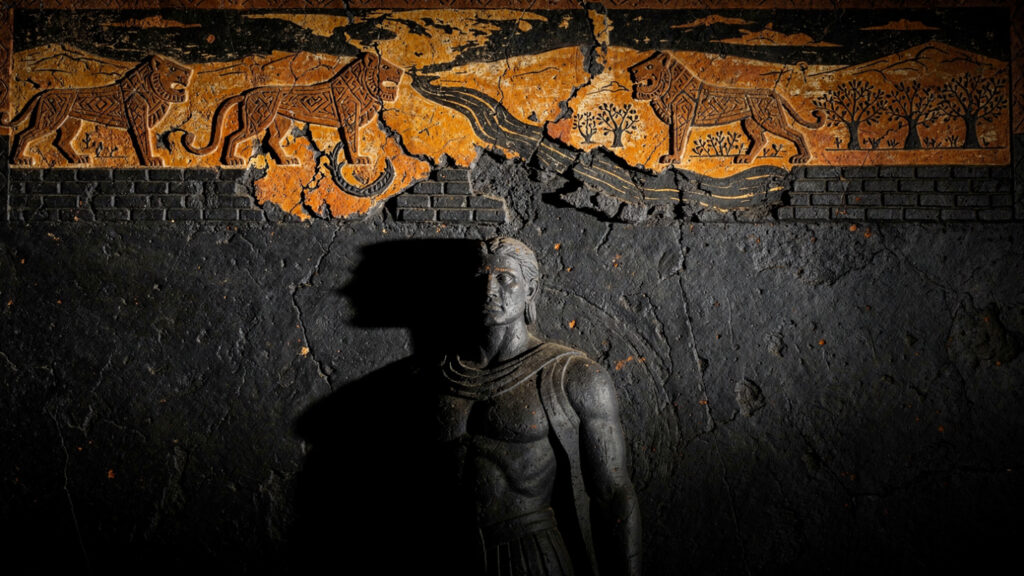
When archaeology began to confirm that some of the places mentioned in the myths existed, and that some of the events described in them had material correlates in the archaeological record, something genuinely important was learned. But the importance of what was learned has sometimes been framed incorrectly: not that the myths were actually history all along, which they were not, but that the myths emerged from a world with a concrete and recoverable material reality, and that the relationship between that reality and the narrative the myths built from it tells us something significant about both.
What Schliemann Found and What It Proved
Heinrich Schliemann, the German businessman and autodidact archaeologist who excavated the site at Hisarlik in northwestern Turkey beginning in 1870, found a city. Several cities, in fact: the tell that the excavation revealed contained nine distinct occupation levels, each built on the ruins of the one beneath it, the earliest dating to the third millennium BCE and the latest to the Roman period.
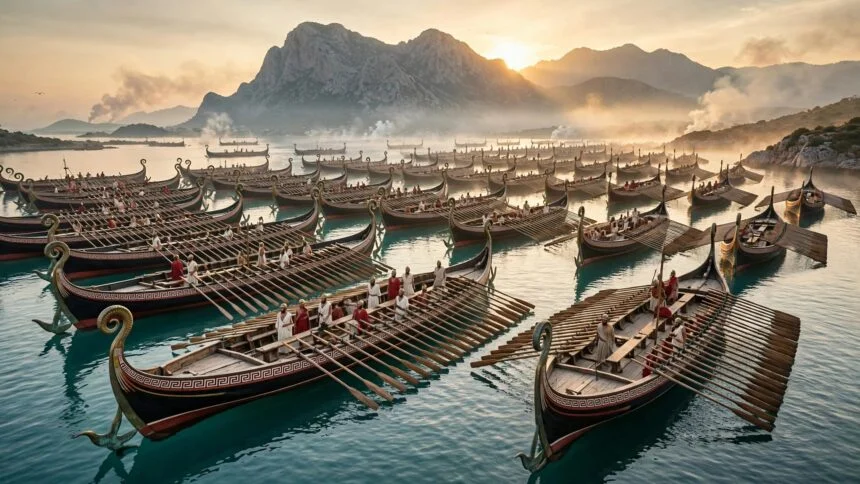
The city that Schliemann initially identified as the Homeric Troy, which he called Troy II, turned out to be approximately a thousand years older than the period in which the Trojan War is conventionally placed: the late Bronze Age, around 1200 BCE. It was the subsequent analysis, particularly by the American archaeologist Carl Blegen in the 1930s, that identified Troy VIIa as the level most consistent with the Homeric period: a city that showed evidence of violent destruction around 1180 to 1190 BCE, arrows embedded in the walls, human remains in the streets, the archaeological signature of a city that was sacked.
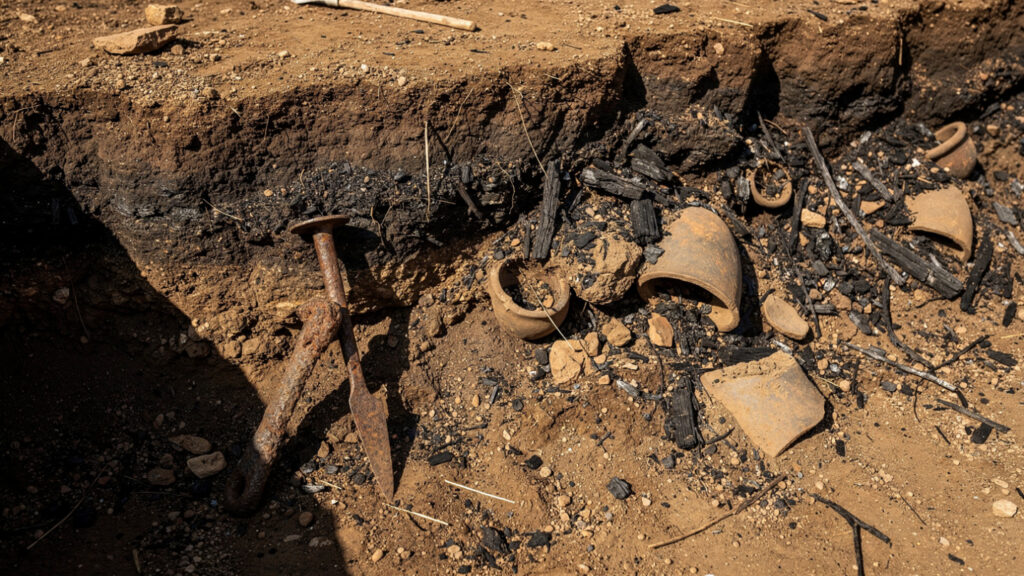
What Schliemann proved, or rather what the subsequent century of excavation at Hisarlik has confirmed, is that there was a city of substantial size and apparent wealth at this location, that it was destroyed by violence at a date roughly consistent with the traditional chronology of the Trojan War, and that the general geography of the Troad, the region around the site, is consistent with Homer’s descriptions of the battlefield and the coastline.
What this does not prove is that Achilles and Hector fought there, that Paris abducted Helen, that Odysseus invented the wooden horse, or that Apollo and Athena took sides in the conflict. The historical kernel that archaeology has confirmed is a Bronze Age conflict at a site in northwestern Anatolia. The narrative structure that Homer built around this kernel is a magnificent literary construction that the archaeological find supports as having originated in real events without those events requiring the form that the literary tradition gave them.
The distinction matters because it is the distinction between archaeology and literary criticism, between what the material record can tell us and what the text can tell us, and both disciplines are necessary for understanding what Greek mythology is and what it is not.
Mycenae and the World That Produced the Myths
Schliemann’s excavation at Mycenae in 1876, which revealed the shaft graves of the royal cemetery and the extraordinary gold objects that they contained, established something as significant for the understanding of Greek mythology as the Troy excavations: that the Bronze Age civilization of the Greek mainland was real, sophisticated, and wealthy, and that Homer’s descriptions of the Mycenaean world were not invented from nothing but drew on a cultural memory of a civilization that had existed and had reached the level of complexity and power that the epics attributed to it.
The gold funeral mask that Schliemann attributed to Agamemnon and that subsequent scholarship has dated to approximately three centuries before the conventional date of the Trojan War is not the mask of Agamemnon. It is the mask of an unknown Mycenaean ruler of the sixteenth century BCE, a member of the dynasty that preceded the one the myths describe by enough generations that any personal connection to the mythological figures is impossible. What it is evidence of is the quality of civilization that the Bronze Age Greek mainland had achieved: the wealth, the craft capability, the burial practice of the ruling class, and the complexity of a society that organized its resources around the kinds of objects the shaft graves contain.
The Linear B tablets recovered from Mycenae and Pylos and Tiryns and Knossos from the 1950s onward added a dimension to this picture that neither Schliemann nor Homer could have anticipated: the administrative records of the Mycenaean palace economies, written in an early form of Greek that was deciphered in 1952 by Michael Ventris, showed the day-to-day workings of the societies that the myths described as heroic and divine. The tablets recorded grain allocations and bronze rations and the names of workers and the quantities of olive oil stored in the palace magazines. They were the bureaucracy behind the heroic age, and their existence confirmed that the world Homer described was a world that had actually operated, that had maintained the complexity of a palace economy, before the catastrophe of the Bronze Age collapse around 1200 BCE removed it from history and left only the memory that the oral tradition preserved.
Knossos and the Labyrinth’s Logic
The Minoan palace at Knossos, excavated by Arthur Evans beginning in 1900, provided the material context for the Minotaur myth in a form that is more revealing than the simple equation of the palace’s complex layout with the mythological labyrinth.
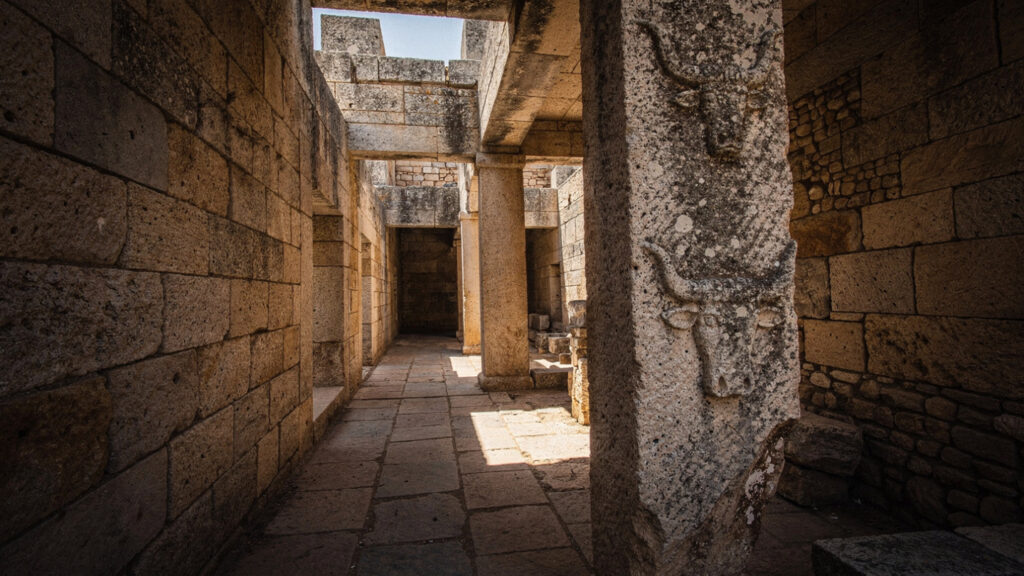
The palace is large and its plan is genuinely complex: over a thousand rooms distributed across multiple stories, connected by staircases and corridors and light wells in an arrangement that someone unfamiliar with the building’s organization would find disorienting. The word labyrinth, which appears in Greek as labyrinthos, may derive from the pre-Greek word labrys, meaning the double axe that appears throughout Minoan iconography as a sacred symbol, the labrys-house being the house of the double axe, which the Knossos palace certainly was. The labyrinth of the myth may be the palace itself, preserved in the cultural memory of the mainland Greeks who came into contact with and eventually occupied Crete in the late Bronze Age period, encoded in the myth of Theseus as the terrifying maze that housed the monster.
The bull itself is central to Minoan religious practice in a way that the archaeological record at Knossos documents: the bull-leaping fresco, the stone rhytons in the shape of bull heads, the ritual significance of the bull horn in Minoan architecture and ceremony, all confirm that the bull occupied a position in Minoan religion that the mainland Greeks, who did not share this religious orientation, would have found strange and powerful enough to encode in the myth of a monstrous bull-man.
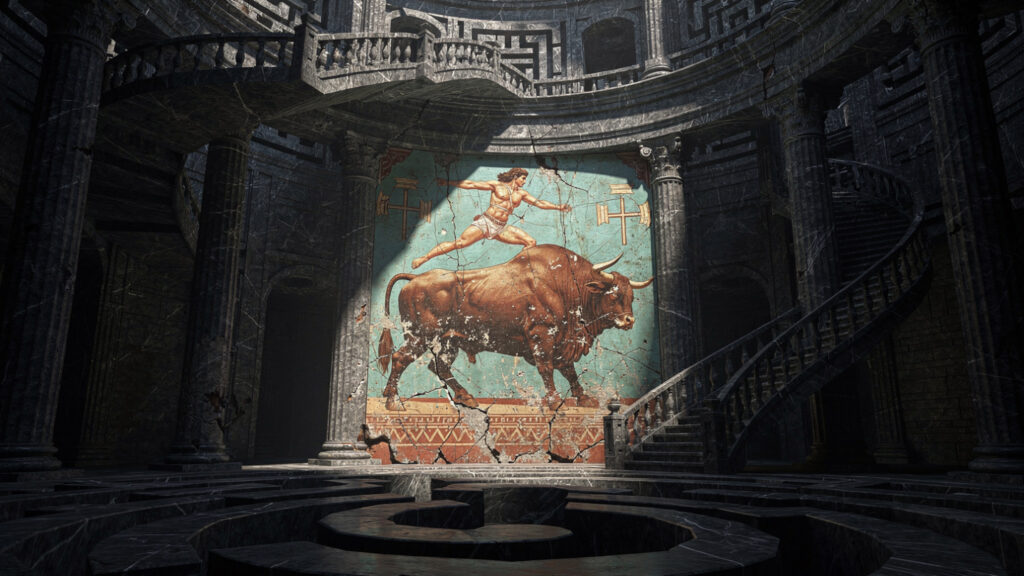
The Minotaur myth is not a description of an actual bull-man that lived in an actual maze. It is a mainland Greek cultural memory of a Minoan civilization whose religious practices, centered on the bull in ways that the mainland culture did not, and whose palace, complex enough to be genuinely disorienting to an outsider, were encoded in narrative form as the myth that the legacy eventually produced. The kernel is cultural encounter rather than event: the mainland Greek experience of Minoan Crete, filtered through the oral tradition and eventually given the narrative form that the Theseus myth represents.
The Flood and the Natural Record
The myth of Deucalion and Pyrrha, the Greek flood narrative in which the gods determined to destroy humanity by water and the single righteous couple survived to repopulate the earth, belongs to the class of myths whose relationship to real events is most directly geological rather than historical.
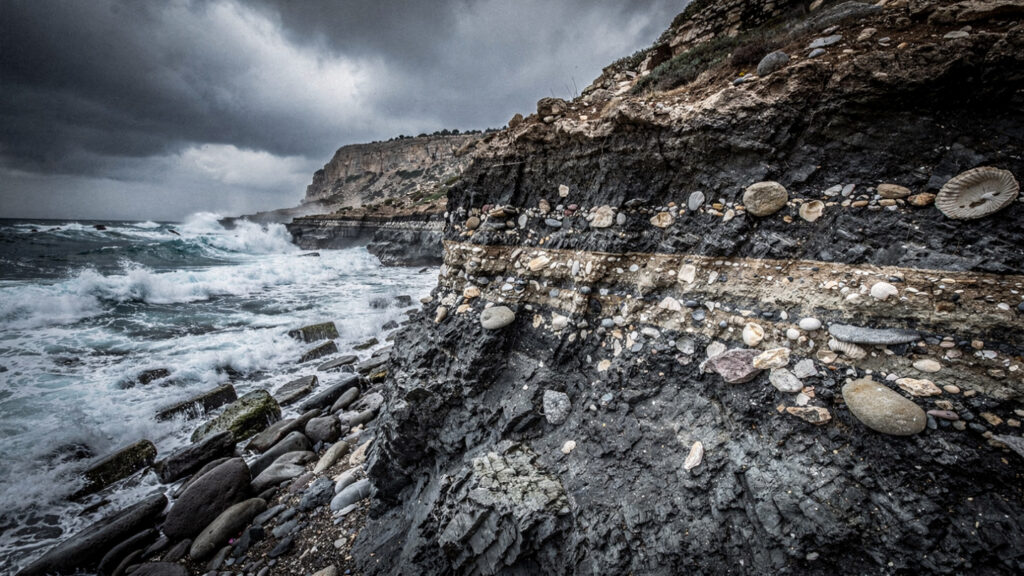
Flood narratives exist in the mythological traditions of cultures across the ancient world with a frequency and structural similarity that the diffusionist explanation, all flood myths deriving from a single origin, cannot fully account for, and that the independent origin explanation, multiple cultures developing similar narratives in response to similar experiences, handles more convincingly. Catastrophic flooding events occurred in the Mediterranean and the Near East during the Bronze Age and earlier: the tsunami generated by the Thera eruption reached the coasts of the eastern Mediterranean with sufficient force to have left a cultural impression. The Black Sea, according to one hypothesis that remains contested in the scholarly literature, underwent a rapid inundation event when the rising Mediterranean broke through the Bosporus barrier in the early Holocene period, flooding the then-freshwater lake into the saltwater sea that exists today.
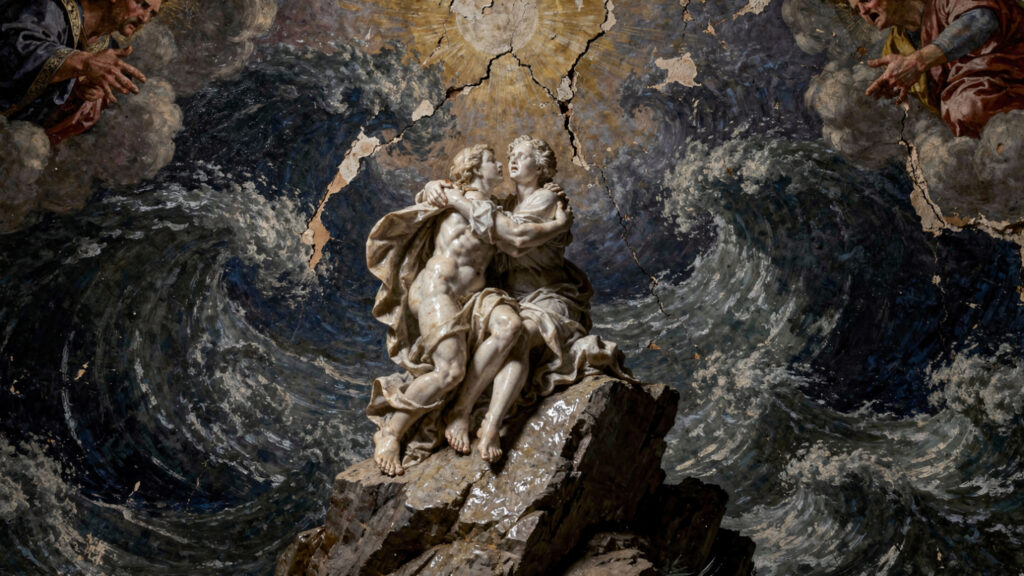
Whether the Deucalion myth encodes the memory of a particular event or represents the general human response to the reality of catastrophic flooding in an environment where flooding was a known and recurrent danger is a question the mythological record cannot definitively answer. What the myth preserves is the cultural encoding of a natural phenomenon as a divine act: the flood is not random or mechanical but the expression of divine decision, and survival is not the product of chance but of righteousness. The narrative framework is not the geological record but the Greek world’s primary interpretive vocabulary, which was theological and narrative rather than scientific.
The Heracles Labors and the Geography of the Bronze Age World
The twelve labors of Heracles have attracted more attempts at historical interpretation than almost any other mythological sequence, because their geographic spread across the known world of the Bronze Age Greek imagination seems to invite the reading of them as a route map: the hero moving through the landscapes that the early Greek world was exploring and colonizing, his feats encoding the challenges that the expansion into new territory actually presented.
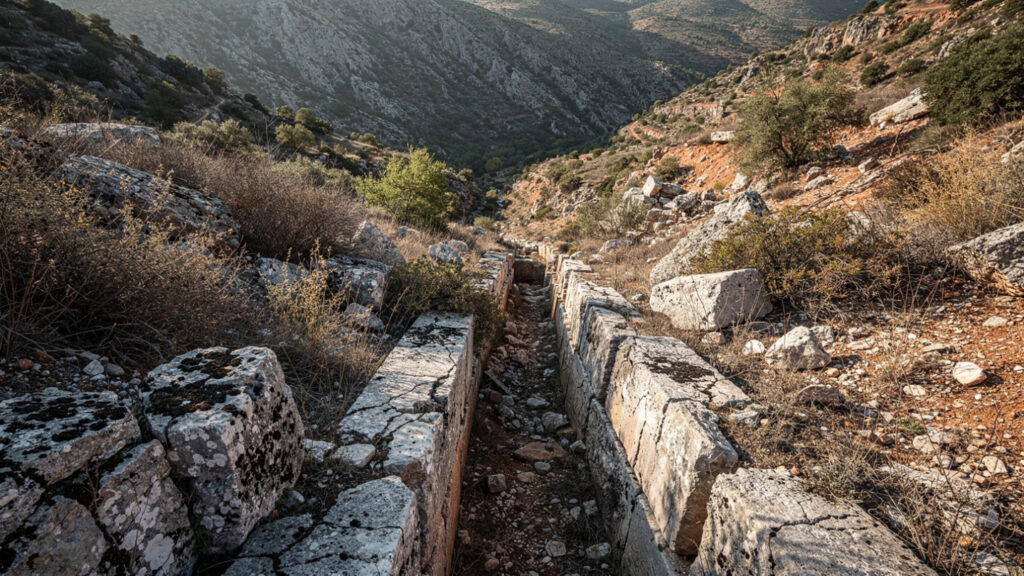
The Nemean Lion, in the Argolid region near Mycenae, is the most locally grounded of the labors: the labor in the territory that the Mycenaean civilization most directly controlled. The Augean stables, whose cleaning required Heracles to divert two rivers through the stable complex, may encode the memory of actual hydraulic engineering projects in the Peloponnese, the drainage of the marshes and the management of the river systems that the Bronze Age agricultural expansion required. The Cretan Bull, which Heracles captured and returned to the mainland, connects the labor sequence directly to the Minoan world and the significance of the bull in the Cretan religious tradition.
The labors that reach further from the Greek heartland, the capture of the horses of Diomedes in Thrace, the belt of the Amazon queen Hippolyta, the cattle of Geryon at the edge of the world, the golden apples of the Hesperides beyond the western sea, may encode the Greek world’s mythological processing of its awareness of the peoples and places at the edges of the known world: the Thracians, the Amazonian warrior women of the Black Sea steppe cultures, the distant west that lay beyond the Pillars of Heracles. The hero’s journey through these peripheral territories was the mythological form of the geographic expansion that the Bronze Age and early archaic periods of Greek history actually involved.
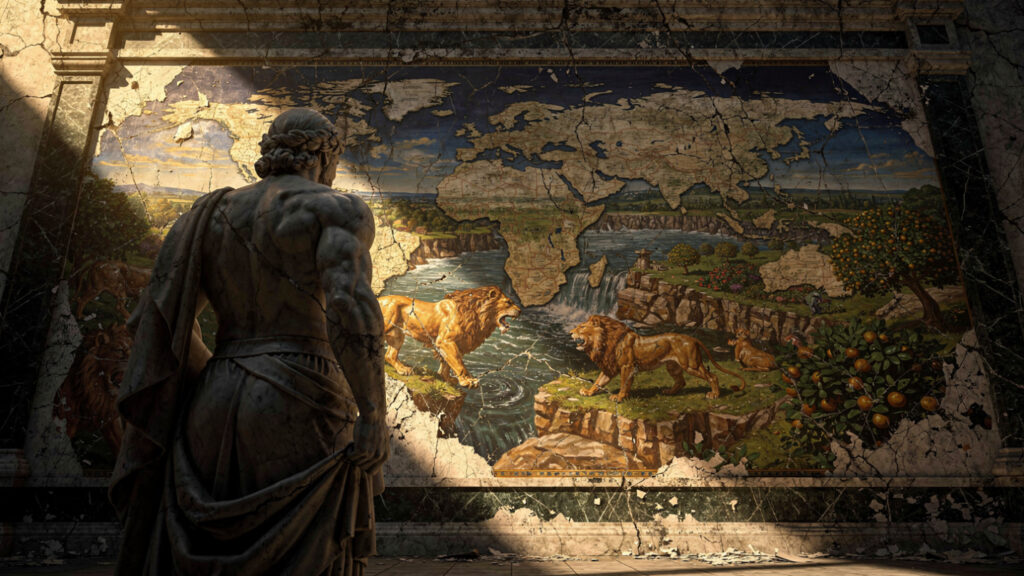
Whether Heracles was a real person whose exploits were amplified and eventually divinized in the culture is a question the evidence does not permit confident answering. The pattern of the hero whose historical exploits become mythological through the process of oral transmission and cultural elaboration is well documented in the ancient world, and Heracles may belong to it. But the more significant observation is that the labor sequence encodes a geographic and cultural knowledge of the world available to the Bronze Age and early archaic Greek tradition, and that this encoding in mythological form was the primary means by which that knowledge was preserved and transmitted.
What the Overlap Between Myth and History Reveals
The discoveries of the last century and a half, from Schliemann’s Troy to the Minoan Crete of Evans and the Linear B tablets of Ventris, have established something important about the relationship between Greek mythology and historical reality: that the myths did not emerge from a vacuum of pure imagination but from a world with a concrete and recoverable material reality, and that the narrative traditions built from this world preserved in distorted and elaborated form the cultural memories of the events and societies and encounters that composed it.
This is not the same as saying the myths are history. The Trojan War as Homer describes it, with the gods taking sides and the fate of the war being decided by the whims of Zeus and the competing claims of Athena and Aphrodite, is not a description of what happened at Hisarlik around 1180 BCE. But neither is it pure invention: it is the elaborated cultural memory of a Bronze Age conflict at a site, filtered through the oral tradition across the centuries that separated the event from the texts that eventually recorded it, and given the narrative and theological structure that the Greek world’s primary interpretive vocabulary required.
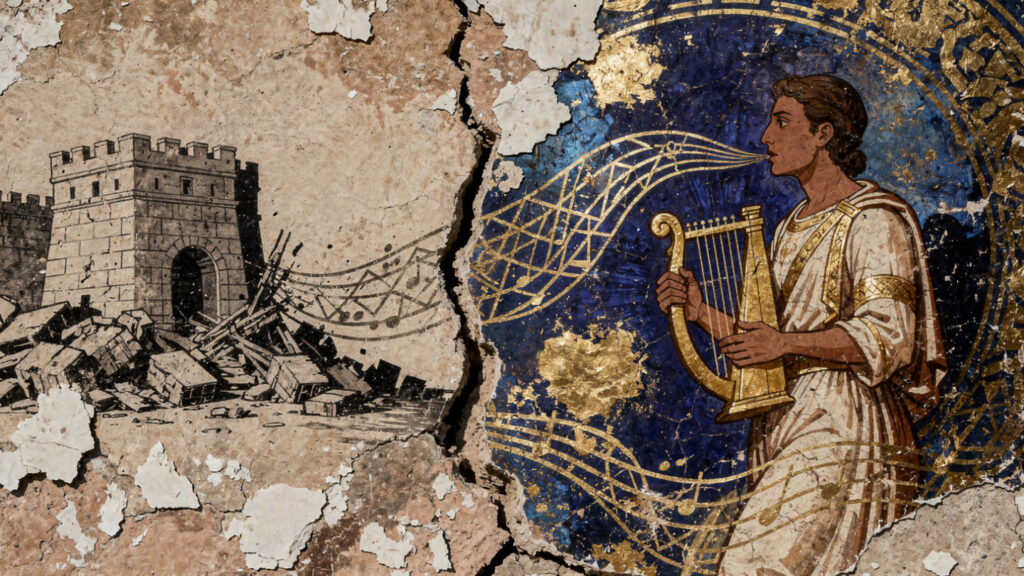
The Greek myths are the form that the ancient world’s most significant memories, encounters, natural experiences, and cultural reflections took when preserved in the primary medium available to a pre-literate culture: the narrative, carried in the memory of the singer and transmitted orally across generations. The historical kernel is real, when it exists. The elaboration is genuine imaginative and theological work, not distortion of a documentary intention that the tradition never had. Both layers are present in the same texts, and understanding Greek mythology requires holding both simultaneously rather than reducing the myths to either pure history or pure fiction.
The world they describe was real. The form they describe it in was not history. The combination is what makes them still worth reading.
At Olympus Estate, Mythic Essays moves through the deeper currents of the Greek tradition, from the shaft graves of Mycenae to the Linear B tablets that show the bureaucracy behind the heroic age. The myths were not history. They were something the ancient world did with history, which is more interesting than if they had simply been true.