



For the Greeks, winter was not a season but a demonstration of the Logos, the tension that keeps the world alive. Heraclitus of Ephesus maintained that the fundamental substance of reality exists as an ever-living fire, kindled and extinguished according to a cosmic measure he called the Logos. The fragments recovered from his work, and almost nothing else survives of it, indicate that change constitutes the only permanent state of the universe. Winter represents a phase within this cycle where the fire retreats into a state of latent potential. Atmospheric shifts during the winter months reflect the same law: cold things must eventually warm.
This process occurs through a continuous exchange between opposites. The Ephesian school, which is how later writers referred to Heraclitus and the loose circle of thought that followed him, rejected the idea of static existence entirely. They focused instead on the tension between contradictory forces as the thing that holds the cosmos together. Reality, in this account, is a self-regulating system of flux in which the cessation of movement would mean the collapse of the material order itself.

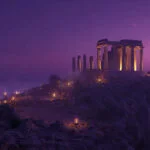
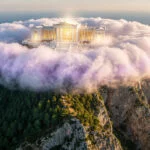
The stone of the Acropolis feels like ice against the palm during a January dawn. Iron-gray clouds press against the Parthenon. Rainwater collects in the ancient grooves of the marble and moves with a quiet, persistent force, flowing toward the low ground to carve the earth. The air smells of damp limestone and burnt olive wood, and the scent of smoke from the Plaka district rises to meet the cold wind. Heraclitus did not write about winter as weather. He wrote about winter as a condition of the soul. He observed the transition from the heat of the harvest to the stillness of the frost and saw the same law at work in both.
The Mechanics of Tension
The Logos is the hidden code that keeps change from turning into chaos. Heraclitus compared the world to a bow or a lyre. The tension of the string is exactly what creates the music. If you remove the tension, the instrument becomes a useless piece of wood. Winter is the moment of maximum tension. The cold pulls at the fibers of the world and tests the strength of the system.

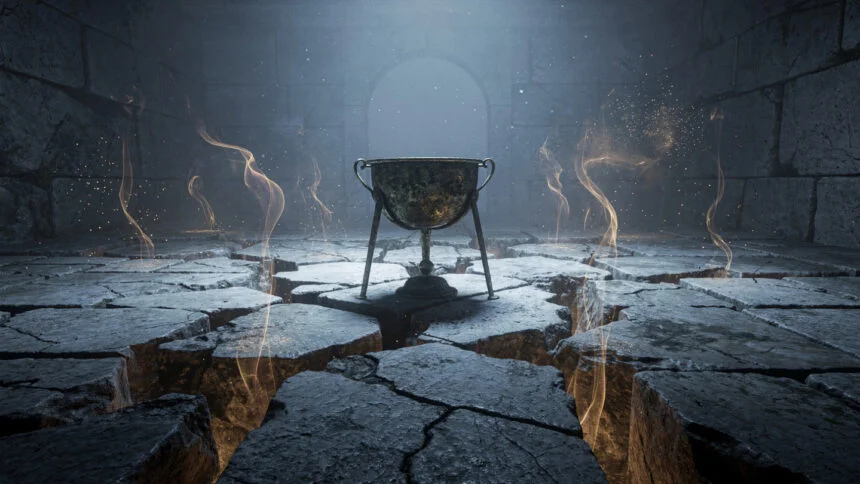
We possess only fragments of the work of Heraclitus, roughly a hundred surviving sentences quoted by later writers, none of them preserved as a complete original text. These sentences are short and blunt, lacking the flowery language of later poets, which is precisely why later antiquity nicknamed him “the Obscure” and “the Weeping Philosopher,” a reputation built partly on the compression of his style and partly on a later, likely apocryphal, tradition that he wept at the folly of mankind. Fragment thirty states that the world always was and is and shall be an ever-living fire, kindled in measures and extinguished in measures. Winter is the period of extinguishing, the cooling of the cosmic engine. This cooling allows for the accumulation of energy. The fire does not vanish. It bides its time in the roots of the trees and the depths of the soil.
The philosopher lived as a recluse, having little patience for the opinions of the crowd. Ancient biographical tradition, admittedly unreliable in its details, claims he eventually retreated to the mountains entirely, living on grass and herbs, having concluded that the company of Ephesus offered nothing worth his attention. He believed most people live as if they were asleep, seeing the winter and thinking it is the end of the year. They miss the fire burning in the center of the frost. This is the distinction between surface observation and Heraclitean insight. One sees the frost. The other sees the preparation for the spring. It is a distinction that requires holding two contradictory truths in the mind at once, which is exactly the kind of thinking Heraclitus considered the mark of genuine understanding.
The Logic of Opposites
Heraclitus observed that cold things must eventually warm. Equilibrium, in his system, is death. The universe requires the friction of opposites to maintain its existence. The hunger of winter creates the appreciation for the summer feast. The silence of the hills allows the mind to hear the Logos. This is the Aegean way of thinking, a philosophy of the real dealing with the materials at hand: stone, water, fire, and ice.
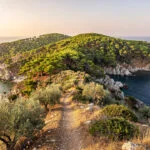
The landscape is the perfect illustration of this principle. You can see snow on the peaks while orange groves in the valleys stay green. This physical proximity of winter and summer within a single sightline is, in a sense, the Heraclitean fire made visible: the frost and the flame existing simultaneously, in a state of mutual tension that neither cancels.

Even the buildings were designed for this flux. Ancient dry stone construction used no mortar. Blocks were carved with mathematical precision to fit perfectly and allowed temples to move during an earthquake without falling. This is flexible stability, the architectural expression of the same principle Heraclitus described in cosmic terms: the stone survives not by resisting the movement of the earth but by accepting it.
Fire as Universal Exchange
Heraclitus observed that everything has a price. He said all things are an exchange for fire just as goods are an exchange for gold, an image drawn directly from the commercial life of Ephesus, one of the wealthiest trading cities of Ionia in his lifetime. Winter is when the cosmic account balances itself. The energy spent during the summer is recovered. The world rests so that it can burn again.

The Ephesian school understood that energy only changes form. Fire becomes water, water becomes earth, and earth becomes fire. This is the great cycle, and the turning of winter into spring is one visible instance of it: the cold acting as a catalyst that forces matter to contract before the explosion of growth that follows.
You cannot step into the same river twice. The water moves and so do you. This fragment, the most famous line to survive from Heraclitus, is often quoted without its full implication: it is not simply that the river changes, but that the person stepping into it has also changed by the time of the second step, aged, altered, no longer identical to the person who stepped in first. Winter performs the same function on a larger scale. We emerge on the other side of it as different beings, not because the season transforms us deliberately, but because time does not allow anything, river or person, to remain what it was.
Winter Practices and the Preservation of the Spark

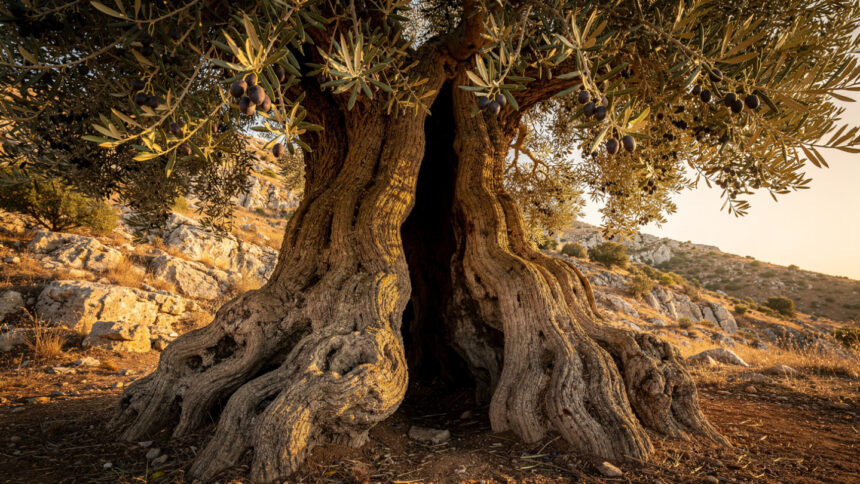
In local villages, winter is marked by practical rituals like pruning olive trees, pressing oil, and lighting the first hearth fire. These are not decorative traditions. They are the physical continuation of the Logos in daily life, a household version of kindling the fire in measures that Heraclitus described at the scale of the whole cosmos.
Smoke rising from a chimney is a signal of life. It is the visible face of the fire Heraclitus wrote about, made small enough to fit inside a single home. Inside, people gather to share wine and wait for the sun. This is the quiet work of winter, and it has continued in the villages of the Greek mainland in something close to its ancient form for as long as anyone has kept a written record of it.

Winter will end. The Logos guarantees it. The path down always leads back to the path up, a phrase Heraclitus used to describe how the same road serves opposite directions depending only on which way one is walking it. The frost will melt and the fire will return to the surface. But the lesson of the winter remains regardless of the season that follows it: change is the only permanence, and the tension between opposites is not a flaw in the system but the very thing that keeps it alive.
At Olympus Estate, Mythic Essays moves through the deeper currents of the Greek tradition. For the Greeks, winter was not a season but a demonstration of the Logos. Heraclitus compared the world to a bow or a lyre: the tension of the string is exactly what creates the music. Remove the tension and the instrument becomes a useless piece of wood. Fragment 30 states that the world always was and is and shall be an ever-living fire, kindled in measures and extinguished in measures. Later antiquity nicknamed him the Obscure and the Weeping Philosopher for the compression of his style and a likely apocryphal tradition that he wept at human folly. The dry-stone construction of the ancient world used no mortar: blocks carved with precision allowed temples to move during an earthquake without falling, the architectural version of the Logos. You cannot step into the same river twice, not simply because the water moves, but because the person stepping into it has changed as well.