

The Odyssey ends at home, and the homecoming takes longer than the war.
Ten years at Troy, ten years at sea, and the poem that describes the sea years is the poem whose attention is not to the places Odysseus visits but to the quality of the longing for the place he is trying to reach. The Sirens, Circe, Calypso, the Phaeacians: each is a version of the temptation to stop, to accept what is available as a substitute for what he actually wants. Odysseus refuses them all, and the character of what he is refusing toward is the character of Ithaca as the Odyssey describes it.
The description is worth attending to, because what Homer says about Ithaca is not what the standard account of the beautiful Greek island would say. Ithaca in the Odyssey is rocky, rugged, unsuitable for horses, not a flat place but appropriate for goats, a good nurse of men. This is the description of an island that the person who grows up on it will love for exactly the qualities that make it less desirable than the alternatives: its difficulty, its inconvenience, the fact that it makes demands on the people who live there rather than simply providing for them. When the goddess Calypso taunts Odysseus by noting that her island is more beautiful than Ithaca, Odysseus agrees with her. He wants to go home anyway. The poem is the record of the quality of wanting something that is not the most beautiful available option, and Ithaca is the object of that wanting.
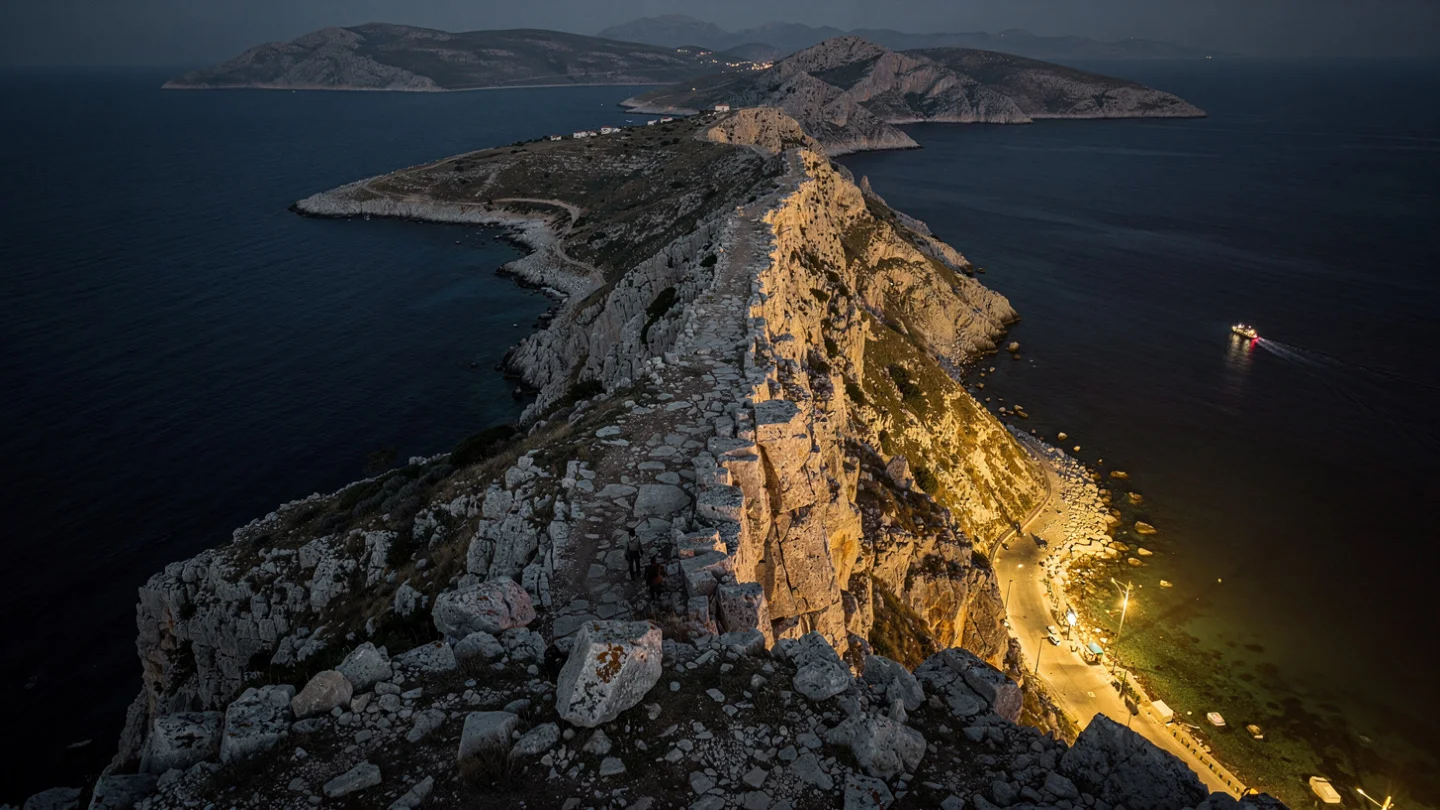
Modern Ithaca, the island in the Ionian Sea east of Kefalonia whose approximately ten thousand permanent residents are the inheritors of the mythological geography that Homer’s poem created, is a real place before it is a literary destination, and understanding what it actually is is the precondition for understanding what the visit to it can provide.
The Question of the Homeric Ithaca
The identification of modern Ithaca with the Ithaca of the Odyssey has been assumed rather than demonstrated for most of the classical tradition, and the assumption has faced serious scholarly challenge in the modern period that the honest account of the island must address.
The primary geographical problem is the description in the Odyssey of Ithaca as the westernmost of a group of islands that includes Same and Doulichion and Zakynthos. Modern Ithaca is not the westernmost island of the Ionian group: Kefalonia and Zakynthos and Lefkada all lie to its west. The geographical claim that the Odyssey makes about Ithaca’s position does not match the position of modern Ithaca in the Ionian group, and this discrepancy has been the foundation for the recurring scholarly argument that the Homeric Ithaca was a different place from the modern island that carries the name.
Robert Bittlestone’s 2005 book Odysseus Unbound proposed the most systematic modern alternative: that the Homeric Ithaca was the Paliki peninsula of Kefalonia, which was at some point in the geological past a separate island before the isthmus connecting it to the main Kefalonian landmass was formed by seismic activity. The geographical details that Homer gives for Ithaca, including the westernmost position and the relationship to the surrounding islands, match the Paliki peninsula more precisely than they match the modern island of Ithaca, and Bittlestone’s team found geological evidence for the land bridge theory that would explain the discrepancy between the ancient geography and the modern one.
The Bittlestone hypothesis has not been accepted as demonstrated by the mainstream classical scholarship, but it has not been definitively refuted either, and the question of whether modern Ithaca is the Homeric Ithaca remains genuinely open in a way that the tourist literature consistently fails to acknowledge.
What the uncertainty does not change is the cultural reality: modern Ithaca has been identified with the Homeric Ithaca since antiquity, the island has been receiving visitors who came for the Odyssean connection for two thousand years, and the mythology of the homecoming has been associated with this island for long enough to have become part of what the island is, regardless of whether Homer’s geography was describing this precise piece of land.
The Landscape and What It Communicates
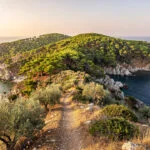
Modern Ithaca is a small island, approximately 96 square kilometers in area, whose terrain is the rugged limestone mountainous terrain that Homer’s description of the Homeric Ithaca anticipated: no flat land suitable for horses, appropriate for goats, the rocky vegetation of the Ionian island that has been grazed and cultivated and left to regenerate across millennia of human occupation.
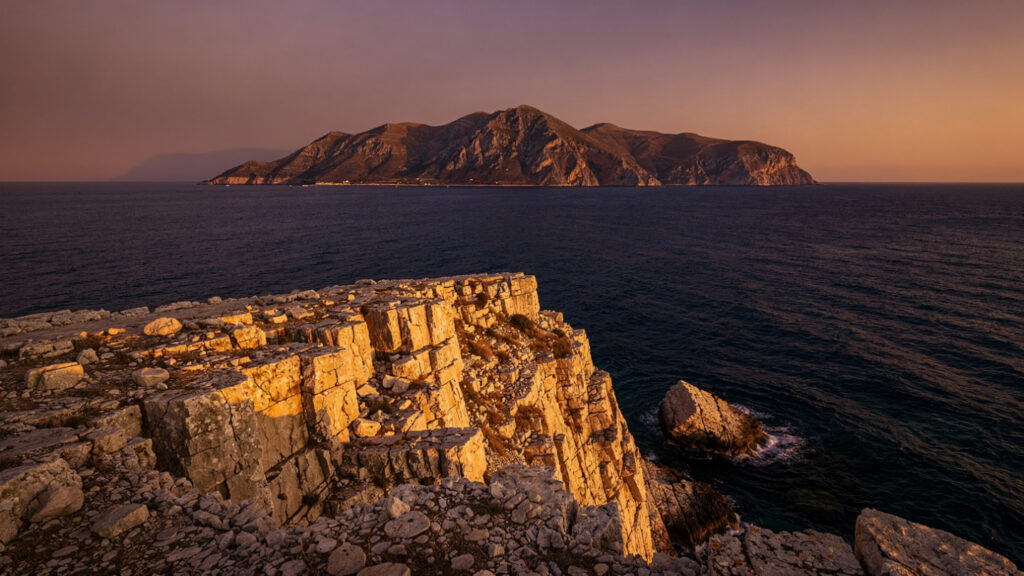
The island is bisected by a narrow isthmus whose minimum width is approximately 600 meters, connecting the northern part of the island, which contains the villages of Stavros and Frikes and Kioni, to the southern part, which contains the capital Vathy and the majority of the island’s permanent population. The geography of the isthmus dividing the island into two distinct sections is one of the features that matches the Odyssey’s description of Ithaca most precisely: Homer describes Ithaca as containing a cave sacred to the nymphs, the Cave of the Nymphs near Dexia Bay south of Vathy, and the topography of the southern part of the island in the area of the bay gives the cave its plausible location.
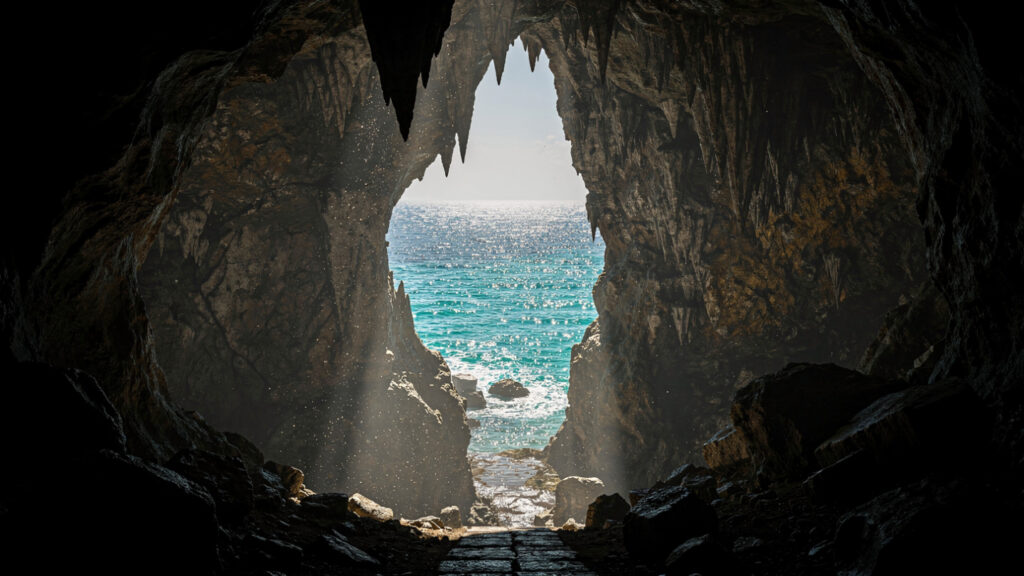
The Cave of the Nymphs, which the Odyssey describes in the passage where Odysseus is deposited by the Phaeacians and where he hides the gifts they gave him before proceeding to his palace, is the single most geographical reference in the poem’s account of Ithaca’s landscape, and the presence of a cave with the orientation and character that Homer describes in the area of Dexia Bay is the strongest piece of geographical evidence for the identification of southern Ithaca with the Homeric setting.
The Bay of Vathy, the deep enclosed harbor that the Odyssey describes as the harbor where the Phaeacians left Odysseus sleeping on the shore, is among the most dramatically enclosed natural harbors in the Ionian Sea: the quality of the bay, whose entrance is narrow and whose interior is deep and sheltered by the surrounding hills on all sides, matches the Odyssey’s description of a harbor that the sailors could navigate safely at night without landmarks.
Vathy and the Southern Island
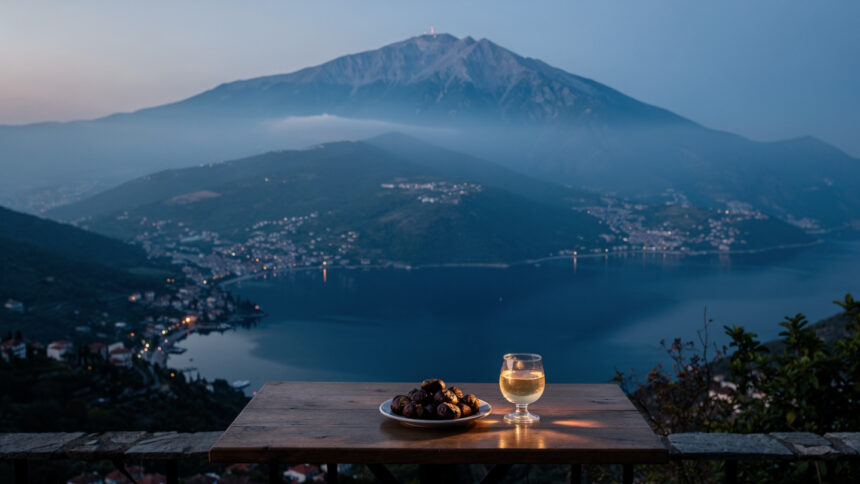
Vathy, the island’s capital, is built around the interior of the bay that gives it its name, the Greek word for deep, and the quality of the harbor settlement, its white and ochre buildings climbing the hillside above the waterfront on three sides of the enclosed bay, is the quality that the traveler arriving by ferry from Kefalonia or Patras encounters first.
The Archaeological Museum of Vathy holds the most significant portable finds from the island’s excavations: the Mycenaean-period objects that document the island’s occupation in the Bronze Age that Homer’s epics describe, the tripods and the bronze vessels and the categories of ritual and domestic objects that the Bronze Age Ithacan community deposited in the archaeological contexts that the excavations have revealed. The museum is small and not extensively visited, which means the objects in it can be examined with the attention that the larger museums’ visitor management prevents.
The Mycenaean material from the Ithaca excavations is the archaeological evidence for the Bronze Age occupation of the island in the period that the Odyssey’s mythological framework treats as historical. There was a prosperous Bronze Age community on Ithaca in the centuries that correspond to the customary dating of the Trojan War. Whether this community was the community of Odysseus is the question the archaeology cannot answer, because the material record can document only objects and practices rather than the names and identities of the people who produced them.
Dexia Bay, north of Vathy, is the inlet that local memory and some scholars have associated with the Phaeacians’ deposit of the sleeping Odysseus. A small enclosed sandy beach lies on the northern edge of the bay, reached by a path from the main road, with the cave above it in the hillside that local lore identifies with the Cave of the Nymphs. The scholarly debate about whether this cave matches Homer’s description closely enough to be accepted with confidence is the debate the informed visitor brings with them, rather than expecting the site itself to resolve.
The Northern Island | Stavros and the Palace Question
The northern part of Ithaca, accessible from Vathy either by the road over the isthmus or by boat to the harbors of Frikes and Kioni, has a different character from the southern part: the villages of the north, Stavros, Frikes, Kioni, are smaller, more isolated, and more directly oriented toward the sea that surrounds them on three sides.
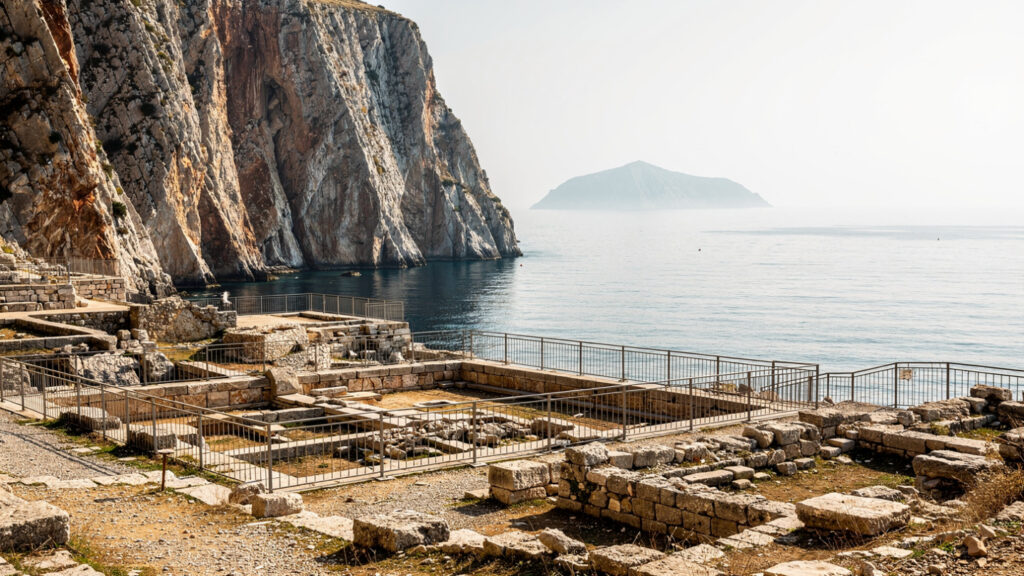
Stavros is the largest of the northern villages and the village closest to the archaeological site of Polis Bay, where the most significant finds from the island’s Bronze Age occupation have been recovered. The Polis Bay site contains the remains of what appears to have been a significant Bronze Age sanctuary or cult site: the votive deposits recovered from the site include bronze tripods and ritual objects of the period that corresponds to the Mycenaean world, and among the finds was a potsherd with an inscription that includes the name of Odysseus, which is the single most evocative piece of material from the Ithaca excavations and the closest thing available to a direct archaeological connection between the island and the mythological figure.
The inscription does not prove that the historical Odysseus lived on Ithaca. It proves that the cult of Odysseus was practiced at Polis Bay in the Hellenistic period, approximately eight centuries after the events the Odyssey describes. The cult of a hero at a site is evidence that the people who performed the cult associated that site with the hero: it is the archaeological evidence for the ancient tradition of identifying this part of Ithaca with the Odyssean geography, not the evidence that the identification is correct in the historical sense.
The archaeological site at Polis Bay is not organized for visitors in the way that the major mainland sites are: there is no entrance fee, no guided tour, no interpretive signage of the quality that the site’s significance would merit. What the visitor finds is the excavated remains at the base of the cliff, partially fenced, with a view across the bay whose enclosed character and orientation give it the quality of a site that people would have returned to repeatedly for reasons connected to the quality of the place rather than simply to the accessibility of the location.
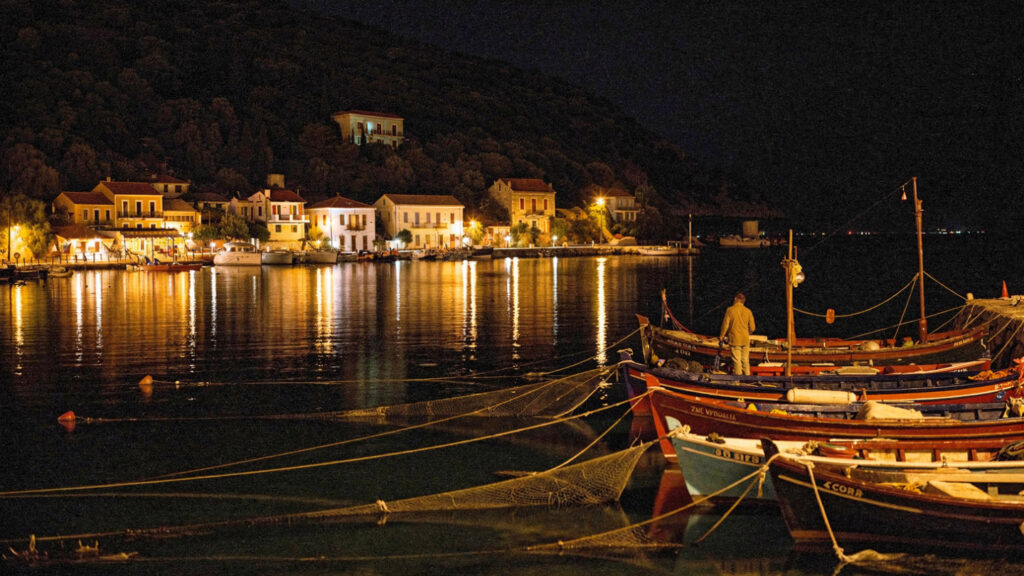
Kioni, at the southern end of the northern island’s eastern coast, is the village that the aesthetic traveler to Ithaca consistently identifies as the most beautiful of the island’s harbor settlements: a small bay with three windmills on the headland above it, traditional architecture in the Ionian manner, and the quality of a village whose character was not substantially changed by the 1953 earthquake that destroyed most of the island’s older buildings. The tavernas at the Kioni waterfront serve the fish that the local fishermen bring in daily, and the quality of the Kioni evening, the fishing boats returning across the bay in the light that the Ionian summer produces at that latitude at that hour, is the quality that the Odyssey’s account of Ithaca’s beauty was encoding when it described the island as a good nurse of men rather than as conventionally beautiful.
What the Odyssey Actually Says About Ithaca
The poem’s most concentrated account of Ithaca’s character is the speech that Odysseus makes to the Phaeacians when he reveals his identity: he tells them that he is Odysseus, son of Laertes, known to all men for his cunning, and that he lives in sunny Ithaca, where there is a mountain, Neriton, conspicuous from afar with its quivering leaves, and around it lie many islands close to each other, Doulichion and Same and wooded Zakynthos. And he continues: Ithaca itself lies low, furthest toward the darkness, while those others lie toward the dawn and the sun, a rough island, but a good nurse of young men, and for myself I can see nothing sweeter than a man’s own country.
The geography in this passage, Ithaca lying furthest toward the darkness while the other islands lie toward the dawn, is the passage that the geographical debate about the Homeric Ithaca has most concentrated on, because modern Ithaca does not lie to the west of the other named islands. It lies to the east of Kefalonia and roughly level with Zakynthos. The passage either describes a different island or uses a geographical orientation that is not the compass orientation that the modern reader assumes.
What the passage does not leave ambiguous is the emotional content: there is nothing sweeter than a man’s own country. This is the poem’s governing claim about what Ithaca is, and it is a claim about the quality of the longing for home rather than about the beauty of any particular island. Ithaca is what Odysseus wants to return to not because it is the most beautiful of the available options but because it is his. The poem is about the irreplaceability of the place you come from, and Ithaca is the name of that irreplaceability.
The visitor who arrives on modern Ithaca in the knowledge of what the poem says about the island encounters an island that is genuinely rocky, genuinely rugged, genuinely unsuited to horses, genuinely a good nurse of men in the sense that the difficulty of the terrain produces a particular quality of character in the people who grow up there. The poem and the landscape correspond in this dimension regardless of whether the geographical details align.
Visiting Ithaca
The ferry from Patras takes approximately three hours and arrives at Vathy. The ferry from Kefalonia’s Sami port takes approximately forty minutes and arrives at Pisaetos in the island’s south, from which Vathy is twenty minutes by road. In summer the hydrofoil connections from Lefkada and Astakos reduce the journey time from the mainland further.
The island is small enough that a rental car or scooter covers the main points of interest in a single day, but the quality of the Ithaca visit that rewards a longer stay is the quality of time spent without an objective: the morning walk from Vathy toward Dexia Bay on the path that follows the bay’s western shore, the afternoon at the Kioni waterfront in the hours after the lunch crowd has cleared, the early morning in Stavros before the road to Polis Bay has any other visitors. The island’s scale and its unhurriedness are the qualities that correspond most directly to the poem’s account of the place, and they require time to find.
The most productive season is May through June and September through October: the summer peak fills the island’s limited accommodation and reduces the quality of the experience at the sites that the informed visitor is seeking. The Ionian climate means that even October retains the swimming weather that the Aegean has surrendered by that month, and the autumnal quality of the light in the Ionian is different from the summer light in the way that makes the landscape most like itself rather than most like the poster.
At Olympus Estate, Wanderlust Greece guides you across the sacred and storied terrain of the Hellenic world. The Odyssey ends when Odysseus is finally home, and the homecoming is not triumphant in the easy sense: there is still the battle with the suitors and the recognition by Penelope and the reunion with his father and the threat of renewed violence from the families of the dead. The poem does not give him a simple return. It gives him his island with its difficulty and its people, which is what he wanted. Go to Ithaca. It is rocky and rugged and not the most beautiful of the available options. Nothing sweeter than a man’s own country. You will understand why he came back.