

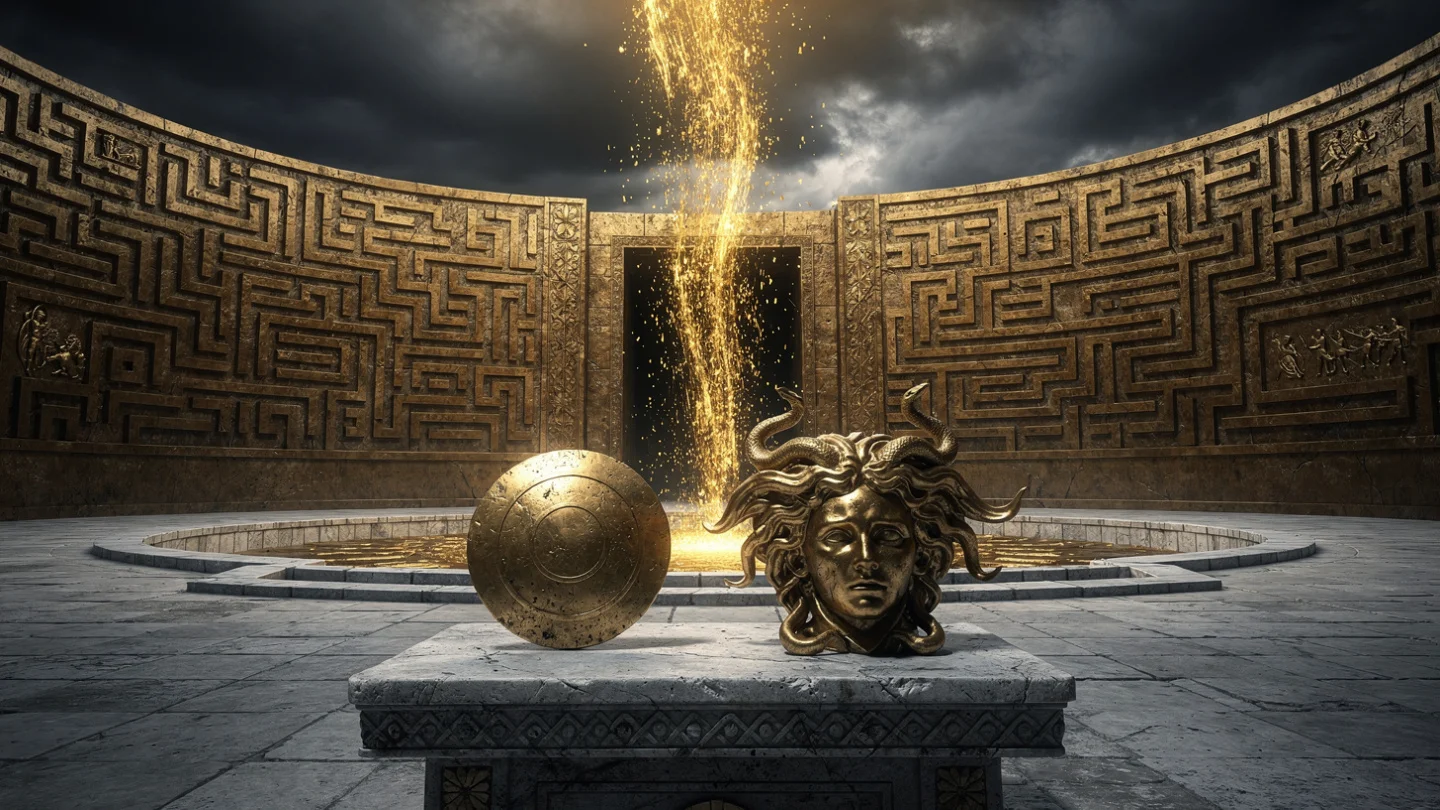
Acrisius built the chamber to contain everything.
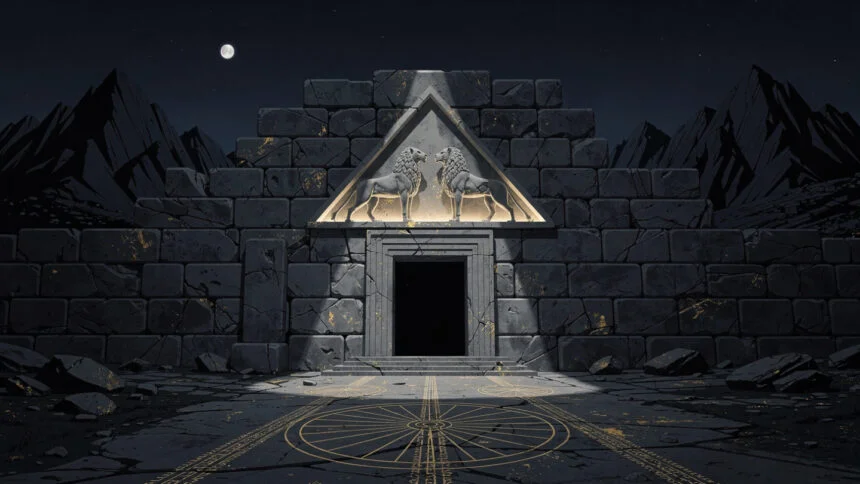
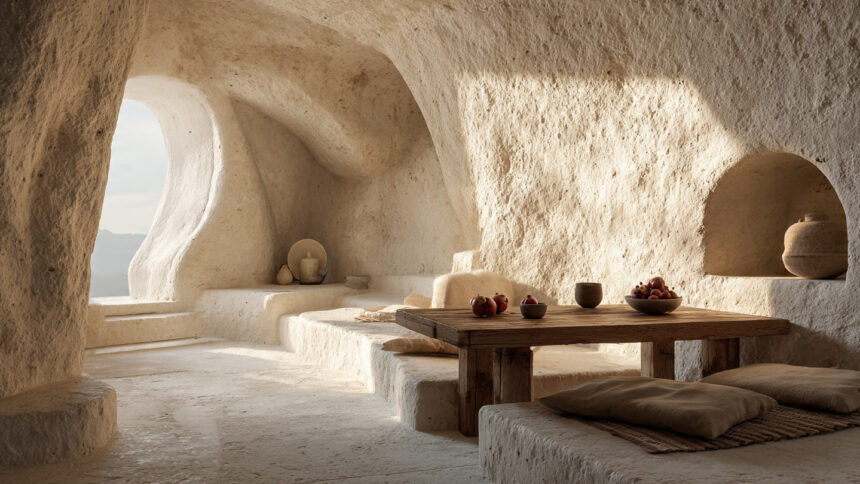
The king of Argos had received the oracle’s prophecy, that his grandson would kill him, and had taken the precaution that the prophecy’s mechanism required: if his daughter Danaë could not conceive, there could be no grandson, and if the means of conception were excluded then the conception itself was excluded. He built the bronze chamber for this purpose, underground, sealed against the ordinary world, designed to exclude every possible visitor. The human suitor could not enter. The animal suitor could not enter. The mortal man in any form could not enter. The chamber was the architectural expression of the attempt to defeat the prophecy by defeating the biological mechanism through which the prophecy would be fulfilled.
He excluded everything except light.
The golden rain that entered through the roof of the bronze chamber and that impregnated Danaë was the divine form whose selection was not arbitrary. It was the form that the architectural exclusion required: Zeus arrived as the one thing that the sealed chamber could not seal against, as the manifestation of the divine whose penetration of the enclosed space could not be prevented by any physical barrier that human engineering could construct. The divine force that governs the cosmos arrives as light because light is the thing that passes through every enclosure, enters every sealed space, illuminates every darkness, and cannot be excluded by any constructed boundary.
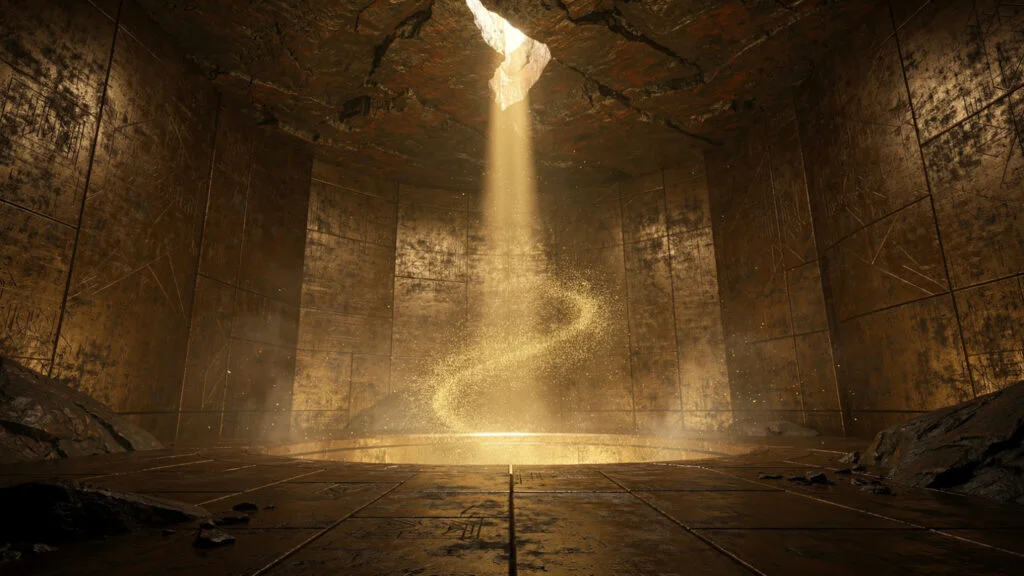
The child who was born from the light entering the sealed space was the child whose divine paternity was encoded in the impossibility of his birth: not simply a claim that his mother made and that her father denied, but a biological event that the sealed bronze chamber’s own design proved. The chamber that was supposed to prevent the conception was the chamber that made the divine origin of the conception undeniable.
Acrisius had built the proof of the prophecy in building the chamber that was supposed to prevent it.
The Architecture of Fate
The structure of the Perseus myth’s opening is the structure that the ancient Greek tradition used most consistently to express the theological claim about the relationship between human action and divine necessity: the action taken to prevent the prophesied outcome becomes the mechanism through which the prophesied outcome is enabled.
Acrisius sealed the chamber to prevent the grandson who would kill him. The sealed chamber produced the divine conception whose impossibility within ordinary human biology was the proof of the divine paternity. The divinely fathered hero required the gifts and the quest that produced the heroic development that produced the set of capacities that would eventually kill Acrisius in the way that the prophecy had foretold. The action taken to prevent the prophecy was the action that fulfilled the prophecy’s first necessary condition.
This is not the dramatic irony of the playwright who knows the ending and lets the audience feel superior to the character who does not. It is the theological claim of the ancient Greek tradition about the structure of necessity: that the attempt to circumvent fate by human action is the mechanism through which fate works, that the oracle’s prophecy is not the prediction of an event that will happen despite what the persons involved do but the prediction of the event that will happen through what the persons involved do in their attempt to prevent it.
Oedipus is the paradigmatic expression of this structure, whose Sphinx article in this collection develops through the riddle about humanity that Oedipus answered correctly without knowing himself. The Deucalion flood myth that the Deucalion article develops is the structure’s cosmic expression: the divine intention and the human response together producing the outcome. The Perseus myth’s opening is the myth’s most architecturally precise expression of the same structure: Acrisius designed the prevention, and the prevention was the prophecy’s enabling condition.
The Graeai and the Intelligence Required
Between the human world and the Gorgons’ realm stood the Graeai: the three ancient sisters whose mythological character was among the most specifically encoded in the entire Greek tradition for the theological claim they were making about what the threshold between the ordinary and the dangerous required of the person who wanted to cross it.
The Graeai were grey from birth. They were described as old women who had been old from the first moment of their existence: the mythological tradition’s way of encoding the character of the creatures who presided over the primordial threshold, beings whose age was the age of the world rather than the age of the person who lives and dies within it. They were the beings who were there before the organized world was organized, before the distinction between the young and the old was established, before the temporal dimension that aging requires.
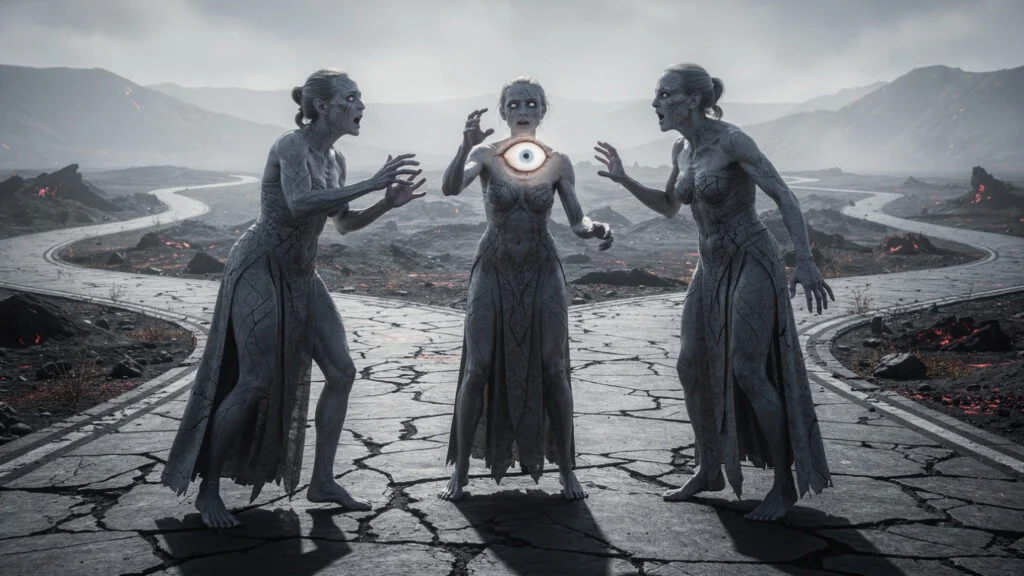
They shared a single eye and a single tooth. The mythology of the single shared eye has generated considerable scholarly attention, but its most direct reading is the reading that the myth’s narrative structure requires: a single eye shared among three beings means that at any moment only one of the three is sighted, while the other two are blind. At the moment when the eye is passing from one sister to another, all three are blind simultaneously.
Perseus waited for that moment.
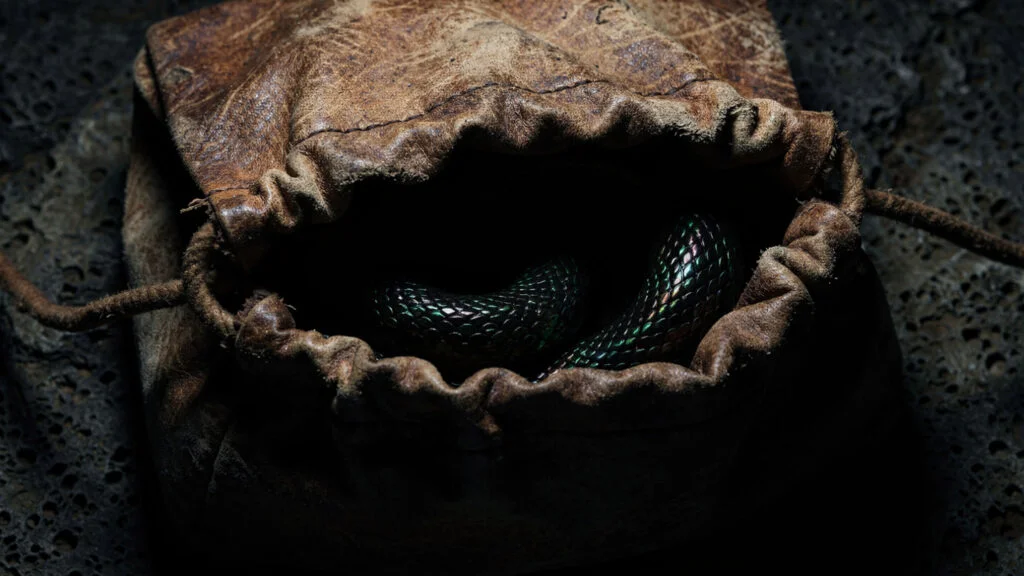
He did not overpower the Graeai. He did not frighten them into submission. He identified the interval of their shared vulnerability and used that interval to take the single eye that gave the three sisters their collective sight. He held it and demanded the information he needed: the location of the nymphs who had the kibisis, the winged sandals, and the cap of invisibility, the divine gifts without which the Gorgon’s lair was unreachable and the Gorgon herself was unkillable.
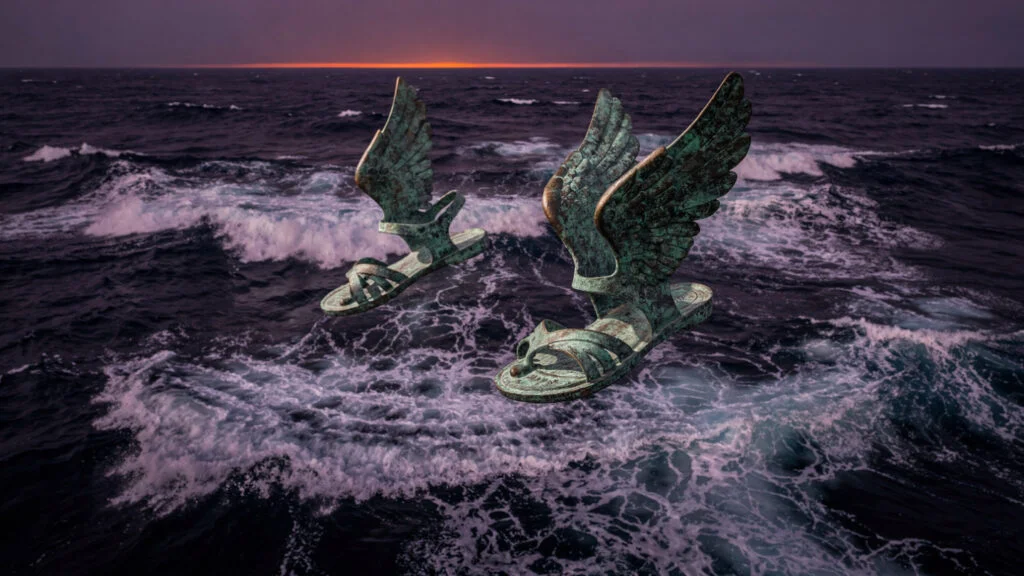
The intellectual quality that the Graeai episode encodes is the quality that the entire Perseus myth was designed to demonstrate: the capacity to identify the vulnerability of the obstacle rather than applying the general heroic virtue of force. Heracles applied force to his obstacles. Perseus identified the moment when the eye was passing between blind hands and took the thing that all three sisters needed to function.
This is the intelligence that the child of divine light required: not the strength of the warrior but the timing of the person who understands how the system he is confronting actually works.
The Sleeping Gorgon and the Mirror’s Logic
The Medusa encounter and the mechanism of the mirrored shield are developed in the Gorgons and Medusa article in this collection through the philosophical dimension of the reflection’s relationship to the original: the reflection resembles the original closely enough to allow Perseus to orient his sword but lacks the quality that makes the original fatal to the gaze.
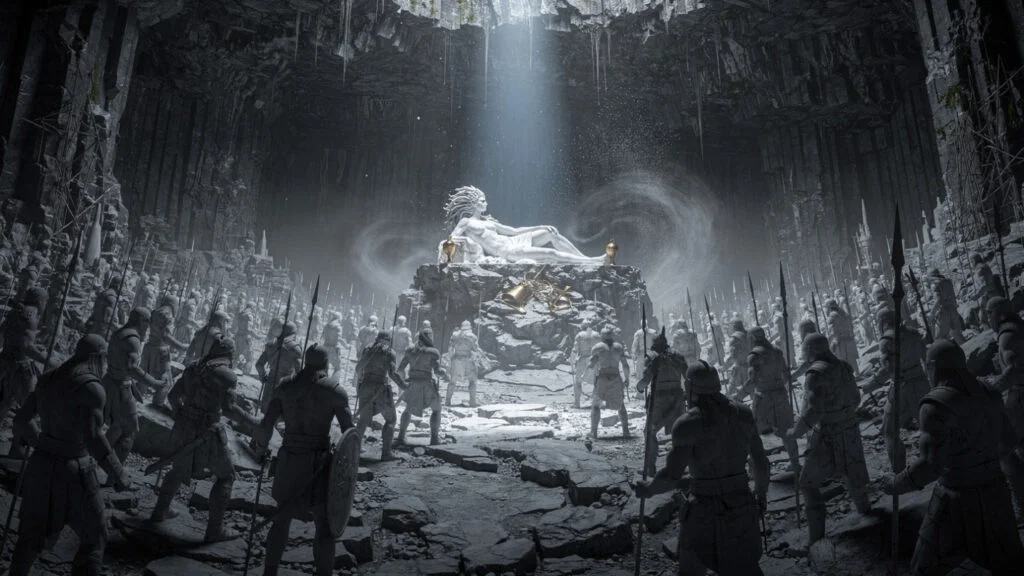
The physical detail that the Perseus encounter with Medusa adds to the philosophical dimension of the reflection’s logic is the detail that the ancient sources consistently preserve: Perseus found the Gorgons sleeping.
The Gorgon’s weapon was the weapon of the gaze, the power of the eye’s direct encounter with the Gorgon’s face. The sleeping Gorgon was the Gorgon whose weapon was temporarily inactive: the eye whose gaze killed was the eye that was closed, and the closed eye’s reflection in the polished shield was the condition in which the reflection’s safety relative to the original was most directly demonstrable. The reflection of a closed eye is a closed eye.
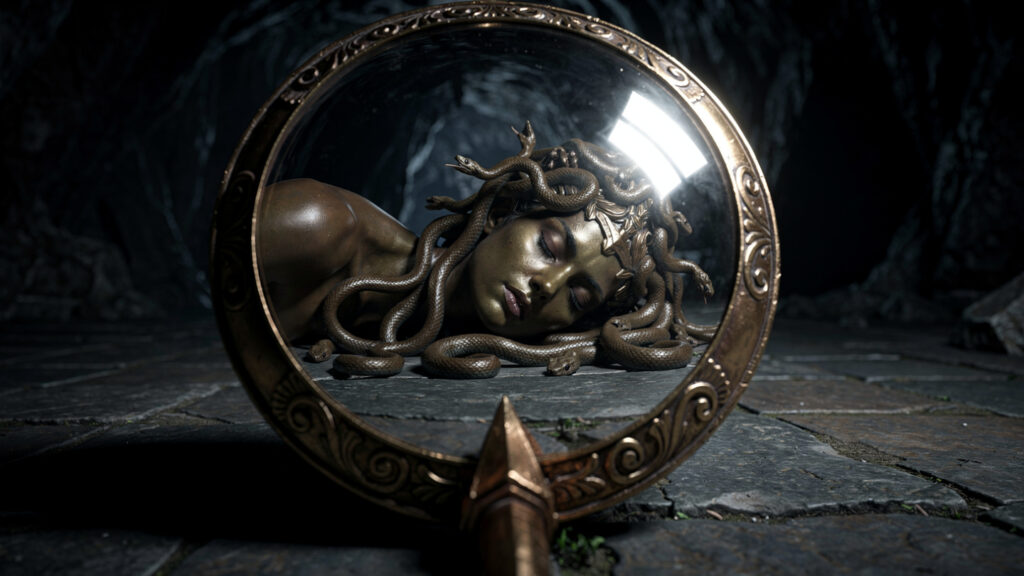
Perseus oriented the sword by the reflection, approached the sleeping form, and struck. The head fell from the body into the kibisis before the reflection could open its eyes and the original could wake to use its weapon.
The quality of the intelligence this required is the same quality that the Graeai episode encoded: the identification of the interval of the obstacle’s vulnerability. The Graeai were vulnerable in the moment the eye was passing. Medusa was vulnerable in the moment of sleep. Both vulnerabilities were not the vulnerabilities that force could exploit: the eye cannot be taken from the Graeai by strength, because the sisters would simply close their hands and the sight would return. The Gorgon cannot be killed by a frontal assault, because the frontal assault requires looking at the Gorgon. The intelligence of the timing was the quality that the divine light’s child possessed and that the brute heroic virtue of the Heracles tradition could not substitute for.
Andromeda and the New Monster
Perseus’s encounter with Andromeda on the Ethiopian coast on his return from the Gorgons’ island is the episode that most directly addresses the question that the entire Perseus myth was organized around: what is the heroic capacity actually for?
The Gorgon’s head was acquired for the purpose of delivering it to Polydectes, the king who had sent Perseus on the quest to remove him from the scene while Polydectes pursued Danaë. The kibisis with Medusa’s head was the instrument of the justice that Perseus was returning to apply. The capacity that the divine equipment and the divine intelligence and the Gorgon’s head together represented was the capacity whose application Perseus was flying back to perform.
But on the way back, there was a girl chained to a rock.
Andromeda’s situation was the situation that the Ethiopian coastline’s mythological tradition produced from the theological structure of the queen’s hubris: Cassiopeia, Andromeda’s mother, had boasted that her daughter’s beauty surpassed the Nereids’, and the Nereids’ complaint to Poseidon had produced the sea monster whose demand was the sacrifice of the princess whose mother’s boast had caused the offense. Andromeda was being sacrificed for her mother’s pride, which was the form of injustice that the myth identified as the occasion for the heroic intervention.
Perseus saw the situation from the air, understood it, descended, negotiated the terms with the parents before acting rather than simply acting, and killed the sea monster with Medusa’s head. The sequence of the negotiation before the rescue is the detail that distinguishes the Perseus myth’s Andromeda episode from the simple heroic rescue: the hero who negotiated the terms of the rescue before performing the rescue was the hero who understood that the rescue was also a political and social transaction whose terms needed to be established before the action that would make the negotiating parties’ agreement binding.
Andromeda became Perseus’s wife. The sea monster was turned to stone. The mythological tradition that the coral of the eastern Mediterranean was produced from the drops of Medusa’s blood that fell into the sea during the rescue is the mythological encoding of the consequence of the heroic action that was not itself the heroic action’s purpose: the coral as the permanent accidental monument to the rescue, the beauty that the violence produced as a byproduct rather than an intention.

Polydectes and the Justice of the Gorgon
The return to Seriphos and the confrontation with Polydectes is the episode that gives the Gorgon’s head its political application and that resolves the injustice that the entire quest had been motivated by.
Polydectes had sent Perseus to the Gorgons because he wanted Perseus dead and Danaë available. Perseus returned with Medusa’s head because the divine assistance that the quest required was available to the hero whose cause was just and whose intelligence was equal to the task. The divine gifts were not given arbitrarily: Hermes and Athena gave the divine equipment to the hero whose situation warranted the intervention, and the intervention was warranted because the injustice of the king who sent the son on the impossible quest to free the mother for the king’s own purposes was the injustice that the divine order required to be corrected.
When Perseus produced Medusa’s head in the royal court and turned Polydectes and his entire court to stone, he was applying the instrument of the quest to the purpose that the quest was ultimately organized around: not the acquisition of the head for its own sake but the correction of the injustice whose correction the head was the means to accomplish. The king who laughed at the returning hero’s claim to have accomplished the impossible was the king who had organized the impossible task specifically to prevent the return, and the stone that the laughing face became was the monument to the mistake of the person who had underestimated what the child of divine light could do when the cause was just.
The Discus and the Unfulfillable Avoidance
The fulfillment of the prophecy about Acrisius is the episode whose structure is the expression of the Greek theological tradition’s most concentrated statement about the relationship between human avoidance and divine necessity.
Acrisius, having learned of Perseus’s return and his successes and the reputation that the hero who had killed Medusa and the sea monster and turned Polydectes to stone had acquired, fled Argos rather than wait to be killed there. He fled to Larissa in Thessaly, the distance that he calculated was sufficient to remove him from the path of the prophecy’s fulfillment. He was not wrong about the prophecy’s mechanism: Perseus did not pursue him to Larissa. Perseus had no intention of killing his grandfather.
But Perseus came to Larissa for the athletic games that the king of Larissa was holding, because Perseus’s reputation had preceded him and the invitation had been extended and the hero who had achieved what Perseus had achieved accepted the invitation to compete in the athletics of the Larissa games.
Acrisius was in the crowd watching the games from which he believed himself safe because Perseus was there as a competitor rather than as a pursuer.
Perseus threw the discus. The wind caught the discus. The discus veered from its intended trajectory and struck an old man in the crowd. The old man was Acrisius.
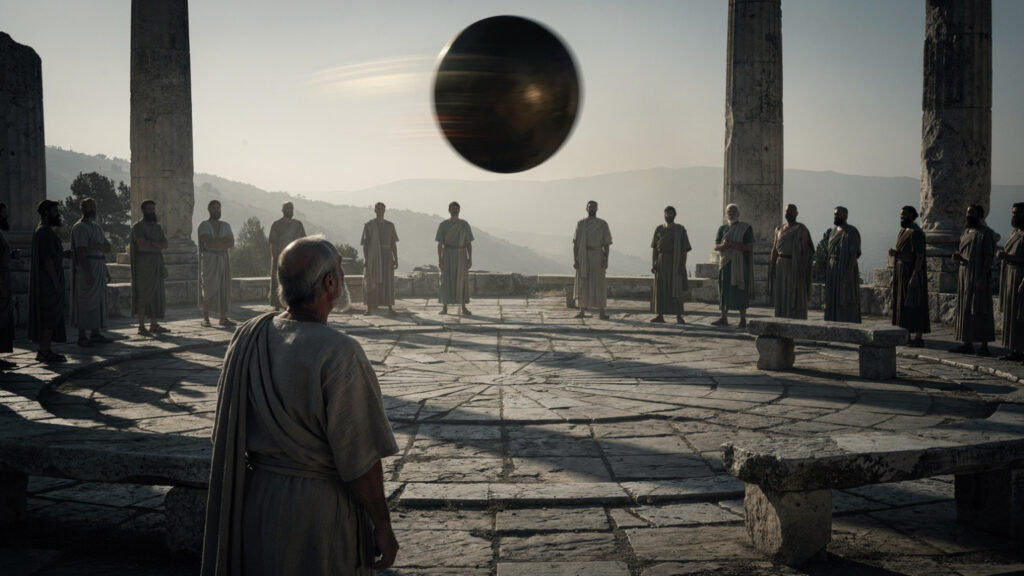
The mechanism of the fulfillment is the mechanism that the Greek tradition identifies as the expression of the necessity’s absolute indifference to human intention: no one intended the killing. Perseus did not intend it. The wind did not intend it. The discus did not intend it. Acrisius did not intend to be in the path of the discus throw that the wind would deflect. The entire chain of events that produced the fulfillment was a chain in which no human agent had the relevant intention, and the prophecy was fulfilled precisely because the human avoidance had generated the chain of accidental events whose endpoint was the death that the oracle had predicted.
Acrisius’s flight to Larissa was the flight that put him in the crowd at the Larissa games. His presence in the crowd at the Larissa games was the presence that the diverted discus struck. His diverted discus was the discus that Perseus threw in the competition that Perseus attended because the Larissa king had invited the famous hero to compete. The invitation had been extended because of the fame that the hero had acquired from the quest that Polydectes had sent Perseus on to get rid of him. Polydectes had sent Perseus on the quest to get rid of him so that Polydectes could pursue Danaë. Danaë had been imprisoned by Acrisius so that she could not conceive the grandson who would kill him.
Every link in the chain leads back to Acrisius’s original attempt to prevent the prophecy.
Perseus in Argos
Perseus was ashamed to take the throne of Argos after killing its previous king, even accidentally, even in fulfillment of the prophecy whose fulfillment had been engineered by the victim’s own actions. He arranged an exchange of kingdoms with his kinsman Megapenthes, the son of Proetus, and became king of Tiryns and Mycenae instead.
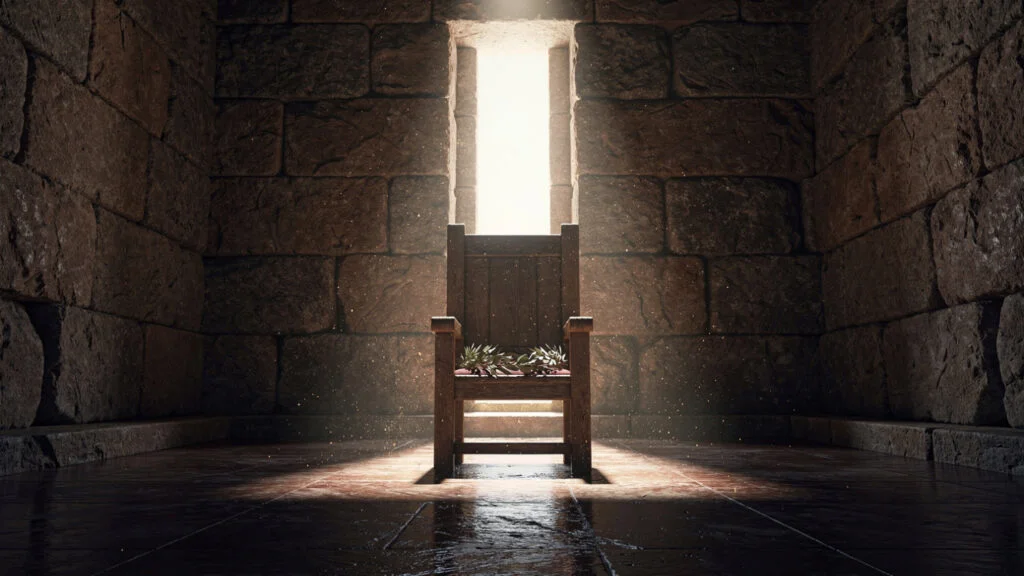
The choice is the choice of the hero whose entire mythological career had been organized around the correction of injustice and who understood that taking the throne of the man he had killed, regardless of the circumstances of the killing, was the action that would transform the hero who had corrected injustice into the beneficiary of the injustice he had corrected. The exchange of kingdoms was the mechanism that allowed Perseus to take the kingship without taking the throne whose occupation would have required him to benefit from the accidental killing.
Perseus founded Mycenae: the city whose Cyclopean walls the Mycenae article in this collection develops as the material record of the late Bronze Age palace civilization that the Greek mythological tradition encoded as the world of the heroes. The city that Perseus founded became the city whose king Agamemnon would lead the Greeks to Troy, the city whose gates would receive the returning Agamemnon and whose queen Clytemnestra would kill him in the bath.
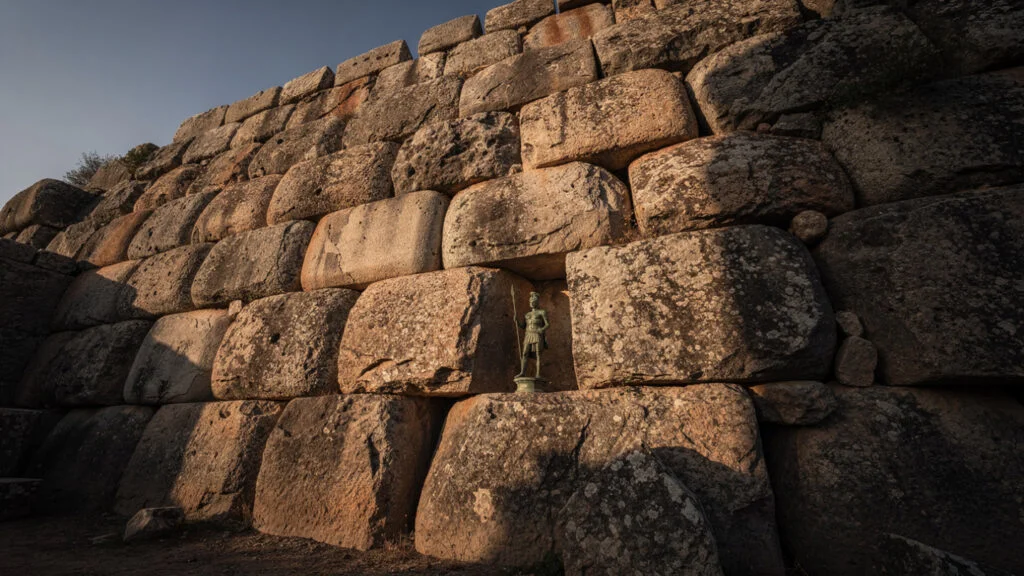
The entire Trojan War tradition, whose Iliad astronomy article and tragic loves article and multiple mythological essays in this collection engage with, descends from the city that the child of the golden rain founded.
At Olympus Estate, Mythic Essays moves through the deeper currents of the Greek tradition. Acrisius built the bronze chamber to exclude everything and excluded everything except light. The child of the light born in the sealed space was the proof of his own divine paternity. Perseus waited for the moment when all three Graeai were simultaneously blind and took the shared eye. He found Medusa sleeping and oriented the sword by the reflection and struck before the eyes could open. He negotiated the terms of the rescue before rescuing Andromeda. He produced the head in Polydectes’s court and the laughter became stone. Acrisius fled to Larissa to escape the prophecy and was killed there by the diverted discus of the hero he had created in building the chamber that was supposed to prevent him. Every link in the chain leads back to the original attempt to prevent the prophecy. The attempt was the prophecy’s first condition.