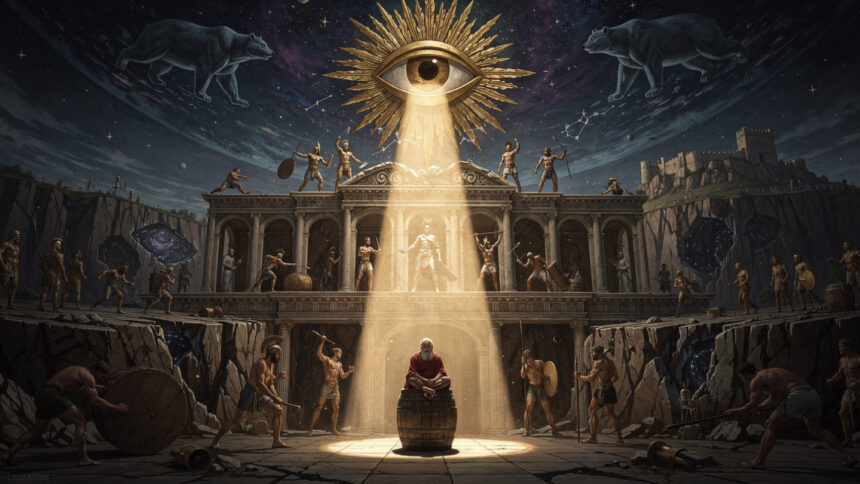




The Sphinx is the only monster in the Greek mythological tradition whose weapon is a question.
Not claws, though she had those. Not the serpent’s venom or the Hydra’s regenerating heads or the Gorgon’s petrifying gaze or the Chimera’s fire: the weapon that the Sphinx deployed against the travelers on the road to Thebes was a question, and the consequence of failing to answer it correctly was death. The Sphinx killed people by asking them something they could not answer, and this is the most unusual form of violence in the entire Greek mythological catalogue, because it makes knowledge the condition of survival in a way that no other monster tradition in the ancient Greek world does.
The person who could not answer the Sphinx’s question did not simply fail. They died. This is the theological claim embedded in the form of the Sphinx’s violence: that ignorance of the thing the Sphinx asked about was a capital offense, that the failure to know was the failure that could not be survived, that there was a category of knowledge whose absence was as fatal as the Gorgon’s gaze or the Hydra’s poison, simply slower and more deliberate and organized around the mechanism of the question and the answer rather than the immediate physical assault.
And the Sphinx was destroyed not by the hero’s weapon but by the hero’s correct answer.
This is the second most unusual thing in the mythological tradition. The Hydra required the cauterizing fire. Medusa required the mirrored shield and the sword. The Minotaur required the sword and Ariadne’s thread. The Sphinx required the truth. Oedipus answered correctly, the Sphinx destroyed herself, and the road to Thebes was open. The weapon that killed the monster was the accurate description of the thing the monster had been asking about. This is the only instance in the Greek mythological tradition in which the hero’s mind rather than the hero’s body or the hero’s weapon is the instrument of the monster’s destruction.
What the Sphinx was asking about was humanity itself.
The Form and Its Journey
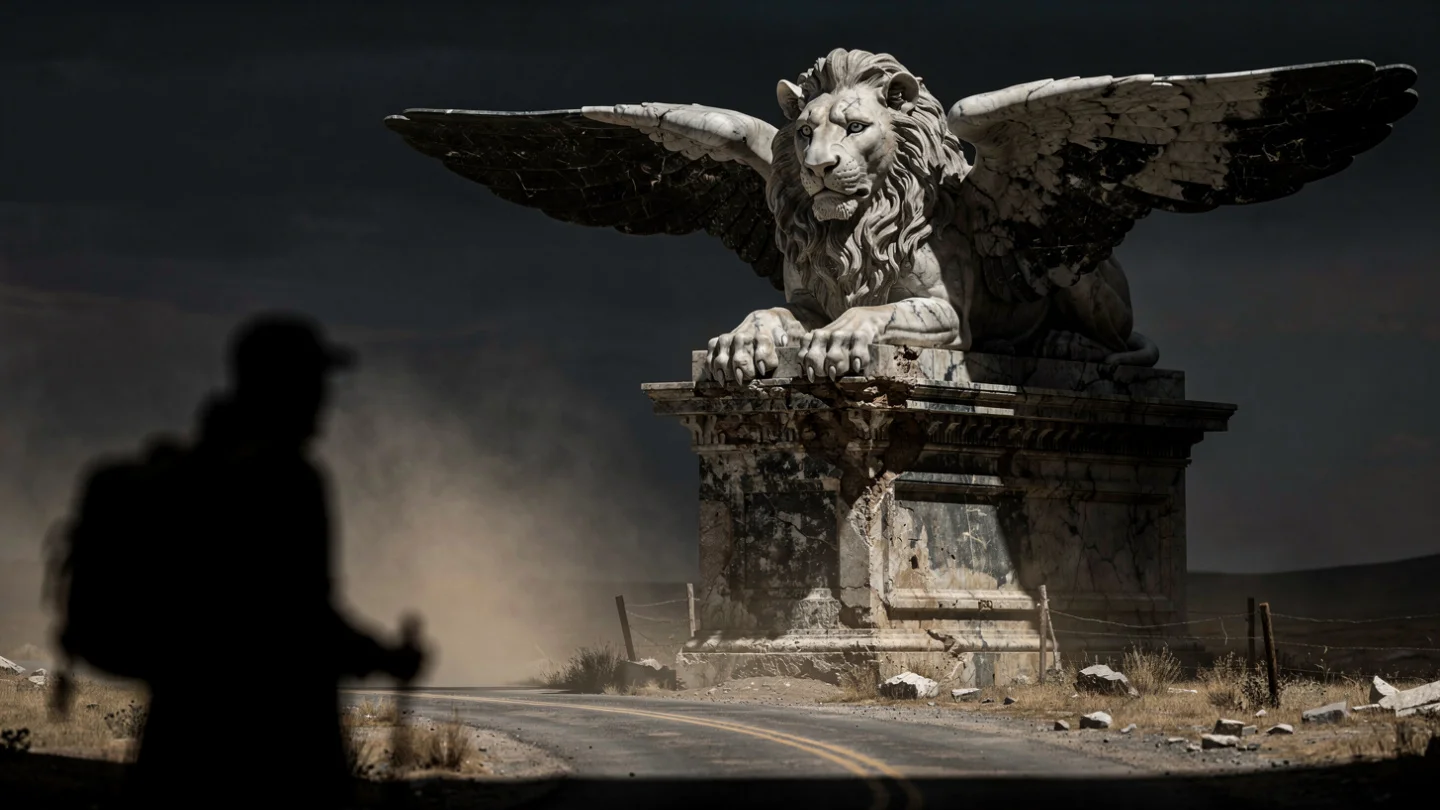
The Sphinx’s physical form, the winged lion with a human head, did not originate in Greece. It arrived.
The hybrid human-animal guardian figure whose combination of the human head, the lion’s body, the eagle’s wings, and the serpent’s tail in various combinations was the standard iconographic vocabulary of the Egyptian and Mesopotamian royal and religious architectural tradition long before it appeared in the Greek world. The Egyptian sphinx, the sphinxes that line the processional avenues of the Karnak temple complex and that guard the entrances to the royal tombs, are the leonine human-headed figures of the solar guardian tradition: the human intelligence of the royal face on the physical power of the lion’s body, placed at the threshold of the sacred space to embody the combination of the divine and the royal authority that the threshold required.
The Great Sphinx at Giza, approximately 4,500 years old and carved from a single limestone outcrop in the location that placed it as the guardian of the Giza necropolis, is the most complete surviving expression of the Egyptian tradition: the solar guardian who faces east, whose gaze is directed toward the sunrise that it witnesses every morning from the same position in the same landscape that it has occupied for four and a half millennia. The Egyptian Sphinx does not speak. It does not ask. It guards in silence, facing the light, the embodiment of the royal solar authority whose function was the protection of the eternal rest of the dead rather than the interrogation of the living.
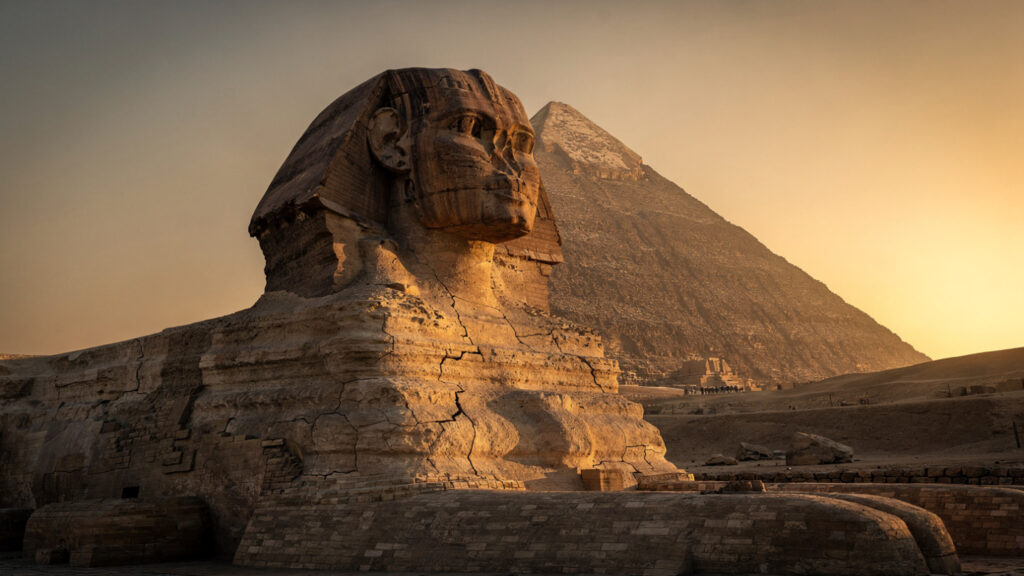
The form traveled from Egypt and from the Levantine coast to the Greek world through the commercial and artistic contacts of the Bronze Age Aegean: the Minoan and Mycenaean civilizations maintained extensive trade and cultural contact with the Egyptian and Levantine worlds, and the hybrid guardian figure appears in Minoan and Mycenaean art in forms that are clearly derived from the Egyptian and Mesopotamian originals. The sphinx appears on Mycenaean gold rings, on Minoan seal stones, on the ivory carvings of the Late Bronze Age palace economies. The form was present in the Aegean world before the Greek mythological world was systematized, and what the Greek world did with the form when it incorporated it was the transformation that the Greek mythological imagination consistently performed on the worlds it absorbed from the surrounding world.
Greece inverted the Egyptian Sphinx completely.
The guardian that did not speak became the riddler that kills through speech. The solar deity that faced the sunrise in silence became the creature that faced every traveler with a lethal question. The protective figure at the threshold of the sacred space became the punitive figure at the threshold of the city. The Egyptian Sphinx protected the eternal rest of the dead. The Greek Sphinx, placed on the road to Thebes by Hera as the punishment for the city’s failure to avenge an act of violence against a young man named Chrysippus, was sent to kill the living as the expression of divine anger rather than to guard the dead as the expression of divine protection.
The same form. The opposite function. The Egyptian Sphinx is silence facing the light. The Greek Sphinx is a question facing the traveler.
The Riddle
The riddle that the Sphinx asked every traveler on the road to Thebes is the most famous riddle in Western literature, and its content is the content whose answer makes the riddle the most precise possible expression of what the Sphinx was actually testing.
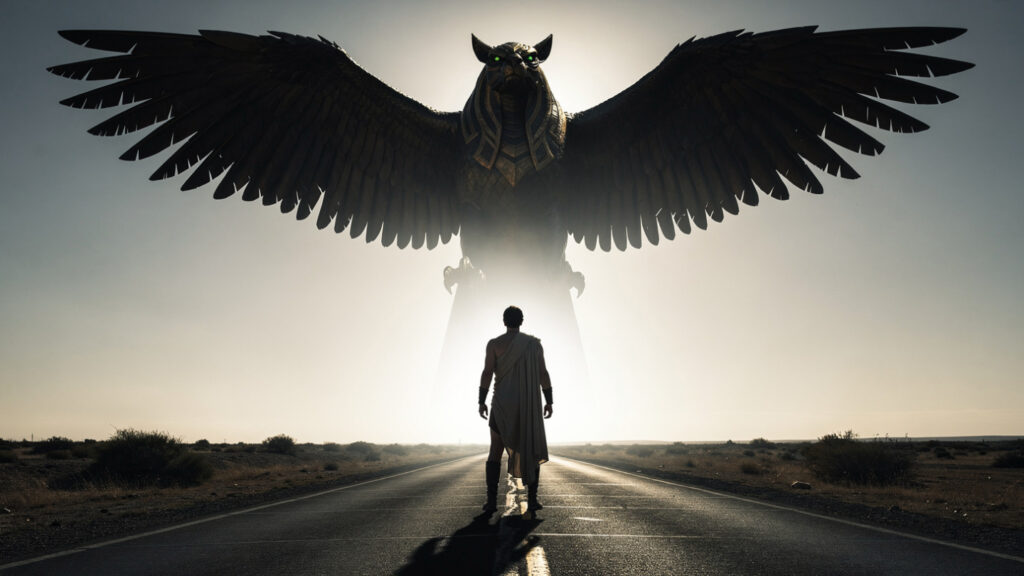
What creature walks on four legs in the morning, two legs at noon, and three legs in the evening?
The answer is the human being. The infant who crawls on hands and knees in the morning of life, the adult who walks upright in the noon of life, and the old person who walks with a staff in the evening of life: the riddle describes the entire arc of human existence in three images organized around the metaphor of the day’s progression from dawn to dusk. The creature who passes through the four-legged morning and the two-legged noon and the three-legged evening is the creature that the riddle is asking the traveler to identify, and the answer is the traveler themselves.
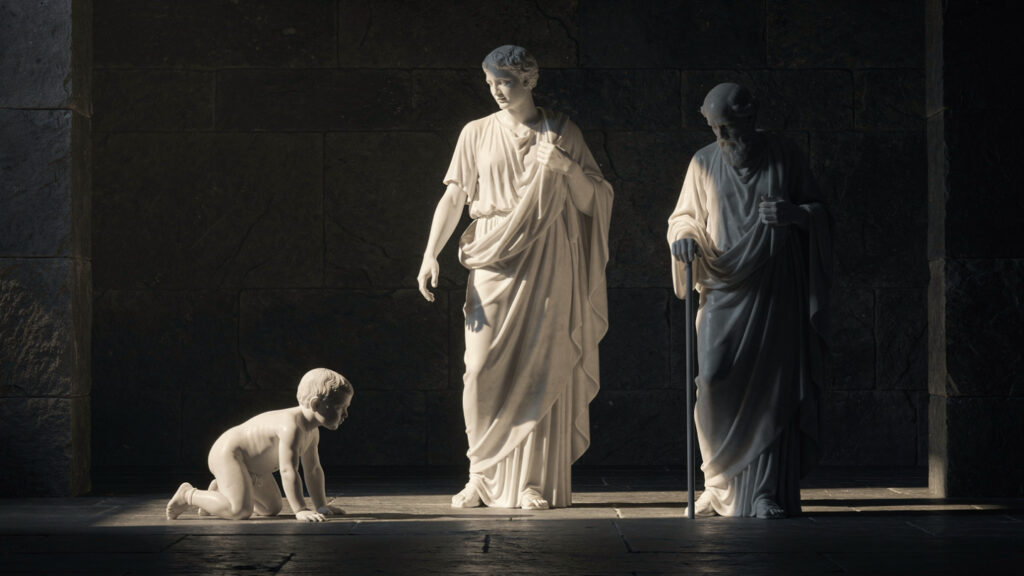
The theological claim embedded in the riddle’s structure is the claim that self-knowledge is the knowledge whose absence the Sphinx was punishing with death: the person who cannot answer the Sphinx’s question is the person who does not know what they are, the person who can walk on two legs through the noon of their life without understanding that the two-legged noon was preceded by the four-legged morning and will be followed by the three-legged evening, the person who inhabits the human condition without understanding it as a condition rather than simply a permanent state.
The Sphinx was not asking for information that required research or education or expertise. She was asking for the answer that every human being who had understood their own nature already possessed. The person who could not answer was the person who had not thought about what it meant to be the thing they were. The violence of the Sphinx’s death was the violence appropriate to that failure: if you have not understood what you are, you cannot be allowed to continue on the road into the city where the consequences of your ignorance will accumulate.
The Sphinx is not the only riddler the Greek tradition remembers. A riddle ended another great career on a Cycladic beach, where a children’s riddle defeated Homer on Ios.
Oedipus and the Tragic Irony
Oedipus answered the riddle correctly. He knew what man was. He described the human condition in its three stages with the accuracy that the Sphinx required. The Sphinx destroyed herself, as the consequence of the correct answer that the mythological tradition had determined would end her, and Oedipus entered Thebes as the man who had saved the city from the monster.
He did not know who he was.
This is the tragic structure of the Oedipus myth that the Sphinx riddle encodes in its most concentrated form: the person who understood the human condition in the abstract and could not recognize it in the case of his own life. Oedipus knew that man walks on four legs in the morning of life and that the morning of life is the time of the infant’s crawling dependence. He did not know that his own morning had been the morning of the infant exposed on the mountain to die, that the man he had killed on the road to Thebes before answering the Sphinx’s riddle was the father he had never known, and that the woman he was walking toward as the city’s new king and savior was his own mother.
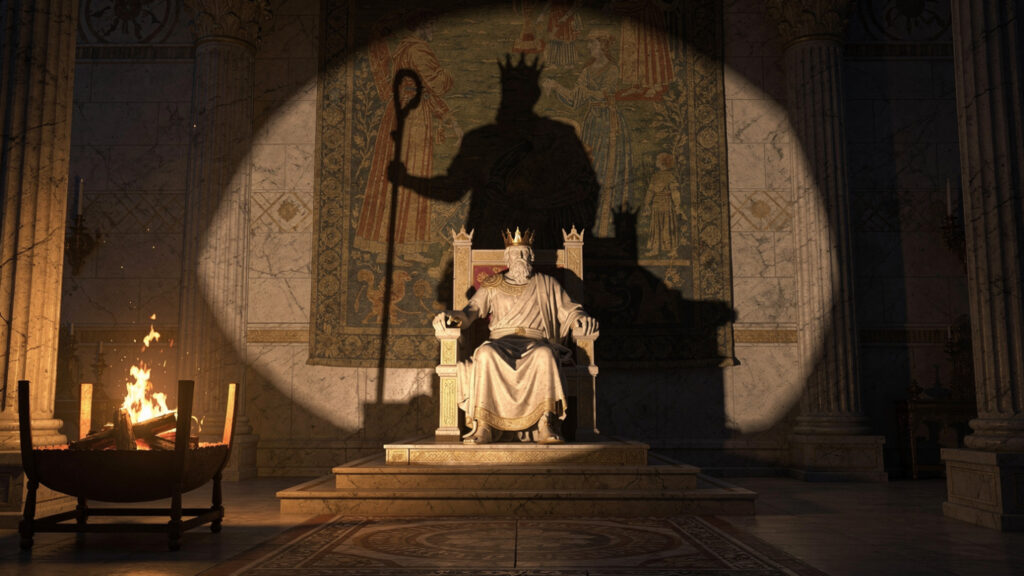
He answered the riddle about man. He did not know himself as a man.
The dramatic structure of Sophocles’s Oedipus the King, which is the fullest surviving ancient Greek engagement with the Oedipus myth, is organized around exactly this irony: the detective story in which the detective is the criminal, the investigation in which the investigator is the person the investigation implicates, the search for the truth whose conclusion is the truth about the person doing the searching. Oedipus moves through the play toward the knowledge of his own identity with the relentlessness of the person who does not know what he will find, and the horror of the play’s conclusion is the horror of the person who had the general knowledge and lacked the knowledge, who knew what man was and did not know what he was.
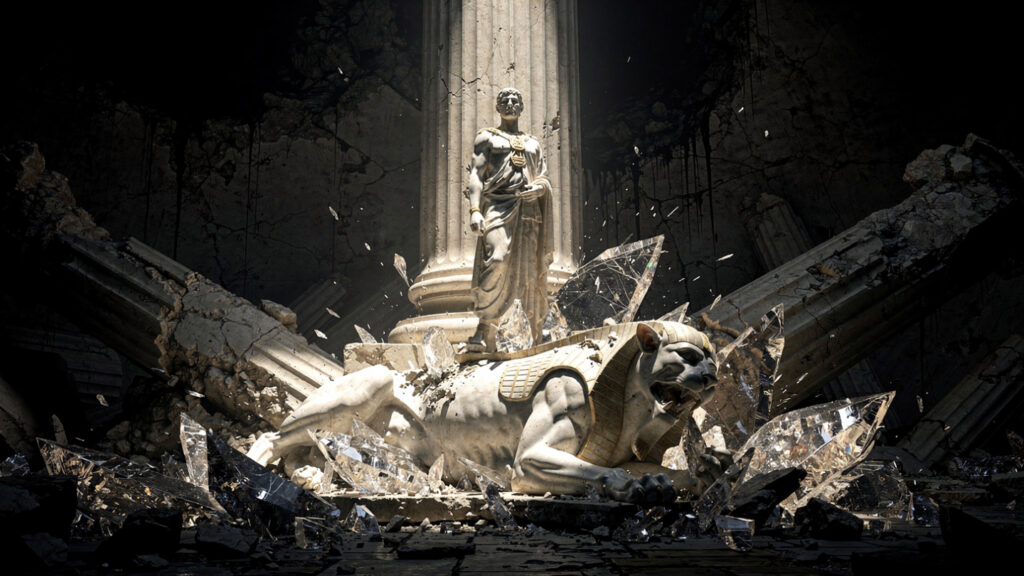
The Sphinx’s riddle set this trap. The riddle about the human condition was the test that the person who answered it correctly would subsequently fail in the most ironic and most personal possible way. Oedipus passed the Sphinx’s test and walked into the catastrophe that the test had been designed to prevent: the entry of the person who does not fully know themselves into the position of power in the city where the consequences of that ignorance will eventually become visible to everyone.
The Greek Sphinx in the Artistic Tradition
The Sphinx appears extensively in the Greek artistic world, particularly in the funerary context that directly reflects her function in the mythological world as the creature associated with death and the boundary between the living and the dead.
The archaic Greek funerary sphinxes, the stone sphinxes that served as grave markers in the sixth and seventh centuries BCE, are the most direct expression of the Greek world’s funerary appropriation of the Egyptian guardian figure. The sphinx that in Egypt protected the eternal rest of the dead was placed by the Greek world on the graves of the dead as the guardian of the tomb and the marker of the boundary between the world of the living and the world of the dead. The Egyptian function was preserved in the funerary context even as the mythological function was inverted in the Theban narrative: the grave guardian did not ask riddles, and the road guardian did not simply guard.
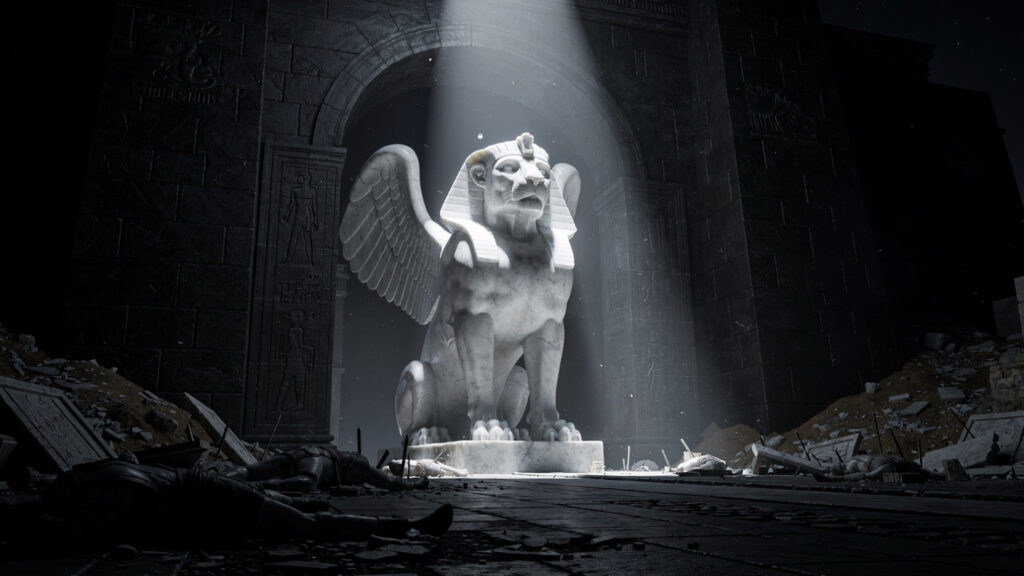
The iconographic world of the Theban Sphinx as the winged female figure with the lion’s body is the Greek elaboration of the Egyptian form. The addition of the wings, which the Egyptian sphinx typically did not have, gave the Greek creature its character of the aerial power combined with the terrestrial power of the lion, and the female face gave the creature the gendered identity that connected her to the broader world of the female monster in the Greek mythological catalogue. The Gorgons were female. Scylla was female. The Sirens were female. The Sphinx was female. The Greek world consistently placed the specifically lethal and the specifically intelligent female figure at the boundary between the human world and what lay beyond it. The monster that kills through knowledge rather than through force is the specifically female monster in the gendered economy of the Greek mythological imagination.

The Sphinx appears on the Oedipus-themed Attic vases of the fifth century BCE in the iconographic program that most completely documents the mythological tradition’s visual representation: the winged lion-woman on the column above the road, the traveler below the column, and the moment of the riddle’s asking suspended between the two figures in the visual tension of the Greek vase painter’s capacity to represent the dramatic instant rather than the narrative sequence. The vase images of the Sphinx and Oedipus are the images of the question before the answer, the violence before the death or the salvation, the instant in which everything depends on whether the person below the column knows what they are.
The Egyptian Sphinx and What It Actually Was
The Egyptian Sphinx, understood in its own world rather than through the Greek overlay that the word sphinx has imposed on it, was not a riddling creature and was not a punitive creature and was not a creature at all in the mythological sense that the Greek world would understand.
The Great Sphinx of Giza, which the Egyptians themselves called Heru-em-akhet, Horus on the Horizon, was the solar deity in leonine human-headed form whose position in the Giza landscape placed it at the precise point where the rising sun was visible between the pyramids of Khafre and Khufu when viewed from the vantage point of the Sphinx Temple directly in front of it. The carving was most likely made during the reign of Khafre in approximately 2500 BCE, using the limestone outcrop that the Giza plateau’s geology offered at that location, and its face, though heavily damaged by millennia of erosion and deliberate defacement, most likely bore the features of Khafre himself in the convention of the Egyptian royal portraiture that identified the pharaoh’s face with the solar deity’s form.
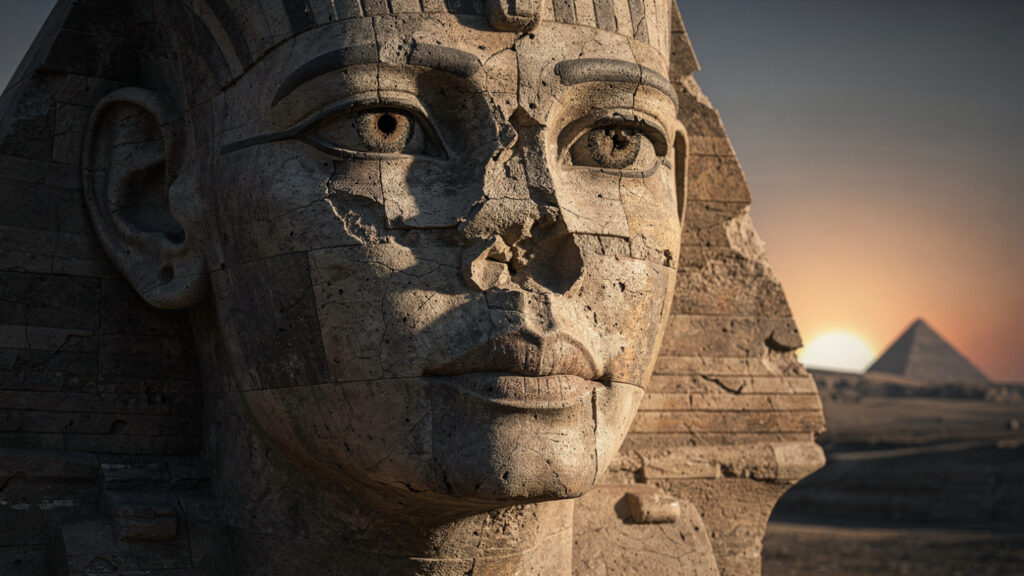
The Sphinx did not ask Khafre’s subjects what they were. It was Khafre, or the solar deity in Khafre’s image, facing the eternal sunrise from the eternal position in the eternal landscape. Its silence was the silence of the divine authority that did not need to speak because everything visible from its position, the sunrise, the pyramids, the Nile valley below, was already within its domain.
The Dream Stela, the granite slab that the pharaoh Thutmose IV placed between the Sphinx’s paws after his restoration of the monument in approximately 1400 BCE, records the dream in which the Sphinx spoke to the young Thutmose and promised him the pharaoh’s crown if he would clear the sand that was burying it. This is the oldest recorded instance of the Egyptian Sphinx speaking, and it spoke not to ask a question but to make a promise. The inversion of the Greek world’s riddling question-asker is complete even in the one ancient Egyptian text that gives the Sphinx a voice.
The Greek world took the form of the Egyptian guardian and gave it the one property that the Egyptian world had consistently denied it: speech in the interrogative mode, the question that demands an answer from the person it confronts, the knowledge test whose failure is fatal. The Egyptian Sphinx was the answer to the question of what divine authority looked like at the horizon. The Greek Sphinx was the question that required the human being to provide the answer about themselves.
What the Bridge Actually Was
The relationship between the Egyptian Sphinx and the Greek Sphinx is not the relationship of the same world in two different cultural expressions. It is the relationship of the borrowed form and the transformed function. The leonine human-headed figure that the Bronze Age Aegean absorbed from the Egyptian and Levantine visual world and that the Greek mythological imagination gave a theological role that the original form had never performed.
What traveled was the visual vocabulary, the hybrid figure that combined the human and the leonine in a single form. What did not travel was the theological content. The solar guardian’s silent facing of the eternal sunrise did not travel with the form into the Greek world, because the Greek mythological world had a different set of theological concerns and a different understanding of what the hybrid creature at the boundary between worlds was for.
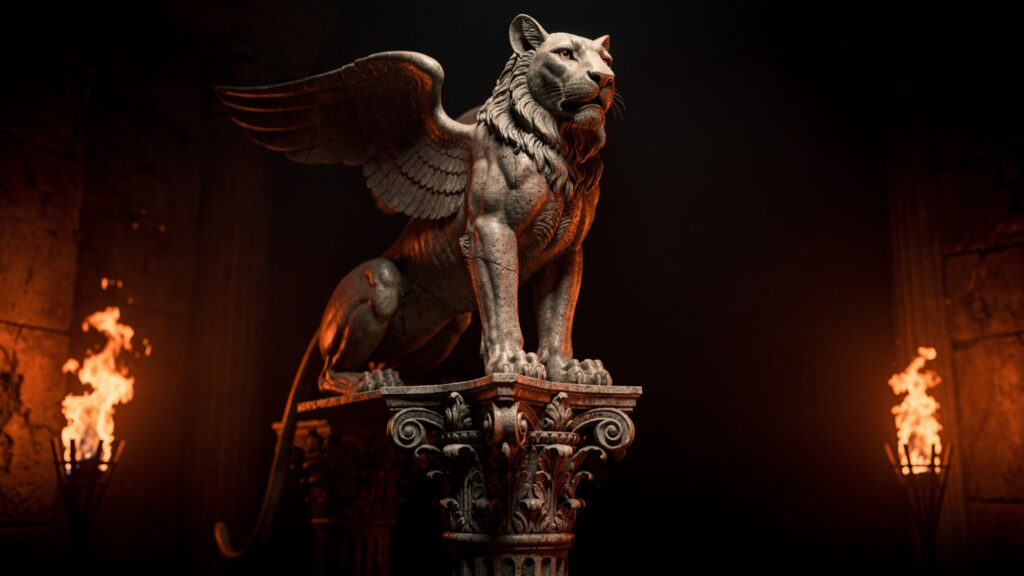
The Greek world needed a creature that embodied the danger of self-ignorance, the lethal consequence of not knowing what the human being was. It needed a monster whose weapon was appropriate to the crime it was punishing, and the crime it was punishing was the failure of self-knowledge, the failure to understand the human condition in its full arc from the four-legged morning to the three-legged evening. The Egyptian leonine guardian’s form was available, and the Greek world gave it the function that the Greek world needed.
The Sphinx is the borrowed form given the Greek soul: the silent guardian of the Egyptian horizon transformed into the lethal questioner of the Greek road. The Egyptian Sphinx asked nothing and told everything about power through its position in the landscape. The Greek Sphinx asked one question and that question contained everything that the human being needed to know about themselves.
Oedipus knew the answer. He did not know himself. The Sphinx was destroyed. The city was entered. The catastrophe was waiting inside.
At Olympus Estate, Mythic Essays moves through the deeper currents of the Greek tradition. The Sphinx is the only monster in the Greek mythological catalogue whose weapon is a question. The Egyptian Sphinx faced the sunrise in silence for four and a half thousand years without asking anything of anyone. Greece borrowed the form and gave it a voice and the voice asked one question and the question was about what it meant to be human and Oedipus answered correctly and entered Thebes and did not know who he was. The riddle was answered. The tragedy was not avoided. The answer to the question about humanity did not protect the person who answered it from the human catastrophe that was waiting for him inside the city. It never does.