The man who conquered the known world was born here, and almost nobody comes.
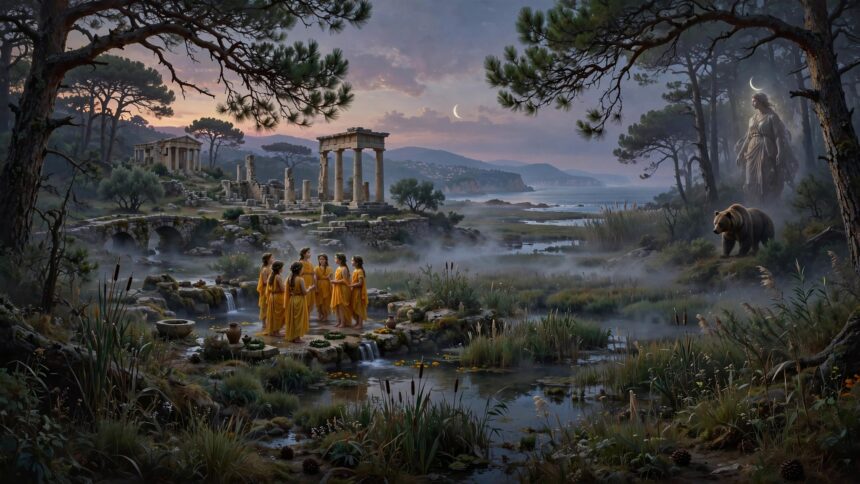
Pella, ancient capital of King Archelaus of Macedonia at the end of the fifth century BCE and birthplace of Alexander the Great. The city lay in northern Greece, about twenty-four miles northwest of Thessaloniki. This is what the encyclopedia says, accurately and with the specific flatness that accuracy sometimes produces in the face of genuinely extraordinary facts. Alexander was born here in 356 BCE. He was educated here by Aristotle, whom his father Philip II had specifically recruited. Euripides, in the final years of his life, came to this court and wrote the Bacchae here, the most psychologically complex play in the entire Greek tragic tradition. The tragedian Agathon and the painter Zeuxis were invited to come to and work in Pella. The city that Philip II built into the dominant power of the Aegean world, and from which Alexander launched the campaign that would eventually put him on the throne of Persia, was a city that attracted, in the generation of its greatest power, the finest artistic and intellectual talent the Greek world could produce.
The city flourished for two centuries, declined after Roman conquest, and was gradually buried under silt and farmland as the river that served it changed course.
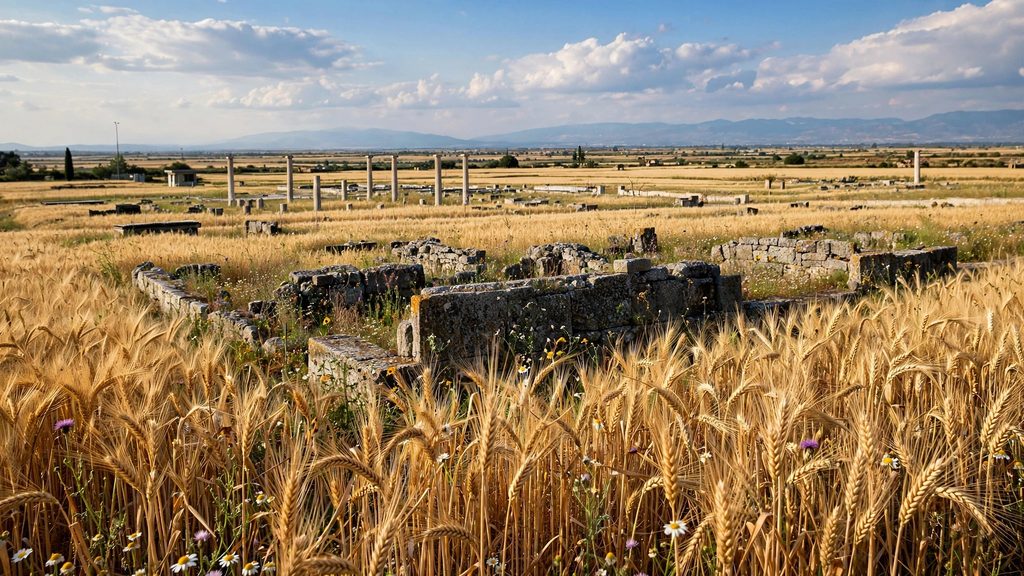
It is now twenty-five kilometers from the sea it once commanded. The harbor that connected it to the Aegean and made it the commercial hub of the Macedonian kingdom has not been found, because the silting that destroyed the harbor buried it under the same flat agricultural plain that now surrounds the site in every direction. Today’s Pella lies twenty-five kilometers inland, as over the past two thousand years the river has silted up and covered the remains of the settlement.
The city that built the world conqueror was itself conquered by geography, and the geography has been winning ever since.
What Pella Was at Its Height
To understand what was lost when the river silted and the earthquake struck, you have to understand what Pella actually was in the century between Philip II’s accession and the Roman defeat of Macedonia at the Battle of Pydna in 168 BCE.
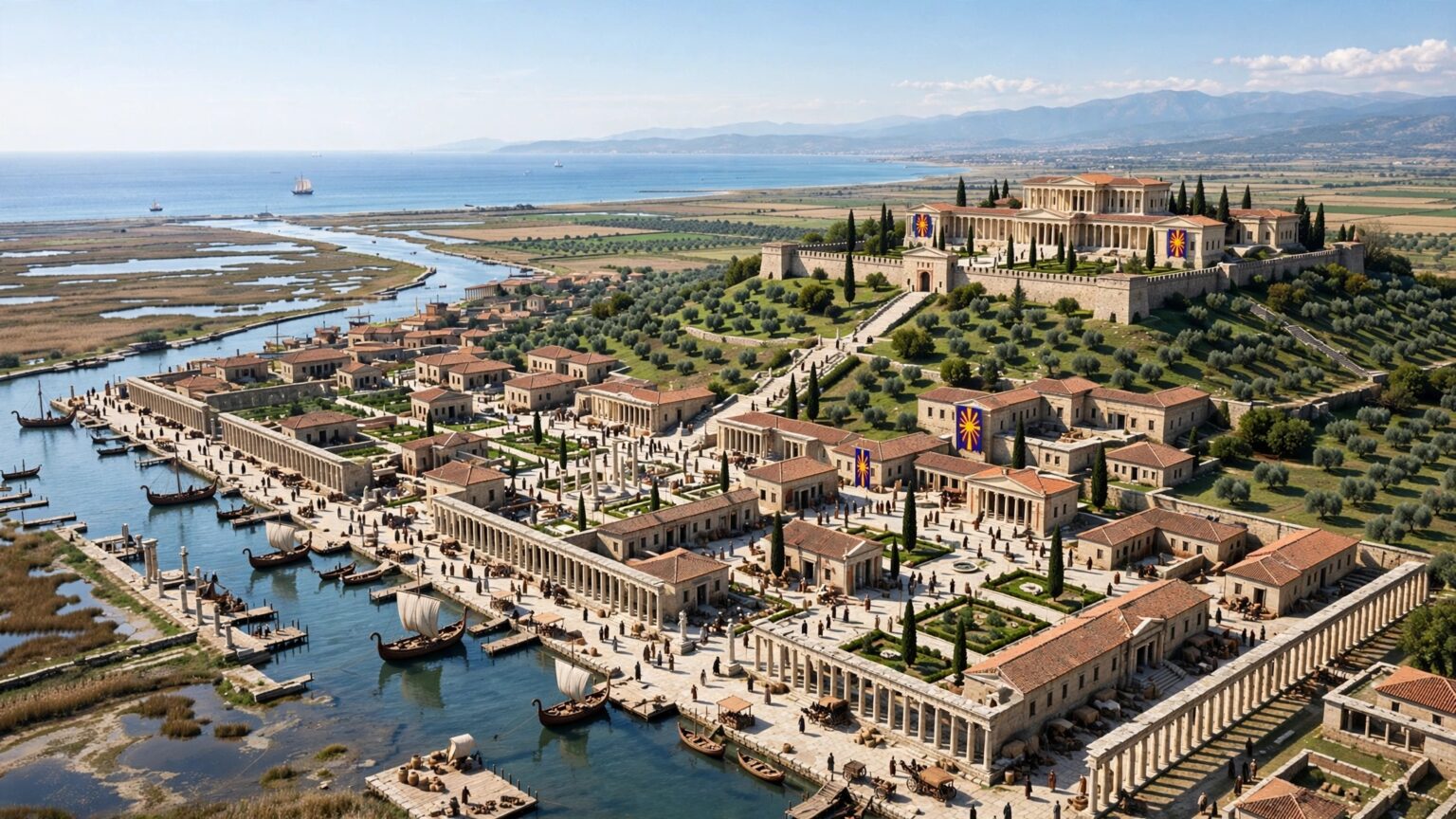
Pella was soon known as the greatest of the cities in Macedonia, a description Xenophon gives directly in his Hellenica. This was not provincial boasting. Archaeologists have been excavating at Pella since the early twentieth century and have revealed sprawling townhouses, broad avenues, lavish bathhouses, sanctuaries overflowing with offerings, and a huge agora, or marketplace, one of the largest in the ancient world. The agora at Pella covered approximately seven hectares of ten city blocks, constructed in the last quarter of the fourth century BCE, with shaded colonnaded walkways known as stoas surrounding the open commercial and civic spaces.
Seven hectares. The Athenian agora, the marketplace that the entire classical world looked to as the model of civic space, covers approximately eight hectares. Pella’s agora was built to nearly the same scale as Athens’s at a moment when Athens was still the intellectual capital of the Mediterranean world and Pella was the political capital of the power that had just defeated it.
The city was built on a Hippodamian grid plan with long building blocks, had an excellent sewer system, and was already fortified in the time of King Philip II, who transformed Pella into a city of great international importance. Persian and Greek ambassadors met the king here. The public baths complex is the oldest organized bathing facility known from this period anywhere in northern Greece, and among the oldest anywhere in Greece. A system of clay water pipes with stone maintenance shafts running under the streets brought clean water to the complex, while drainage pipes carried off waste water.
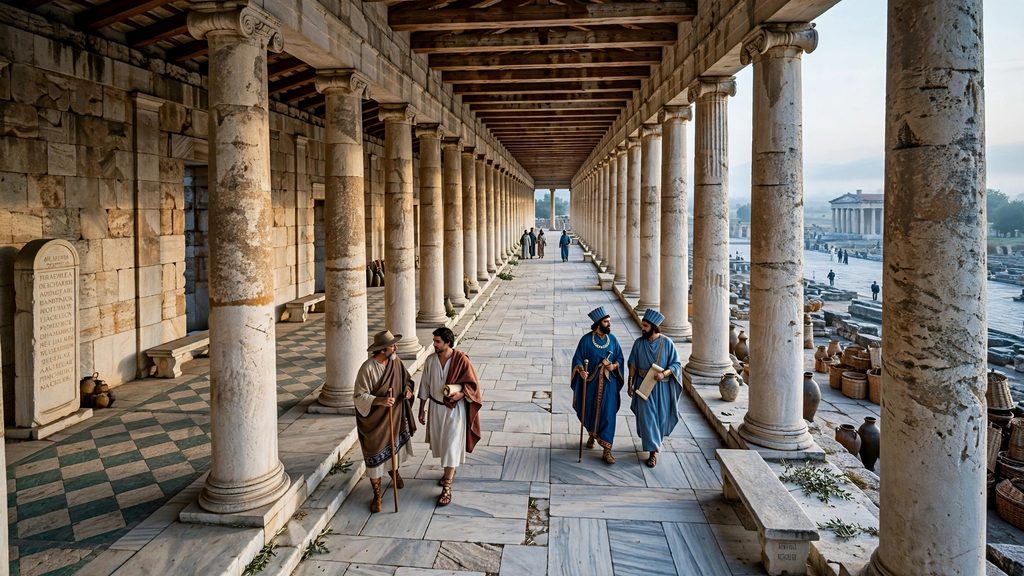
A city with a hydraulic infrastructure system, a grid street plan, an agora that nearly matched Athens in scale, diplomatic traffic from Persia and across the Greek world, and the intellectual credibility to attract Euripides and Aristotle: this was not a barbarian outpost at the edge of the Greek world. It was a city that understood itself as the Greek world’s new center of gravity, and for approximately two centuries it was right.
The royal palace, where Alexander the Great was born and educated, was on a hill in the northern part of the city. During the reign of Cassander, the same king who would later found Thessaloniki, the city was redesigned and occupied an area of about two and a half million square meters and was defended by a fortification wall. The palace complex alone covered sixty thousand square meters. Although archaeologists have been excavating Pella since 1914, it was only in 2011 that serious work began on the palace, and today it remains largely off limits to tourists.
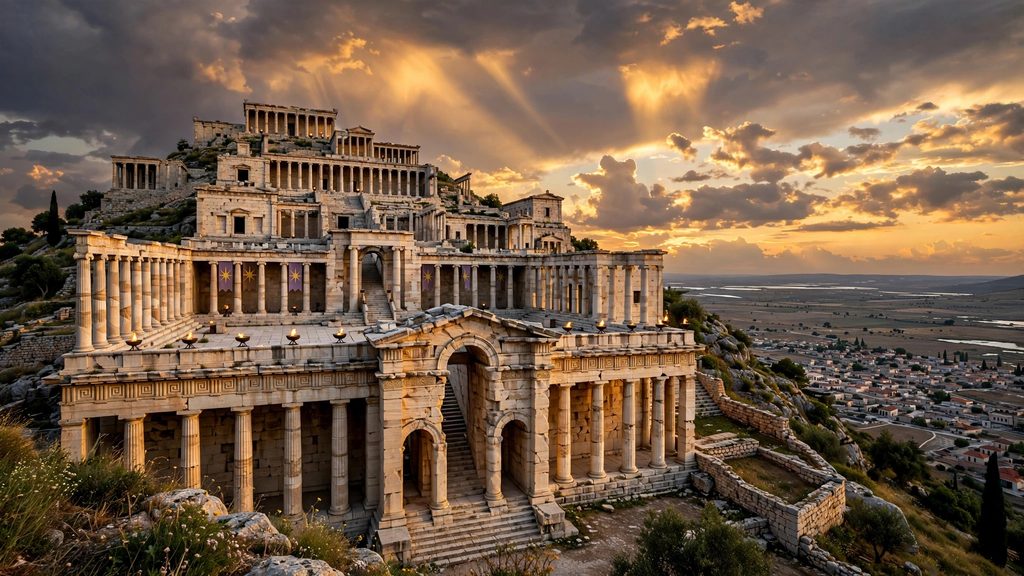
The place where Alexander was born is a hill behind a protective shelter that visitors can see but not enter, still being excavated, still giving up its secrets to the people with brushes rather than the people with cameras.
Euripides in the North
The detail that Euripides wrote the Bacchae at Pella is not a biographical footnote. It is the most specific evidence available of what Pella represented to the intellectual world of late fifth-century Greece: a court sophisticated enough to attract the most demanding and most controversial playwright of his generation in the final years of his life, and a cultural environment in which the most theologically unsettling play in the entire Greek tragic canon, examined in full elsewhere on this site, could be composed.
Euripides left Athens around 408 BCE, near the end of his life, and accepted the invitation of the Macedonian king Archelaus to come to Pella. He died there in 406 BCE, and the Bacchae was produced posthumously. The play explores, with a psychological precision that anticipates modern accounts of religious ecstasy and crowd violence, the specific dynamic of Dionysian worship: the god whose arrival in a city disrupts the rational order, whose female devotees achieve through ecstatic possession both liberation and destruction, whose theology challenged the Olympian settlement in ways the Athenian theatrical establishment was ambivalent about hosting.
That Euripides chose to write this play at a Macedonian court is not incidental. Macedonia had a particular relationship to the Dionysian tradition, one that the mythological geography of the region supported: Dionysus’s own origin traditions, treated at length in this site’s dedicated essay on the god, placed him in the northern Aegean world, in Thrace and Macedonia, the territories beyond the southern Greek world where he had come from before arriving among the city-states of the classical period. The court that received the aged Euripides and the play that court generated were in explicit dialogue with the specifically Macedonian religious tradition within which the new dynasty was building its cultural identity.
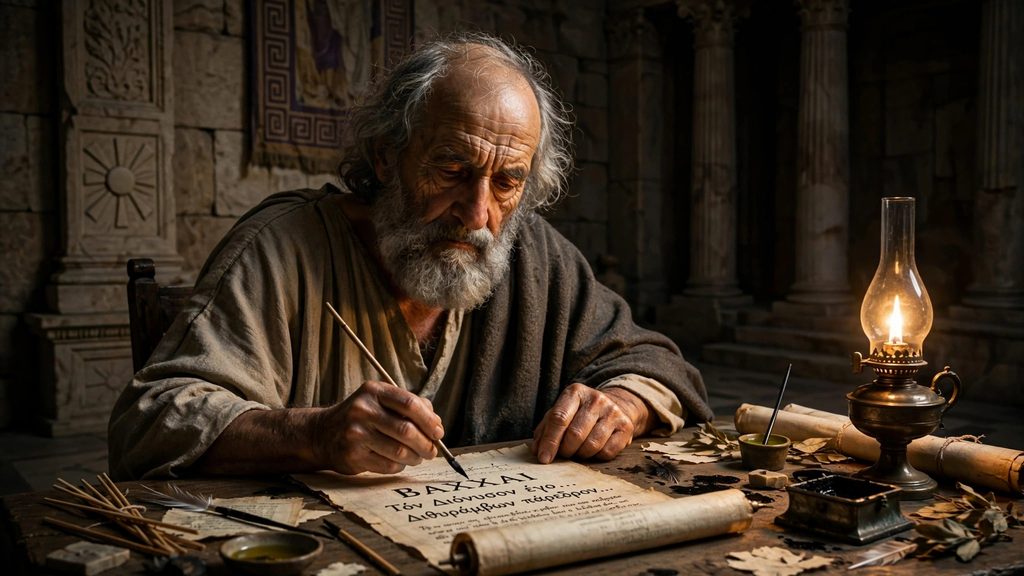
Euripides wrote his Bacchae here. The play that defined the Western understanding of religious ecstasy and the violence it can produce was written in the city where the man who would later claim to be the son of a god was born. This is the specific quality of Pella’s intellectual history: events that seem random when described separately reveal, when placed in their shared context, the density of consequential things happening in the same place at the same time.
The Mosaics and What They Meant
Some of the richest houses, including the House of Dionysus, were adorned with intricate river-pebble mosaics depicting hunts and mythological scenes.
The pebble mosaic tradition that Pella developed in the late fourth century BCE is the most technically sophisticated and the most visually ambitious floor decoration produced in the ancient world before the Roman tessellated mosaic tradition of the second century BCE and later replaced it. The Pella mosaics did not use cut tiles or tesserae. They used natural pebbles, river stones selected for their color and shape, laid into a bed of mortar with a precision that produced, across several square meters of floor surface, images whose quality and detail rival painted panel paintings of the same period.
The Lion Hunt floor mosaic from the House of Dionysus at Pella depicts the moment when two huntsmen, one on either side of the lion, are preparing to kill the beast. The figure on the left has been identified as Alexander the Great himself, while the figure on the right may be Alexander’s companion Hephaestion or the general Craterus, who saved Alexander’s life during a lion hunt. The identification of Alexander in the mosaic is not speculative: the specific quality of the hair, swept back from the center in the anastole that became Alexander’s visual signature, appears in the left-hand figure, and the mosaic’s date, the last quarter of the fourth century BCE, coincides with Alexander’s own lifetime. This is possibly the earliest surviving visual representation of the man who conquered the known world, produced in the city where he grew up, in a style of artistry that the city’s own patronage tradition had developed.
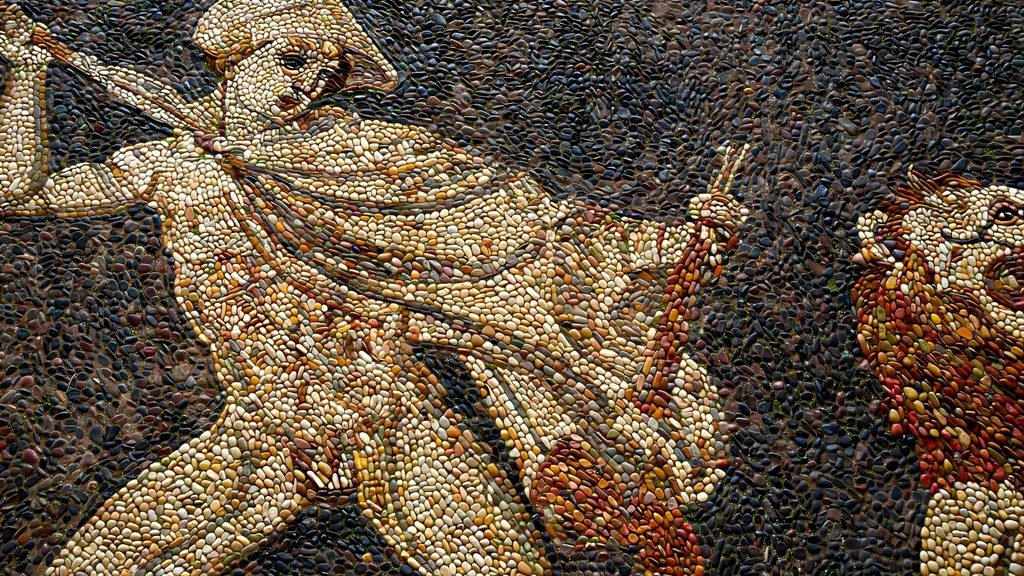
The archaeological museum holds three famous Hellenistic pebble-mosaic floors: the Deer Hunt, the Lion Hunt, and Dionysus on a Panther. The Dionysus on a Panther mosaic, from the same House of Dionysus, shows the god seated on the animal with the relaxed authority of a being for whom dangerous animals are furniture, his thyrsus staff carried as casually as a walking stick, his expression the calm of a deity who has already won the encounter with chaos that the panther represents. Given that Euripides wrote the Bacchae in this city, given that the Macedonian royal tradition had deep connections to Dionysian cult, given that the House of Dionysus whose floor this mosaic decorated was, at 3,160 square meters, the largest house in Pella, the mosaic’s subject is not a decorative choice. It is a statement about the city’s own theological and cultural identity: a city that understood itself as inhabiting the tension between civilized order and ecstatic release that the Dionysian tradition represented, and that chose to express this understanding on the floors of its finest houses.
The Stag Hunt mosaic from the House of the Abduction of Helen bears a signature, making it the first signed work of art in Western history whose artist’s name we still know: Gnosis, painted by Gnosis.
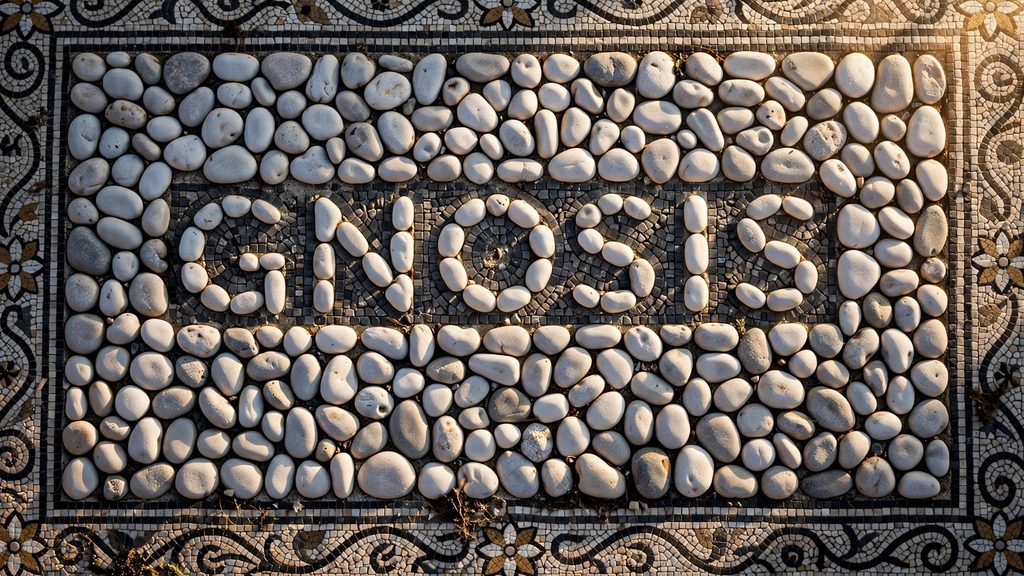
The name preserved in the white pebbles of a floor mosaic in a house in a city that the earthquake of 90 BCE ruined and the silting river buried is the first artist’s signature in Western art. Gnosis. We know nothing else about him. We know that his name is in the floor.
How It Ended | The River, the Earthquake, the Roman
The abandonment of Pella was not a single event but a sequence of interconnected processes that together dissolved a city of two and a half million square meters back into the Macedonian plain over approximately two centuries.
After Rome ended the Macedonian kingdom in 168 BCE, the city declined, and an earthquake and the silting of its harbor-lake finished it. The Roman defeat of Perseus, the last Macedonian king, at Pydna in 168 BCE did not destroy Pella. It demoted it: after the defeat of the last Macedonian king by the Romans, it became a small provincial town. The city that had been the capital of the most powerful state in the Greek world became, in a single military engagement, a minor administrative center in a Roman province whose real importance lay elsewhere.
Then the geography began its longer work. Situated at the mouth of the Axios River, the city had direct access to the sea, although the harbor itself has still not been located. The river that had given Pella its maritime connection to the Aegean was also the river that, over centuries of deposition, was extending the delta further and further into the sea, pushing the coastline progressively away from the city. By the first century BCE, the harbor that had connected Pella to the trade routes of the Mediterranean world had silted to the point where the city’s commercial rationale was seriously compromised.
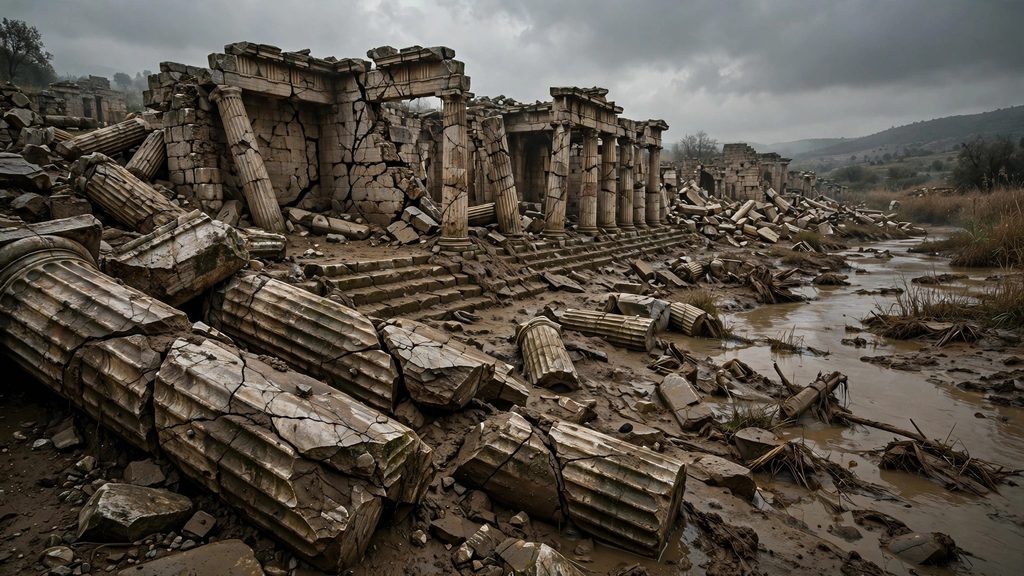
An earthquake, or possibly an invading Thracian tribe, in the first quarter of the first century BCE caused significant destruction in the area of the agora, which was never repaired. The city was partially destroyed by an earthquake in 90 BCE and never recovered its importance thereafter, with Thessaloniki usurping its place. Thessaloniki, founded by Cassander in 315 BCE at the head of the Thermaic Gulf in a location that remained connected to the sea, was always better positioned to survive the silting that eventually condemned Pella, and the Roman administration that replaced Macedonian independence recognized this by making Thessaloniki the provincial capital.
The population that remained at Pella after the earthquake either moved to Thessaloniki, whose own mythical namesake this site has examined elsewhere, or remained in a diminished settlement that the river’s continued silting and the loss of the harbor made increasingly difficult to sustain. By the early centuries of the common era, the city that had launched the conquest of the known world was a village. By the medieval period, it was a memory and a ruin, buried progressively under the alluvial deposits of the river that had once made it possible.
What Remains and How to Read It
What survives today is an open-air site with three main areas: the archaeological museum, the agora with column bases visible in outline, and a few preserved houses with shelters over mosaic floors.
The honest account of what the visitor to Pella’s archaeological site will experience is the account that most travel writing avoids: there really isn’t that much left of Pella in the sense of visually impressive standing remains. No temples, palaces, or other grand structures. The site is the outline of a city rather than the city itself: the column bases of the agora’s stoas, the foundations of the houses, the occasional preserved wall section, the drainage channels and pipe runs of the hydraulic system that nobody had to excavate to prove was sophisticated.
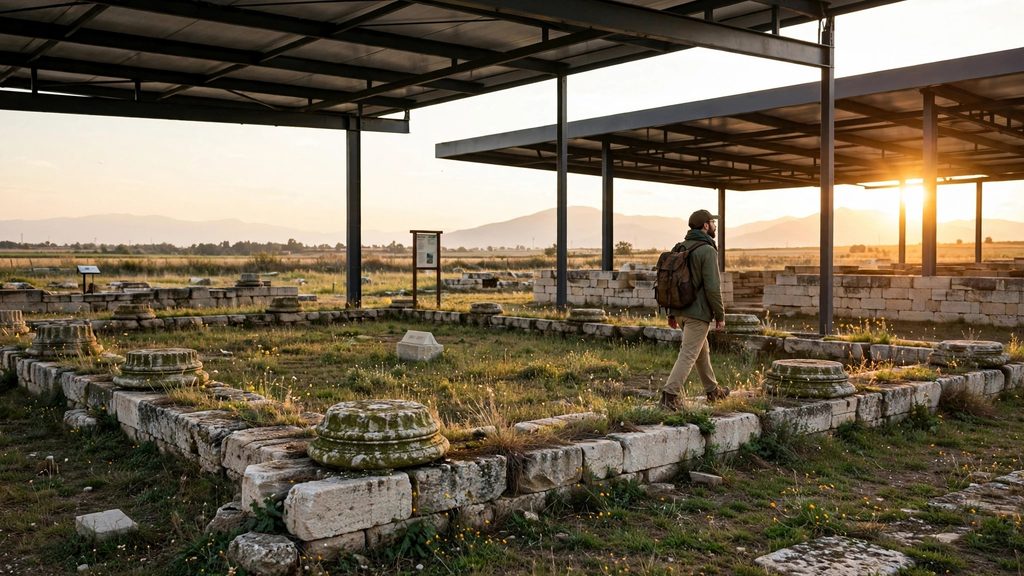
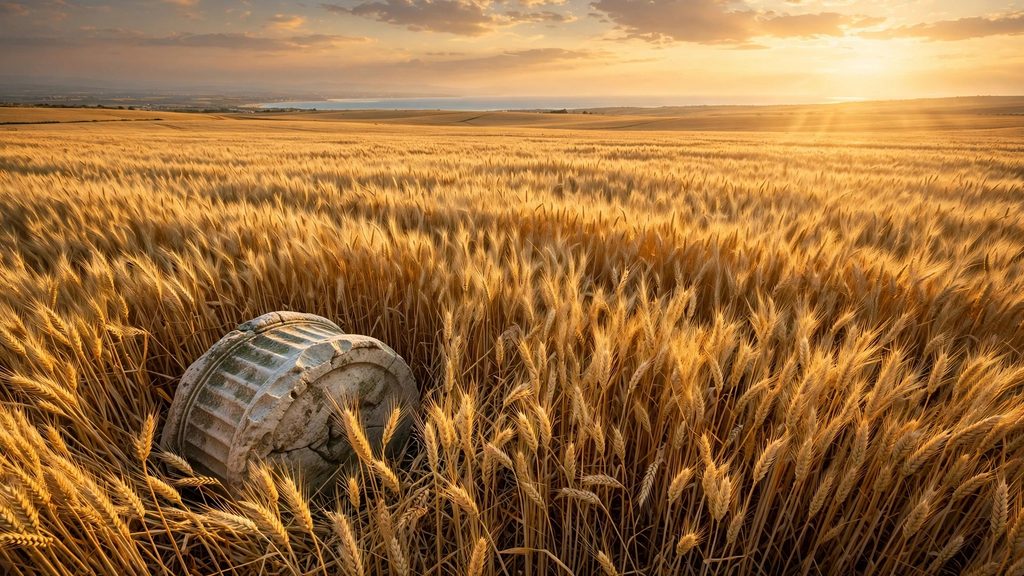
What the site rewards is not the visual impact of standing architecture but the exercise of historical imagination that the column bases and the house outlines require. Standing here, it is not difficult to mentally erase the houses and roads and imagine what it may have looked like in Alexander’s day. The flat plain that surrounds the site in every direction is the same flat plain that surrounded the city, the same agricultural territory of barley and wheat and olive groves that fed the population of a capital. The hill behind the mosaic shelters where the palace stood is still a hill. The scale of what was here is still readable in the distribution of the remains across the landscape.
The museum is where Pella justifies itself to the visitor who might otherwise wonder whether the journey was worth making. The Archaeological Museum of Pella opened in 2009 and immediately attracted thousands of visitors from Greece and around the world. Two stately floors tell the area’s prehistory and history, from Bronze Age bones in urns to well-preserved fourth-century BCE mosaics and phallic drinking vessels.
The Lion Hunt mosaic in the museum is the object that justifies everything else about the visit: approximately three meters by three meters, composed of river pebbles of natural color selected and laid with a precision that produces shading and depth of field, depicting two figures at the moment before killing a lion whose musculature and movement the artist has rendered with an accuracy that suggests direct observation rather than decorative convention. The figure on the left with the anastole hair is Alexander, or someone the mosaic’s patron wanted to be understood as Alexander, and the quality of the image, the complete confidence of the composition, the technical mastery of a form that has no margin for revision, is the quality of a tradition at the absolute peak of its development.
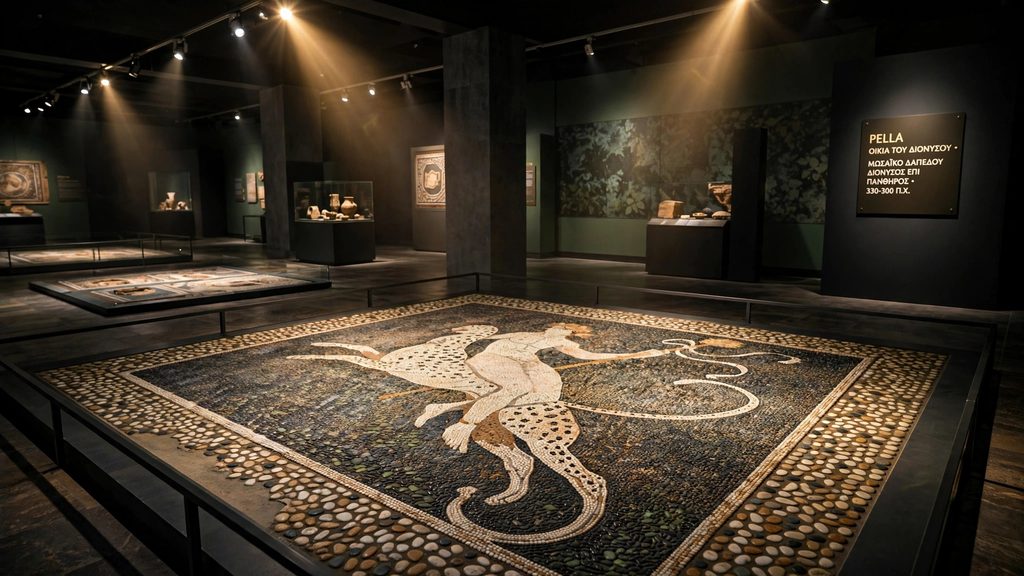
The Dionysus on a Panther mosaic, displayed beside it, shows a god in a moment of complete authority over the animal that carries him, and the calm of the image after the dynamic tension of the Lion Hunt produces, in the museum’s arrangement, exactly the effect that the Dionysian tradition itself was designed to produce: after the hunt and the violence comes the divine peace of the wine god at rest, the order that follows the expenditure of everything dangerous.
Pella and Vergina | Why Both Matter
The Alexander tourism cluster in northern Greece concentrates most of its visitor attention at Vergina, where a grass-covered tumulus contains the Royal Tombs Museum, treated in full in this site’s own pilgrimage route through northern Greece, with the spectacular gold of Philip II’s burial. Vergina receives the crowds. Pella receives a fraction of them.
The distinction between the two sites is the distinction between death and life: Vergina is where the Macedonian kings were buried, where the gold of their graves is preserved under a museum built inside the tumulus itself, where the material wealth of the dynasty is concentrated in the specific, dramatic form of royal burial goods. Pella is where the kings lived, where the dynasty was built, where the decisions that produced the conquest of the known world were made in the palace on the northern hill and in the agora whose column bases are now the only evidence of the largest civic space in fourth-century Greece.
Both sites deserve serious attention. The visitor who goes only to Vergina and not to Pella has seen where the Macedonian dynasty was buried and missed where it lived. The visitor who makes the additional hour and a half of driving from Thessaloniki to include both sites in the same day, spending the morning at Pella’s museum and site and the afternoon at Vergina’s spectacular underground museum, has the most complete available experience of what the Macedonian kingdom actually was: not simply the gold it accumulated, but the city it built to manage it, and the specific intellectual and cultural life it sustained in that city at the moment of its greatest ambition, tutored, in Alexander’s own case, by the philosopher this site has examined at length in its own dedicated essay.
Practical Notes
Pella is approximately forty kilometers west of Thessaloniki on the E86 highway, accessible by car in forty-five minutes or by the Thessaloniki-Edessa bus service, whose stop is a short walk from the museum. The archaeological museum and the site are adjacent to each other and are best visited together in a single session of two to three hours.
Visit the museum before the site: the museum’s mosaics and artifacts provide the visual and material context that makes the site’s outlines and foundations legible as the city they once constituted. The mosaics in the museum, particularly the Lion Hunt and the Dionysus on a Panther, are the visit’s primary justification and deserve unhurried attention rather than a quick pass on the way to the outdoor ruins.
The site’s sheltered mosaic houses, where original pebble floors are preserved in situ under protective roofing, give the visitor the specific experience of standing in a room whose floor was laid in the generation that included Alexander’s lifetime, in the city where he was a child, looking at an image that was there when he was. The mosaics in the museum are more spectacular. The in-situ floors are more immediate.
Combine with Vergina, forty kilometers to the south, for the complete northern Macedonia Alexander cluster. The Axios plain between the two sites is the agricultural landscape that fed both cities: flat, productive, still growing the grain it grew in the fourth century BCE, still the same physical environment that produced the dynasty that changed the world.
The Wheat Grows Over the Rest
Twenty-five kilometers from the sea it once commanded, the city that built Alexander sits under a wheat field and a museum.
These findings indicate that, at its height, Pella rivaled the grandeur of other great cities of the Hellenistic age, Alexandria in Egypt and the great cities of Asia Minor among them. The city Alexander left when he departed for Asia in 334 BCE, that he never returned to, that he wrote to from the far edges of the world he was conquering, was a city of this size and this ambition and this cultural density.
He got further than anyone before him. The city he left got buried by the river he grew up beside.
The mosaic floor with his face on it is still in the museum. The wheat grows over the rest.
At Olympus Estate, Cultural Chronicles traces the institutions, thinkers, and practices that defined Greek civilization from the inside. Pella was the capital Philip II built and the city where Alexander the Great was born in 356 BCE, tutored by Aristotle, and grew up beside an agora nearly the size of the one in Athens. Euripides came here in the final years of his life and wrote the Bacchae at this court before his death in 406 BCE. The House of Dionysus held the largest floor mosaics of the ancient Greek world, including the Lion Hunt, which may be the earliest surviving image of Alexander himself. After Rome’s victory at Pydna in 168 BCE and an earthquake in 90 BCE, the Axios River’s silting finished what the Romans started, leaving the city twenty-five kilometers from the sea it once commanded. The kings who lived here are buried forty kilometers south, at Vergina.