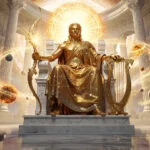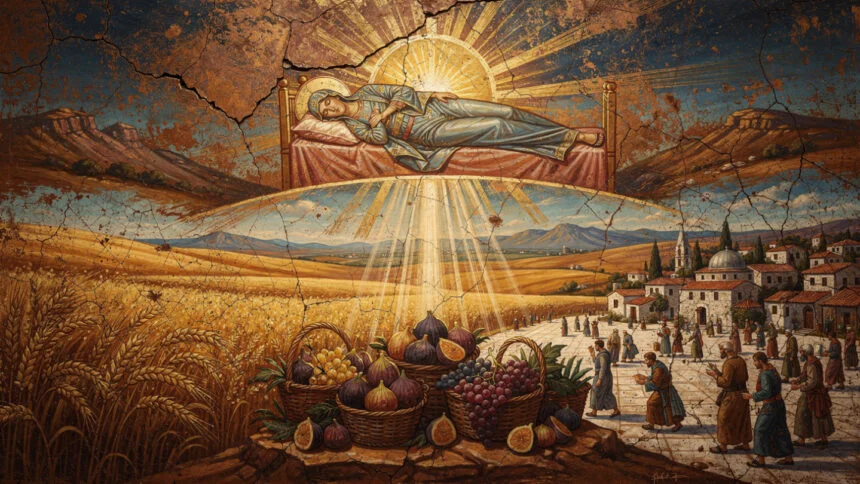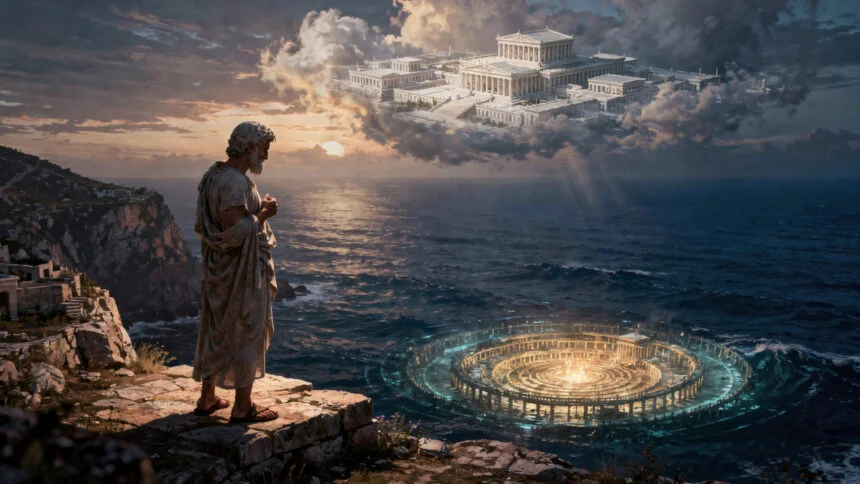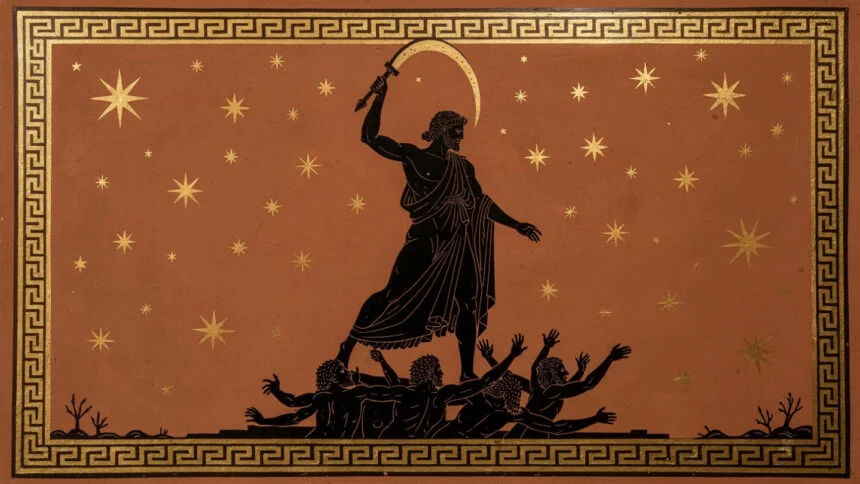




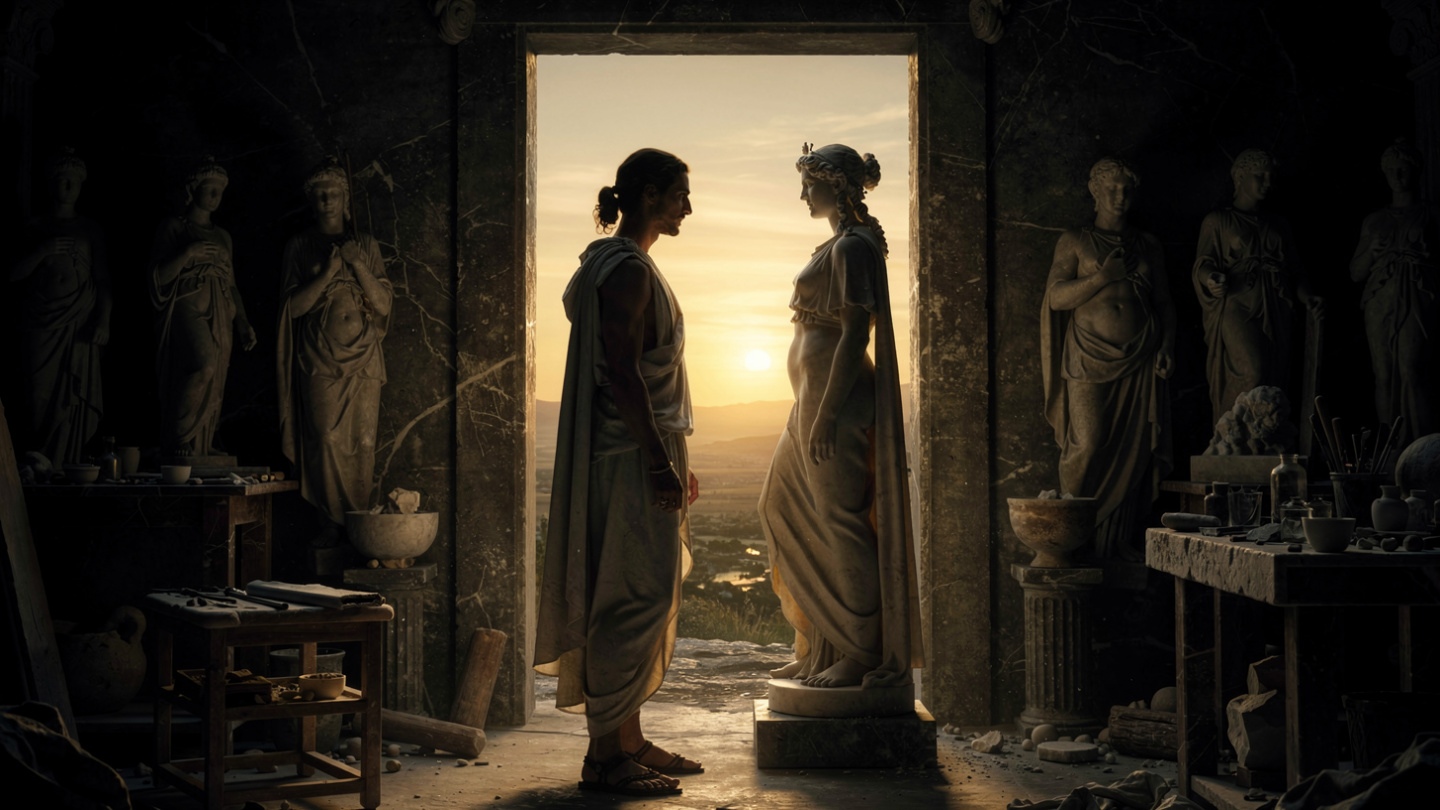
Orpheus tells the Pygmalion story.
This is the detail that the standard retellings of the myth omit and that the Metamorphoses makes central: the narrator of the Pygmalion narrative in Ovid’s tenth book is not an omniscient storyteller but Orpheus, the divine musician who has just descended into the underworld to retrieve his dead wife, has almost succeeded, has looked back, has lost her again, and has subsequently renounced women entirely. The man who tells the story of the sculptor who renounced women is himself a man who has renounced women, and the story he tells is the story of the resolution to the problem that his own situation has produced without resolution.
Ovid’s architectural decision to place the Pygmalion narrative inside the Orpheus narrative is the decision of the poet who understood that the myth’s content was the content that Orpheus, and only Orpheus, was in the precise position to tell.
Orpheus descended for the love of an actual woman. He went to the underworld, convinced the god of the dead with the beauty of his music, and received the permission to bring Eurydice back on the condition that he not look back until they had fully returned to the upper world. He looked back. She returned to the underworld. He came back alone.
After the loss, Orpheus renounced women. The Ovidian account says that he transferred his attention to young men, who could not die as Eurydice had died, who could not be lost through the mechanism of the backward glance because they did not require the same journey of retrieval. He sat on a hill and played his lyre, and the trees came to shade him, and the animals gathered to listen, and then he began to sing. The tenth book of the Metamorphoses is the book of the songs that Orpheus sang on that hill, and Pygmalion is one of them.
What Orpheus Was Doing When He Sang the Pygmalion Story
The songs that Orpheus sang on his Thracian hill were not random selections from the mythological tradition. They were the stories that the man who had lost Eurydice and renounced women chose to sing, and their selection and their arrangement constitute the most carefully organized sequence in the Metamorphoses.
The sequence begins with Orpheus announcing that he will sing of boys loved by gods and of girls seized by forbidden desires, the two categories of erotic story that the tenth book will develop. The boys loved by gods produce the Hyacinthus story and the Cyparissus story, the two divine erotic relationships whose outcomes, the hyacinth flower and the cypress tree, are transformations produced by the grief of loving a mortal. The girls seized by forbidden desires produce the Myrrha story, the girl who loved her own father and whose transgressive desire produced the incestuous union from which Adonis was born.
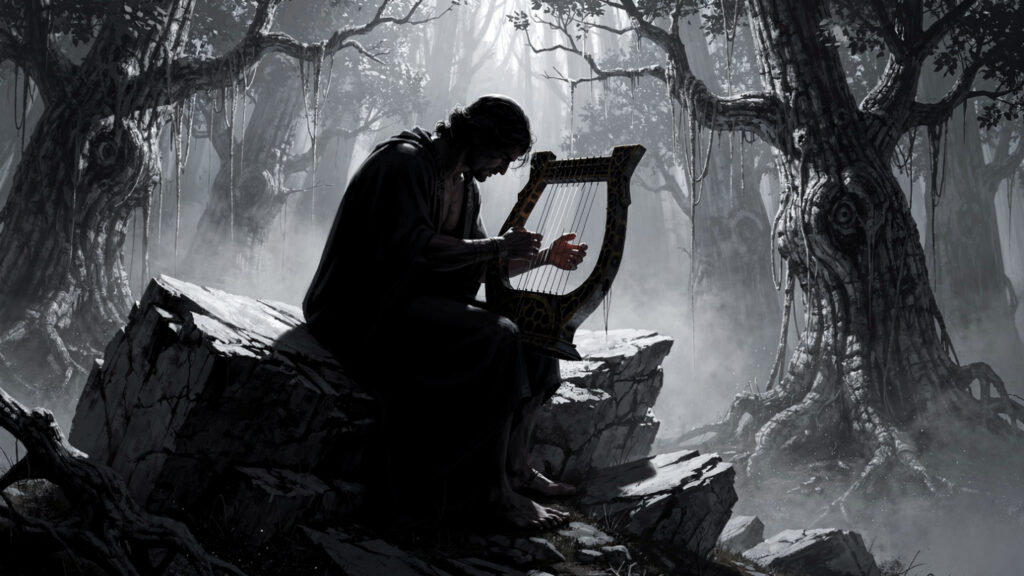
Between the divine loves of boys and the transgressive desire of Myrrha, Orpheus sings the Pygmalion story.
The placement is the placement that makes the Pygmalion myth the pivot of the tenth book’s architecture: the story of the sculptor who renounced actual women and fell in love with his own artistic creation is the story that stands between the divine loves that end in botanical transformations and the human transgression that ends in incest and the birth of the world’s most beautiful and most doomed mortal. Pygmalion’s story is the story of the successful resolution to the problem of the actual woman’s inadequacy to the ideal, the one story in the sequence where the love that avoids the actual woman produces not transformation or transgression but the miracle of the statue becoming the ideal woman that the sculptor had given up hoping to find in the world.
Orpheus, who lost Eurydice by looking back, sings the story of the man who could not lose his beloved because his beloved could not precede him on the path to the underworld. The sculptor who created the woman he loved never had to make the journey that Orpheus made. He never had to negotiate with Hades. He never had to accept the condition of the forward gaze. He simply asked Aphrodite for the miracle and received it.
The story that the man who failed the backward gaze tells is the story of the man who never had to attempt the backward gaze, because the woman he loved was not vulnerable to the death that required the backward journey.
Ovid’s Pygmalion and What the Text Actually Says
The Ovid Pygmalion narrative in the tenth book of the Metamorphoses is the most complete surviving ancient literary account of the myth, and the details of Ovid’s treatment are the details that the subsequent tradition has worked with, modified, and misunderstood.
Pygmalion in Ovid is a sculptor from Cyprus who has seen the Propoetides, the women of the island who had denied the divinity of Aphrodite and had been transformed by the goddess into prostitutes as punishment. The character of the Propoetides’ transgression, the denial of the divine, and the character of their punishment, the reduction to the condition of the woman whose body is available for sale, gives Pygmalion’s misogyny its Ovidian context: he is not simply a misanthropic eccentric but a man whose experience of actual women has been determined by the Cypriot tradition of the women whose punishment is their complete availability.
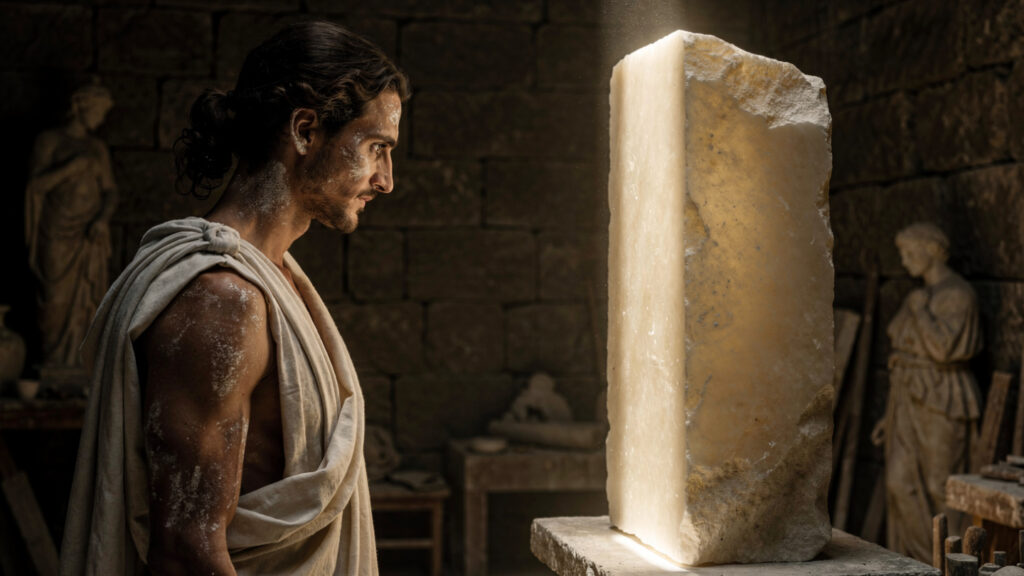
He carves the ivory statue with the skill of the artist who is also the devotion of the person in love: the Ovidian account of the carving is the account that makes the technique and the feeling inseparable, the artist’s attention to the material and the lover’s attention to the beloved operating simultaneously in the same gesture. The statue that results is the result of the artist’s complete attention, which is also the lover’s complete attention, which is why the result is the object that the artist-lover falls in love with: he has given the statue everything that the complete human attention can give to a material, and the material has received it in the form of the beauty that the complete attention produces.
The dressing of the statue, the jewelry, the positioning, the daily attention that Ovid describes with the vocabulary of the lover’s ritual, is the behavior that the poem treats with the gentle irony that Ovid consistently brings to the erotic tradition he is working with: the sculptor who dresses the statue in fine garments and adorns her with gemstones is the sculptor who is performing the rituals of love without the object of love being present to receive them, and the gap between the ritual and the object is the gap that the myth will eventually close with the miracle.
The prayer to Aphrodite at the festival is the prayer whose formulation Ovid preserves with the care of the writer who understands that the prayer’s formulation determines its outcome: Pygmalion does not pray for the statue to come alive. He prays for a wife like the statue, a formulation that allows Aphrodite the latitude to grant the prayer in the form that the prayer’s qualified statement enables rather than in the direct literalism that the unqualified statement would require. The prayer’s careful formulation is the sculptor’s intelligence about how to ask the divine for what he actually wants without stating it so directly that the divine is forced to either grant the impossible or refuse the petition.
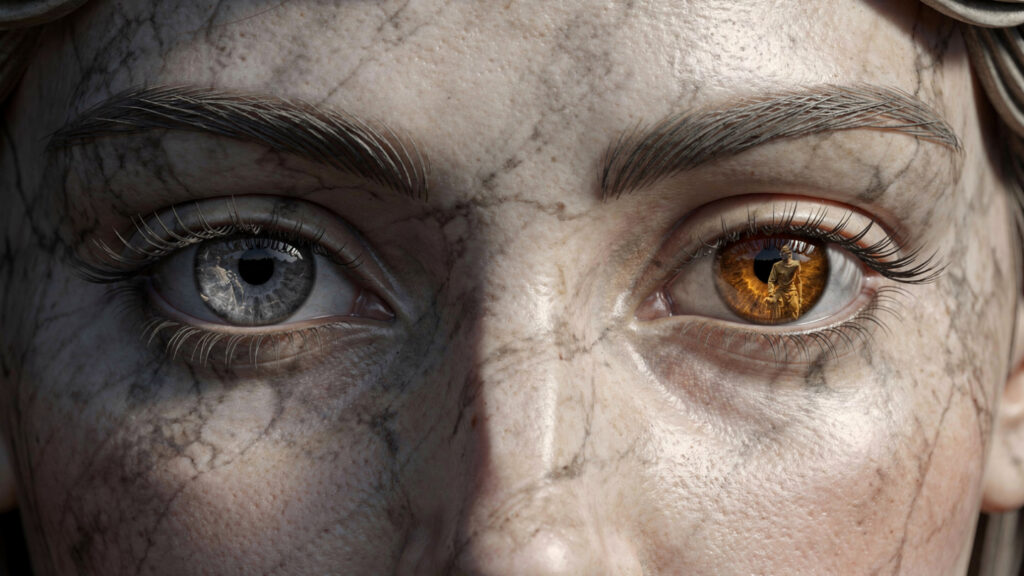
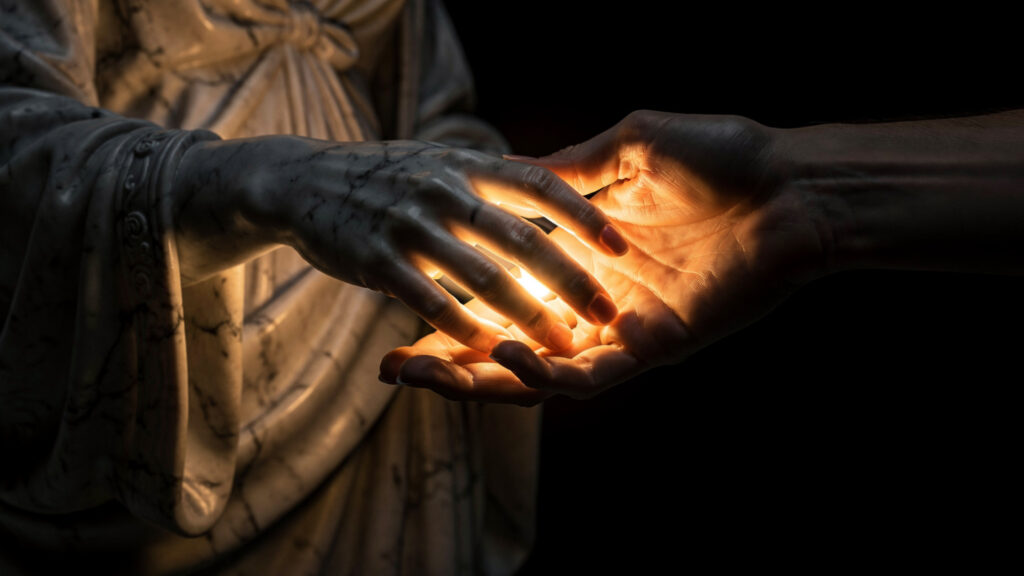
Aphrodite grants the prayer. The statue warms under Pygmalion’s touch when he returns from the festival, softens, blushes, breathes, lives. The sensory progression of the animation in Ovid’s account, the warmth before the softening, the pulse before the breath, the blush before the open eyes, is the progression of the lover’s discovery of the beloved’s life in the order that the lover’s attention reveals it: the touch before the sight, the body’s warmth before the face’s expression.
The Myth’s Location in Cyprus and the Adonis Connection
The Cyprus setting of the Pygmalion myth is not simply a geographical specification. It is the theological geography that gives the entire tenth book of the Metamorphoses its coherence, and the connection between the Pygmalion story and the Adonis story that follows it in Ovid’s account is the connection that makes the Cyprus setting the book’s organizing theological principle.
Cyprus was Aphrodite’s island: the island whose ancient cult tradition at Paphos was among the oldest Aphrodite sanctuaries in the Greek world, the island whose connection to the Phoenician Astarte tradition through the commercial and cultural contacts of the Bronze Age had given the Aphrodite cult its earliest institutional form in the western Mediterranean. The Eros and Aphrodite article in this collection develops the Kythera and Paphos alternatives as the two competing ancient birth traditions for the goddess, and the Cyprus tradition’s character as the site of the Astarte-Aphrodite cultural transmission gives it the particular theological weight that Ovid exploits by locating both the Pygmalion story and the Adonis story on the same island.
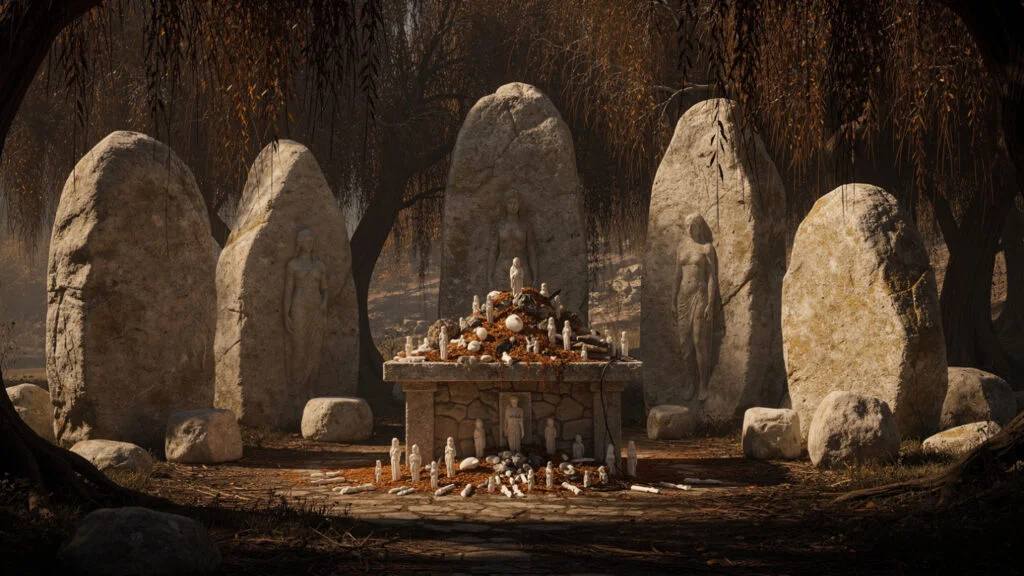
Adonis was born from Myrrha, whose incestuous desire for her own father Cinyras, the king of Cyprus, was the transgressive love whose outcome was the incestuous union that produced the most beautiful mortal the world had ever seen. Myrrha was transformed into the myrrh tree, still weeping the resinous tears that the myrrh exudes, and Adonis was born from the tree’s split bark. He grew up beautiful beyond any other mortal, attracted Aphrodite herself, and was killed by a boar whose identity the mythological tradition consistently associated with Ares, the war god who was Aphrodite’s divine lover and who resented the goddess’s devotion to the mortal.
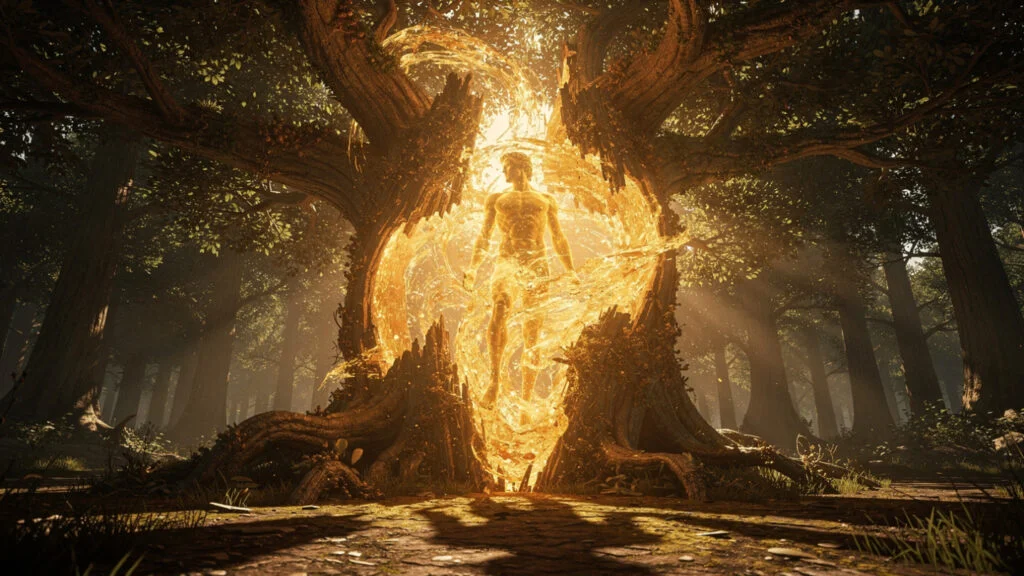
The sequence in Ovid’s tenth book, Pygmalion’s successful creation of the perfect woman who becomes the grandmother of Adonis through the genealogical line that the poem traces, and the Adonis story whose outcome is the death of the most beautiful mortal by the force that the goddess of love was ultimately unable to protect against, is the sequence whose theological arc traces the relationship between the created ideal and the actual mortal from the miracle of the statue’s animation to the tragedy of the beautiful mortal’s unavoidable death.
Pygmalion’s statue came to life: the ideal became actual, the created perfect woman became the actual woman that the sculptor had despaired of finding in the world. But the actual woman who came from the ideal’s animation was the woman whose grandson was born from incest and died from the jealousy of the god whose domain was the violence that love could not prevent. The miracle that resolved Pygmalion’s problem produced the genealogical line that produced the tragedy that the miracle’s resolution could not forestall.
The Statue and the Ideal
The theological claim that the Pygmalion myth encodes about the relationship between the artistic ideal and the actual person is the claim that the entire Metamorphoses is working toward through the medium of the transformation narrative: the artistic creation that becomes actual is the case where the transformation is in the direction from art to life rather than from life to art, and this direction’s reversal of the poem’s standard transformation pattern gives the Pygmalion story its particular weight within the collection.
Every other transformation in the Metamorphoses moves from life toward art in the form of the botanical or geological transformation: the person becomes the flower, the stone, the tree, the spring, the constellation. The Pygmalion transformation moves in the opposite direction: the art becomes life, the stone becomes the person.
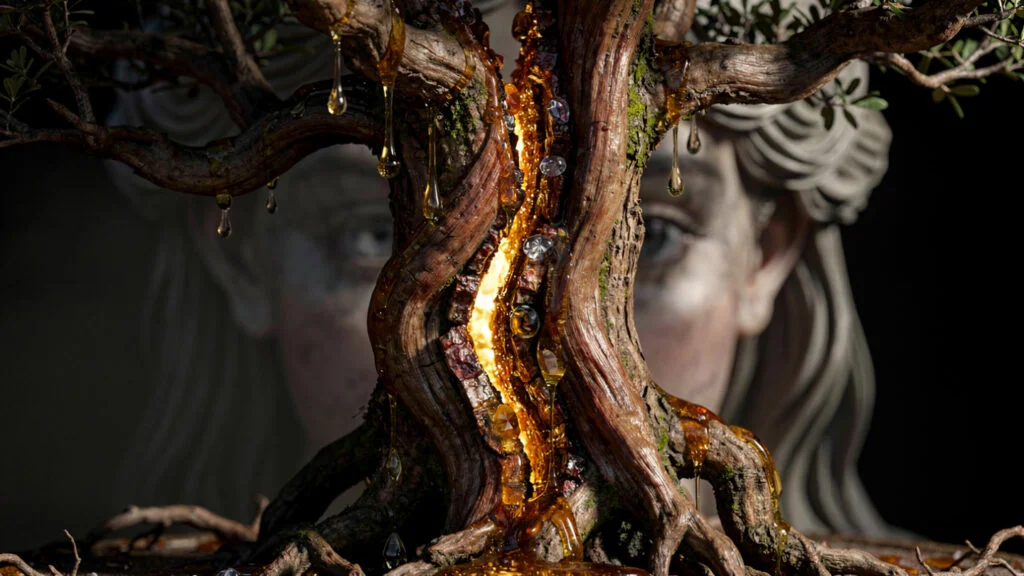
This reversal is not simply a technical variation in the transformation pattern. It is the theological claim that the artistic ideal, given the complete human attention and the divine sanction of the love goddess’s intervention, can produce the actual person that the artist-lover had created the ideal in order to have because the actual world could not provide her.
The claim’s implication is the implication that the subsequent tradition has consistently found both compelling and disturbing: that the woman produced by the artistic ideal rather than by the biological process of the actual world’s reproduction is the woman without the history, the autonomous development, the prior existence that the actual woman brings to the relationship. She is the ideal without the reality of the ideal’s limitation: no past, no other desire, no prior claim on any person other than the person who created her.
The tradition’s consistent discomfort with this character of the Galatea figure is the discomfort with the theological claim that the ideal’s animation encodes: that the woman created by the man’s artistic attention is the woman who is most completely the man’s in the sense of having no existence prior to his attention. She is his creation in the literal sense that the actual woman is not and cannot be.
A feminist reading of the Pygmalion myth engages most directly with this discomfort: the animated statue is the figure whose perfection consists in her having been formed entirely by the male creator’s attention rather than by her own autonomous development, and whose character as the ideal feminine is the character of the feminine without the qualities, the resistance, the prior desire, the autonomous will, that make the actual woman an actual person rather than an artistic projection.
Ovid does not resolve this discomfort. He tells the story with the gentle irony that he brings to all the erotic transformations in the Metamorphoses: the miracle is beautiful, the prayer is answered, the statue lives. And then the story moves immediately to Myrrha and the incestuous desire and the birth of Adonis and the death of Adonis and Aphrodite’s grief.
The ideal became actual. The actual produced the tragedy. Orpheus, who lost Eurydice and renounced women and sat on his Thracian hill singing the stories of the loves that ended in transformation, sang the Pygmalion story in between the divine loves of boys and the transgressive human desire of Myrrha, in the position in the sequence that made it the story of the successful resolution that produced the conditions for the subsequent tragedy.
What the Myth Actually Asks
The Pygmalion myth asks the question that the Orpheus narrative has already established as the central question of the tenth book: what is the relationship between the ideal and the actual in the experience of love, and what is the cost of the resolution to the problem of the actual’s inadequacy to the ideal?
Orpheus’s resolution was to renounce the actual and to accept the loss of the ideal. He renounced women after losing Eurydice, which was the renunciation of the attempt to recover the ideal actual woman through the mechanism of the backward journey. His songs were the sublimation of the lost love into the artistic form, the movement from the erotic to the artistic that the Ovidian tradition consistently associated with the creative intelligence’s response to the loss that the erotic produces.
Pygmalion’s resolution was to create the ideal and to ask the divine to animate it. He did not renounce the ideal. He rejected the actual women whose inadequacy to the ideal he had diagnosed from the evidence of the Propoetides, and he created the ideal in the medium of the ivory that his artistic skill could give the ideal form, and he asked Aphrodite for the miracle that would make the ideal actual.
The miracle was granted. The statue lived. And the man who renounced women because no actual woman was adequate to the ideal received the actual woman whose entire actuality was the product of the artistic ideal. She was adequate to the ideal because she was the ideal made actual.
The myth does not answer whether this actuality is the actuality that the love that produced it was seeking. Ovid ends the Pygmalion story with the animation and the union and the genealogy, the narrative closure that the story required, without asking the question that the story’s theological content raises: was the Galatea who woke from the statue the person that Pygmalion fell in love with, or was she the person that Pygmalion created, and is there a difference, and if there is a difference, which of the two did Pygmalion love?
Orpheus, who told the story, knew the difference. He had loved Eurydice, who was actual and who died. He had not loved an ideal of Eurydice that he had created. He had loved the person who was Eurydice, and the person who was Eurydice had preceded him to the underworld and had nearly returned and had returned to the underworld instead.
He told the story of the man who did not have to make the backward journey. He told it on the hill where the trees came to shade him and the animals gathered to listen, surrounded by the audience of the natural world that the living woman who died could not be. His songs were the artistic form that the love that lost its actual object produces in the person whose gift was the gift that could make the animals and the trees and the rivers listen.
The Pygmalion myth is the story of the man who did not lose. Orpheus tells it, which is the reason it belongs in the collection’s exploration of the Greek tradition’s engagement with love, loss, and the cost of the ideal.
At Olympus Estate, Mythic Essays moves through the deeper currents of the Greek tradition. Orpheus lost Eurydice by looking back and told the Pygmalion story on the hill where he sat after renouncing women. The man who tells the story of the sculptor who never had to make the backward journey is the man who made the backward journey and failed. Pygmalion prayed for a wife like the statue, not for the statue to come alive, and Aphrodite granted the prayer in the form the careful formulation allowed. The statue warmed before it softened, the pulse before the breath, the blush before the open eyes. The genealogical line from the animated statue to Adonis to the boar’s killing is the line that the Ovidian architecture traces from the miracle of the created ideal to the tragedy that the actual produces. The myth does not answer whether Pygmalion loved Galatea or the idea of Galatea. Orpheus, who told the story, knew the difference.