


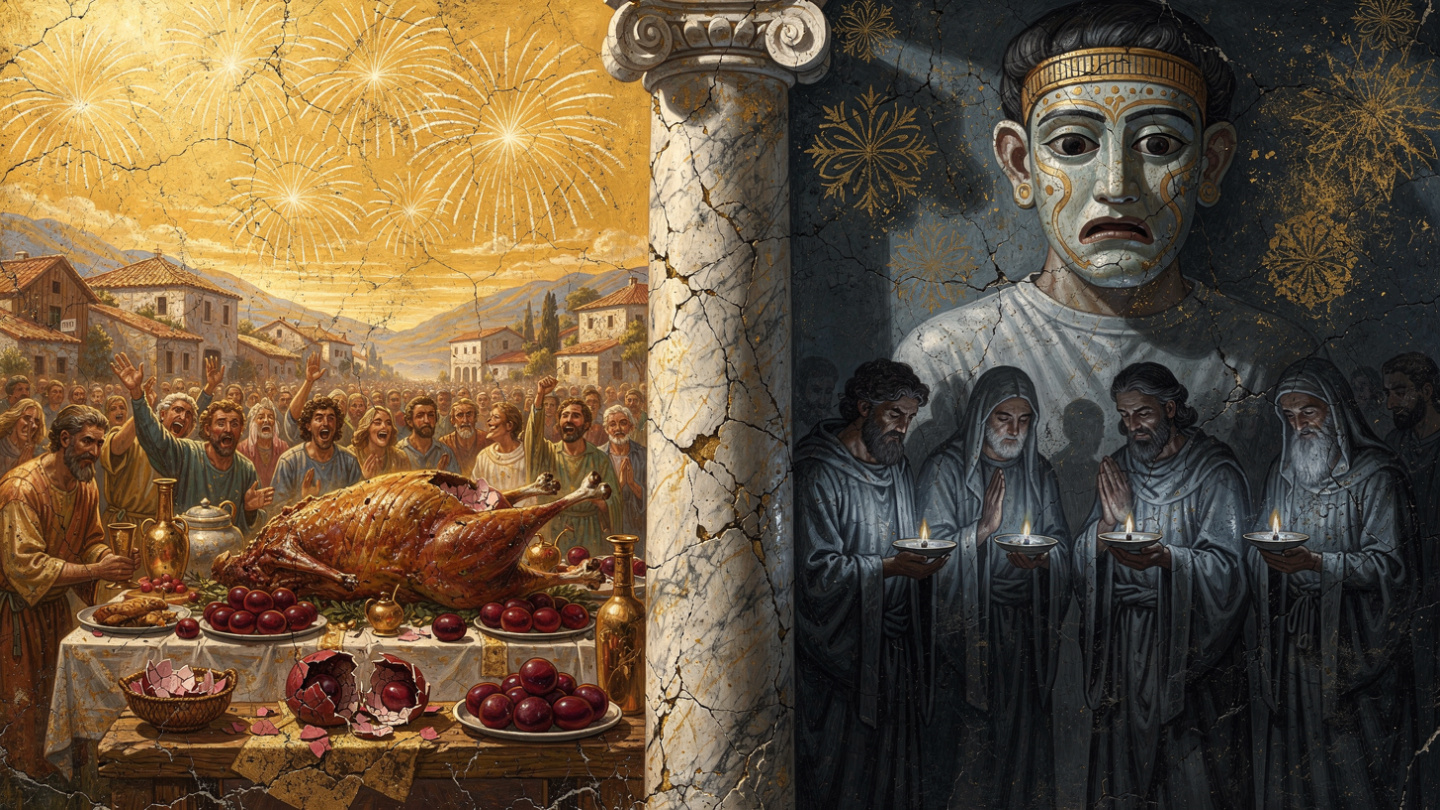
The Greek year has two poles.
The first is the feast: the table that does not empty, the lamb on the spit, the red eggs cracked against each other in the game whose winner is determined by whose egg survives intact, the fireworks at midnight, the candles carried home from the church through the dark streets with the care that keeping the flame alive requires. The second is the fast that earns the feast: the seven weeks of Sarakosti, the Great Lent of the Orthodox tradition, whose structure of progressive austerity and liturgical intensity is the preparation that makes the Easter feast something more than a meal.
These two poles organize the Greek calendar in the way that the calendar of the ancient world was organized around the oscillation between feast and fast, between the communal abundance of the public celebration and the deliberate restraint of the ritual purification period. The ancient Greek calendar had its own version of this oscillation: the Anthesteria in February, the festival of the opened wine jars that was simultaneously a celebration of Dionysus and a festival of the dead, when the spirits of the dead were understood to walk among the living and the city was in a state of ritual suspension between the ordinary and the extraordinary, until the festival’s closing day when the dead were ceremonially dismissed and the ordinary world reasserted itself. Sarakosti opens the same way the Anthesteria closed: with a collective movement toward austerity and purification after the excess of the Carnival period that precedes it.
Apokries | The Excess That Precedes the Fast
Sarakosti does not begin without an ending.
The Apokries, the Greek Carnival whose name means away from meat, is the three-week festival period that precedes Clean Monday and that reaches its peak in the final weekend before the fast begins. The Apokries is the Greek tradition’s version of what the Catholic world calls Carnival: the concentrated period of excess, masquerade, and licensed transgression that the calendar places immediately before the fast precisely because the fast requires a contrast to be felt as a fast rather than simply as a period of reduced eating.
The Patra Carnival is the largest Carnival celebration in Greece and one of the largest in Europe, organized around the satirical float parade whose roots lie in the political satire of the nineteenth century and whose public mockery of the powerful continues in the form of the large effigy float. The burning of the Carnival King at the Patra harbor on the final evening is the ritual conclusion of the period of excess. The figure that embodied the Carnival’s licensed transgression is destroyed so that the discipline of the fast can begin on cleared ground.
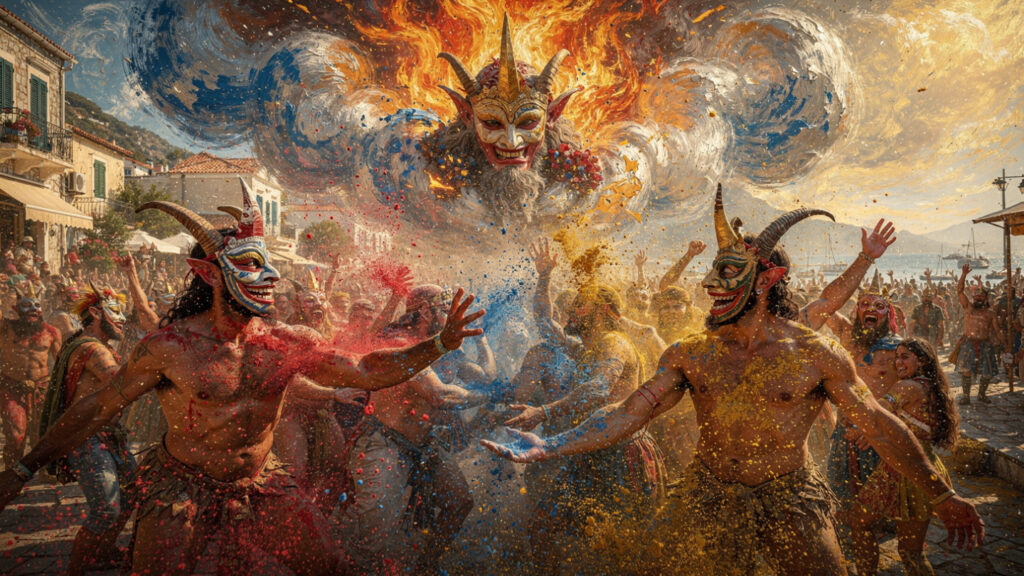
The Galaxidi Flour War is the Apokries custom that most directly expresses the Carnival’s transgressive character. The village of Galaxidi on the Gulf of Corinth has preserved for generations the flour battle fought through the streets on the final day of Carnival, in which participants cover one another and the village itself in colored flour until the entire community becomes unrecognizable beneath the accumulated color. The flour war is the extreme case of Carnival’s licensed disorder. It is the temporary destruction of the ordinary visible order of the community as preparation for the period of intensive self‑examination and spiritual ordering that the fast requires.
Clean Monday
Clean Monday, Kathari Deftera, is the first day of Great Lent and one of the most completely Greek days in the entire Greek calendar.
It is a public holiday, which is itself significant: no other day in the Orthodox liturgical calendar that is not also a national historical commemoration is a public holiday in Greece. Clean Monday is a public holiday because it is understood as the beginning of a collective process rather than simply a private devotional observance: the Greek nation enters the fast together, publicly, on Clean Monday, and the public holiday is the formal acknowledgment of that collective beginning.
The Clean Monday custom is the custom of the outdoor gathering: the kite flying on hilltops and in parks, the picnic in the open air, and the foods of the day that are coded as clearly as the fast that begins them. The kite flying is the activity that most directly expresses the day’s character as a moment of release and elevation after the enclosed excess of the Carnival period. The kite that rises on the March wind of the first Lenten day is the symbol of the soul’s aspiration toward the divine dimension that the fast is meant to cultivate, and the act of flying it outdoors, in the open air, after the indoor celebrations of the final Carnival days, is the transition from the enclosed and the excessive to the open and the aspirational.
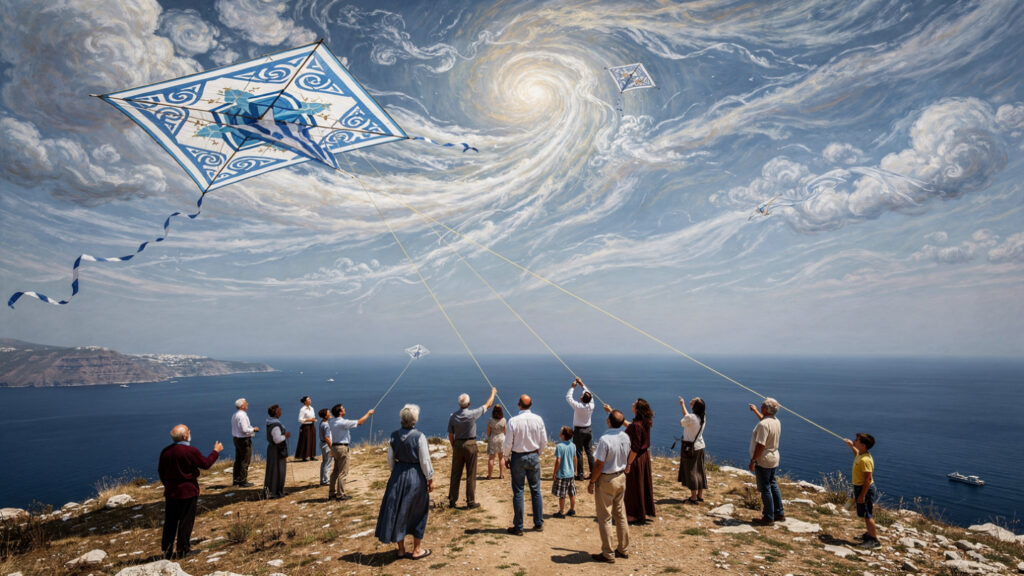
The foods of Clean Monday are not simply the first day’s Lenten menu. They are the foods that Greek culture has associated with the day for the symbolic properties they carry. The lagana, the unleavened flatbread topped with sesame seeds and baked only on Clean Monday, is the bread of the fast’s beginning rather than the bread of any liturgical occasion, and its preparation in homes and bakeries across Greece is the most widely shared domestic act of the day. The taramosalata, the fish‑roe dip permitted because fish eggs are classified differently from meat in the Orthodox fasting rules, is the luxury of the first day that acknowledges the difficulty of the transition from the abundance of Carnival to the austerity of the fast. The olives, the halva, the lagana, the taramosalata, and the ouzo or the wine form the combination that Greek practice has settled on as the appropriate first meal of Sarakosti, and the quality of this meal, eaten outdoors on a hilltop or in a park with the kite pulling against the string overhead, is the quality of the Greek cultural institution at its most precisely balanced between the liturgical and the popular.
The Structure of Sarakosti
The Greek Orthodox Great Lent runs for seven weeks, and the structure of those seven weeks is not a uniform period of austerity but a progressive deepening of the liturgical intensity that reaches its fullest expression in Holy Week.
The first week is the most intense liturgically. The Great Canon of Andrew of Crete, the longest single hymn in the Orthodox liturgical world, is chanted in segments across the first four evenings at the Compline service and in its entirety on the Thursday of the fifth week. The Great Canon is the achievement that most fully expresses what the Lenten season understands the fast to be. It is not a dietary restriction but a comprehensive examination of the conscience organized around the narrative of the Old and New Testaments. The speaker of the canticle places themselves in the position of each biblical figure whose failure is described and measures their own life against the standard that the figure’s failure reveals. The Canon is penitential in the sense that it is a sustained act of self‑examination in the presence of the full range of human moral failure that the biblical record preserves.
The five Fridays of the Salutations to the Theotokos, the Chairetismoi, are the Lenten services most widely attended by Greeks who do not otherwise maintain regular church participation. The Friday evening gathering in which the four sections of the Akathist Hymn to the Virgin are sung across the five weeks of the middle period of Lent is the service that most fully expresses the warmth of Greek Orthodox devotion to the Mother of God. The Akathist Hymn is among the most beautiful texts in the Byzantine liturgical world, organized around a series of poetic salutations to the Virgin that move between the doctrinal and the intimate. The quality of its singing in Greek parish churches on the five Lenten Fridays, with the entire congregation standing as the hymn’s title requires, is the quality of Lenten worship at its most accessible and most emotionally immediate.
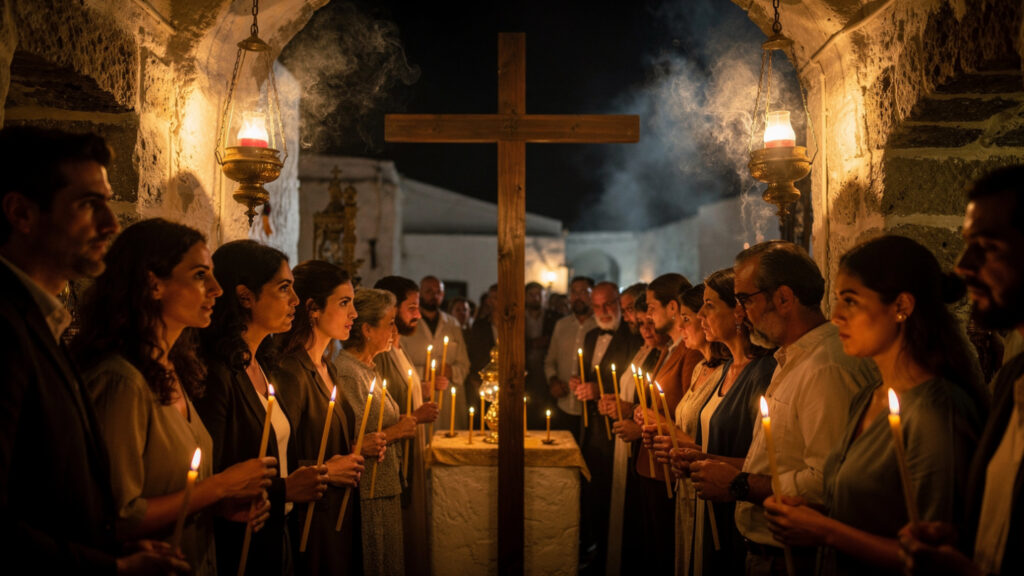
The Sunday of the Veneration of the Holy Cross in the third week of Lent is the structural midpoint of the seven-week period: the cross is brought to the center of the church for veneration, and the liturgical character of the Sunday acknowledges the difficulty of the fast’s midpoint while providing the reminder of its purpose. The cross is the reason for the fast, in the Orthodox theological understanding: the Lenten preparation is the preparation for the encounter with the cross in Holy Week, and the midpoint veneration is the preview of the encounter that is still three weeks away.
Holy Week
Holy Week, Megali Evdomada, is not simply the final week of Lent. It is a liturgical world that the Orthodox tradition has constructed with extraordinary care over seventeen centuries, in which each day has its own liturgical character and its own position in the narrative of the Passion.
Monday, Tuesday, and Wednesday of Holy Week each have their liturgical occasions, but Wednesday evening is the hinge: the service of Holy Unction, in which the priest anoints the foreheads of all who present themselves with the oil of the sick and the penitent, is the last opportunity for the collective receiving of sacramental grace before the Paschal mystery begins on Thursday.
Holy Thursday’s morning liturgy includes the full Divine Liturgy of St. Basil, the longest of the three Divine Liturgies of the Orthodox calendar, and is the last opportunity for communion before Easter. The Thursday evening service, the Service of the Twelve Gospels, is the longest single service in the annual Orthodox liturgical cycle: twelve readings from the four Gospels covering the entire Passion narrative from the Last Supper through the Crucifixion, broken by twelve antiphons that the choir sings between the readings. The service lasts approximately three hours, and the congregation holds candles that are lit at the fifth Gospel reading, the reading of the Crucifixion, and that they maintain lit for the remainder of the service and carry home after.
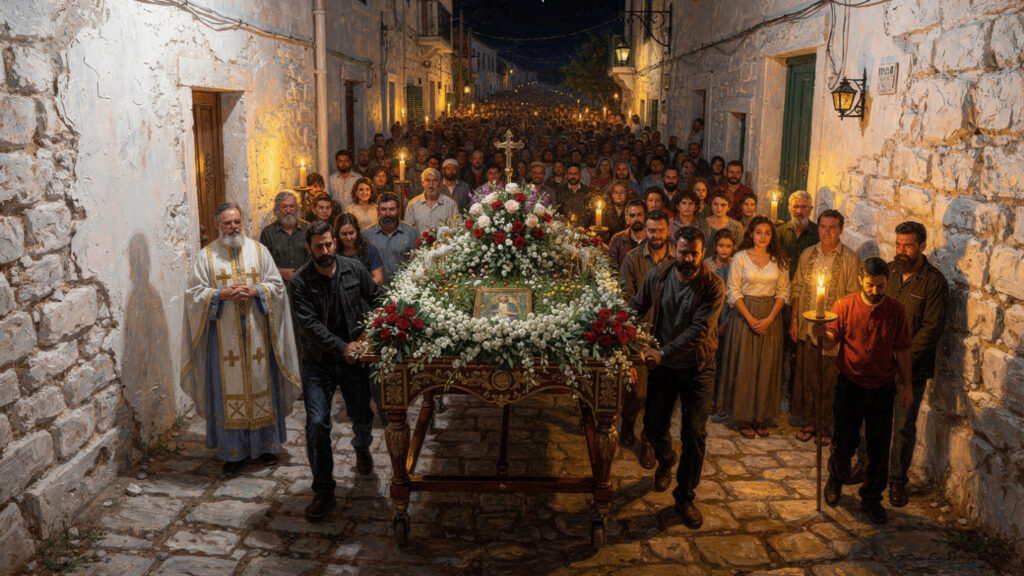
Good Friday is the day of the Epitaphios: the decorated bier of Christ, covered in flowers by the women of the parish in the communal act of preparation that every Orthodox community in Greece performs on Good Friday morning, is carried in procession through the streets of every village and neighborhood in the evening service. The Epitaphios procession is the most publicly visible moment of the Holy Week liturgical sequence: the candlelit procession through the streets, accompanied by the dirge of the Lamentations, is the moment when the liturgical cycle moves completely into the public space of the community rather than remaining within the church walls.
Holy Saturday is the day of the most complex liturgical transition in the Orthodox calendar: the morning service of the Vesperal Divine Liturgy begins as a service of mourning and transforms in the course of the liturgy into the first celebration of the Resurrection, with the priest changing from the dark vestments of mourning to the white vestments of the Resurrection at a moment in the service that the congregation experiences as the first moment of Easter even though midnight has not yet arrived. The reading of the twelve Old Testament prophecies that form the first part of the Holy Saturday service is the liturgical occasion that gives the day its contemplative and expectant character.
The Anastasi
The midnight Resurrection service, the Anastasi, is the single most significant moment in the Greek Orthodox liturgical and cultural calendar, and its organization is the organization of an event that has been performed for seventeen centuries in essentially the same form and that still produces the quality of the sacred gathering that the tradition has been refining across those centuries.
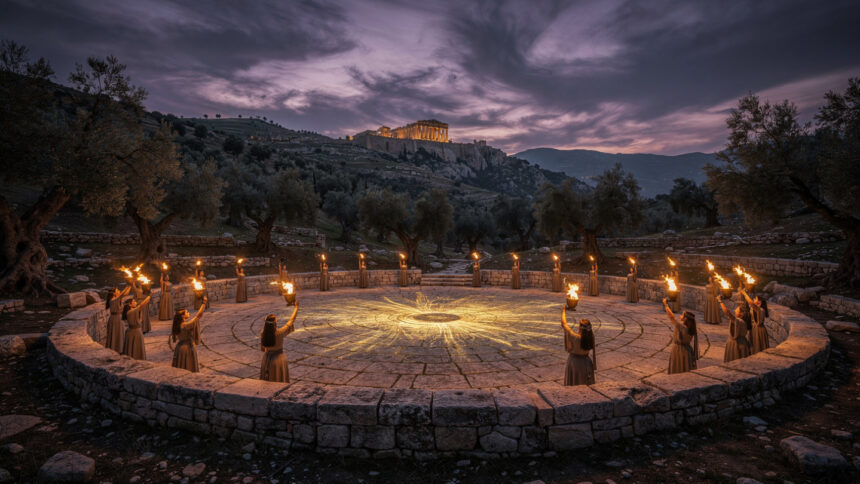
At approximately 11:45 PM on Holy Saturday night, the lights in the church are extinguished: the entire interior of the church is in darkness, with only the sanctuary lamp burning before the altar. The priest, having entered the sanctuary, receives the light from the sanctuary lamp and carries it to the Royal Doors, where he offers it to the congregation with the announcement: Come receive the light. The movement of the flame from the sanctuary lamp through the Royal Doors to the first row of the congregation and then from candle to candle through the entire assembly until the church is illuminated again by the collective light of the congregation’s candles is the most direct visual expression of the Anastasi’s theological claim: the light that begins in the sanctuary reaches the entire community through the act of each person receiving it from the person beside them and passing it on.
At midnight, the priest announces Christos Anesti, Christ is Risen, and the congregation responds Alithos Anesti, Truly He Is Risen. The announcement is made three times. After the third exchange, the fireworks begin. In the Greek tradition, the fireworks at Easter are not a decorative addition to the liturgical celebration: they are the community’s expression of the joy that the Resurrection announcement produces, the Greek manner of making joy audible and visible to the entire neighborhood and the surrounding landscape simultaneously.
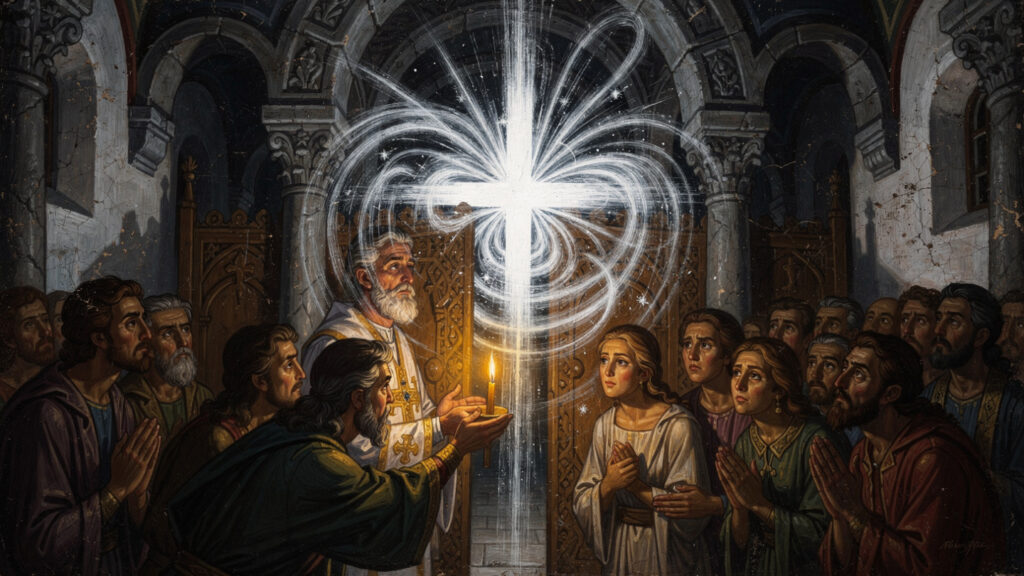
The congregation leaves the church carrying the flame they have received, walking home through the streets with the care that maintaining the candle’s flame in the night air requires. The tradition that the candle flame carried from the Anastasi should be used to make a cross of soot on the door lintel of the home before entering is the domestic ritual that extends the liturgical fire into the household: the flame that entered the home from the Easter service marks the threshold with the sign of the protection that the Resurrection’s light is understood to confer.
The mayiritsa, the lamb offal soup seasoned with dill and thickened with egg and lemon in the avgolemono technique, is eaten immediately after the return from the Anastasi: the soup made from the parts of the Easter lamb that would not be roasted on Easter Sunday is the bridge between the fast’s end and the feast’s beginning, a meal that is simultaneously the first meat dish after seven weeks of abstinence and the preparation of the body for the fuller feast that Easter Sunday’s roasted lamb will provide.
The Ancient Resonance
The Greek Orthodox calendar’s placement of the Resurrection celebration in the late winter-early spring period, in the season when the ancient Greek calendar had consistently placed the festivals of purification and renewal that marked the transition from the winter’s closing to the spring’s opening, is not coincidental.
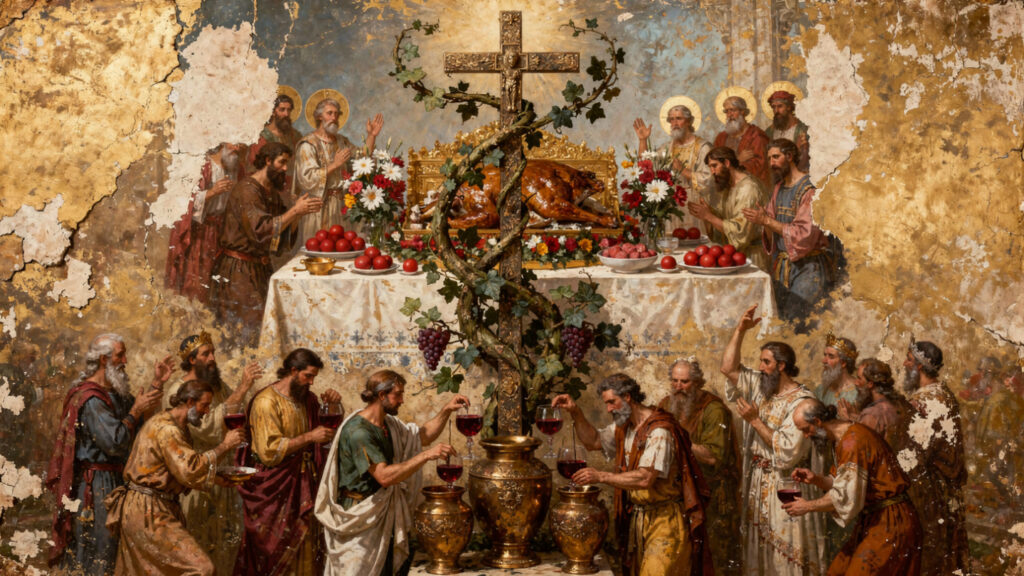
The Anthesteria, the February festival of the opened wine jars that was both the celebration of Dionysus and the festival of the dead, occupied the position in the ancient calendar that Sarakosti occupies in the Orthodox one: the last festival of the winter period, the festival that marked the transition to the spring by acknowledging the presence of the dead before dismissing them back to their proper domain. The Christian tradition that arrived in Greece did not replace the ancient calendar’s seasonal logic: it superimposed on it, and the resonance of the Greek Easter’s location in the spring, with the flowers of the Epitaphios and the outdoor quality of the Clean Monday gathering and the fire of the Anastasi in the late spring night, is the resonance of a tradition that has been marking the winter’s end and the spring’s beginning at this season for a very long time, in different forms but with the same essential understanding that the return of the light after the dark is the event that the community needs to mark together.
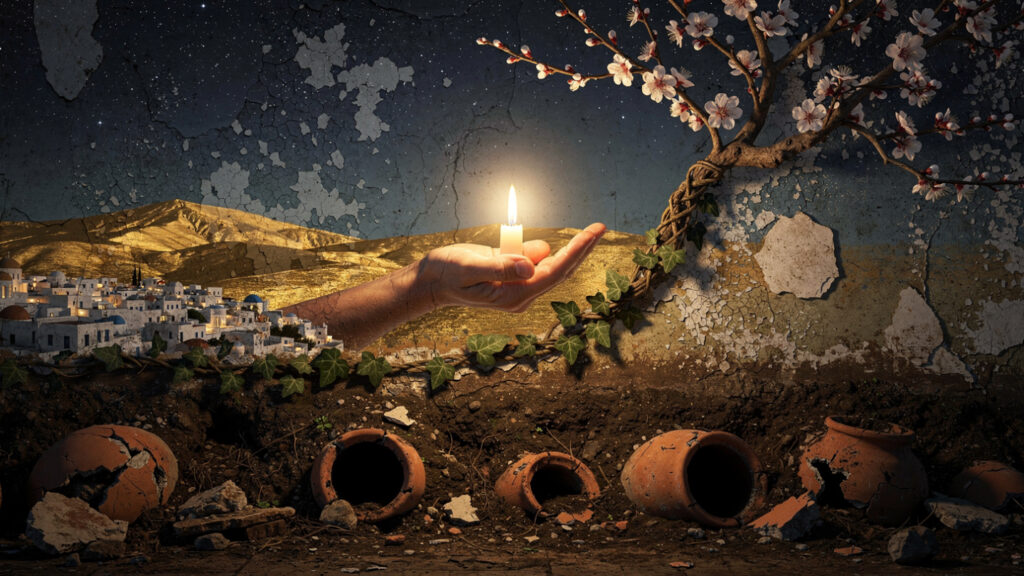
Christos Anesti. The fireworks over the Greek villages and the Greek cities and the Greek islands and the Greek communities of the diaspora on the same midnight in the same week across the Orthodox world are the same fireworks in different places, and the flame that each community received from the sanctuary lamp and passed from candle to candle through the darkness until the church was bright again is the same flame in the same gesture, performed for seventeen centuries, still performed now, still producing the quality of the sacred gathering that the tradition has been building toward across the seven weeks of Sarakosti.
The fast is what makes the feast possible. The darkness is what makes the light visible. This is not a metaphor. In the Orthodox understanding, it is the structure of the cosmos.
At Olympus Estate, Cultural Chronicles traces the practices and institutions that defined Greek civilization from the inside. The Greek year has two poles: the feast and the fast that earns it. Sarakosti runs for seven weeks. The Great Canon of Andrew of Crete is the longest hymn in the Orthodox liturgical tradition. The Epitaphios procession moves through the streets of every Greek community on Good Friday evening. At midnight on Holy Saturday the lights go out and the flame comes through the Royal Doors. Christos Anesti. The fireworks begin. The candle is carried home. The mayiritsa is eaten. Easter Sunday the lamb goes on the spit. The fast was worth it. It always is.