



The three judges of the dead in Hades were Minos, Rhadamanthus, and Aeacus.
The Hades article in this collection develops the judicial function of the three judges through the Platonic Gorgias’s account of the judgment: the soul stripped of the social advantages that had protected it in the earthly law court stands before the judge stripped of the judicial robes and the court procedures, two naked beings in the direct confrontation of the soul with its own record. The three judges were selected for this function because their earthly lives had established them as the exemplars of the just governance: Minos for the legal tradition that organized the first Aegean maritime order, Rhadamanthus for the reputation for impartial application of the divine law, and Aeacus for the piety toward the gods that had made him the divine administration’s most reliable mortal executor.
Minos came from Crete. Rhadamanthus came from Crete. Aeacus came from Aegina.
The island in the Saronic Gulf, forty minutes by hydrofoil from the Piraeus harbor, whose permanent population is approximately thirteen thousand people and whose contemporary identity is the identity of the pistachio‑producing agricultural community and the Athenian weekend destination, was in the ancient mythological world the island whose king was so just that the divine administration gave him the role of judging the dead whose record the earthly law courts had been unable to evaluate with the impartiality that the genuine judgment required.
This is the quality of the Aeginetan mythological world that distinguishes it from the mythological worlds of the more celebrated islands. Not the dramatic divine violence of the Santorini volcanic world or the primordial cosmological depth of the Delos birth world, but the moral quality of the just governance that the island’s founding king embodied at a level that the divine administration recognized as the standard against which the dead souls’ earthly records would be measured.
Aeacus and the Aeacid Line
Aeacus was the son of Zeus and the nymph Aegina, the daughter of the river god Asopus, whose abduction by Zeus to the island that subsequently bore her name was the origin narrative that connected the island’s divine genealogy to the Olympian world’s most fundamental parental relationship.
The content of the Aeacus world in the ancient sources was the content of the king whose justice was so absolute that when a plague devastated the Greek world, the oracle advised the Greek cities to ask Aeacus to pray on their behalf, because the divine administration’s respect for Aeacus’s character made his prayers the most effective available intercession. This was the theological claim of the Aeginetan world about its founding king: not the heroic capacity to fight monsters or the divine capacity to produce miracles, but the moral character that the divine administration recognized as the closest available mortal approximation of the divine justice that the underworld’s judicial function required.
From Aeacus came the Aeacid lineage whose members gave the Trojan War tradition two of its most significant figures. Peleus, the son of Aeacus, married the sea nymph Thetis and fathered Achilles: the hero whose character the Iliad and the Shield of Achilles article in this collection develop as the hero who chose the short glorious life and carried the entire world’s beauty on his left arm into the killing that would seal his fate. Telamon, the other son of Aeacus, fathered Ajax: the hero whose character was the character of the massive defensive fighter whose strength and whose loyalty were the qualities that the Achaean army depended on most completely and whose madness and suicide after the judgment of Achilles’s armor gave the tragic tradition one of its most affecting subjects.
Achilles and Ajax were Aeacus’s grandsons. The hero who was the greatest individual fighter in the war and the hero who was the greatest defensive fighter in the war were both the grandsons of the king of Aegina, the island whose justice was the justice that the underworld’s judicial function required.
The pediment sculptures of the Temple of Aphaia on Aegina depicted the Trojan War: the western pediment’s archaic period sculptures showing the first sack of Troy by Heracles and Telamon, and the eastern pediment’s early classical sculptures showing the second sack of Troy by the Achaean forces including Achilles, both celebrating the Aeacid heroes whose Aeginetan origin the pediment program was designed to honor. The coincidence that both pediments depicted the Trojan War from the angle of the Aeacid contribution was not coincidence: it was the artistic program of a sanctuary designed to celebrate the island whose royal house had given the war its most significant heroes.
The Temple of Aphaia
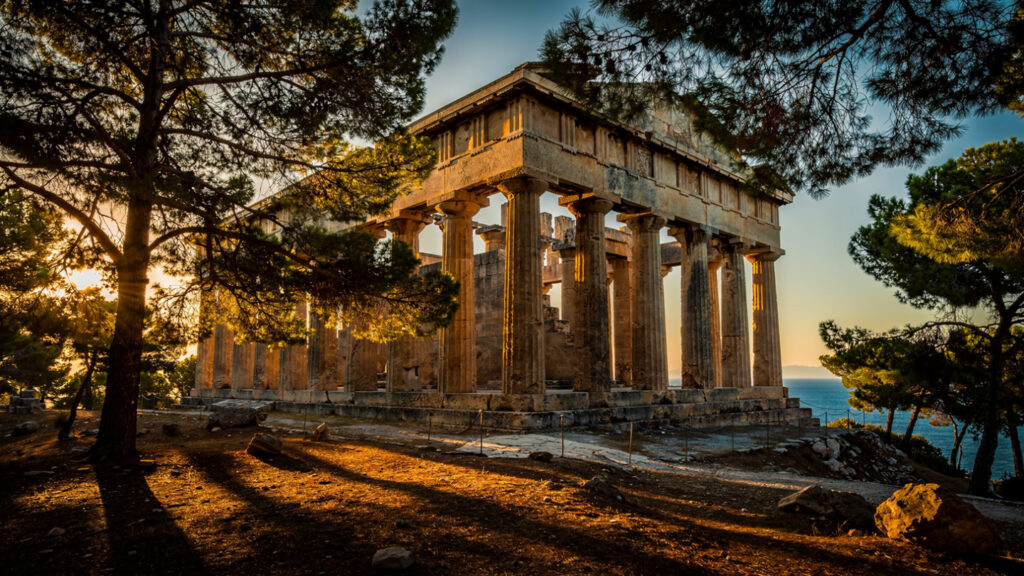
The Temple of Aphaia on the pine-clad hill above the eastern coast of Aegina is the most complete surviving archaic Doric temple in the Greek world. The character of its survival, with twenty-five of the original thirty-two columns still standing in their original positions along with substantial portions of the entablature and the architectural sculpture program, makes it the site where the archaic Doric order’s proportional system and the quality of the porous limestone and the painted stucco surface are most directly available to the contemporary visitor’s encounter.
The temple was built in approximately 500 BCE, replacing an earlier seventh‑century sanctuary on the same site, and its architectural program represented the most concentrated available expression of the late archaic Greek temple world at the moment when the classical style was beginning to emerge from the archaic conventions. The slightly stocky proportions of the Doric order’s archaic phase were giving way to the more refined proportions that the Temple of Zeus at Olympia and the Parthenon would subsequently develop, and the Temple of Aphaia stands at the transitional moment whose character makes it the architectural document of the Greek world’s own awareness of its developing refinement.
The pediment sculptures are in Munich’s Glyptothek, removed to Bavaria by Crown Prince Ludwig in 1812 following an excavation that revealed the buried fragments of the original sculptural program. The removal is the loss whose practical consequence is the practical consequence of the standard colonialist collecting that the nineteenth century produced across the ancient Mediterranean: the pediment sculptures that were designed to be seen in the relationship between the sculpted narrative and the architectural frame and the landscape setting are now in a museum in a northern European city, and the temple itself stands with empty pediments above its surviving colonnade.
What remains on Aegina is the temple itself, and the temple itself is sufficient for the encounter that the architectural tradition requires: the quality of the Doric colonnade in the Aegean morning light, the relationship between the temple’s elevated position and the sea visible below it through the pine trees, and the acoustic quality of the wind in the temple’s surviving columns that the open-air sanctuary produces as the background to the architectural encounter.
The deity the temple served, Aphaia, was the Aeginetan goddess whose identity and whose relationship to the broader Greek theological tradition the ancient sources treated with the ambiguity of the deity whose local character was too particular to assimilate completely into the Olympian framework. Pausanias identified her with Britomartis, the Cretan huntress who had leapt into the sea to escape Minos’s pursuit and had been deified. The character of the deity as the local divine being whose particular domain was the domain of the Aeginetan landscape gave the sanctuary its particular quality of the sacred space whose divine character was most directly expressed in the relationship between the hilltop position and the surrounding landscape rather than in the institutional connection to the Olympian divine order.
The First Coin
Aegina minted the first silver coinage in the Greek world in approximately 650 BCE, and the historical achievement whose economic and political consequences transformed the ancient Mediterranean world’s commercial organization was the achievement of the island whose position in the Saronic Gulf made it the commercial crossroads between the eastern and the western Mediterranean whose trade the coined money most directly facilitated.
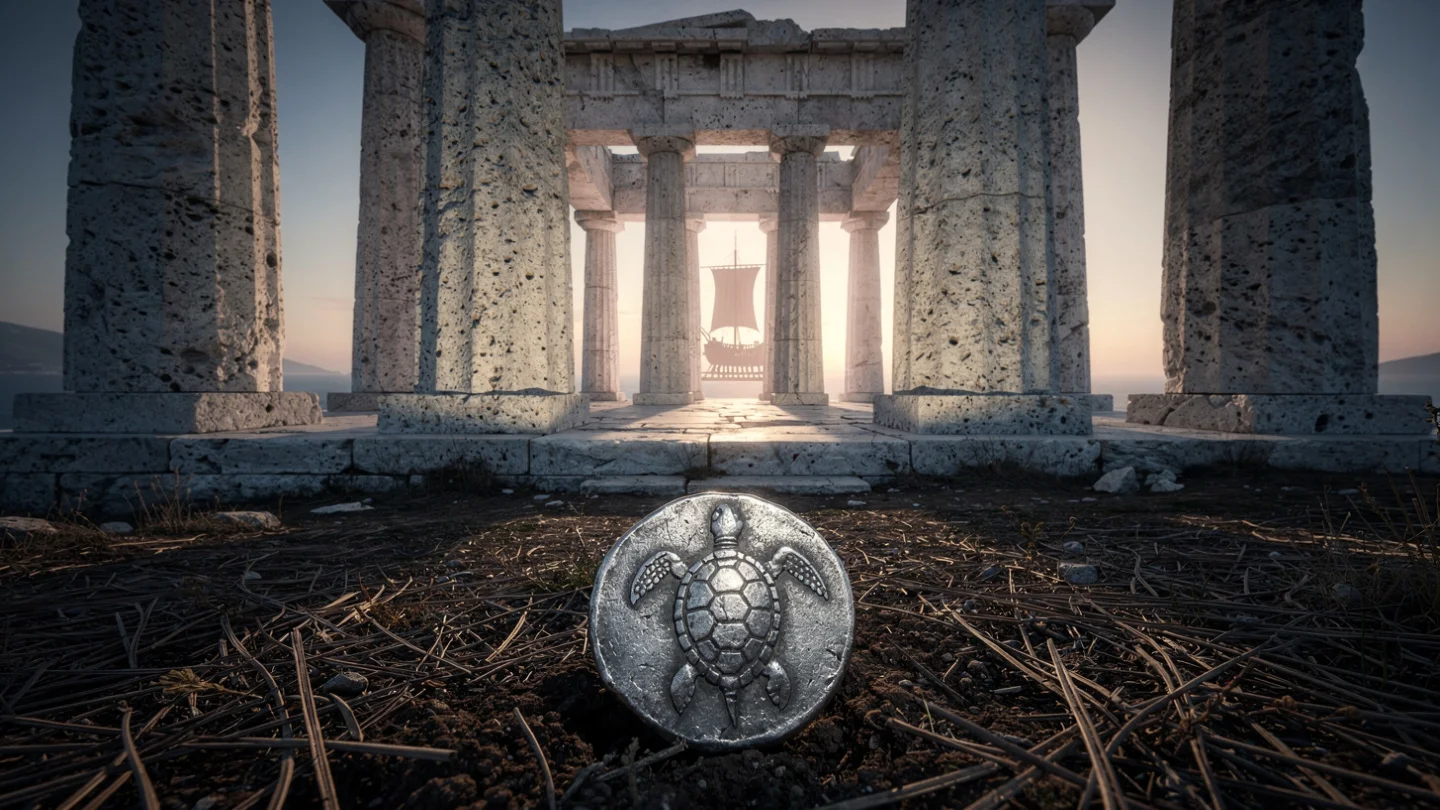
The Aeginetan silver stater, whose obverse bore the image of the sea turtle that was the symbol of the island’s maritime identity and whose reverse bore the incuse punch mark whose pattern the numismatic world uses to identify the earliest Aeginetan coins, was the denomination whose adoption as the standard commercial unit of exchange across the Aegean and the wider Mediterranean world in the seventh and sixth centuries BCE reflected the commercial dominance of the Aeginetan trading world at the moment of coinage’s invention.
The choice of the sea turtle as the coin’s obverse image was the choice of the maritime community’s most appropriate symbol: the sea turtle whose character as the creature that moves between the marine and the terrestrial worlds, that is equally at home in the open sea and on the beach, was the symbol of the trading community whose commercial activity required the capacity to operate in both the maritime and the terrestrial commercial worlds simultaneously.
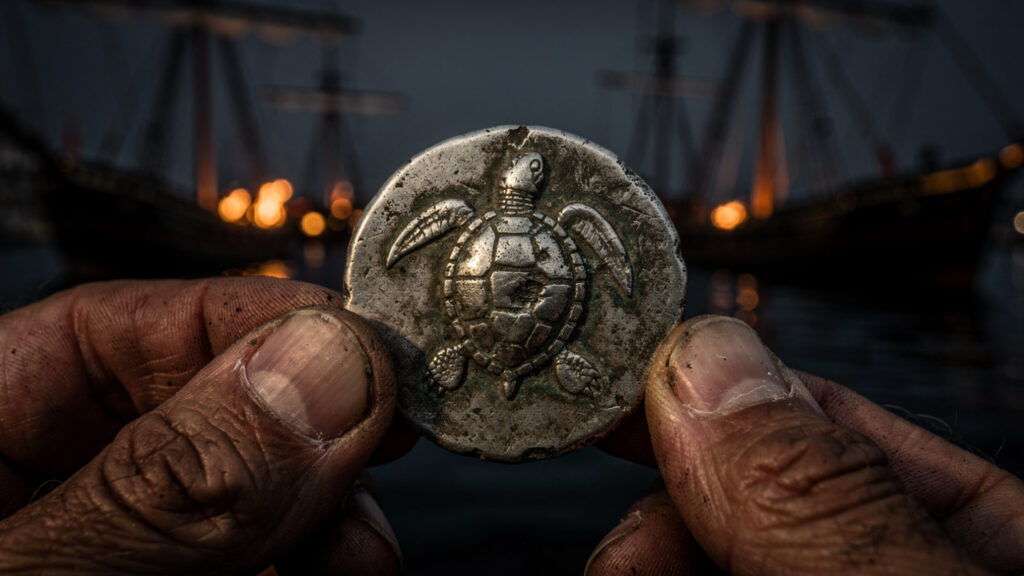
The Aeginetan standard, the weight system that the Aeginetan coinage established, became the standard against which the coinage of other Greek communities was measured: the Aeginetan drachma and its subdivisions provided the unit of commercial exchange whose adoption across the Greek world reflected the commercial authority of the island that had invented the practice. The commercial vocabulary of the ancient Greek world, the units of weight and the denominations of exchange whose use organized the commercial transactions that the trading networks required, was in significant part the Aeginetan commercial vocabulary whose adoption had been the adoption of the commercial standard that the first mint had established.
The Rivalry with Athens and the Island’s Destruction
The relationship between Aegina and Athens in the fifth century BCE was the relationship that Thucydides identified as the grievance whose existence contributed to the conditions that produced the Peloponnesian War: the Athenians, Thucydides recorded, called Aegina the eyesore of the Piraeus, the characterization of the island whose proximity to the Athenian harbor made its commercial and naval independence the strategic threat that the Athenian maritime empire could not accommodate.
The rivalry between Aegina and Athens was the rivalry between the two most commercially and militarily significant powers in the Saronic Gulf during the archaic and early classical periods. Aegina’s first coinage and the commercial dominance it reflected were the achievements that the Athenian commercial and naval tradition was developing to challenge in the sixth century, and the wars between the two states in the early fifth century were the military expressions of the commercial competition whose outcome would determine which of the two states would organize the Saronic Gulf’s commercial traffic.
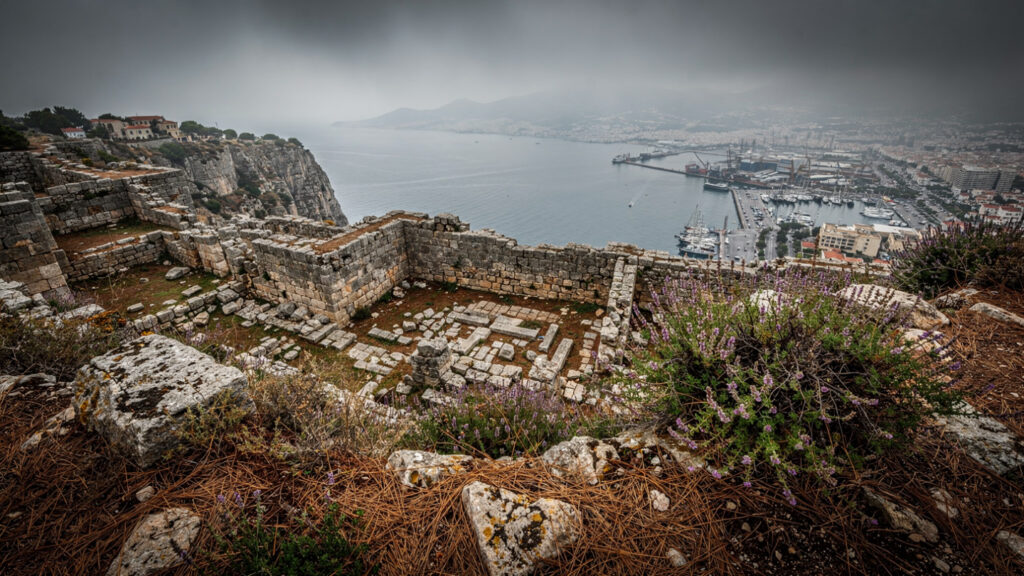
Athens won. In 457 BCE, the Athenian forces defeated the Aeginetan fleet and imposed the terms of the Athenian victory: the demolition of the Aeginetan walls, the surrender of the Aeginetan fleet, and the tribute payment that integrated Aegina into the Athenian imperial structure as a subject state rather than an independent commercial power. In 431 BCE, at the beginning of the Peloponnesian War, the Athenians expelled the entire population of Aegina and replaced them with Athenian settlers, removing the human community that had built the commercial tradition and the island’s cultural identity across the preceding centuries.
The expelled Aeginetans were given territory by Sparta in the Peloponnese, where they established a community in exile. In 405 BCE, after the Athenian defeat in the Peloponnesian War, the surviving Aeginetans were allowed to return to their island. They returned to a different place: the commercial network whose organization had given Aegina its fifth-century dominance had been disrupted beyond recovery, and the demographic and cultural continuity that the expulsion had severed could not be fully restored.
Thucydides’s identification of the Aegina grievance as a contributing condition of the Peloponnesian War is the historical judgment that gives the island’s destruction its particular weight in the collection of events whose combination produced the war that destroyed the conditions of the fifth‑century BCE Greek world. The island whose justice had given the underworld its most reliable judge, whose royal house had given the Trojan War its greatest heroes, whose commercial world had given the ancient world its first coin, was destroyed by Athens partly because it was too close to the Athenian harbor and too commercially successful for the Athenian imperial world to accommodate alongside its own.
The Kolona and the Archaeological Site
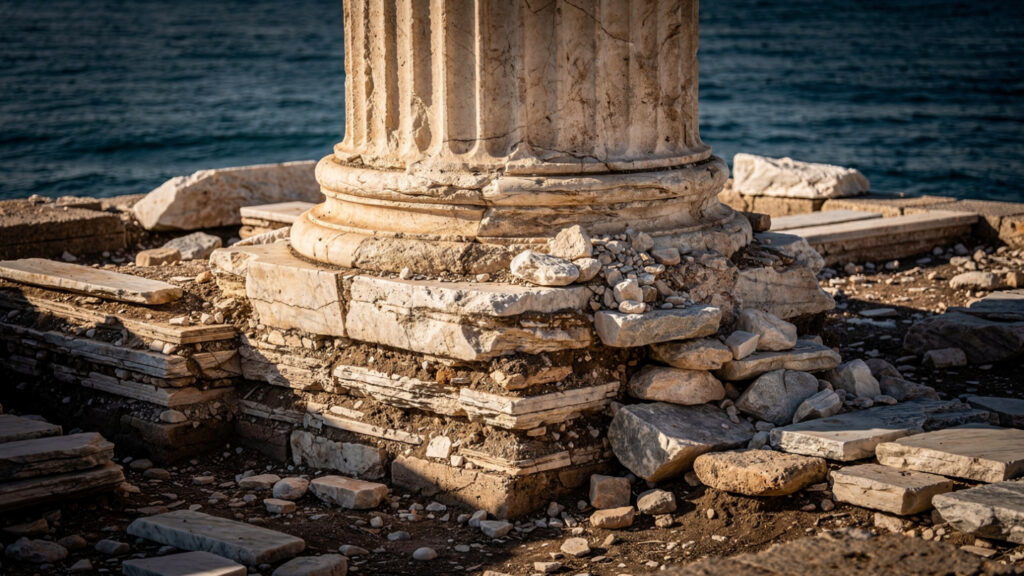
The solitary column standing at the edge of the Aegina Town harbor whose preservation above the general collapse of the ancient structure gives the site its name, kolona meaning column in Greek, is the surviving element of the Temple of Apollo whose construction in the early sixth century BCE made it the sanctuary that organized the ancient city’s sacred topography.
The Kolona archaeological site preserves the layering of the human occupation of this coastal location from the Early Bronze Age through the Hellenistic period in the stratigraphic record whose content the excavations of the German Archaeological Institute have been revealing since the nineteenth century: the successive building phases on the same site, each using the stone of the preceding phase as the available building material for the subsequent construction, give the site the character of the accumulated physical record of the human community’s continuous occupation of the coastal location over approximately four thousand years.
The Archaeological Museum adjacent to the Kolona site holds the material record of the island’s ancient history in the form that gives the site visit its intellectual context: the early Aeginetan pottery whose quality in the seventh and sixth centuries BCE reflected the commercial prosperity that the first coinage had enabled, the architectural sculpture fragments from the successive building phases at the Kolona site, and the numismatic material whose turtle staters give the visitor the direct encounter with the physical object whose invention had transformed the ancient Mediterranean’s commercial organization.
Visiting Aegina
The hydrofoil from the Piraeus harbor reaches Aegina Town in approximately forty minutes, and the conventional ferry takes approximately one hour and fifteen minutes. The frequency of the service, with multiple departures in each direction throughout the day, makes Aegina the most accessible of the significant ancient sites in the wider Athens region.
The optimal sequence for the visitor whose interest is the content this article has developed is the sequence that moves from the Kolona archaeological site and museum in the morning, through the Aegina Town harbor and its neoclassical character as the briefly serving first capital of the independent Greek state in 1828 and 1829, to the Temple of Aphaia in the afternoon.
The Temple of Aphaia requires the preparation of the visitor who understands what the pediment sculptures depicted and where they now are: the empty pediments of the surviving temple communicate their content most fully to the visitor who carries the knowledge of the Aeacid heroes whose Trojans War actions the Munich sculptures depicted, and whose presence in the Munich Glyptothek is the loss whose understanding transforms the empty pediments from the absence of content into the presence of the historical claim that the pediment sculptures’ removal made about the relationship between the nineteenth-century collecting tradition and the ancient architectural program whose integrity the removal permanently disrupted.
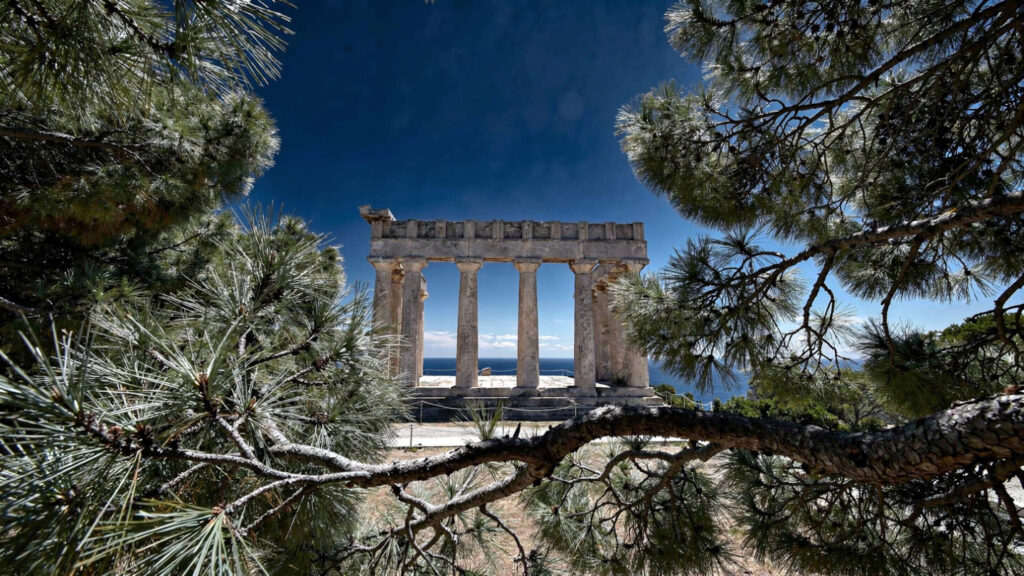
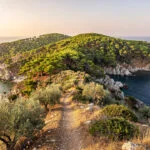
The pine forest that covers the hill below and around the temple, the Aleppo pine whose aromatic quality in the afternoon heat gives the temple precinct its characteristic sensory character, is the landscape within which the ancient sanctuary’s particular quality of the sacred space whose divine character was most directly expressed in the relationship between the hilltop position and the surrounding landscape is most completely available to the contemporary visitor.
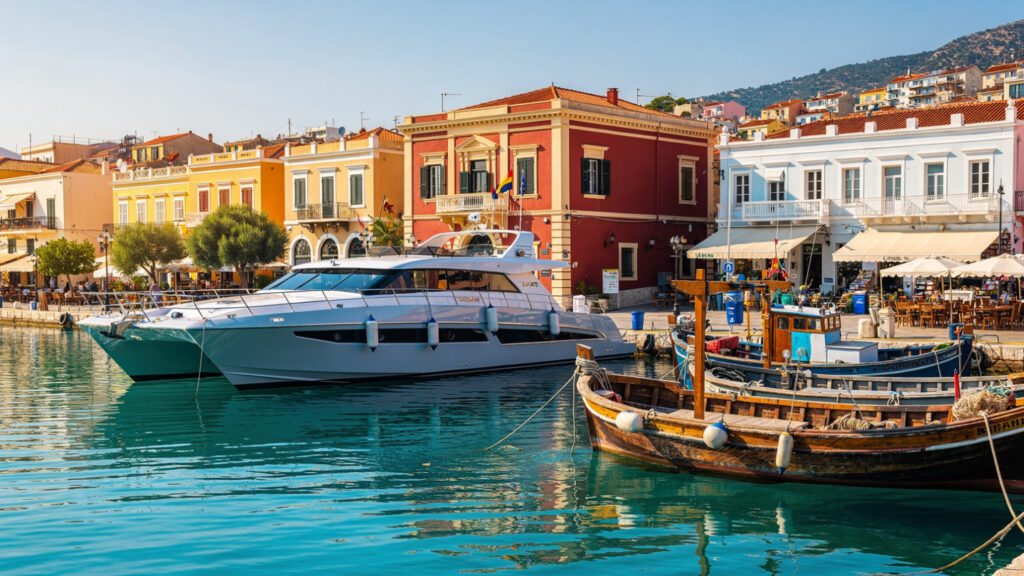
The sea is visible through the pines. The temple stands above it. The empty pediments face the direction from which Aeacus’s grandsons sailed to Troy.
At Olympus Estate, Wanderlust Greece guides you across the sacred and storied terrain of the Hellenic world. The three judges of the dead were Minos and Rhadamanthus and Aeacus. Aeacus came from Aegina. His grandsons were Achilles and Ajax. The Temple of Aphaia depicted both Trojan War campaigns in the pediment sculptures that honored the Aeacid heroes. The pediments are now in Munich. Aegina minted the first silver coin in the Greek world around 650 BCE with a sea turtle on the obverse. Thucydides called Aegina the eyesore of the Piraeus. Athens expelled the entire population in 431 BCE. The solitary column of the Temple of Apollo still stands at the harbor’s edge. The sea is visible through the pines from the temple hill. The empty pediments face the direction from which Aeacus’s grandsons sailed to Troy.