
The price of anything in a tourist economy reflects what the market will bear from people who are not coming back.
The Greek islands have two economies running simultaneously in summer. One prices everything for the visitor who arrived by cruise ship or package flight and will be gone in five days. The other prices things for the residents who have been living here their entire lives and will be here long after the ferries stop running in October. These two economies occupy the same streets, sometimes the same buildings, and they produce radically different experiences of the same place.
The visitor who finds the second economy finds Greece. The visitor who stays inside the first finds a version of Greece that was assembled around their expectations and priced accordingly.
This is not a guide to spending as little as possible. It is a guide to spending where the value is genuine and avoiding where it is constructed. The result is a more affordable trip. More importantly, it is a more honest one.
Moving on Local Terms
The bus network on the Greek islands is not a tourist service. It runs between towns on schedules set for the people who use it daily, which means school hours, market days, and the working rhythms of the island rather than departure times calibrated to tourist attractions. This makes it occasionally inconvenient and consistently cheap. A bus journey that an organised tour would charge thirty euros for costs two or three on the KTEL network, and the journey includes the experience of travelling with people who are going somewhere real rather than being transported to an attraction.
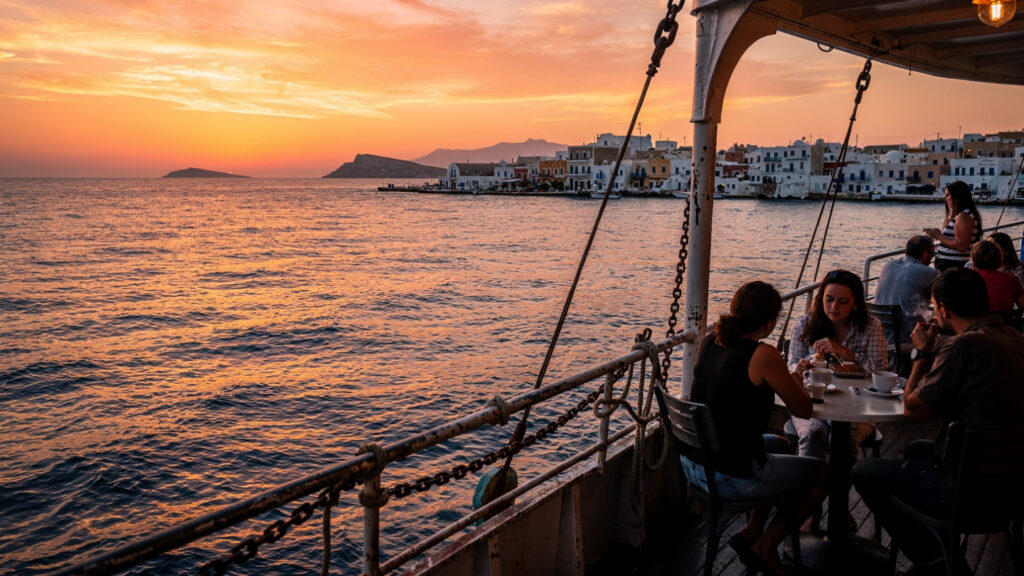
The ferry system connecting the islands operates on the same logic. The inter-island ferries that the local population uses to move between the Cyclades, the Dodecanese, or the Ionian islands are structured around commercial and social necessity rather than scenic routing. Booking directly through the ferry companies rather than through aggregator platforms removes the booking fee. Travelling on the slow conventional ferry rather than the fast catamaran on longer routes costs roughly half the price and takes twice the time, which on a journey between islands surrounded by the Aegean is not the sacrifice it might appear.
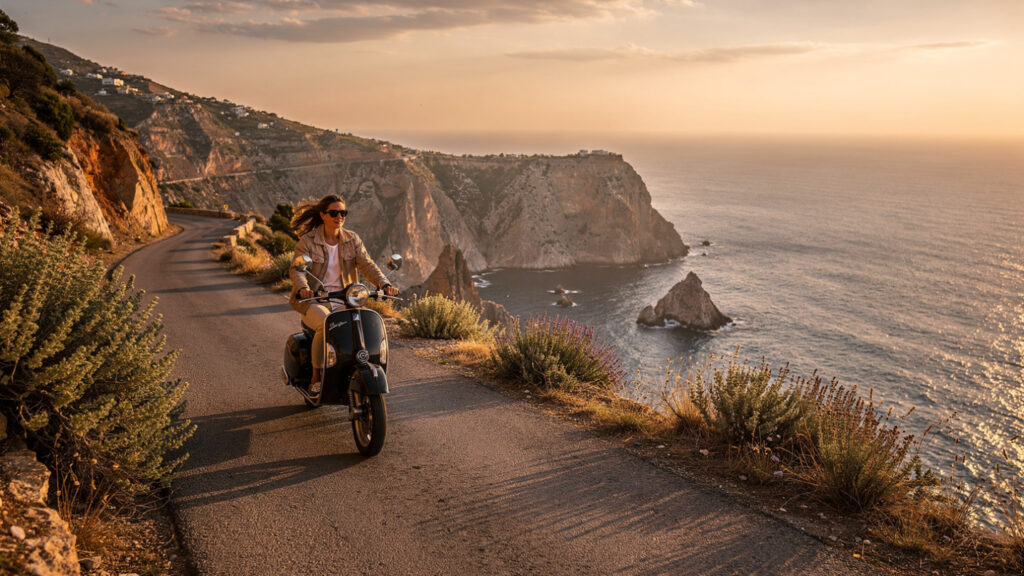
Hiring a scooter or a small car from a locally owned rental shop rather than a chain operation in the port typically costs less and comes with the benefit of advice from someone who has driven these roads their entire life. Ask which road to take over the mountain and which beach is worth the extra kilometre of unpaved track. This information is not available in any guidebook. It is the product of decades of local knowledge and it is freely given to anyone who asks with genuine interest rather than transactional intent.
Where the Food Is
The tourist taverna on the harbour front has a laminated menu with photographs and prices that reflect its location. The taverna two streets back, without a sign in English and without a man at the door inviting you inside, has a handwritten daily menu on a chalkboard and prices that reflect what the food actually costs to produce.
The absence of English outside a Greek eating establishment is not a barrier. It is useful information. It tells you that the clientele is primarily local, which tells you that the food has earned its customers rather than borrowed them from the foot traffic of the tourist zone.
The chalkboard menu changes because it reflects what was available at the market or the fish landing that morning. The laminated menu does not change because it was designed to be legible to every nationality and to minimise the need for interaction. The chalkboard requires a brief conversation, which in Greece is never experienced as a transaction but as the beginning of a meal.
The central markets of the island capitals, the covered and open-air produce markets where the island’s agricultural production arrives each morning, are not tourist destinations. They are working spaces where the residents of the island buy what they need for the day. Bread, olives, cheese, fruit, herbs, fish from the morning landing: the quality at the market is the quality available in the island’s own production, which is substantially higher than the quality of imported produce in the supermarkets serving the tourist zone. The prices at the market are the prices of the local economy rather than the prices of the visitor economy.
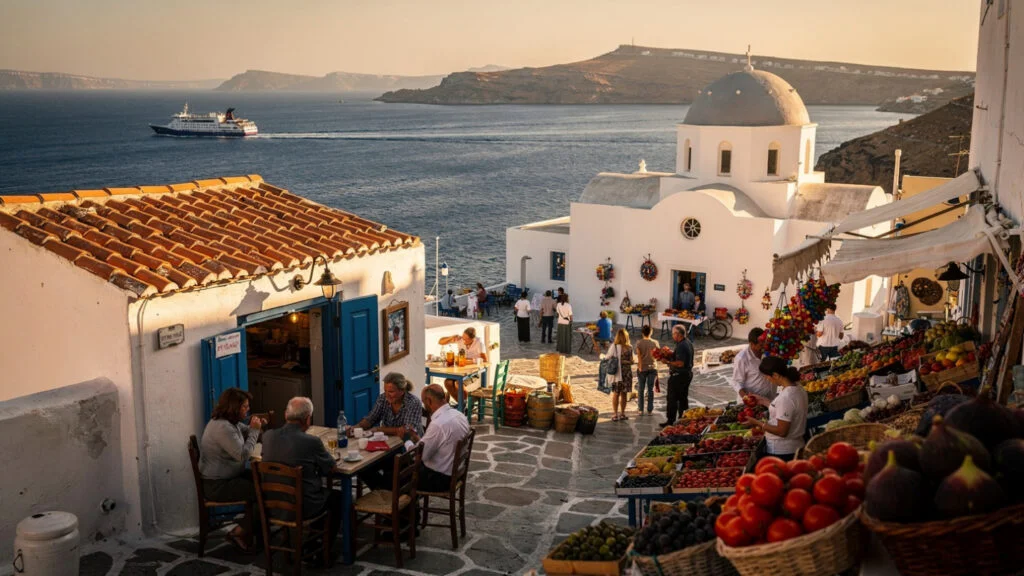
Eating partly from the market, preparing simple food from local ingredients when accommodation allows it, and reserving restaurant meals for the evenings when the social dimension of the taverna experience is what you are paying for rather than simply the food: this arrangement produces both the most authentic encounter with Greek food culture and the most reasonable account of what food actually costs in Greece.
The Kafeneion Rhythm
The kafeneion operates on a time logic that is worth understanding before you sit down, because misunderstanding it produces frustration and understanding it produces one of the most genuinely pleasurable experiences available in Greece.
A single coffee in a kafeneion is not a transaction for a beverage. It is a rental of time and presence at a table in a shared public space. The expectation of turnover that governs a coffee shop in London or Amsterdam does not operate here. A Greek coffee, small and thick and arrived with a glass of cold water, gives you the table for as long as the conversation lasts. Two hours is not unusual. Three is not remarkable.
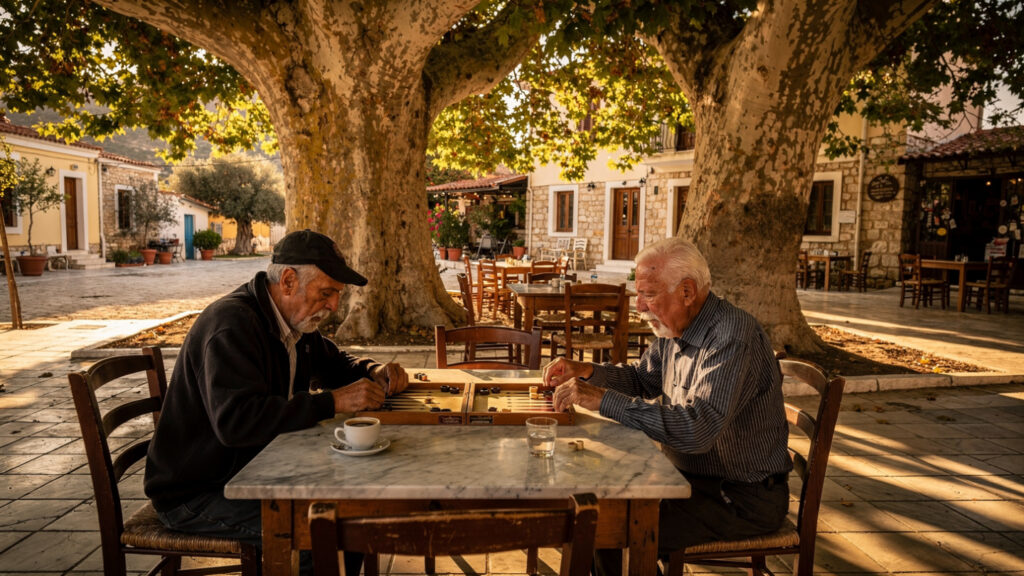
This means that the cost of an afternoon in a kafeneion in a Greek village, spent watching the square perform its daily social life, amounts to the cost of one or two drinks. No other equivalent use of time in Europe produces this ratio of experience to expenditure, because no other equivalent institution exists with the same relationship to time.
The kafeneion is also where the actual information about the island is held. The men and women who have been drinking coffee in the same square for thirty years know which beach is currently inaccessible because the path washed out in winter and has not been repaired, which taverna recently changed hands and is no longer what it was, and which feast day this weekend will bring the surrounding villages down to the port for a celebration that is not listed anywhere. This information is available to anyone who sits long enough to be included in the conversation.
The Feast Day Calendar
The Greek Orthodox religious calendar produces feast day celebrations throughout the summer that are among the most genuinely festive public events in Europe, entirely free to attend, and almost entirely invisible to visitors who have not been told to look for them.
Every church on every island celebrates the feast day of its patron saint. The celebration involves a liturgy in the evening followed by a panegyri, an all-night festival in the churchyard or the village square, with live music, dancing, and food and wine at prices set by the organising committee of the community rather than by a commercial operator. The price of a plate of food and a glass of wine at a panegyri is the price the community decided was appropriate for its own members, which is very low, and the attendance is the entire social fabric of the surrounding area rather than a curated tourist experience.
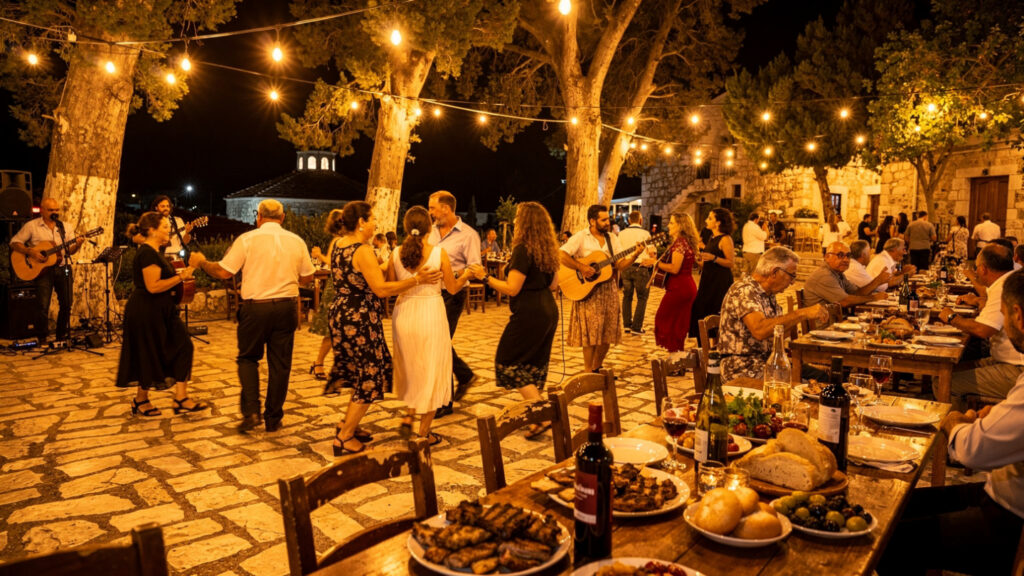
The most significant of these celebrations draw participants from across the island and from neighbouring islands. The atmosphere that results is the atmosphere of a community at full social intensity, entirely absorbed in its own celebration, into which visitors are welcomed as guests rather than customers.
Finding these events requires either a calendar from the local municipality or the simple act of noticing the preparations as they happen in the days before a feast: the stringing of lights between the plane trees of the village square, the arrival of the sound system, the women carrying covered dishes toward the church. Follow the preparations. The event will be worth the following.
Staying Inside the Residential Economy
The accommodation economy of the Greek islands has two distinct layers, and the difference between them is more than price.
The large hotel and resort sector at the port and the beach caters to the visitor who wants a managed experience, consistent service standards, and the infrastructure to leave the island without having encountered it. This sector is priced at European resort rates.
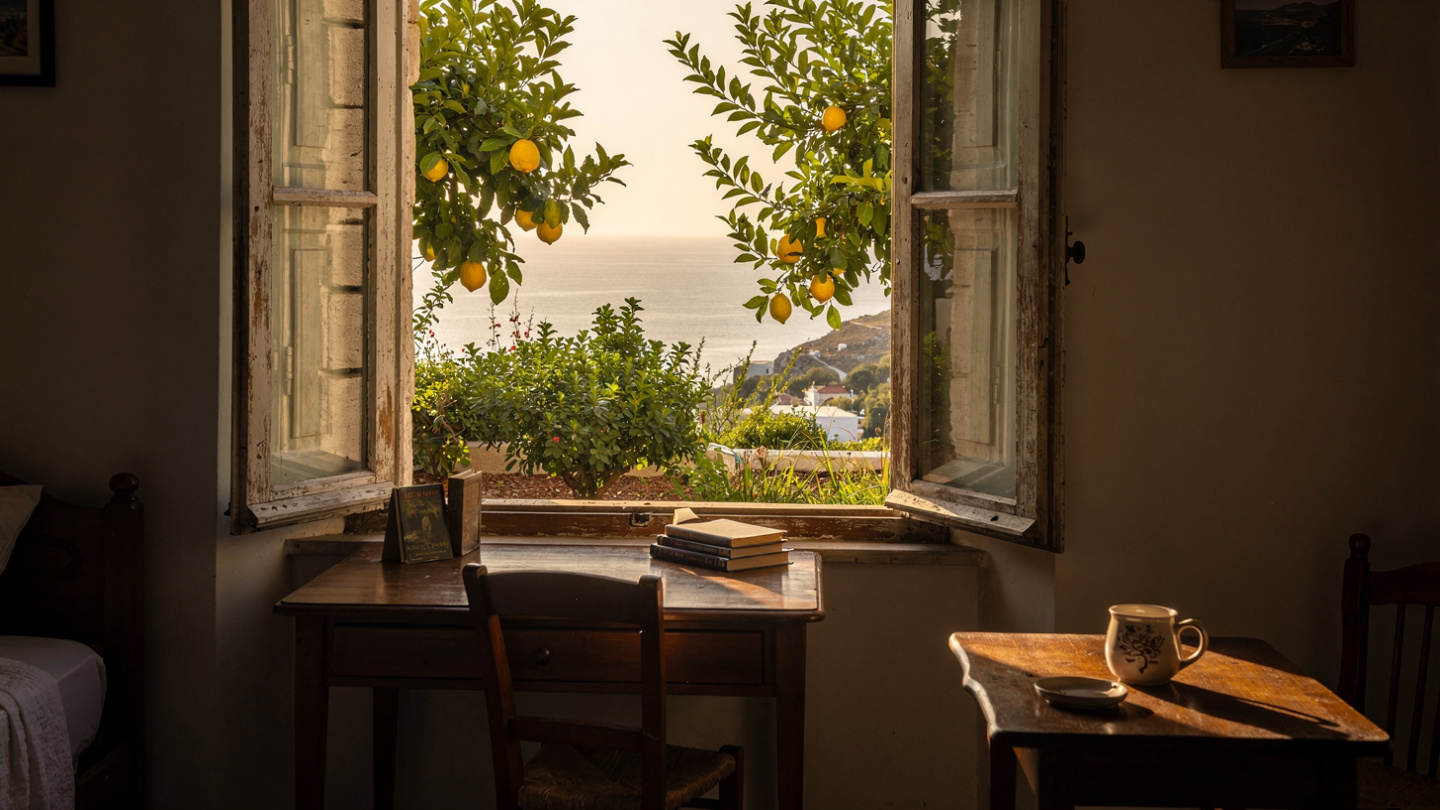
The rooms-to-let sector, operating in the residential parts of the same islands, provides accommodation in houses whose owners converted a spare room or a garden apartment rather than building a purpose-designed tourist facility. The quality varies more than in the resort sector. The experience of staying in a house that has been a family home for three generations and is being run as accommodation by the family’s children is not the same as staying in a hotel room. The kitchen garden visible from the window, the owner who brings a plate of fruit without being asked, the quality of the sheets and the light through the shutters in a room whose furniture has been in that room longer than most of its guests have been alive: these are not experiences that the resort sector can produce.
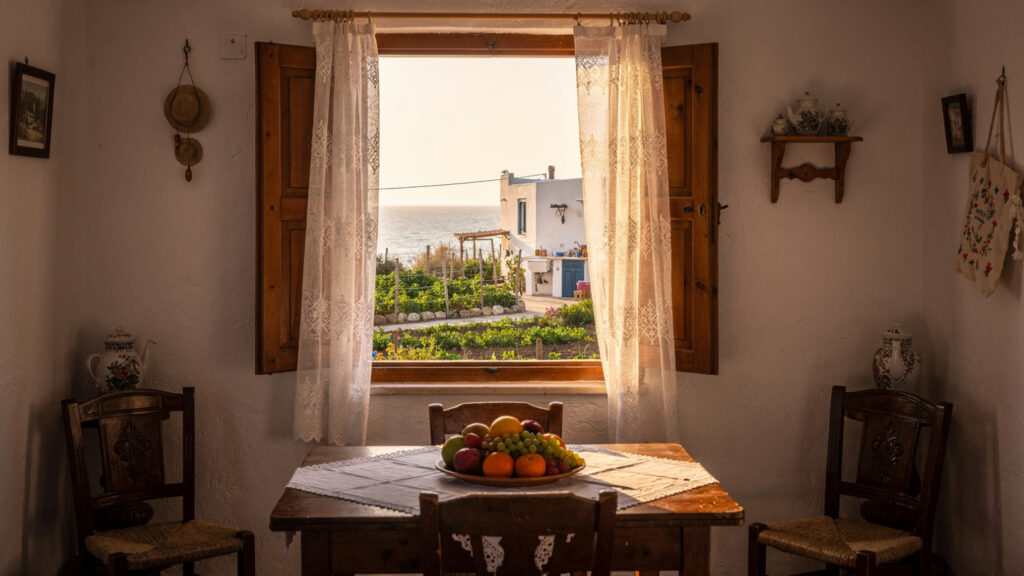
Platforms that aggregate room listings across the islands provide access to this sector without the previous generation’s requirement of arriving at a port and wandering in search of the rooms to let signs. The prices on these listings, particularly away from the most heavily touristed islands and the peak weeks of July and August, reflect the residential economy rather than the resort economy.
Shoulder season travel, specifically May through mid-June and September through October, produces the best combination of available accommodation at reasonable rates, weather that is genuinely pleasant without the intensity of the August heat, and islands that are functioning as inhabited places rather than as seasonal attractions.
The Honest Accounting
Traveling in the Greek islands on terms that are financially reasonable and culturally honest is not a matter of deprivation or compromise. It is a matter of knowing which economy to operate in.
The ferry rather than the tour boat. The kafeneion rather than the bar strip. The market rather than the resort restaurant. The feast day in the village rather than the sound-and-light show at the ancient theatre. The rooms above the family kitchen rather than the pool villa with the sunset view.
Each of these choices is less expensive than its alternative. Each of them is also closer to Greece.
The Greek islands were not built for the tourist economy. They were built by fishing families and farmers and sailors and merchants who lived on them year-round and whose architectural and culinary and social traditions predate the first package holiday by several centuries. The visitor who moves within the structures those traditions produced is moving within something genuine, and the cost of genuine things, in Greece as elsewhere, is substantially lower than the cost of their simulations.
At Olympus Estate, Wanderlust Greece explores the Greek islands and mainland as living places rather than seasonal destinations. The most authentic experience and the most financially intelligent approach turn out to be the same approach. This is not a coincidence.