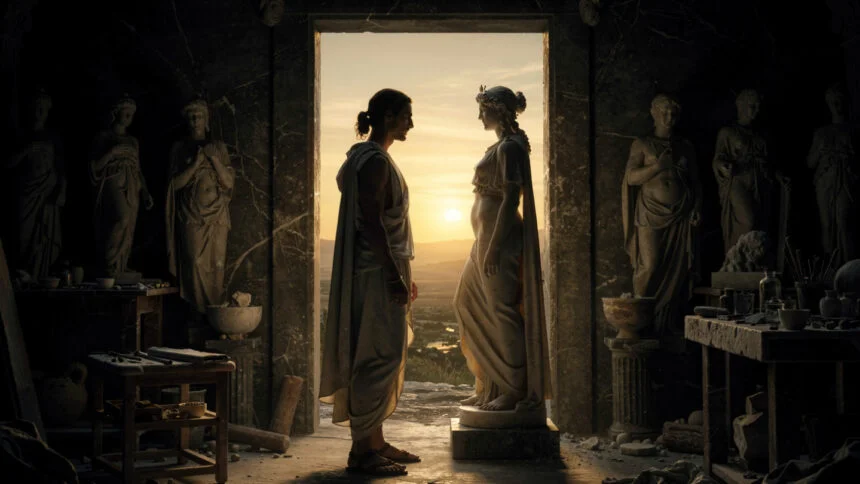






The Greeks had two words for time and they meant entirely different things.
Chronos is the time the clock measures: sequential, quantitative, the inexorable succession of moments whose accumulation makes up the duration of a life. It is the time of the calendar and the tide table and the agricultural cycle, whose reliable regularity made organizing the Greek world possible in the first place. It passes whether anyone attends to it or not, moving through the night while you sleep and through the years while you age, and it will not be stopped or reversed or compressed no matter how urgently you need it to be.
Kairos is the time the clock cannot measure: the qualitative moment of opportunity, an opening that either exists or does not, one no amount of effort or will can manufacture, recognizable only to someone who has developed the sensitivity to read the conditions it presents, and seizable only by someone who has developed the capacity to act correctly the instant the situation calls for it.
This is not a distinction between the important and the trivial, or the sacred and the secular. Chronos is necessary. Kairos is necessary. The relationship between the two was a problem Greek philosophy treated as one of its most consequential contributions to understanding what it actually means to act well in the world.

Someone who attends only to Chronos, organizing their existence entirely around managing the sequence of passing time, has access to the full duration of their life but no guarantee that duration will contain the moments of correct action that actually give it value. Someone who attends only to Kairos, always waiting for the opportune moment without the preparation and endurance that only patient navigation of Chronos provides, recognizes the opportunity the instant it arrives but has never prepared themselves to act correctly within it.
Understanding both at once was the person Greek philosophy was actually trying to produce.
Chronos and the Titan Who Consumed What He Created
The ancient Greeks gave Chronos exactly the cosmological weight the most fundamental available temporal fact demanded: time passes, everything that exists within time is subject to that passage, and the passage of time is the condition within which every human activity must occur.
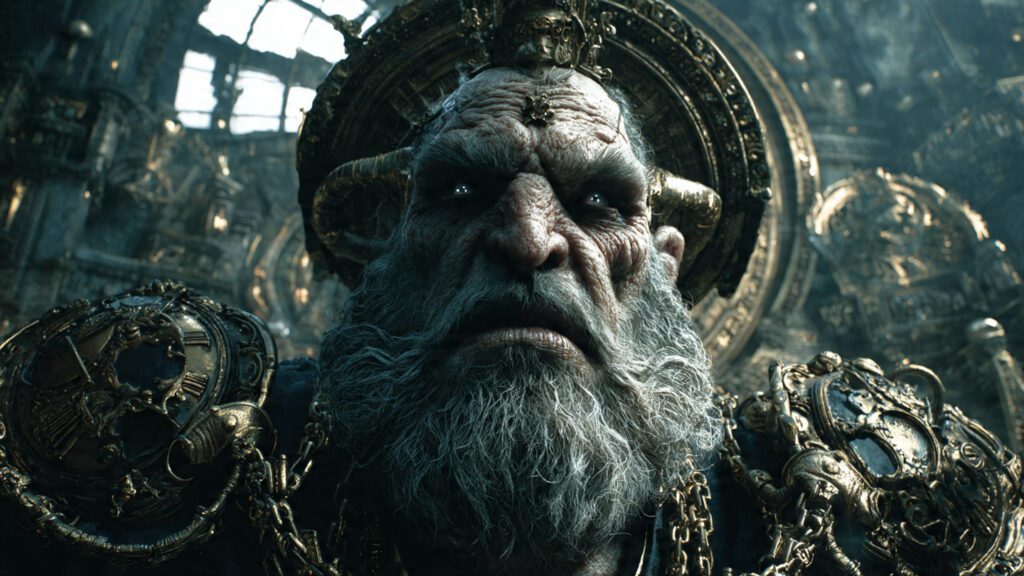
Later allegorical thought conflated Chronos with Kronos, the Titan who swallowed his own children to prevent the prophecy that one of them would dethrone him. The conflation is understandable: both figures embody the devouring character of the relentless temporal process, the sense in which time’s passage consumes exactly what it produces, the year that gives the harvest also demanding the harvest’s end and winter’s beginning. But the two figures remain distinct in the ancient sources, and the distinction matters. Kronos is the mythological figure this collection’s articles on the divine constellation and the Titanomachy both develop. Chronos is the philosophical concept whose personification gives Greek thought its most abstract engagement with the nature of time itself.
What the devouring image of Chronos actually encodes is an observation the Stoics later developed into their most precise account of the human relationship to time: time that has passed cannot be recovered, a moment allowed to slip by without the action it required cannot be recalled and used again, and someone who failed to attend to that moment has not merely missed an available resource but has permanently lost whatever opportunity it contained.
This is exactly the weight the Greek philosophical tradition placed on Kairos: not simply the pleasant idea that some moments are more favorable than others, but the sharper claim that moments of correct action are not evenly distributed across the flow of Chronos. They arrive at specific points and depart if not seized, and someone who never develops the capacity to recognize and act within them has not merely missed an opportunity here and there. They have failed at what Greek thought treated as the central task of a human life: acting well at the right moment.
The Iconography of Kairos
Ancient Greek art gave Kairos an iconographic form that encoded the concept’s philosophical content with unusual precision.
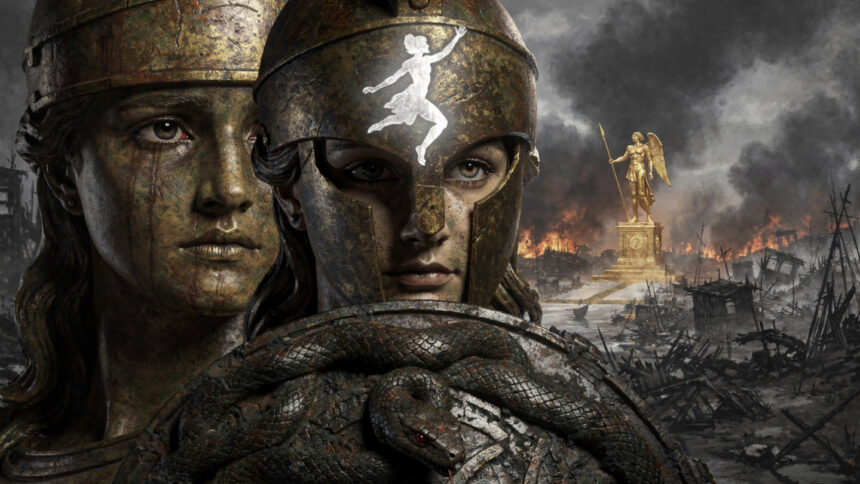
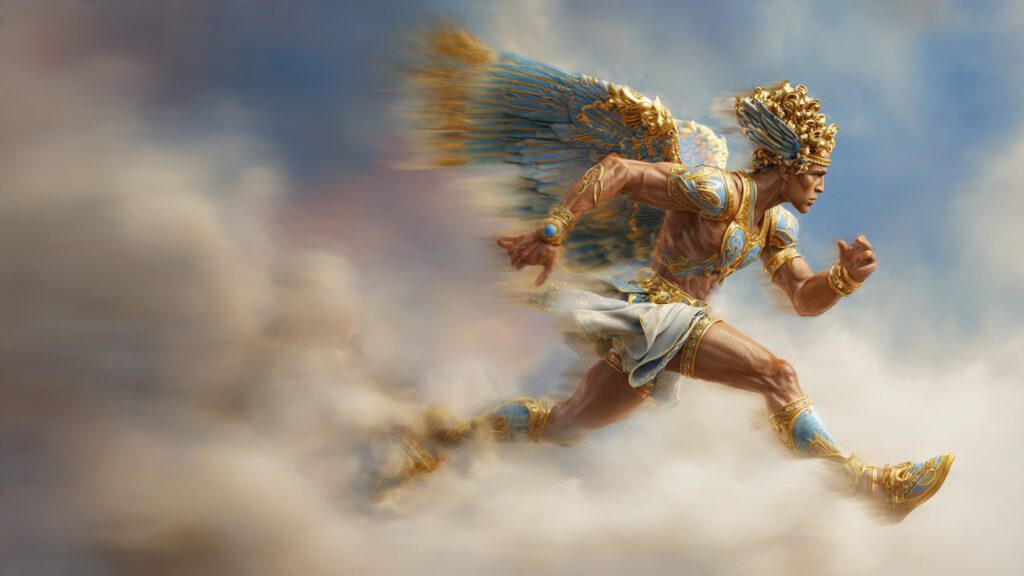
He was depicted as a young, athletic figure caught in rapid motion, someone who never waits, always in transit from one position to the next. His heels were winged, encoding the speed of both his approach and his departure. His back was bald. A single long forelock fell forward over his face.
The hairstyle carried the whole concept’s meaning directly: Kairos approaching could be seized by the forelock. Kairos departing offered nothing left to hold. Someone who recognized the opportune moment as it arrived had one available action, grasping the forelock, taking hold of the moment while it was still present and the action still possible. Someone who let the moment pass had no equivalent recourse. The bald back of a departing Kairos gave the hand nothing to grip, and the failure of reaching for what had already moved beyond reach was made visually immediate by the bare skull itself.
This iconography is the single most compressed available statement of the whole concept: the moment of correct action is recognizable in advance, graspable in the present, and permanently unavailable in retrospect. The preparation that makes recognition possible belongs to someone who has attended to a situation’s character with the attention it required. The act of seizing belongs to someone who has both recognized the moment and built, in advance, the capacity to act correctly within it.
Someone prepared but unable to recognize the moment watches it pass without acting. Someone who recognizes it without preparation acts within it, but acts incorrectly. Only someone both prepared and alert seizes the forelock and acts correctly at the right moment.
This is phronesis, practical wisdom: the capacity to recognize Kairos in any situation and act correctly within it. Aristotle developed phronesis as the master virtue, the one whose function was applying every other virtue exactly when its application counted as the correct action. Courage without phronesis is recklessness, brave action performed at the wrong moment. Generosity without phronesis is waste, a generous act performed when the recipient cannot receive it correctly, or when the giving actually undermines rather than supports the person it was meant to help.
Odysseus and the Literary Expression of the Distinction
The Odyssey’s governing narrative belongs to the figure who understands the distinction between Chronos and Kairos more completely than anyone else in Greek literature.
Odysseus endures Chronos. Ten years of war and ten years of a return voyage are the duration within which every Kairotic moment in the Odyssey must occur, and he cannot abbreviate any of it. He cannot skip the years on Calypso’s island, the months of Circe’s hospitality, or the storm Poseidon sends against his raft. Chronos is simply what it is, and enduring it requires exactly the quality the Greeks called hupomone, the capacity to remain under a burden for as long as the burden demands.
But inside that duration, Odysseus waits for Kairos with the alertness of someone who understands that the opportune moment will come, and that meeting it will require exactly the prepared capacity only the preceding years of endurance could have built.

The Cyclops episode encodes this distinction most completely. Odysseus does not attack Polyphemus while the Cyclops is awake and at full strength, the action Chronos’s own impatience would suggest, the move of someone who cannot endure the waiting a situation demands and acts at the wrong moment simply because the delay has become intolerable. He waits instead. He observes his opponent’s character within the actual conditions in front of him. He identifies the exact moment the situation makes action possible: Polyphemus’s drunken sleep, the point of maximum vulnerability, when the hardened stake, the blinding, and the escape beneath the sheep’s bellies become the action Kairos itself makes available, and the action his own preparation has made him capable of carrying out.
The return to Ithaca is the same structure played out at the scale of the entire epic: Odysseus arrives at his own household in disguise, endures the beggar’s humiliation, observes the suitors’ character within the household’s actual conditions, and waits for the moment when stringing the bow, killing the suitors, and revealing himself to Penelope becomes the action the situation requires, one his long observation has finally made him capable of performing correctly.
The Odyssey is a twelve-book meditation on Chronos endured in preparation for the Kairos its endurance makes possible. Odysseus is the literary figure whose excellence Greek philosophy named the highest available form of practical wisdom: the wisdom of someone who has learned to live correctly in the relationship between the time that passes and the time that arrives.
Aristotle and the Virtue That Requires the Right Moment
The Nicomachean Ethics develops, in philosophical terms, the same account of virtue and timing the Odyssey had already developed in narrative form.
Every virtue, Aristotle argues, is the correct action performed at the correct moment, to the correct degree, toward the correct person, in the correct way. This is the formulation of someone who understood that virtuous action is never simply a general rule applied mechanically to a situation, but always a calibration of action to the specific character of the moment it occurs in.

Courage is not performing a brave action regardless of the situation’s actual conditions. It is performing that action exactly when the situation requires it. Someone who acts bravely when the situation does not call for it, when the risk is not genuine or the stakes do not warrant the exposure, is not courageous but rash, someone with the capacity for brave action who lacks the practical wisdom to recognize when that capacity actually applies.
Someone who fails to act bravely when the situation genuinely does call for it, when the risk is real and the stakes warrant the exposure, is not prudent but cowardly, again a failure of practical wisdom rather than a failure of capacity.
Phronesis is the virtue whose function is recognizing exactly when an action is the correct one. It is not itself a content-virtue the way courage, justice, and temperance are. It is the meta-virtue whose job is applying the content-virtues at the right moment. Someone with courage but no phronesis has the capacity for brave action without the capacity to deploy it correctly. Someone with phronesis but no courage can recognize the correct moment for bravery without being able to act on the recognition when it actually arrives.
The complete virtuous person has both: the content-virtues that constitute genuine excellence, and the phronesis that applies them precisely when their application counts as correct action.
This is the philosophical content Kairos carries: acting well in the world requires not merely possessing the capacities an action demands, but the practical wisdom to deploy them exactly when their deployment is correct. The moment is not incidental to the quality of an action. It is constitutive of it. The right action at the wrong moment is not a correct action performed badly. It is simply a different, wrong action, wrong precisely because of when it happened.
The Stoic Internalization
Stoicism, whose development from the Cynic school the Diogenes article in this collection traces, and whose relationship to Epicureanism the Epicurus article develops, made the single most radical move in the entire Greek engagement with Chronos and Kairos. The Stoics inherited Heraclitus’s claim that the universe runs on a rational fire, a law of flux making every moment part of a larger coherence, and internalized it with enough precision to transform the concept of time itself. Zeno, who built his school at the Stoa Poikile, argued that external Chronos, the succession of moments shaped by the world’s own conditions, was never actually within human control.
The storm that arrives, the illness that interrupts, the political upheaval that reshapes a city, all of it belongs to the realm of Chronos. What remains within a person’s control is internal Kairos, the quality of their own response to the moment. The Stoics gave this external condition a technical name, a preferred indifferent: the kind of external state whose positive form is genuinely preferable to its negative one, but whose actual occurrence remains entirely outside the control of whoever lives through it.

The Stoic sage cannot choose whether a given moment brings release or continued confinement. What the sage can choose is the character of the response to it, whatever it turns out to be.

Epictetus, the freed slave this collection’s treatment of Stoicism references across several articles, developed this position with the precision of someone whose own experience of total powerlessness over external Chronos had made internalizing Kairos not a philosophical preference but a practical necessity of daily survival. A person enslaved cannot control the external conditions of that enslavement. But they can control the quality of their response to it, maintaining an internal freedom the external conditions cannot reach, an attentiveness to the moment that remains the only form of correct action still available inside whatever constraints the situation imposes.
This is the most radical available version of the Kairos idea: the claim that the qualitative moment of correct action never actually depends on favorable external conditions at all, but remains available, within any configuration those conditions take, to anyone who has built the internal capacity to recognize and act correctly regardless of what Chronos happens to present.
The Greek Afternoon and the Living Practice
The mesimeri, the middle of the day, is the contemporary expression of exactly this understanding of the relationship between the time that passes and the time that arrives.
Between early afternoon and early evening, the heat of the Mediterranean day produces conditions under which continuing to work at the tasks that would otherwise make productive use of daylight becomes, simply, the wrong action, not because the tasks themselves are not worth doing, but because the conditions, the heat, the quality of the light, the body’s own response to both, make this particular stretch of time the wrong moment for them.

The mesimeri is the institutional acknowledgment of exactly this fact: suspending the working day’s productive activity because the moment’s own character makes rest, social connection, and that suspension the correct response to what the day is actually offering.
The evening volta that follows is the community’s own expression of Kairos at the collective, social scale: movement through public space not to reach a destination but to be present within the community’s shared social life at that particular hour. The conversations that happen during the volta are not the conversations of an agenda, a transaction, a piece of business. They are conversations built entirely around the quality of attention people bring to each other’s presence in the shared space of the evening.

This is the living practice carrying forward exactly what Chronos and Kairos meant to the Greeks who first distinguished them: the understanding that the time arriving is never the same kind of thing as the time passing, that each demands its own particular quality of attention, and that whoever learns to live correctly inside the relationship between the two has learned the single most important thing Greek thought ever understood about what it means to live well.
At Olympus Estate, Greek Living traces the domestic and daily traditions of the Hellenic world from the ancient household to the contemporary table. The Greeks had two words for time and they meant entirely different things. Chronos is the time that passes. Kairos is the time that arrives. The iconographic Kairos had a forelock and a bald head: you could seize him as he approached, and nothing to hold as he departed. Odysseus endured Chronos for twenty years in preparation for the Kairotic moments the endurance made possible. Aristotle argued that every virtue is the correct action at the correct moment in the correct degree: phronesis is the meta-virtue whose function is deploying the content-virtues at the right moment. The Stoics made the most radical available move: internal Kairos remains available within any configuration of external Chronos. The mesimeri is the institutional recognition that afternoon heat makes rest the correct action and work the incorrect one. The volta is the community’s own expression of the shared social Kairos. Learning to live correctly in the relationship between the two is the most important thing.