
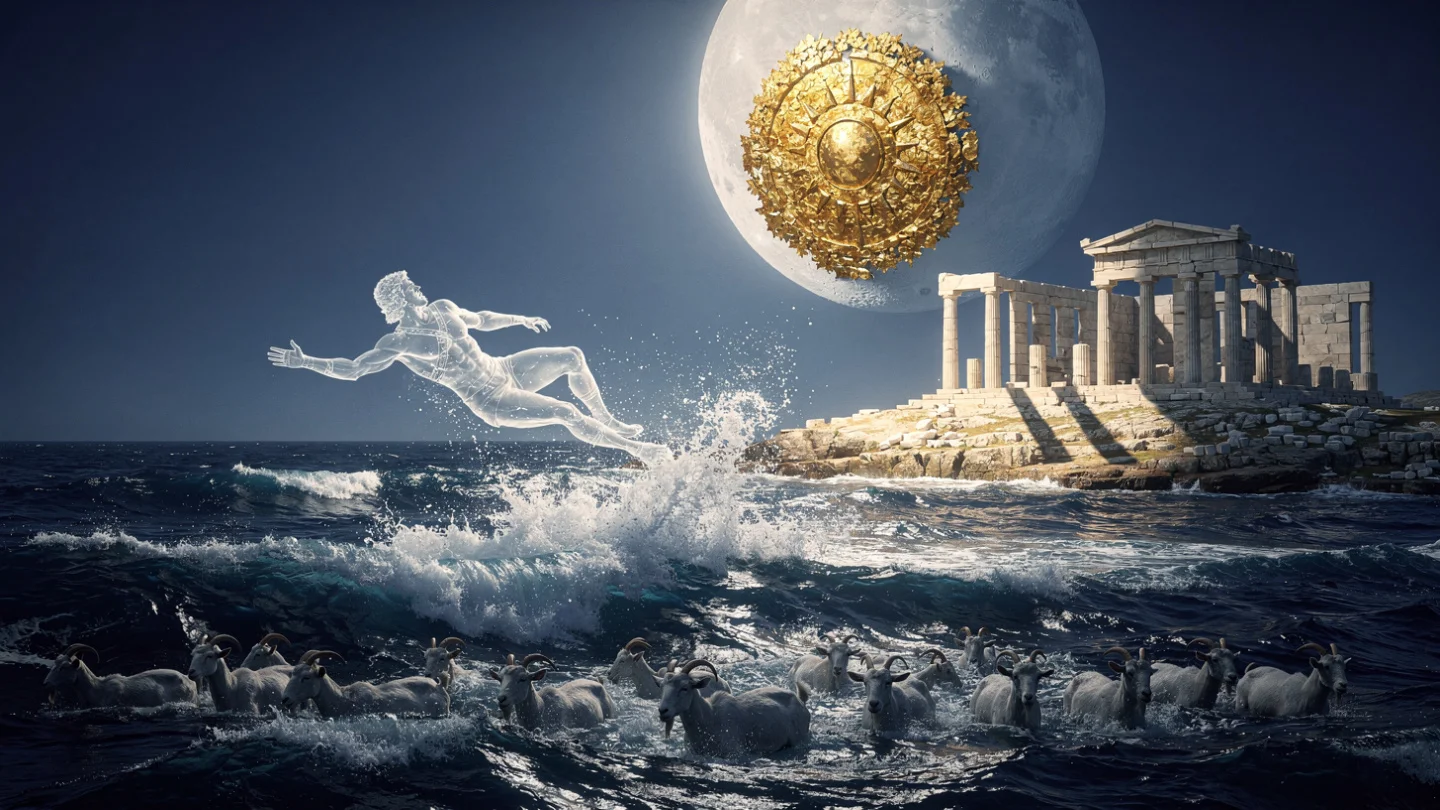
The ancient Greeks had three explanations for the name of the sea between them and Asia, and they preserved all three without ever resolving the contradiction, an intellectual honesty that understood geographical names accumulate layers of meaning rather than settling on one correct origin.
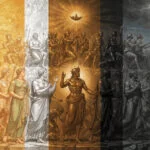
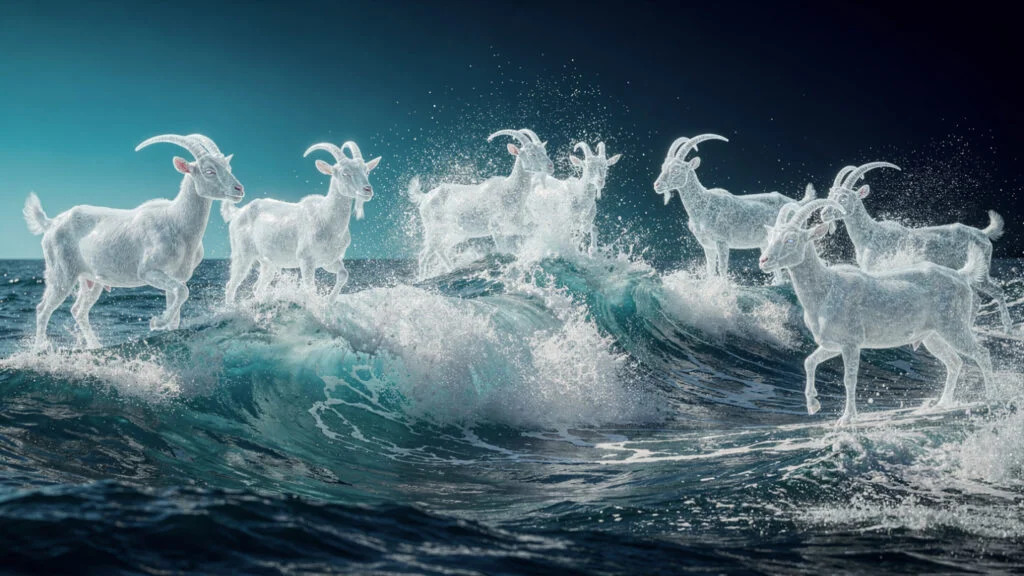
The three explanations: the name came from Aegeus, king of Athens, who threw himself from the cliffs at Cape Sounion when he saw his son Theseus’s ship returning under black sails and believed his son was dead. The name came from aiga, the ancient Greek word for goat, because the Aegean’s whitecapped waves in a storm looked like a herd of goats bounding across the surface of the water. The name came from the aegis, the divine goatskin shield belonging to Zeus and Athena, connected to the word for goat through the same root, giving a sea whose crossing demanded divine protection a name that encoded exactly that quality of the crossing.
These three explanations don’t contradict each other the way three competing historical claims would, because two share the same etymological root and the third encodes a mythological event about what this sea did to a person who forgot to attend to its demands. They are three different engagements with the same underlying quality: the Aegean as the most treacherous, most demanding, and most beautiful of the Mediterranean’s enclosed sea basins, its whitecapped waves, island-channeled winds, quality of surface light, and the mythological weight resting on every cliff, headland, and island together, demanding a name capable of carrying all of it at once.
Aegeus at Cape Sounion
The Aegeus myth preserves exactly the quality ancient tragedy consistently identified as the most devastating form of human failure: not deliberate betrayal, but a failure of attention at the precise moment attention mattered most, someone who has achieved the extraordinary undone by the merely ordinary.
Theseus had done what no one had done before. He had entered the Labyrinth, the most inescapable enclosure Daedalus’s design could produce, navigated it with Ariadne’s thread, and killed the Minotaur, the monster whose annual tribute of Athenian youth had been the price of Athens’s defeat by Minos, ending that tribute with the monster’s death. He had achieved exactly the heroic act his father’s city needed, and he was sailing home.
He forgot to change the sails.
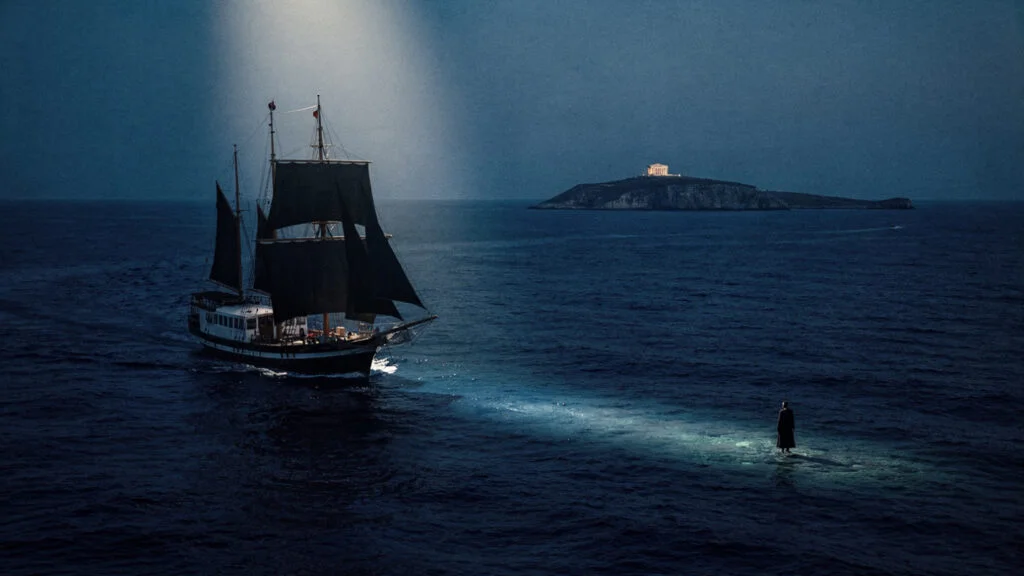
The agreement with his father anticipated exactly this moment: Aegeus would be watching the approach from the promontory at Cape Sounion, and father and son had arranged the return signal around the visibility of the sail’s color from the distance at which the promontory gave the best view of an approaching ship. Black sails meant the mission had failed and Theseus was dead. White sails meant success, and Theseus alive.
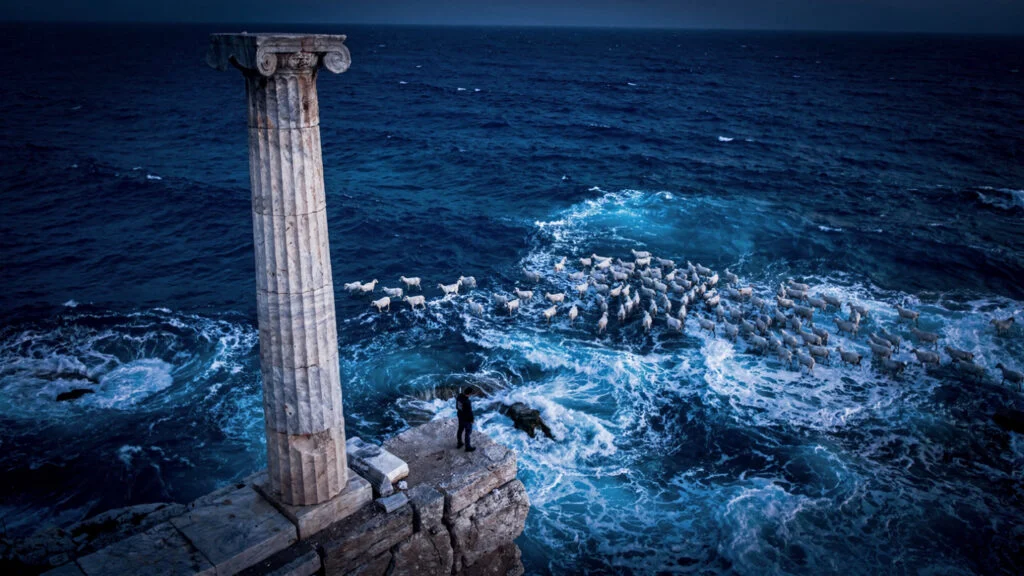
Theseus had succeeded. He was alive. He forgot to change the sails.
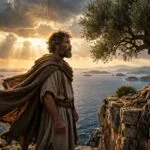
Aegeus, watching from Cape Sounion at exactly the distance where the sail’s color became visible before any other detail of the ship, saw black sails, believed his son dead, and threw himself from the cliff into the sea.
As an origin story for the sea’s name, this carries a particular weight: a geographical feature named for the cost of inattention at exactly the moment attention was most required. The sea that carries Aegeus’s name is the sea that killed him because Theseus forgot to change the sails, and anyone who sails the Aegean sails a sea named for the moment a man who had organized his entire existence around his son’s return was destroyed by that son’s failure to remember the one signal meant to protect him from exactly this outcome.
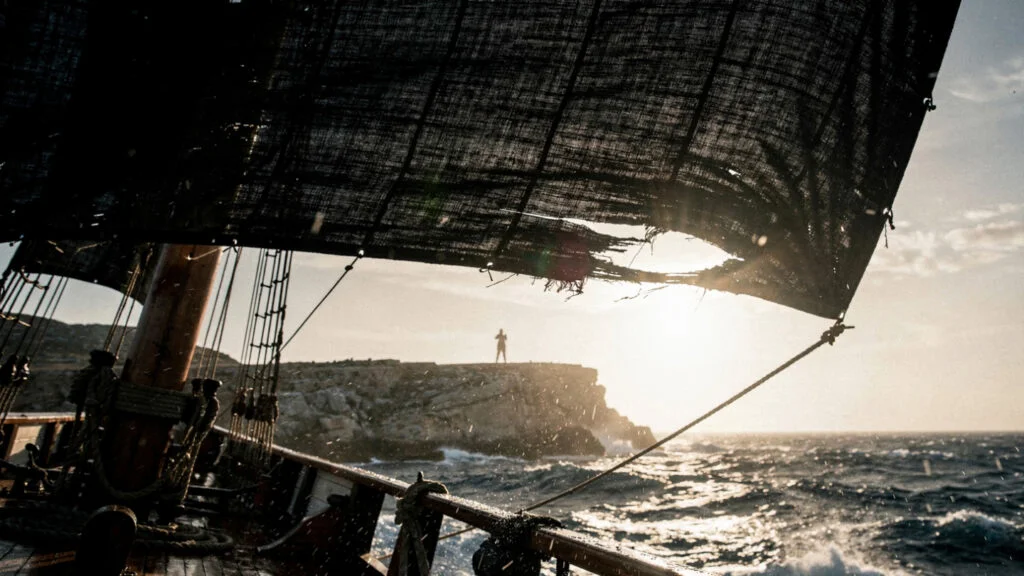
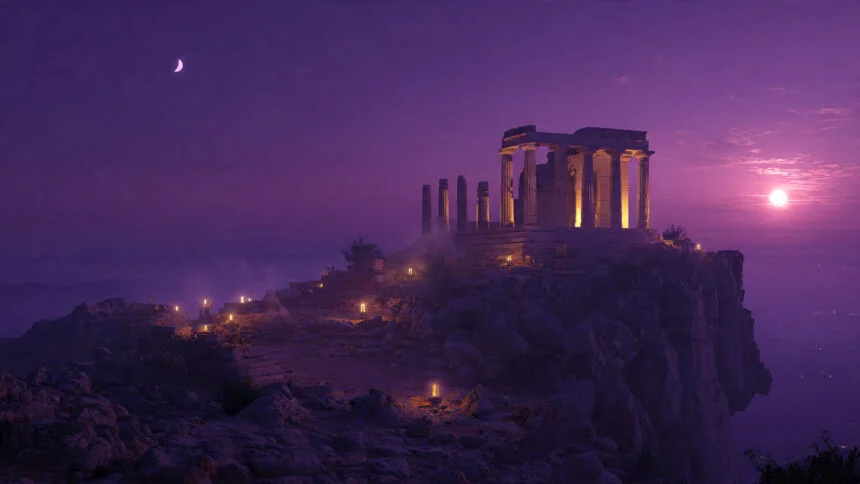
The Poseidon article in this collection develops Cape Sounion at length: the Temple of Poseidon at the promontory’s southernmost point, its position as the last landmark of the Attic mainland visible from any ship entering or leaving Piraeus, and the relationship between the sanctuary’s position and the maritime traffic it watched over. The Aegeus story gives the cliff below the temple its own particular mythological weight: the cliff the king fell from is the same cliff the temple now stands above, myth and religion converging at the single most visually concentrated point on the whole promontory.
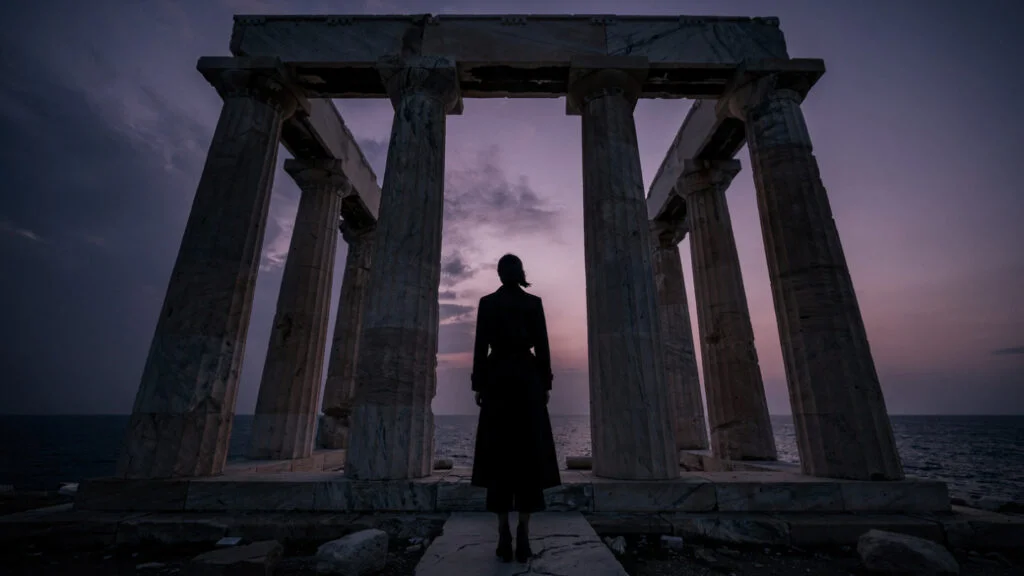
The Temple of Poseidon was built around 440 BCE, roughly four centuries after the Theseus myth’s own dramatic setting. The temple’s construction here is best understood as a religious sanctuary later established at a site whose mythological significance was already recognized. The sanctuary was built where the name was born.
The Goat and the Whitecap
Ancient Greek sailors crossing the Aegean during the spring-to-autumn sailing season, when predictable winds and navigable swells made crossing possible, called the whitecapped waves goats.
This naming practice was never unique to the Aegean: English whitecap, French mouton, Spanish and Portuguese cabrilla, Italian capriola, all reach for the sheep or the goat, whose bounding movement and white coloring most directly captured the visual and kinetic character of a breaking wave. A wave crest breaking into white foam, continuously generating and dissolving as it moves across the surface, is exactly what a goat’s movement across rocky terrain suggests: the individual animal’s white coat as the white foam, its individual bound as an individual crest, an entire herd’s continuous movement across terrain as the continuous generation of whitecaps across a sea’s surface, especially under the wind conditions the Aegean’s island-channeled winds most consistently produced.
The Meltemi, the seasonal north wind that was the most reliable and powerful wind of the Aegean summer, mattered enormously to ancient sailors and still matters to sailors today, produced exactly the conditions where whitecap density concentrated most: the north wind channeling through gaps between the Cycladic islands produced a sea state where whitecaps were most numerous, most persistent, and most visually similar to a herd of goats bounding across terrain, the very impression the naming practice was capturing.
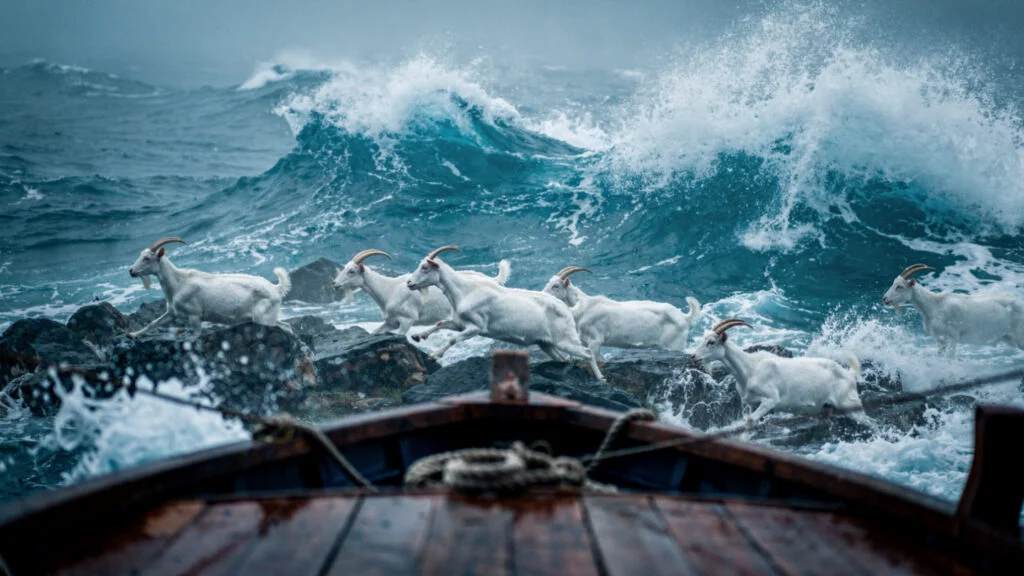
The ancient Greek word aiga, goat, relates to the verb aissein, to move with speed and momentum, to dart or bound. A goat leaping across rocky terrain and a wave breaking across the sea’s surface share the same quality of movement, speed and momentum combined with the unpredictability of individual direction: the goat that won’t follow a predictable path, the wave that breaks wherever wind, current, and underwater topography determine rather than wherever an observer expects.
This kinetic, visual observation, encoded directly into the sea’s own name, is exactly the form of engagement with the natural world this collection’s geological mythology articles develop through volcanic landscapes: a natural phenomenon’s quality encoded into the name it produced, geological reality expressed in mythological vocabulary that carries the content of the original observation.
The Aegean was the sea of the goats: a surface that, under Meltemi conditions, moved with exactly the speed, unpredictability, and white-crested beauty of a herd of goats bounding across the rocky terrain surrounding the Aegean islands on every horizon.
The Aegis and Its Goatskin
The connection between the Aegean’s name and the aegis, the divine protective implement whose theological character the Gorgons and Medusa article in this collection develops through its relationship to the Gorgoneion and Athena, gives the sea’s name its deepest layer of meaning.
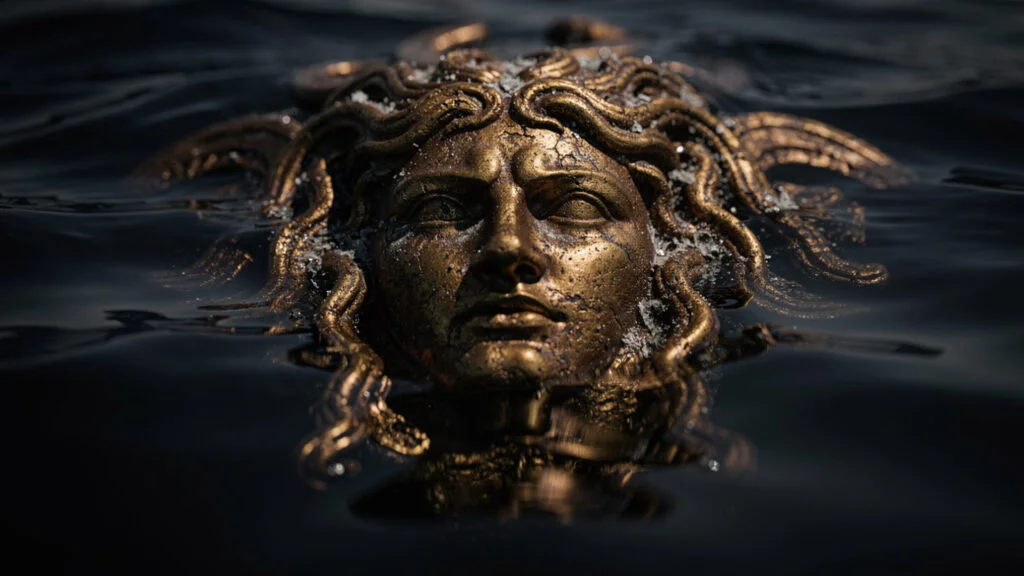
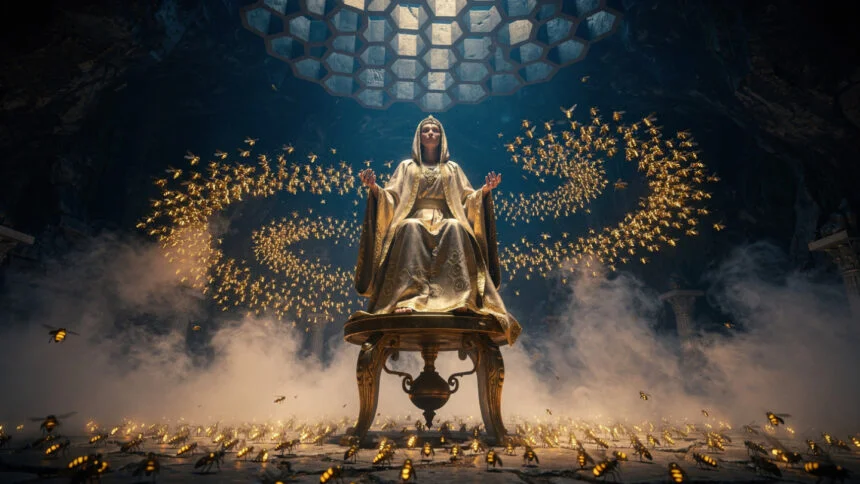
The aegis was a goatskin shield, its very name drawn from aiga, goat, with an origin most fully preserved in the story of Zeus’s infancy. The divine goat Amalthea, who nursed the infant Zeus in the Cretan cave hiding him from Kronos, a story the divine constellation article in this collection develops, gave her own life protecting the divine child who would go on to rule the Olympian order. Zeus fashioned her skin into the aegis: a protective implement made from the very animal whose sacrifice had secured the cosmos’s future ruler through the most vulnerable period of his own existence.
This origin gave the aegis its character as the single most powerful available form of divine protection: the shield Zeus and Athena carried was made from the animal whose sacrifice had protected the divine order’s own establishment. Whatever protection the aegis provided was continuous with that original protection, preserved directly in its material form.
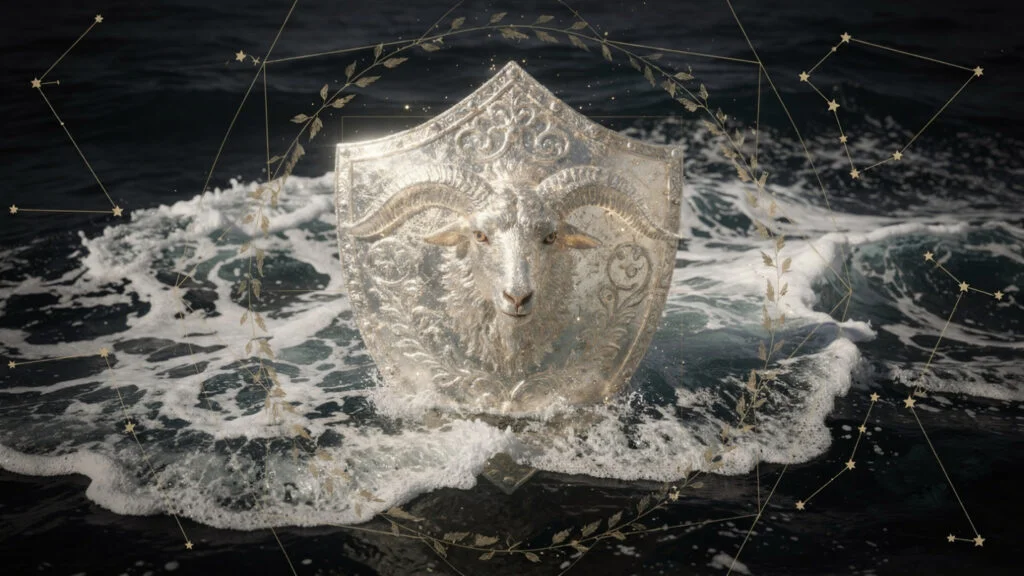
The Aegean was the sea under the aegis: a sea whose crossing demanded exactly the divine protection whose implement shared the same etymological root as the name of its own whitecapped waves. The sailors who called those whitecaps goats crossed under the protection of a shield whose own name came from that same root.
All three naming traditions converge on the single root aiga, giving the name its layered character: the king who fell from the cliff at Cape Sounion carried a name sharing the same root sailors used for whitecaps, and the whitecaps shared that root with the divine protective implement, and that implement was made from the animal that had protected the divine child who would go on to rule the very order the sailors navigated beneath.
The Aegean was the sea of Aegeus and the sea of the goats and the sea under the aegis simultaneously, because all three traditions shared a single etymological root whose different developments produced three different ways of naming what mattered most about this sea to whoever coined each name.
The Theseus Myth’s Deeper Structure
The Aegeus myth’s structural claim about the Aegean, that the sea bears the name of a man whose death was caused by a failure of attention at exactly the moment attention was most required, is a claim this collection’s mythological articles develop through multiple examples of the same underlying structure: attention failing at the critical moment destroys precisely the outcome all the preceding effort had been designed to secure.
Orpheus’s look-back, which the tragic loves articles develop, is exactly this same failure of attention destroying the recovery of Eurydice: a man who had navigated the underworld and moved its divine rulers with his own music looked back at precisely the moment when not looking back was the single remaining requirement. Perseus’s success at every stage of his own quest, which the Perseus article develops, is not without its own structural parallel to failure, the discus at Larissa as an accidental outcome an entire chain of events made inevitable. But Theseus’s story is different again: a deliberate agreement whose single requirement was forgotten at the exact moment it needed fulfilling.
Theseus made this agreement specifically because he understood his father would be watching for the signal. The agreement’s entire content was attention, exactly the attention the moment of return demanded. The very person who had set up the signal system to spare his father the anxiety of waiting was the person who forgot the signal at the moment that system existed for.
Ariadne’s story adds a dimension that gives the forgetting its particular character: Theseus had left Ariadne on Naxos during this same return voyage, an abandonment this collection’s other articles cross-reference in multiple contexts, and whatever distraction or divine compulsion drove that abandonment may well have been the same psychological state in which the sail-change slipped his mind. The man who had just abandoned the woman whose help made his survival possible was the same man who forgot to change the sails.
The Aegean bearing Aegeus’s name recorded the cost of that forgetting in the most permanent form available: a geographical feature named for the man who died from it. Every ship that crosses the Aegean crosses a sea named for the cost of inattention.
The Sea Itself
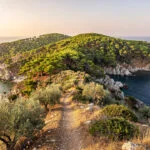
The Aegean’s particular combination of island-channeled winds, whitecapped waves, and a blue produced by the water’s depth and clarity together is exactly what all three naming stories were encoding, each from its own angle.
The Meltemi crosses the Aegean from the north every summer between June and September with a regularity ancient sailing organized itself entirely around: the wind that made the Aegean’s summer crossing predictable also made its summer sea state consistently rough. The short, steep chop the Meltemi produces between the islands, uncomfortable for a small vessel precisely because the sea here is too shallow and too channeled to build the long, deep swells of the open ocean, is the sea state where the goat comparison lands most directly: whitecaps at their most numerous, motion at its most bounding, the kinetic quality of a herd across terrain most immediately present in every wave.
The blue of the Aegean, the quality of light on the surface and in shallower water above the white sand and limestone seabed, is exactly what ancient vocabulary captured through several distinct words for blue that English’s single word cannot preserve. Kyanos was the dark blue. Glaukos was the grey-green-blue of shallow water. Pontos was the deep blue of the open sea. This vocabulary belonged to people who had organized their entire theological, navigational, and commercial life around exactly the qualities of this sea the three naming traditions were all encoding.
The islands scattered across the Aegean basin gave ancient sailors real navigational challenges, passages between islands where winds accelerated, currents concentrated, and the sea state grew most dangerous, and whose visual character from the water, dark hills rising from bright water, each profile sharpened by the Aegean’s own light, gave each island a name that accumulated across centuries of engagement with the place.
The Aegean was navigable in the sense that its island chain gave sailors a series of short crossings between visible landmarks, rather than the open-sea crossing of the Atlantic or Indian Ocean’s uninterrupted blue horizon. But navigable was never the same as safe: the Meltemi, the island channels, and the shallow-water passages, where currents and shoals concentrated to produce the wrecks that accumulate in the maritime record, were exactly the challenges this whole naming tradition responded to when it called the whitecaps goats, the protective shield a goatskin, and the sea itself the water of the aegis.
Cape Sounion and the Temple Above the Name’s Origin
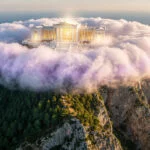
A visit to Cape Sounion connects a contemporary visitor most directly to all these layers of the Aegean’s name, concentrated by the promontory’s own geography into a single view.
The Temple of Poseidon at the promontory’s southernmost point, whose character the Poseidon article develops at length, was built on a site whose mythological significance, the cliff Aegeus fell from, its placement above that cliff was clearly designed to honor. A sea god’s temple standing at the exact place where the sea received its name from a king’s fall is architecture directly acknowledging the mythological, geographical, and theological layers this single promontory concentrates.
Standing at Cape Sounion while the Meltemi blows from the north and the sea below produces the whitecaps sailors once called goats means standing where all three naming traditions are simultaneously present: the cliff Aegeus fell from, the goat-crested waves below, and the aegis-colored sea whose blue carries all three traditions inside the single name the ancient world gave to the water that produced them.
Byron carved his name into the temple’s marble. The inscription is still visible. The sea below still produces the whitecaps sailors once called goats. The name encoding a king’s grief, a divine goatskin, and the observation of a bounding wave is still the name of this sea.
At Olympus Estate, Mythic Essays moves through the deeper currents of the Greek tradition. Theseus defeated the Minotaur and forgot to change the sails. Aegeus saw black sails from Cape Sounion and threw himself from the cliff. The ancient Greek sailors called the whitecaps goats because the word for goat and the word for the bounding movement were the same root. The aegis, the divine protective implement made from the goatskin of Amalthea who nursed the infant Zeus, bore the same etymological root as the whitecaps and the sea whose crossing it protected. Three naming traditions, one etymological root, one sea. The Temple of Poseidon stands above the cliff from which the king fell. The Meltemi is still producing the whitecaps below. The name is still the name.