




The zodiac is not Greek.
This is the starting point for an honest account of how Greek mythology came to be embedded in the constellations that contemporary astronomy and astrology still use, because the starting point is not Greece but Babylon, and the Greek contribution to the system was the transformation of a Babylonian astronomical framework into something that carried a completely different kind of cultural content.
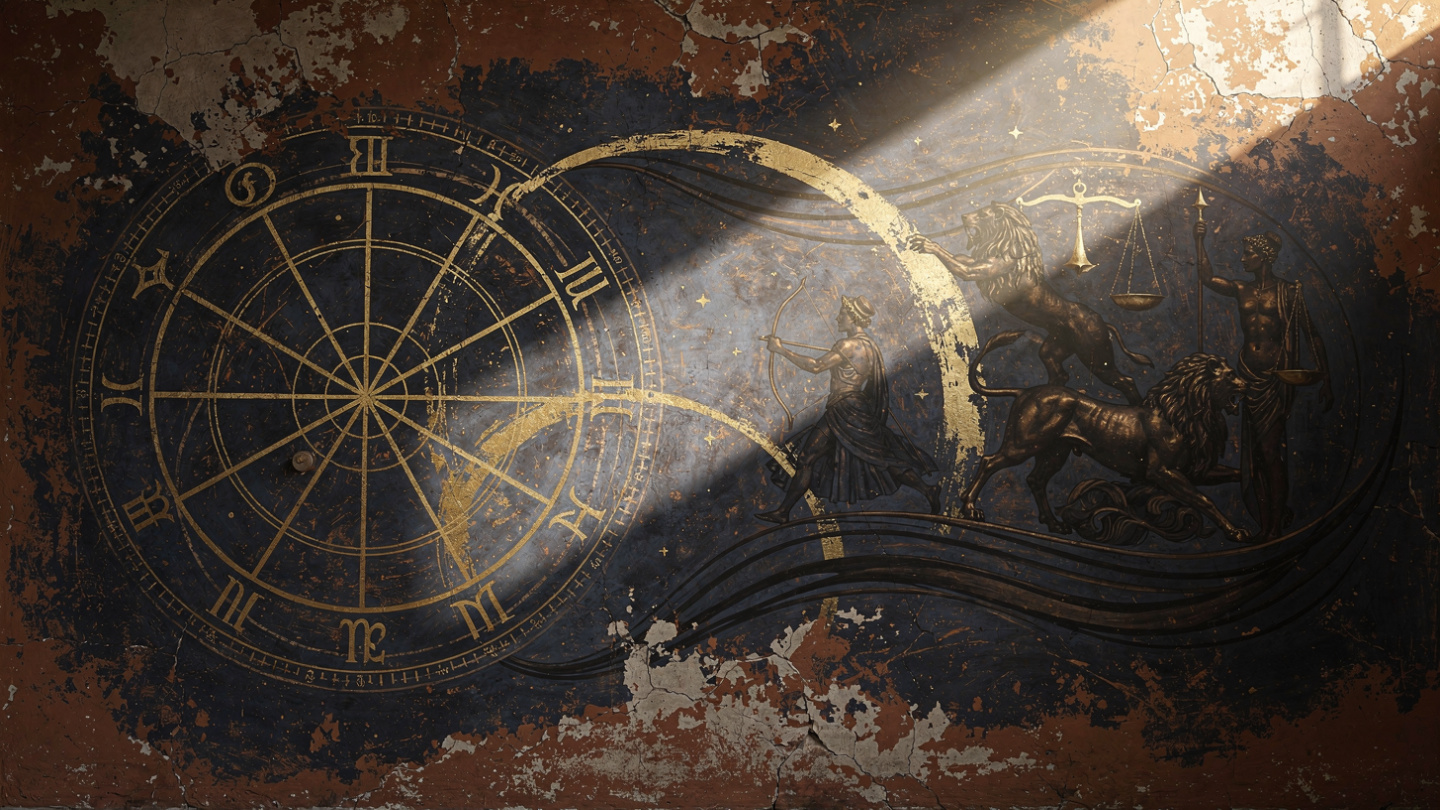
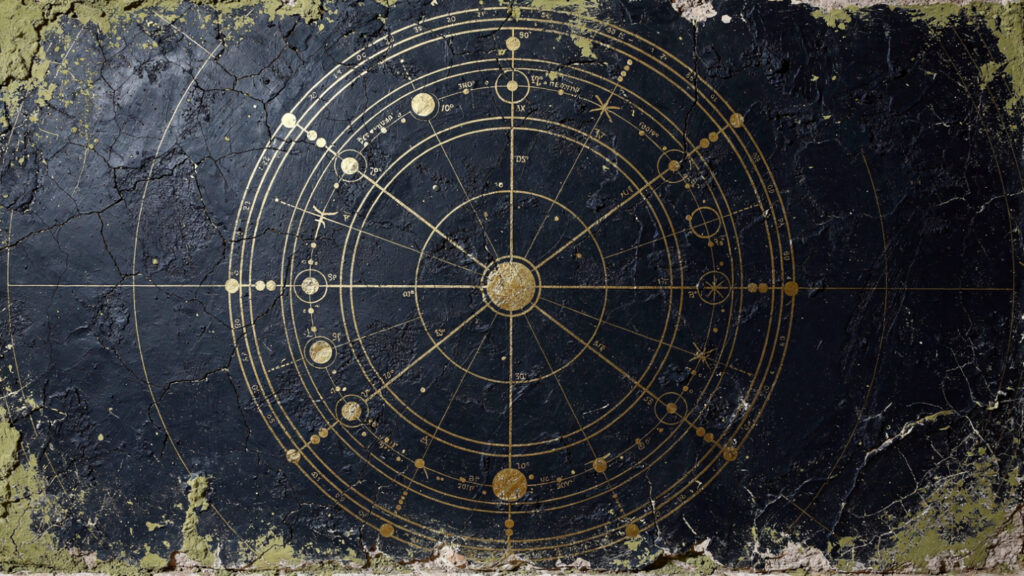
The Babylonian astronomers of the second millennium BCE were the first to divide the sky into the twelve zones of thirty degrees each that constitute the zodiac. It was the belt of sky through which the sun, the moon, and the planets appeared to move, divided into regular segments that corresponded to the twelve months of the year. This allowed the Babylonian astronomical school to track the positions of celestial bodies with the mathematical precision that the palace and temple administrations required. The Babylonian zodiac was an astronomical coordinate system. Its primary purpose was calculation, not narrative.
What the Greek world did with this system, across the centuries from the first contacts between Greek and Babylonian astronomical schools in the fourth century BCE through the full development of Hellenistic astrology in Alexandria from the second century BCE onward, was to pour the Greek mythological imagination into it: to attach to each of the twelve zones and to each of the seven visible planets the Greek mythological narratives and divine associations that transformed the Babylonian coordinate system into a narrative framework in which the sky told the stories that the Greek culture had been telling for centuries.
The result is the zodiac that the contemporary world uses: an astronomical framework of Babylonian origin, carrying Greek mythological content, transmitted through the Ptolemaic synthesis of the second century CE, and operating today in the international astrological canon as though it had always been this singular combination of mathematics and lore.
Berossus and the First Transmission
According to Hellenistic authors, astrology was introduced to Greece by a Babylonian priest named Berossus, who established a school of astronomy on Kos around 280 BCE. The choice of Kos is geographically significant: the island was already the center of the Hippocratic medical school, and the connection between celestial influence and physical health that the medical field had developed independently created a receptive intellectual environment for the Babylonian astronomical material Berossus was introducing.
What Berossus brought with him was the accumulated astronomical knowledge of the Babylonian temple archives: the mathematical methods for predicting the positions of the planets, the systematic records of celestial omens and their earthly consequences that the Babylonian priests had been compiling for more than a millennium, and the twelve-zone zodiac structure that provided the coordinate framework for all of this observation. He also brought an understanding of the relationship between celestial patterns and terrestrial events that differed from the Greek philosophical school’s interpretation: the Babylonian approach was empirical and omen-based, cataloguing observed correlations without providing a theoretical account of why those connections held.
The Greek philosophical tradition, particularly the Stoic philosophy that was developing in the same period that Berossus was teaching on Kos, provided the theoretical framework that the Babylonian empirical approach lacked. The Stoics contributed theories of fate and divination, and cosmic sympathy, present in Greek medicine and popularized by the middle Stoic Posidonius, provided astrologers with a theoretical grounding for the associations among planets, zodiac signs, and all other things. The Stoic understanding of the cosmos as a unified whole permeated by a single divine rational principle, the logos, in which every part was connected to every other part through the medium of the pneuma, provided the philosophical justification for the astrological claim that celestial positions influenced terrestrial events: if the cosmos was genuinely unified in this way, the influence of the celestial on the terrestrial was not a mysterious action at a distance but the expression of the same universal sympatheia that connected all parts of the cosmos to each other.
Alexandria and the Synthesis
After the occupation by Alexander the Great in 332 BCE, Egypt came under Greek rule and influence. It was in Alexandrian Egypt that Babylonian astrology was mixed with the Egyptian tradition. The city that Alexander founded at the mouth of the Nile became, in the third and second centuries BCE, the intellectual center of the Hellenistic world, and the Library and Museum that the Ptolemaic dynasty established there were the institutions within which the synthesis of Babylonian, Egyptian, and Greek astronomical and astrological knowledge was accomplished.
Horoscopic astrology first appeared in Hellenistic Egypt. The earliest extant Greek text using the Babylonian division of the zodiac into twelve signs of thirty equal degrees each is the Anaphoricus of Hypsicles of Alexandria in 190 BCE. The specifically Greek contribution to the Babylonian zodiac system was the horoscope: the birth chart that recorded the positions of the sun, moon, and planets at the moment of an individual’s birth and used those positions to describe that individual’s character and predict the major events of their life.
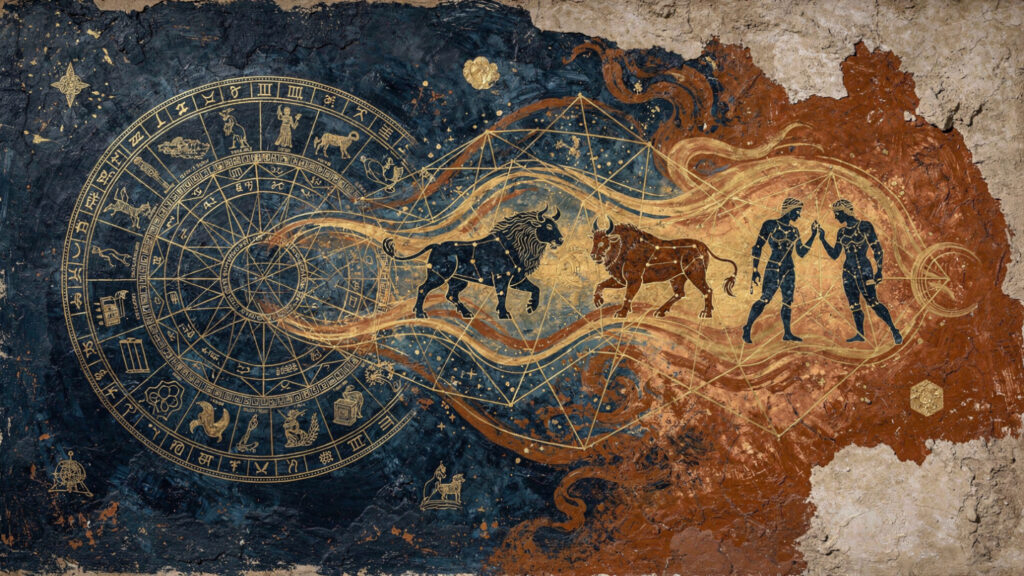
This shift from the Babylonian tradition’s focus on celestial omens affecting kingdoms and rulers to the Greek focus on the individual horoscope was the most significant transformation that the Greek world made to the Babylonian material. While the Babylonians had begun experimenting with personal horoscopes by the 5th century BCE, it was the Greeks who fully developed this concept into a structured, mathematical system. The individualization of astrology, the shift from the fate of cities and kingdoms to the fate of individual persons, reflected the broader philosophical individualism of the Hellenistic period, in which the question of how to live a good individual life, which Stoicism and Epicureanism and the other Hellenistic philosophical schools addressed in their different ways, had displaced the earlier Greek tradition’s focus on the city-state as the primary unit of human life.
Ptolemy and the Systematization
The figure who gave the Western astrological canon its definitive form was Claudius Ptolemy, the mathematician, astronomer, and geographer who worked in Alexandria during the second century CE. His Tetrabiblos, composed around 150 CE, systematized Hellenistic lore into a structure that subsequent Western, Arabic, and modern practices have maintained.
As the most influential astrological text in history, the Tetrabiblos codified zodiac signs, planetary rulerships, and birth charts in ways that remain recognizable today. The assignments established within the work form the foundation of contemporary practice. The Sun rules Leo. The Moon rules Cancer. Mercury rules Gemini and Virgo. Venus rules Taurus and Libra. Mars rules Aries and Scorpio. Jupiter rules Sagittarius and Pisces. Saturn rules Capricorn and Aquarius. These attributions were rooted in the ancient understanding of each planet’s observable characteristics. The Sun’s heat and light connected it to Leo, which rises at the height of summer. The Moon’s moisture and changeability linked it to the rainy season of Cancer. The slow and cold nature of Saturn connected it to the signs of the winter months.
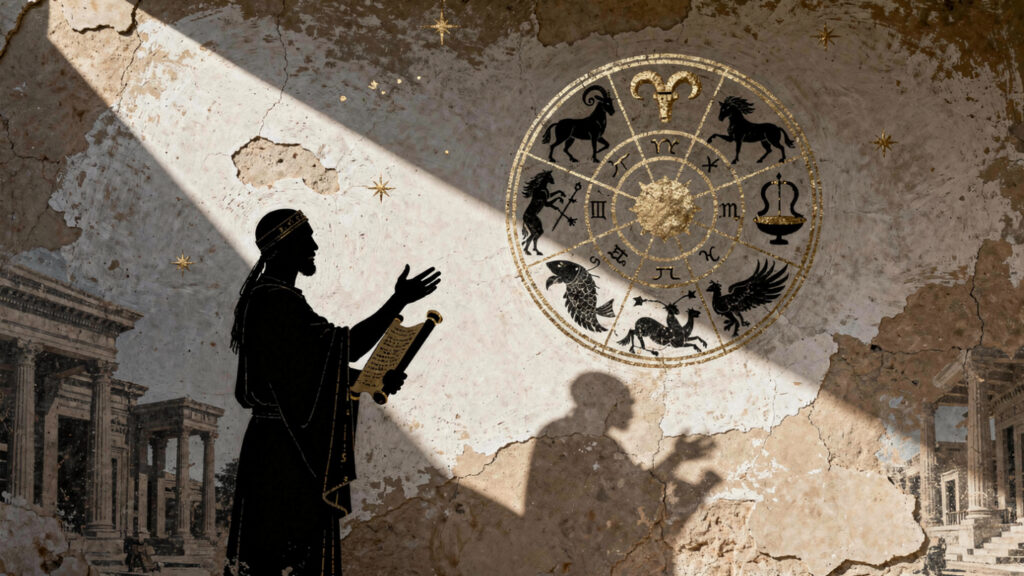
Ptolemy was also the astronomer who documented the precession of the equinoxes, the slow drift of the Earth’s axis that means the sun is no longer in the constellations that the Babylonian zodiac names when the zodiac says it is. This is what we call the Tropical Zodiac: it is seasonal, not stellar. When the Greeks took in Babylonian astronomy, they added their own flavor: philosophy, geometry, and a desire for systematic order. The contemporary astrological zodiac marks not where the sun is in the actual sky but where it was in the sky when the Babylonian astronomers established the system, displaced now by approximately thirty degrees from the actual constellations due to the axial precession that has occurred across the intervening two and a half millennia.
The Myths Behind the Constellations
The twelve zodiac constellations carry the Greek mythological content that the Hellenistic tradition attached to the Babylonian astronomical framework, and each connection encodes a Greek mythological story or divine association.
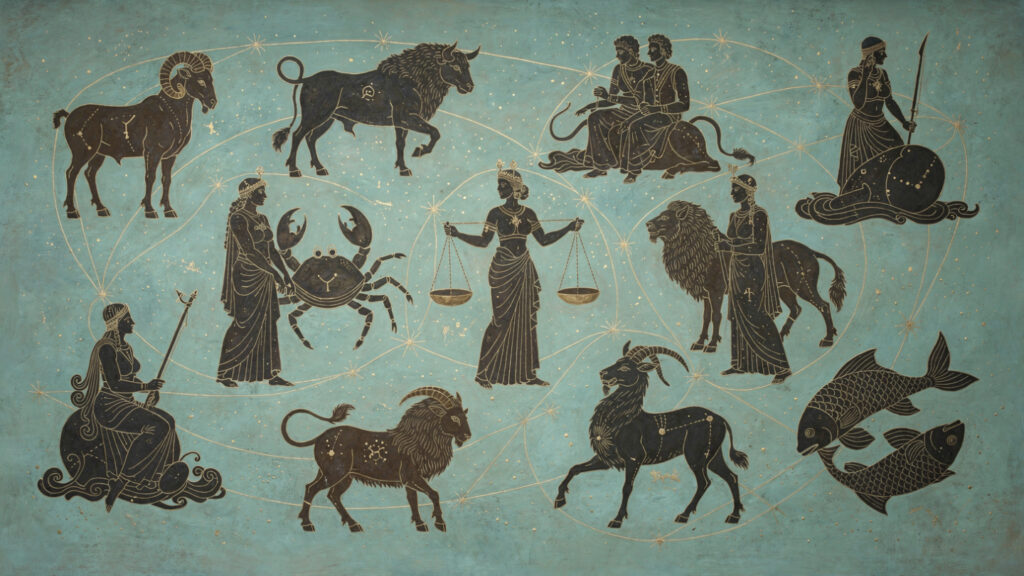
Aries, the Ram, is the ram of the golden fleece: the divine ram that the cloud nymph Nephele sent to rescue her children Phrixus and Helle from sacrifice. The ram carried them across the seas, but Helle lost her grip and fell into the sea, giving the sea its name Hellespont. At Colchis, the ram instructed Phrixus to sacrifice him to Zeus. He was placed among the stars as a constellation. His shining fleece was given to King Aeetes, who hung it in a grove of Ares, and it became the goal of the quest of Jason and the Argonauts. The golden fleece that the Argonaut tradition preserved as the object of the most celebrated sea voyage in Greek mythology had its origin in the sky above the first sign of the zodiac.
In ancient Greek mythology, Taurus represents the bull from the story of the abduction of Europa, a beautiful Phoenician princess. According to the myth, Zeus transformed himself into a magnificent white bull to seduce Europa and carry her away to the island of Crete. The bull that carries Europa across the sea is the bull whose form the constellation preserves: the most powerful of the Olympians in the disguise of the most powerful of the agricultural animals, carrying the woman who will become the mother of Minos and therefore the ancestor of the Minoan civilization.
Gemini, the Twins, are Castor and Pollux, the Dioscuri, the divine twins born of Leda: one son of Zeus and immortal, one son of Leda’s mortal husband and therefore mortal. The brothers were inseparable and engaged in many adventures together, including being among the Argonauts and joining the Caledonian Boar Hunt. When Castor was killed, Pollux asked Zeus to share his immortality with his brother, and Zeus placed them in the sky where they spend alternating periods in the underworld and on Olympus: the twin stars that are always visible together in the constellation are the visible record of the bond that death could not permanently separate.
Cancer, the Crab, is the crab that the goddess Hera sent to distract Heracles during his battle with the Hydra, one of the twelve labors. The crab pinched Heracles’ foot while he was fighting the multi‑headed serpent. Heracles crushed it. Hera placed it in the sky in recognition of its service, however ineffective, to her campaign against the hero she despised.
Leo, the Lion, is the Nemean Lion, the first of Heracles’ twelve labors: the divine beast that could not be wounded by any weapon and that Heracles strangled with his bare hands before removing its skin to use as his armor. Zeus rewarded the lion’s bravery by giving him a constellation. The Nemean Lion in the sky is the permanent record of the beast that gave the greatest Greek hero his defining attribute, the lion skin that made him immediately recognizable in every subsequent representation.
Virgo, the Maiden, was most commonly identified in the Hellenistic canon with Dike, the goddess of justice and daughter of Themis. In the lineage preserved by Hesiod and Aratus, she was the divine principle of earthly justice that dwelt among humanity during the Golden Age, retreated to the mountains as morality declined through the Silver and Bronze Ages, and finally ascended to the heavens when the Iron Age made human company intolerable. The constellation Virgo represents the goddess in her celestial exile, eternally observing the world she was forced to abandon.
Libra, the Scales, is the pair of scales that Dike-Astraea carries: the instrument of justice that the virgin goddess uses to weigh the claims of the disputing parties before she departed from the earth. It is the only zodiac constellation that represents an object rather than a living being, which reflects its function as the instrument of the figure who precedes it in the zodiac sequence.
Scorpius, the Scorpion, is the scorpion that killed Orion, the greatest hunter of the mortal world. In the story of Orion’s death, he was either killed by Artemis or by a scorpion sent by Gaea to punish him for boasting that he would slay all the creatures of the earth. The scorpion was also placed amongst the stars, and continued to plague him, for as it rose in the east, Orion fled beneath the horizon in the west. The astronomical relationship that the myth encodes is the actual astronomical relationship between Scorpius and Orion: the two constellations are on opposite sides of the sky, never visible simultaneously, because as one rises the other sets. The myth explains this astronomical observation as the consequence of a mythological event.
Chiron was the eldest and wisest of the centaurs, a Thessalian tribe of half-horse men. Chiron was a teacher and mentor for some of the greatest heroes in Greek mythology, including Jason, Peleus, the physician Asclepius, and demigods Aristaios and Achilles. The association of Sagittarius with Chiron made the archer-centaur constellation the celestial record of the figure who was simultaneously the most learned being in the Greek world and the most physically hybrid, combining the human capacity for knowledge and teaching with the animal speed and power of the horse.
Capricorn, the Sea-Goat, is the hybrid creature that the god Pan became when he leaped into the Nile to escape the monster Typhon: the top half of a goat above the water and the bottom half a fish below it, frozen in the sky at the moment of the god’s transformation. The sea-goat form that the constellation preserves is the panic, the specifically Pan-induced terror, that the mythological tradition encoded in the English word panic itself.
Aquarius, the Water-Bearer, is Ganymede: the most beautiful of mortal men, whom Zeus abducted in the form of an eagle to serve as the cup-bearer of the gods on Olympus. The constellation represents the boy perpetually pouring the divine water that the gods required, carrying in the sky the role that his divine abduction assigned him.
Pisces, the Fish, is Aphrodite and Eros transformed into fish to escape the monster Typhon, the same catastrophe that produced Capricorn’s transformation. Tied together by a cord to avoid separation in the water, the two gods were placed in the sky by Zeus in commemoration of their escape, the cord that bound them preserved in the faint line of stars that connects the two fish of the constellation.
What the Greeks Added to the Sky
The Greek mythological content of the zodiac constellations is not a superficial veneer on an astronomical framework. It is an integral layer of meaning. The mythology encodes the cultural values and the understanding of divine‑human relationships that the Greek school developed, and these foundations shaped the astrological interpretation of the signs in ways that persist in contemporary practice.
The ram of Aries carries the memory of the divine rescue and the golden fleece, the recovery of which was the Greek narrative’s paradigmatic heroic quest. The bull of Taurus preserves the memory of the most potent divine desire expressed in animal form, alongside the civilization that emerged from that union. The twins of Gemini reflect the bond between mortal and immortal that not even death could permanently dissolve. The lion of Leo embodies the labor that defined heroism as the conquest of the unconquerable.
In short, the Greeks transformed a Babylonian measuring tool into a symbolic language of existence. The zodiac that the modern world utilizes is the product of this evolution: a coordinate system for tracking celestial positions that has been saturated with the narratives and values of the Greek heritage, transmitted through Ptolemy’s synthesis and the Arabic scholarly canon that preserved and developed it. It continues to operate in contemporary astrology as the primary symbolic framework through which the sky is read as a mirror of human experience.
The sky that the Babylonian astronomers divided into twelve zones for the purposes of astronomical calculation became, in Greek hands, the sky that told twelve stories. Those stories are still running.
At Olympus Estate, Mythic Essays moves through the deeper currents of the Greek tradition, from the Babylonian coordinate system that arrived in Greece with Berossus in 280 BCE to the Ptolemaic synthesis that gave the Western astrological tradition its canonical form. The zodiac is not Greek. What the Greeks did with it is.