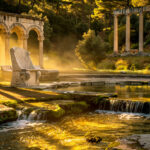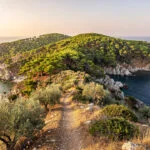

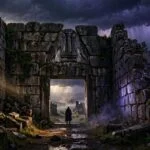
The two oldest oracles in Greece are both in Epirus.
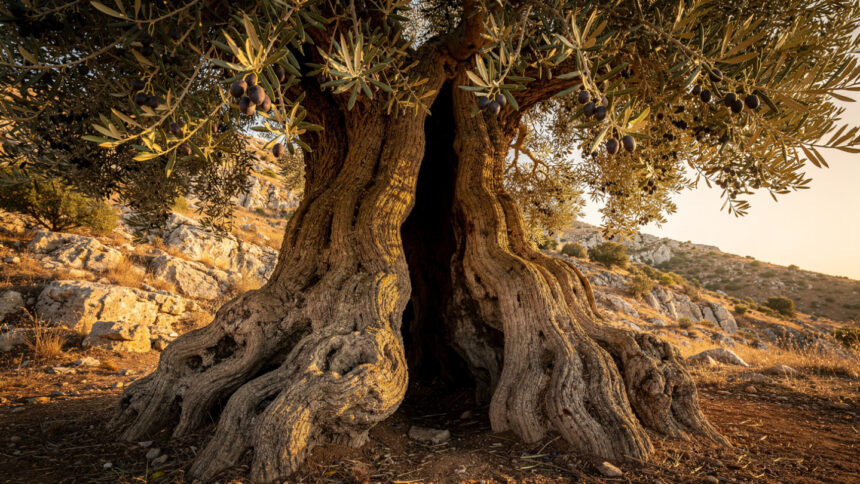
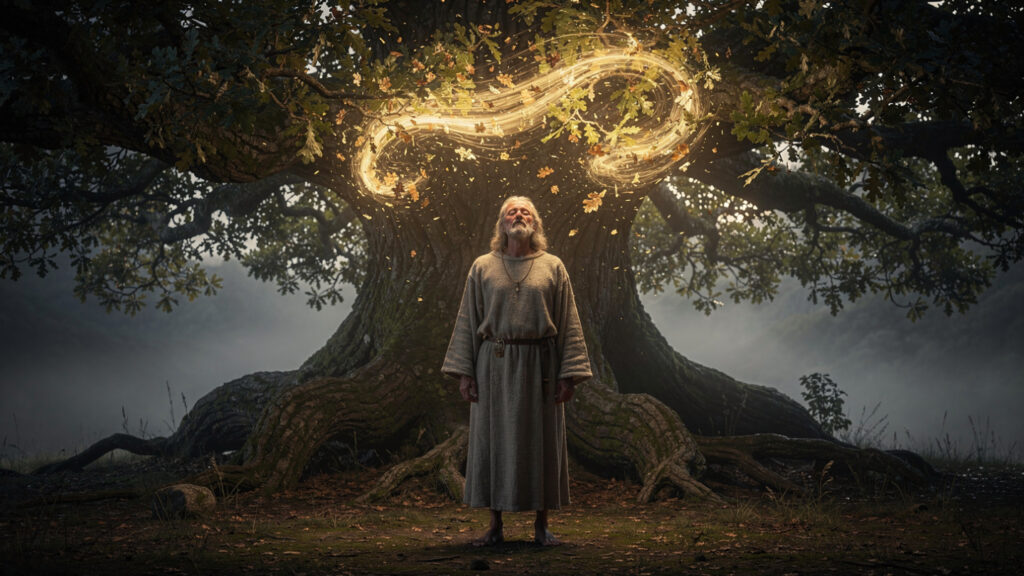
Dodona, where the priests of Zeus interpreted the rustling of the sacred oak grove’s leaves as the voice of the god, predates the Delphi oracle by several centuries in the ancient tradition’s own account: it is the oldest oracle in the Greek world, the site where the divine communication through the natural world was heard before the Apollonian prophetic tradition had developed the institutional complexity of the Pythia and the prophetes and the elaborate consultative process that Delphi made the standard form of the divine-human conversation. The Dodona oracle’s character is developed at depth in the sacred trees article in this collection, and the Ioannina Archaeological Museum holds the bronze tablets on which the ordinary questions of ordinary people were brought to the oak grove across the centuries of its operation.
The Necromanteion of Efyra, on the Acheron River near the modern village of Mesopotamos, is the oldest surviving oracle of the dead in the Greek world: the sanctuary whose function was the summoning of the spirits of the dead for consultation by the living, the institution that the ancient tradition placed at the geographical point where the rivers of the underworld world approached most closely to the surface. Odysseus consulted the dead here, in Homer’s account: he dug the pit, poured the libations of blood that attracted the spirits, and received from them the knowledge he needed for the final stage of his return to Ithaca.
Both oracles are in Epirus. No other Greek region has both.
This is not a coincidence of geography. It is the character of the region: the northwest corner of the Greek mainland, enclosed by the Pindus range to the east and the Ionian Sea to the west, whose combination of the mountain isolation, the dramatic landscape of gorges and rivers and enclosed valleys, and the historical trajectory of a region that was always somewhat apart from the organized Hellenic world of the city-states and the formal religious institutions, made it the region where the Greek tradition’s oldest and most direct engagements with the divine and the dead survived longest in their most original forms.
The Necromanteion of Efyra
The Acheron River descends from the Pindus mountains through the Thesprotian plain to the Ionian Sea near the town of Parga, and the section of the river below the ancient hill site of Efyra, where the Acheron was joined in antiquity by the Pyriphlegethon and the Cocytus in a geographical configuration that made the marshy confluence resemble the mythological description of the underworld rivers, is the section that the ancient tradition identified as the point where the boundary between the living world and the dead was most permeable.
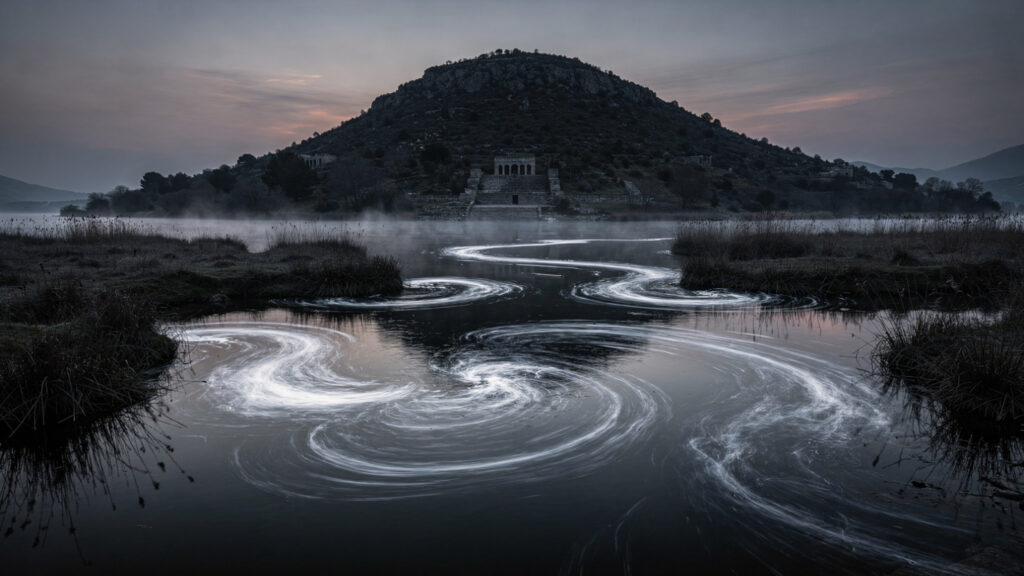
The identification of the Acheron River with the underworld’s river of woe is among the oldest geographical‑mythological associations in the Greek world. The name appears in Hesiod’s Theogony as one of the underworld’s rivers, and the Thesprotian world that located the underworld’s entrance in the marshy lowlands where the Acheron approached the sea is the world that the Homeric Nekyia, the eleventh book of the Odyssey, was encoding in the geographical instructions that Circe gives Odysseus for finding the entrance to the dead’s realm.
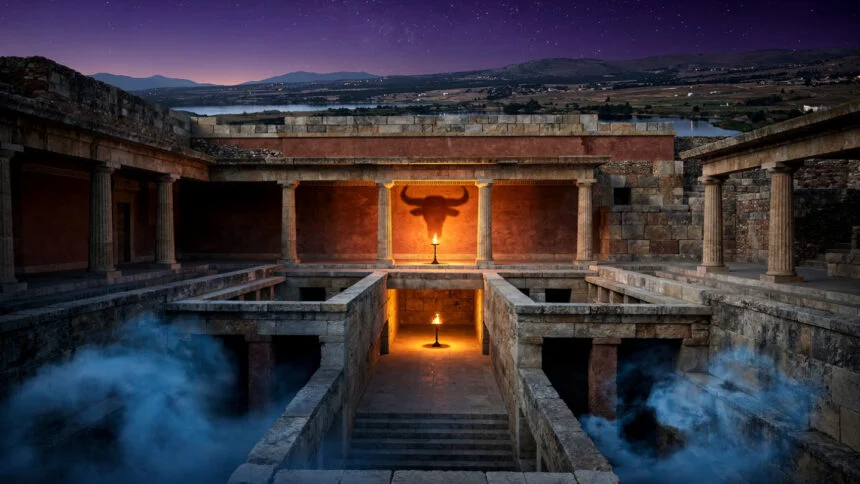
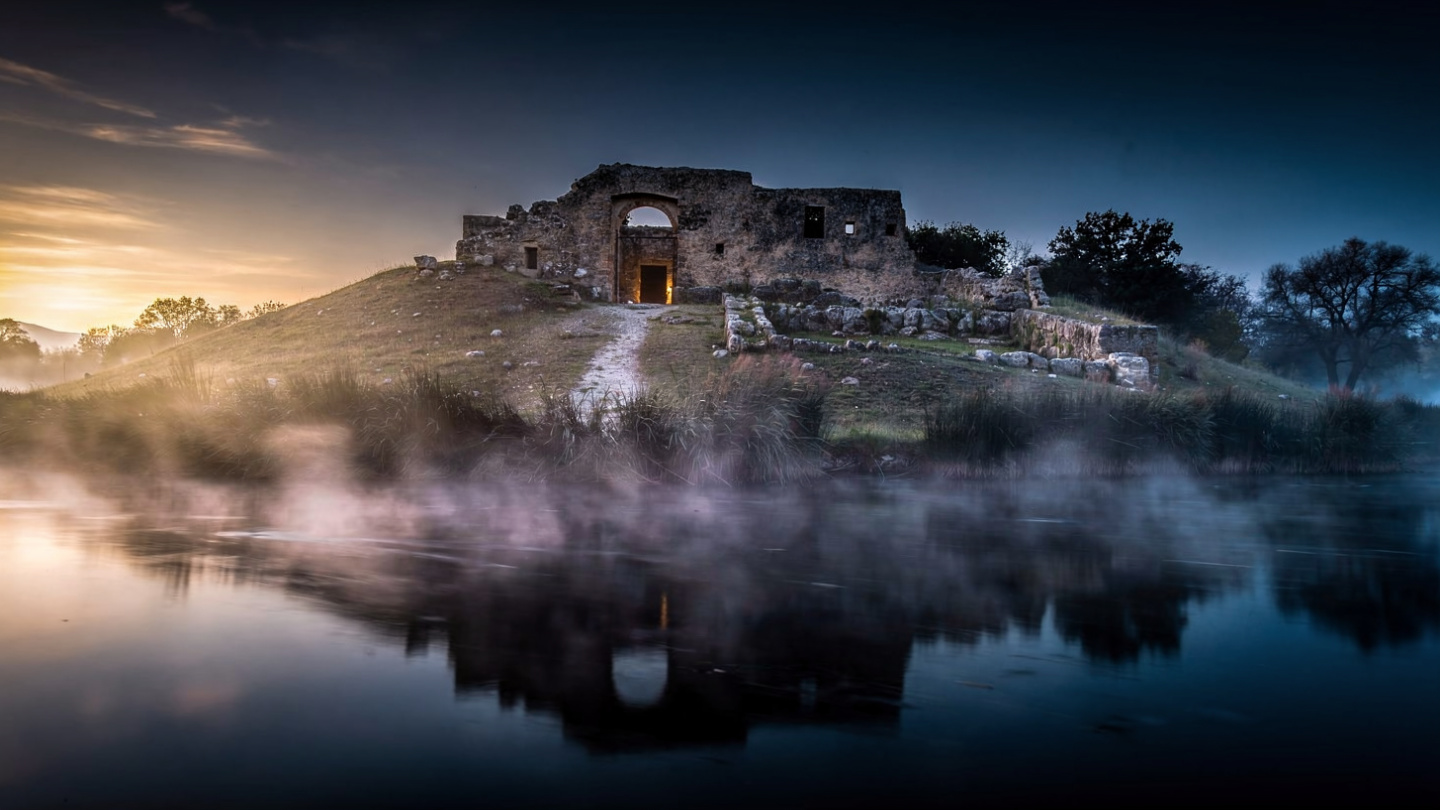
The Necromanteion, the oracle of the dead, occupies a hill above the ancient confluence whose height and enclosure by water on multiple sides gave it the character of an island in the marshy landscape that the ancient symbolic geography of the underworld entrance required. The archaeological site, excavated by the Greek archaeologist Sotirios Dakaris in the 1950s and 1960s, revealed the architectural program of the necromantic sanctuary: the underground chamber at the hill’s center, approached through a series of labyrinthine corridors whose darkness and spatial complexity produced the psychological condition of disorientation and heightened receptivity that the consultation of the dead required.
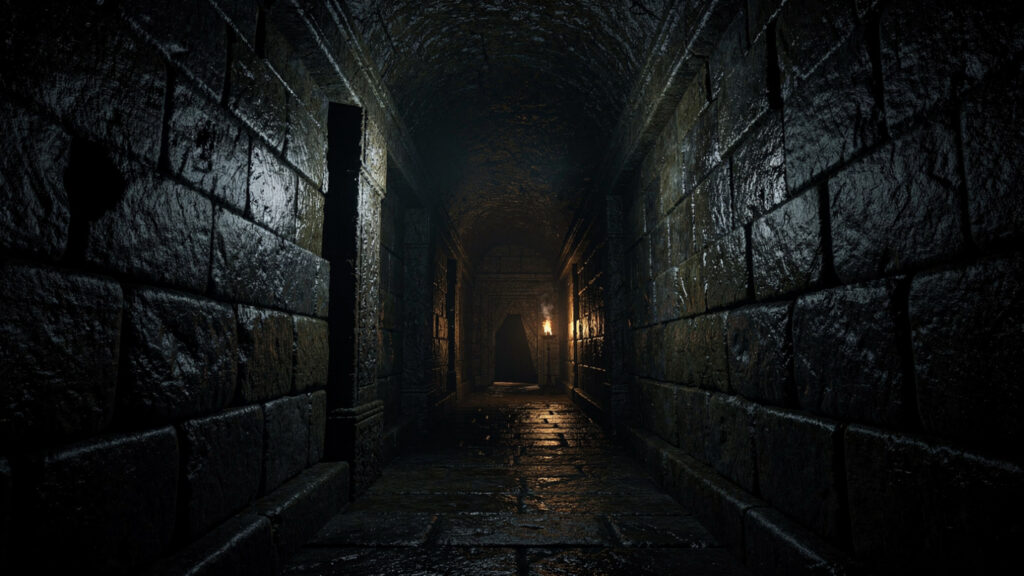
The pilgrims who came to the Necromanteion followed a preparation ritual whose duration and character the ancient sources describe as lasting approximately a month: the pilgrims lived on the sanctuary’s grounds, consuming a diet of beans and barley and pork whose combination the ancient ritual tradition associated with the dead and the chthonic deities, performing the required purifications, and progressively entering the psychological state of the person prepared to cross the boundary between the living and the dead. The underground chamber at the end of the labyrinthine approach was the space where the crossing occurred: the darkness, the physical descent below ground level, the sounds designed to disorient and to signal transition, and the ritual of the blood libation that the spirits of the dead required before they would speak.
The scholarly debate about the site’s identification as the Necromanteion is genuine and should not be dismissed: some archaeologists have proposed that the complex’s architectural character is better explained as a Hellenistic fortified farmhouse than as a sacred sanctuary. The debate’s terms, the question of whether the underground chamber was the nekromanteion’s central feature or simply a storage facility, is a debate whose resolution depends on the interpretation of the evidence from the excavation. What is not in dispute is the site’s location at the geographical point that the ancient tradition identified as the underworld entrance, and the character of the finds, including the bronze wheels and chains and other equipment consistent with the theatrical staging of the underworld encounter, that the excavation recovered from the underground chamber.
Visit in the late afternoon. The hill above the Acheron marshes at the hour when the light is dropping and the river mist is beginning to rise produces the atmospheric quality that the ancient tradition was encoding in its identification of this place as the boundary: the landscape between the world above and the world below, between the visible and the invisible, looks exactly like what the mythology said it looked like.
Dodona | The Oldest Voice
The Dodona oracle site, in the valley below Mount Tomaros approximately twenty-two kilometres southwest of Ioannina, is the site that the sacred trees article develops at length through the tradition of the Selloi priests, the oak leaves, and the bronze tablets whose ordinary questions give the oracle’s democratic character its most concrete expression. The practical visit deserves its own brief treatment.
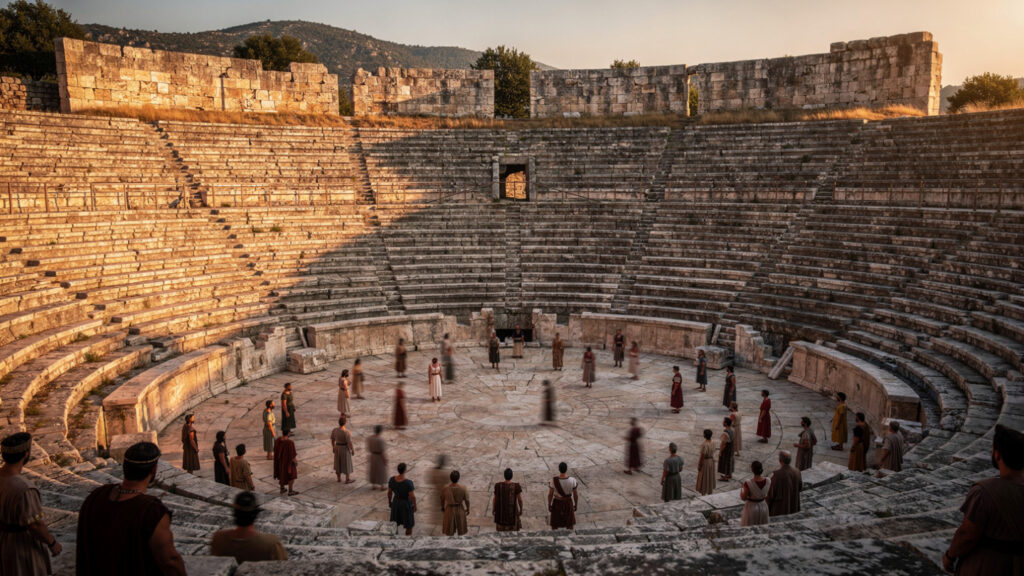
The theater of Dodona, whose construction the Epirote king Pyrrhus organized in the third century BCE and whose restoration in the late nineteenth century gives it the most completely legible form of any ancient theater in northwestern Greece, is among the largest ancient theaters surviving in the Greek world: its seating capacity of approximately seventeen thousand reflects the sanctuary’s Panhellenic significance in the classical and Hellenistic periods, when pilgrims from across the Greek world brought their questions to the oak leaves.
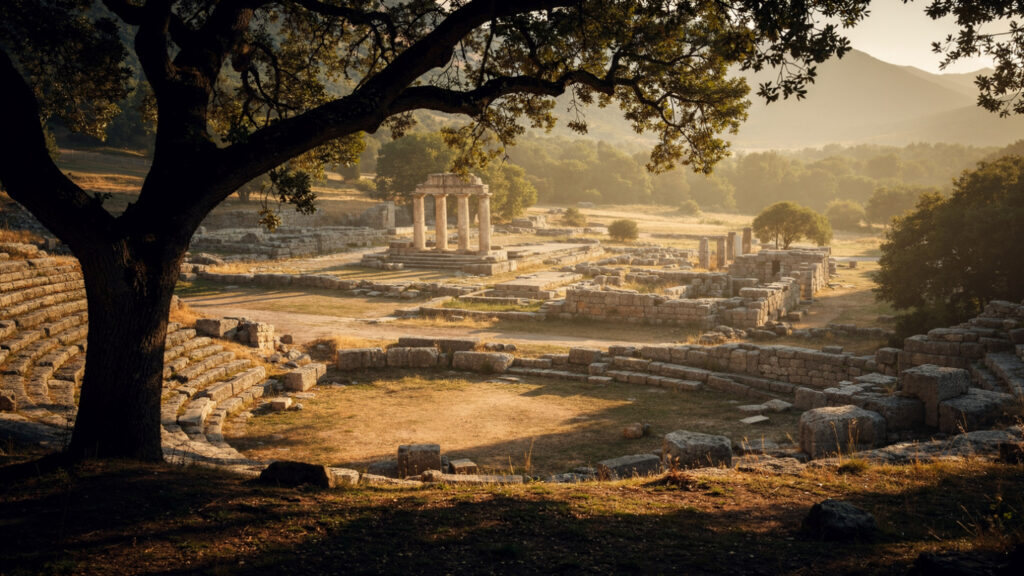
The sanctuary’s setting, the enclosed valley below the mountain whose acoustic character the theater exploits with the precision of the best Greek theatrical sites, gives the Dodona visit its quality of the ancient religious site in its actual landscape rather than in the urban or coastal landscape that most Greek archaeological sites now occupy. The valley is agricultural, the surrounding terrain is the Epirus mountain countryside, and the quality of the morning light in the valley before the tour coaches from Ioannina have arrived gives the site the contemplative character that the oracle’s mode of communication required of its consultants.
The Ioannina Archaeological Museum, a twenty-minute drive from the site, holds the bronze tablets: several thousand of them recovered from the excavation, covering the questions that the oracle’s consultants brought from the fifth century BCE through the third century CE. The content of the tablets is the content of ordinary human concern made permanent by the bronze medium through which it was brought to the divine: shall I marry her, should I take the contract, is the illness going to pass, whose sheep are those that were stolen. The divine communication through the oak leaves was sought for the same questions that any contemporary person would bring to any available form of guidance. The medium was different. The questions were not.
The Molossian Kingdom and the Region’s Independence
Epirus maintained a form of political organization distinct from the city‑state model that the classical Greek world has made the standard framework for understanding ancient Greek political life. The Molossians, the Chaonians, and the Thesprotians were the three principal tribal groupings whose territories divided the Epirote region, and the political form of the Epirote kingdom was the form of the monarchy rather than the democracy or the oligarchy that the city‑state world produced in its most developed expressions.
The most significant Molossian king in the ancient historical record was Pyrrhus, whose military campaigns against Rome in the early third century BCE produced the victories whose character gave the English language the phrase Pyrrhic victory: the victories won at such cost to the winner that they advance the winner toward defeat rather than away from it. Pyrrhus was one of the finest military tacticians in the ancient world. Hannibal, asked by Scipio Africanus decades later to name history’s greatest generals, is reported to have ranked Pyrrhus second only to Alexander, ahead of Hannibal’s own considerable claim to the title. The intelligence of the man who could defeat Rome repeatedly without defeating Rome is the intelligence that the phrase he gave the language preserves in its form: the victory that is not a victory, the success that is not a success, the win that is the beginning of the loss.
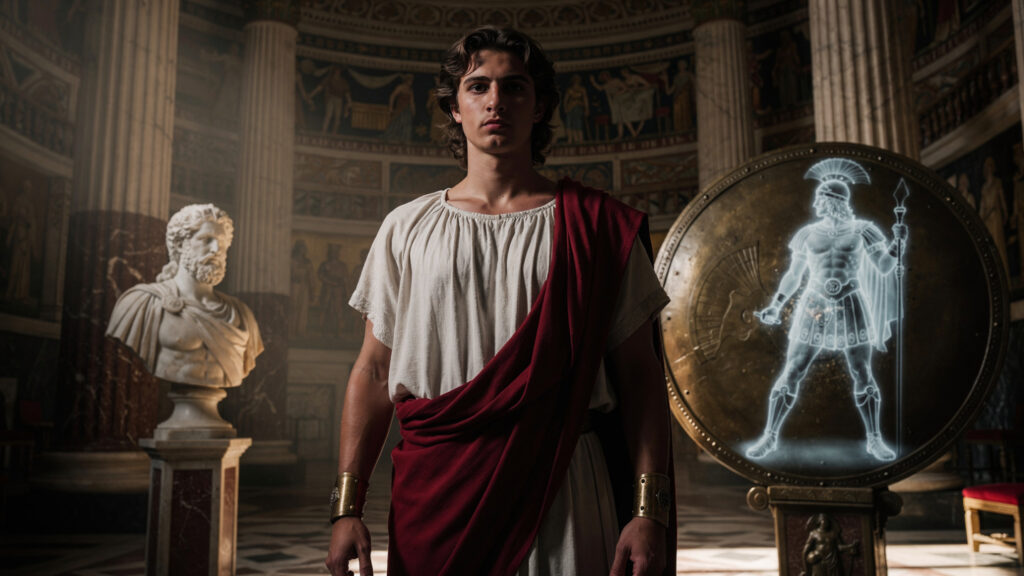
The Molossian kingdom was also the kingdom through which the claim of descent from Achilles entered the Epirote tradition: the Molossian royal family traced its lineage through Neoptolemus, the son of Achilles, whose mother Deidamia was from the island of Skyros where Achilles had been hidden by his mother Thetis before the Trojan War. Alexander the Great’s mother Olympias was a Molossian princess, which gave Alexander the combination of the Macedonian Philip’s lineage from Heracles and the Molossian Olympias’s lineage from Achilles that Alexander himself consistently emphasized as the divine ancestry that the conqueror of the world required.
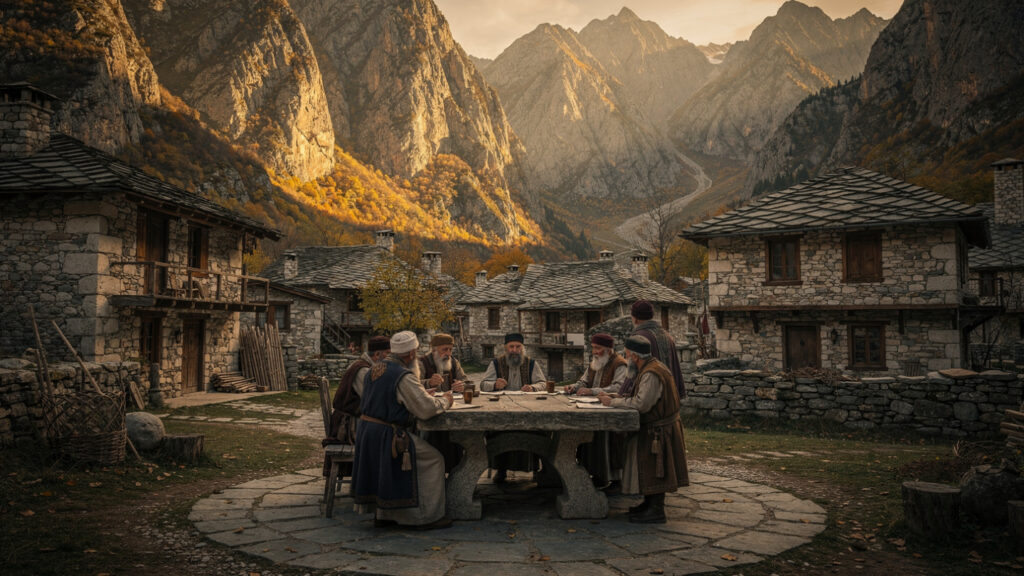
The Ottoman history of Epirus followed the pattern of the Argithea article’s account of the Agrafa mountains: the terrain’s inaccessibility produced the practical autonomy that the administration’s inability to reach the mountain communities effectively granted them. The Zagori villages, the stone-built communities of the Pindus mountain valleys whose architectural heritage the Zagorohoria UNESCO designation acknowledges, maintained their self-governance arrangements through the Ottoman period under the mechanism of the tax farming agreement that gave the community collective responsibility for its own taxation and the internal freedom that collective responsibility allowed.
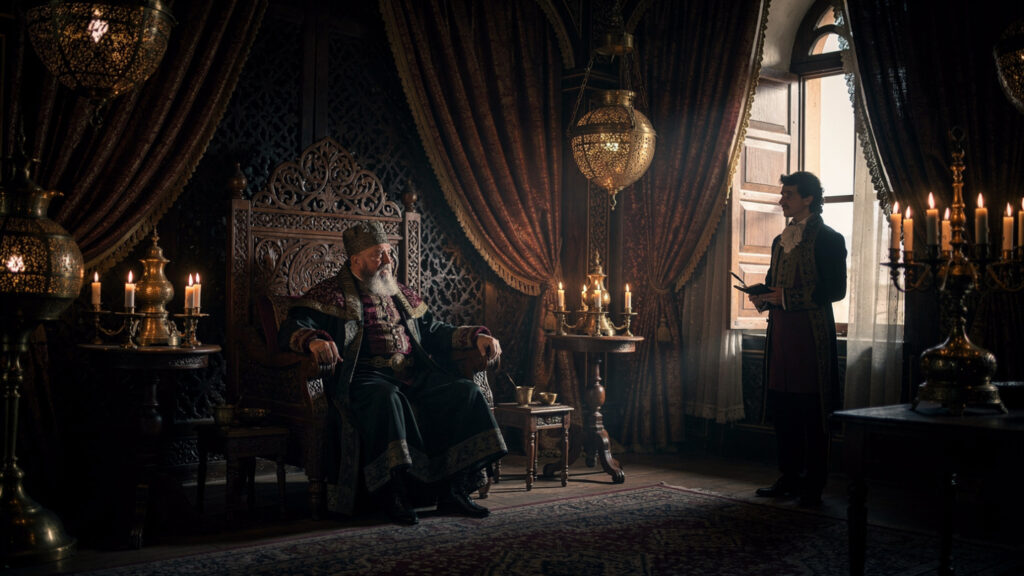
The most dramatic expression of the Epirote resistance world within the Ottoman period was the career of Ali Pasha of Ioannina, the Albanian‑born Ottoman governor whose combination of military force, diplomatic intelligence, and systematic elimination of rivals gave him effective control of the entire northwestern Greek mainland from the 1780s until his defeat and death in 1822. Ali Pasha’s court at Ioannina was the court that Lord Byron visited in 1809 and that gave Byron some of the material for Childe Harold’s Pilgrimage: the combination of the oriental splendor and the political violence and the mountain landscape that Byron encountered in Ioannina was the combination that the Romantic world processed as the image of the Greek world’s engagement with its own worlds under Ottoman administration.
Vikos Gorge and the Zagori
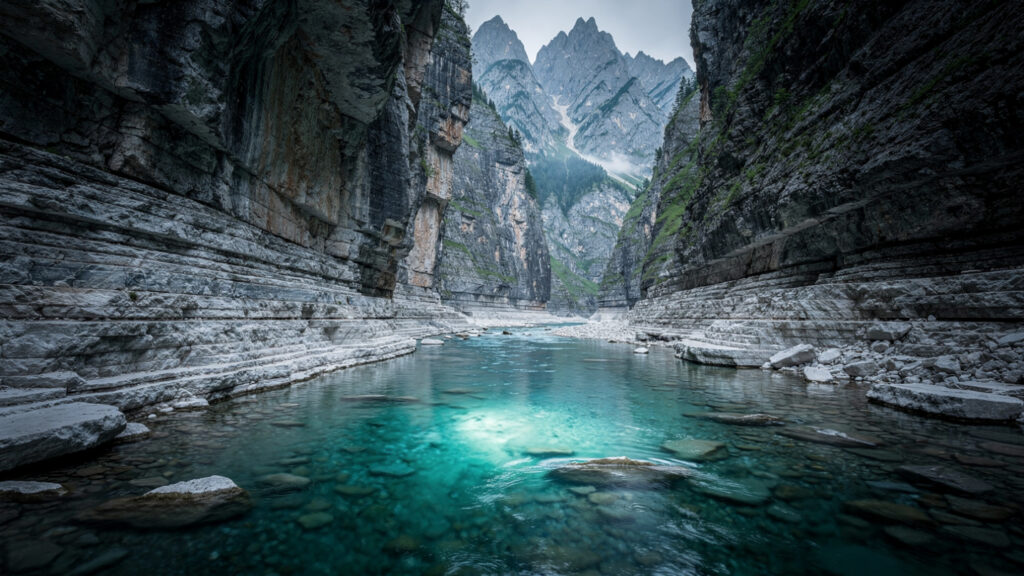
The Vikos Gorge, whose depth relative to its width gives it the Guinness classification that the tourist literature consistently cites, is the landscape feature of the Zagori region whose character most directly expresses the geological and hydrological forces that shaped the Epirus mountain landscape: the Voidomatis River has been cutting through the limestone of the Pindus range for the geological time that produced the depth and the narrowness of the gorge’s most confined sections.
The quality of the Vikos Gorge is the quality of a limestone gorge at its most dramatic: the walls in the deepest sections rising to approximately nine hundred meters above the river, the acoustic character of the enclosed limestone space that makes the sound of the Voidomatis audible throughout the gorge as the constant presence of the water rather than the occasional sound of it, and the botanical richness of the gorge environment, the endemic plants of the Epirus limestone whose populations the gorge’s microclimate supports. The Voidomatis River’s water quality, the clarity that the limestone filtration and the intact forest cover of the gorge walls produce, is the water quality that the European conservation organization has recognized as among the cleanest in Europe.

The standard gorge walk from Monodendri to Vikos takes approximately seven hours at a comfortable pace, following the marked path from the village above the gorge’s southern entrance down to the river level and through the gorge to the northern exit at the Vikos village. The experience of the descent from the gorge rim at Monodendri to the river below, and then the seven hours of movement through the gorge with the walls rising on both sides and the Voidomatis audible or visible throughout, is the experience of moving through a landscape of a scale and a character that most of the Greek topography available to the ordinary visitor does not provide.
The Zagori villages, the forty-six communities whose collective name, Zagorohoria, means the villages beyond the mountain in the Slavic etymology that the Ottoman administrative language preserved, are the architectural heritage that the mountain community’s social and economic history produced. The stone mansions of the Zagori villages were built in the eighteenth and nineteenth centuries by the category of the Greek merchant who had made his fortune in the diaspora trading communities of central Europe and the Ottoman cities and who returned to his village to build the expression of his prosperity in the medium of the local stone architecture. The archontika of Zagori, whose combination of the exterior stone construction and the elaborately carved interior woodwork follows the same architectural logic as the Pelion archontika that the Makrinitsa article develops, are the buildings that express the character of the Greek diaspora merchant’s relationship to his mountain village origin.
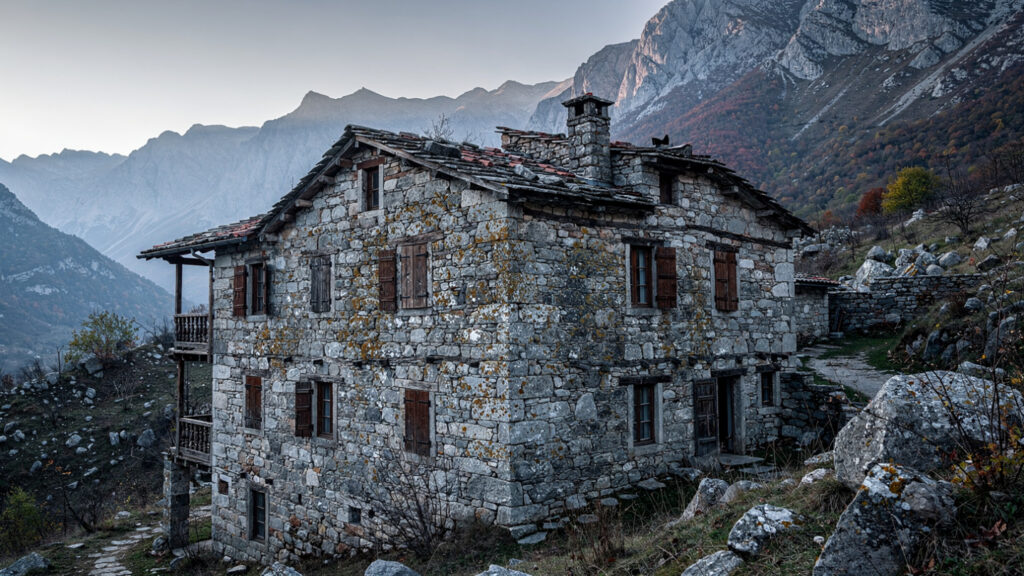
Monodendri, whose position above the gorge’s southern entrance makes it the conventional starting point for the gorge walk and the most visited of the Zagori villages, is the village whose combination of the gorge viewpoint and the stone village architecture and the Monastery of Agia Paraskevi perched at the gorge’s rim gives it the character of the entry point to the Zagori experience rather than a destination in itself. Megalo Papingo and Mikro Papingo, the twin villages at the gorge’s northern end below the Gamila massif, are the villages whose combination of the stone architecture and the dramatic mountain setting above the Voidomatis springs is the combination that gives the Zagori experience its most concentrated form: the village that is simultaneously an architectural achievement and a landscape experience, the stone buildings at the foot of the limestone mass above the clearest river in Europe.
The Stone Bridges
The stone bridge engineering world of the Epirus mountain landscape is the world that the Argithea article develops through the case of the Agios Minas bridges and the mastoroi craftsmen who built them. The Zagori bridges represent the same world at its most abundant and most varied. The combination of the region’s many river crossings, the wealth of the merchant community that could commission the construction, and the availability of the mastoroi craftsmen whose knowledge of the arch had been refined across generations of mountain bridge building produced the concentration of high‑quality stone bridges in the Zagori landscape that makes it the most significant surviving ensemble of the world.
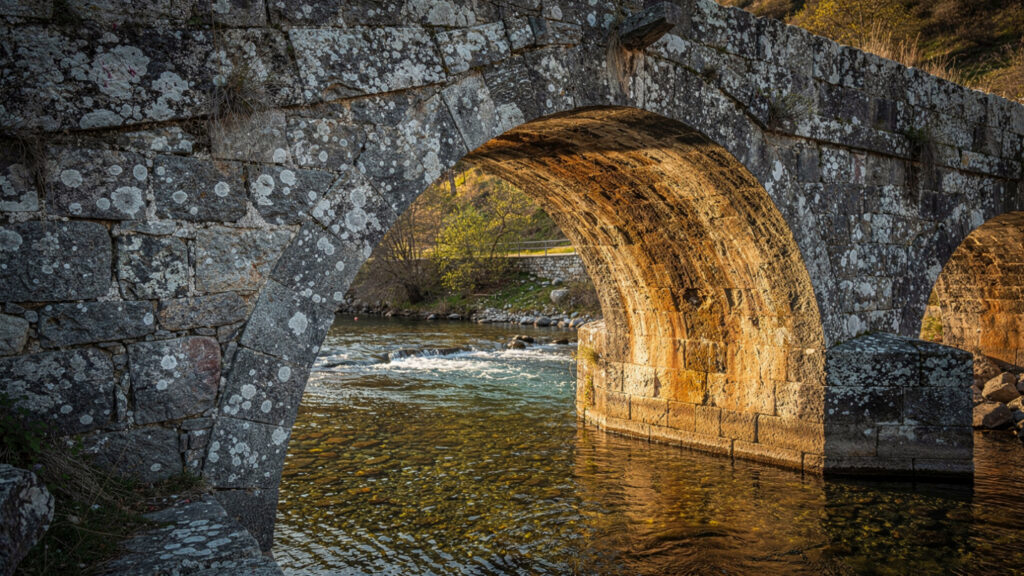
The Kokkorou bridge near Kipi, the Kalogeriko triple‑arched bridge below Kipi, the Plakidas bridge near Kipi, and the Lazaridis bridge are the bridges of the Kipi area whose proximity to each other and the village makes them the most accessible concentration of the Zagori bridge world. The Konitsa bridge over the Aoos River at the gorge’s northern end, whose single arch spans forty‑two meters in the largest single‑span stone bridge in Greece, is the engineering achievement that the mastoroi world reached at its most ambitious.
The local legend that some of the bridges required the entombment of the master builder’s wife or of another human being in the foundations to prevent the bridge from collapsing is the legend that the mastoroi world maintained as the encoding of the craft’s most demanding requirement. The foundation that holds the arch’s load is the foundation that must never fail, and the seriousness of the commitment to the foundation’s integrity was expressed in the mythological form of the ultimate sacrifice rather than in the engineering language of the foundation technique. Whether the legend encodes a historical practice or is the symbolic expression of the bridge builder’s commitment to the foundation’s permanence is a question the archaeological record does not resolve. The bridges are still standing.
Ioannina and Ali Pasha’s Lake
Ioannina, the regional capital, sits on the western shore of Lake Pamvotis at the foot of the Pindus foothills, and its urban character is the character of a city that was the capital of a significant semi-autonomous political entity for the forty years of Ali Pasha’s effective rule rather than simply an Ottoman provincial town.
The kastro, the fortified enclosure on the lake promontory that forms the city’s oldest quarter, contains the layering of the Byzantine, Venetian, and Ottoman periods that the successive administrations of Ioannina’s history produced: the Byzantine walls that the Venetian and Ottoman fortifications reinforced, the mosques within the kastro enclosure, and the quality of the lake views from the kastro walls that give Ioannina its visual character. The two museums within the kastro, the Byzantine Museum and the Museum of the Silver Arts, hold the collections that give the city’s history its material form: the Byzantine icons and the ecclesiastical objects of the Christian community that survived through the Ottoman period, and the world of the Epirote silversmith whose technical skill in the working of silver was the craft world that the mountain communities of the Pindus developed into one of the most significant regional metalworking worlds in the Ottoman Greek world.
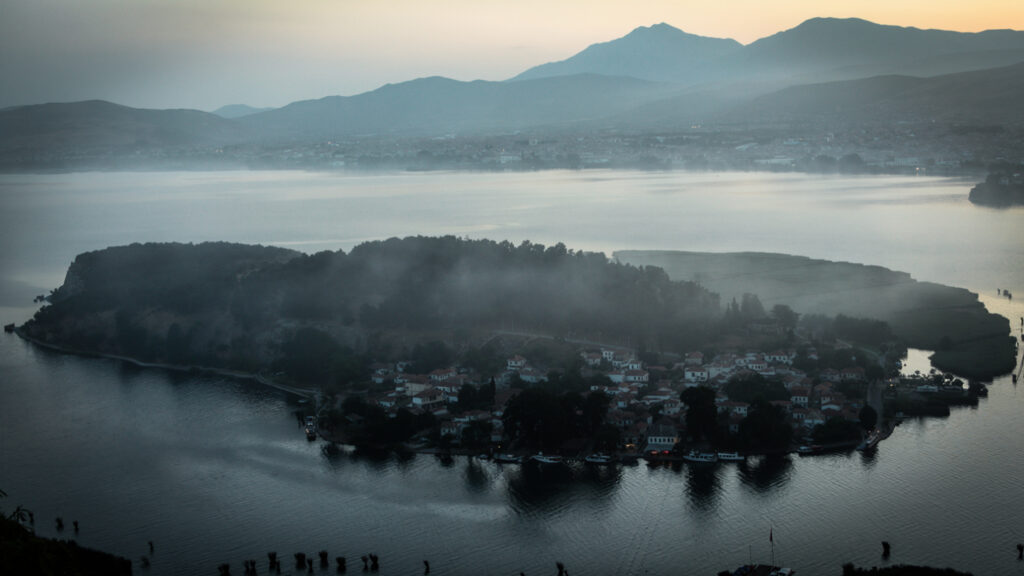
The island in Lake Pamvotis, the small wooded island that the boat service from the Ioannina waterfront reaches in approximately five minutes, is the island where Ali Pasha was killed in 1822: the room in the monastery of Agios Panteleimon where the Ottoman forces, finally authorized by the Sultan to end the semi-independent ruler’s career, shot him through the floorboards from below is the room whose historical event the small museum on the island preserves. The island also holds several Byzantine monasteries of genuine artistic significance, whose frescoes represent the provincial Byzantine tradition of the Epirote region in its fullest surviving form.
Practical Organization
Ioannina is the natural base for the Epirus visit: the city is accessible by bus from Athens in approximately five and a half hours or by the Olympic Air or Sky Express flights from Athens in approximately forty-five minutes. The city’s accommodation is sufficient for the range of budgets the Olympus Estate reader covers, and its position, an hour’s drive from Dodona to the south and forty minutes from the Zagori villages to the north, makes it the appropriate center for the regional exploration.
The Zagori visit requires a car: the distribution of the villages across the mountain terrain and the quality of the road network in the region, adequate but not organized around the tourist circuit, make the car the appropriate transport for the visitor who wants to move between multiple villages and bridge sites and gorge access points. The gorge walk itself is car-independent once you have reached Monodendri, but the approach to Monodendri and the return from Papingo require independent transport.
The Necromanteion is most efficiently visited as a day trip from Ioannina in combination with Parga: the two sites are on the same coastal route, approximately ninety minutes from Ioannina, and the combination of the Necromanteion’s inland-hill character and Parga’s coastal character gives the day its appropriate contrast.
The optimal visiting months are May, June, September, and October: the spring months for the botanical richness of the gorge environment and the quality of the Voidomatis when the spring water table is high, and the autumn months for the Zagori village’s chestnut harvest and the golden coloring of the deciduous forest on the gorge walls. July and August are accessible but hot in the gorge interior and crowded in the most popular villages.
At Olympus Estate, Wanderlust Greece guides you across the sacred and storied terrain of the Hellenic world. The two oldest oracles in Greece are both in Epirus. The region maintained practical autonomy through the Ottoman period because the administration could not reach the mountain communities. The mastoroi built bridges across the gorges whose arches are still standing. The Voidomatis is the clearest river in Europe. Ali Pasha ran a semi-independent state from the Ioannina lakeside until 1822 and Lord Byron came to see it. The Acheron is still the Acheron. The oracle of the dead is still on the hill above the marsh where the rivers meet. Go to Epirus. The oldest conversations Greece had with the divine are still audible if you know where to stand.