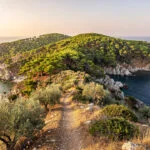




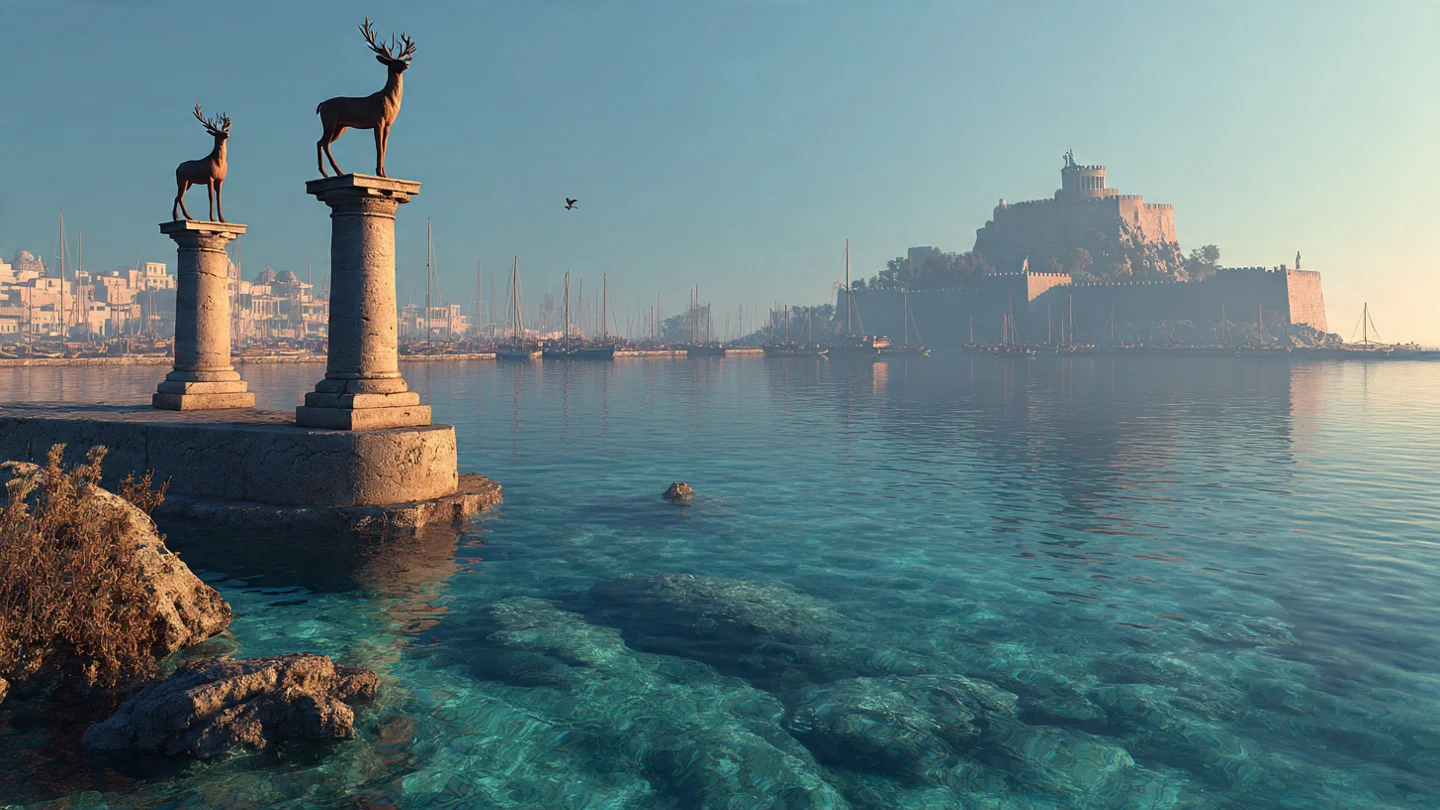
The approach to the island of Rhodes by sea offers a sensory transition, moving from the open, rolling sapphire of the Aegean into the protected stillness of the Mandraki harbor. At dawn, the air carries a mineral sharpness, a scent of salt mingling with the dry, resinous perfume of wild thyme and sage drifting from the inland hills. Two limestone columns stand at the harbor entrance, topped by the bronze stag and hind serving as the modern symbols of the island. These figures occupy a space once defined by a far more imposing presence. The water here possesses such startling clarity that the sandy floor, many fathoms below, appears reachable, inviting a gaze seeking the remains of the Colossus, one of the Seven Wonders of the Ancient World. This harbor remains a landscape shaped not by what remains visible, but by the profound weight of what has been lost to the sea and the soil over the millennia.
Foundations of the Rhodian Giant
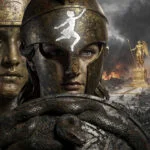
The creation of the Colossus was an expression of communal resilience following the Great Siege of 305 BCE. After successfully repelling the forces of Demetrius Poliorcetes, the citizens of Rhodes gathered the abandoned siege engines, massive towers of wood and iron, repurposing them as the raw materials for a monument to their patron deity, Helios. The sculptor Chares of Lindos was tasked with this monumental undertaking, a project requiring twelve years of relentless labor and a revolutionary understanding of structural engineering. Standing over thirty meters in height, the statue was a marvel of the Hellenistic world, constructed from a sophisticated iron framework clad in hammered bronze plates. The sheer scale of the figure aimed to bridge the human with the divine, a solar sentinel greeting every vessel entering the most prosperous maritime hub of the eastern Mediterranean.
Chares was said to have trained under Lysippos, the court sculptor to Alexander the Great, which placed the Colossus in direct artistic lineage with the heroic, larger-than-life bronze tradition Lysippos had pioneered for Alexander’s own portraits. Ancient tradition also preserves a darker rumor about the project’s aftermath: that Chares, facing cost overruns or a flaw discovered late in construction, took his own life before the statue’s completion, leaving a fellow sculptor, Laches, to finish the work. Modern historians treat this story with considerable skepticism, since it follows a pattern common in ancient biography of assigning tragic ends to celebrated craftsmen, but the story’s persistence says something about how large the achievement loomed even for antiquity’s own imagination.
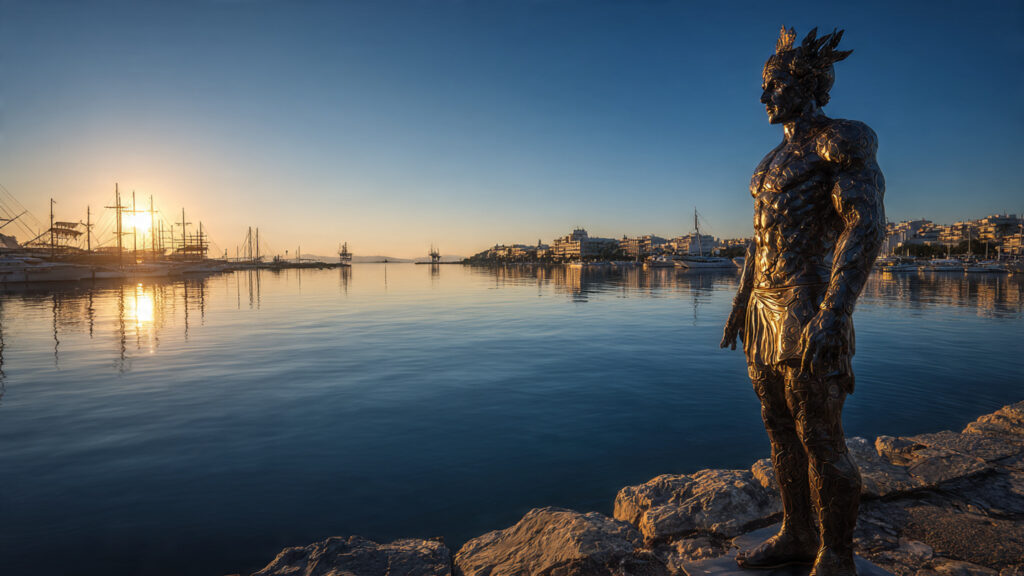
Geologically, the harbor of Rhodes provided the necessary bedrock of solid limestone to support such a concentrated weight. Chares built more than a statue. He engineered a vertical structure of metal and stone. The bronze skin, polished to a mirror finish, was designed to catch the first rays of the sun, making the god appear as if emerging from the light itself. This was an artistic and engineering achievement that remained uniquely Rhodian in its focus on the sun as a source of both protection and civic identity. The construction process involved building massive earthen ramps that grew alongside the statue, allowing the workers to pour the bronze and secure the iron rivets at heights previously unimagined by the architects of the era.
The Architecture of the Descent
The reign of the Colossus was famously brief, lasting only fifty-four years before a cataclysmic earthquake in 226 BCE struck the island. The force of the tremors was so great that it broke the giant at its knees, causing the massive torso to collapse upon the land and the sea, as recorded by the geographer Strabo. This event provided a stark lesson in impermanence, a reminder that even the most enduring expressions of human ambition remain subject to the volatile rhythms of the earth. Unlike many other wonders dismantled by war, the Colossus lay in its shattered state for nearly eight hundred years, becoming a site of pilgrimage for travelers like Pliny the Elder. He noted that even in its fragmented form, few men could wrap their arms around its thumb, while the hollow cavities of its broken limbs resembled vast caverns.
An oracle, consulted by the Rhodians in the aftermath of the earthquake, reportedly advised against re-erecting the fallen giant, warning that Helios himself had thrown the statue down and that rebuilding it would offend the god who had allowed its fall. Whether this account reflects genuine religious anxiety or a later rationalization for why a wealthy trading city simply never found it practical to fund a second colossal statue, the Rhodians left the fragments where they lay for the better part of a millennium, a decision that turned a monument to civic triumph into a monument to catastrophe almost as famous as the original structure had been.
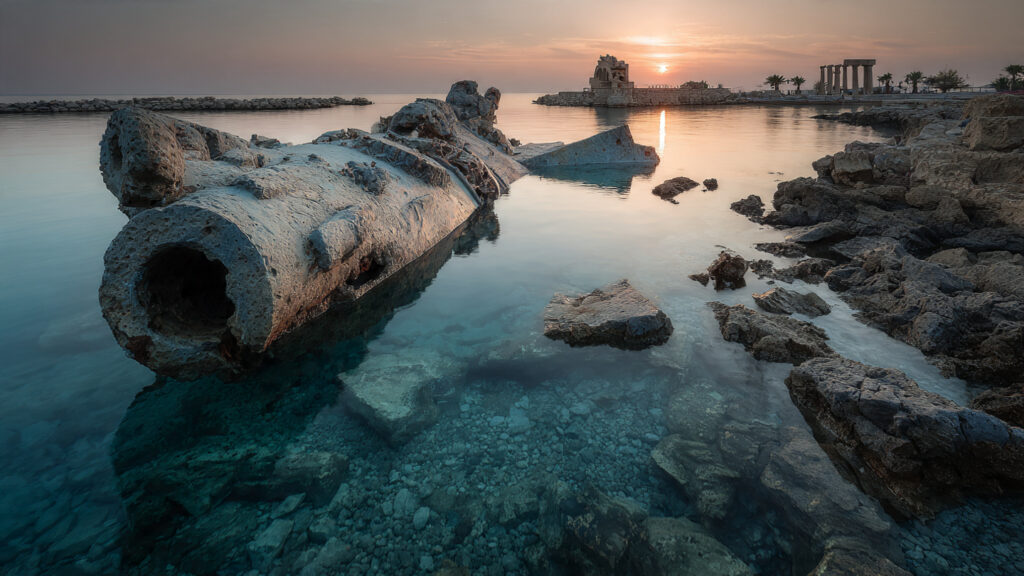
The mystery persisting into the modern era concerns the exact location of the statue. While later medieval legends and popular illustrations imagined the Colossus straddling the harbor entrance, one foot on each side, such a feat would have been an engineering impossibility, blocking the harbor entirely during its decade-long construction and rendering the port unusable for the very maritime trade the statue was meant to celebrate. Historical evidence instead suggests the Colossus stood on a massive pedestal near the current site of the St. Nicholas Fortress, a location offering the structural stability of the natural reef. When the bronze was eventually sold for scrap in the 7th century, it was said to have required nine hundred camels to transport the fragments away. The sheer volume of the statue and the speed of the Arab conquest suggest that significant portions of the iron framework and the heavy stone ballast within the legs may have been swallowed by the shifting silts of the harbor floor, remaining hidden beneath centuries of maritime traffic.
Marine Archaeology and the Search for the Giant

The search for the remains of the Colossus today is an exercise in archaeological patience and the precise use of sub-bottom profiling. The harbor of Rhodes is a complex archaeological site, layered with the wrecks of Mycenaean galleys, Roman merchant ships, and Ottoman vessels. Marine researchers must navigate the natural sedimentation of the Aegean, where the seabed is a moving tapestry of sand and Posidonia seagrass capable of obscuring massive artifacts within a few decades. The search is not merely for bronze, which is rare to find because of its historical value as scrap and the near-certainty that nearly all of it was recovered and melted down in antiquity, but for the negative space in the harbor’s history: the heavy stone blocks of the pedestal, or the iron rivets that may have survived centuries of corrosion buried beneath the silt.
Periodic announcements over the past several decades have claimed discovery of pedestal fragments or statue remnants, none of which has withstood sustained archaeological scrutiny. A 2015 proposal to construct a modern replacement colossus at the harbor entrance, funded through private and crowdsourced investment, generated international attention but has not progressed past the planning stage, running into the same practical objection that shaped the original’s actual placement: any structure large enough to command the harbor visually would also interfere with the working port beneath it.
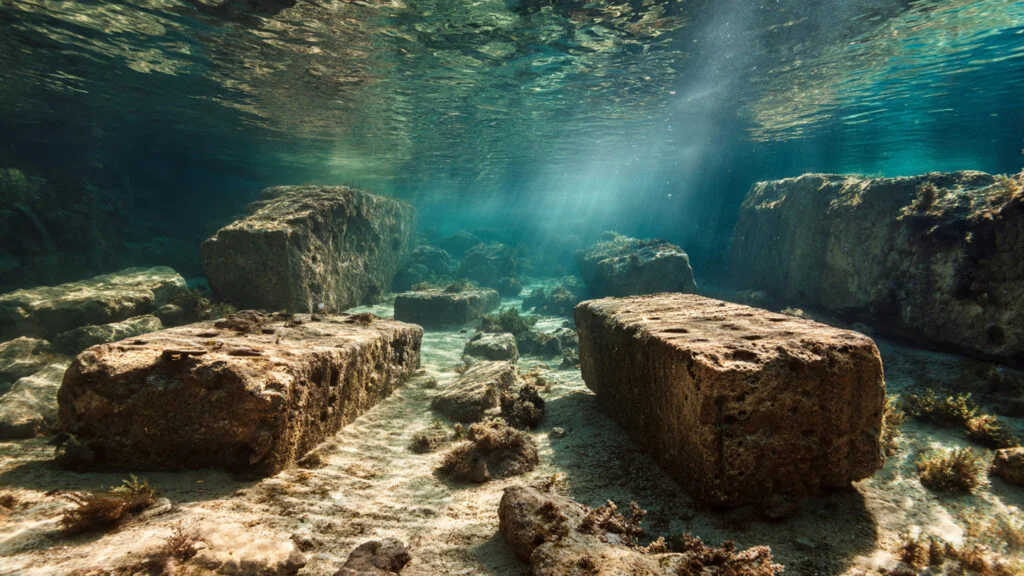
No confirmed fragment of the Colossus has yet been recovered. This remains, after nearly two thousand years, one of the genuine open questions of Mediterranean marine archaeology.
What Remains at the Mandraki
For those who explore the waters around the Mandraki, the continuity of the environment is striking. The seasonal light hits the seabed at close to the same angle it did when the giant’s shadow once fell across the waves. Even without the physical presence of the bronze, the harbor maintains its identity as a place defined by absence as much as by history, a site where the search itself has become part of the story being told.
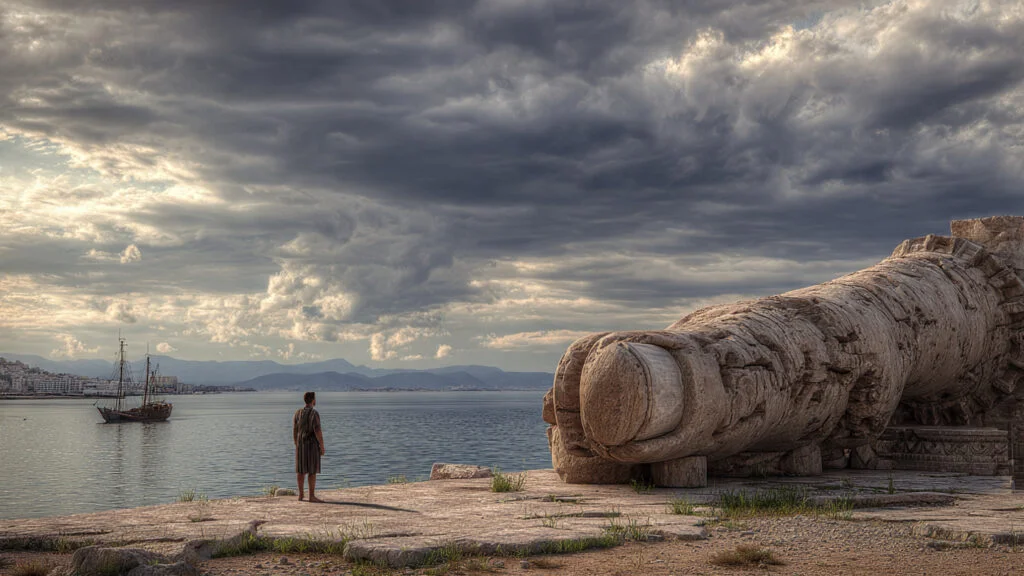
To walk the medieval fortifications now ringing the harbor of Rhodes is to encounter a city that has never fully let go of its solar identity. The fishing boats move across the same colors and the same light familiar to the ancients, and the harbor remains, in its way, a sanctuary defined by what it lost: a reminder that the most ambitious human structures are not exempt from the volatile rhythms of the earth beneath them, and that an empty pedestal can hold a place in memory as firmly as a standing statue ever could.
At Olympus Estate, Sacred Geography explores the places across Greece where landscape and myth read as a single text. The Colossus of Rhodes stood for only fifty-four years before an earthquake broke it at the knees in 226 BCE. An oracle reportedly warned the Rhodians against rebuilding it, and the fragments lay where they fell for eight centuries before being sold for scrap, requiring nine hundred camels to carry away. No confirmed fragment has ever been recovered from the Mandraki harbor it once guarded, and a modern proposal to build a replacement has stalled for the same practical reasons that shaped where the original actually stood. The search for the Colossus remains one of the genuine open questions of Mediterranean marine archaeology.