

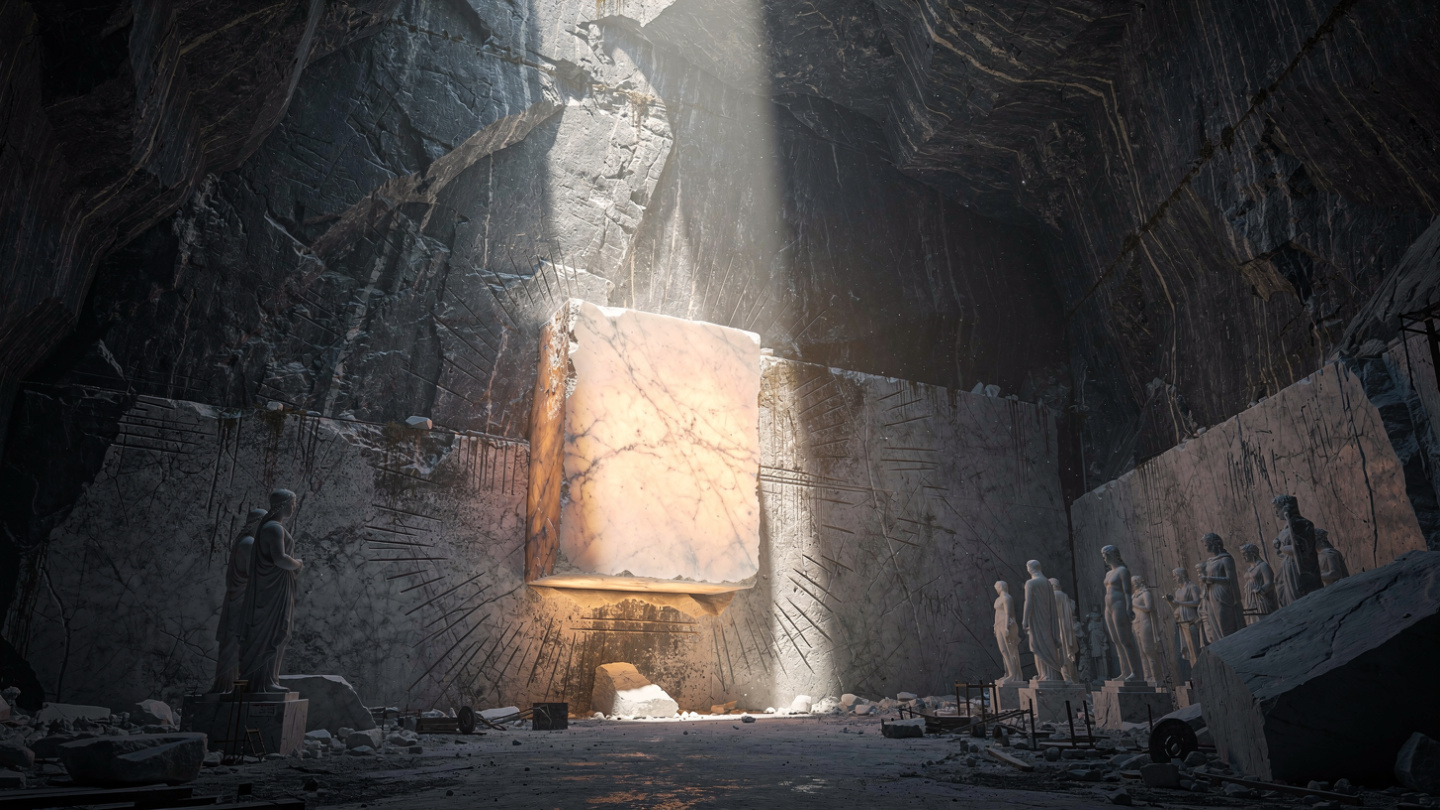
The marble of Paros is not simply white.
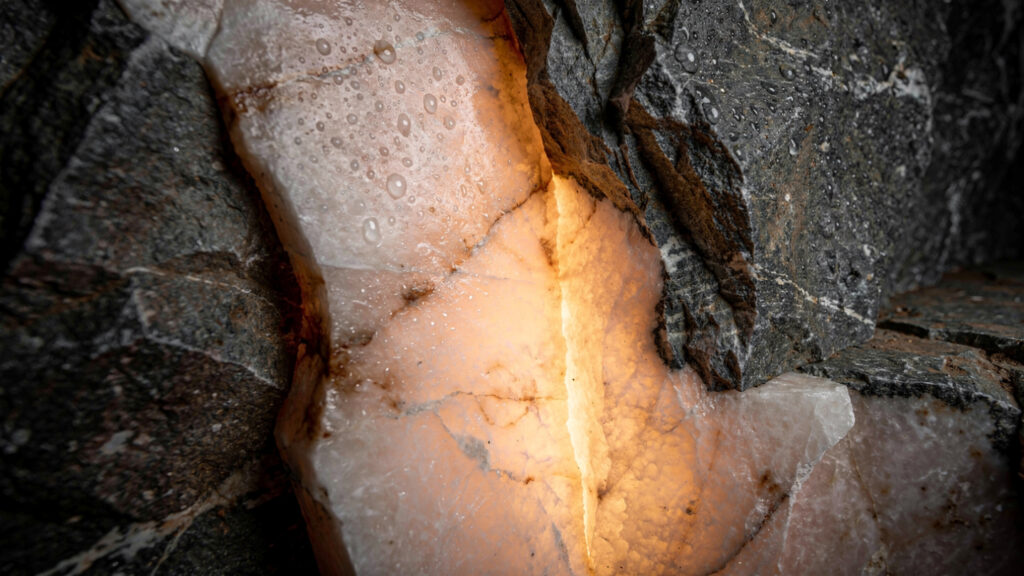
It is translucent. The optical property that the Parian marble has and that other white marbles do not is the property that made it the most sought‑after sculptural marble in the ancient tradition: the light does not simply reflect from the surface of the Parian marble as it reflects from an opaque material. It enters the stone, travels through the crystalline structure of the calcite, and re‑emerges at the surface with the warm glow that the ancient tradition consistently identified as the closest available approximation to the quality of human skin. Marble that looks like skin. This is what the sculptors of the classical account were seeking when they specified Parian marble for the statues that the ancient imagination’s greatest patrons commissioned, and this is what the island of Paros had in the geological character of its mountain’s interior that no other Cycladic island could offer in the same form.
The Venus de Milo is Parian marble. The Victory of Samothrace is Parian marble. The Hermes of Praxiteles at Olympia is Parian marble. The Parthenon’s metope reliefs and pediment sculptures were made in part from Parian marble. The luminous quality that makes these objects different from competently executed sculptures in a different stone is the geological accident of Paros: the island whose mountain contained the marble that the ancient world needed for the objects it wanted to make that would look most alive.
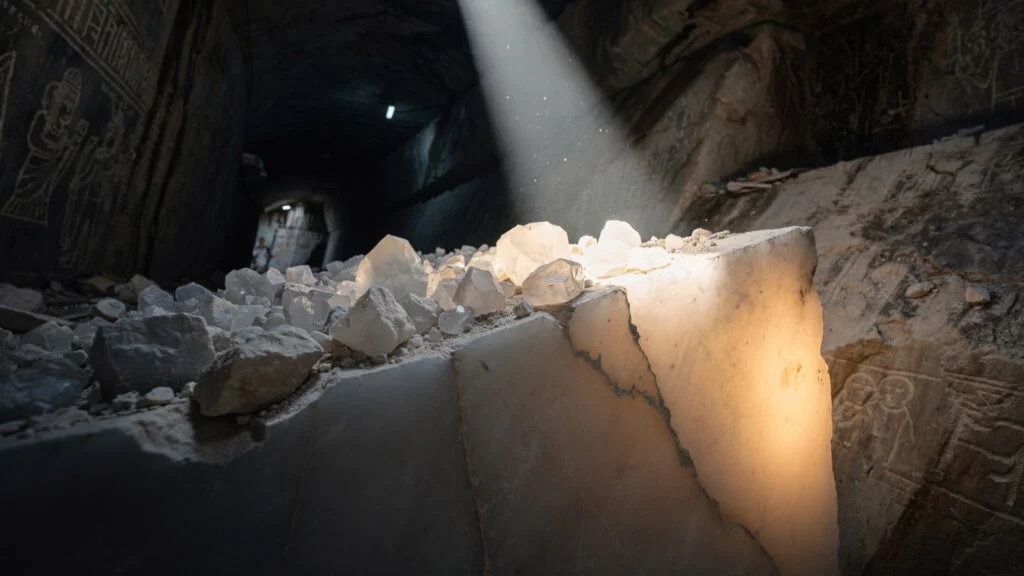
The quarries on the slopes of Mount Marpissa have been open since at least the seventh century BCE. They are still open.
The Quarries and Their History
The Parian marble quarries, the Marathi quarries on the slopes of Mount Marpissa in the island’s interior, are among the longest continuously worked quarries in the world: the combination of the marble’s unmatched sculptural properties and the island’s accessible position in the central Cyclades made them the primary source for the ancient world’s most ambitious sculptural projects across at least twelve centuries of continuous operation.
The ancient quarrying at Marathi operated through the technology of the underground tunnel rather than the open-cast extraction that the modern marble industry uses: the ancient quarriers followed the veins of the highest quality translucent marble into the mountain rather than removing the overlying material to expose the vein from above. The tunnels that the ancient quarriers cut into the Mount Marpissa slope are still visible and still accessible: the longest of the ancient tunnels extends approximately 150 meters into the mountain, and the quality of the interior, the marks of the ancient tools visible on the cut rock faces, the abandoned blocks that the ancient quarriers left in place when a flaw in the marble made them unsuitable, and the cool darkness of the tunnel interior that the mountain enclosure produces, is the quality of a working space that was operational for centuries and that the material record of its operation is still legible in.
The Parian Chronicles, the marble inscription known as the Marmor Parium that was cut in Paros in 264 BCE and that records a chronology of Greek history from the mythological period to the contemporary moment of its inscription, is among the most significant surviving ancient chronological documents: it is also made of Parian marble, the island recording its own history in its own most valued product. The original is now in the Ashmolean Museum in Oxford after its acquisition in the seventeenth century, and the content of the inscription, the dated sequence of events from the reign of Kekrops in Athens through the musical and literary achievements of the archaic and classical periods to the third century BCE, is the content of a community recording the cultural achievements of the Greek world in the medium that the community’s geological resource made available.
The contemporary Marathi quarries continue to produce Parian marble for restoration projects requiring the match of the ancient material: the restoration of the Erechtheion on the Athenian Acropolis used Parian marble from the Marathi quarries whose crystalline structure matched the ancient material closely enough for the optical consistency that the restoration required. The island is still supplying the marble that the ancient world’s most significant buildings were made from.
The Panagia Ekatontapiliani
The Church of the Panagia Ekatontapiliani in Parikia, whose name means the Church of the Hundred Doors though the tradition’s explanation of the name is more elaborate than the simple count suggests, is among the most significant surviving early Christian architectural complexes in the Aegean world, and its character as a layered architectural document of the transition from the ancient to the Byzantine world gives it a different quality from the medieval Byzantine churches that the standard Greek church tour covers.
The foundation tradition attributes the church’s original construction to Saint Helena, the mother of the emperor Constantine, who stopped at Paros on her journey to Jerusalem to seek the True Cross and vowed to build a church on the island if she found what she was seeking. The vow was fulfilled by her son Constantine after Helena’s death, and the historical claim that the Ekatontapiliani is a Constantinian foundation of the fourth century CE is a claim that the architectural archaeology partially supports. The baptistery to the south of the main church contains structural elements whose form and construction technique are consistent with a fourth‑century date, and the overall layout of the complex, with the main basilica and the subsidiary chapel and the baptistery forming the spatial organization that the early Christian liturgical tradition required, is consistent with the Constantinian period’s church‑building program.
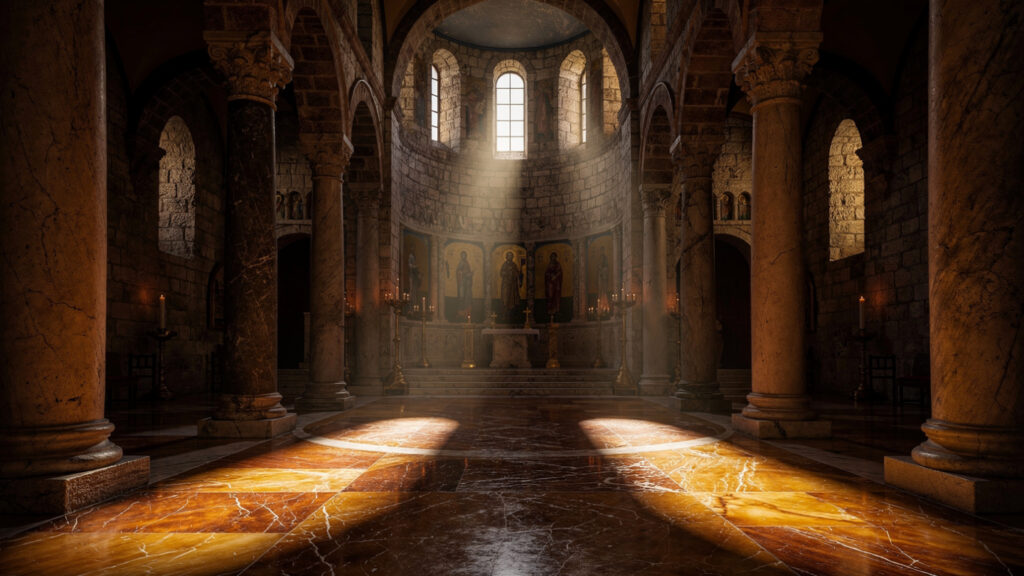
The building as it survives today is substantially the product of the Justinianic rebuilding of the sixth century CE: the basilica’s architectural form, the triple-aisled nave with the synthronon at the apse’s east end and the proportions of the nave elevation, is the architectural form of the Justinianic building program that also produced the Hagia Sophia in Constantinople and the Church of the Nativity in Bethlehem. The quality of the Ekatontapiliani’s interior, the warm white of the Parian marble floor and the relationship between the nave’s proportions and the light that the clerestory windows admit, is the quality of a building whose architects understood what the Parian marble would do with the quality of the Aegean light that the windows admitted.
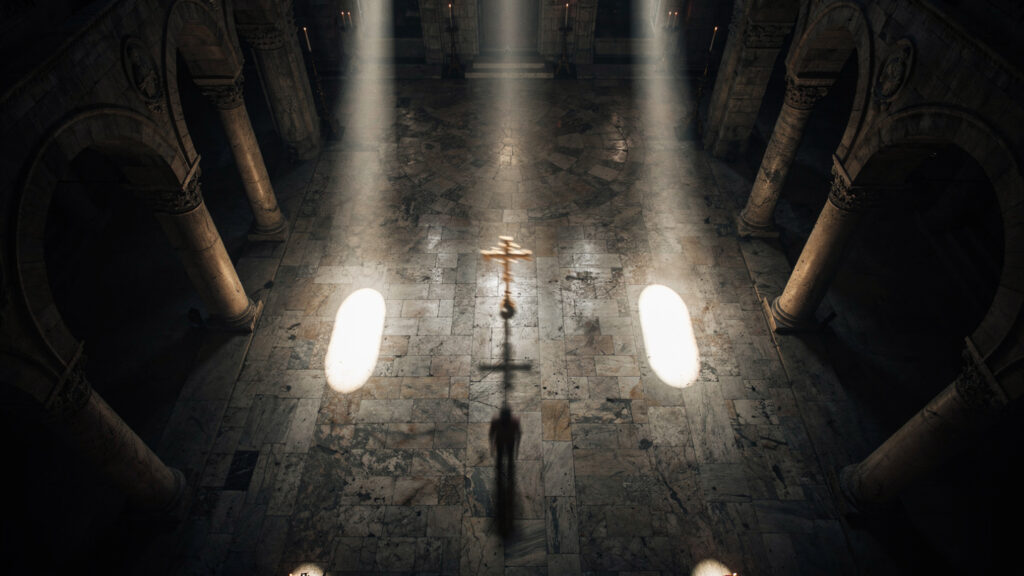
The church’s historical layering, the Constantinian foundation, the Justinianic rebuilding, the Byzantine modifications, the Frankish additions of the Latin occupation period, and the restoration work of the twentieth century, is the layering of a building that has been in continuous liturgical use for approximately 1,700 years: the quality of a sacred space that has been used for the same purpose across seventeen centuries of changing political and cultural administrations is the quality that the Ekatontapiliani’s interior communicates most directly, and it is the quality that distinguishes the Ekatontapiliani from the deconsecrated archaeological monuments that the majority of significant ancient and Byzantine buildings in Greece have become.
Parikia and the Ancient City
Parikia, the island’s main port and capital, occupies the site of the ancient city of Paros whose importance in the archaic and classical periods reflected the value of the island’s marble resource and the wealth that the marble trade generated. The ancient city extended across the flat coastal area behind the current harbor and up the slope of the low hill above it, and the evidence for its urban extent, the fragments of ancient walls and the architectural members visible in the foundations of the medieval structures throughout the old town, is the evidence of a city that was among the wealthiest in the Cyclades during the period when the marble trade was at its most intensive.
The poet Archilochus was from Paros: the seventh‑century BCE lyric poet whose innovations in the iambic meter and whose willingness to write about the personal and the immediate rather than the heroic and the mythological gave the Greek literary tradition one of its most influential formal and thematic departures from the Homeric standard. The account that Archilochus fought in the Parian colony at Thasos in the northern Aegean and that he wrote about the realities of the military campaign with a directness and a disillusionment that the heroic tradition had never allowed is the account that gives Paros its place in the history of Greek literature alongside its place in the history of Greek sculpture. The island that produced the marble that gave the statues their skin‑like luminosity also produced the poet who gave the lyric craft its first unmediated personal voice.
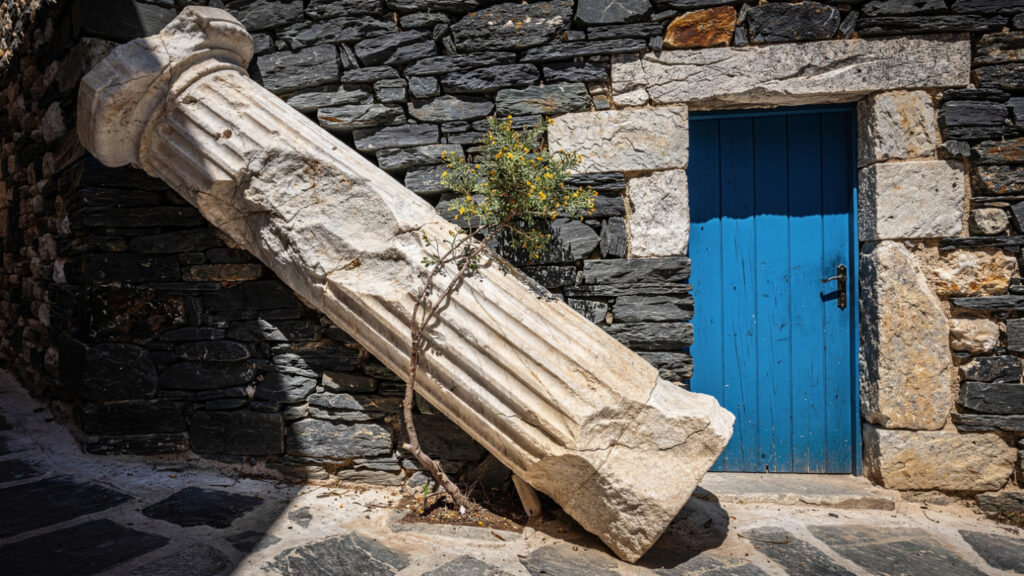
The Castle of Parikia, the kastro built by the Frankish Sanudo dynasty in the thirteenth century from the material of the ancient temples that occupied the same hilltop site, is the most visible evidence of the ancient city’s presence beneath the medieval overlay: the drum columns from the Temple of Athena that the Frankish builders incorporated into the kastro’s walls are the repurposed ancient material whose reuse is the form that the medieval appropriation of the ancient site most directly expresses. The columns are visible in the kastro’s wall, the ancient marble incorporated into the medieval fortification, the Parian marble that was cut for the goddess’s temple ending its useful life as the building material for the Frankish garrison.
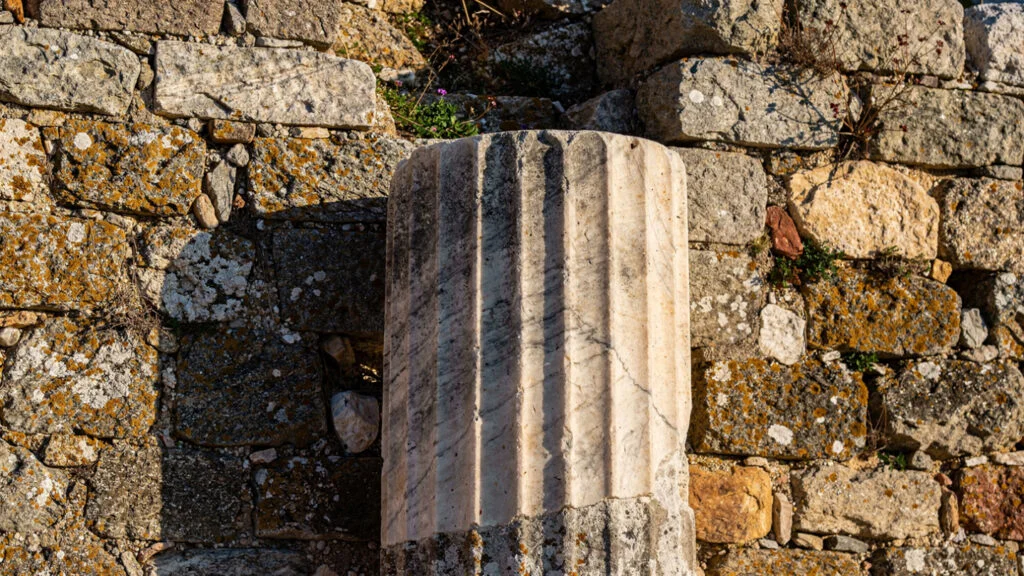
The Archaeological Museum of Parikia holds the material record of the island’s ancient history in the form of the objects that the excavations of the ancient city and the surrounding sites have recovered: the Cycladic marble figurines whose abstract formal vocabulary the Parian marble’s translucent quality makes most directly visible, the archaic kouroi fragments whose surface treatment in the Parian marble creates the quality of the emerging sculptural tradition’s engagement with the human form, and the Parian Chronicles fragment that remained on the island when the larger portion was taken to England in the seventeenth century.
Naoussa and the Northern Coast
Naoussa, the fishing village on the northern coast whose combination of the Venetian-era harbor fortifications and the whitewashed village architecture and the activity of the working fishing harbor has made it among the most successfully maintained traditional Cycladic village characters in the archipelago, is the place on Paros that the visitor who arrives in the summer month of July and walks through the lanes of the village in the morning before the day’s heat has organized itself will understand most directly what the Cycladic village was before it became the object of the tourism economy’s attention.
The quality of the Naoussa harbor in the early morning, the fishing boats in the colors of the traditional Cycladic boat‑painting style and the sound of the harbor activity and the smell of the fish catch and the coffee from the harborside cafés, is the quality of a working harbor that has accommodated the tourism economy without reorganizing itself around its requirements. The kafeneion beside the Venetian harbor tower whose outdoor seating faces the harbor approach rather than the street behind it is the kafeneion that the fishing community uses and that the visitor who arrives early enough can use without displacing the fishing community from its own gathering place.
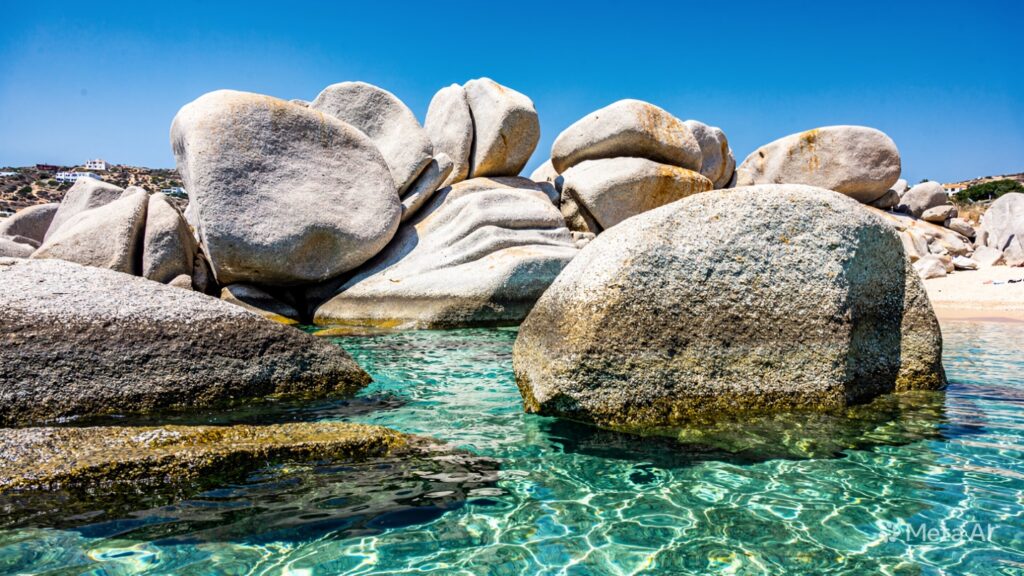
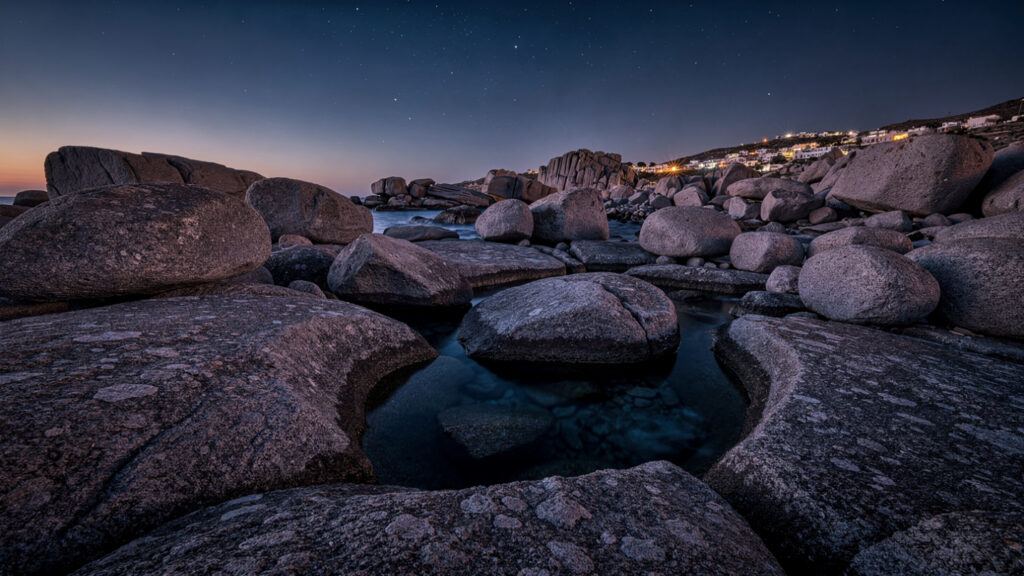
The Kolymbithres beach north of Naoussa, whose geological character is the character of the granite outcrops that the ancient erosion has sculpted into the rounded forms that the tourist literature consistently photographs as the most distinctive natural feature of the Parian coastline, is the beach whose combination of the granite landscape and the clear water of the protected bay is the combination that gives the northern Parian coast its particular character within the broader Cycladic beach landscape. The granite of Kolymbithres is not the marble of the quarries: it is the older igneous rock beneath the marble’s limestone parent rock, exposed by the erosion that removed the overlying material, and the rounded forms that the sea and the weather have given the granite outcrops are the forms of a rock whose physical character is entirely different from the stratified and cleavable marble of the Marathi quarries.
The Marble Roads
The evidence for Paros’s ancient importance in the sculptural marble trade is not only in the quarries and in the museums: it is also in the road system whose engineering reflects the logistical requirement of moving large marble blocks from the quarry sites to the coastal loading points.
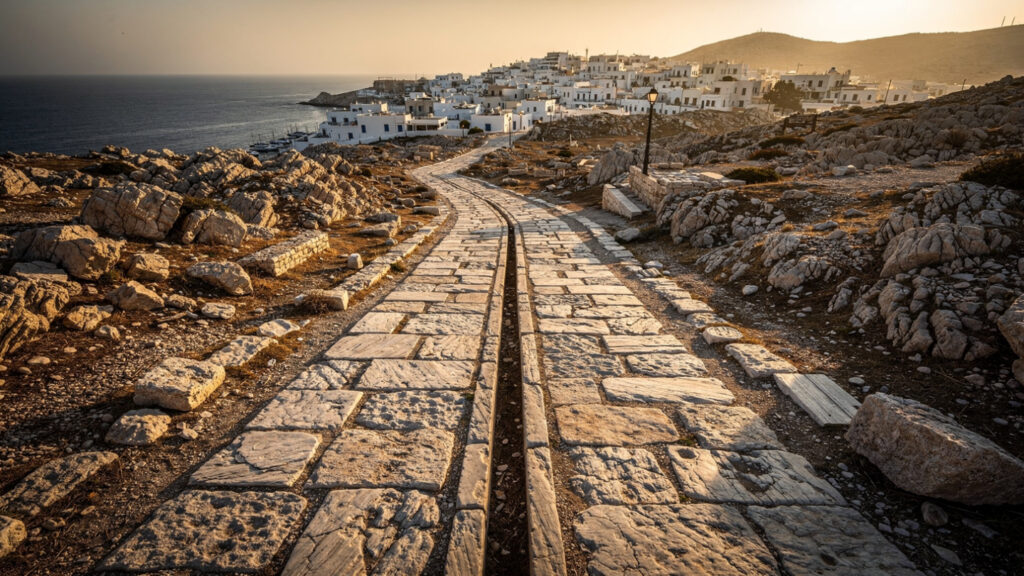
The ancient roads connecting the Marathi quarries to the harbor at Parikia are among the best-preserved ancient transport infrastructure on any Cycladic island: the paving of the road surface, the width that allowed the oxen-drawn sleds to negotiate the gradient while maintaining the load’s stability, and the engineering of the drainage channels beside the road whose function was to prevent the winter rains from undermining the road surface, are the elements of a transport infrastructure designed for heavy load movement rather than pedestrian or light vehicle traffic.
Walking sections of the ancient marble road between the quarry area and the coastal plain gives the experience of the logistical achievement that the ancient marble trade required: the gradient of the road’s descent from the quarry elevation to the sea level loading point, the surface engineering that maintained the stability of that gradient under the load of a marble block whose weight was measured in tons rather than kilograms, and the visual relationship between the interior marble mountain and the coastal harbor visible at the road’s lower end, is the experience of the ancient supply chain whose product ended up in the Parthenon and the Venus de Milo and the Hermes of Praxiteles.
Visiting Paros
Paros is accessible by ferry from Piraeus with a journey of approximately four hours by the fast ferry services that the Blue Star and Minoan ferry companies operate, or by the slower overnight ferries whose crossing time of approximately six to seven hours gives the approach to the island the quality of the sea arrival in the dawn light as the ferry enters the Parikia harbor.
The compact size of the island makes a car or scooter the appropriate transport for the visitor who wants to move between the quarry site, the Ekatontapiliani, Naoussa, Kolymbithres, and the smaller villages of the interior. The distance from Parikia to Naoussa is twelve kilometres by the main road. The distance from Parikia to the Marathi quarry area is approximately seven kilometres by the road that follows the ancient marble transport route into the interior.
The optimal visiting months are May, June, September, and October: the shoulder season months when the quality of the Cycladic summer light, the clarity of the atmosphere and the angle of the sun on the marble surfaces, is present without the compression of the July and August visitor density that transforms the island’s character from the character of a genuinely significant Cycladic community into the character of an organized beach tourism destination.
The Marathi quarry visit requires the preparation of walking shoes and the willingness to enter the ancient tunnel sections that are accessible to the independent visitor without guide: the tunnel interior is unlit and the experience of the ancient quarry space, the tool marks on the walls and the abandoned marble blocks and the cool darkness of the mountain interior, is the experience that requires the preparation of a light source and the readiness to enter a space that is not organized for the comfort of the visitor.
The Ekatontapiliani is open daily and is free of charge: the quality of arriving at the church in the early morning before the day’s tourist activity has organized itself around the building is the quality of the sacred space in its own time rather than in the tourist time, and the experience of the interior in the morning light, the Parian marble floor and the nave proportions and the light from the clerestory windows, is the experience the building was designed to provide.
At Olympus Estate, Wanderlust Greece guides you across the sacred and storied terrain of the Hellenic world. The Venus de Milo is Parian marble. The Victory of Samothrace is Parian marble. The Hermes of Praxiteles is Parian marble. The Parthenon’s pediment sculptures were carved from it. The Panagia Ekatontapiliani has been in continuous liturgical use for approximately 1,700 years. Archilochus invented the personal voice in Greek lyric poetry on this island. The quarry tunnels on Mount Marpissa are still open and the tool marks of the ancient quarriers are still on the walls. The marble that the ancient world needed to make its most significant sculptures was on this island. The island is still here.