




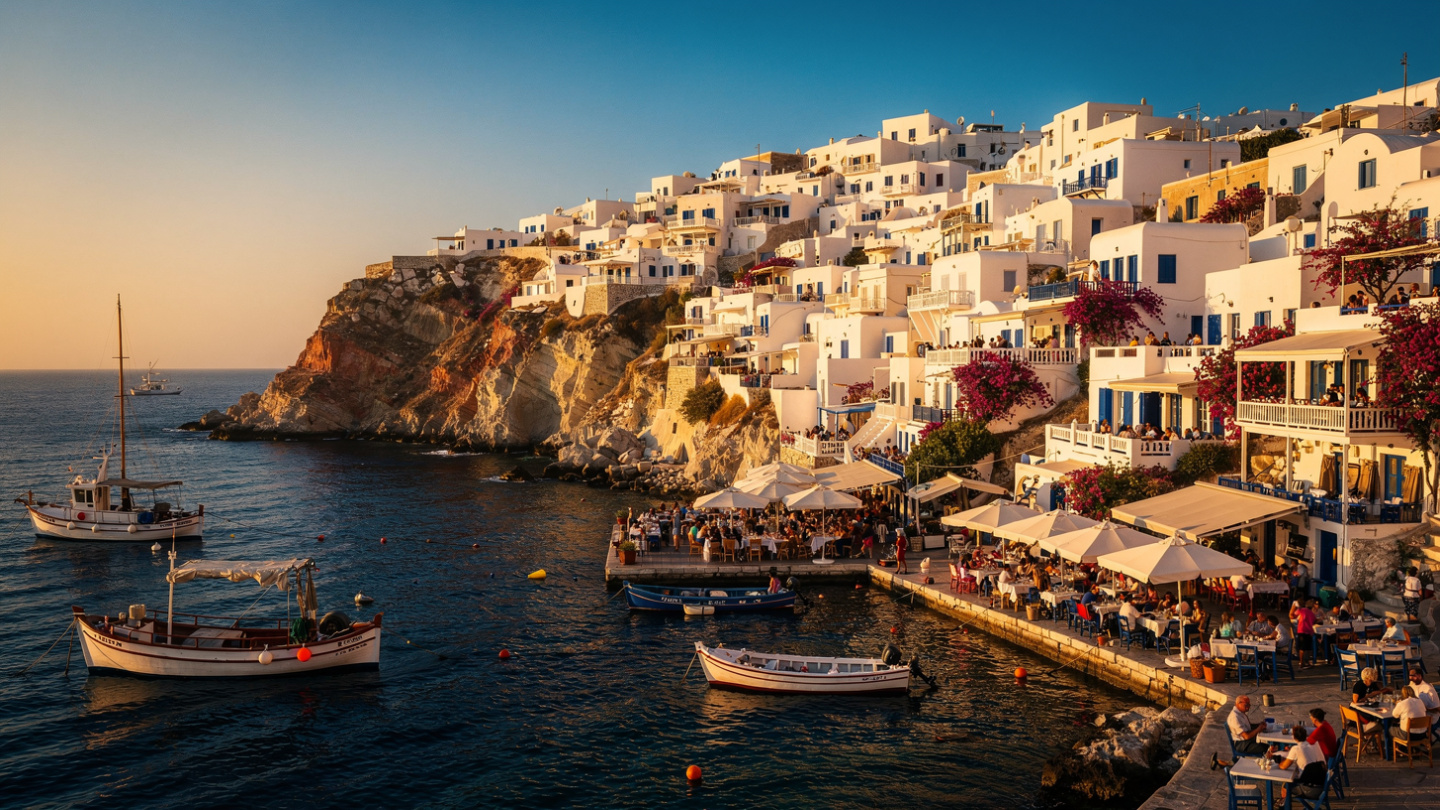
There is a version of Greek island life that arrives in your imagination fully formed, uninvited, and extraordinarily persuasive.
It involves a whitewashed terrace above a harbour. Coffee in the morning light. The quality of Aegean blue that changes shade across the day and never quite looks the same twice. A taverna where you have become a regular, where the owner knows what you drink and does not bring a menu. Time that moves differently, not slowly exactly, but without the particular violence of urgency that defines life elsewhere.
This vision is not a lie. It exists. People live it. The terrace is real, the coffee is real, the taverna owner’s recognition of a familiar face is real, and the quality of the light above the Aegean is genuinely different from every other light you have stood in.
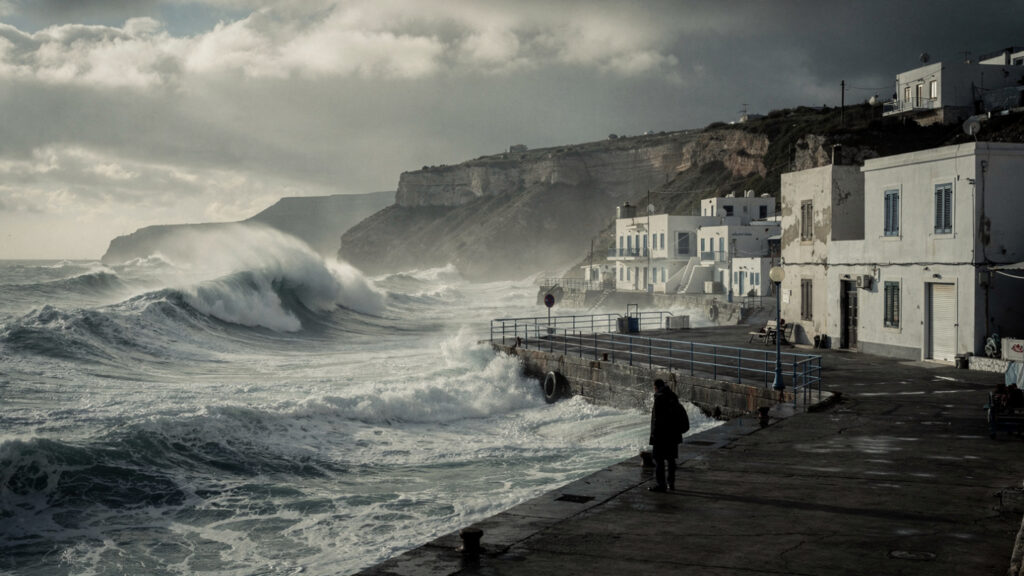
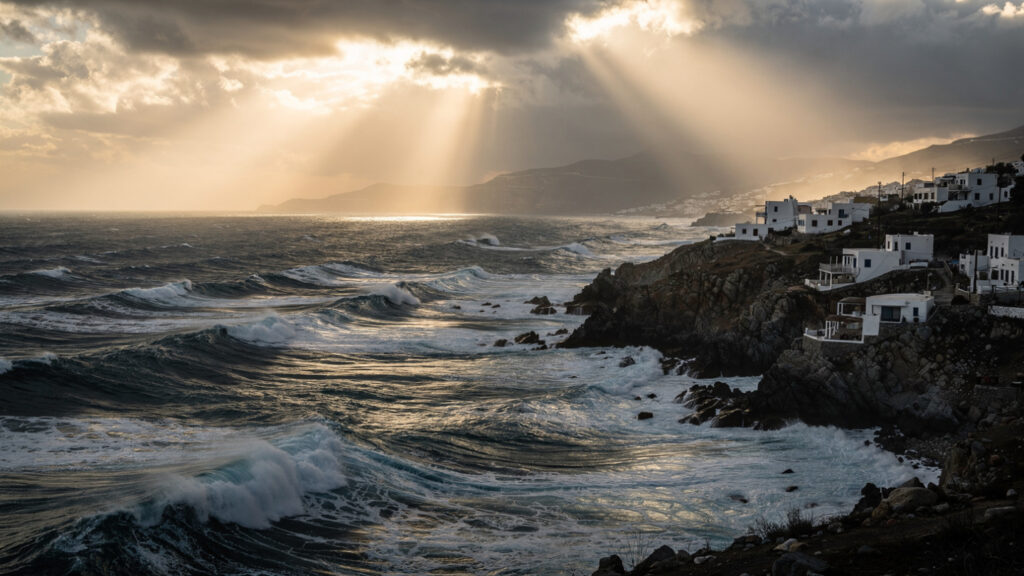
But the vision arrives in summer, in high season, in the ten weeks of the year when the island is performing its best version of itself for the largest possible audience. It does not arrive in February, when the ferry has been cancelled for the third consecutive day because the wind off the open sea is at forty knots and the harbour is white water and the single general store is out of a medication you need and the next scheduled delivery is unclear.
What nobody tells you before you buy is not that the dream is wrong. It is that the dream is seasonal, and life is not.
This article is about the rest of the year.
Two Islands in One Place
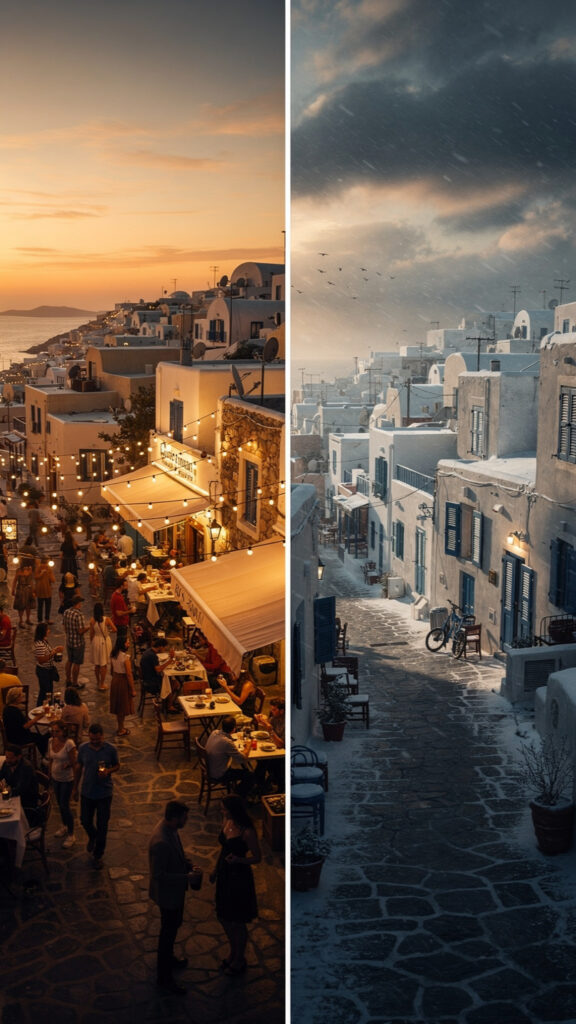
Every Greek island that attracts buyers is, in fact, two completely different places occupying the same geography at different times of year.
The summer island is the one you visited. Full of life, full of options, full of the social richness that comes from a community temporarily swelled by tourism and the return of diaspora families and the arrival of people from Athens escaping the heat. Restaurants open for dinner at nine and close at two in the morning. The market has everything. The medical centre is staffed. The ferry runs twice daily. The mechanic returns your call the same day.
The winter island is something else entirely.
On a smaller Cycladic island, roughly October through April, the population can drop by sixty to eighty percent. Restaurants close, not all of them but most. Shops reduce their hours or shut entirely until Easter. The ferry schedule contracts to two or three times a week, sometimes less in bad weather, sometimes not at all for days at a stretch. The social world that made the summer island feel abundant retreats to a small permanent community who have been living with each other all their lives and whose social fabric, however warm to outsiders in July, is a thing with its own history and its own closed rooms.
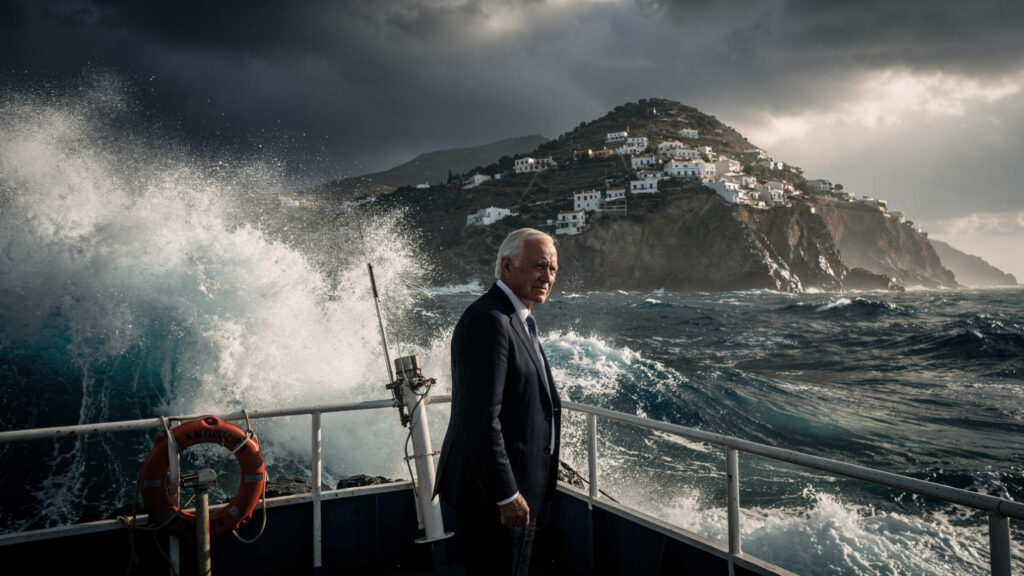
This is not a criticism of island winter. For many people who know it, the winter island is the real one: stripped of performance, belonging to itself, quieter in a way that rewards those with the constitution for it. The light is different in winter, lower and more horizontal, and the landscape reads differently without the summer haze. The sea is often spectacular in ways that summer calm cannot be: enormous swells from Atlantic storms that have crossed the entire Mediterranean, the kind of waves that remind you that the Aegean is not a swimming pool but an arm of an ancient sea that has been killing ships for three thousand years.
But you need to know which island you are buying. And you need to know whether the person you are is suited to the one that will be waiting for you when the last tourist ferry leaves in October.
Infrastructure | What Works and What Requires a Relationship
Island infrastructure in Greece is a subject that separates the honest from the promotional.
The honest version is this: it varies enormously by island, it is better than it was ten years ago on almost every island with significant tourism, and it will at some point in your residency fail you in a way that would not happen on the mainland, and you need to have already thought about how you will handle that moment.
Water on most Aegean islands is not a given in the way that mainland water is a given. Many smaller islands receive a portion of their fresh water by tanker during peak season. Desalination plants cover some of the gap but not all of it. Cisterns, the ancient solution to island water storage, are still in use and still relevant. If you are buying on a smaller island, your water supply and its continuity in dry summer months is a question you must ask explicitly, not assume.
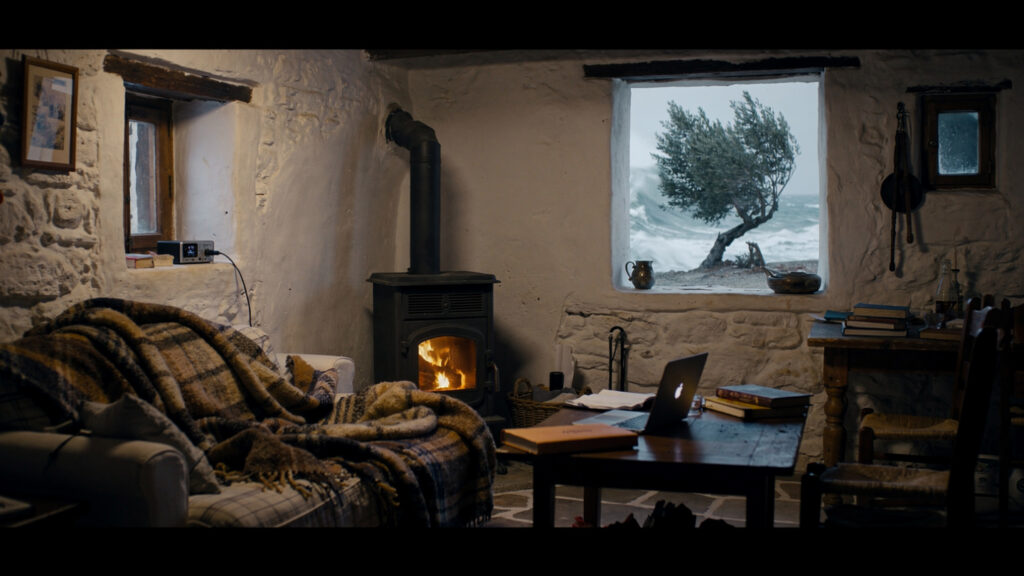
Electricity is reliable on larger islands and significantly less so on smaller ones. Power cuts during winter storms are normal. The question is not whether they happen but how long they last and how your property handles them. A house with no backup power source, no alternative heating, and no wood stove on an island where the electricity goes out for twelve hours in January is a different proposition from the same house in July.
Internet has improved dramatically in the past five years across most inhabited Greek islands. Fibre has reached the larger islands and some of the more significant smaller ones. On very small islands, satellite connectivity has filled gaps that cable never will. If you work remotely, this is the infrastructure question that will most immediately determine whether island life is viable for you. Test it in winter before you commit, not in summer when everything works better.
Medical care is the infrastructure question most buyers ask last and should ask first. Most inhabited Greek islands have a basic health centre, a kentro ygeias, staffed by a doctor who rotates on assignment from the mainland health service. Staffing continuity is inconsistent: the doctor may change every few months, may not speak your language, may not be present every day. For routine care this is manageable. For anything acute, you need to understand the evacuation protocol: helicopter in an emergency, ferry to the nearest hospital on the mainland or a larger island in less acute situations. On an island where the ferry does not run in bad weather and a helicopter cannot fly in fog, the window between a medical event and medical treatment can be hours.
If you have a condition that requires regular specialist care, or if your age puts you in a category where acute medical events are a realistic possibility, this is not a reason not to buy on an island. It is a reason to choose your island based on its medical infrastructure rather than its Instagram presence.
The Ferry | Your Lifeline and Its Limitations
Nothing defines island life more completely than the ferry schedule.
On a well-connected island, Aegina, Hydra, Poros, Spetses within two hours of Piraeus, or the main Cyclades on the high-frequency summer routes, the ferry is a minor inconvenience at worst. On a smaller or more remote island, the ferry is the architecture within which your entire life must be planned.
Understand this before you buy: on many Greek islands outside the main routes, there is one ferry per day in summer, two to three per week in shoulder season, and an entirely weather-dependent schedule in winter that can and does produce multi-day periods of no connection to the mainland. These are not exceptional circumstances. They are the ordinary rhythm of island life.
What this means practically is a list of adjustments that sound manageable in the abstract and require genuine recalibration in practice.
Medical prescriptions must be maintained in sufficient supply that a three-day ferry cancellation does not create a crisis. Building materials, appliances, and anything larger than a suitcase must be planned around freight ferry schedules that operate on different timetables from passenger services. A car repair requiring a part not held locally involves ordering the part to the island, waiting for delivery, and hoping the mechanic is available when it arrives. A flight from Athens requires the ferry to Piraeus or a regional airport, which requires working backwards from your departure time through ferry schedules that may not align with what the flight booking platform assumes.
None of this is impossible. Islanders do it every day, and they do it with a matter-of-fact competence born of lifelong practice. The adjustment for a buyer coming from a mainland or urban context is not learning new procedures. It is learning a different relationship with time and contingency, one that accepts interruption as a structural feature of life rather than an anomaly to be resolved.
The buyers who adapt most successfully to island life are those who approach the ferry the way the islanders approach it: not as a service that should work but as a condition that sometimes does and sometimes does not, and planning accordingly.
Community | Warmth, Depth, and What Takes Time
The Greek island community is genuinely warm. This is not a tourism brochure claim. It is a consistent reality reported by virtually everyone who has made the transition to year-round island life, regardless of island, regardless of nationality, regardless of how the transition went in other respects.
Greeks are, with near-universal consistency, hospitable toward the person who approaches their community with genuine respect and a willingness to participate in its life rather than simply to consume its scenery. The concept of philoxenia, love of the stranger, is not an ancient abstraction. It is a lived practice on islands where visitors and newcomers have always been part of the social fabric, bringing news and goods and different perspectives to communities that would otherwise become claustrophobically inward.
But community warmth and community belonging are different things, and the distinction matters for year-round residents in a way it does not for holiday visitors.
Island communities are old. Their social structures have been forming for generations. The families that have been on the island for centuries know each other in ways that go many layers deep, and the new resident, however warmly received, is always beginning at the surface. This is not unfriendliness. It is the natural condition of a small community with a long memory. You are not going to be the person who has known the baker since childhood within your first year. You are going to be the person the baker is friendly to, which is genuinely pleasant, but it is a different thing.
The transition from warmly received visitor to genuine community member takes years on most islands, and it requires learning Greek to a functional level of conversational competence. This is the single most important piece of advice for anyone planning year-round island life and the single most frequently ignored. An island community that conducts its internal life in Greek will welcome you in English across the taverna table and across the harbour wall. But the conversations that matter, the ones where you understand what is happening in the community, what the disagreement at the municipal council meeting was really about, what the history is between the two families whose properties adjoin yours, happen in Greek. Without it, you will always be an observer rather than a participant.
Learn Greek. Begin before you move. Continue after you arrive. The investment is returned many times over in the quality of the life you can actually access.
What Winter Costs, in Every Sense
The economics of island life shift dramatically between summer and winter, and not always in the direction buyers assume.
Heating is the surprise that most catches new island residents off guard. The Greek island aesthetic is built around summer: open windows, stone floors that stay cool, terraces for outdoor living, architecture that manages heat. That same architecture is frequently inadequate for winter warmth. A whitewashed Cycladic house with metre-thick walls and small windows is cool in August and, if poorly insulated and heated only by a single electric unit, genuinely cold in January. The cost of heating an island house through winter, particularly with electricity as the primary energy source, can be substantial. Oil-fired central heating, wood stoves, and heat pumps are all used by permanent island residents, and the transition from a summer holiday property to a warm winter home often involves investment in heating infrastructure that the purchase price did not account for.
Seasonal pricing works in both directions. Groceries and supplies that arrive by ferry carry a transport premium year-round, and that premium does not disappear in winter when the tourist revenue that partially subsidises island commerce disappears with the tourists. Some staples, particularly fresh produce, become more expensive and less varied in winter as the supply chain contracts.
On the other hand, the costs that summer makes inevitable, the inflated taverna prices, the premium on every service in peak season, the social cost of living in a place temporarily occupied by people with more money than local economics normally see, disappear entirely. The permanent resident’s winter island is cheaper in many respects than the visitor’s summer island, and the quality of ordinary daily transactions, the unhurried conversation at the kafeneion, the unhurried service at the post office, the absence of queues at every point of interaction, is something that long-term island residents describe as one of the most significant improvements in daily quality of life.
The Island You Choose Matters More Than You Think
Not all Greek islands offer the same year-round proposition, and the choice of island deserves the same analytical rigour as the choice of property.
For year-round living, the critical variables are ferry connectivity, medical infrastructure, year-round population size, availability of skilled tradespeople, and the existence of at least a minimal economic life that does not shut down entirely in October.
Islands with populations above two thousand have enough permanent community to support year-round commerce, schooling for families with children, and the social density that makes winter manageable rather than isolating. Islands below five hundred permanent residents can be extraordinarily beautiful, extraordinarily peaceful, and extraordinarily difficult for a first-time island resident navigating the practical demands of year-round life without an established support network.
Some islands that work exceptionally well for year-round life, in roughly ascending order of connectivity and infrastructure: Aegina, thirty minutes from Piraeus by fast ferry, with a genuine year-round economy and excellent mainland connections. Paros, well-connected by air as well as ferry, with a large enough permanent community to support a full range of services year-round. Naxos, the largest of the Cyclades, with mainland-like infrastructure in its main town and agricultural self-sufficiency that makes it less dependent on ferry supply chains than purely tourist islands. Lesbos, Chios, and Samos in the eastern Aegean, large enough to function as genuine communities year-round with hospitals, universities, and economic lives that do not revolve entirely around summer tourism.
The small island of your dreams may be the right place for a holiday home used across long summer visits and occasional shoulder-season stays. For a primary or year-round residence, the infrastructure of the slightly larger, slightly less photogenic island is worth serious consideration.
The People Who Thrive and the People Who Leave
After speaking with and reading the accounts of dozens of people who have made the island transition, a pattern emerges that is worth stating directly.
The people who thrive in year-round island life share a small number of characteristics that have very little to do with their nationality, their income, or how much they fell in love with the island when they visited.
They are self-contained. They do not need a large social life to feel comfortable. They have interests, work, or creative practices that can be pursued independently of what the island provides socially. They are comfortable with solitude, not merely tolerant of it but genuinely at ease with days that pass in their own company and the company of the landscape.

They are practically resourceful. They can manage logistical problems with equanimity, adapt plans when the ferry is cancelled, find solutions locally when the mainland solution is not available, and approach the practical demands of island life as interesting puzzles rather than failures of a system that should work better.
They have learned, or are learning, Greek.
They have visited the island in winter before committing to year-round life there.
That last point is simple enough that it sounds obvious, and it is ignored with remarkable consistency by buyers who fall in love with an island in August and purchase in September and arrive in October and find themselves in a different country from the one they thought they had bought into. Visit in February. Stay for at least two weeks. Talk to the permanent residents. Eat where they eat, not where the visitors ate in summer. Look at your potential property in the rain and the wind and the low light and ask yourself whether the person you are in February could be happy in this place.
The answer might be yes. It is for many people. But the answer needs to be honest, and honesty requires winter evidence.
What You Get That No Other Life Offers
This article has spent considerable time on what island life costs and what it demands, because these are the things nobody tells you before you buy, and they deserve to be said plainly.
But plain speaking cuts both ways.
What a year-round Greek island life offers, for the person genuinely suited to it, is something that no other context in the modern world provides with the same completeness.
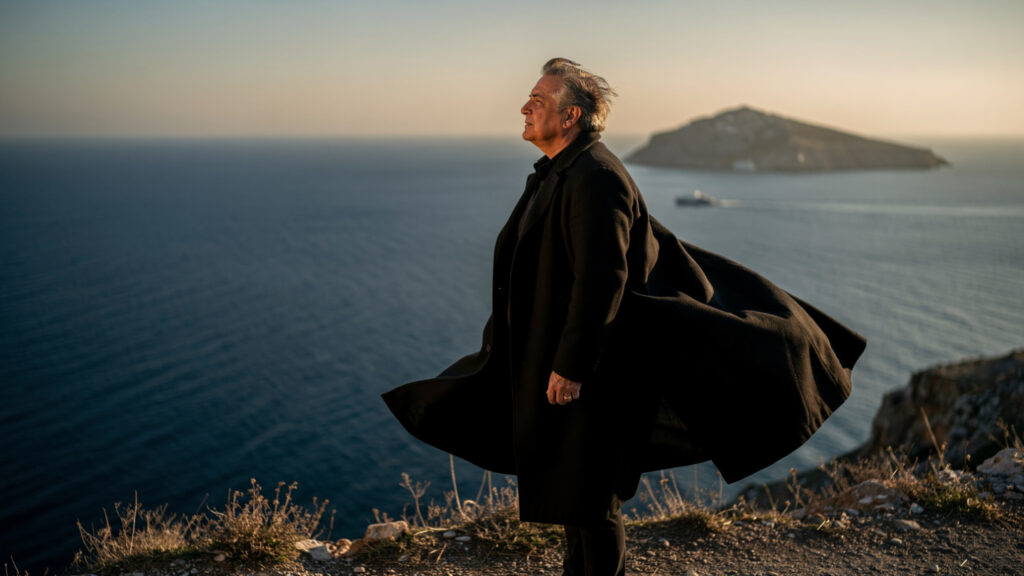
It offers a relationship with natural time that urban and suburban life have made essentially inaccessible. You will know the weather not as a forecast but as a physical reality you live inside. You will know the seasons not as a change in what the supermarket stocks but as a complete transformation of the landscape, the community, and the quality of daily experience. You will know the sea not as scenery but as a presence that shapes your plans, your moods, and your sense of what is possible on any given day.
It offers a community life of genuine depth, once you have put in the years required to access it. The baker who has known you for five years is a different relationship from the baker who has known you for five weeks, and the island community, for all its historical closeness and all the time it takes to enter, is one of the few social structures in the contemporary world where people still know each other with that kind of duration and specificity.
It offers the particular freedom that comes from living in a place that is genuinely beautiful and that you are not visiting. The Aegean light, which visitors experience as a gift from a holiday, you will experience as the ordinary condition of your mornings. It will still be extraordinary. But it will be yours in a way that holiday beauty is never quite yours, because you will have stood in it in all the seasons and known it in all its moods and understood that it is not performing for you.
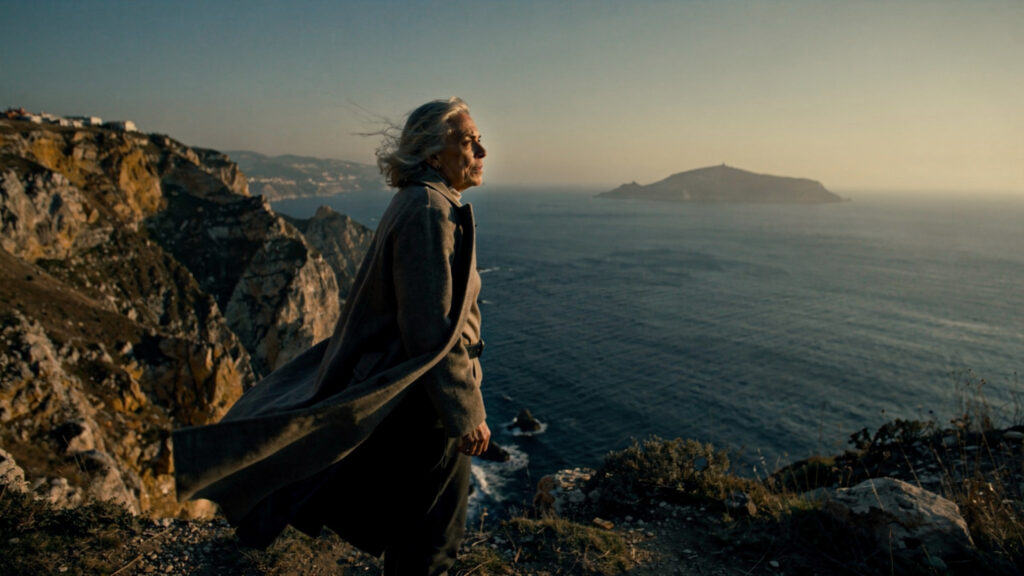
It will simply be where you live.
The Greek Island Dream is Alive
The Greek island dream is not a lie. It is a truth that requires the right person in the right place with the right preparation and a sufficient supply of honest self-knowledge.
The island in February is the test. Not because February is the worst the island has to offer, but because February, when the summer performance has been packed away and the island is simply itself, is the most accurate version of what you are actually choosing.
If you stand on the harbour in February, with the wind off the Aegean and the kafeneion half-empty and the ferry not running and the light lower and longer than you remember from August, and you feel, underneath the difficulty of the conditions, something that resembles rightness, something that says this landscape and I understand each other, then you are probably suited to this life.
If you feel only the absence of what was there in summer, only the loss of the version that made you fall in love, then you have learned something important before it cost you more than a winter visit.

The island will wait. It has been there for several thousand years and is not in a hurry. The question, as with all the most important decisions, is not whether the place is right.
It is whether you are.
At Olympus Estate, Property Pantheon explores the architecture, restoration, and living heritage of the Greek built world. Year-round island life in Greece is two completely different lives occupying the same geography at different times of year. The summer island performs for its audience. The winter island belongs to itself. The ferry schedule, the medical infrastructure, and the size of the permanent population determine whether the winter island is inhabitable for you. Visit in February before you commit. Stay two weeks. Talk to the permanent residents. If you stand on the harbour in February and feel, underneath the difficulty of the conditions, something that resembles rightness, you are probably suited to this life. The question is not whether the place is right. It is whether you are.