




“The part can never be well unless the whole is well.” — Plato
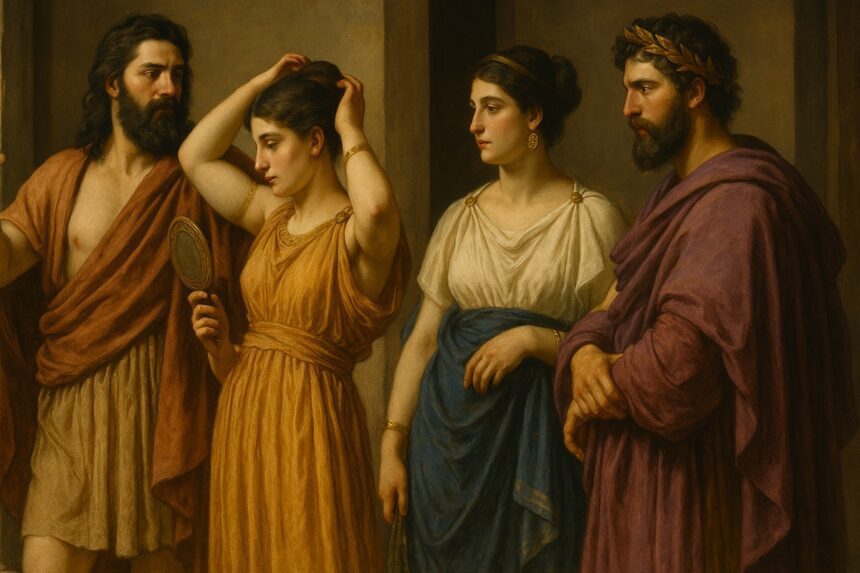
In the modern world, fitness is all too often viewed through the narrow, reductive lens of expensive gym memberships, highly restrictive, unsustainable diets, or the relentless, exhausting pursuit of an easily consumable and Instagrammable physique. The goal is external validation and short-term cosmetic change. But for the Ancient Greeks, physical cultivation was never a mere, superficial pursuit of vanity; it was, at its very core, a profound philosophical and spiritual duty. They firmly believed in kalokagathia—the timeless, aspirational ideal of harmonious perfection, where a beautiful, strong body (kalos) housed a good, moral, and courageous soul (agathos).
This deep-rooted, essential connection between rigorous physical health and inner moral radiance is the true, enduring legacy of Ancient Greek fitness. It’s a holistic philosophy that effortlessly transcends fleeting modern trends and offers a balanced, sustainable, and profoundly intellectual path to lifelong wellness.
The Gymnasium: Philosophy, Sweat, and the Civic Ideal
The spiritual and societal centerpiece of Ancient Greek fitness was the gymnasium—a term that literally translates to “a place to exercise naked.” Far from being a noisy, specialized weight room, the gymnasium was a revered intellectual, cultural, and athletic hub, typically located near the agora (marketplace) and serving as the undisputed focal point of civic life. These institutions were endowed with high status and staffed by paidotribes (trainers) and philosophers alike.
Beyond the Barbells: Training the Mind and Body

Within the open-air courtyards of the gymnasium, often adjacent to the smaller palaestra (wrestling school), young men practiced competitive running, brutal wrestling, and powerful discus throwing alongside engaging in vigorous philosophical discourse with legendary thinkers like Socrates and Plato. Crucially, the daily physical training was utterly inseparable from the mental and moral development. Athletes would often oil their bodies before exercise and use an aryballos (oil jar) and a strigil (scraper) for cleaning afterward, a ritual that further reinforced the connection between physical purity and mental clarity. A well-conditioned, robust body was seen as absolutely essential for sustained mental effort, the forging of moral courage, and the fulfillment of good citizenship. This ancient practice offers a potent, enduring lesson for modern wellness travel: true, sustainable fitness must integrate physical discipline, intellectual growth, and strong community participation. The objective was never a body optimized for a single snapshot, but the total, harmoniously developed human being.
The Pillars of Hellenic Radiance
The Ancient Greek approach to achieving peak physical and mental form—the kind of genuine radiance that radiates from the inside out—was fundamentally built on three timeless, interlocking pillars that governed everything from the training regimen to the rhythm of daily life.

Pillar 1: Balance (Isorropia)
The Greeks universally prized symmetry and moderation, principles that originated from the Delphic maxim, meden agan—”nothing in excess.” Their highly regulated training systems vigorously avoided excessive specialization, focusing instead on movements that benefited the entire musculature equally. For instance, Pankration, a devastating combination of boxing and wrestling, demanded that the athlete possess both brute, explosive strength and immense flexibility. Similarly, The Pentathlon, which was the definitive flagship Olympic event, comprised discus, javelin throwing, running, long jump, and wrestling, and explicitly demanded comprehensive, all-around athleticism. This principle teaches us that sustainable functional strength and Ancient Greek fitness are found not in extreme specialization but in variety, mobility, and comprehensive conditioning, powerfully countering the modern tendency toward isolating and overtraining single muscle groups.
Pillar 2: Rhythm and Routine
Both daily life and intense athletic training were governed by natural, predictable rhythms. The Greeks understood intuitively that the quality of movement and form, not mere quantity of time spent working out, was the ultimate key to progress and longevity. They consciously employed rhythm to maximize effort, enhance form, and critically minimize the risk of injury. In fact, it was common practice to employ a flautist to play a steady, commanding beat during the athletes’ training sessions, ensuring they kept perfectly in sync. This practice reinforced the profound philosophical concept that the body’s complex movements should be as harmonious and disciplined as music itself, promoting a fluid, coordinated style of movement.
Pillar 3: Environment (Euergesia)
For the Greeks, training was a deeply sensory, invigorating outdoor affair, often conducted in shaded olive groves, near philosophical schools, or along scenic riverbanks. Athletes relied entirely on simple, natural tools—such as heavy rocks, filled sandbags, and their own body weight—thereby directly harnessing the profound, natural power of the Greek environment. This reliance on nature fostered a deep, abiding appreciation for the landscape (euergesia, or “doing good”) and eliminated the need for complex, costly, and isolating equipment. The earth, the sun, and the elements themselves were intrinsically linked to the spirit of the gymnasium.



The Wellness Pilgrimage: Tracing Ancient Fitness in Greece
For the modern traveler seeking genuine wellness tourism, Greece offers unparalleled destinations to authentically reconnect with these ancient ideals. These sacred, evocative sites allow you to literally walk where the masters trained, utilizing the very same Ancient Greek environment as your own contemporary gymnasium.
Olympia: The Birthplace of Excellence
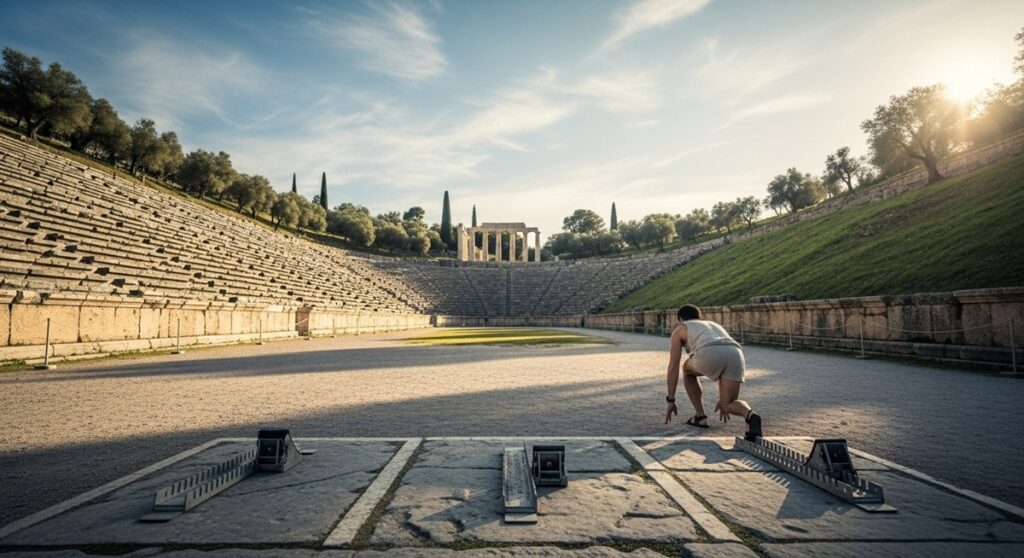
The Sanctuary of Olympia in the Peloponnese is the spiritual heart and undisputed birthplace of Ancient Greek fitness. This site, dedicated to the mighty Zeus, was far more than a simple competitive venue; it was a sacred, consecrated place where athletes swore profound oaths to compete with honor and to observe the demanding, ten-month-long training regimen. The ultimate experience here is to run a lap in the historic Ancient Stadium. Standing at the starting line, which is still perfectly carved in the stone of the track, offers a profound, visceral connection to the 776 B.C. roots of organized sport. Here, the focus naturally shifts from external competition with others to an inner, honest competition with your own personal limits. This act is a powerful, tangible metaphor for setting and achieving your most challenging personal fitness goals. The core lesson of the Olympic spirit—Citius, Altius, Fortius (Faster, Higher, Stronger)—was never just about the fleeting moment of victory; it was about the lifelong, daily pursuit of betterment.
Athens: The Philosophical Training Grounds

In Athens, the ancient gymnasia were inextricably linked to philosophy, mindful movement, and learning. Sites like the Academy (where Plato taught his celebrated lessons) and the Lyceum (where Aristotle established his great school) were intentionally surrounded by running tracks and dedicated palaestrae (wrestling schools). The experience here is both intellectual and physical: one can walk the grounds near the remains of the Lyceum (Peripatos) or the Ancient Agora. Imagine Aristotle lecturing profound lessons as he literally walked with his students (known as the Peripatetics). This destination powerfully encourages mindful movement and demonstrates the essential, natural synergy between physical activity and intellectual stimulation. The core lesson is to immediately integrate brief, thoughtful, mindful walks into your daily schedule—this is the original “walking meeting”—to unlock the synergy between clear movement and profound creativity.
Rhodes: The Tradition of the Javelin and Discus

The beautiful island of Rhodes was famed throughout antiquity for its highly skilled, formidable athletes, particularly in the precision-based throwing events like the javelin and discus. The island’s tradition of cultivating robust, all-around athleticism remains strong, offering a contemporary reflection of Ancient Greek training. The challenge on Rhodes is to engage fully in local outdoor activities. The island’s diverse, dramatic terrain—from challenging coastal roads to dense pine forests and exposed peaks—is absolutely ideal for cycling, running, and exploring. The best modern reflection of Ancient Greek training is utilizing this complex natural environment for comprehensive, truly functional movement. The lesson here is simple: use the natural environment as your playground. Replace complex, costly gym routines with invigorating swimming in the Aegean, challenging hill sprints, or deep-sand running to authentically build primal, resilient functional strength.
Ancient Fitness for the Digital Age: Reclaiming Kalokagathia
The Ancient Greek philosophy offers a simple, yet profoundly radical, solution to the paradox of modern wellness: stop chasing the trend, and start consciously pursuing the whole self. Your own unique path to radiance doesn’t require complex gadgets, confusing supplements, or the latest fleeting Instagram routine. It simply requires a strategic return to the timeless, proven fundamentals of Hellenic wisdom: Embrace Variety through movements that mirror the Pentathlon, consciously rejecting harmful single-focus specialization; practice Mindfulness by training the philosophical mind alongside the vigorous body; integrate Nature by utilizing the sun, air, and earth of the natural environment; and prioritize Community by seeking and sustaining motivation in shared, dedicated effort. By focusing on genuine balance (isorropia) and purposefully integrating mindful movement into your daily philosophical life, you reclaim the true, powerful legacy of Ancient Greek fitness—ultimately achieving kalokagathia, where a beautiful, strong body is the inevitable, external sign of a life well-lived and wisely trained.