Let’s address it directly and then move on.
Lesbos is the birthplace of Sappho, the lyric poet of the seventh century BCE whose writing about love and desire between women gave the island its most internationally recognised association and gave the English language one of its most common words. The word lesbian derives from Lesbos. This is a fact of etymology and literary history, and it has made the island a site of pilgrimage and association that most travel writing handles in one of two ways: either by making it the entire subject of the article, or by treating it as an awkward prelude to be dispatched as quickly as possible.
This article will do neither.
Sappho was one of the greatest lyric poets in the ancient world. Her fragments, and they are mostly fragments, survive with enough power to make the loss of the complete body of work one of the great deprivations in the history of literature. She wrote about desire and beauty and loss with a directness and an emotional precision that no subsequent tradition has fully surpassed. She was of Lesbos. She belongs to Lesbos. All of this is true and worth knowing.
And then there is the island itself.
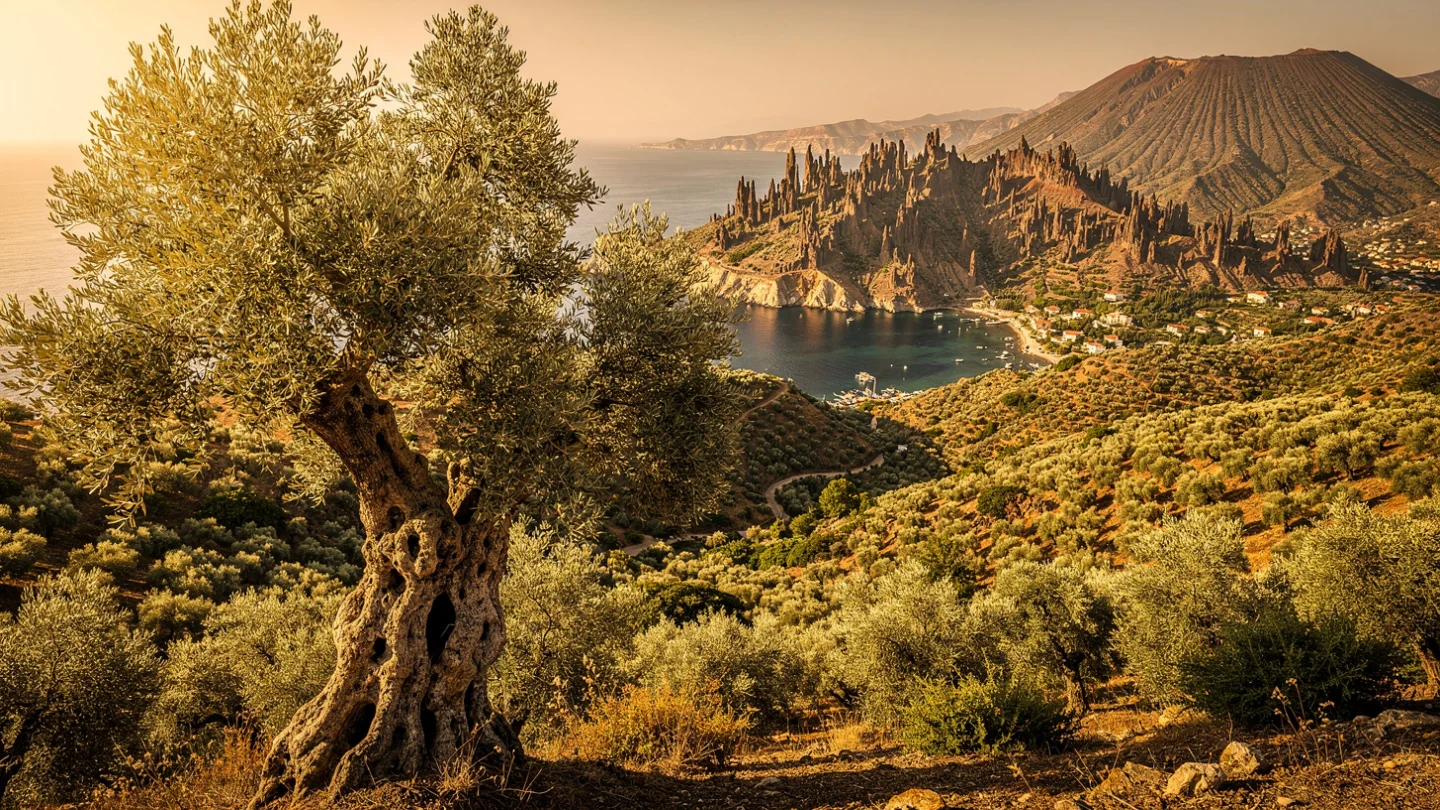
Twenty million years of geological history frozen in a petrified forest that is the second largest in the world. Twelve million olive trees covering forty percent of the island’s surface, more olive trees per capita than anywhere else on earth. The ouzo distilleries of Plomari, founded by merchant families who brought their knowledge from Asia Minor in 1922 and whose secret recipes are still produced in copper stills by the same families a century later. The Ottoman-era waterfront mansions of Mytilene. The Kalloni Gulf wetlands drawing ornithologists from across the continent. Molyvos, the medieval castle town whose preserved stone architecture belongs to the category of places visitors find and cannot explain why they had not heard of them before.
Aristotle came here after Plato died and invented biology. Theophrastus studied the plants while Aristotle studied the animals, and what they produced on this island is the founding literature of the natural sciences. Odysseas Elytis, the Greek Nobel Prize winner in literature, came from a Lesbos family and was later made an honorary citizen of the island.
Lesbos is one of the most extraordinary islands in the Aegean. It has been carrying the weight of its associations too heavily for too long, and the associations have been obscuring the island.
This article is about the island.
The Island at Its Actual Scale
Most visitors to Greece experience islands as small places: the Cycladic model, where the ferry arrives in a port that is also the village that contains most of what the island offers, and two days is sufficient to develop a complete picture.
Lesbos will disabuse you of this model within the first hour of arriving.
The island is 1,632 square kilometres, making it the third largest in Greece after Crete and Euboea. It takes two hours to drive from Mytilene on the eastern coast to Sigri on the western, and that drive passes through four distinct landscapes: the olive-dense eastern coast, the mountainous central spine, the pine-forested interior, and the volcanic western peninsula where the petrified forest emerges from the landscape like something that has no business being visible above ground.
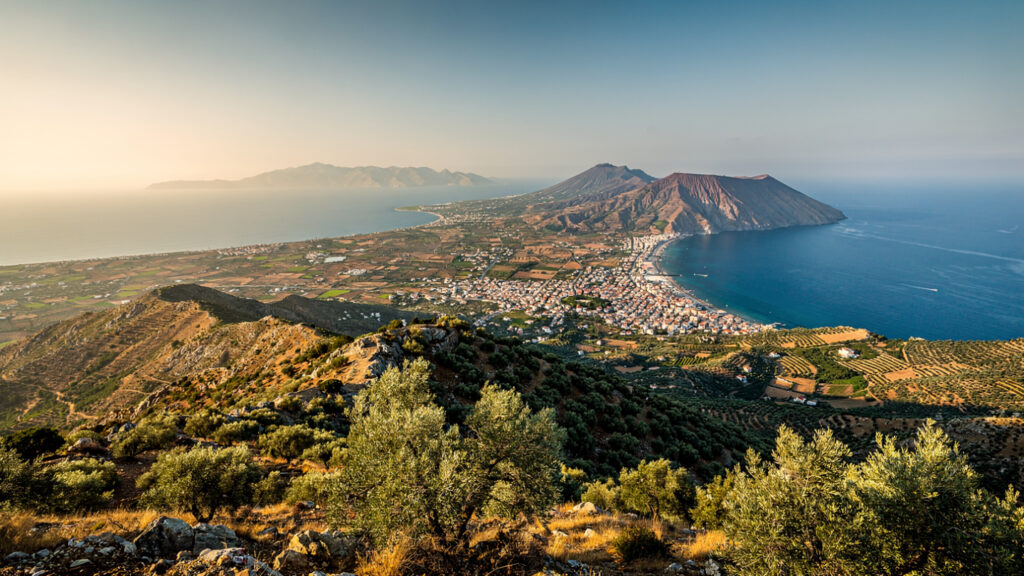
This scale is not simply a logistical fact. It is the island’s defining quality. Lesbos is large enough to sustain independent lives in its different regions, large enough that the village of Molyvos in the north and the village of Plomari in the south are genuinely different places with different characters shaped by their respective geographies and histories, large enough that a week of serious travel does not exhaust it.
You need a car. The bus network serves the locals on local schedules. The island rewards the visitor who treats it as a destination requiring exploration rather than a backdrop requiring a two-night stay.
Twenty Million Years | The Petrified Forest
Here is what happened on the western end of Lesbos twenty million years ago.
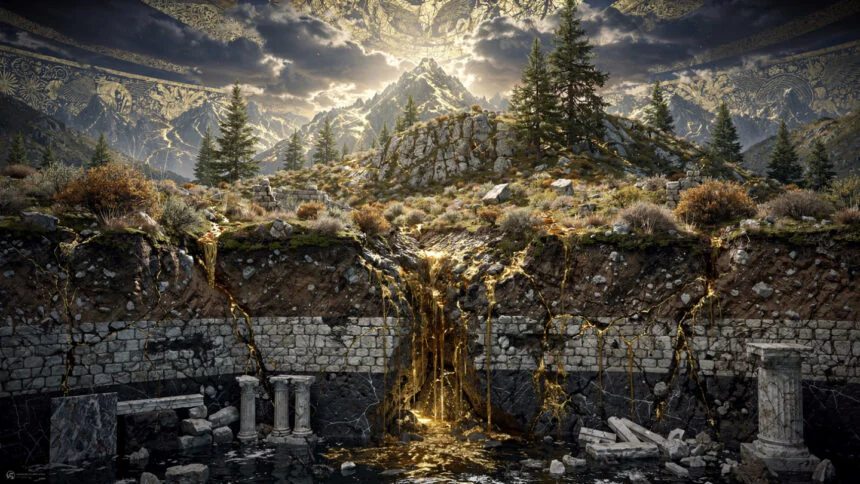
A subtropical forest grew in a climate that was warmer and wetter than the Mediterranean climate that now governs the island. The trees were large, some reaching twenty metres in height, their root systems extending seven metres into the soil. The forest was probably dense, the canopy continuous, the understory populated with plants and animals that no living person has ever seen because they belong to the Miocene epoch rather than the present world.
Then the volcanoes erupted.
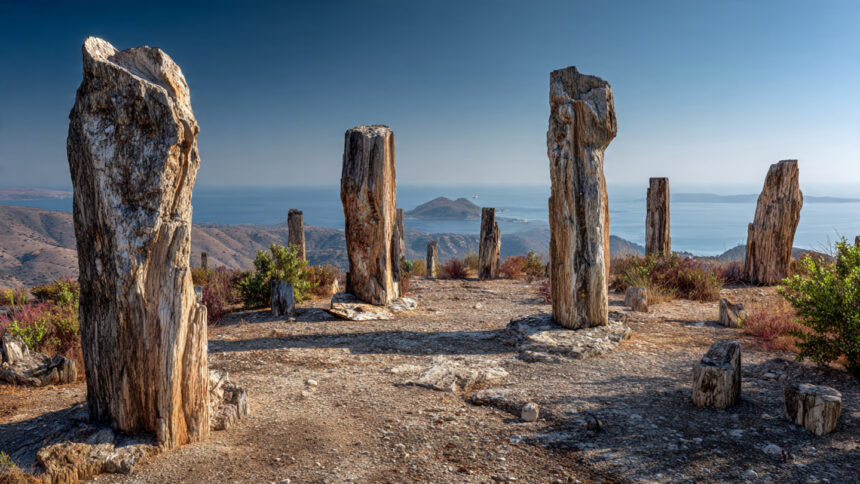
The eruptions, successive and catastrophic, covered the forest in lava, ash, and pyroclastic flows. The trees were buried where they stood, in life position, their trunks vertical, their root systems intact in the ground, the whole structure of the living forest preserved in the moment of its destruction. Over the following millions of years, the silica in the volcanic material replaced the organic matter in the wood cell by cell, transforming the trees from carbon to stone without disrupting the cellular structure that made them recognisably trees.
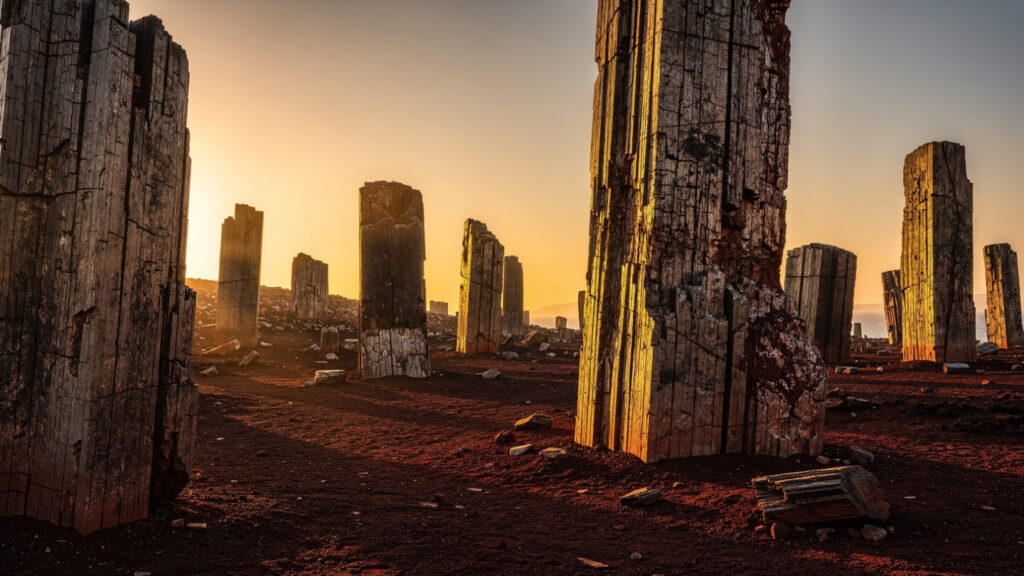
What emerged from the erosion of the overlying material was stone trees standing in a stone landscape: trunks still vertical, still with their original dimensions, the rings of their growth still visible in cross-section, the bark texture preserved in the surface of the silicified wood. The largest standing petrified tree in the site reaches 7.2 metres in height with a circumference of more than 8 metres. Fallen trunks extend twenty metres across the ground. Branches, fruits, and leaves have been found in preservation.
The Lesvos Petrified Forest is the second largest in the world and one of the finest Miocene ecosystem records known to science. The International Union of Geological Sciences has included it in its global list of the most significant geological heritage sites on earth. The UNESCO Global Geopark designation covers the entire island, not just the primary forest site near Sigri, because the volcanic geology that produced the forest is present across the island’s western and central regions.
In 2021, excavations uncovered fossils of large mammals, including horses, cattle, deer, and antelope, dating to approximately two million years ago: animals grazing on slopes that the earlier volcanic catastrophe had subsequently revegetated. The island’s geological record is layered, with the Miocene fossil forest at one stratum and the Pleistocene mammal fauna at another, the whole sequence available to anyone willing to read the exposed rock faces along the western coast.
The Natural History Museum of the Lesvos Petrified Forest in Sigri, a serious institution of genuine scientific standing, provides the context that the outdoor site does not supply through signs alone. Allow two hours for the museum and another two for the main accessible area of the outdoor site.
Walking through the petrified forest in the late afternoon, when the light is horizontal and the stone trunks cast shadows that look like the shadows of living trees at a distance, is one of those experiences where the gap between the familiar and the incomprehensible becomes physically present in a way that no amount of scientific description fully prepares you for.
Where Biology Was Born
After Plato’s death in 347 BCE, Aristotle left Athens and came to Lesbos.
What drew him was specific: the Gulf of Kalloni, a large, shallow, enclosed bay in the centre of the island, rich in marine life and accessible to the systematic observation that Aristotle was developing as a scientific method. He spent time observing, dissecting, categorising, and describing the animal life of the gulf and the surrounding sea with a rigour and a breadth that no previous thinker had attempted. His History of Animals, which covers more than five hundred species, emerged directly from this work on Lesbos.
Theophrastus, his companion and eventual successor at the Lyceum in Athens, studied the plants of the island with the same systematic attention, producing the Enquiry into Plants and the De Causis Plantarum that founded the discipline of botany. His On Stones, which described minerals and their properties from direct observation, contributed directly to the founding of mineralogy as a scientific discipline.
The two friends, working on this island, in the shade of its olive groves and at the edge of its enclosed gulf, produced the intellectual foundations of biology, botany, and mineralogy simultaneously.
The Gulf of Kalloni is still exceptional for wildlife. The wetland complex around the gulf is among the most significant bird habitats in the eastern Mediterranean, and the serious ornithologists who arrive at Lesbos each spring from across Europe come specifically for what the gulf and its surrounding wetlands provide: a reliable site for rare and migratory species that draws professional observers alongside amateurs with sufficient commitment to travel to the northeastern Aegean for a bird.
This is not a niche detail. It is the contemporary expression of the same quality that brought Aristotle here: the island’s ecology is genuinely extraordinary, and the gulf that provided the material for the founding of biology is still providing the conditions for serious natural observation twenty-four centuries later.
Mytilene | The Capital That Surprises Everyone
The traveller who arrives at Mytilene by ferry for the first time expecting a standard Greek island port is going to need a moment.
The waterfront of Mytilene is not the whitewashed Cycladic model. It is a neoclassical and Ottoman cityscape of considerable ambition: mansions of five and six storeys facing the harbour with the architectural confidence of a city that was, in the nineteenth century, a significant commercial centre in the northeastern Aegean, connected to Smyrna and Constantinople and the trading networks of the Ottoman world. The buildings have the scale of urban architecture rather than island architecture. The castle above the city, Byzantine and Genoese and Ottoman in its successive layers, commands a view over both the Gulf of Gera to the south and the strait between the island and the Turkish coast to the east.
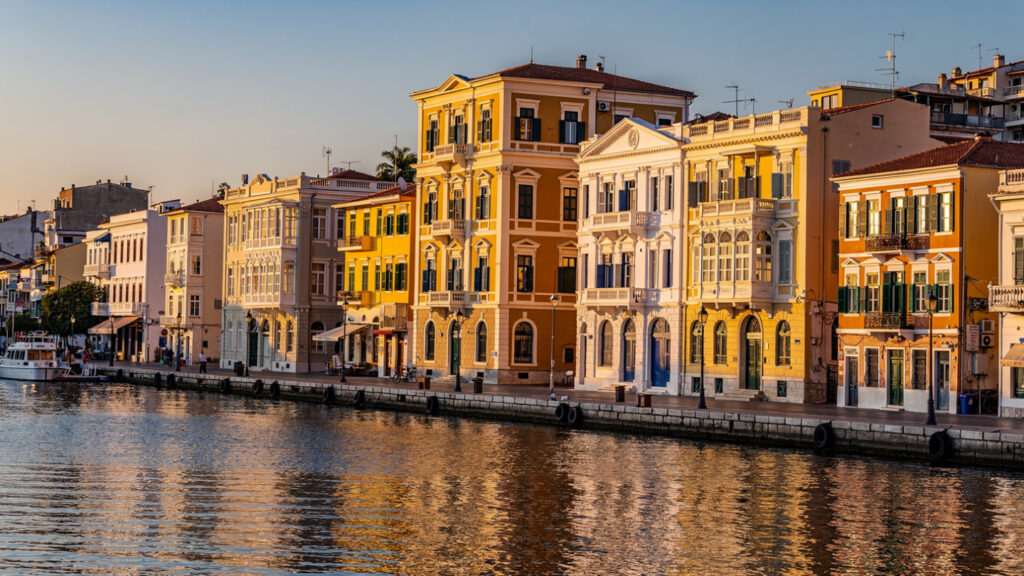
The Turkish coast is visible from Mytilene. On a clear day the buildings of Ayvalık are distinct enough to read as a town rather than simply a landmass across the water. The distance is nine kilometres. This proximity, which shaped the island’s entire history, is not something that appears in most writing about Lesbos, which tends to treat the island as a Greek entity in isolation rather than as a border island whose nearest mainland is not Greek.
The archaeological museum holds material from across the island that establishes Lesbos as a significant site in the broader Aegean world. The Theophilos Museum holds the folk paintings of Theophilos Hatzimihail, whose scenes from Greek mythology, from the War of Independence, and from daily life on Lesbos are painted with a directness and an intensity of colour that made him famous after years of being dismissed as an untrained eccentric. He was brought to wider attention by the poet and art critic Stratis Eleftheriadis, known as Tériade, himself from Lesbos and publisher of the most significant French art journals of the twentieth century. His collection of works by Matisse, Picasso, Léger, Miró, and Chagall is exhibited alongside the Theophilos paintings in the Tériade Museum, making this one of the more unexpected combinations of modern art to be found on a Greek island.
Molyvos | The Castle Town the North Built
Three hours from Mytilene by road, on the northern coast at the foot of a hill crowned by a Genoese castle that has been watching the sea since the fourteenth century, Molyvos is the most visually complete medieval town in the northeastern Aegean.
The streets climb from the harbour steeply, cobbled, with the houses on either side close enough that washing can be hung from window to window across the lane. The stone is the local volcanic stone, grey-brown and substantial, weathered to the colour of a building that has been standing for several centuries and has absorbed the rain and the sun and the winter wind off the sea in proportions that produce something no freshly built structure can replicate.
The castle above the town is Genoese in its primary construction, Byzantine in some of its foundations, reinforced under Ottoman administration: three successive powers whose defensive needs were similar enough that each built on what the previous one had established rather than clearing it and starting again. The view from the castle walls, across the sea toward the Turkish coast and back over the town below and the olive groves extending southward, is a strategic view, which gives it a different quality from the purely aesthetic: the landscape read for its information rather than its beauty, which is also, in the end, beautiful.
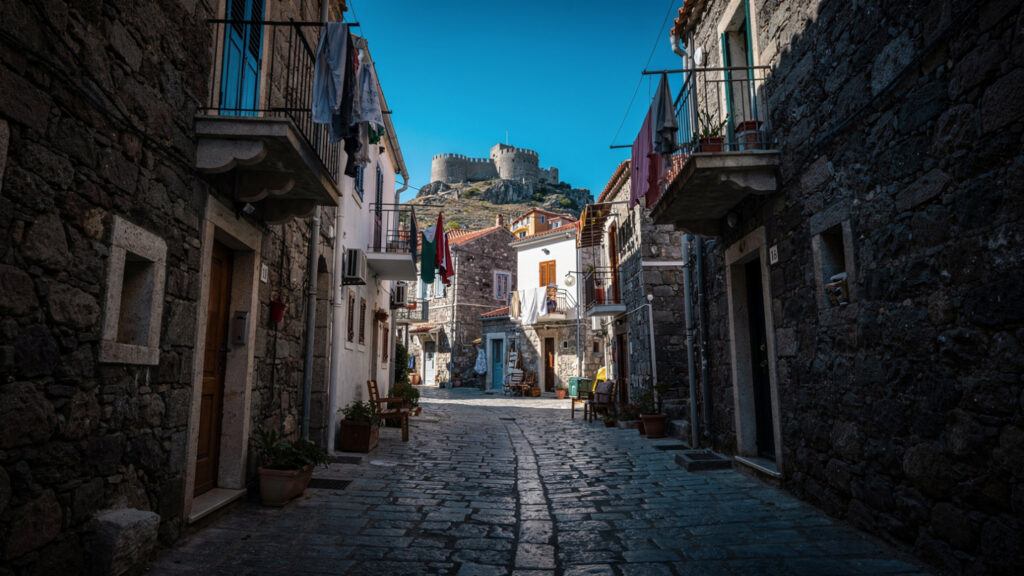
Molyvos has managed its relationship with tourism more successfully than most comparably beautiful Greek medieval towns, maintaining its residential character without becoming either a museum or a resort. The town has the quality of a place that has received visitors for long enough to know how to accommodate them without reorganising itself around their requirements.
Plomari and the Ouzo That Came From Exile
The ouzo of Lesbos is not simply the most famous variety of a Greek spirit. It is the product of a history that the distilleries of Plomari carry in their copper stills and their family recipes.
Ouzo production came to Plomari in its most concentrated and most artisanal form through successive waves of merchant families arriving across the nineteenth and early twentieth centuries, some from the Black Sea trading cities like Odessa, others fleeing Asia Minor after the 1922 catastrophe and the population exchange that followed. These families brought with them not simply a generic knowledge of distillation but recipes, techniques, and proportions of anise and other botanicals refined across generations in the trading cities of the wider Ottoman and Black Sea world.
The result, established in the decades following 1922 and sustained by the families through a century of production, is a concentration of serious ouzo making in a small coastal town that has no equivalent anywhere else in Greece. The Barbayianni distillery, whose bottles appear across Greece in every taverna that takes its spirits seriously, was founded in 1860 and has been operating continuously ever since. The Isidoros Arvanitis distillery, producing Ouzo Plomari, uses copper stills and botanical blends that have not been published in any recipe and will not be. Both offer tours that allow visitors to understand the double distillation process and the way that the island’s climate and botanicals influence the finished spirit.
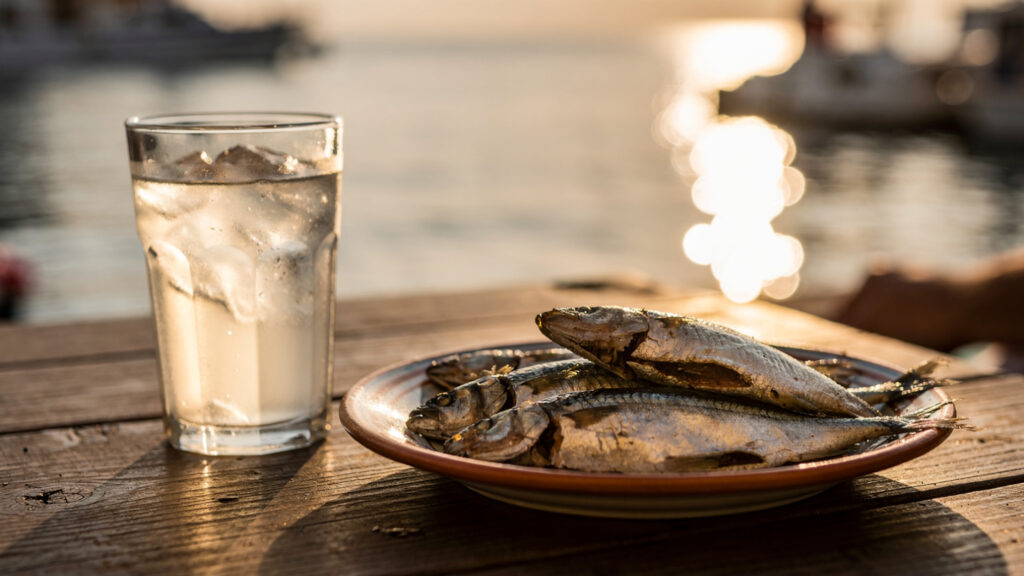
The correct way to encounter Plomari ouzo is the way that the people of Plomari encounter it: in the afternoon, at a table above the harbour, with a glass of ice and a separate glass of cold water for dilution, and a series of small plates arriving alongside it. The ouzo on Lesbos is not an aperitif to be consumed before the food arrives and then set aside. It is the structure of the afternoon: the food and the drink interleaved, neither one complete without the other, the pace set by the conversation rather than the kitchen’s schedule.
This is the social architecture of ouzo drinking that the island produced and that no distillery tour fully conveys. The tour tells you how the spirit is made. The afternoon table in Plomari tells you what it is for.
Twelve Million Olive Trees | The Island’s Actual Economy
The figure is worth repeating because it is genuinely extraordinary.
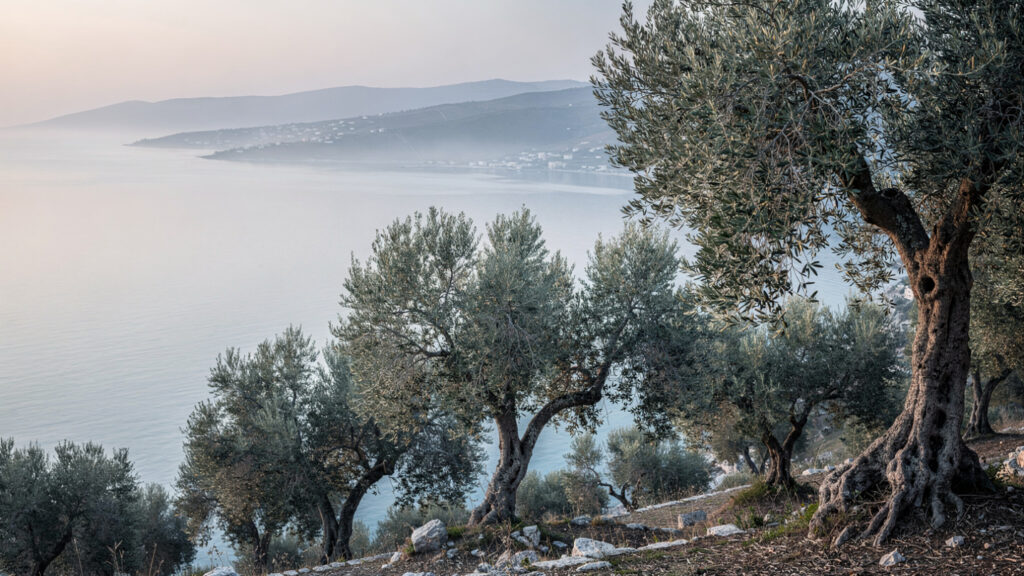
Twelve million olive trees on an island of 85,000 permanent residents. Approximately 122 trees per person. More olive trees per capita than anywhere else on earth, and a coverage of forty percent of the island’s total area that makes the olive grove not simply an agricultural feature of the landscape but the landscape itself.
The trees are old. Not uniformly ancient, but many of them of the age that olive trees reach in landscapes where they have been cultivated continuously rather than cleared and replanted: two hundred years, three hundred years, some older, their trunks twisted in the manner of trees that have been responding to the pressures of soil and wind and dry season for centuries. The grove on Lesbos is not a monoculture in the industrial sense. It is the accumulated agricultural decision-making of dozens of generations of farmers who planted, grafted, tended, and harvested in a landscape that the olive tree had made its own.
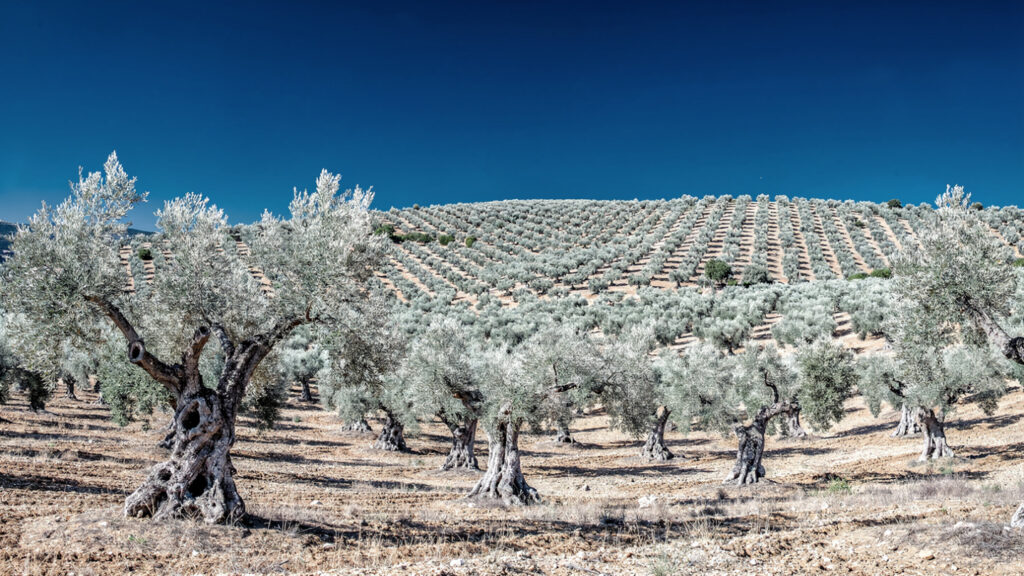
The olive oil produced from these trees, particularly the Agoureleo, the early-harvest oil pressed from green olives before full ripening, has a flavour intensity and a polyphenol content that the later harvests do not match. The taste is peppery, almost bitter at the back of the throat, with a greenness that registers as the flavour of something still alive.
Buying olive oil on Lesbos is not simply a souvenir decision. It is an encounter with the primary agricultural product of an island that has been producing it continuously for millennia, in a landscape that twenty million years of geological history prepared for exactly this crop.
Sappho’s Island | What Remains
Skala Eressos, the beach village at the southwestern corner of the island below the ancient site of Eressos where Sappho was born, is what it is and does not pretend to be otherwise.
It has developed as a destination with a character: bohemian, international, welcoming to the community that comes here in connection with the island’s most famous daughter. The beach is long and sandy and backed by cafes and tavernas that operate with the easy, unhurried quality of places that have found their audience and stopped trying to be something else.
The fragments of Sappho’s writing that survive do what the greatest poetry survives to do: they make you feel, across twenty-seven centuries, the pressure of an emotion in a moment, expressed by someone who understood both the emotion and the language well enough to find the form that preserved the feeling rather than simply describing it.
She was of Lesbos. The island belongs to her in the way that places belong to the great writers who came from them: not exclusively, not in a manner that forecloses the island’s other claims on attention, but genuinely and permanently.
It is also not the whole island.
Practical Notes
Lesbos has an international airport at Mytilene with direct connections to Athens year-round and additional European connections in season. The overnight ferry from Piraeus takes nine to ten hours. A car is essential: the island is too large and the public transport too limited for serious exploration without one.
Spring is the finest season. The Kalloni Gulf birding peaks between late March and mid-May, the olive groves are still green before the summer heat bleaches them, and the wildflowers on the volcanic western peninsula around the petrified forest are at their most varied. September and October offer the olive harvest, beginning in the groves closest to Plomari and extending across the island through November.
Mytilene is the natural base for eastern and central exploration. Molyvos or the smaller villages of the north for anyone focusing on the castle town. Sigri or the area around it for anyone making the petrified forest the primary destination.
The Theophilos and Tériade museums in Mytilene are among the most underappreciated museum experiences in Greece and should not be skipped by anyone interested in modern art encountering folk vision.
Lesbos is the island that carries too many labels for any of them to be the whole truth.
The birthplace of Sappho, yes. The world capital of ouzo. The site of the second largest petrified forest on earth. The island where Aristotle invented biology. The place that produced Odysseas Elytis and Theophilos and Tériade and a wine and olive oil and sardine culture that belongs to the geography of the Kalloni Gulf and to nowhere else.
No island should be asked to carry this much. Lesbos carries it anyway, with the equanimity of a place that has been shaped by more history than most islands receive across ten times the span of time.
The petrified trees in the western landscape are twenty million years old and they are still standing. The olive groves have been producing fruit since before the first settlement we know by name. The ouzo in the copper stills of Plomari carries the memory of Smyrna in its botanical recipe. The poetry on the beach at Skala Eressos is mostly gone but what remains is sufficient.
Come to this island without the expectation of finding one thing, because one thing is not what it offers. Come prepared to find an extraordinary place that has been too busy being itself to spend much time managing what other people think it is.
That quality, more than the petrified forest or the ouzo or the olive groves, is what the island is actually made of.
At Olympus Estate, Wanderlust Greece guides you across the sacred and storied terrain of the Hellenic world. The petrified trees on Lesbos are twenty million years old and they are still standing. Aristotle arrived in 347 BCE and began the systematic observation of the animal world in the shallows of the Kalloni Gulf. The ouzo in the copper stills carries the botanical memory of Smyrna. The fragments of Sappho carry the emotional memory of the seventh century BCE. The olive groves cover forty percent of the island. None of this is what the island is primarily known for outside Greece. Come and find out what it actually is.