




The Greeks were not afraid of the strange.
This is the quality that separates the Greek mythological corpus from most of the world’s other great mythologies, and it is the quality that the better known stories tend to obscure. The Trojan War, the Odyssey, the labors of Heracles: these are the myths that the Western tradition has processed most thoroughly, and in the processing they have been made more familiar, more narratively legible, more aligned with the heroic conventions that later literature found useful. The strangeness has been edited out, or smoothed over, or translated into allegory so efficiently that the original quality of the story, its capacity to produce the unease that genuine strangeness produces, has largely disappeared.
What remains in the stranger myths, the ones that the classical framework mentioned in passing or that survive only in single sources or that the later culture found too uncomfortable to develop, is the quality that the cosmological structure of the ancient Greek world actually required: the fluid boundary between the human and the divine, the animal and the god, the living and the transformed. For the ancient Greek world, metamorphosis was not a literary device or a moral metaphor. It was a physical reality that the cosmos permitted, a consequence of the fact that the gods were not transcendent beings operating from outside the world but forces operating within it, capable of reaching into the physical form of any living thing and changing it.
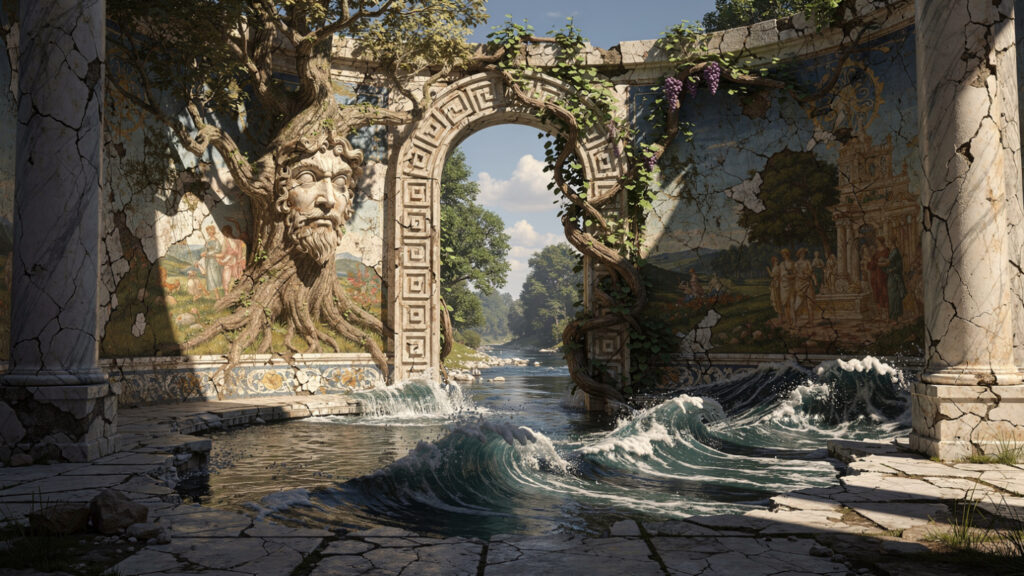
The myths that follow are the ones in which this capacity is most directly expressed, most unsettling in its consequences, and most revealing about what the ancient Greek world actually believed was possible.
Erisichthon and the Hunger That Had No End
The myth of Erisichthon is the Greek tradition’s most precise statement about what happens when a human being violates the order that the gods maintain in the natural world, and it is more disturbing than the more famous myths of divine punishment because the punishment it describes is not external to the violation. It is the violation completing its own logic.
Erisichthon, king of Thessaly, ordered his men to cut down a sacred grove of Demeter to build himself a feasting hall. The grove was ancient and specifically protected: within it stood a great oak, hung with votive offerings and garlands, in which the nymphs who served Demeter had danced. When his men hesitated at the sight of the tree’s divine character, Erisichthon seized the axe himself. The blood that poured from the first cut confirmed what the men had sensed: the tree was inhabited by a dryad, a tree nymph, whose life was bound to the oak’s existence. As she died, she cursed Erisichthon with her last breath, and Demeter honored the curse by sending Limos, the spirit of Famine, to take up residence inside him.
The hunger that Famine installed was not ordinary hunger, which can be satisfied, but the quality of hunger that Famine embodies: appetite that consumes without ever reaching the state of fullness that consumption is supposed to produce. Erisichthon ate through the resources of his household, through the livestock, through the stores that had been accumulated over years. When everything was gone, he sold his daughter Mestra into slavery to buy more food. Mestra, who had been given the gift of shape-shifting by Poseidon, escaped her buyers repeatedly by changing form, but Erisichthon sold her again and again into the same bondage, exhausting the single resource that his own body had provided him.
And then he began to eat himself.
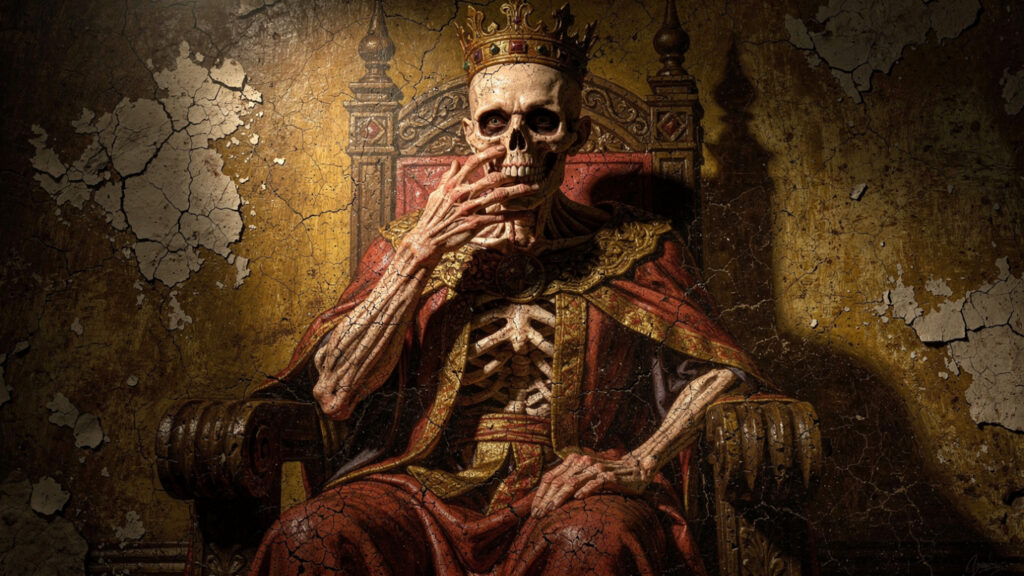
The precise detail of the self-consumption, which Ovid in the Metamorphoses renders with the specificity of a medical observation, is the myth’s final and most important statement. Erisichthon violated the boundary between what human appetites are permitted to consume and what belongs to the divine order. Demeter’s punishment was not simply starvation: it was the installation of a consuming force that eventually had nothing left to consume except the body that had housed the appetite. The violation that began with the wrong thing being consumed ended with the violator being consumed by their own violation.
The myth knows something about appetite that the moralizing summary of it, desecrate nature and face consequences, does not capture. It knows that appetite operating without the restraint that the divine order imposes does not simply become uncomfortable. It becomes self-destructive in the literal sense: the self that is consumed by ungoverned appetite eventually has nothing left but itself to consume.
Salmacis and the Body That Could Not Be Separated
The myth of Hermaphroditus and the nymph Salmacis is the Greek aesthetic’s most direct engagement with the question of what happens when desire is absolute and its object is unwilling, and it resolves the question in the most disturbing way available to a culture that understood the gods as capable of taking physical desire to its literal conclusion.
Hermaphroditus was the child of Hermes and Aphrodite, a youth of extraordinary beauty who had inherited the qualities of both divine parents: the grace of Hermes and the beauty of Aphrodite, combined in a form that the ancient sources describe as making every quality of either parent more powerful for being combined. He was fifteen when he came to the pool of Salmacis in Caria, and the nymph who inhabited the pool saw him and desired him with the quality of desire that the myth distinguishes from ordinary attraction: not simply wanting but the determination to possess permanently, to eliminate the distance between the desirer and the desired that desire normally operates across.
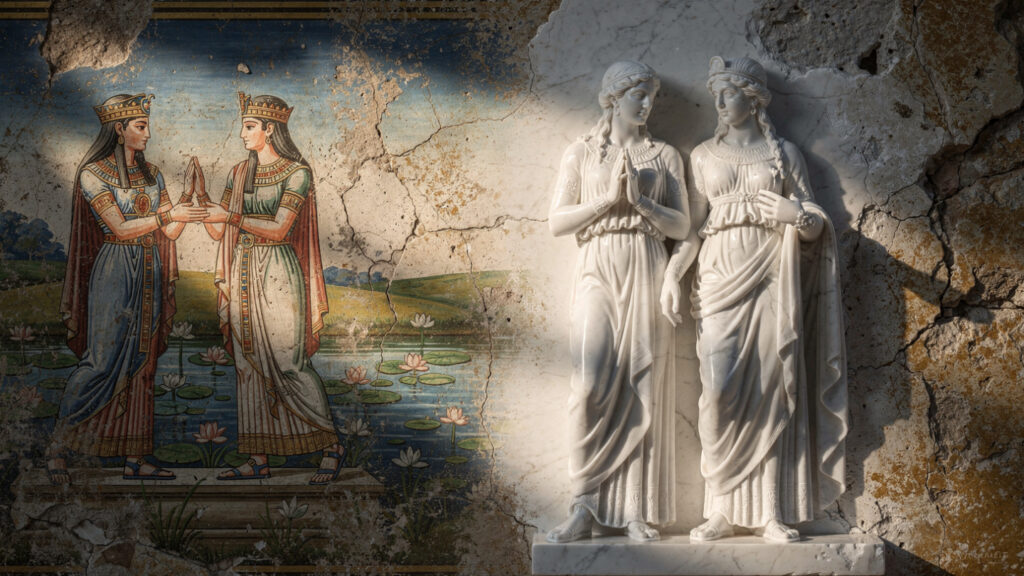
When Hermaphroditus entered the pool, Salmacis wrapped herself around him and called on the gods to make the union permanent. The gods granted the prayer literally: the two bodies fused into a single being, male and female simultaneously, neither fully one nor the other, the boundary between them dissolved by divine action in response to a desire so absolute that it could not accept the existence of a separation between itself and its object.
The myth is not a story about love. Hermaphroditus did not desire Salmacis. The prayer she made was for her satisfaction, not for his, and the body that resulted was not a compromise between two willing participants but the forced and permanent imposition of one person’s desire on another. The Greek tradition did not romanticize this outcome: the ancient sources record that Hermaphroditus, understanding what had been done to him by his own body’s violation, prayed to his parents that any man who bathed in the pool of Salmacis would be similarly transformed, and the prayer was granted. The pool became a site of enfeebling transformation, the physical environment taking on the character of the act that had occurred within it.
The myth carries something that the Greek tradition understood about desire at its most absolute: that the desire to consume the beloved, to eliminate the separation that makes the beloved distinct and therefore desirable, is also the desire to destroy the beloved as a distinct being. Salmacis wanted Hermaphroditus so completely that she wanted there to be no Hermaphroditus separate from herself. The gods gave her what she asked for, and what she asked for was also the elimination of the thing she had wanted.
Lycurgus and the Madness That Came From Wine
Dionysus was the most recently arrived of the Olympians and the one whose cult encountered the most resistance, because what Dionysus embodied, the dissolution of individual identity in collective ecstatic experience, was exactly what the organizing structures of the polis and the household were designed to prevent.
King Lycurgus of the Edones, in Thrace, drove Dionysus and his followers out of his kingdom by force. The response of the god was not the straightforward divine punishment of a Zeus thunderbolt or a Poseidon earthquake. It was a punishment designed to use the faculties that Lycurgus had deployed against the god against himself. Dionysus drove Lycurgus mad.
In the madness, Lycurgus attacked the grapevines of his kingdom with an axe, believing he was clearing away the god’s corrupting influence. When his servants tried to stop him, he killed his son Dryas, mistaking the boy for a vine. In some versions of the myth, he continued the destruction by dismembering himself, his perception of reality so thoroughly disorganized by the divine madness that the basic distinctions between his own body and the plant he was attacking had ceased to be available to him.
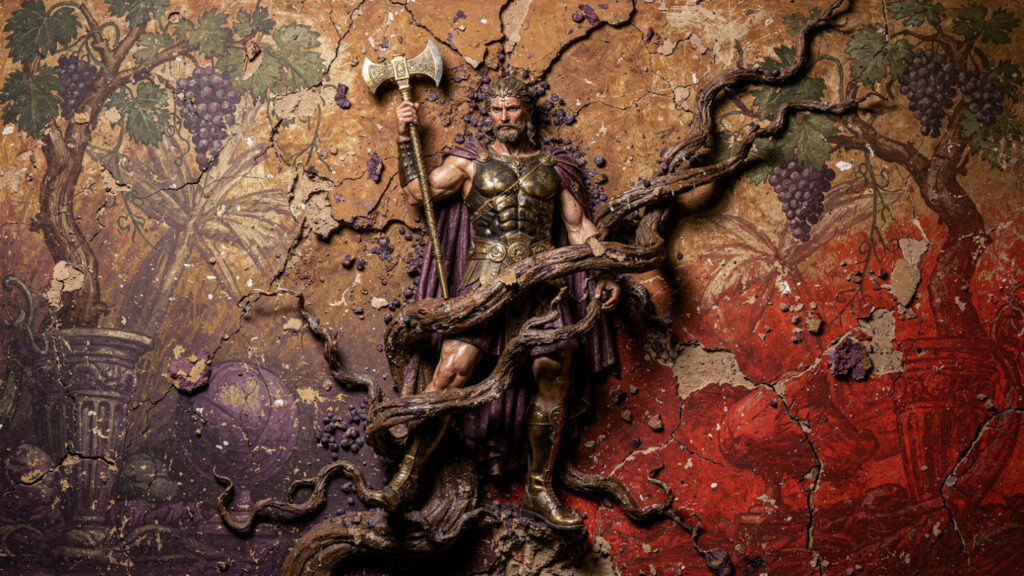
The land of the Edones became barren in response to the king’s actions, and an oracle told the people that the land would remain barren until Lycurgus was killed. They tore him apart with wild horses.
The myth of Lycurgus is the Greek tradition’s account of what happens when the individual will attempts to close itself off from the forces that the cosmos requires to flow through human experience. Dionysus does not represent simply wine or even simply intoxication. He represents the dissolution of the boundaries that the individual ego maintains between itself and the larger forces of life, the quality of experience in which the self is temporarily suspended and something larger than the self is permitted to move through it. Lycurgus, who refused this movement and tried to contain it by violence, had it imposed on him from within, as a disorder of perception so complete that he could not distinguish his son from a vine.
The barrenness of the land that followed the king’s actions was the agricultural expression of the same principle: the land that had excluded Dionysus, the god whose domain included the fertility of the vine and the transformation of the grape, was the land that could not produce.
Myrrha and the Desire She Did Not Choose
The myth of Myrrha is the Greek culture’s most uncomfortable examination of the relationship between divine punishment and human experience, and it has remained peripheral to the mainstream tradition partly because of the nature of the punishment it describes and partly because the myth refuses to assign simple guilt.
Myrrha, the daughter of the king of Cyprus, was afflicted by Aphrodite with a desire for her own father. The versions of the myth disagree about what caused the goddess’s anger: some say Myrrha’s mother had boasted of her daughter’s beauty as exceeding Aphrodite’s own, a transgression the goddess consistently punished, others locate the offense elsewhere. What the myth is consistent about is that the desire Myrrha experienced was not her own in origin. It was installed in her by divine action, as Salmacis’s desire was a feature of her nature, but where Salmacis’s desire was her own even if its consequences were destructive, Myrrha’s desire was imposed on her from outside, against her will, as a punishment for a transgression she may not have committed.
Myrrha, understanding what had happened to her and horrified by it, attempted to kill herself. Her nurse intervened and persuaded her to act on the desire through deception, gaining access to her father’s bed over several nights of darkness before he discovered who she was. When her father discovered the truth, he pursued her with a sword. She fled across the world, and when she was exhausted and beyond human endurance, she prayed to the gods to remove her from both the living and the dead. They transformed her into a myrrh tree, her tears becoming the resin that the myrrh tree weeps.
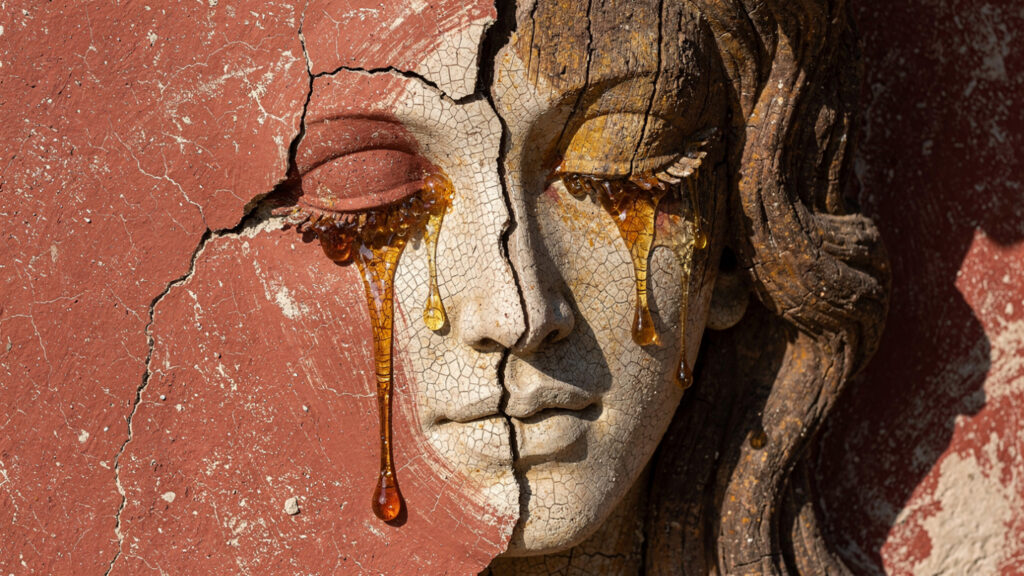
From the myrrh tree, after ten months, Adonis was born, the most beautiful mortal who ever lived, the beloved of Aphrodite and Persephone, the figure whose death and mourning structured one of the most important ritual cycles in the ancient Mediterranean world.
The myth carries a theological argument that the tradition found difficult to incorporate into its standard frameworks of divine justice and human responsibility. Myrrha was punished for a crime she did not commit, afflicted with a desire she did not choose, driven to acts by the affliction that she found abhorrent, and transformed into a tree that wept the substance that the ancient world associated with embalming and mourning. The child born from her transformed body became the figure whose violent death organized one of the most significant mourning rituals in the ancient religious calendar. The entire sequence of events that produced Adonis, and through him the ritual cycle that marked the end of the growing season across the ancient Mediterranean, was set in motion by a divine punishment that the myth itself presents as unjust.
The Birth of Hephaestus | The God Who Fell
The birth of Hephaestus exists in two versions in the ancient sources, and the versions contradict each other in the detail that matters most: why he was thrown from Olympus.
In the first version, preserved in the Iliad, Hephaestus was thrown from Olympus by Zeus in the course of an argument between Zeus and Hera, when Hephaestus intervened on his mother’s side and Zeus hurled him out by his foot. He fell for an entire day and landed on the island of Lemnos, where the Sintians, the people of the island, found him and cared for him.
In the second version, also ancient and equally preserved, Hera threw Hephaestus from Olympus herself, at his birth, because she was horrified by the physical deformity he displayed when he arrived. This version connects his birth to Hera’s attempt to produce a child without Zeus, in parallel to Zeus’s solo production of Athena, and places his deformity as the failure of the parthenogenetic birth: the child produced without the divine male was incomplete in the way that the myth marks as the consequence of unilateral divine creation.
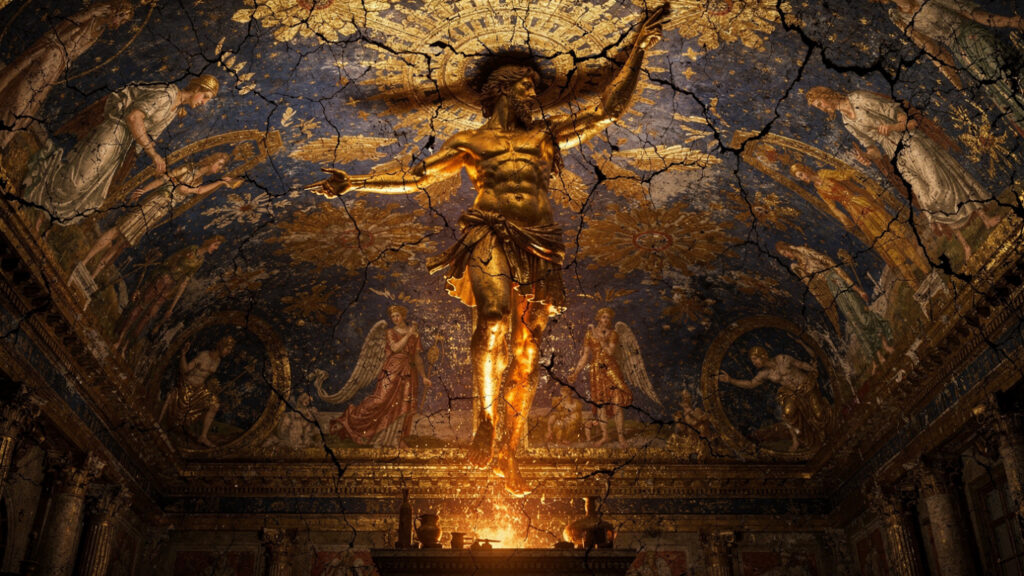
The two versions are not simply contradictory. They encode different versions of the same myth’s central claim: that Hephaestus was excluded from the divine community that he should have been born into, thrown out by the family that produced him because he did not conform to the standard of divine perfection that Olympus maintained. His response to this exclusion was the forge: the only Olympian whose work involved physical labor, the only Olympian who made things with his hands in the way that mortals made things, Hephaestus became the god of craft precisely because he had been expelled from the world where craft was unnecessary and beauty was automatically given.
The throne of Hera, which Hephaestus crafted and sent to Olympus as a gift to his mother, was the instrument of his revenge: when Hera sat in it, invisible chains held her fast, and no other god or mortal could release her. The Olympians were unable to persuade him to return and free her until Dionysus, who understood the relationship between intoxication and the release of what has been held too tightly, brought Hephaestus back to Olympus drunk on wine and guided him to release the chains.
The myth of Hephaestus’s birth and return is the Greek tradition’s account of what the excluded and the deformed can produce when the exclusion becomes the condition of a unique and irreplaceable capability. The smith god who was thrown from heaven because he was not beautiful enough became the craftsman whose work was the most beautiful in existence, the maker of the armor of Achilles, the chains that held Ares and Aphrodite, the automata of living gold that served as his attendants, the golden palaces of Olympus itself.
Perdix and the Jealousy of Genius
The story of Perdix, the nephew of Daedalus, is one of the shortest and most precisely constructed moral narratives in the Greek mythological tradition, and its brevity does not diminish what it says about the failure of intelligence operating without the governance of character.
Daedalus was the greatest craftsman in the ancient world, the inventor of the living wooden cow that Pasiphae used to consummate her desire for Poseidon’s bull, the builder of the Labyrinth, the maker of wings. He took his sister’s son Perdix as an apprentice, and the boy’s capability developed with a speed that the culture consistently describes as prodigious. At twelve years old, Perdix had already observed the backbone of a fish and used it to invent the saw, one of the foundational tools of woodworking. He had also invented the compass, the instrument for drawing circles.
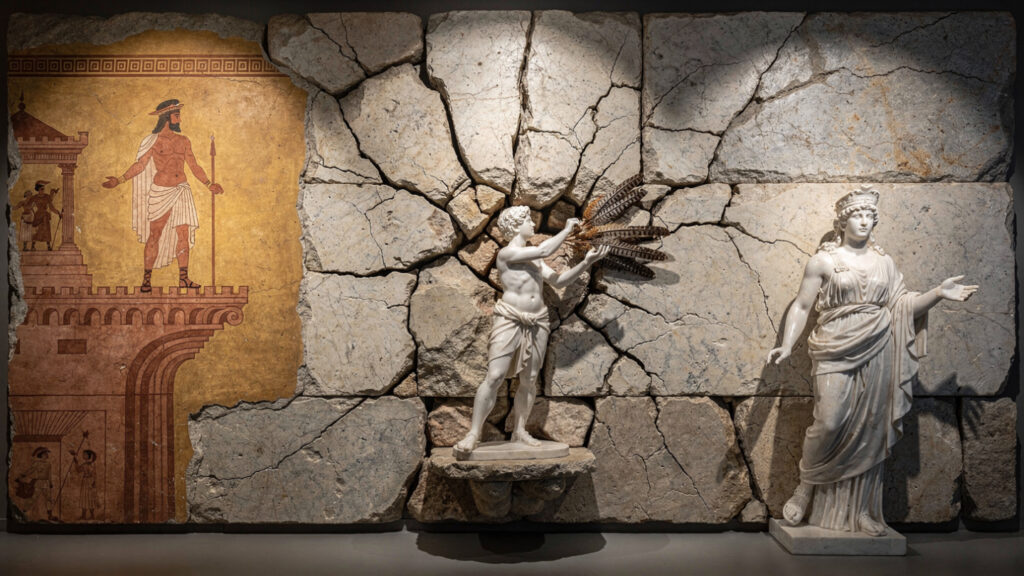
Daedalus threw him from the Acropolis.
The reason the tradition gives is envy: Daedalus saw in the boy’s development the evidence that the student would surpass the teacher, and the prospect of being surpassed was intolerable to a man who had built his entire identity on the quality of being unsurpassed. He threw Perdix from the height of the citadel and told people the boy had fallen accidentally.
Athena, the goddess who governed craft and who had her sanctuary on the Acropolis from which Perdix was thrown, saw the act. She transformed Perdix into a partridge in mid-fall, saving his life at the cost of his human form. The partridge, the ancient sources note, never builds its nest in trees or on high places: it makes its home close to the ground, in the memory of the fall that transformed it.
Daedalus was convicted of the murder, despite the cover story, and exiled from Athens. He went to Crete, where he put his genius to the service of a king who would eventually imprison him in the Labyrinth he had built, and his son would die in the sky above the sea that his father’s invention had made him capable of reaching.
The myth is an account of the destruction that genius without character produces. Daedalus had the intelligence to build anything the ancient world required of him. He did not have the character to exist in the presence of someone who might eventually do it better.
The Pool of Salmacis and What Became of It
The ancient world took the myth of Salmacis and Hermaphroditus seriously enough to attempt to identify the pool.
Strabo, the first-century BCE geographer, locates it at Halicarnassus, the city on the Carian coast of Asia Minor, and records that the local tradition maintained the pool as a site whose waters produced the quality of character that the myth described: a softening of the specifically male qualities of aggression and physical dominance that the Greek world associated with the masculine norm. The pool’s water was said to produce this effect on those who drank from it, and the ancient commentators offered various explanations for the phenomenon, ranging from the specifically divine action of the myth to the more naturalistic explanation that certain mineral contents in the water could affect behavior.

The attempt to locate Salmacis’s pool geographically is evidence that the ancient world did not treat the transformation myth as purely allegorical. The physical location mattered because the physical consequence was understood as real: the pool that had been the site of the transformation retained the character of the transformation, and the effect on those who encountered it was continuous rather than historical.
This literalism is the quality of Greek mythology that the modern tradition most consistently misses. When the ancient sources describe the water of a pool as productive of effects on those who drink it, they are not speaking metaphorically about the cultural associations of the location. They are describing what they believed to be a physical reality, embedded in the geography of the ancient world, persisting in the landscape as the consequence of a divine action that had altered the nature of that place permanently.
Echo and What Was Left
The myth of Echo is not primarily about Narcissus. Narcissus receives more of the tradition’s attention because his fate is more spectacular, but Echo’s fate is more philosophically precise, and the specificity of what the myth says about her is the specificity of a genuinely original insight about language and identity and what remains when both are taken away.
Echo was a nymph who had aided Zeus’s infidelities by engaging Hera in conversation, holding the goddess’s attention long enough for Zeus to escape detection. When Hera discovered the deception, she punished Echo with the punishment that most exactly reversed the capability that had enabled the crime: she removed Echo’s ability to initiate speech, leaving only the ability to repeat the last words of whatever was said to her.
The punishment was not silence. It was enforced repetition without origination: the ability to return language without the ability to generate it, the capacity for response without the capacity for address. Echo could hear everything but could say nothing that had not already been said by someone else.
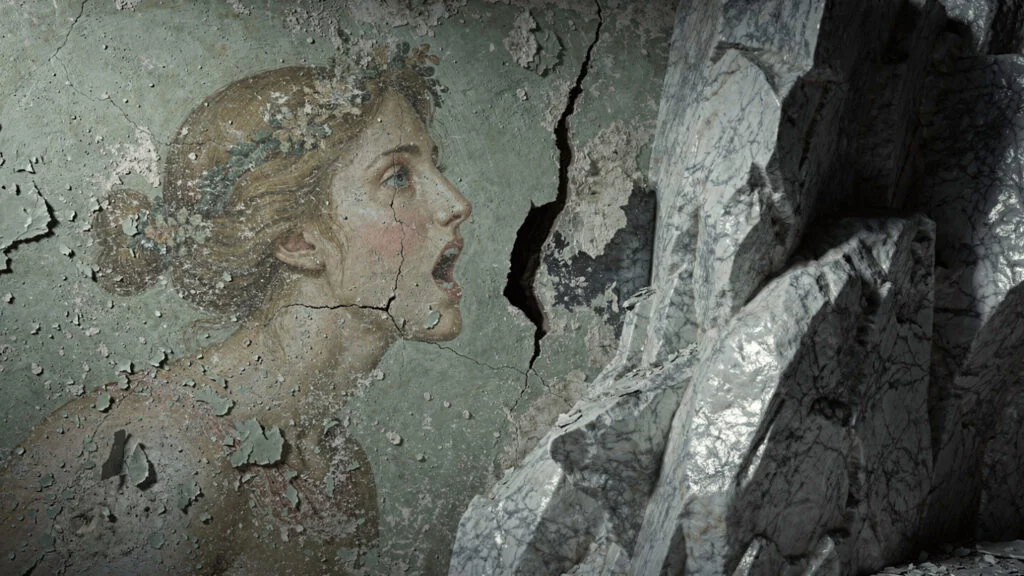
When she encountered Narcissus and desired him, the form her desire was required to take was the form of his own words returned to him. When he said is anyone here, she could only answer here. When he said come, she could only answer come. She was structurally incapable of saying anything to him that was not already him, and he, who was himself incapable of desiring anything outside himself, heard in her repetitions only the echo of his own voice, which he found less interesting than his own reflection.
Echo faded to nothing but a sound. Narcissus wasted away beside his reflection, reaching for the face in the water that was his own face reaching back.
The two myths are the same myth told in complementary registers. Narcissus had a self that he refused to extend beyond itself. Echo had a self that had been reduced to nothing but the extension of others. The pool where they met was the surface on which Narcissus found the only thing he had ever been able to love, and the rocks where Echo faded were the surface on which the only voice she had left continued to repeat what others said.
Both of them became, in the end, what they had been all along: the one a reflection, the other a reflection of reflections.
What the Strange Myths Know
The myths in this article are not the myths that the tradition has processed most thoroughly, and their relative obscurity is not evidence of their lesser importance. It is evidence of their greater difficulty.
The familiar myths, the Trojan War, the Odyssey, the birth of Athena, have been worked and reworked into forms that the culture finds useful: they have been translated into allegories of leadership and wisdom and the consequences of pride. The strange myths resist this processing. Erisichthon cannot be easily translated into a warning about environmental responsibility without losing the quality of the self-consumption that makes the myth what it is. Myrrha cannot be translated into a lesson about the dangers of transgression without the myth protesting that the transgression was not her choice. Salmacis cannot be translated into a warning about obsessive love without the myth insisting that what was lost was a person’s right to their own body.
These myths know something about the Greek cosmological world that the more familiar myths express less directly: that the gods were not simply moral authorities dispensing rewards and punishments in proportion to virtue and transgression, but forces operating within the physical world whose actions produced consequences that did not always map onto any available moral framework.
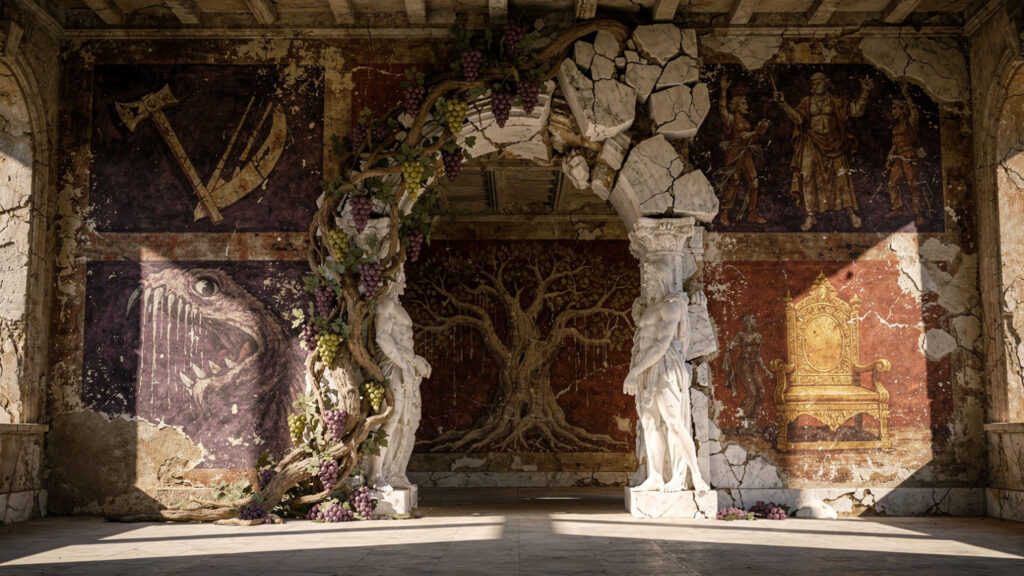
Myrrha’s punishment was unjust. Echo’s punishment was disproportionate. Perdix’s transformation was the response to a crime committed against him, not by him. The Greek tradition preserved these stories because the world they described was the world the ancient Greeks actually lived in: a world in which divine action was real, immediate, and not always comprehensible in the terms that human justice provided.
The strangeness of these myths is the strangeness of a world that had not yet decided that the cosmos owed its inhabitants an explanation.
At Olympus Estate, Mythic Essays moves through the deeper currents of the Greek tradition, from the hunger that consumed Erisichthon to the voice that was all that remained of Echo. The strange myths carry the tradition’s most honest account of a world in which the gods were not moral authorities but forces, and in which transformation was not metaphor but possibility.