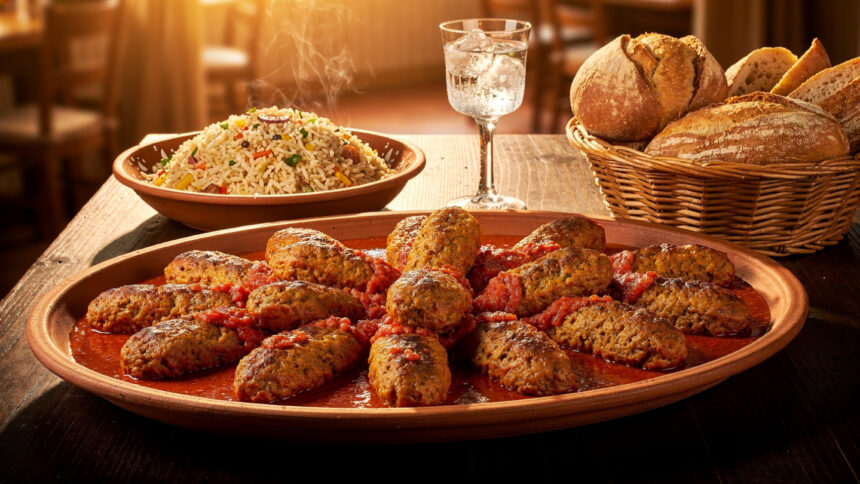





The keftedes are not the same dish as the soutzoukakia.
This distinction matters because the two are consistently confused in the international reception of Greek cuisine, and the confusion erases the character of each. The soutzoukakia, developed in the dedicated article in this collection, are the oval meatballs of Smyrna, simmered in tomato and ouzo sauce, carrying the Anatolian spice palette of cumin and the history of the 1922 population exchange across the Aegean. They are a winter dish, heavy, sauce-rich, served over pasta or rice, carrying the weight of a historical displacement in every bite.
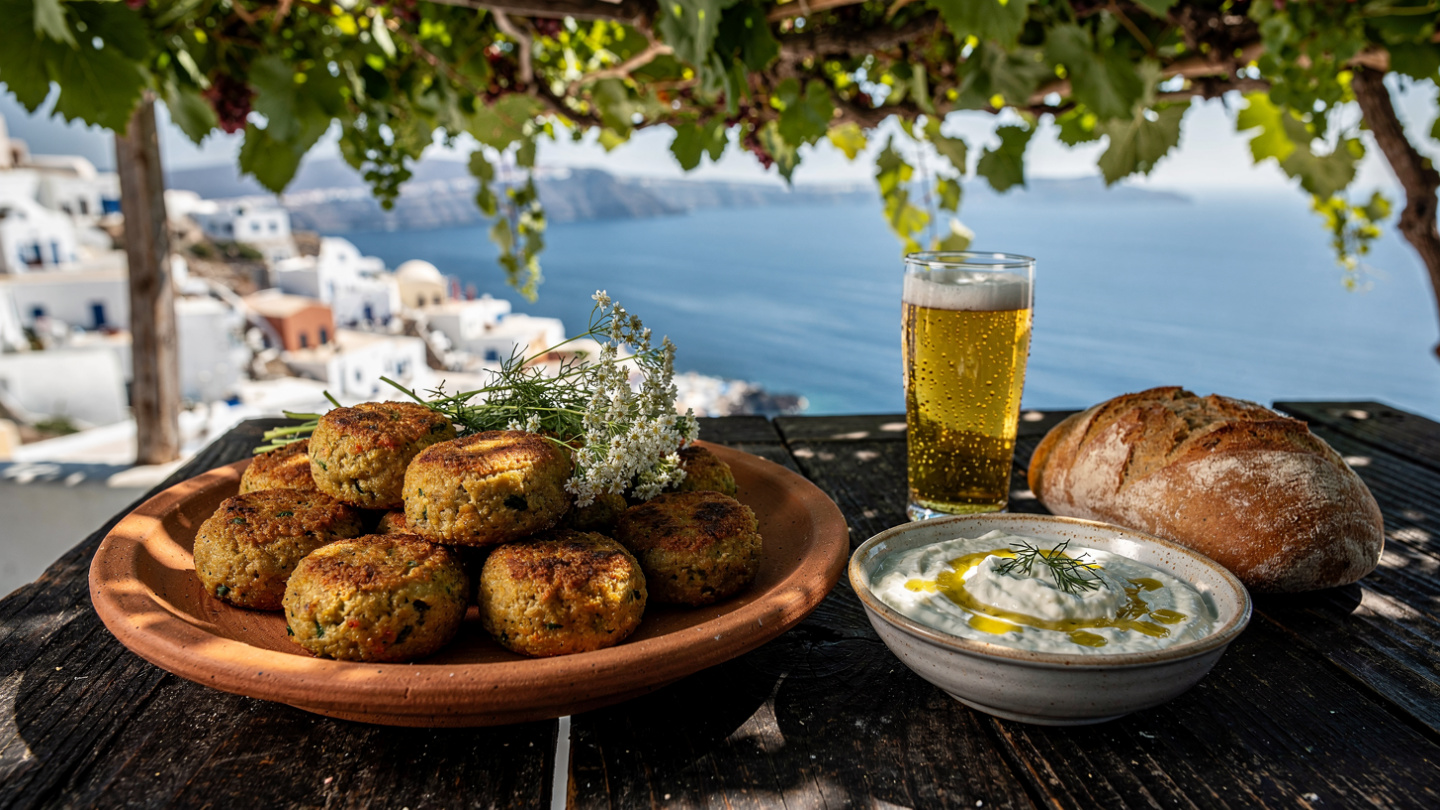
The keftedes are the summer dish. Round rather than oval, fried rather than simmered, served without sauce and eaten warm or at room temperature with tzatziki alongside, they belong to the Greek table’s most casual register: the meze plate, the Sunday lunch in the garden, the taverna table under the vine with cold beer and a simple salad. They are the meatball that the Greek summer produces when the mint is fresh in the kitchen garden and the oregano is dry on the hillside and the onion has been grated into the mixture that has been sitting in the refrigerator since the morning.
The character of the keftedes comes from two herbs: fresh mint and dried oregano. The mint, specifically diosmos, the spearmint of the Greek kitchen rather than the peppermint of the tea tradition, is the herb that distinguishes the Greek meatball from every other meatball tradition in the Mediterranean. It is present and it is fresh and it lifts the richness of the meat in the way that only mint can, providing a coolness that the fried exterior and the fatty interior require as a counterpoint. The dried oregano provides depth and the aromatic weight that the Greek table associates with meat preparations. Together they produce a flavor that is immediately recognizable as specifically Greek rather than as generically Mediterranean.
The Mixture and What It Requires
The keftedes mixture is the mixture that Greek households have been making since before any written record of the recipe exists, and its character has been stable across the regions and the generations because the character comes from the quality of the ingredients rather than from the complexity of the technique.
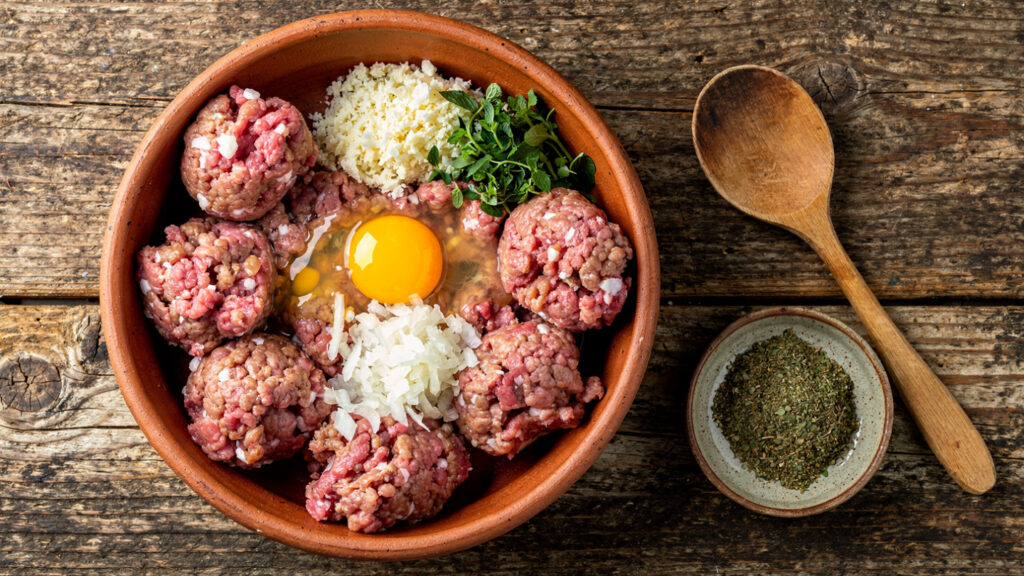
Ground beef or a mixture of beef and pork, in the ratio of two parts beef to one part pork, is the standard base: the beef provides the flavor and the pork provides the fat that keeps the meatball tender through the frying. A proportion of stale bread soaked in water or milk and then squeezed out is the element that most directly determines the keftedes’ texture: the soaked bread, incorporated into the mixture, carries moisture into the interior of the meatball that the frying process would otherwise drive out, and it lightens the density of a pure meat mixture into something more yielding in the mouth.
Grated onion rather than chopped onion is the correct preparation, for the same reason it is the correct preparation in the soutzoukakia: the grated onion releases its liquid into the mixture and distributes its flavor evenly through the mass rather than creating pockets of concentrated onion. The garlic, pressed or very finely minced, is present but not dominant: the herbs carry the flavor, and the garlic provides the underlying aromatic support that the herbs build on.
The egg binds the mixture and contributes to the texture. The fresh mint, chopped fine enough to distribute through the mixture without visible green strands in the cooked meatball, is the distinguishing ingredient. The dried oregano is crumbled between the fingers before it is added, to release the essential oils that the drying has concentrated. Salt, black pepper, and a small quantity of olive oil complete the mixture.
The rest is the most important step: the keftedes mixture must rest in the refrigerator for at least one hour, preferably three, before shaping and frying. The resting time allows the salt to penetrate the proteins and begin the mild curing effect that firms the mixture and allows it to hold its shape during frying without the egg alone providing the structural support. It also allows the mint and the oregano to move through the fat of the mixture in a way that produces a more evenly distributed and more deeply developed flavor than the freshly mixed preparation provides.
The Frying and Its Logic
The keftedes are fried rather than baked, and the distinction is not merely a cooking method preference. The frying produces the exterior that the keftedes require: a crust of Maillard-reacted protein that provides the textural contrast to the tender interior, that seals the moisture inside during the remaining cooking time, and that develops the flavor of browned meat that the oven cannot replicate at the same surface temperature.
The oil should be olive oil, or at minimum a mixture of olive oil and a neutral oil: the olive oil contributes its flavor to the exterior of the keftedes in a way that the neutral oil does not, and the keftedes that have been fried in pure sunflower oil taste different from those fried in olive oil in a way that is immediately perceptible. The oil should be deep enough to come halfway up the meatball, hot enough to produce immediate sizzling contact when the meatball is placed in it, and the meatball should not be moved until the crust on the contact side is fully formed: the premature movement of a meatball that has not yet developed its crust will cause it to tear.
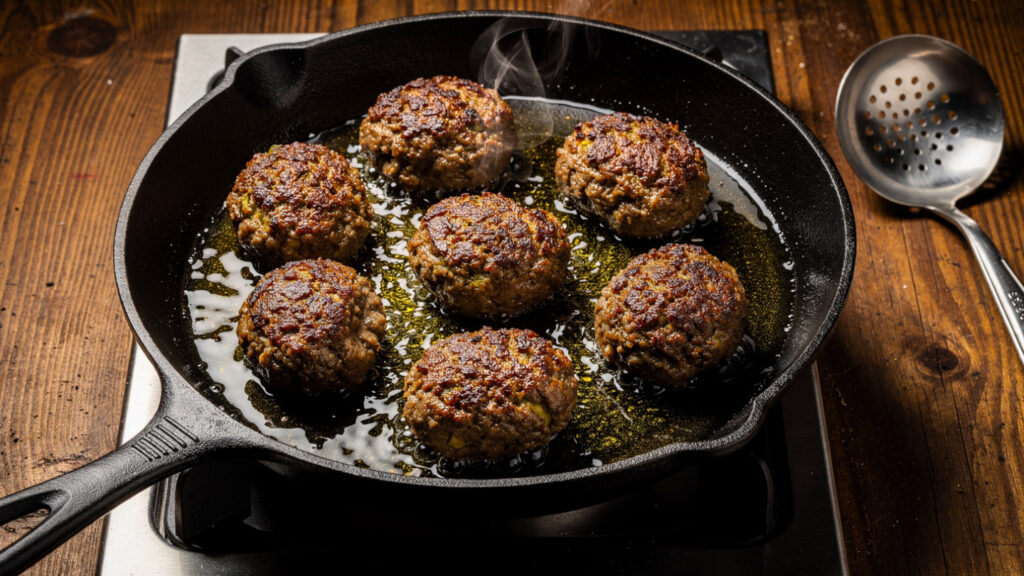
The size of the keftedes, approximately the size of a large walnut, is the size that the frying time and the serving context require: large enough to have a meaningful interior, small enough to cook through in the frying without the exterior burning before the center is done, and small enough to eat in one bite or two bites at the meze table without requiring a knife.
The temperature of service is the final element of the keftedes’ character that distinguishes them from most other meat preparations: they are equally good hot from the pan, warm after resting for half an hour, and at room temperature after two hours. The keftedes that have been made in the morning for the Sunday lunch, that have been sitting on the plate under the vine since noon, and that are eaten at the table in the late afternoon when the meat has cooled to the ambient temperature of the summer afternoon, are not a worse version of the keftedes than the ones eaten immediately from the pan. They are a different and equally valid version.
Tzatziki as the Essential Partner
The keftedes and the tzatziki are the pairing that the Greek summer table has established as its most consistent, and the pairing works because the tzatziki provides what the keftedes lack and lacks what the keftedes provide.
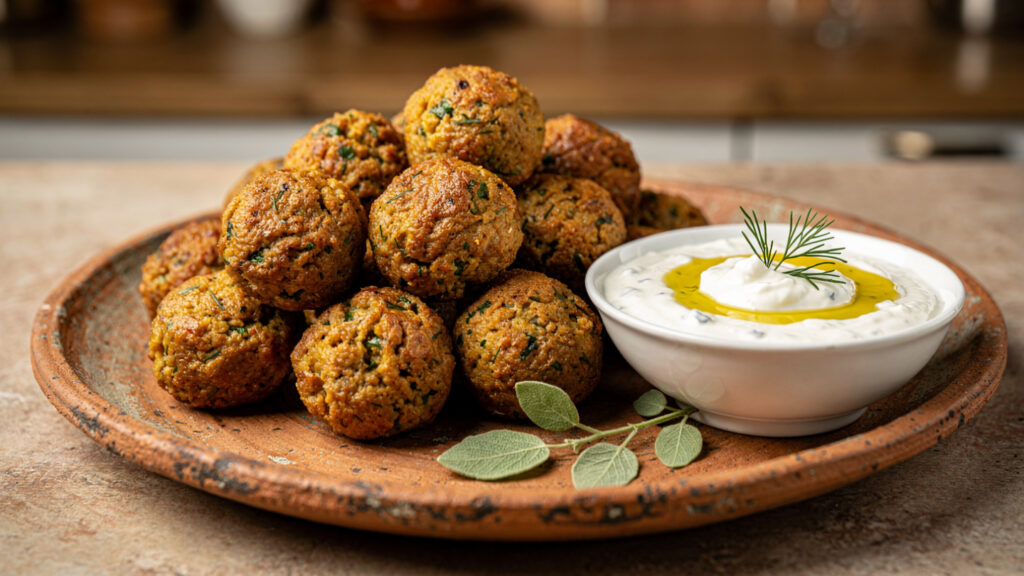
The keftedes are hot, fatty, herbed, and salty. The tzatziki is cold, dairy-based, cucumber-fresh, and acidic. The combination of the two in the same bite produces the balance that neither achieves alone: the richness of the fried meat moderated by the cool yogurt, the saltiness of the meatball cutting through the mild dairy, the mint of the keftedes echoing in the dill or mint of the tzatziki, and the lemon or vinegar of the tzatziki providing the acid that the fried meat requires to feel complete rather than heavy.
The tzatziki recipe in the Greek yogurt article of this collection gives the preparation in full. For the keftedes, the tzatziki should be made from full-fat strained yogurt, drained cucumber, olive oil, garlic, and fresh dill or dried mint, in the proportions that the recipe specifies, and refrigerated for at least an hour before serving so that the flavors have integrated and the texture has set.
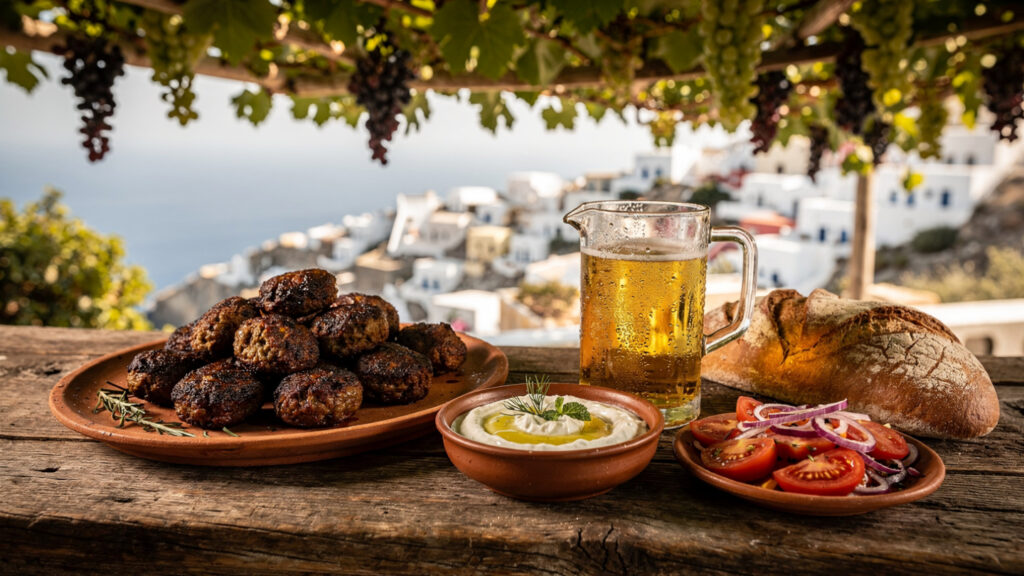
The keftedes on the plate beside the tzatziki, with bread and a simple tomato salad and perhaps a cold beer or a glass of retsina, is the Greek summer lunch in its most fundamental expression: the food that the table produces when the ingredients are fresh, the technique is honest, and the company is good.
Olympus Estate · Food & Seasonal Life
Keftedes · Greek Fried Meatballs with Fresh Mint and Oregano
The summer meatball of the Greek table. Round, fried, herb-scented, eaten warm or at room temperature beside tzatziki and bread. Not the soutzoukakia. The keftedes.
Ingredients
For the keftedes
- Minced beef, or half beef half pork500 g
- Stale bread, crusts removed100 g
- Whole milk or water (for soaking bread)enough to cover
- Onion, finely grated1 medium
- Garlic clove, pressed or very finely minced2
- Fresh spearmint (diosmos), finely chopped3 tbsp
- Dried Greek oregano, crumbled1 tsp
- Egg1 large
- Extra virgin olive oil2 tbsp
- Sea salt and freshly ground pepperto taste
- Olive oil for fryinggenerous amount
- Plain flour for dustingas needed
To serve
- Tzatzikialongside
- Crusty breadalongside
- Simple tomato salad (optional)alongside
Method
-
1
Soak the bread
Break the stale bread into pieces and soak in milk or water for 10 minutes until fully softened. Squeeze firmly to remove as much liquid as possible. The bread should be compact and moist but not wet.
-
2
Mix and rest · minimum 1 hour, 3 hours preferred
In a large bowl, combine the meat, soaked bread, grated onion, garlic, mint, crumbled oregano, egg, olive oil, salt, and pepper. Mix well by hand until evenly combined. Do not overwork the mixture. Cover and refrigerate for at least 1 hour, preferably 3. The resting time is not optional. It develops the flavor and firms the mixture so the meatballs hold their shape during frying.
-
3
Shape the keftedes
With lightly wetted hands, roll the mixture into round meatballs approximately the size of a large walnut, 3 to 4 centimeters in diameter. Dust each lightly in flour, shaking off the excess. The flour produces the crust and prevents sticking without creating a heavy coating.
-
4
Fry in batches · 8 to 10 min per batch
Heat olive oil in a wide skillet over medium-high heat until shimmering. The oil should come halfway up the meatball. Place the keftedes in the pan without crowding and do not move them until the underside has formed a firm golden crust, approximately 3 minutes. Turn and brown on all sides. The meatballs are done when golden all over and cooked through. Drain on kitchen paper. Continue in batches.
-
5
Serve
Arrange on a plate and serve warm, or allow to reach room temperature before serving. Both are correct. Place the tzatziki alongside, with bread. The keftedes eaten immediately from the pan and the keftedes eaten two hours later under a vine in the garden are different versions of the same dish. Both are the right dish.
At Olympus Estate, Food and Seasonal Life traces Greek cuisine as a living calendar. The keftedes belong to the summer because the mint belongs to the summer, fresh and abundant from the kitchen garden in the months when the table moves outside and the meal takes its time. They are not the soutzoukakia. Both are the right dish at the right moment. The keftedes are the moment when the vine is in shade and the afternoon is long.