





The tavern has been at the corner of Erechtheos and Erotokritou streets since 1898.
Not rebuilt on the site. Not revived after a closure. The same establishment, on the same corner in the Plaka neighborhood below the Acropolis, opened by the family that gave it its name and operating continuously since the year that Athens was still a city of fewer than a hundred thousand people, before the great population exchange that would double and then triple and then multiply its inhabitants many times over, before the neoclassical capital of the young Greek state became the sprawling metropolitan reality it is now.
The Old Tavern of Psaras, known in Greek as the Paradosiako Taverna tou Psara, is the oldest continuously operating restaurant in Greece. It holds that position on the global map of historic eating establishments that NetCredit compiled from documentary evidence across countries, placed alongside St. Peter Stifts Kulinarium in Austria, founded in 803, and Sobrino de Botín in Madrid, which the Guinness World Records lists as the oldest restaurant in the world, established in 1725. Psaras is younger than these, but its claim is the same: it has never stopped.
The Corner and What It Has Seen
The Plaka neighborhood that the tavern has occupied since 1898 is the oldest continuously inhabited district of Athens, the section of the city that grew up against the northern and eastern slopes of the Acropolis in the medieval and Ottoman periods and that survived the otherwise comprehensive rebuilding of Athens in the nineteenth century relatively intact.
Walking from the Monastiraki metro station to the tavern’s corner takes approximately ten minutes through the warren of Plaka streets, passing the Mnisikleous steps that are among the most recognizable passages in old Athens and arriving at the junction of Erechtheos and Erotokritou in the upper Plaka, where the streets narrow and the Acropolis rock is visible above the roofline.

The building that houses the tavern is a neoclassical structure of the kind that the nineteenth century produced across the newer sections of Athens and that survived in Plaka because the neighborhood’s density and its established character made wholesale demolition impractical. The stone walls of the interior, the vine that covers the terrace in summer, and the quality of an eating space that has been used continuously for well over a century are the conditions that the visitor encounters on arrival: not a reconstruction of historical atmosphere but the atmosphere itself, accumulated through the simple fact of the place having been what it is for a very long time.
The tavern’s own records, passed down through successive generations of the Psaras family, trace continuous ownership within the same bloodline since the founding, a detail rare even among Europe’s small cohort of centuries-old restaurants, several of which have changed hands, names, or locations at least once across their history. Psaras has done none of these things. The same family has poured the wine at the same corner for four generations.
The Writers and the Poets
The letter that Giorgos Katsibalis wrote to the poet Giorgos Seferis is the literary evidence that most directly connects the tavern to the world of twentieth-century Greek culture.
Seferis, who received the Nobel Prize in Literature in 1963 and who is among the most significant figures in modern Greek poetry, knew the tavern well enough that Katsibalis could describe it to him as a place he already understood: a corner of Athens, an atmosphere, an owner. The letter’s reference to the foreigners gathering at Mr. George’s lunch is a glimpse into the Plaka of the mid-twentieth century, when Athens was a city that international writers and artists and performers moved through as part of the Mediterranean cultural circuit that no longer exists in the same form.
The names that accompanied Seferis and Katsibalis at the tavern’s tables across the decades of its celebrity patronage, Laurence Olivier, Vivien Leigh, Graham Greene, Margot Fonteyn, represent the overlap between the British cultural world of the 1940s, 1950s, and 1960s and the Athens that those decades produced: a city that was attracting international attention as a center of classical heritage and contemporary culture simultaneously, where the distance between the ancient monuments above Plaka and the living literary and artistic culture below them was navigable in an afternoon.

Henry Miller’s portrait of Katsibalis in The Colossus of Maroussi, published in 1941, fixed the image of the man who described Psaras as Seferis’s favorite tavern in the international literary record: the large, enthusiastic, enormously talkative Greek intellectual whose social life was the connective tissue of Athenian cultural life in the period. A tavern that Katsibalis frequented was a tavern at the center of that world, which is what the letter to Seferis records.
Miller’s own account of his time in Greece, written just before the outbreak of the Second World War, captures a country and a city that would be almost unrecognizable within a few years of his visit. The tavern’s continued operation through the occupation, the civil war, and every political upheaval that followed is itself a kind of quiet historical record, a single fixed point in a city whose twentieth century offered very few of them.
The Table and What It Offers
The menu of the Old Tavern of Psaras is not a museum exhibit of historical recipes. It is a working restaurant menu built from the ingredients and preparations that the Greek kitchen has maintained across the period of the tavern’s operation, with the emphasis on the fresh and the grilled that the Athenian taverna tradition at its best has always favored.
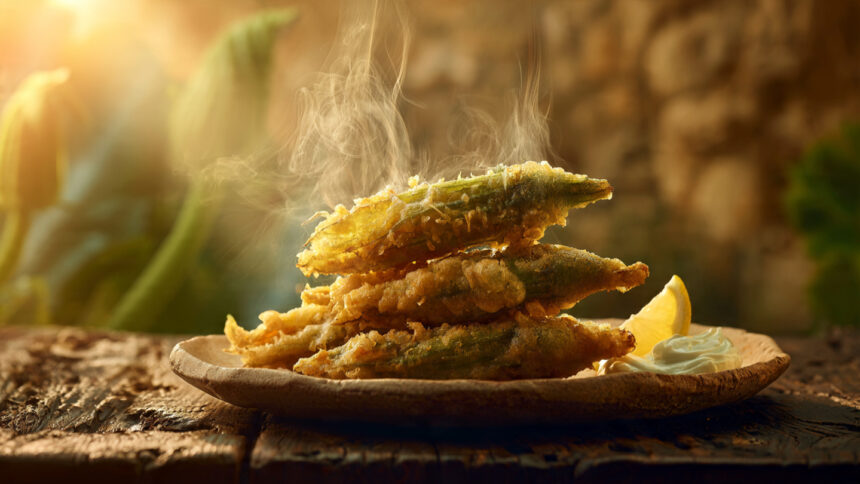
The octopus, grilled after sun-drying in the way that the preparation requires, is the dish that most directly connects the menu to the food tradition of the Aegean. The grilling of fresh calamari over high heat, served simply with lemon, is the preparation whose success depends entirely on the quality of the ingredient. The dolmadakia, the vine leaves stuffed with rice and herbs, are the dish that the Greek kitchen makes well when it makes them at all, with the balance between the rice, the herbs, and the acidity of the lemon sauce that covers them being the test of execution.
Moussaka, the baked layered preparation of ground meat, aubergine, and béchamel that has become the most internationally recognized Greek dish, is on the menu in the form that the serious Greek kitchen produces: the béchamel properly reduced, the aubergine properly cooked before it enters the oven, the spicing rather than generic. The version at a kitchen that has been making the dish for a hundred and twenty years has the advantage of that duration.
The wine list draws from the Greek regional wine production that has developed significantly in quality and range over the last two decades, with the varieties that the Greek mainland and islands produce available in forms that the international wine world has only recently discovered but that the tavern’s guests have been drinking in this setting for much longer.
The Acropolis Above
The quality of the Old Tavern of Psaras that no other restaurant in Greece can replicate is the combination of its age and its position: the oldest continuously operating restaurant in the country is located directly below the most significant monument in Greek civilization.
The Acropolis is visible from the terrace of the tavern and from the upper Plaka streets that surround it. The Parthenon, still under the slow restoration that has been in progress for several decades, sits on the rock above the neighborhood that the tavern has been serving since 1898. The temporal relationship between the two is the relationship between the ancient and the continuous: the Parthenon was built in the fifth century BCE and fell into its current state across the centuries of use, misuse, and accident that followed. The tavern opened in the nineteenth century and has remained what it opened as.
The visitor who sits at the terrace table in the evening, with the Acropolis lit above the neighborhood and the atmosphere of a Plaka summer night in the air, is in the most concentrated form of Athens available: the ancient monument, the medieval neighborhood, the nineteenth-century building, the one-hundred-and-twenty-year-old kitchen, and the same ouzo that has been poured at this corner since the year the establishment opened.
How to Visit
The tavern is located at the corner of Erechtheos and Erotokritou 16, in the upper Plaka, Athens. It is accessible on foot from the Monastiraki and Acropolis metro stations in approximately ten minutes.
Reservations are recommended during the summer months and on weekends in the rest of the year, when the combination of tourist traffic and the tavern’s reputation among Athenians produces the occupancy that a restaurant of this age and this reputation generates. The website is tavernofpsaras.gr.
Lunch and dinner are served daily. The lunch service is the quieter of the two and the better time for the visitor who wants to engage with the space rather than simply eat in it, when the summer evening crowds have not yet arrived and the quality of the Plaka afternoon, the heat, the light coming down the stepped streets from the Acropolis direction, is the condition in which the meal takes place.
At Olympus Estate, Food and Seasonal Life traces the culinary traditions of the Hellenic world, from the sundried octopus of the Aegean islands to the table at the oldest restaurant in Greece where Seferis ate and Olivier came for lunch. The same family has run the kitchen for four generations, through occupation, civil war, and every upheaval Athens has seen since 1898. The oldest kitchens carry the deepest memory.