



The oracle at Delphi told Athens to trust its wooden walls, and for several tense weeks, nobody could agree on what that meant.
In the late summer of 480 BCE, with the Persian army already through Thermopylae and marching on an undefended Attica, an Athenian delegation had gone to Delphi in genuine panic. Herodotus preserves the first answer the Pythia gave them, and it offered no comfort at all: flee to the ends of the earth, abandon your homes, everything you know will burn. The delegation, unwilling to carry that answer home, returned to the sanctuary as suppliants, bearing an olive branch, and asked again. The second response, examined at length in this site’s own account of how the oracle actually worked, was gentler but no clearer: a wall of wood, granted by all-seeing Zeus, would remain unbreached, a stronghold for the Athenians and their children. It also mentioned, in the same breath, that divine Salamis would destroy the sons of women.
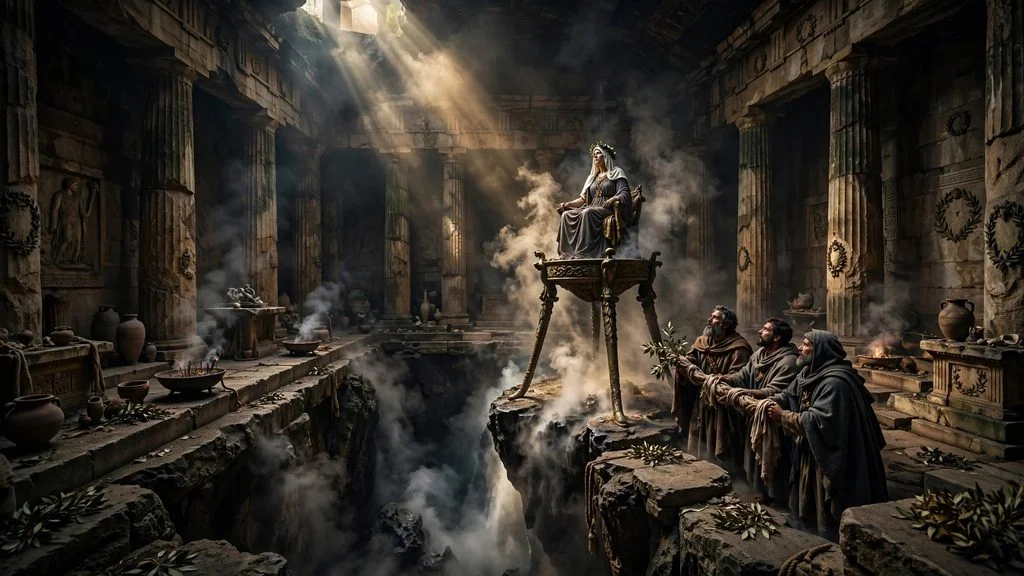
Nobody agreed on what any of it meant. Some Athenians took the wooden wall literally, the old palisade that had once ringed the Acropolis. One man argued otherwise, and made the argument stick.
The Argument Themistocles Won
Themistocles told the assembly the wooden walls were ships. Specifically, the fleet Athens had spent the previous several years building, funded by a windfall from the silver mines at Laurion that Themistocles had persuaded the city to spend on triremes rather than distribute among the citizens directly, ostensibly to settle a maritime rivalry with the island of Aegina. The foresight required to make that argument years before anyone knew Persia was coming again is, on its own, one of the more remarkable strategic bets in Greek history.
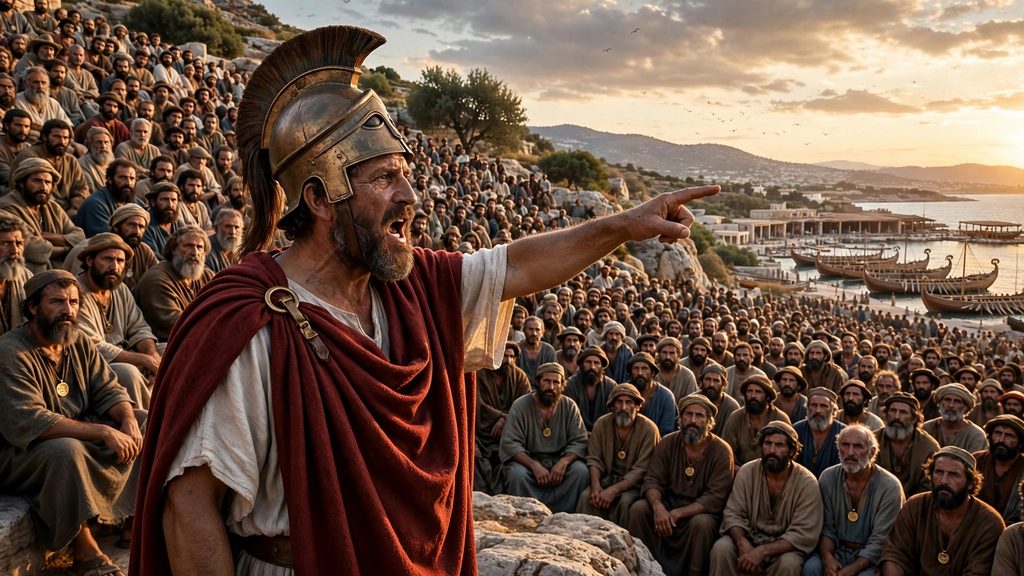
His case for the interpretation was not simply confidence. He pointed to the oracle’s own language: if the Pythia had truly meant that Athens would be defeated at Salamis, she would have called the place cruel or harsh, the way Delphic prophecy typically described a site of disaster. Instead she called it divine. A god does not attach a reverent word to the scene of his own people’s destruction. The wooden walls, Themistocles argued, would save Athens precisely at Salamis, not despite it.
The argument won. Athens evacuated almost completely, the elderly, women, and children carried to Salamis, Aegina, and Troezen, the fighting men boarding the fleet, the city left to a token garrison that the Persians would shortly overrun and burn. It was, by any ordinary measure, a catastrophic gamble: a whole civilization staking its survival on one politician’s reading of an ambiguous sentence delivered by the Pythia. It worked because
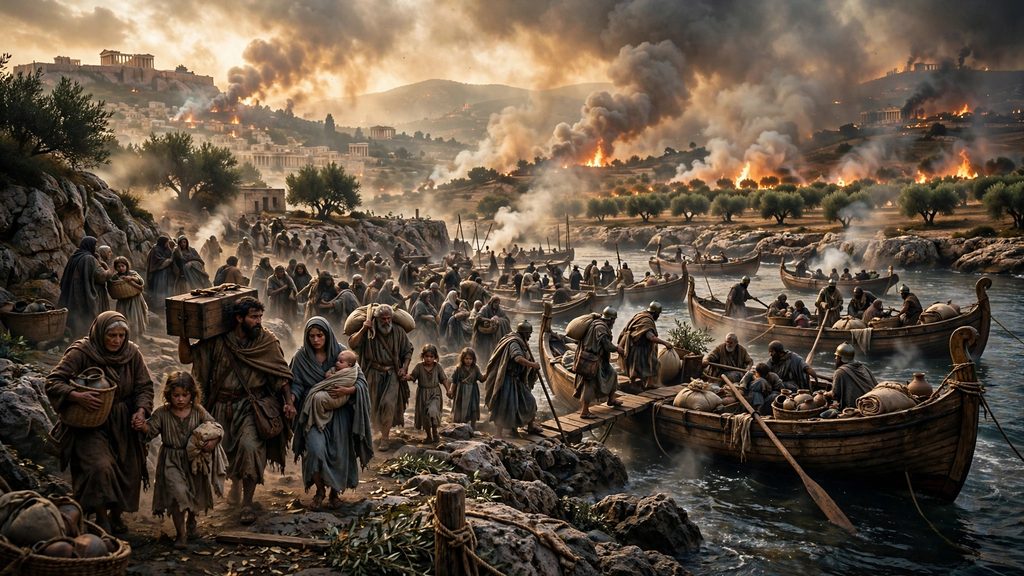
Themistocles was not finished manipulating the situation. Evacuating Athens was only the beginning of his plan.
The Message That Was Designed to Be Believed
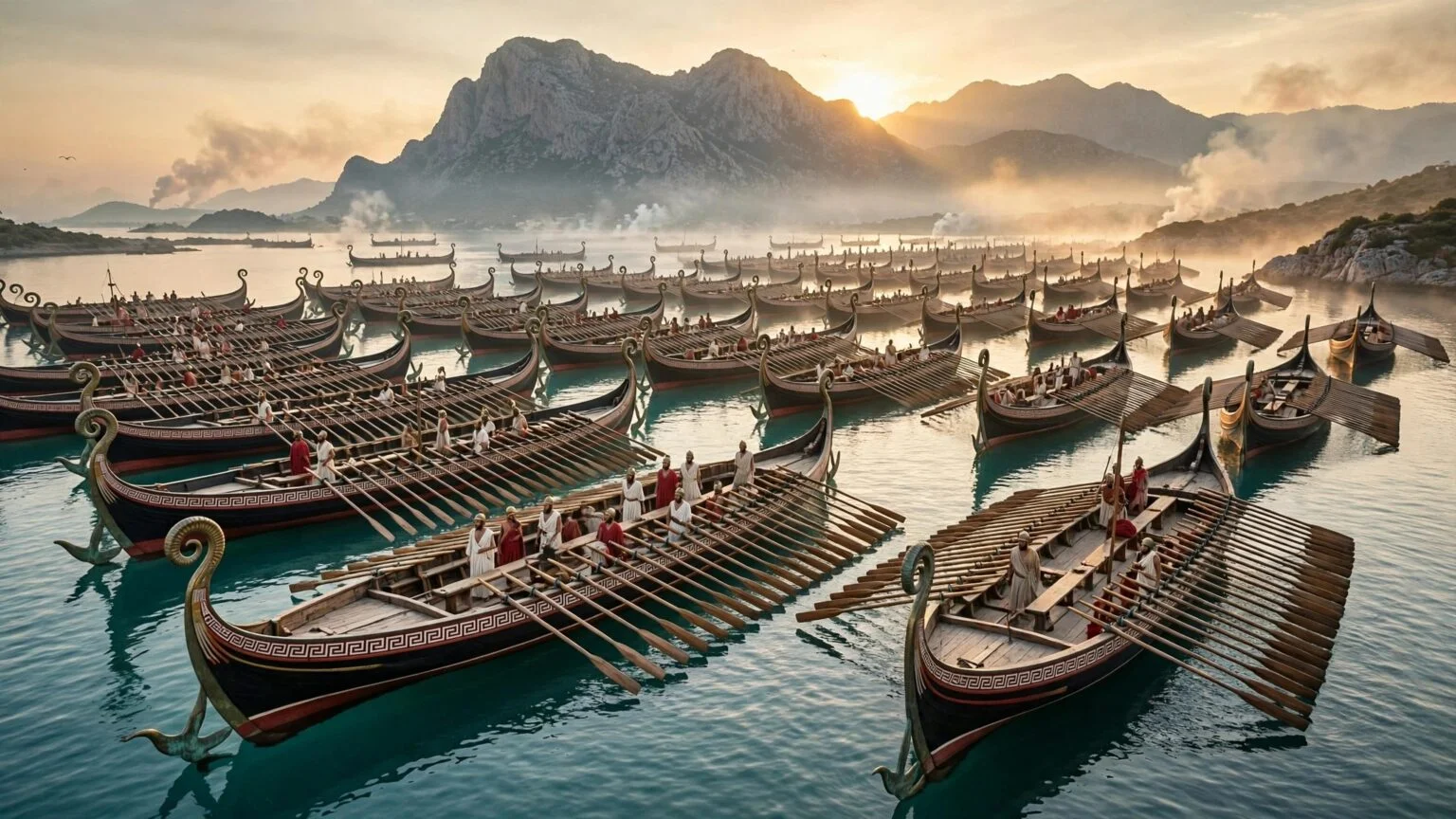
The Greek fleet, somewhere between 370 and 380 triremes according to Herodotus’s own count, had fallen back to the narrow strait between the island of Salamis and the Attic coast near Piraeus. The Persian fleet Xerxes commanded was considerably larger. Herodotus’s own figure for it, 1,207 ships, is suspicious for a specific reason: it is the exact same number he gives for the fleet’s total strength at the very start of the campaign, before losses at Artemisium and in the storms off Euboea that his own narrative describes in detail. A fleet that loses ships to weather and battle and then arrives at its next engagement at precisely its starting strength raises real doubt about whether that number represents a fresh count at all. Modern reconstructions place the number far below Herodotus’s figure, though estimates vary substantially, generally somewhere between four hundred and eight hundred vessels, still a real numerical advantage over the Greeks, just not the overwhelming one Herodotus’s own arithmetic implies.
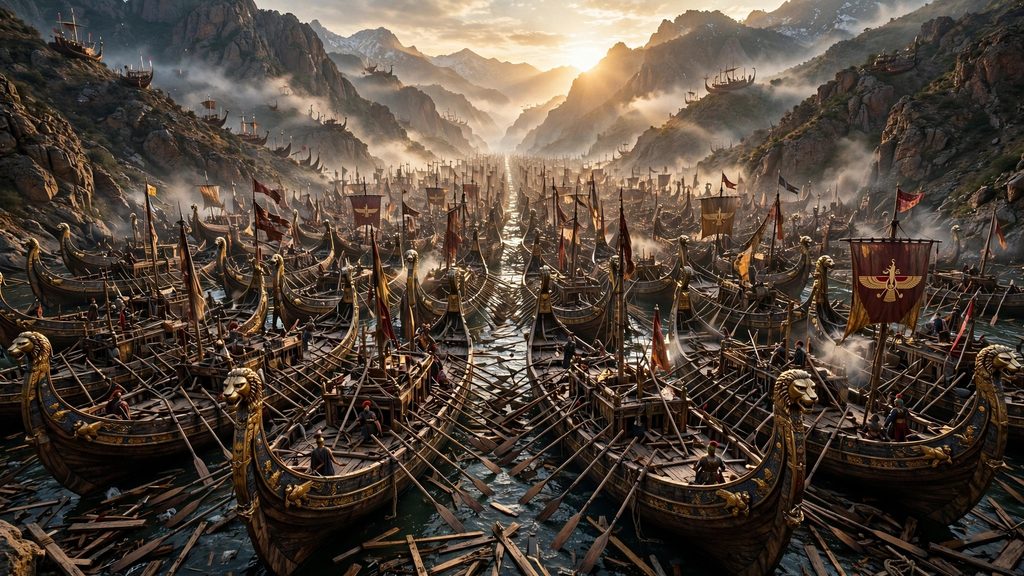
Themistocles understood that Persian numerical superiority was decisive in open water and close to worthless in a channel too narrow for most of those ships to maneuver or even to reach the fighting at all. His problem was persuading the Persians to enter the strait voluntarily, since Xerxes had no obvious reason to abandon the advantage of open water where his numbers could actually be brought to bear.
He solved it by sending his own slave, a man named Sicinnus, across to the Persian camp with a message purporting to be a private warning from a secret sympathizer. The Greek alliance, Sicinnus reported, was fractured and demoralized. The Peloponnesian contingents intended to abandon Salamis that very night and retreat toward the Isthmus of Corinth. If Xerxes moved now, he could trap and destroy the Greek fleet before it dispersed.
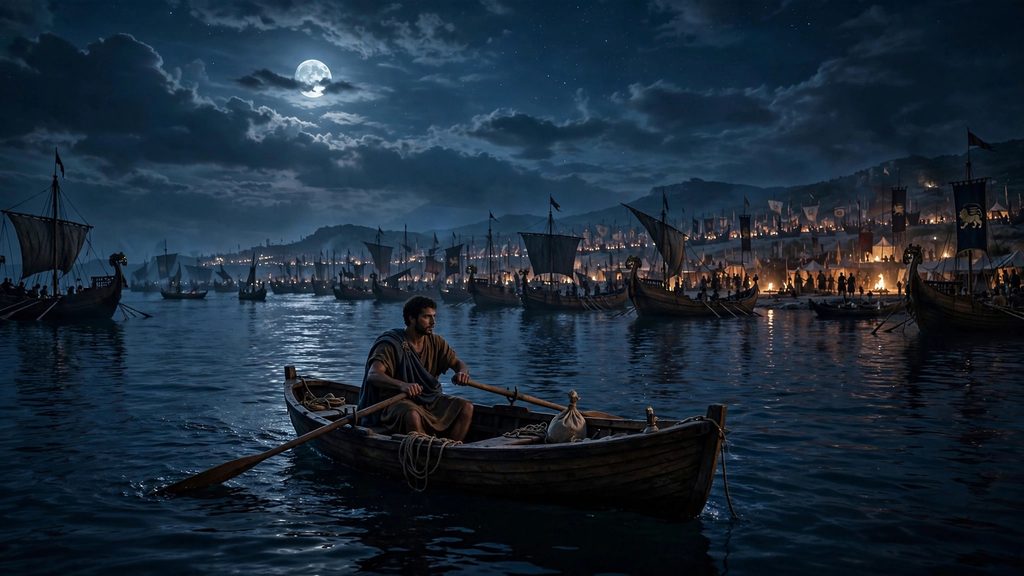
Xerxes believed it, and the belief cost him the one asset that might have made his numbers matter. He ordered a substantial detachment, by most accounts the Egyptian squadron, to circle around and seal the strait’s western exit near Megara, preventing the Greek escape the message had described. He then moved his main fleet to block the eastern approach and, over the course of the night, began ferrying troops onto the small island of Psyttaleia at the strait’s mouth, positioned to kill or capture any Greek sailors who washed ashore there.
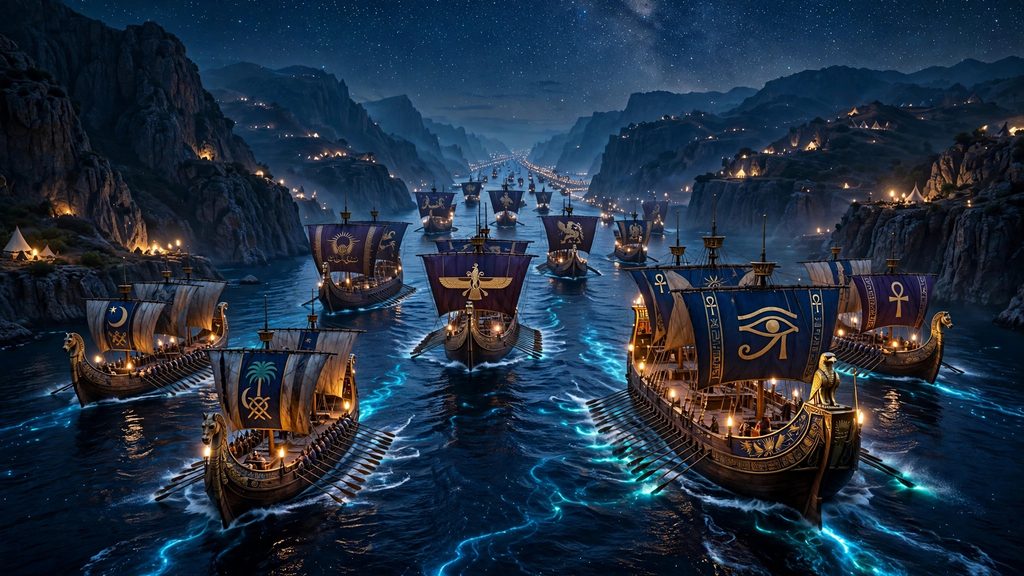
Every one of these movements was designed around a Greek retreat that was never going to happen. By the time the sun rose, a significant fraction of the Persian fleet’s total strength had been maneuvered out of the coming battle, guarding an exit nobody intended to use.
The Woman Who Told Xerxes Not to Do This
Before the battle, in the war council Xerxes convened aboard his flagship, one voice argued directly against fighting at Salamis at all, and it belonged to the only woman commanding ships anywhere in the Persian fleet.
Artemisia, queen of Halicarnassus, had already distinguished herself in the campaign’s earlier naval actions, and Herodotus, himself a native of the city she ruled, records her advice to Xerxes in detail. Save the fleet, she told him. Do not risk it in the strait. The Greeks are far better sailors than your Egyptians and Phoenicians, and a naval defeat here would also damage the army, since the fleet’s failure would inevitably be blamed on the soldiers watching from the shore. Wait instead, she argued. Move on the Peloponnese by land, and the fragile Greek alliance, deprived of the urgent threat holding it together, will likely dissolve on its own.
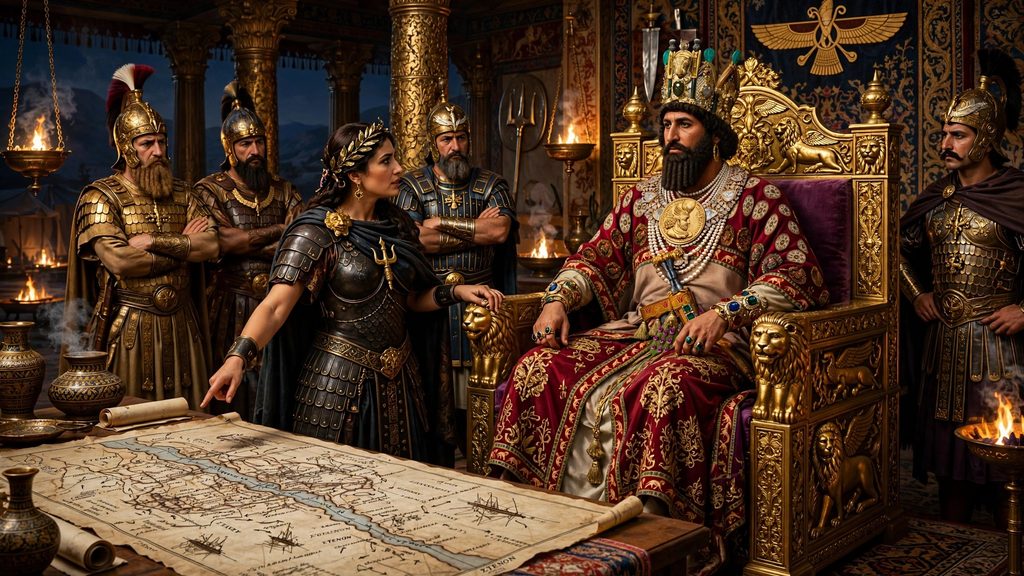
Strategically, it was difficult advice to improve upon. Xerxes praised her for it, and then ignored it completely, ordering the attack Themistocles’s message had engineered him into wanting.
What Happened in the Strait
The battle unfolded, by most reconstructions, sometime in late September, in the narrow channel where the Persian numerical advantage that had shaped every Persian decision of the campaign became, for the first time, a liability rather than a strength. Ships arriving in successive waves through the strait’s mouth had no room to deploy properly, and vessels toward the rear, unable to see what was happening ahead, kept pressing forward into a mass of their own fleet that had nowhere left to go.
Aeschylus, who had already fought at Marathon a decade earlier, examined in this site’s own account of that battle, fought at Salamis too, and wrote of it directly in his play The Persians, staged in Athens only eight years afterward, the earliest surviving literary work by a known participant in the battle. His description of the Persian collapse is precise in a way secondhand history rarely manages: ships ramming their own line in the confusion, oars shattering against each other, the sea, in his words, hidden from sight and strewn with wreckage and drowned men. The Greek triremes, by contrast, had exactly the room they needed to execute the tactic they had trained for, ramming with the reinforced bronze prow below the waterline, then withdrawing to strike again.
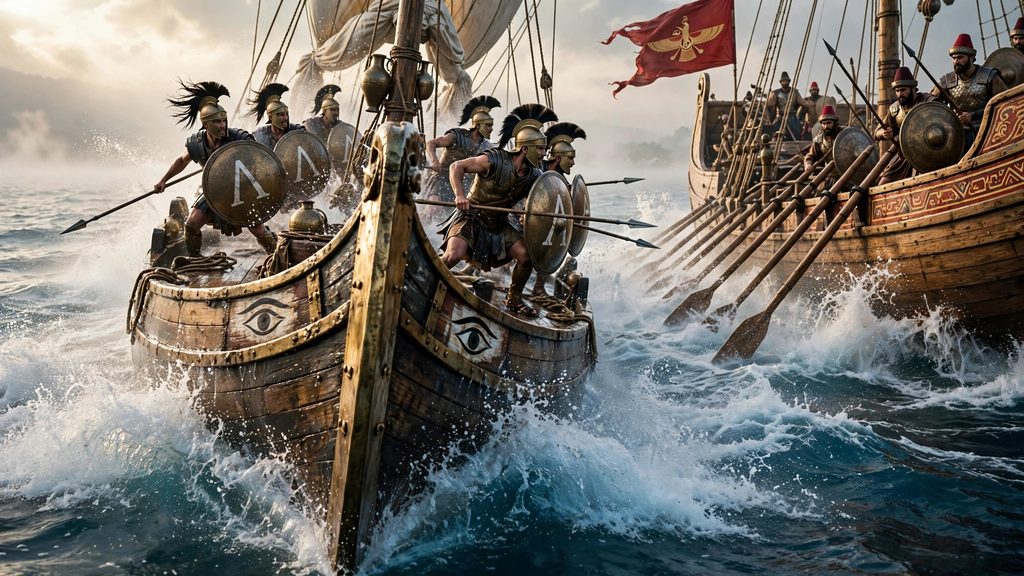
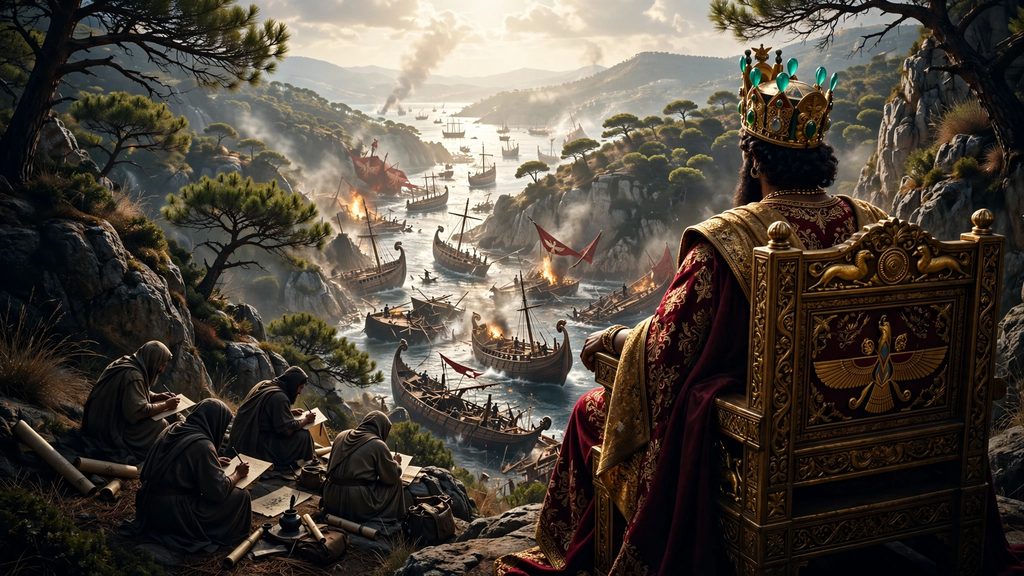
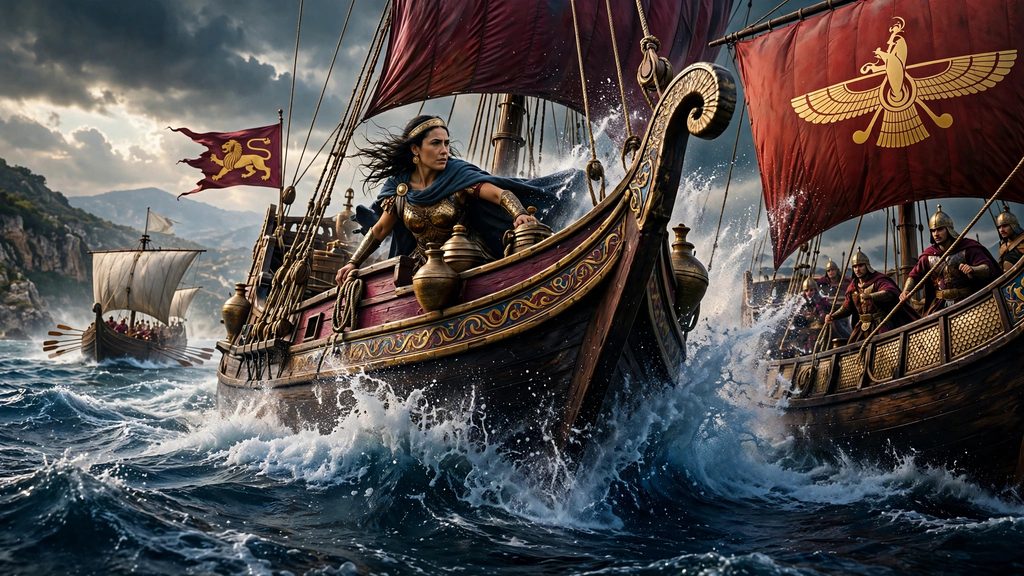
In the middle of that collapse, Artemisia produced the battle’s strangest single moment. Pursued closely by an Athenian trireme with no room to maneuver away, and with friendly ships blocking every direction she might otherwise have fled, she rammed and sank one of her own side’s vessels. The Athenian captain, seeing her ram what he assumed must be an enemy ship, or at minimum a Greek defector fighting for Persia, broke off the pursuit and turned toward easier targets. Watching from his golden throne on the slopes of Mount Aigaleos above the strait, Xerxes was told by an attendant that Artemisia had just sunk an enemy ship. Xerxes’s reported response has survived in more than one ancient source with consistent wording: my men have become women, and my women have become men.
Ancient and modern estimates differ on the precise figures, but the Persian losses were far greater than the Greek losses, with modern reconstructions commonly placing Persian losses at roughly two hundred ships against Greek losses of several dozen. Xerxes’s own brother, Ariabignes, commanding part of the fleet, was among the Persian dead. Plutarch records that it was Artemisia, of all people, who recovered his body from the wreckage and returned it.
What the Victory Actually Bought
Salamis did not end the war. Xerxes still commanded a formidable army on land, and the Persian general Mardonius remained in Greece through the following year, fighting and losing the decisive land battle at Plataea in 479 BCE that finally settled the invasion for good. What Salamis actually accomplished was narrower and, in its way, more consequential: it broke Xerxes’s confidence in his own supply lines and his own position. A king who no longer commanded the sea was a king whose army in Greece depended on a single vulnerable bridge of boats across the Hellespont for its whole connection home, and Xerxes, according to Herodotus, became genuinely afraid the Greeks might sail north and destroy that bridge, trapping him in Europe indefinitely. He withdrew the bulk of his forces and his own person from Greece within weeks of the defeat, leaving Mardonius to finish a war Xerxes himself no longer trusted his position to fight. Salamis had not simply destroyed ships. It had destroyed the strategic position from which Xerxes expected to finish the war.
The oracle, read correctly by exactly one person in a frightened city, had been telling the truth. The wooden walls held. The sons of women who died at divine Salamis, in the end, were mostly Persian.
The Strait Today
The channel where the battle happened has not disappeared the way the pass at Thermopylae or the harbor at Pella did. The basic geography remains: the strait between Salamis and the mainland is still there, still narrow, still navigable, now crossed constantly by ferries running between the mainland and the island rather than by triremes searching for room to ram.
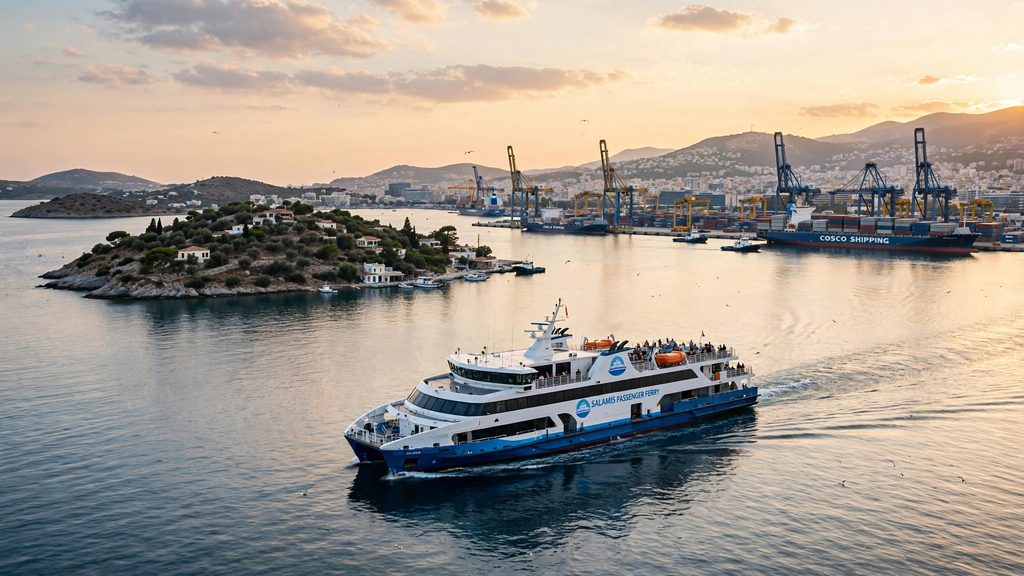
What has genuinely changed is what surrounds it. The strait today sits inside one of the busiest industrial and shipping corridors in the eastern Mediterranean, framed by the Piraeus container port on one side and Salamina’s own shipyards on the other, a working commercial waterway rather than a preserved battlefield. Archaeologists have searched periodically for physical traces of the battle itself, bronze ram fragments, wreck sites, anything the strait’s seabed might still hold, with only limited and inconclusive results, the same difficulty that affects almost all ancient naval archaeology, where wooden hulls rarely survive and metal fittings scatter across a wide and often heavily disturbed seabed. What draws visitors today is less the strait itself than the view from Mount Aigaleos, above modern Athens, roughly where Xerxes is said to have watched his fleet come apart, a vantage point that still overlooks the same channel and still makes the battle’s geography immediately legible in a way few ancient naval engagements allow.
Salamis Island itself, a short ferry ride from Piraeus, holds its own quieter sites: monasteries, beaches, and the low-key, largely unmarketed character of an island that spends most of the year serving Athenian day-trippers rather than international tourism, a place whose single most consequential day happened twenty five centuries ago and left almost no physical monument behind, only the water itself and the story of what happened on it.
One Sentence, Read Correctly
The whole campaign turned, in the end, on an argument about language. A priestess in trance said a wall of wood would hold, and said the word divine about a strait most of her audience assumed meant their destruction. Themistocles read the same ambiguous sentence everyone else had access to and reached a different, better-argued conclusion, then spent the following weeks manufacturing the exact circumstances that would make his reading true: building the fleet years in advance on a pretext nobody at the time connected to Persia, evacuating a city on the strength of his own interpretation, and finally tricking the most powerful man in the world into fighting exactly where Themistocles needed him to fight.
None of it required the gods to intervene directly. It required one man to read a sentence correctly, persuade a frightened city to believe him, and then do the considerably harder work of making the prophecy come true himself.
At Olympus Estate, Tales from Olympus traces the moments where legend and the historical record pull in different directions. The oracle at Delphi told Athens to trust its wooden walls. Themistocles alone read this as the fleet rather than the Acropolis’s old palisade, evacuated the city on that reading, and then tricked Xerxes into fighting in the one place his numbers, somewhere between four hundred and eight hundred ships against roughly 370 Greek triremes, could not save him. Artemisia of Halicarnassus gave Xerxes the campaign’s best advice and watched him ignore it, then produced the battle’s strangest moment by ramming her own side’s ship to escape. Aeschylus fought in the strait and wrote the earliest surviving literary work by a known participant in the battle. Xerxes lost roughly two hundred ships in an afternoon and, within weeks, his confidence in remaining in Greece to see it through.