

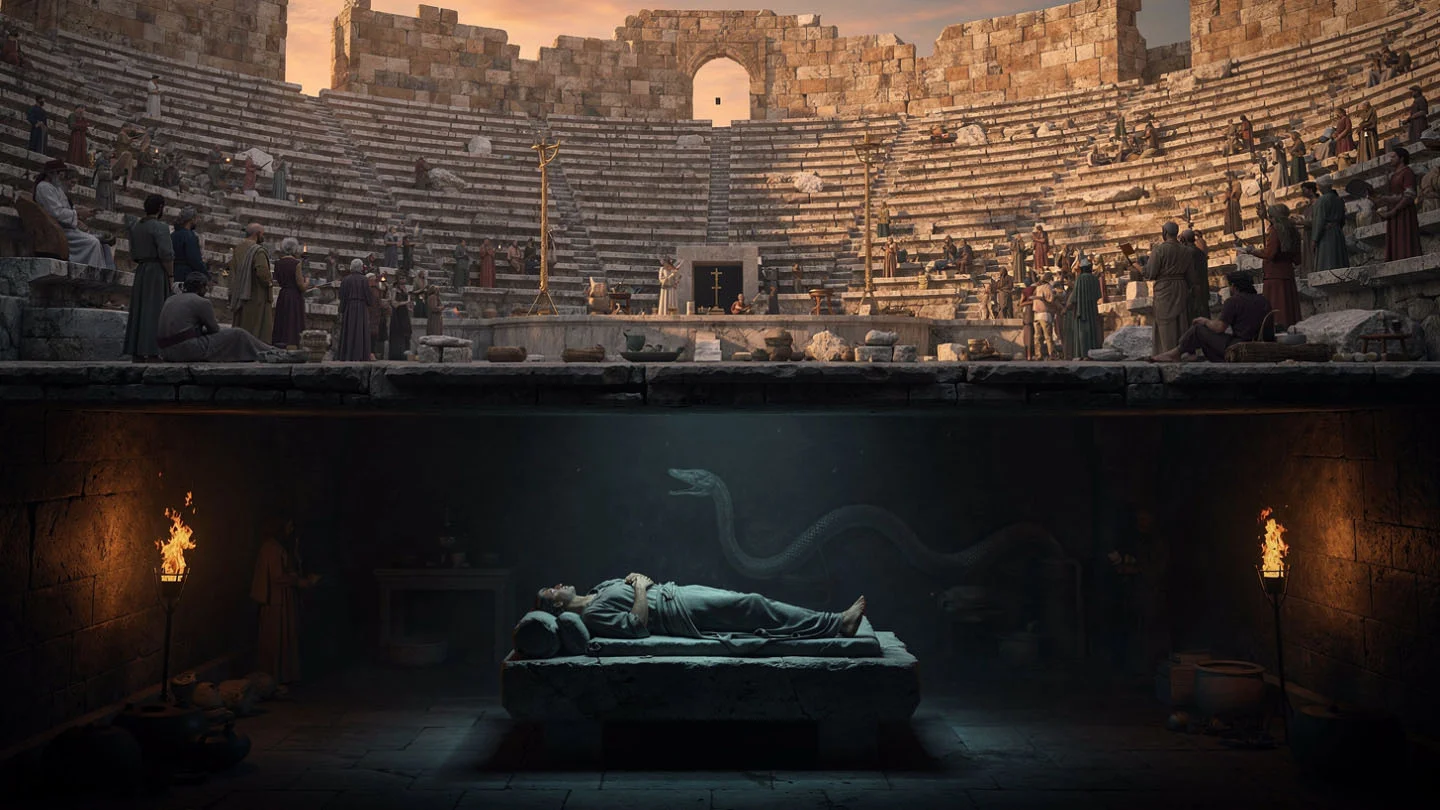
The theater at Epidaurus is the most acoustically perfect ancient theater surviving anywhere in the Greek world, and its perfection is no accident. The geometry of the cavea, 55 rows of limestone seats arranged in the precise circular arc the architect Polykleitos the Younger calculated in the fourth century BCE, produces the acoustic phenomenon every visitor experiences who drops a coin at the orchestra’s center and hears it clearly from the uppermost row: sound traveling from the stage to the back of the theater without amplification, without loss, without the distortion an enclosed or irregular space would introduce. The theater holds 14,000 people. The person at the back hears the actor at the front exactly as clearly as the person in the front row.
The theater was built as part of the Asclepion.
This is the detail standard presentations of Epidaurus tend to omit or mention only in passing: the theater was never a separate civic entertainment facility built near a religious sanctuary. It was a working part of the sanctuary complex, serving its therapeutic purpose directly. Ancient understanding of healing required a sick person’s mind and spirit to actively participate in the healing process, and the theater was the institution Epidaurus used to engage mind and spirit at their most concentrated.
The greatest theater ever built was built as a hospital’s own therapeutic annex.
Asclepius and the Theology of Healing
Asclepius was the son of Apollo and the mortal Koronis, whose birth and early biography the Apollo article in this collection develops through the tragic sequence of his mother’s infidelity, her death, and his own rescue from her funeral pyre. What Asclepius inherited from his father was Apollo’s own rational order, applied specifically to the body’s relationship with illness and recovery: the son of the god of light and medicine became the divine being whose entire domain was the organized practice of healing itself.
Asclepius’s theological character sets him apart from the general divine healing figures of the ancient world: he was never simply a god who healed the sick through occasional divine intervention, the way any powerful deity could be petitioned in a crisis. He was the divine being whose actual domain was organized medical knowledge and practice, whose sanctuaries functioned as institutions maintaining accumulated empirical medical knowledge alongside ritual healing practice, and whose relationship to Hippocrates and rational Greek medicine was the relationship of a divine patron to a human profession that claimed direct descent from him.
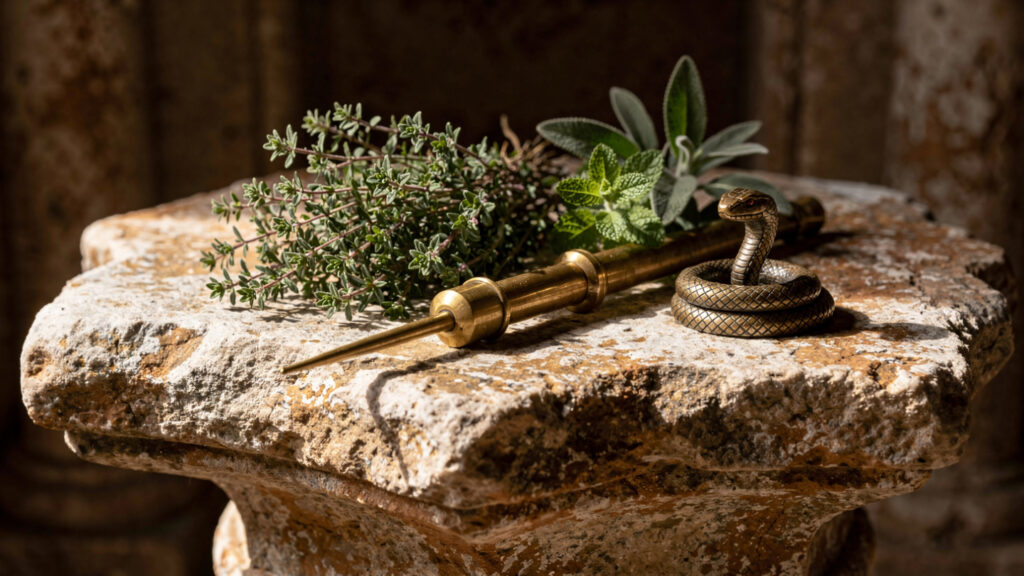
Hippocratic medicine, whose botanical and pharmacological roots the pharmakeia article in this collection develops through Theophrastus and the wider ancient Greek medical tradition, claimed direct descent from Asclepius through the genealogical link between Hippocratic medical families and the god himself. Hippocratic physicians called themselves Asclepiads, descendants of Asclepius, and the claim that rational medicine was the humanized continuation of divine healing gave ancient Greek medicine its own theological foundation.
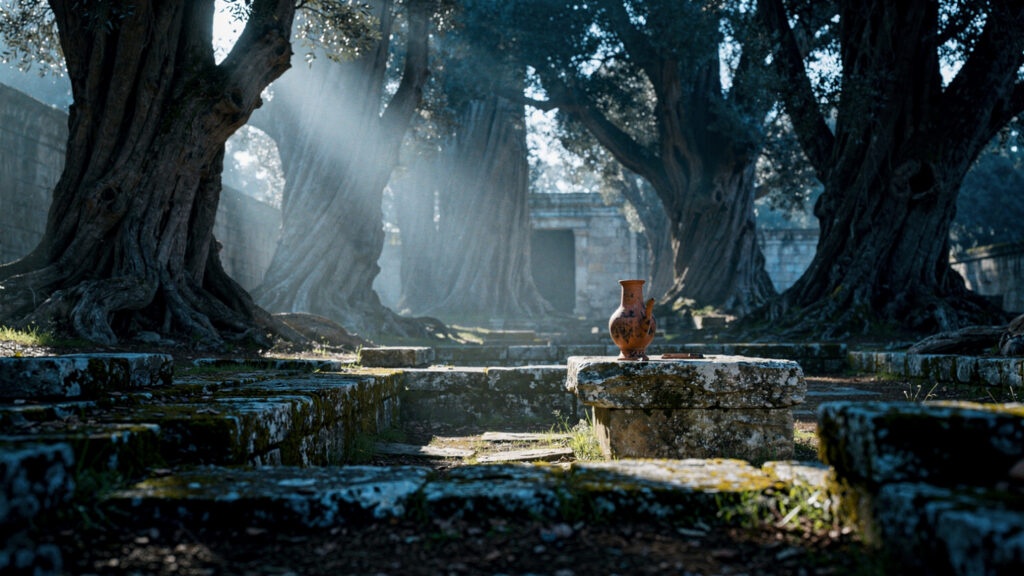
The snake, whose character as a chthonic symbol of renewal and the underworld boundary the Hekate and August fifteenth articles in this collection develop, was Asclepius’s own sacred animal: the snakes ancient Asclepieia kept in their sanctuary grounds were the material presence of his healing power, and letting these sacred snakes move freely among sleeping patients in the enkoimesis hall was the ritual expression of that same presence inside the sanctuary itself.
The Enkoimesis | Sleeping Toward the Cure
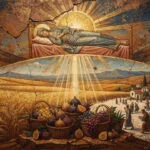
The Asclepion’s actual healing mechanism was the enkoimesis, the sacred sleep, a ritual incubation practice that set the Asclepion apart from an ordinary medical facility and gave the ancient healing sanctuary its whole religious character.
Anyone arriving at the Epidaurus Asclepion seeking healing did not simply arrive, consult a physician, receive a prescription, and leave. Asclepian healing required preparation whose duration and content varied with the supplicant’s condition and the sanctuary’s own requirements: ritual purification, dietary restrictions, offerings to Asclepius and his associated divine figures, and a preliminary consultation with the sanctuary’s priests, whose knowledge of the practice let them prepare each supplicant for the encounter with divine healing power the enkoimesis was designed to produce.
The enkoimesis itself was ritual sleep inside the abaton, the sacred dormitory whose enclosed, darkened space, where a sleeping supplicant received divine healing communication through dream, gave the sanctuary its single most distinctive architectural feature. A supplicant who slept in the abaton had completed the required preparation, and the dream that followed was interpreted by the sanctuary’s priests as the specific therapeutic guidance that particular supplicant’s condition required.
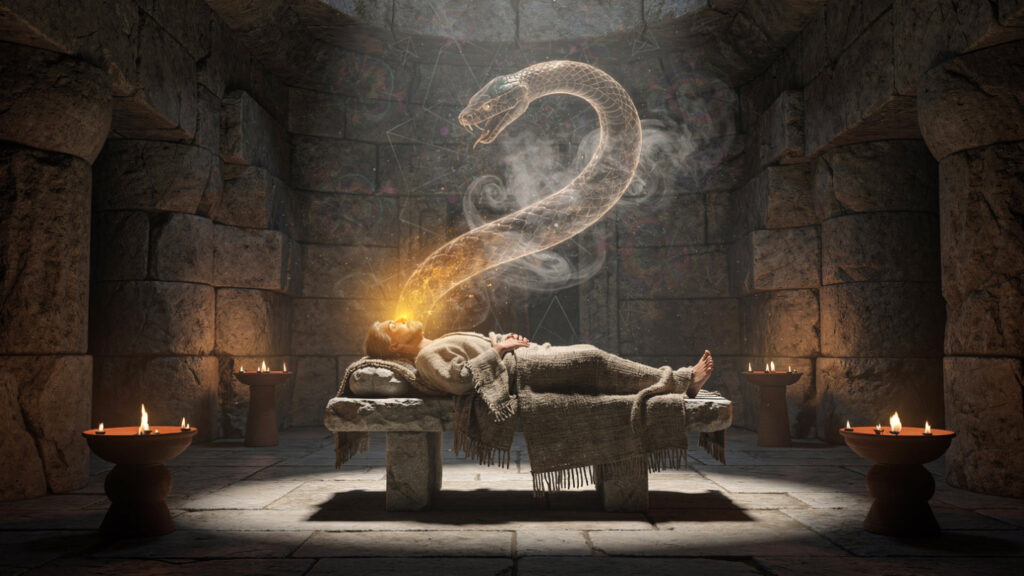
The surviving inscriptions from the Epidaurus sanctuary, the iamata, records of miraculous healings the sanctuary maintained and displayed to instruct and encourage arriving supplicants, are among the most remarkable documentary records of ancient healing anywhere, ranging in content from the plausible, resolving a skin condition through a dream-prescribed dietary change, to the extraordinary, restoring sight to the blind, to the outright miraculous, curing conditions no ancient medical treatment could ever have addressed.
The iamata function simultaneously as documentary record of the sanctuary’s healing practice and as institutional propaganda meant to encourage an arriving supplicant’s faith, which makes them both the most direct evidence of what actually happened at the Asclepion and among the most challenging evidence to interpret: the boundary between documented and embellished simply was not maintained the way a contemporary medical record would require.
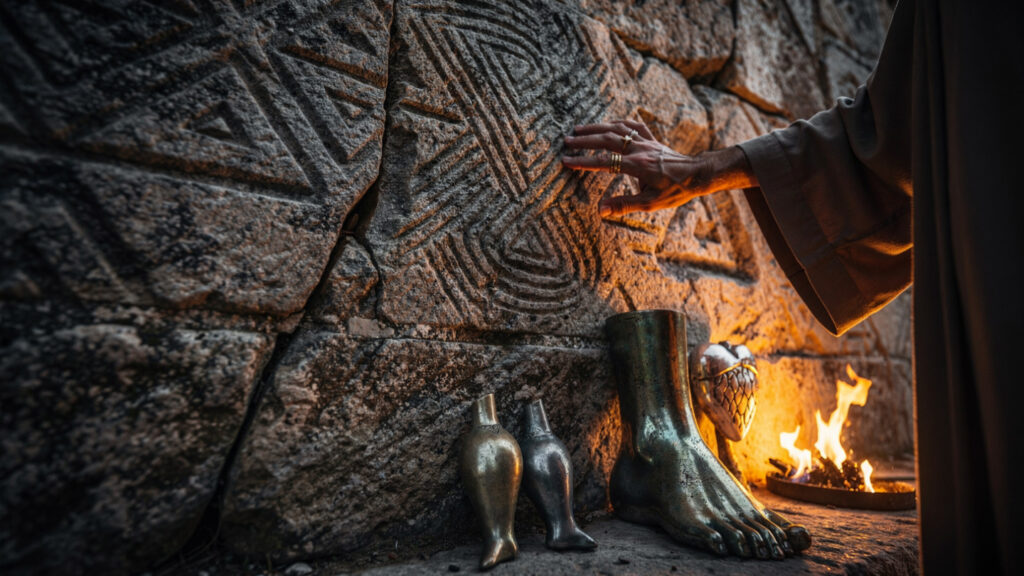
The most honest modern engagement with enkoimesis practice appears in the Oropos Amphiaraus article in this collection, which treats the Amphiaraus oracle’s own dream incubation the same way: the combination of ritual preparation, the altered state fasting and purification produce, the sensory conditions of the abaton’s darkness and enclosure, and the psychological state of someone who has traveled specifically to receive a healing communication, together produce exactly the conditions under which a dream’s content is most likely to address the very concern that brought the supplicant there in the first place. The religious and psychological dimensions of enkoimesis are not competing explanations. They describe the same process in different vocabularies.
The Sanctuary Complex and Its Architecture
The Epidaurus Asclepion was never simply the theater and the abaton. It was a complete sanctuary complex whose many buildings and spaces served every stage of the healing process, from initial arrival and purification through the enkoimesis itself to recovery and departure.
The Tholos, a circular building whose architectural complexity has made it one of the most studied structures in ancient Greek architecture, occupied the sanctuary’s center, and its exact function is something ancient sources never unambiguously describe. The most widely accepted interpretation holds that the Tholos housed the sacred snakes, its underground circular passages providing exactly the habitat they needed, while its upper structure served a ceremonial function elaborate enough to justify the building’s own design complexity. The Tholos’s architect was Polykleitos the Younger too, the same designer who built the theater, and both buildings reflect the same architectural ambition applied to a single integrated sanctuary complex.
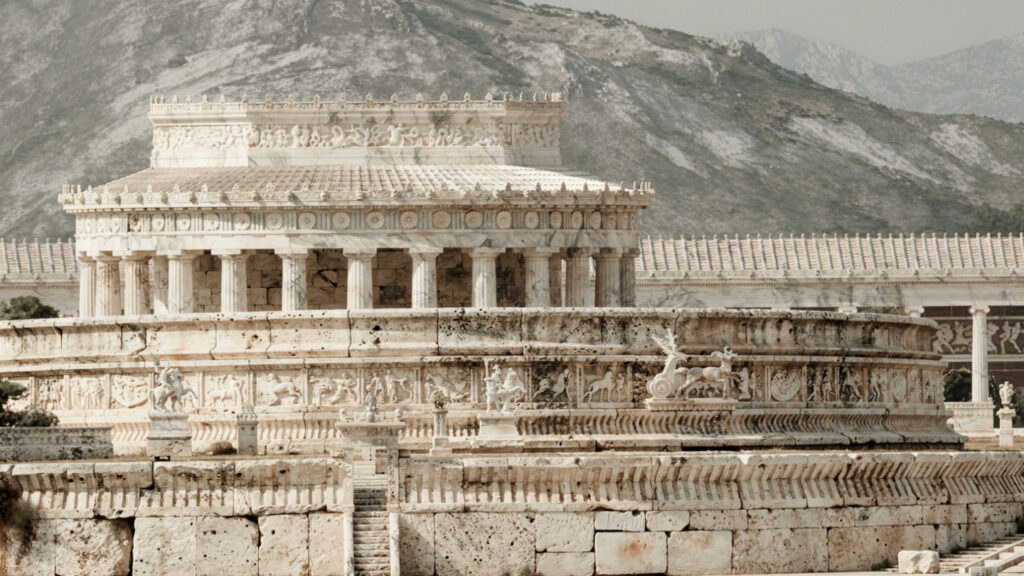
The gymnasium, the stoa, the propylon, the temples of Asclepius, Artemis, and Aphrodite, and a stadium built for the Asclepian games the sanctuary organized, together formed a complete spatial program integrating therapeutic, religious, athletic, and theatrical functions all at once, an integration that expressed exactly what the ancient world believed healing actually required.
Ancient Greek understanding of health is exactly what the Epidaurus sanctuary’s architectural program expresses in built form: a healthy person combined sound physical condition, the mind’s rational order, the spirit’s own relationship to the divine, and real integration into a community, together constituting the flourishing life the Greeks called eudaimonia. A sanctuary treating an unhealthy person provided the conditions for restoring every one of these dimensions at once: therapeutic waters and enkoimesis for the body, theater for the mind and spirit, the Asclepian games for physical training, and communal festival feasting for social reintegration.
The theater was never entertainment added onto a medical complex. The medical complex was designed from the ground up around the understanding that the theater was already part of the therapy.
What the Theater Did
The Epidaurus theater’s therapeutic function has its ancient theoretical foundation in Aristotle’s concept of catharsis: the emotional experience tragic drama produces, the combined pity and terror an audience feels watching a tragic hero’s fall, was understood in antiquity as an emotional experience whose therapeutic consequence was exactly the purification of emotion Aristotle called catharsis.
Catharsis remains among the most contested concepts in the entire history of literary and theatrical theory, and exactly what Aristotle meant by the purification of emotion through tragedy is a question scholarship still hasn’t fully resolved. But the most direct reading, and the one that fits the therapeutic context of Epidaurus most naturally, treats catharsis as the process through which emotions a sick person has been unable to process or express in ordinary life find a safe, organized outlet through theatrical performance: the grief, fear, anger, and despair carried by someone whose body is failing, whose condition is chronic, or whose prognosis is uncertain, are exactly what tragic drama gives organized form to, experienced safely through fiction whose consequences belong to someone else.
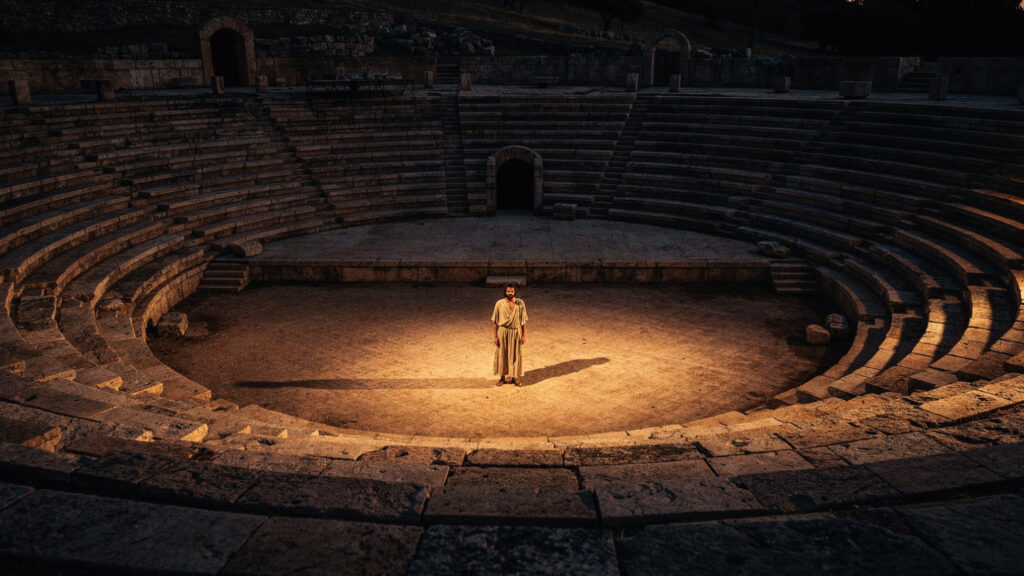
A sick person sitting in the theater at Epidaurus, watching Oedipus discover what he has done, or Hecuba process the destruction of everything she loved, or Philoctetes alone on his island with a wound that will not heal, has their own condition given form and narrative by characters carrying emotions their own condition produces, at exactly the theatrical distance that lets emotion be experienced and released without the overwhelming force a direct encounter with one’s own condition usually carries.
The theater’s perfect acoustics carried every word of the tragic text to every one of the 14,000 seats with a clarity that was itself the first effect of the experience: the person in the back row heard every word, meaning every person in the theater experienced the same text at the same moment with the same clarity, and that communal quality supplied a social dimension of therapy the enkoimesis’s private isolation in the abaton simply could not.
Individual healing in the abaton and communal healing in the theater were the two poles of the entire Epidaurus therapeutic program: an encounter with the divine in the solitude of sacred sleep, and an encounter with the human condition inside a theatrical audience.
Epidaurus and the Contemporary Visitor
The Epidaurus archaeological site ranks among the most significant and most complete in the Greek world: a theater still in active use for summer performances, combined with a sanctuary complex whose many buildings ongoing excavations by the Greek Archaeological Service have been revealing since the nineteenth century, together giving visitors one of the most complete surviving experiences of ancient sacred space anywhere.
The theater’s acoustic demonstration, a coin dropped at the orchestra’s center, is a ritual every guide performs and every visitor repeats once the guide has moved on: hearing sound travel through the space with the clarity Polykleitos the Younger’s mathematics produced connects the contemporary visitor most directly to his actual achievement. The demonstration doesn’t diminish the experience. It’s exactly what gives an abstract architectural achievement its sensory reality.
The sanctuary complex below the theater, whose signage and small on-site museum connect visible architectural remains to the functions they once served, rewards a visitor who has come prepared, having already read the iamata and understood the enkoimesis: the abaton’s foundations, the Tholos’s circular base, the propylon’s massive threshold, are remains whose function the archaeological context alone does not communicate without that preparation.
Summer performances at the Epidaurus theater, organized through the Athens Epidaurus Festival’s program of ancient drama in Greek and in translation alongside contemporary productions the theater’s international reputation attracts, offer the most direct available experience of ancient theater in the exact space ancient theater was designed for. The theater’s acoustic perfection still gives the ancient text its sonic quality inside the very space the ancient architect built specifically to make tragedy maximally available to the maximum number of people at once.
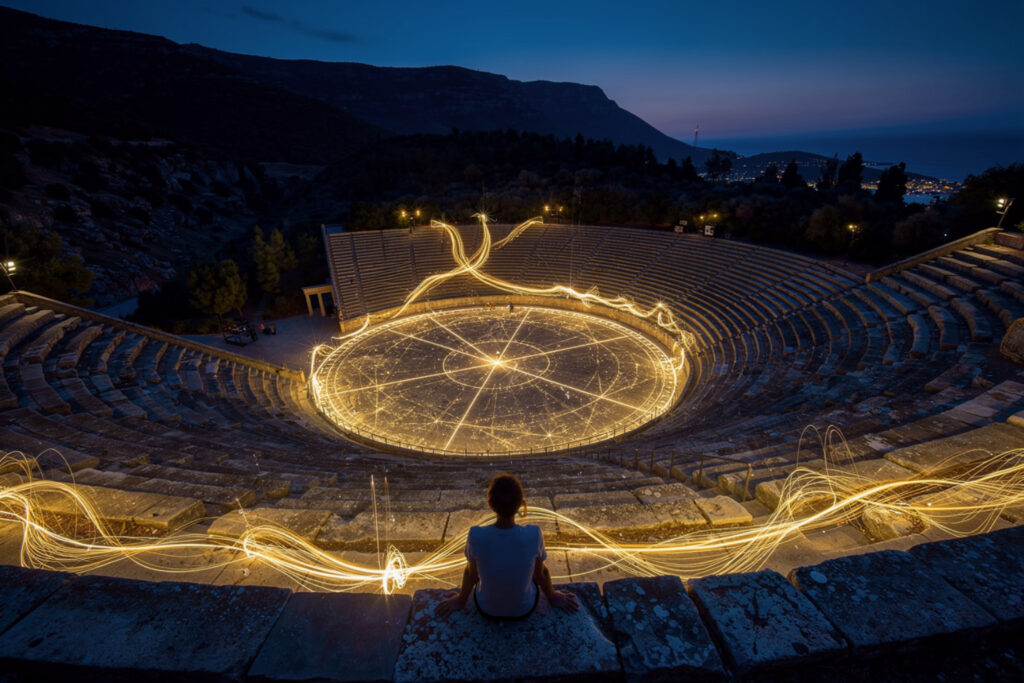
Anyone who attends a performance of Sophocles at Epidaurus on a summer evening, in a theater whose limestone seats still hold the warmth of the August day, whose acoustic perfection still carries the ancient text to the back row with exactly the clarity Polykleitos the Younger’s mathematics produced, is experiencing the ancient therapeutic program in almost precisely the form its own architects designed: a community gathered inside a healing sanctuary to hear a text whose emotional content the shared theatrical experience produces and organizes together.
The cure was never guaranteed. It never was. But the combination of ancient space, ancient text, and communal experience inside the acoustic perfection of the most carefully designed theater ever built is exactly the combination the sanctuary’s architects understood when they placed the theater at the center of the entire healing complex.
The greatest theater ever built was built as a hospital’s own therapeutic annex. Attending a performance at Epidaurus means attending theater in exactly the context its ancient architects intended it for.
At Olympus Estate, Wanderlust Greece guides you across the sacred and storied terrain of the Hellenic world. The theater at Epidaurus holds 14,000 people and a coin dropped at the orchestra’s center is heard clearly at the back row. It was built as part of the healing sanctuary. The enkoimesis was the ritual sleep in the darkened abaton where the prepared supplicant received the healing dream whose content the sanctuary’s priests then interpreted. The iamata inscriptions recorded the miraculous cures and encouraged the arriving supplicant’s faith. The sacred snakes moved through the sanctuary. The Tholos at the center was probably their home. The catharsis of the tragic drama was part of the therapy. The theater’s acoustic perfection was the quality that made the communal emotional experience maximally available to the maximum number of sick people simultaneously. The Athens Epidaurus Festival performs ancient drama here every summer. The limestone seats still hold the August warmth. Attend a performance.