
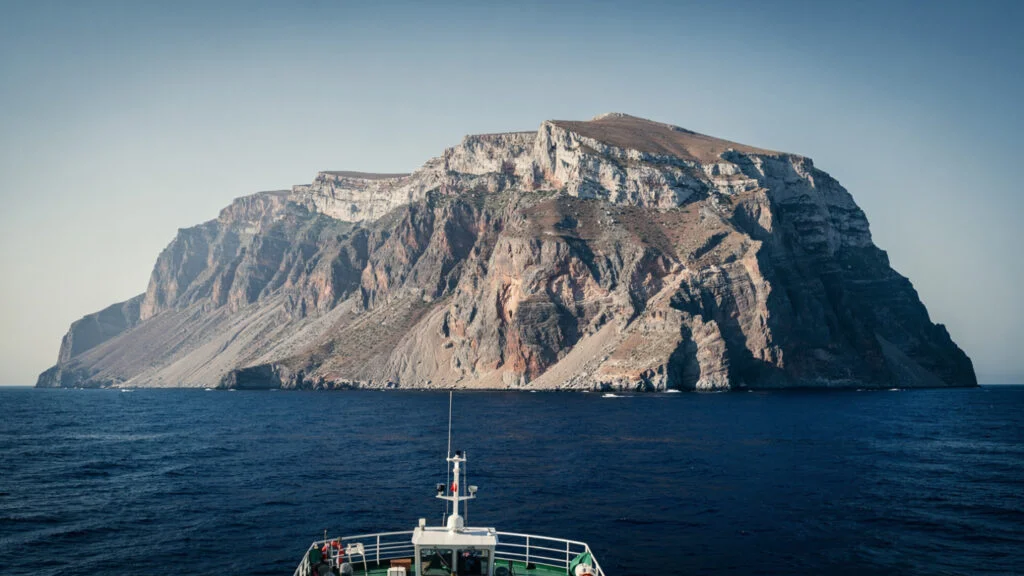
The ferry to Amorgos takes longer than the ferry to any other Cycladic island from Athens.
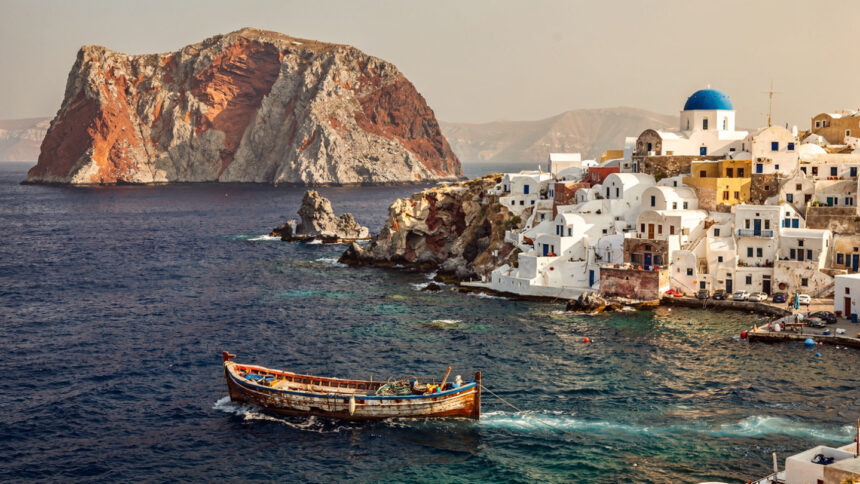
This is not incidental. It is the first fact about Amorgos that shapes everything else about the experience of the island: the distance from Piraeus, the reduced frequency of the connections, the position of Amorgos at the easternmost reach of the Cyclades before the Dodecanese begin, has kept the island from the development pressure that proximity to Athens and to the main Cycladic routes has imposed on Mykonos and Paros and Ios. The visitor who arrives on Amorgos has made a decision to come here rather than somewhere easier to reach, and the island’s character reflects this self-selection in the quality of what it has preserved.
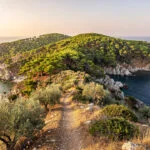
What it has preserved is the quality of a Cycladic island that has not been organized for the convenience of the visitor: the terrain is steep and the paths are limestone and the monastery is built into a cliff face and the sea caves are accessible only by swimming and the inland villages above Aegiali are accessible only on foot or by the road that winds above the bay. The island does not meet you. You go to it, and the going is part of what it gives you.
The Chora | The Most Beautiful Village Capital in the Cyclades
The Chora of Amorgos sits in the interior of the island on a ridge between the two ports of Katapola to the southwest and Aegiali to the north, and its position in the island’s center rather than at its coast is the first indication of its character: a village that developed around its own logic rather than around the logic of the arriving ferry.
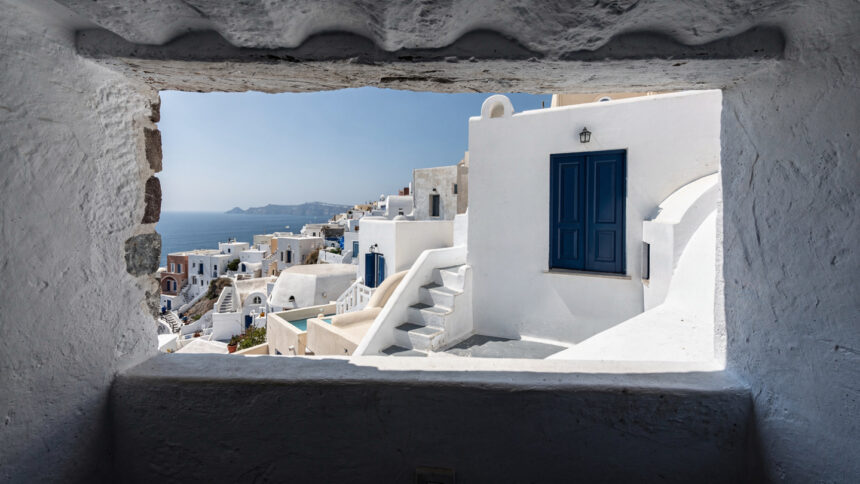
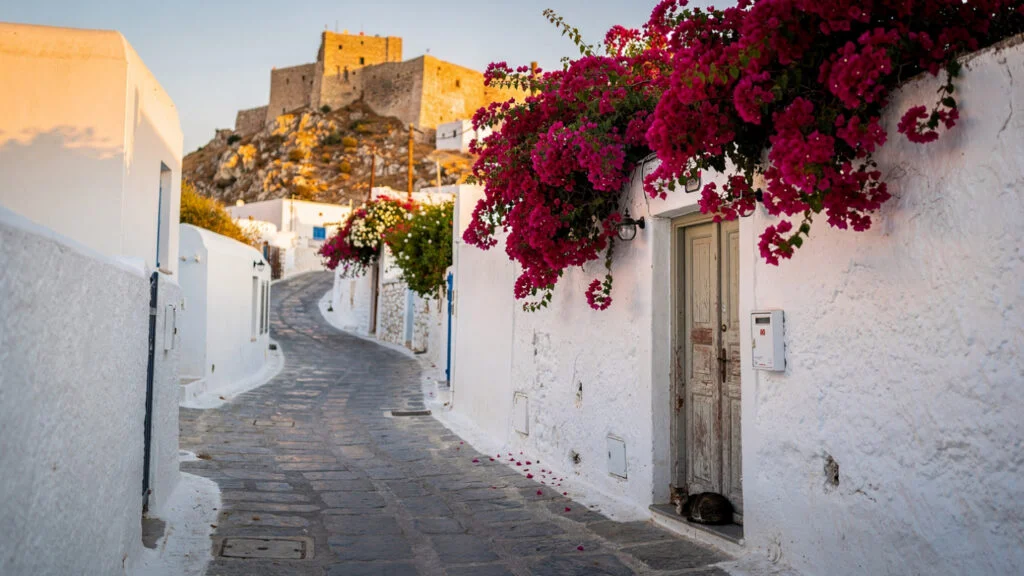
The village is whitewashed in the Cycladic convention, with the intensity of the whitewash that the island’s limestone and the Cycladic light together produce, but its organization is the organic organization of a settlement that grew from a medieval Venetian fortification rather than from a planned tourist development. The Kastro, the medieval tower that anchors the highest point of the village, is still there, and the lanes that descend from it into the village below follow the logic of the medieval settlement’s defensive arrangement rather than the logic of the tourist promenade.
Walking through the Chora’s lanes in the early morning, before the day visitors who have slept in the port villages begin the ascent, is the walk through the Cycladic village in its most undisturbed form: the bougainvillea on the whitewashed walls, the cats in the doorways, the smell of the morning bread from the single bakery, and the quality of the light in the eastern-facing lanes at the hour when the Aegean sun first reaches them. The Chora has approximately forty churches for a village of a few hundred permanent residents, which is the Cycladic arithmetic of the island community that built a church for every family or every neighborhood rather than for a planned congregation, and the small squares that the churches create in the lane network are the spatial punctuation of the village’s layout.
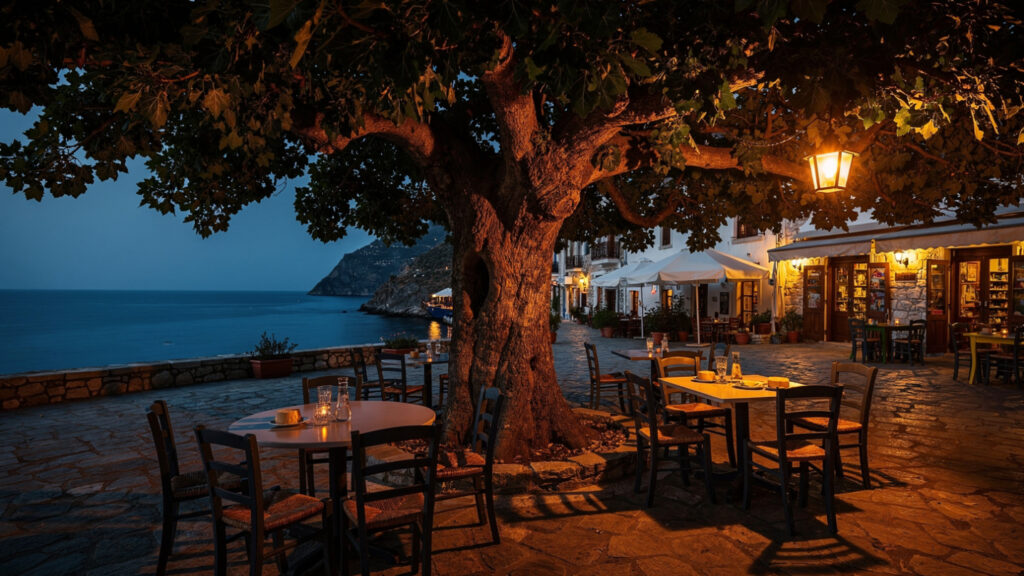
The village fills in the late afternoon when the entire island seems to converge: the cafe tables in the main square under the mulberry tree, the ouzo bars that open as the heat drops, the tavernas along the main lane that begin setting their outdoor tables as the light changes. The Chora’s evening is the Amorgos experience in its most social form: the small concentrated space of the village center holding the combination of permanent residents and summer visitors in the proportion that makes a Cycladic village evening different from a restaurant district in a larger town.
Katapola and Aegiali | The Two Ports and Their Characters
Amorgos has two ports of very different character, and the choice of which to use as a base is effectively the choice of which kind of Amorgos experience to organize around.
Katapola, the main port on the southwestern coast, is where the majority of the ferries arrive and where the majority of the island’s practical commercial life is concentrated: the harbor with its fishing boats and the tavernas along the waterfront and the boat departures to the beaches that are inaccessible by road. The bay of Katapola is sheltered and the waterfront is gentle, and the settlement that wraps around the bay has the character of a working port whose tourism has been added to the working-port infrastructure rather than having replaced it.
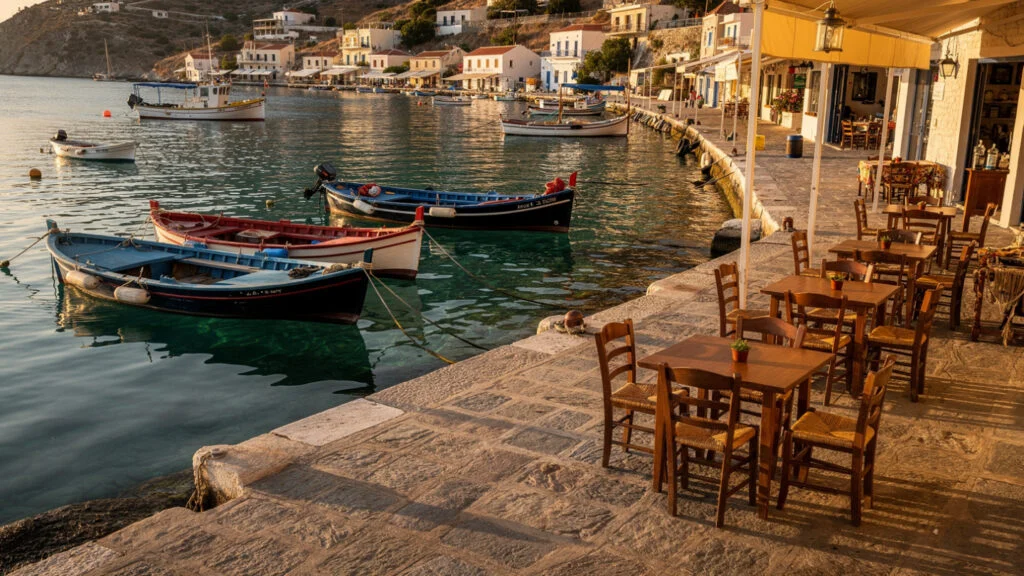
From Katapola the boats depart daily to the beaches of the southern and western coast that the road does not reach. Maltezi is accessible only by boat, with its organized sandy beach and the turquoise water that the Amorgian sea produces in the protected bay. The bay of Kalotaritissa at the southern tip of the island has its own sandy organized beach, and the departures from there reach Gramvoussa with its white sand and the color of the water in the shallower bay.
Aegiali, the port on the northern coast, is a different proposition: a deep bay with a long sandy beach along its southern edge, the three villages of Tholaria, Lagada, and Potamos arranged on the mountain above it, and a character that is younger and more actively sociable than Katapola’s. The campsite that is the island’s only organized camping is here, and the beach bars along the Aegiali beach are the organized beach experience that the rest of Amorgos largely refuses to provide.
The three villages above Aegiali, Tholaria to the southeast, Lagada in the center, and Potamos to the north, are the interior settlements of the island’s northern region whose walking connections to each other and to the port below constitute some of the island’s most rewarding trail sections. The sunset from any of the three, across the bay of Aegiali and out toward the open Aegean, is the Cycladic evening view at its most complete.
The Chozoviotissa Monastery | The Building in the Rock
The Monastery of Panagia Hozoviotissa, which appears on the eastern cliff face of Amorgos approximately 300 meters above the sea, is the image of the island that the island is most known by: a white building embedded in a vertical terracotta cliff face above the deep blue of the Aegean, visible from the sea before it is visible from any road on the island, inaccessible except by the long staircase cut into the rock below it.
The monastery was built in the eleventh century CE, in the period of Byzantine monastic expansion across the Aegean that produced the Great Meteoron in Thessaly and the Holy Monastery of Saint John on Patmos within the same century. The site on the Amorgos cliff face was chosen for the same reason that the other dramatic monastic sites of the Byzantine period were chosen: the physical inaccessibility that the location imposed was understood as the physical expression of the spiritual separation from the world that the monastic life required, and the quality of a building that could only be reached by a considerable climb and that could only be seen from the sea or from the air was the quality that made the dedication visible in the architecture.
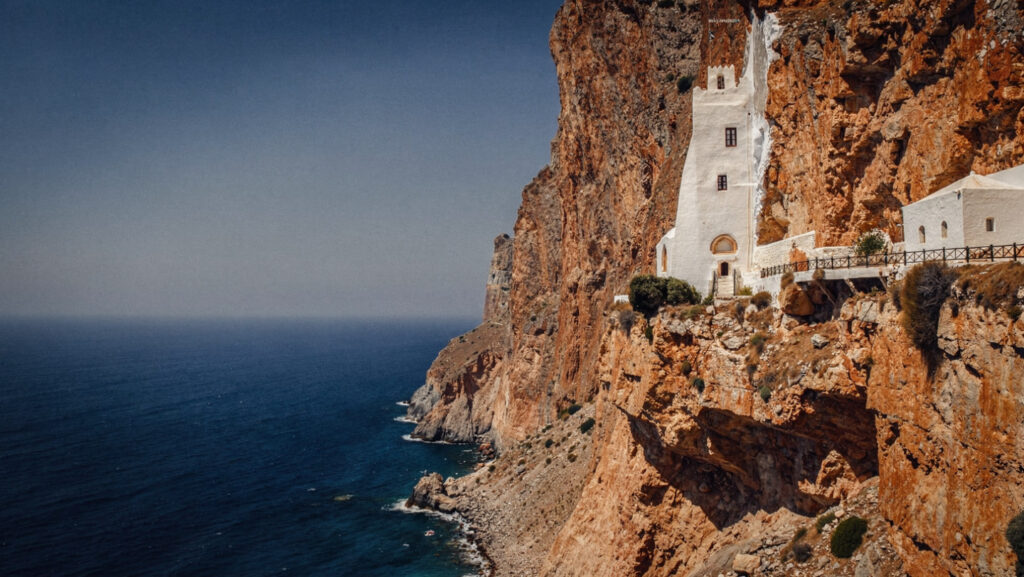
The monks’ cells and the kitchens and the storerooms and the liturgical spaces of the monastery are distributed across a building that is in some places eight stories deep into the cliff face, using the natural rock of the Amorgian limestone as the building’s structural core. The interior spaces are narrow and the ceilings follow the rock’s own contours rather than any constructed geometry, and the quality of the monastery’s interior, the cool temperature that the rock maintains even in the heat of the Amorgian summer, the light that comes through the small windows cut into the cliff face, and the accumulation of eight centuries of liturgical objects in the chapels and the treasury, is unlike the interior of any other religious building available to the visiting public in Greece.
The monastery receives visitors in the morning, and the traditional hospitality of the monks, who offer loukoumades and raki in keeping with the Aegean monastic practice of philoxenia, is the hospitality of a community that has welcomed travelers at this point on the cliff for eight centuries. The feast of the Virgin on November 21 is the island’s largest annual celebration, organized around the monastery’s patronal day, and the pasteli, the sesame and honey sweet that is the island’s festival confection, is given to everyone who comes.
The Hiking Network
The hiking trails of Amorgos are the island’s most distinctive offering to the visitor who moves through Greece on foot rather than from beach to beach, and they constitute one of the most organized and most rewarding walking networks in the Cyclades.
The Palia Strata, the Old Road, is the trail that most completely traverses the island’s character across its full length: 11.5 kilometers from the Chora to the monastery and then northward to the village of Potamos and down to the bay of Aegiali, classified as difficult and taking approximately four hours. The trail follows the limestone path that connected the island’s interior settlements to each other before the motor road arrived, and the sections between the monastery and Potamos pass through the combination of the cliff-edge terrain and the open Aegean view that is Amorgos’s most characteristic landscape.
The Fotodotis, the Light-Giver, is the shorter trail that connects the Chora to Katapola: 3.5 kilometers of descent with continuous sea view, taking approximately one hour, the ideal morning walk for the visitor whose base is Katapola and who wants to begin the day with the Chora before the heat arrives and the crowds with it.
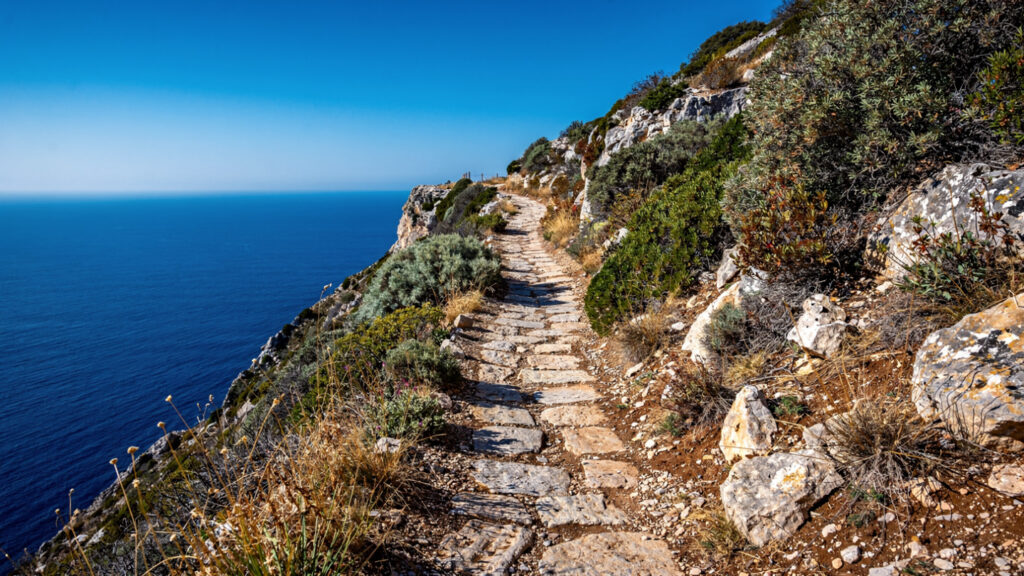
The Itonia, the cultural trail, covers 10 kilometers through the villages of the island’s southwestern interior, the ancient settlement of Arkesini whose archaeological remains the trail passes through, and the landscape between them: a trail whose value is the encounter with the island’s historical depth across the Early Cycladic, Hellenistic, Byzantine, and Venetian layers that the Amorgian countryside preserves in varying degrees of visibility.
The Melania Trail, 4.5 kilometers between Aegiali and Tholaria via the intermediate settlements of Stroumbos and Lagada with the chapel of Panagia Epalochoriani, is the easiest of the major trails and the one that gives the best account of the relationship between the three villages above Aegiali and the bay below them. The views of the Aegiali bay from the trail’s upper sections are among the most complete available encounters with the island’s northern bay landscape.
The Pan Trail, 6.5 kilometers from Lagada to the summit of Mount Krikelos at 821 meters via the monastery of John the Theologian and the chapel of Stavros, is the ascent to the island’s highest point and the panoramic view of the Aegean that the summit provides: the full arc of the Cyclades to the west, the Turkish coast to the east on clear days, and the quality of the elevated air above the island that the summit produces and the beach cannot.
The Valsamitis Trail, one hour of easy walking from Katapola to the archaeological site of ancient Minoa via the dependency of Agios Georgios Valsamitis, ends at the site where significant sections of the ancient city wall survive alongside the remains of the ancient stadium, the gymnasium, and the temple of Dionysus. The archaeological remains of ancient Minoa are the least visited of the significant archaeological sites in the Cyclades, which means the visitor who takes the Valsamitis trail finds them in the condition of a site that has not been organized for the tourist but simply preserved in the landscape.
The Beaches and the Sea Caves
The beaches of Amorgos are not the organized sandy beaches of the main Cycladic tourist circuit: with the exception of the Aegiali beach and the organized beaches accessible by the southern boat routes, the Amorgian coastline is the limestone and volcanic rock coastline of the eastern Cyclades, producing small coves of pebble and the sea-cave formations that the island’s underwater terrain creates.
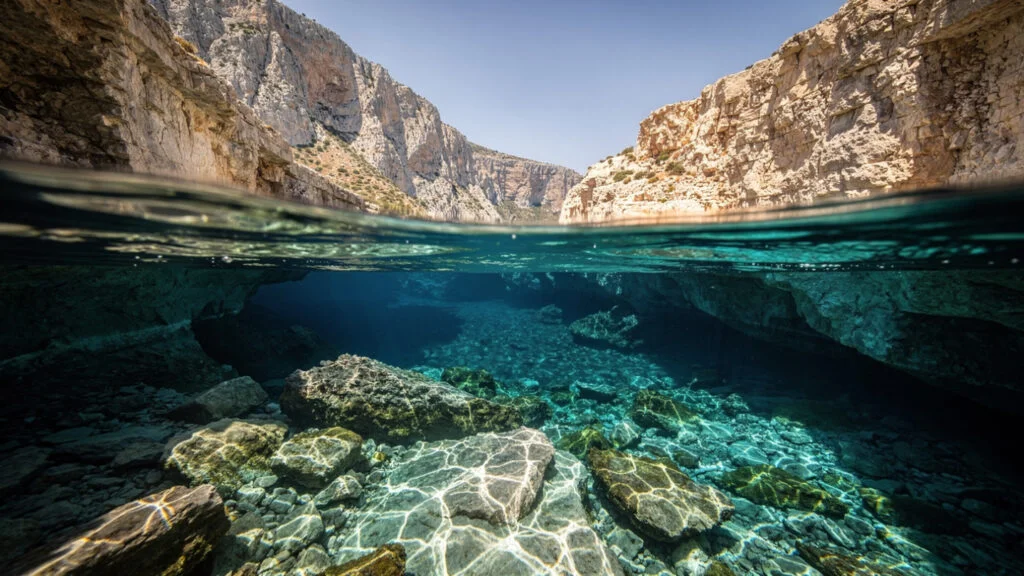
Agia Anna, the beach below the Chozoviotissa Monastery whose combination of the chapel of Agia Anna at one cove’s edge and the monastery visible on the cliff above it and the extraordinary water clarity that the depth and the limestone bottom produce, is the beach that appeared in the underwater sequences of Luc Besson’s The Big Blue in 1988 and that carries the quality of the film’s visual memory in the water it occupies. The walk down from the road above takes approximately fifteen minutes on the path, and the beach has a taverna in the summer months and nothing else: the condition of a beach that is famous for reasons most visitors cannot precisely name.
Mouros, accessible from the road above by a path through the rocky landscape, is the beach whose character is the drama of the rocks that emerge directly from the water: large volcanic formations that divide the swimming area into the pockets and coves that the Amorgian coastline produces when the geology cooperates with the swimmer’s desire for enclosure.
Liverou Bay, accessible by boat from Katapola, contains the shipwreck of the Olympia, a vessel whose presence on the Amorgian sea floor makes it the most underwater site available to the diver and snorkeler on the island and whose appearance in the underwater sequences of The Big Blue gives it the cinematic dimension that the Agia Anna beach carries on the surface.
The sea caves of the Amorgian coastline, accessible only by swimming or by boat in the calmer summer conditions, are the feature of the island’s marine environment that the snorkeling and the local boat excursions exist to reach: the caves whose combination of the Aegean light and the limestone formations and the quality of the Amorgian underwater creates the conditions that The Big Blue was attempting to document in the freediving sequences that made the island internationally known.
The Local Food
The cuisine of Amorgos is the cuisine of a Cycladic island that has preserved its agricultural and pastoral traditions more fully than the islands whose development has replaced the local food economy with the tourist supply chain. The foods of the island reflect the resources of the Amorgian landscape.
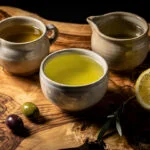
Patatato is the island’s most traditional meat dish. Goat meat is slow‑cooked with potatoes in a broth made from the island’s own goat stock and the potatoes grown in Cycladic gardens, prepared in the wood oven that most Amorgian households kept until recently and that the traditional tavernas still use. Ladotyri is the island’s cheese. It is aged in olive oil in the Cycladic method that uses the oil as both preservative and aging medium, producing a cheese whose flavor carries the character of both milk and oil.
Xerotigana are the fried pies of the island’s festival tradition, filled with the wild greens of the Amorgian countryside, the chard and fennel that grow in the spring and autumn when the summer heat has not yet arrived or has already passed. Pasteli, the sesame and honey bar that the monastery distributes at the November feast, is the sweet the island identifies as its own. It is made from the wild thyme honey of the Amorgian mountains and sesame seed in the proportion the island tradition has settled on.
The raki of Amorgos, served in the Chora bars in the evening and offered to visitors at the monastery, is the island’s expression of the Cretan tsipouro tradition. It is distilled from grape pomace and served warm in the Amorgian winter and at room temperature in the summer. It is the spirit that carries the island’s hospitality tradition.
Practical Information
The ferry service to Amorgos runs from Piraeus via the fast ferry routes operated by Seajets and Blue Star Ferries, with journey times ranging from approximately three hours by fast ferry to seven or more hours by the conventional ferry that also serves the smaller Cycladic islands along the route. The fast ferry connection makes Amorgos accessible as a direct journey from Piraeus in the time that other Cyclades take by slower vessels.
The island’s two ports, Katapola and Aegiali, are connected by a road that crosses the island’s interior through the Chora: the bus service between them is infrequent and the taxi service is limited to the island’s small fleet, which means the visitor who wants to move freely between the two ends of the island benefits from a rental car or a scooter during the stay.
The accommodation on Amorgos is primarily the small family-run rooms-to-let and small guesthouses that the island’s development philosophy has maintained as the dominant hospitality form: there are a small number of larger hotel units in Aegiali and in Katapola, but the character of the island’s accommodation is the character of the family-run establishment whose owner is present and whose knowledge of the island is the knowledge of someone who has lived there.
The best months for the hiking trails are May, June, and September, when the temperature is manageable at altitude and the vegetation is at its best. July and August are the peak months for the beaches and the Aegiali atmosphere but the most demanding months for the trails. October through April the island is at its quietest, with the minimum ferry connections and the maximum space on the paths and in the village.
At Olympus Estate, Wanderlust Greece guides you across the sacred and storied terrain of the Hellenic world. The ferry to Amorgos takes longer than the ferry to any other Cycladic island. This is the first thing the island asks of you. What it gives in return is the quality of a place that has not been organized for the visitor who was not willing to make the journey. The monastery is in the cliff. The trails are in the limestone. The sea caves are in the water. Go slowly. Take the long way.