




The myth does not begin with the abduction.
It begins with the flowers.
The Homeric Hymn to Demeter, the oldest and most complete surviving account of the myth, opens in a landscape: the plain of Nysa, a flowering meadow where Persephone and her companions, the daughters of Oceanos, were gathering flowers. The text lists them by name: roses, crocuses, violets, irises, hyacinths, and finally the narcissus, which the earth produced at Zeus’s command as a trap for the girl, a flower of such extraordinary beauty that when Persephone reached out for it the earth opened beneath her and Hades appeared in his chariot to take her into the ground.
The specificity of the flowers matters. It is not a detail added for poetic color. In a myth about the loss of agricultural fertility, the precise enumeration of the flowers that preceded the moment of loss is the Hymn’s statement about what was at stake: not an abstraction called fertility but the specific, cataloguable beauty of the world in its most abundant seasonal expression. The narcissus that served as the trap was the flower of spring, and it was the last thing Persephone touched before spring itself was lost.
Every element of the myth that follows is present in this opening: the beauty that attracted desire, the trap disguised as beauty, the opening of the earth that is both Hades’s abduction and the seed’s descent, and the loss of the world’s flowering capacity that Demeter’s subsequent grief would produce.
Demeter and the Grain
Before the myth of the abduction, Demeter was the goddess who made the agricultural world possible, and understanding what this meant in the context of the ancient Greek world is understanding what was at stake when she withdrew her power from the earth.
Greek civilization, in its archaic and classical forms, was organized around grain in the fundamental sense that grain determined the difference between subsistence and surplus, between a community that could sustain itself and one that could not. The olive and the vine, the other two pillars of the Mediterranean agricultural system, produced wealth and pleasure and the products that trade and culture required. But grain, wheat and barley, produced the calories without which no population could survive. Demeter’s domain was not agriculture in the general sense but the specific, life-determining crop whose failure meant starvation.
The winter food tradition preserves this memory in dishes like trahanas, the fermented grain that carries Demeter’s cycle into the cold months when the earth withdraws its abundance.
The ancient world knew this with a directness that the contemporary food system makes difficult to feel. In a pre-mechanized, pre-global-trade agricultural economy, a failed harvest was not an economic problem to be addressed by imports from elsewhere. It was a communal crisis in which real people died. The Athenian state maintained grain reserves and regulated the grain trade with the seriousness of a national security matter because the failure of the grain supply was the failure of the society itself.
Demeter’s power over grain was therefore not symbolic in the way that later religious thinking tends to make divine power symbolic. It was as close to literal as a pre-scientific culture could articulate: the goddess was the force whose presence in the earth, expressed through the conditions of warmth and moisture and the mysterious biological process of germination, caused the seed to become a plant and the plant to produce a harvestable crop. Her withdrawal of that force, as the Hymn describes, caused what the ancient world knew as its deepest fear: the fields that did not produce, the seed that went into the earth and did not emerge, the harvest that did not come.
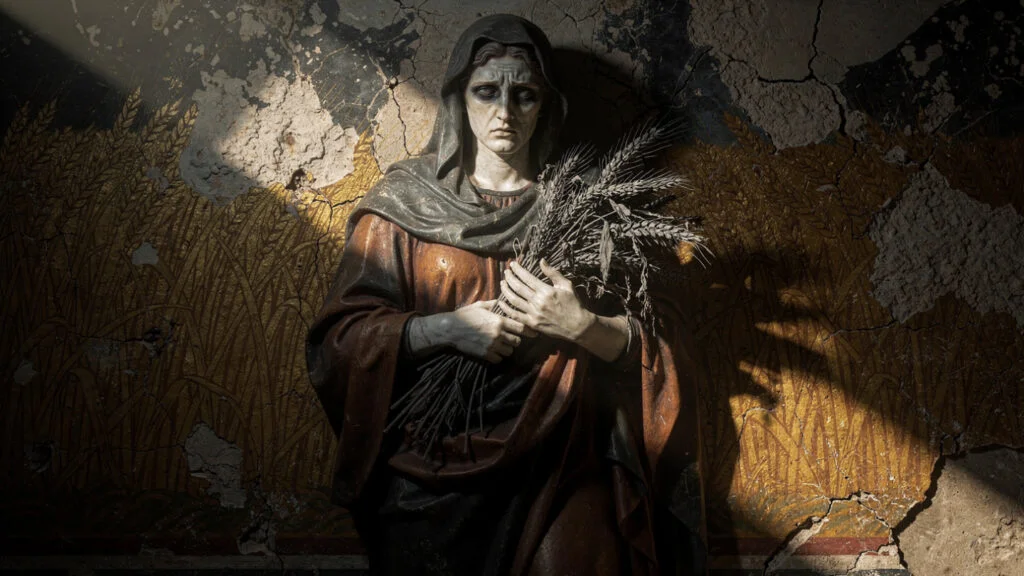
The Hymn describes what followed Demeter’s grief with the economy of a description of something the audience knew from experience: the year the grain did not grow, the year the earth was barren, the year that demonstrated what the world was without the goddess who made it produce.
The Abduction and the Silences Around It
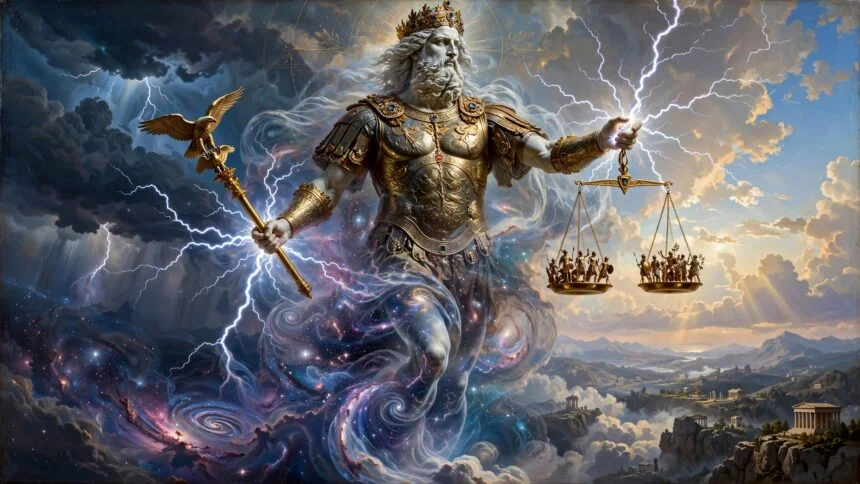
The abduction of Persephone in the Homeric Hymn is described in a way that modern readers sometimes find difficult to read without the interpretive framework of their own historical moment, and the ancient text is honest about what it describes: Hades took Persephone against her will, she cried out for her father Zeus, and Zeus had consented to the abduction.
This last detail, which the Hymn includes without commentary or moral evaluation, is the most theologically significant element of the abduction narrative. Zeus knew. He had agreed to give Persephone to Hades before the abduction occurred. The Hymn tells us this and moves on, because the myth’s interest is not in the question of Zeus’s moral responsibility, which it treats as beyond the scope of what a hymn to Demeter addresses, but in the consequences: what the abduction produced in the world, what Demeter’s response to it produced in the world, and how the situation was eventually resolved.
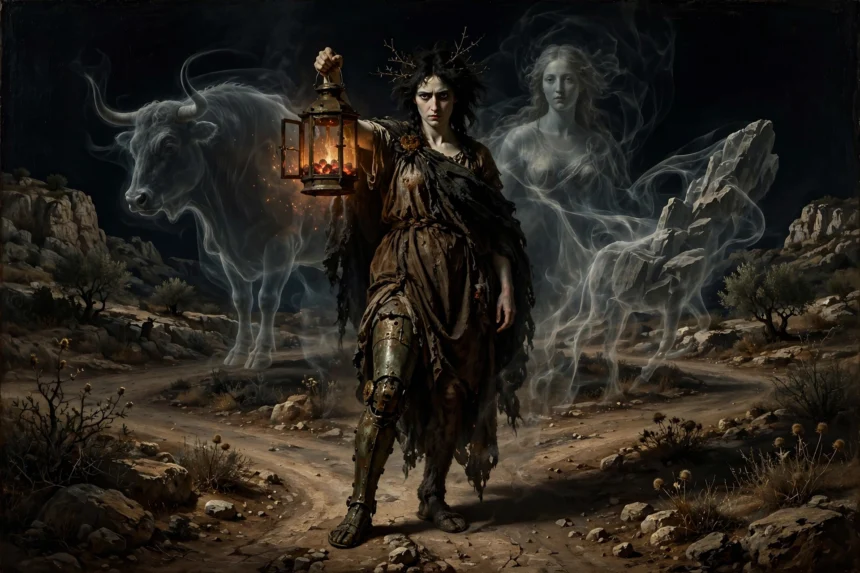
Demeter heard her daughter’s cry, but could not locate its source. The earth and the sea gave no response to her questions. For nine days she wandered the earth with torches, not eating, not bathing, not performing the ritual acts that maintained her divine dignity and power. The Hymn is about the nine days: the period of searching before Hecate, who had heard the cry without seeing the abductor, suggested that Helios, the sun who saw everything, might know what had happened.
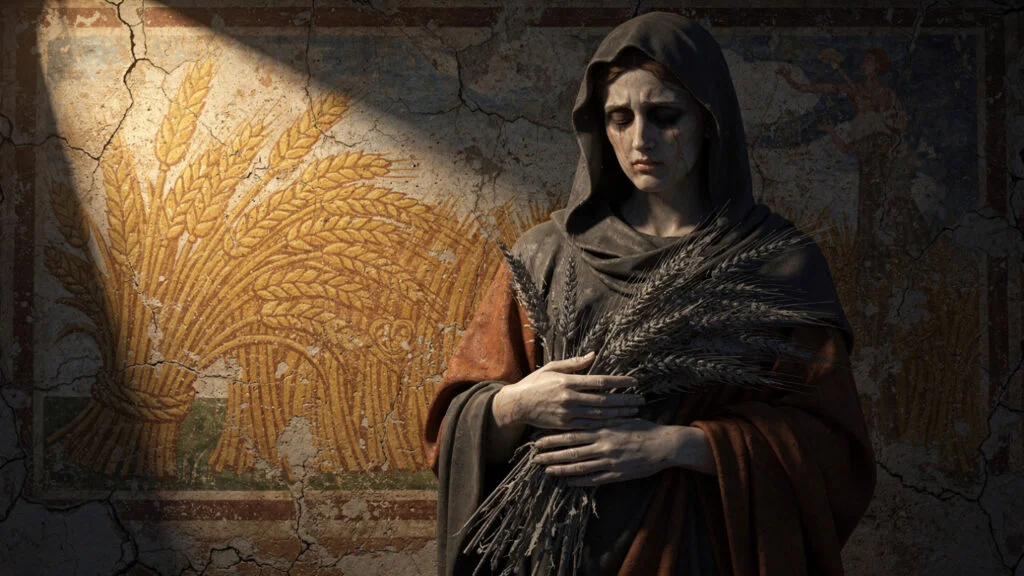
Helios confirmed what the Hymn’s audience already knew: Hades, with Zeus’s prior agreement, had taken Persephone. The sun god addressed Demeter with what reads as an attempt at consolation, pointing out that Hades was not an unworthy son-in-law. The Hymn records Demeter’s response to this perspective without describing it: she simply moved on to the next stage of her grief and her action, which was to withdraw from Olympus and the company of the gods entirely.
The myth is not interested in consolation. It is interested in consequences.
Eleusis and the Disguise
Demeter came to Eleusis in the disguise of an old woman, a mortal woman past her useful years, and sat at the well outside the city where the daughters of the king came to draw water. The encounter between the goddess in disguise and the mortal women who offered her kindness is the Hymn’s most human scene: the women’s natural hospitality, their questions about who she was and where she had come from, the old woman’s story that she was a refugee from Crete, and the invitation to come into their household and care for their infant son Demophoon.
The detail of Demophoon is the Hymn’s most extraordinary digression, and it is not a digression. Demeter, in grief for her lost daughter, received a mortal child into her care, and began to transform him into an immortal by anointing him with ambrosia and placing him in the fire each night to burn away his mortality. This process was interrupted by his mother Metaneira, who discovered the scene and screamed in horror at the sight of her child in the flames. Demeter, interrupted and angry, revealed her divine identity and explained what she had been doing, which was giving Metaneira’s son the immortality that her own daughter had lost access to.
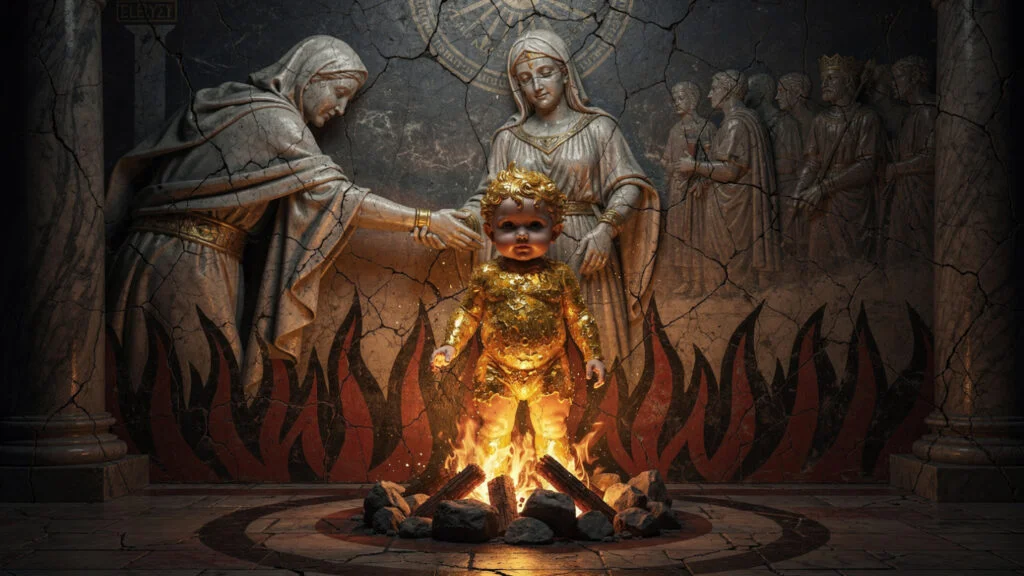
The Demophoon episode is the myth’s clearest statement of what the abduction of Persephone had taken from the world: the possibility of a mortal child becoming immortal, the connection between the divine and the human that Demeter’s presence in the world maintained, was broken by the interruption. Demophoon would remain mortal. Demeter would build her temple at Eleusis and retreat into her grief.
And the earth would be barren until her daughter was returned.
The Pomegranate
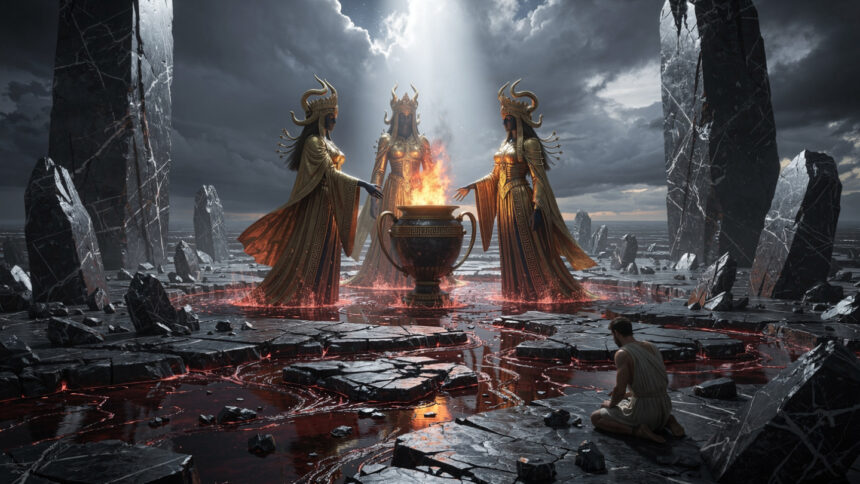
The resolution of the crisis required Zeus’s intervention, which Zeus provided by sending Hermes to the underworld to negotiate Persephone’s return. Hades released her, but first offered her pomegranate seeds, which she ate, in some versions knowingly and in others without understanding the consequence.
The pomegranate seed clause is the myth’s most precisely constructed theological mechanism. The rule that eating in the underworld bound the eater to it was not invented for this myth: it was a principle that the ancient world applied broadly and consistently, the dead eating the food of the dead becoming part of the dead’s world in the same way that the living ate the food of the living world and participated in it. Persephone’s consumption of the pomegranate seeds, even one, even three or six or seven depending on the version, was the act that made her permanent return to the upper world impossible.
The compromise, negotiated by the gods and accepted by Demeter as the best available outcome, was the annual division: Persephone would spend part of each year with her mother in the upper world and part of each year with her husband in the underworld. The precise proportion varies in the ancient sources. The Hymn specifies one third of the year in the underworld, two thirds above, which produces a mythological calendar in which the barren winter is shorter than the fertile growing seasons. Other traditions give Hades half the year, producing an equal division between the barren and the productive.
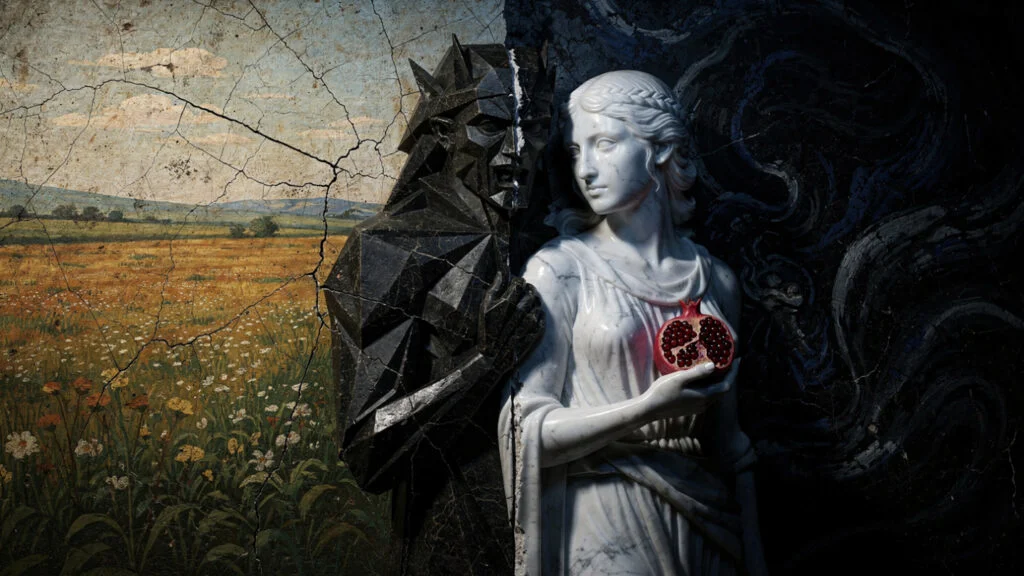
What the myth encodes in this resolution is the agricultural reality that its audience experienced and that Demeter’s domain governed: the land is productive for part of the year and barren for part of the year, and the division between the productive and the barren is not random but follows a regular, predictable cycle that the ritual calendar could track and that the seasonal agricultural practice organized itself around. The myth gives this cycle a narrative cause: not simply the nature of the climate, but the divine arrangement that followed from a historical event in mythological time.
The Mysteries
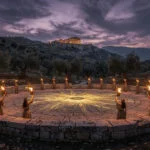
The Eleusinian Mysteries, which the myth of Demeter’s sojourn at Eleusis grounds in the gift the goddess gave the city in exchange for its hospitality, were the most prestigious and most carefully guarded religious institution in the ancient Greek world for approximately a thousand years, from the early archaic period through the late Roman empire.
What the initiates experienced in the Telesterion, the great hall at Eleusis built specifically for the mystery rites, was kept secret with a completeness that the scholarship has never fully breached. The penalty for revealing the mysteries was death, and the penalty was enforced: Alcibiades was exiled from Athens partly for allegedly parodying the mysteries in private. The secrecy was maintained so effectively that the ancient world’s own literary record, which describes the mysteries in terms of their general character and their effects without revealing their content, is the primary available source.
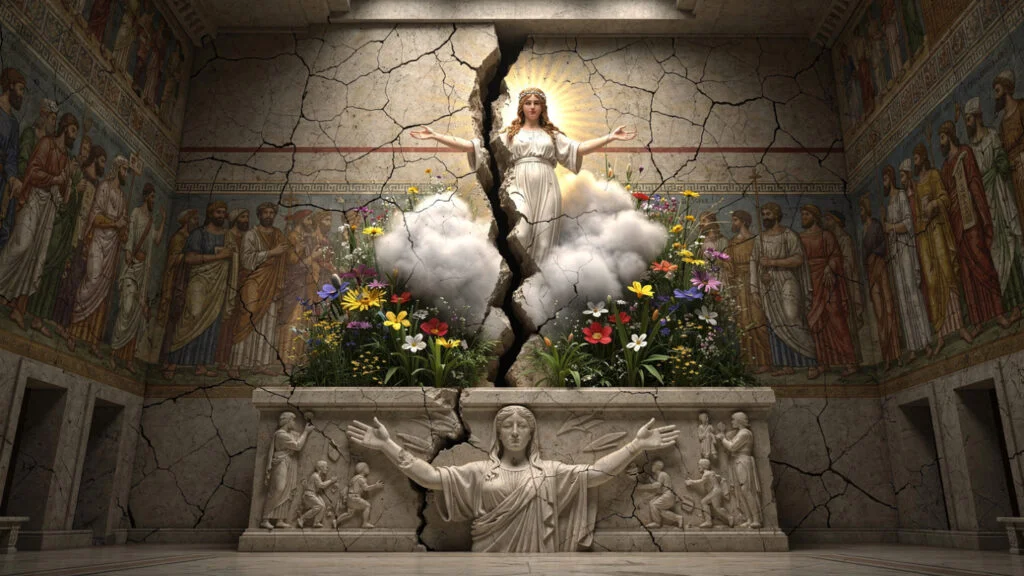
What the ancient sources do preserve is the character of the experience: the initiates who went through the mysteries at Eleusis emerged from them with a relationship to the prospect of death that they had not had before. The ancient descriptions consistently describe this change as a reduction in the fear of death, a confidence in something continuing beyond it, a sense of having witnessed or participated in a demonstration of the cycle that the Demeter and Persephone myth described: the descent into the earth and the emergence from it, the death and the return.
The Hymn’s connection between Demeter’s gift to Eleusis and the mysteries places the myth’s agricultural cycle, the seed descending into the earth and emerging as grain, in direct theological parallel with the mystery’s promise about the human soul: the person who had seen what the mysteries showed knew that descent was not the end, that the earth received what it received and gave it back transformed.
This is the deepest layer of the Demeter myth, and the layer that the mystery tradition preserved most carefully. The grief that nearly ended the world was also the grief that produced the institution that promised the world’s inhabitants that their own ending was not the last word.
What the Myth Understands
The myth of Demeter and Persephone is older than any text that records it. The Homeric Hymn to Demeter, which preserves the most complete ancient version, is dated by scholars to the seventh century BCE, but the cult of Demeter at Eleusis predates this by several centuries, and the agricultural goddess whose grief made the earth barren appears in related forms across the ancient Near East in cultures that preceded the Greek version and that the Greek legacy was aware of and in conversation with.
The Sumerian myth of Inanna’s descent to the underworld, which caused the earth to cease producing, the myth of the Hittite agricultural god Telipinu whose anger or absence caused the same barrenness, the Egyptian myth of Osiris whose death and resurrection governed the agricultural cycle of the Nile: these are not the same myth as the Demeter and Persephone story, but they address the same fundamental question that any agricultural civilization must address, which is why the earth sometimes produces and sometimes does not.
The Greek tradition’s contribution to this shared question is the psychological dimension: Demeter’s grief is not an arbitrary divine withdrawal but a response to a loss, a mother’s love for a daughter taken against her will, and the barrenness that grief produces is the natural consequence of a being whose love for the world was expressed through making it fertile, turning that love inward in mourning.
The world almost ended not because of a god’s anger or a cosmic power struggle or a natural catastrophe. It almost ended because a mother lost her child and could not find her. The scale of the consequence was proportional to the scale of the love: the goddess who made the earth produce could only do so out of the same creative force that made her love her daughter, and when that force was consumed by grief there was nothing left for the earth.
The resolution, the compromise of the seasons, was not a restoration of what existed before the abduction. It was a new arrangement, less complete than what had been lost, and the world that Demeter returned to was not the world before the narcissus was reached for. It was a world with winter in it, with barrenness built into its structure, with the knowledge that the goddess’s full power was not always available because part of her attention was always, permanently, on what was below.
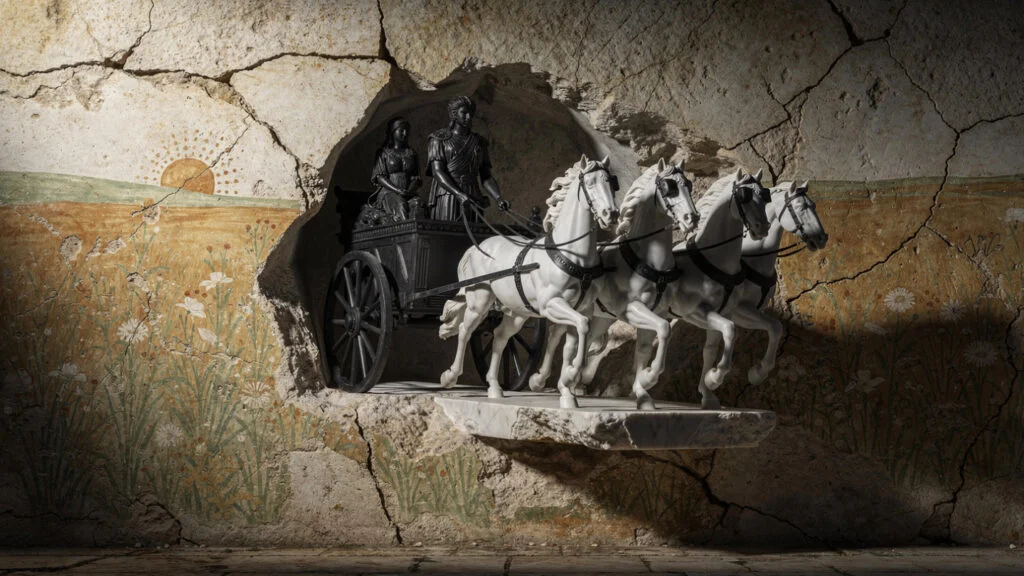
Spring is not simply the renewal of what winter took. It is Persephone returning. It is Demeter’s grief lifting for the months of reunion. It is the quality of the earth’s renewal that follows not from the natural order operating smoothly but from a mother’s joy at her daughter’s presence, temporary and therefore more intensely felt for being temporary, expressed outward into the world as the blossoming that the world experiences as spring.
The flowers that bloom in the meadows of March and April are the same flowers that were blooming on the plain of Nysa when Persephone reached for the narcissus. They are the world demonstrating that the loss did not end everything, that what was taken could be returned even if not entirely, that the grief of the goddess who nearly let the world die was not greater than the love that brought it back.
At Olympus Estate, Mythic Essays moves through the deeper currents of the Greek tradition, from the flowers on the plain of Nysa to the darkness of the Telesterion at Eleusis where initiates emerged knowing something about the cycle that the world outside could not teach them. Demeter’s grief nearly ended the world. Her reunion with her daughter is why it did not. The myth is still running.