

The night in Greece is a solid thing. It is not merely the absence of the sun but a presence that settles over the limestone ridges and the silvered groves of olives with a weight you can almost feel against your skin. If you sit on a stone terrace in the Mani or on the high, lonely plateaus of Crete after the sun has dropped behind the sea, the darkness does not feel empty. It feels crowded with history and the steady, rhythmic breathing of the earth. For the ancient Greeks, the sky was the primary text of existence. It was the clock, the calendar, and the map. In 2026, this ancient relationship is set to be renewed with a particular intensity. The year marks a rare sequence of celestial events where the moon will demand the kind of attention usually reserved for the gods of the mountain.
Darkness is becoming the rarest of commodities in the modern Mediterranean. We have traded the deep, velvet black of the ancestral night for the orange haze of streetlights and the persistent glow of our screens. Yet, in the pockets of Greece where the light of the city cannot reach, the sky remains a theater of profound clarity. The Super Moons of 2026 will act as a bridge, pulling the modern traveler back toward a way of seeing that has remained unchanged since the time of Homer. There is a specific kind of luxury in this. It is a celestial luxury that cannot be purchased or manufactured. It is the luxury of witnessing the world in its most primal, illuminated state, where the only light is the reflected glory of a sun that has long since set.
Selene and the Three Acts of 2026
The term super moon is a modern convenience for an ancient phenomenon. It occurs when the moon reaches its perigee, its closest point to Earth in its elliptical orbit, coinciding with the full moon phase. The result is a lunar disk that appears significantly larger and brighter than average, casting shadows that are sharp enough to mimic the day, though washed in a ghostly, monochromatic silver. In 2026, Greece will host three of these events, each occurring during the warmer months when the atmospheric conditions are at their most stable.
The first act occurs in late May. This is the time when the Greek spring is reluctantly giving way to the heat of summer. The hills are still green in the shadows, but the air is dry. When this first Super Moon rises over the Aegean, it will do so with a clarity that is startling. The second, and perhaps most dramatic, arrives in mid-June, coinciding with the summer solstice. This is the moon of the shortest nights, a celestial lantern that keeps the world awake. The third and final Super Moon of the year will dominate the skies in early July, appearing at its largest and brightest as it reaches its absolute closest point to the Earth.

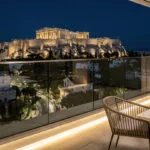
These dates are not just for the amateur astronomer. They are for anyone who understands that the landscape of Greece is best understood when it is partially hidden. Under the light of a Super Moon, the white-washed walls of a Cycladic village do not just reflect light; they seem to emit it. The marble ruins of an ancient temple, like the Parthenon or the Temple of Aphaia, lose their heavy, historical baggage and become something ethereal, suspended between the dark earth and the silver sky. This is stargazing in Greece in its most traditional form, requiring nothing more than a pair of eyes and the willingness to stay awake.
The Geography of Shadow and the Dark Sky Regions
To truly experience the power of the 2026 lunar cycle, one must move away from the glare of the resorts and the neon pulse of the ports. Geography is the great curator of the Greek night. The country is blessed with a topography that creates natural barriers to light pollution. The deep gorges of Crete, the high mountain basins of the Pindus, and the remote, wind-swept islands of the Eastern Aegean are some of the few remaining dark sky regions in Europe where the Milky Way still looks like a solid band of smoke across the heavens.
In the southern Peloponnese, the Taygetos mountain range acts as a massive wall, shielding the Mani peninsula from the light of the larger northern towns. Here, the darkness is absolute. When the moon rises over the Laconian Gulf, it illuminates a landscape of stone towers and prickly pears that looks like it belongs to another planet. The silence is broken only by the occasional call of a scops owl or the distant clatter of a goat on the rocks. This is where the concept of Wanderlust Greece finds its most quiet and profound expression. It is a travel experience that is measured in heartbeats and lunar phases rather than miles.

On the mainland, the slopes of Mount Olympus offer a different perspective. At higher altitudes, the air is thinner and colder, stripping away the haze that often blurs the horizon at sea level. The moon here does not just rise; it emerges with a violent brightness that makes the snow-capped peaks look like they are burning with a cold, white fire. The ancient Greeks believed this mountain was the home of the gods, and when you stand beneath a Super Moon on its ridges, that belief feels less like a myth and more like an observation of fact. The scale of the sky here is humbling, a reminder that the heavens were never meant to be a background. They were always the main event.


The Cycladic Mirror and the Sea Horizon
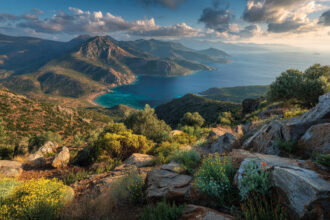
The islands of the Cyclades, particularly the more remote ones like Amorgos and Anafi, offer a unique lunar experience because of the sea. The Aegean acts as a giant, dark mirror. When the moon is at its perigee in 2026, the reflection on the water will create a path of light, a silver road that seems to lead directly to the horizon. This is a phenomenon that the islanders have lived with for millennia, a natural orientation that has guided sailors and fishermen since the Bronze Age.
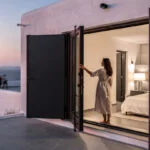
The architecture of these islands is instinctively aligned with the sky. The flat roofs and open terraces of the traditional houses are not just for drying tomatoes or laundry; they are platforms for the night. In the summer of 2026, these spaces will become the front-row seats for the lunar theater. Living in a house on a cliff in Folegandros or Astypalaia, you realize that the window is not just for the view of the sea during the day, but for the entry of the moon at night. The light of a Super Moon is strong enough to pour into a room, waking the sleeper with its persistent, cool touch. This is the heart of Greek Living, a life that is porous to the natural world.
Mythology Projected Upon the Void
The Greek night sky is a library of stories. Every constellation is a figure from a narrative that has shaped the Western mind for three thousand years. When you look up from a terrace in the Property Pantheon of a rural estate, you are not just seeing balls of burning gas; you are seeing the hubris of Cassiopeia, the bravery of Perseus, and the eternal hunt of Orion. This is where Greek mythology and astronomy merge into a single, lived experience.

In 2026, as the Super Moons bleach the sky of the smaller stars, the major constellations will stand out with even more authority. There is something deeply grounding about seeing the same stars that Ulysses used to find his way back to Ithaca. It provides a sense of continuity that is missing from modern life. The stories are not stuck in books; they are happening overhead every night. The hero Heracles is still performing his labors in the stars, and the Pleiades are still mourning their lost sister. To know these stories is to never be alone in the dark. It gives the night a familiar, almost domestic quality.
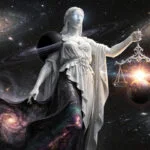
The moon itself has always been the domain of Artemis and Selene. Artemis, the huntress, was the goddess of the wild places and the silver light that allows the hunter to see his prey. Selene was the personification of the moon itself, driving her silver chariot across the sky. In the ancient mind, the moon was a living entity with a will of its own. When it grew large and bright, it was a sign of the goddess approaching the earth. In 2026, as we watch the moon swell to its maximum size, it is easy to slip back into that ancient mindset. The scientific explanation of orbital mechanics feels thin and unsatisfying compared to the visceral reality of a goddess leaning down to touch the mountains.
The Rise of Celestial Luxury and Architectural Restraint
There is a new movement in Greek hospitality and architecture that is moving away from the loud and the bright. It is a philosophy of restraint, a realization that the most valuable thing an estate can offer is the uninterrupted view of the stars. This is celestial luxury, and it is defined by what is missing. It is a property that does not have floodlights illuminating its trees. It is a terrace that is oriented toward the rising of the moon rather than the setting of the sun. It is the use of natural materials like stone and wood that do not compete with the landscape.
At properties, the design is focused on the sensory experience of the night. The outdoor spaces are conceived as sanctuaries for contemplation. The lighting is low, warm, and directed toward the ground, ensuring that the eyes remain adjusted to the darkness. This allows the guest to experience the full depth of the Greek sky, from the craters of the moon to the distant glow of the Andromeda galaxy. It is a return to a more honest way of living, where the luxury is found in the connection to the infinite rather than the accumulation of the material.
This shift toward dark-sky preservation is not just an aesthetic choice; it is a cultural one. By protecting the night, we are protecting the environment that allowed Greek culture to flourish. The philosophers of ancient Greece did their best work under these stars. The mathematicians and astronomers who first measured the circumference of the earth and the distance to the moon did so from these same rocky hills. To lose the night is to lose a part of the Greek soul. In 2026, the focus on the Super Moons will hopefully galvanize the movement to keep the Greek sky dark and its wonders visible for the generations to come.
Food, Night, and the Old Pace of the Table
The Greek table changes character after the sun goes down. In the villages, the meal is often served under the light of a single bulb or, better yet, the moon itself. When the Super Moons of 2026 arrive, the late-night dinners that are so characteristic of Greek life will take on a ritualistic quality. There is a specific pace to a meal eaten in the cool of the night. The heat of the day has broken, and the body finally relaxes.
The food served during these lunar nights is often simple and anchored in the season. A salad of ripe tomatoes and sharp feta, a plate of small, fried fish, and a carafe of chilled white wine from a local vineyard. Under the silver light, the colors of the food are muted, but the flavors seem more intense. You are eating the products of the soil that you are sitting on, a direct connection to the landscape. This is the ultimate Cultural Chronicles experience, where the history of the land is consumed through its fruit and its grain.

In some parts of Greece, there are still traces of old lunar rituals related to food. Bread is baked in the shape of the moon, or honey is offered to the hearth as a sign of respect for the cycle of the month. These are small, quiet acts that persist in the corners of the country, a reminder that the relationship with the celestial bodies was once a matter of daily survival. Even if we no longer believe that the moon controls the growth of our crops, there is a profound satisfaction in aligning our meals with its phases. It makes the act of eating feel like a participation in something much larger than ourselves.
Astronomy Travel in Greece 2026: A New Narrative
The rise of astronomy travel in Greece 2026 is a response to a world that has become too bright and too loud. Travelers are seeking out places where they can be alone with the universe. Greece, with its combination of ancient ruins and dark skies, offers a narrative that no other destination can match. It is the ability to stand in the place where the first astronomers stood and to see exactly what they saw. It is a form of time travel that does not require a machine, only a clear night and a sense of wonder.
This type of travel is inherently slow. It does not fit into a packed itinerary of sightseeing and selfies. It requires staying in one place, waiting for the moon to rise, and spending hours simply looking up. It is an exercise in patience and presence. For the traveler in 2026, the Super Moons are the anchors for this experience. They provide the specific dates around which a journey can be built, but the real reward is the quiet nights in between, when the stars are the only company and the only sound is the wind in the pines.
Whether it is a retreat in the mountains of Epirus or a secluded villa in the Dodecanese, the goal is the same: to rediscover the night. This is the mission of the Olympus Heritage Hub, to celebrate the elements of Greek life that are timeless and essential. The sky is the most enduring part of that heritage. It has watched over the rise and fall of empires, the construction and decay of temples, and the slow, steady movement of the olive groves. In 2026, it is our turn to watch back.
A Reflective Gaze into the Starlit Future
As the final Super Moon of July 2026 fades and the moon begins its long, slow retreat from the earth, the Greek night will return to its usual quiet brilliance. But those who have spent those nights on the stone terraces and the mountain ridges will be changed. They will have a different understanding of the scale of their own lives. They will have seen the world illuminated by a light that is billions of years old, reflected off a rock that has been our companion since the beginning of time.
The sky above Greece is not a static picture. It is a living, breathing part of the culture. It is the source of the myths that still govern our stories and the rhythm that still governs our seasons. By seeking out the darkness and the silver light of the moon, we are reclaiming a part of our own humanity. We are remembering that we are inhabitants of a planet, not just citizens of a city. The Super Moons of 2026 are a gift, an invitation to step out of the artificial glow and back into the ancestral night.
The path through the Greek night is one that leads eventually to the dawn, but the lessons learned in the darkness are the ones that endure. As we look forward to the coming year, let us prepare to be quiet. Let us prepare to be still. Let us prepare to look up and realize that the most beautiful things in the world are the ones we cannot own, the ones that are shared by everyone who has ever stood on this rocky earth and wondered at the light. The moon is rising, and the Greek night is waiting.