



“The flowers of the field are the alphabet of the gods.” — William Wordsworth
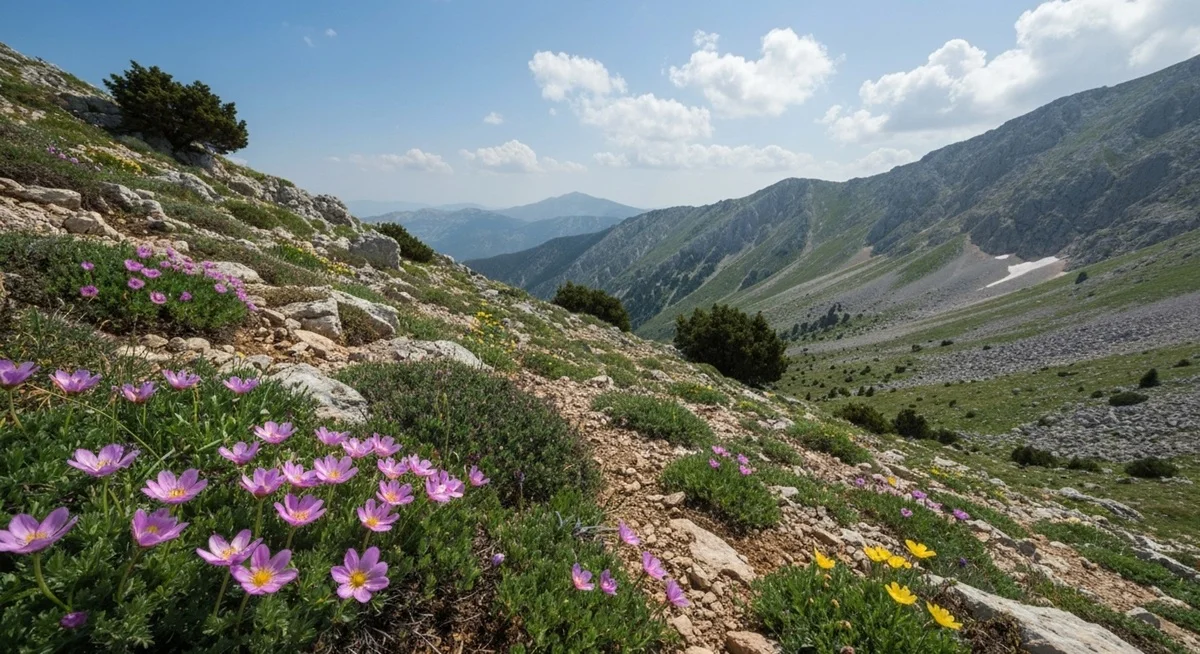
Imagine standing on a rugged slope, the air crisp with the scent of pine and earth, as vibrant petals unfurl like ancient secrets beneath your feet. Long before manicured gardens or imported bouquets dominated our landscapes, the ancient Greeks saw divinity in the untamed wild blooms that carpeted their majestic Greek mountains. These were were whispers from the gods themselves, symbols of love, loss, triumph, and transformation. From the thunderous heights of Mount Olympus, where Zeus reigned supreme, to the sun-baked gorges of Crete, the cradle of myths, these peaks remain alive with floral wonders that bridge millennia.
Today, as modern explorers, we can trace those same paths, discovering endemic species that thrive nowhere else on Earth. This is a plunge into a living mythology, where each bloom tells a tale of gods and heroes.
The Mythic Roots of Greek Flora
In the world of ancient Greek mythology, flowers were active players in epic dramas. Gods transformed mortals into blooms as punishments, memorials, or acts of mercy, weaving flora into the fabric of divine narratives. Take the anemone, born from the tears of Aphrodite mingled with the blood of her lover Adonis, or the narcissus, which ensnared the vain youth Narcissus in his own reflection. These stories reflected how the Greeks interpreted the natural world around them, especially in isolated mountainous regions where unique plants evolved in solitude.
This profound link between myth and nature underscores why Greece boasts such extraordinary biodiversity. With over 6,600 plant species, including around 800 that are endemic to the country, the nation’s geography—riddled with mountains, islands, and gorges—has created natural laboratories for evolution. The Pindos mountains, Peloponnese, and Crete stand out as hotspots, where isolation has birthed flowers that echo the gods’ whims. To wander these trails is to read a divine script, petal by petal, in a landscape that feels eternally alive.
But why do these myths endure? Perhaps because they humanize the wild, turning a simple hyacinth into a symbol of tragic love, or a laurel into an emblem of victory. As you trek through these areas, you’ll feel that connection, sensing how the ancients might have paused amid the blooms, pondering the gods’ messages in every hue and form.
Endemic Treasures: Blooms Tied to Legendary Lands

Greece’s endemic species are like hidden gems, polished by time and terrain. Thanks to the country’s fragmented landscape, with mountains acting as barriers, plants have adapted in remarkable ways. About 15% of Greece’s flora is unique to its borders, often clinging to high-altitude refuges where human impact is minimal. These wild blooms not only survive but thrive, painting the slopes in seasonal spectacles that draw ecotourists from around the globe.
The Crocus of Olympus: Herald of Renewal

Perched on the legendary Mount Olympus, home to the Olympian gods, the Crocus sieberi—often called the Crocus of Olympus—emerges like a royal proclamation. This delicate flower, with its purple petals veined in white and a fiery orange throat, pushes through lingering snow in late winter to early spring, blooming from February to April in hardy zones. It’s no wonder the ancients saw it as a sign of rebirth; Zeus himself might have scattered these blooms as tokens of his power.
Hiking the trails near Litochoro, you’ll spot clusters of these resilient beauties against gray rock faces, their colors popping like jewels in a crown. Endemic to Greece and parts of the Balkans, this crocus embodies the mountain’s mythic resilience, surviving harsh winters to herald new life. For botanists, it’s a must-see, but remember: these flowers are protected, so admire from afar.



Orchids of Crete: Nature’s Masterpieces

Crete, the mythical birthplace of Zeus, is a paradise for orchid enthusiasts, hosting over 70 species, many endemic and blooming from February to May. These intricate wild orchids, with shapes mimicking insects or even human figures, dot the White Mountains (Lefka Ori) and gorges like Samaria. The wavy-leaved monkey orchid (Orchis italica), for instance, adds a whimsical touch to the rugged terrain.
Venture to Gious Kambos plateau near Spili or the trails around Anopoli for prime sightings, these spots burst with color in spring, turning hikes into treasure hunts. Crete’s orchids highlight the island’s biodiversity hotspot status, where isolation has fostered evolutionary artistry. Their fragile elegance contrasts the dramatic landscapes, reminding us of nature’s delicate balance amid mythic grandeur.
Hyacinth and Laurel of the Peloponnese: Symbols of Sorrow and Triumph

The Peloponnese mountains pulse with stories etched in flora. The hyacinth, linked to Apollo’s tragic love for Hyacinthus, springs from the youth’s blood in myth, its petals marked with grief. Wild tassel hyacinths (Muscari comosum) flourish here in spring, their purple spikes fragrant and evocative.
Nearby, the laurel (Laurus nobilis) thrives, born from Daphne’s transformation to escape Apollo’s pursuit—now an eternal symbol of victory and poetic inspiration. Trails around Arcadia and Delphi teem with these plants, blending myth with reality. As you walk, the scent of laurel leaves might transport you to ancient games, where winners wore wreaths of this sacred foliage.
Peonies of Parnassus: Regal and Rare

On Mount Parnassus, sacred to the Muses, the Paeonia parnassica reigns supreme. This endemic peony, with deep crimson blooms unfurling in late spring, is a sight to behold amid alpine meadows. Its velvety petals and silvery leaves evoke royal elegance, thriving in high elevations where few dare venture.
Hikers on Parnassus trails often stumble upon these beauties in May and June, their bold colors contrasting the green slopes. As a protected species, it symbolizes Greece’s commitment to preserving its floral heritage.
Tulips of the South: Crete’s Scarlet Wonders

Crete and the southern Peloponnese hide another gem: the Tulipa doerfleri, a wild tulip with vivid red petals blooming in April. Endemic to these regions, it carpets plateaus like Gious Kambos, creating scarlet seas amid grass.
These tulips, shorter and hardier than garden varieties, adapt to rocky soils, offering a stark, beautiful contrast to the Mediterranean backdrop. Spot them on hikes near Spili for an unforgettable display.
Campanulas: Bellflowers Ringing in the Wild

Greece’s bellflowers, like the Campanula incurva from Evia, chime in with lavender bells in summer. These endemic species cling to cliffs and meadows, their nodding blooms a delight on mountain paths.
In the Pindos or Peloponnese, they add a soft, melodic touch to hikes, blooming from June to August and attracting pollinators in droves.
Preserving the Divine Garden: Conservation Efforts
These wild blooms face threats from climate change, tourism, and habitat loss, but Greece is fighting back. Protected areas like Mount Olympus National Park and Samaria Gorge safeguard endemic species, with NGOs collaborating on monitoring and reforestation. The Mediterranean basin, a global biodiversity hotspot, hosts over 11,000 endemics, and Greece’s role is pivotal.
Ecotourism plays a key part, guided hikes promote “leave no trace” principles, ensuring future generations can experience these wonders. By supporting local conservation, visitors become guardians of the gods’ alphabet.
Your Botanical Odyssey: A Practical Guide to Exploration
Hiking in Greece vacation, Zagori & Meteora | Responsible Travel
Timing your visit is crucial for witnessing peak blooms. Spring (March to May) is ideal for most wild blooms, while summer extends the show in higher altitudes. Here’s a quick guide:
| Region | Key Blooms | Best Trails | Bloom Season |
|---|---|---|---|
| Mount Olympus | Crocus sieberi, peonies | Enipeas Gorge, Prionia | Feb-May |
| Crete | Wild orchids, Tulipa doerfleri | Samaria Gorge, White Mountains | Feb-Jun |
| Peloponnese | Hyacinth, laurel, campanulas | Arcadia trails, Delphi | Mar-Jul |
| Pindos Mountains | Bellflowers, various endemics | Vikos Gorge, Pindus Trail | Apr-Aug |
Pack sturdy boots, water, and a field guide, apps like PlantNet can help identify finds. Join organized ecotourism tours for expert insights, and always prioritize sustainability. Trails like the Pindus offer multi-day adventures, blending wildflower spotting with stunning vistas.
As you traverse these paths, you’ll not only see the flowers of the gods but feel their timeless presence. It’s a journey that renews the spirit, connecting you to a world where myth and nature entwine.
In the end, these Greek mountains remind us that beauty endures, even in the wildest places. Whether chasing crocuses or orchids, your adventure awaits—step into the divine garden and let the blooms speak.