



The sun is new every day. This observation by Heraclitus remains the governing principle of the Greek landscape, where the light does not merely illuminate the earth but constantly redefines it. To live in Greece is to be in a perpetual state of negotiation with this light, understanding that its character changes with the tilt of the world. In the heat of July, it is a demanding judge, but in the heart of a Peloponnesian winter, it becomes a restorative whisper.
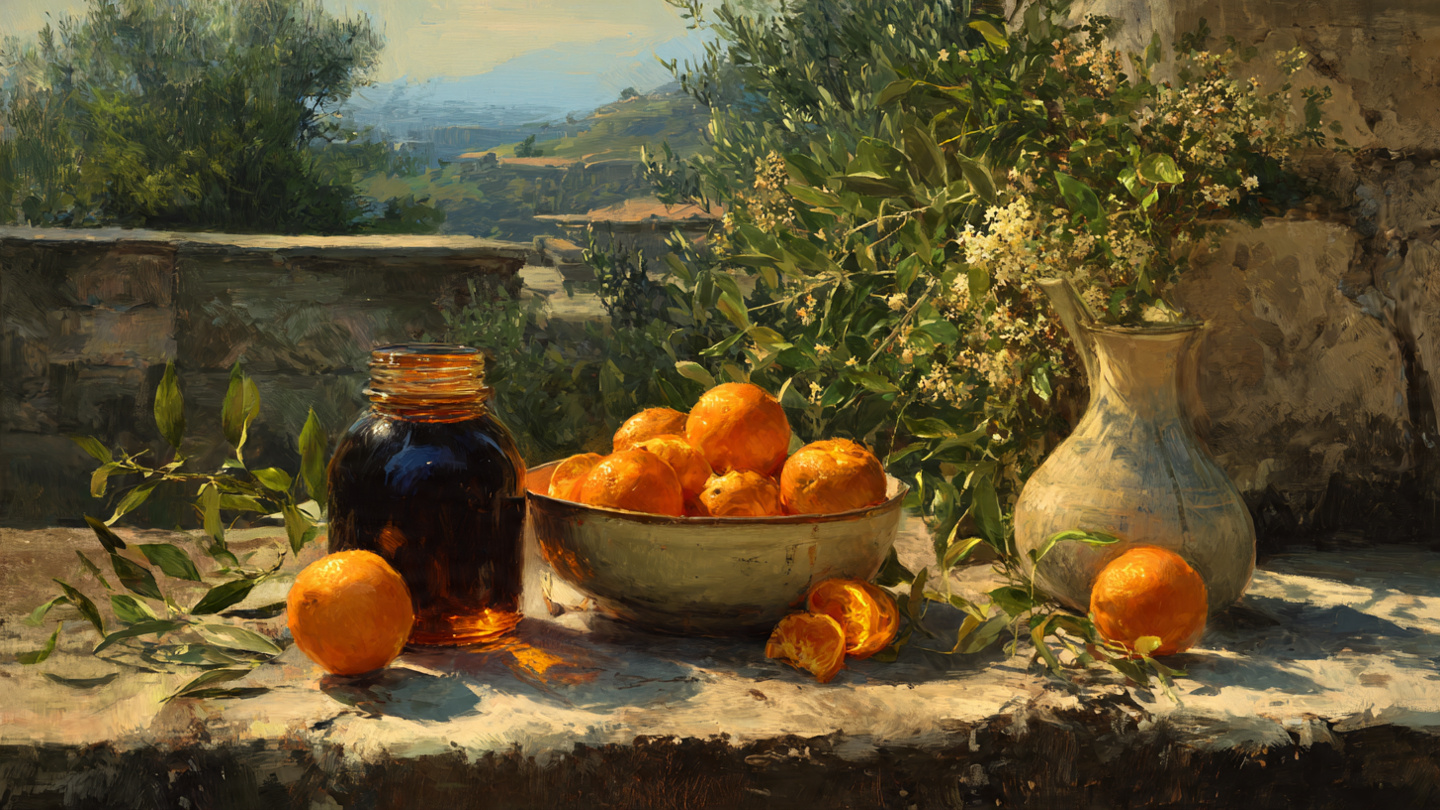
Winter in the Peloponnese arrives quietly, as if by a gentleman’s agreement between stone and sky. There is no theatrical snowfall along the lemon-scented coasts, no abrupt shuttering of life. Instead, the light simply lowers its angle, casting long, amber shadows across the ruins of Messene and the fortresses of Mani. The stone warms more slowly, holding the day’s heat like a secret. In the groves, the oranges deepen on the branches, heavy with a concentration of sugar that only the cold can provoke. Their skins grow tight and fragrant, oily to the touch. This is the season of Apollo, though few in the bustling markets of Argos or Nafplio name it as such anymore.
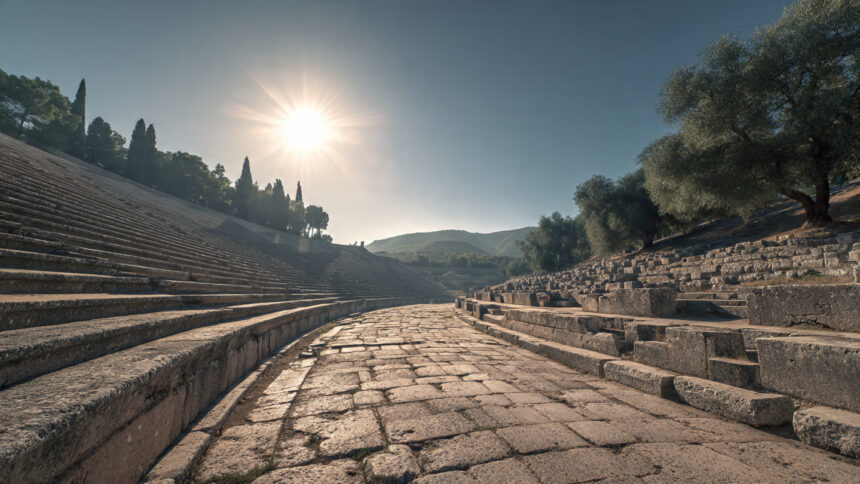
Long before these fruits were sliced at scarred wooden tables or baked in blackened village ovens, the Greeks understood winter as a profound test of balance. The darkness lengthened, yet the sun did not abandon the land; it merely changed its character. It became steadier, touching the temple steps with a clarity that summer’s haze often obscures. Apollo, god of the sun, healing, and measured order, presided over this quieter light. He was not the blazing, destructive force of the August dog days. He was the god of winter lucidity, the light that reveals the structure of the world when the leaves have fallen. This period of the year is when the Mediterranean lifestyle retreats from the shore and settles into the interior, toward the warmth of the hearth and the depth of the grove.
The Peloponnese the Geography of the Winter Light
The Peloponnese is often described through its epic cycles, the bronze echoes of Mycenae or the Spartan discipline of the Eurotas valley. Yet its truest character is agricultural, written in the dirt and the sap. Hills are layered with olives like silver scales, and valleys are stitched together by the dark, glossy green of citrus. Villages are oriented not toward grandeur, but toward the sun’s path. When the wind turns north, coming down from the peaks of Taygetos, the air carries a sharp, ozonic quality that makes the scent of the orange groves even more intoxicating.

In regions like Messenia, Laconia, and Argolis, winter does not halt cultivation; it sharpens the focus. Oranges ripen when most life retreats, their brightness feeling deliberate, almost defiant against the grey backdrop of a storm-tossed Ionian sea. Ancient farmers read this as a sign of divine favor. The sun still worked through the fruit. Healing still circulated in the juice. Greek citrus became the anchor of the winter estate, marking the heritage and continuity of life when the grain stores thinned and the nights demanded a steady fire.
Walking through an orange grove in January is a lesson in patience. The trees stand in orderly rows, their heavy fruit glowing like small lanterns against the dark foliage. There is a specific sound to this landscape, the dry rustle of leaves and the distant, rhythmic thud of a fallen orange hitting the soft earth. This is the heartbeat of the Peloponnesian winter. It is a world where the Olympus Estate philosophy of rootedness is most visible. The trees do not hurry. They wait for the precise moment when the sugar levels peak, responding to the cold nights by deepening their color.
Apollo the Discipline of the Seasonal Hearth
Apollo was never a god of indulgence. His gifts always arrived with a price of discipline. Music required tuning, healing required a bitter equilibrium, and prophecy demanded a frightening restraint. Unlike Dionysus, who ruled the heat of fermentation and the loss of self, Apollo governed the cooling of the senses. He represents the Apollonian ideal of order and clarity.
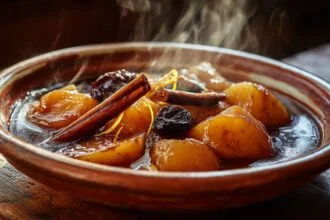
In the Peloponnesian kitchen, this manifested in a dessert that resisted spectacle. It was a dish shaped by the logic of the sun, slow, persistent, and transformative. It relied on the four pillars of the Greek landscape: oranges, honey, olive oil, and the resinous scent of mountain herbs. What survives today as a local tradition carries the echo of an ancient ritual. The citrus bitterness and the honeyed sweetness mirrored the dual nature of the god, sharp yet restorative. A Greek winter dessert shaped by this influence would never be cloying; it would warm the blood without dulling the mind.
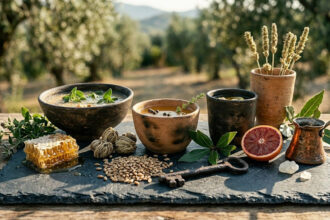

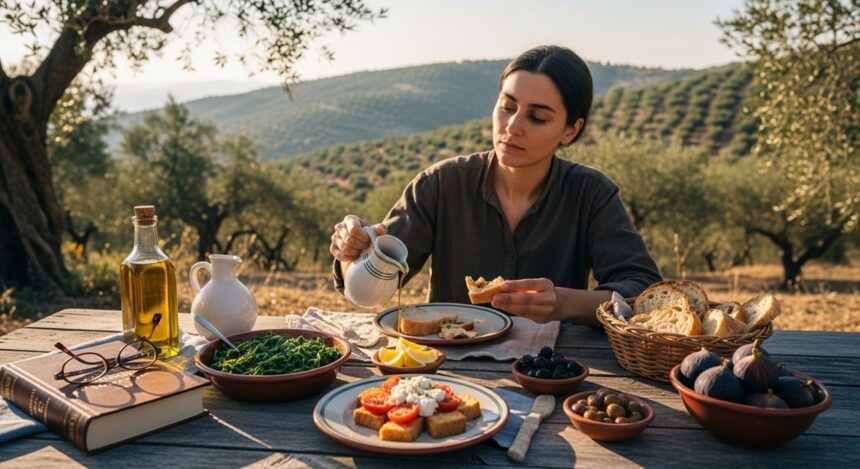
This approach to food is part of a larger mythology of consumption. The Greeks did not eat merely for calories; they ate to ingest the qualities of the land. To eat a sun-baked orange was to consume the stored light of the autumn. It was a way of internalizing the sun’s power during the months when the god himself seemed more distant. This connection to the divine through the physical is what defines the Mediterranean diet at its most fundamental level. It is about the sacredness of the ingredient.
The Golden Apples the Hesperides in the Kitchen
The presence of citrus in the Peloponnese is often linked to the myth of the Hesperides. These were the nymphs who guarded the garden of the gods, where golden apples grew. Many historians and mythographers suggest that these golden apples were actually oranges, fruits so vibrant and rare that they were deemed the property of the immortals. When Heracles traveled to the edges of the world to retrieve them, he was not just performing a feat of strength; he was bringing the essence of eternal youth and solar vitality back to the world of men.
Today, the Greek citrus groves of the Peloponnese are the descendants of that mythic garden. The fruit has been naturalized over millennia, becoming so central to the identity of the region that it is impossible to separate the landscape from the scent of the blossom or the taste of the zest. In the Cultural Chronicles of the Peloponnese, the arrival of the orange changed the way people managed their winter health. The high concentration of vitamin C was understood intuitively as a way to “keep the sun in the body” during the damp months.

The alchemy of the kitchen transforms this raw power into something more refined. When we talk about sun-baked oranges, we are talking about a process of slow concentration. It is a culinary reflection of the way the land itself produces the fruit. The orange takes months to build its flavor; the cook takes hours to coax it out. This shared pace creates a harmony between the producer and the preparer, a hallmark of Greek cuisine.
The Architecture of the Baked Orange
Before sugar was a commodity, sweetness was a functional medicine. In the Peloponnese, oranges were slowly heated near the embers, never directly in the flame. This was an architecture of patience. The heat released the essential oils from the peel, softening the natural acidity into a deep, syrupy richness. This preparation appeared after illness or long winter journeys. It was eaten slowly, often standing near the fire, a spooned offering that blurred the line between food and remedy.

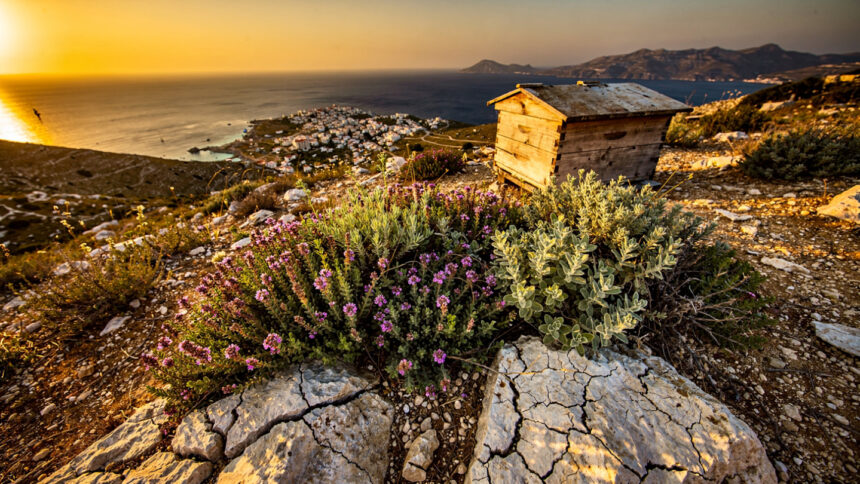
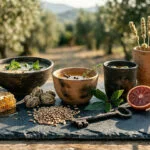
No written recipe was needed because the method was etched into the seasonal memory of the people. It was an act of internal ordering, preparing the body for the endurance required before the almond blossoms signaled the spring. The use of thyme honey, collected from the rocky slopes where the bees forage on wild shrubs, added a layer of terroir that grounded the dessert in a specific place. You could taste the mountain in the honey and the valley in the orange.
The modern version of this dish maintains that same integrity. It requires no specialized tools, only the willingness to wait. You begin by selecting thick-skinned navel oranges, the kind that feel heavy for their size. These are sliced into rounds, keeping the peel intact because the peel holds the bitterness necessary to balance the honey. In a terracotta dish, the slices are laid out, drizzled with a robust olive oil from the Messenia region and a generous amount of honey. Rosemary or bay leaves are tucked between the fruit, adding a savory, woody note that echoes the scent of the winter forest.
A Narrative of Preparation and Patience
Baking these oranges is a slow process, usually done at a low heat that mimics the gentle winter sun. As the fruit cooks, the kitchen fills with a scent that is both bright and earthy. The honey begins to bubble, mingling with the orange juice and the olive oil to create a golden lacquer. You must baste the slices, ensuring they are fully coated in this solar syrup. The goal is to reach a state where the peels are translucent and the edges of the fruit have begun to caramelize into a deep bronze.

This is not a dish that should be rushed. If the heat is too high, the honey will burn and the bitterness will become acrid. It requires the Apollonian middle way, the temperate approach. When finished, it is served warm. The contrast between the cool, thick yogurt often served alongside it and the warm, syrupy orange is a reflection of the Greek winter itself, the cold air and the warm hearth. It is a sensory manifestation of heritage and continuity.
For those who live on an estate in the Peloponnese, this dessert is a reminder of the wealth that comes from the soil. It is a luxury that cannot be bought in a supermarket; it can only be cultivated through a relationship with the seasons. It is the taste of a landscape that refuses to go dormant, a culture that finds its highest expression in the simple transformation of a single fruit.
The Measured Life the Philosophy of the Bitter and Sweet
The interplay of flavors in this winter dessert speaks to a larger Greek philosophy of life. The bitterness of the orange rind is not something to be removed; it is something to be integrated. Like the hardships of history or the difficulties of the mountain terrain, the bitter provides the structure that allows the sweet to be appreciated. Apollo’s measured order is about the inclusion of all parts of the experience.

This perspective is what makes the Mediterranean lifestyle so resilient. It does not seek a sanitized, purely sweet existence. It acknowledges the sting of the winter wind and the bite of the citrus. This honesty is what makes the culture feel so grounded and human. When you sit in a stone house in the Peloponnesian interior, eating oranges baked in honey, you are participating in a tradition that values truth over artifice.
The orange groves of Argolis or the valleys of Laconia are not just places of production. They are philosophical landscapes. They teach us about the return of the light and the necessity of endurance. They remind us that the sun is always present, even when it is hidden behind the clouds of a January storm. The fruit is the evidence of that presence.
Modernity and the Preservation of the Winter Soul
In our contemporary world, where global supply chains blur the distinction between seasons, eating seasonally in the Peloponnese is an act of Biological Command. It is a method of maintaining Personal Privacy by bypassing the algorithmic tracking of globalized logistics. By choosing the Horta (wild greens) and Laconian citrus at the peak of their winter harvest, we reconnect with the Regional Rhythms that shaped the Maniote identity for centuries.
The Olympus Estate vision of the future is one where this connection is not lost but enhanced. We look to the past not for nostalgia, but for the blueprints of a sustainable and meaningful life. The sun-baked orange is a small thing, but it represents a large idea: that we belong to the cycles of the earth. As long as the oranges ripen in the winter and the honey flows from the thyme, the Greek soul remains intact.

As the sun sets over the Messenian Gulf, the groves turn a dark, shadowy green, and the fruit seems to glow with an inner light. The fire is lit in the hearth, and the scent of baking citrus begins to drift through the house. It is a moment of profound peace, a realization that the winter is not a time of loss, but a time of preparation. The light is returning, one day at a time, just as Heraclitus promised.
The Peloponnesian winter is a season of depth. It asks us to slow down, to listen to the wind in the olives, and to taste the sunlight stored in the orange. It is a season that refuses to fade because it is rooted in the very bones of the land. We consume the light so that we may become light. We honor Apollo by finding the order in the chaos and the sweetness in the bitter. And in doing so, we ensure that the heritage of this ancient landscape continues to flourish, one winter at a time.