




In 2026, the Greek real estate market holds an average asking price of 2,150 euros per square meter. Bank of Greece data confirms a 12.4 percent annual increase in residential values across Attica. Foreign direct investment reached 2.8 billion euros in the first three quarters of 2025, reinforcing Greece’s position as a Mediterranean capital magnet.
The 2026 Golden Visa reform introduces a clarified tier system:
- 800,000 euros for Tier 1 zones (Athens, Thessaloniki, select Riviera districts)
- 400,000 euros for secondary regions
- 250,000 euros exclusively for commercial‑to‑residential conversions and restoration of listed heritage buildings
Short‑term rental restrictions are now active in central Athens. The Ellinikon megaproject has completed its first residential phase. Tourism arrivals reached a record 34 million in 2025, supporting a 5.2 percent average rental yield for long‑term coastal assets. Infrastructure upgrades continue, with the Kastelli Airport in Crete now 85 percent complete.
The Athenian Riviera and the 800k Reality
Glyfada sits under a sharp winter sun. The air carries brine and industrial dust. Diamond‑bit saws cut through marble, workers move across skeletal concrete frames. This is the physical expression of the current investment surge.
The Athenian Riviera remains the densest concentration of capital in the eastern Mediterranean. The 800,000 euro threshold has not reduced demand — it has filtered it. Investors now target the southern suburbs, where the Ellinikon redevelopment reshapes five miles of coastline into a metropolitan park and residential zone built with reinforced concrete and heat‑reflective glass.
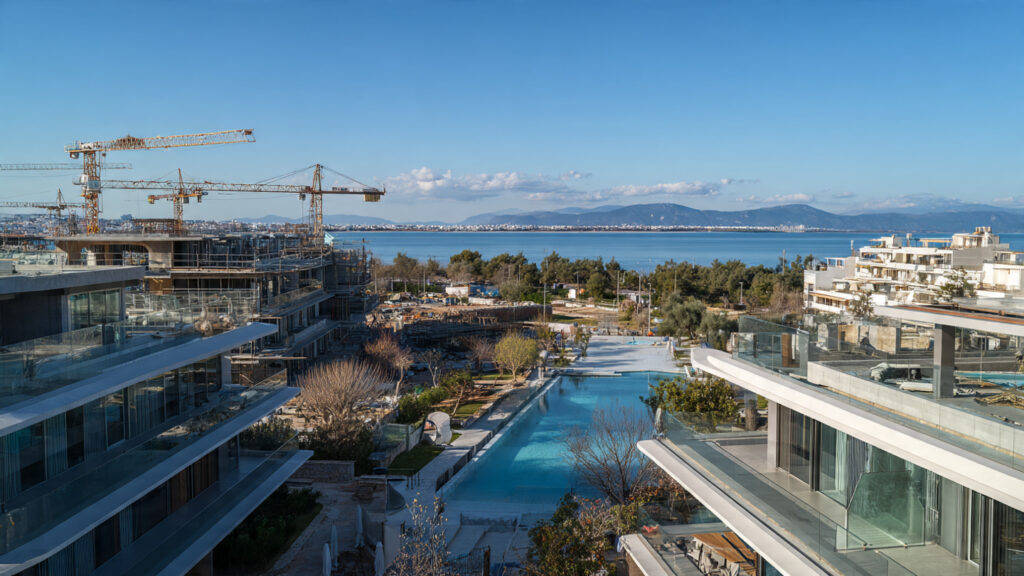
Glyfada and Voula have detached from national pricing logic. They function as a separate asset class defined by absolute land scarcity. You cannot build more coastline. This scarcity ensures long‑term appreciation. With short‑term rentals restricted in central Athens, investors pivot to long‑term luxury leases, stabilizing yields around 4.8 percent.
Central Athens and the 250k Conversion Track
The historic core remains a restoration arena. Pagrati and Kallithea dominate the 250,000 euro conversion pathway, where industrial warehouses and retail units are transformed into residential lofts. Legal requirements include:
- Full change of use registered in the Land Registry
- Compliance with modern energy standards
- Installation of double‑glazed windows and external insulation
- Oversight by licensed engineers
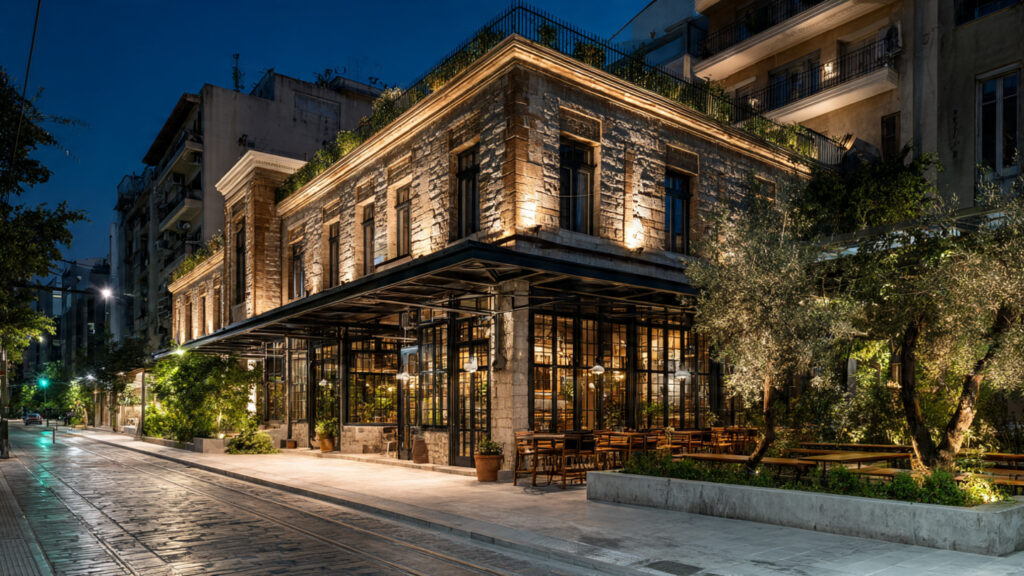
This is a technical, bureaucratic, and architectural process — but it offers the lowest entry point into the capital.
Thessaloniki and the Northern Corridor
Thessaloniki is the second structural pillar of the 2026 economy. The completion of the metro has redrawn the city’s internal geography, connecting Kalamaria and the historic center in fifteen minutes and equalizing prices across the metropolitan axis.
The market is less volatile than Athens, supported by a stable student population of 150,000. Port privatization has triggered demand for logistics and commercial conversions, particularly in the western districts where old tobacco warehouses are becoming tech hubs. Most outskirts fall under the 400,000 euro threshold, offering a balanced entry point with strong growth potential. Thessaloniki remains the gateway to the Balkans.
The Student Housing Yield
Institutional investors are expanding purpose‑built student accommodation with communal study areas and fiber‑optic infrastructure. Yields exceed 6.5 percent, with near‑total occupancy. This model is resilient and independent of tourism cycles.
Crete and the Kastelli Infrastructure Wave
Crete is undergoing its largest infrastructure upgrade since the 1970s. The new Kastelli Airport — designed for 10 million passengers annually — extends the tourist season into winter. Property values in Chania and Rethymno have risen 15 percent in two years.

The island offers high‑end villas and urban apartments with mature property management ecosystems. Western Crete remains the prestige zone, framed by the White Mountains and olive groves that reach the sea. Investors are speculating on land around the new airport, but rezoning in Greece is slow. The safer play is coastal residential property driven by functional demand from airport staff.
The Peloponnese and the 250k Restoration Path
The Peloponnese hosts the 250,000 euro heritage restoration track. The region is filled with 19th‑century stone buildings with timber roofs, many in decay. Restoring them requires:
- Lime‑based mortar (not cement)
- Preservation of original facades
- Oversight by the Archaeological Service
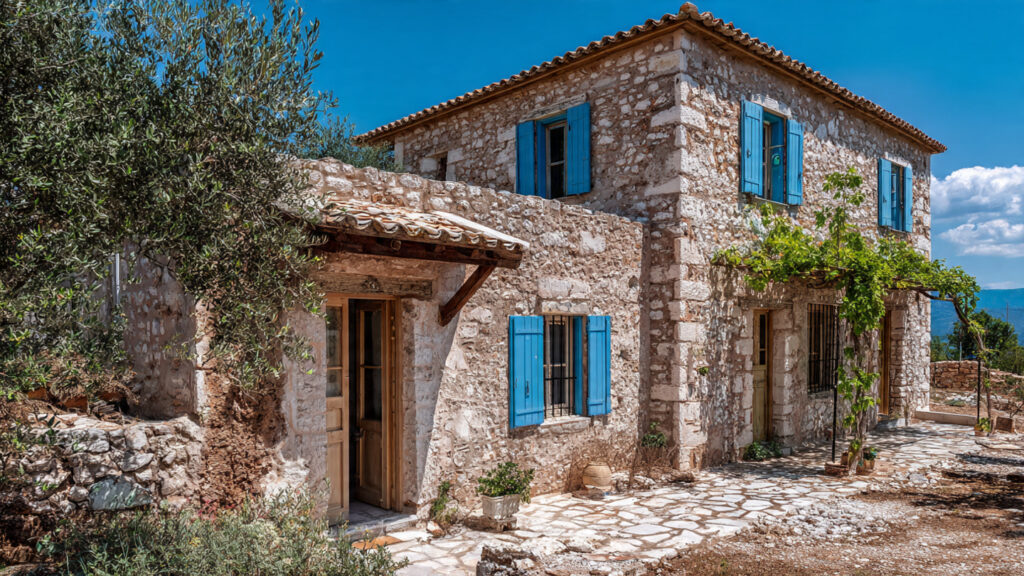
It is slow, technical, and deeply rewarding. The result is an asset with unreplicable character. Kalamata serves as the southern urban hub, with direct flights to London and Munich and a two‑hour motorway connection to Athens. Prices remain accessible, with seaside properties still under 2,000 euros per square meter.
Halkidiki and the Three Peninsulas
Halkidiki serves northern Greece and the Balkans.
- Kassandra: most developed
- Sithonia: most natural
- Athos: most restricted
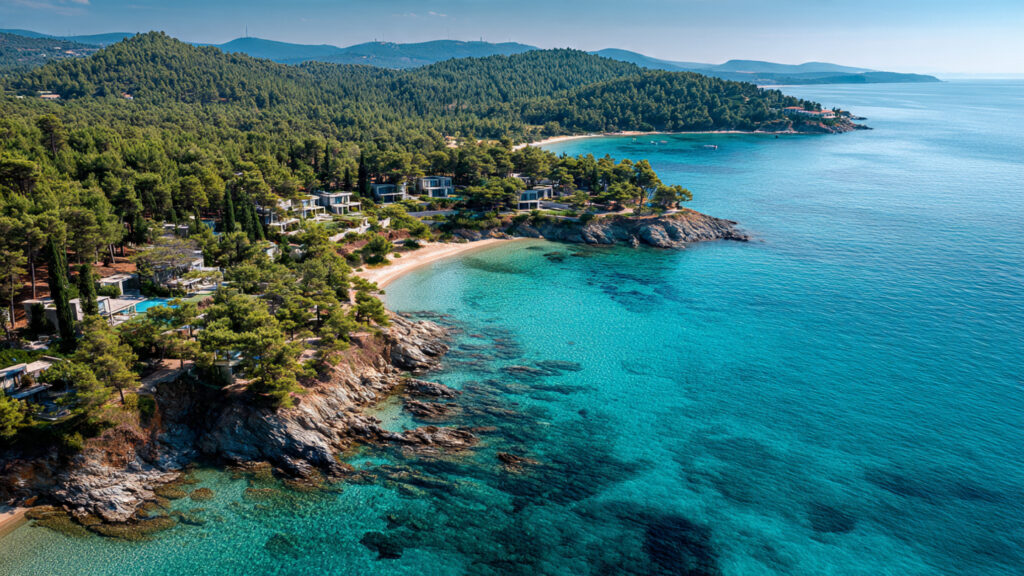
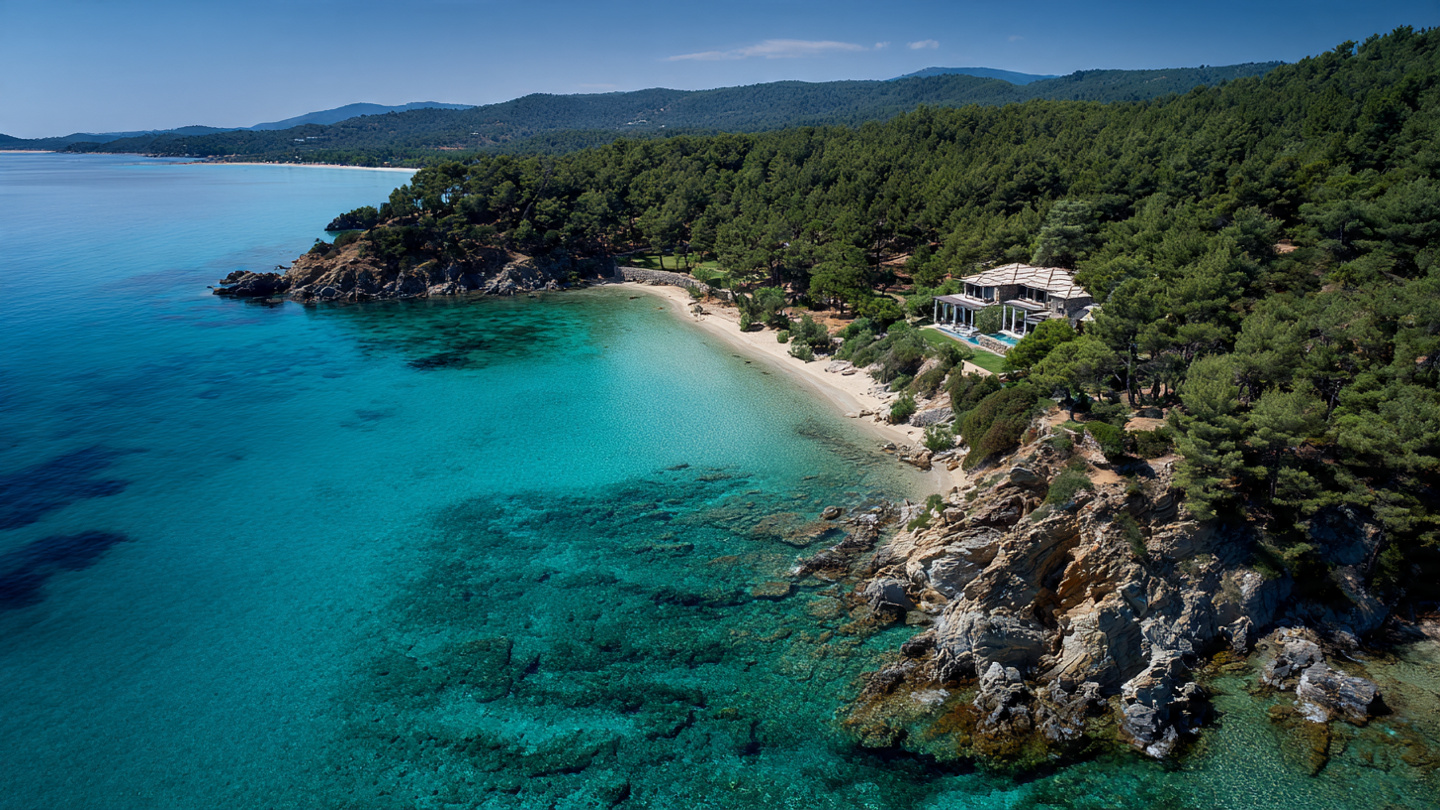
Seasonal demand is extreme, populations triple in July and August. Villas and maisonettes dominate, often built lightly for summer use, requiring vigilant maintenance. Returns concentrate in a ten‑week window. Sithonia is shifting toward luxury resorts with private beaches and old‑growth pine forests. Parts of the region fall under the 800,000 euro threshold.
Kavala and the Emerging East
Kavala is a tiered amphitheater city with a Byzantine castle and a port connecting to Thassos. Prices remain among the lowest on the coast, with renovated apartments around 1,800 euros per square meter. The eastern Macedonian coastline is underdeveloped, with long empty beaches even in June. Port privatization is expected to bring industrial activity and demand for professional housing. The city offers clean air, mountain‑sea duality, and a high quality of life.
Administrative Procedures and the 2026 Law
The 2026 reform corrected the Golden Visa’s biggest flaw: residency validity now begins at issuance, not application. With backlogs previously eroding a year of residency, this change aligns the law with investor interests.
A Greek residency permit grants visa‑free access to 29 Schengen countries. The state is digitizing archives and modernizing the Land Registry, reducing title risks and increasing transparency.
Acquisition Costs and Maintenance
Beyond the purchase price:
- Transfer tax: 3.09 percent
- Notary + legal fees: 2–3 percent
- Annual ENFIA property tax based on objective value
Maintenance varies by region:
- Coastal homes require frequent repainting due to salt exposure
- Mountain stone houses need roof inspections after winter
Property ownership in Greece is active stewardship, not passive holding.
Energy Class Requirements
New buildings must reach Energy Class A+, requiring solar panels and high‑efficiency heat pumps. Initial costs rise, but operating costs fall. With 300 days of sun, solar integration is both logical and value‑enhancing.
Outlook for 2027 and Beyond
Greece’s market is maturing. Infrastructure projects nearing completion will unlock new regions. Regulation is becoming structured, investor protections stronger, and the informal era is ending. Greece positions itself as a premier European residency destination — a blend of heritage and modernity.
The water of the Aegean is unchanged since the time of Pericles. The stone is the same. The opportunities are new.
The crane moves. The cement dries. The permit is issued.
The market continues its course. Greece is ready.