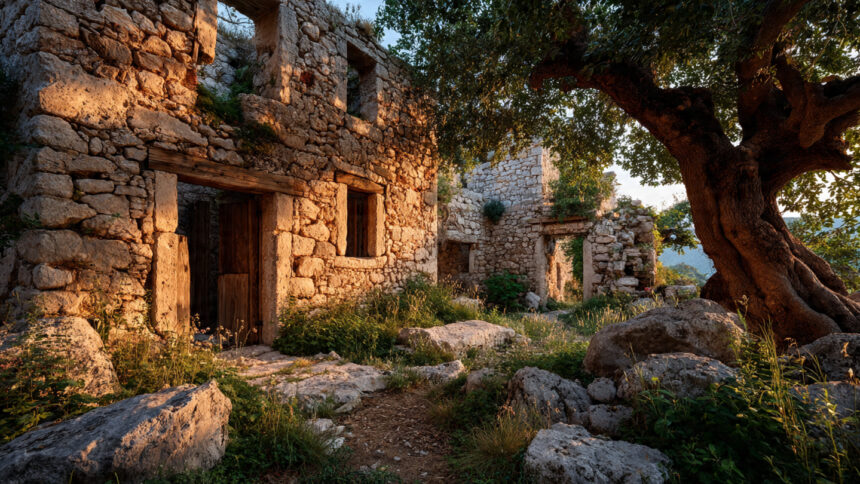




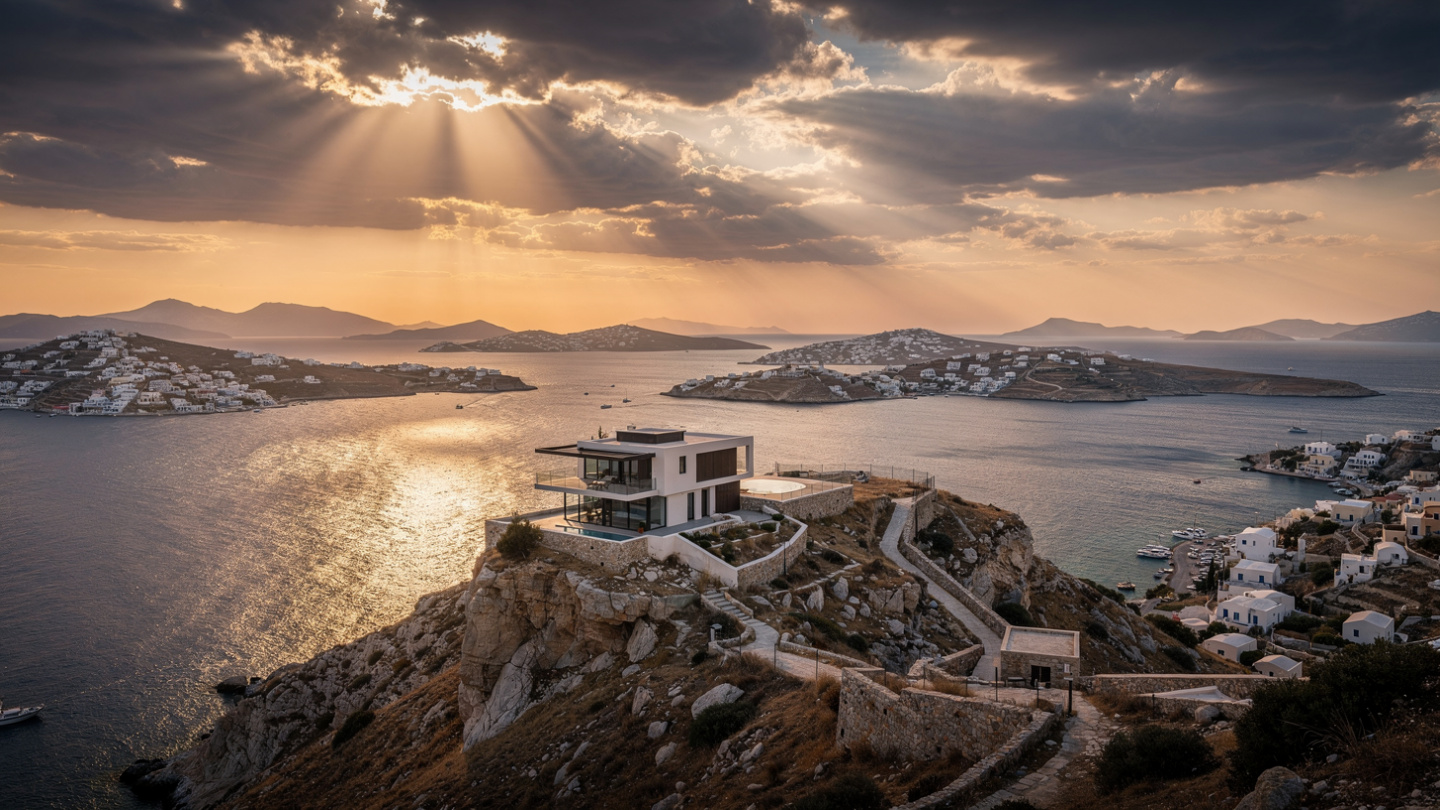
There is an old Greek word, kairos, for the moment that will not come again. The opportune instant. The crack between what was and what is about to be, where action taken at exactly this point produces what no earlier or later action could have produced.
The decision to buy property in Greece at this exact moment is a decision about timing as much as it is about taste.
The Greek property market is, in 2026, a kairos.
Not because Greece has been discovered and the prices are still low. Because it has been partially discovered, in the way that a landscape reveals itself in stages, and the stage most people are currently in is the one where the quality is fully evident but the valuation has not yet caught up with the evidence.
What the Numbers Say
Greece has the longest Mediterranean coastline of any country in the world. At 13,676 kilometres, it is more than double the Spanish coastline and more than seven times the Portuguese. This is the direct consequence of geography that no policy can replicate and no competitor can manufacture: 2,000 inhabited and uninhabited islands distributed across the Aegean, the Ionian, and the Libyan Sea, each one adding its perimeter to a total that grows longer the more carefully you measure it.
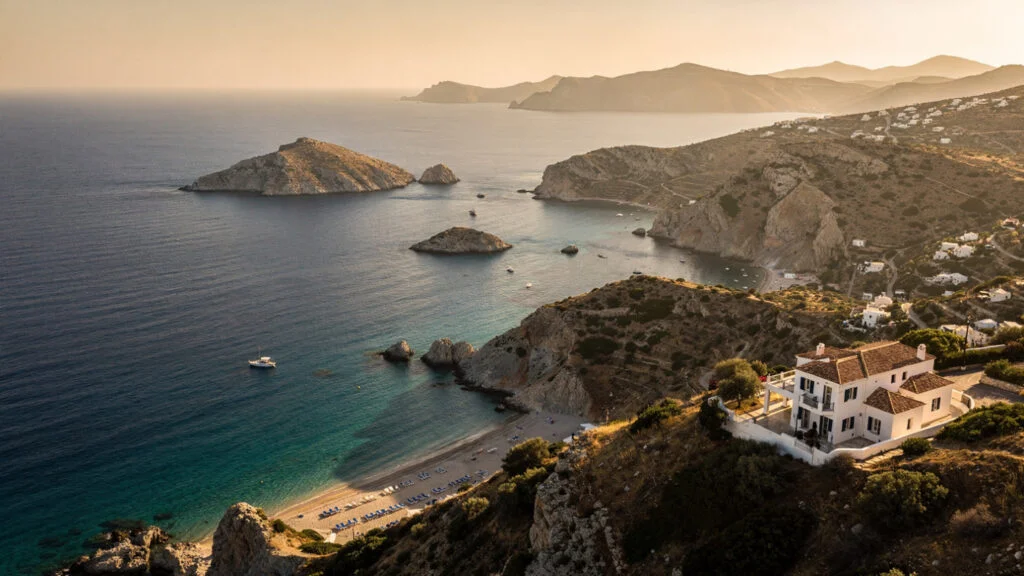
Nearly 400 of its beaches carry the Blue Flag certification. The average annual temperature sits at 18 degrees Celsius. The country receives an average of 300 days of sunshine per year. These are not marketing claims. They are meteorological measurements of a climate that the ancient world considered the gift of Apollo, the god who drove the sun across the sky and who chose this geography as the site of his most sacred oracle.
Seventeen UNESCO World Heritage sites are distributed across the territory, which places Greece among the most densely concentrated heritage landscapes in the world relative to its land area. More than 400 museums. More than 230 sites of archaeological significance formally registered with the state, alongside the uncounted thousands of sites whose significance is understood by local knowledge but not yet formally documented.
Against these fundamentals, the property prices in most of Greece remain measurably below those of Spain, Portugal, and Italy, the countries most directly comparable in climate, cultural density, and European accessibility.
This discrepancy has a history. The decade of economic crisis that began in 2010 reduced Greek property values by more than forty percent from their pre-crisis peak. The recovery that began in 2018 has been consistent and documented, with the market appreciating for twenty-seven consecutive quarters through 2026. The discrepancy between the fundamentals and the price is closing. It has not closed yet.
Arriving
Greece is accessible from every major European hub by direct flight, and the infrastructure for international arrivals has expanded substantially through the past decade. Twenty-one international airports currently serve the country, with capacity and connections that continue to increase as the tourism and residential markets develop in parallel.
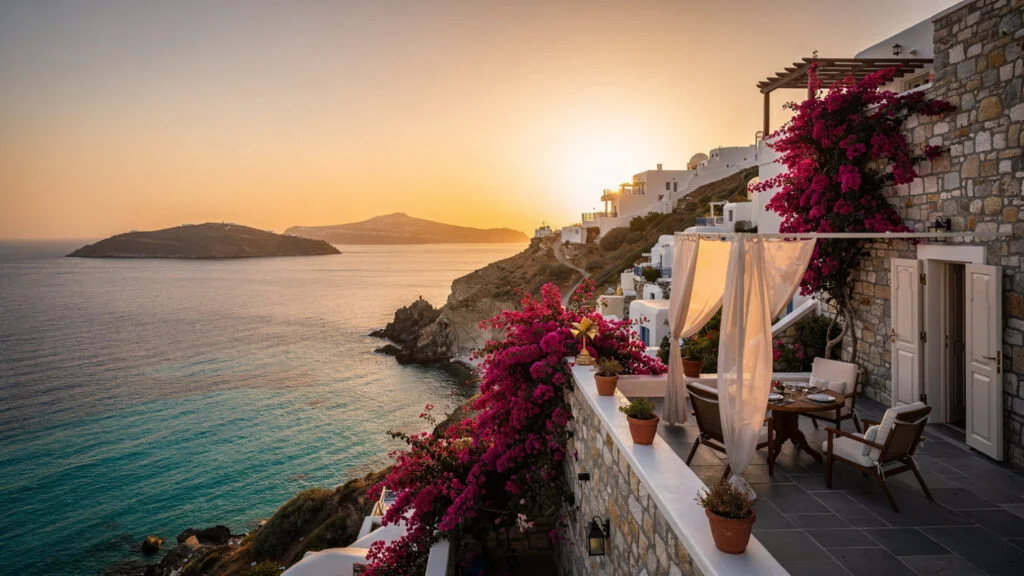
Athens receives direct connections from most major European cities in under three hours. Thessaloniki, the gateway to northern Greece, is two and a half hours from London. The island airports of Heraklion, Rhodes, Corfu, Santorini, Mykonos, and Zakynthos have direct seasonal connections to cities across Europe, Scandinavia, and the Balkans that have made island property ownership practical for a buyer based in Stockholm or Amsterdam in ways that were significantly more complicated fifteen years ago.
The mainland is accessible by road from the Balkans and central Europe, and the continuing investment in the Greek road network, including the Egnatia motorway crossing northern Greece from the Turkish border to the Albanian coast, has reduced drive times from the borders to major destinations significantly from the previous generation’s experience.
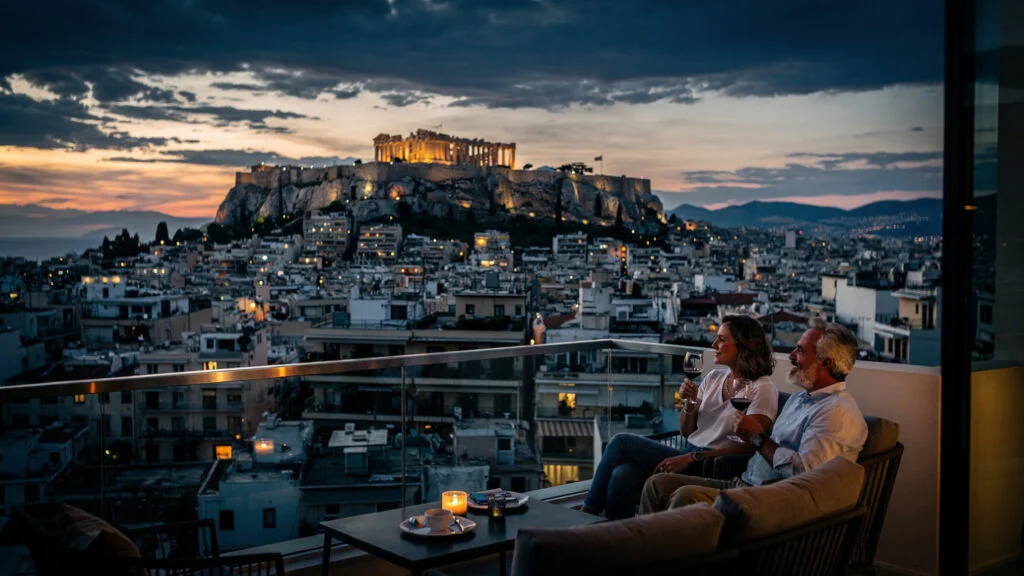
The ferry network connecting the mainland to the islands operates year-round on the major routes and seasonally on the minor ones, and the speed of the fast-catamaran services on routes like Piraeus to the Cyclades, one hour to Mykonos and Paros, has made the practical distance between Athens and the islands a matter of commuting logic rather than expedition planning.
Quality Without the Premium
The quality of life index for Greece stands significantly above Turkey, Egypt, and most of the Balkans, and the cost of living remains measurably lower than France, Italy, and Spain. This combination, European quality at sub-European cost, is the practical reality of the Greek lifestyle proposition that the property market quantifies but that the numbers alone do not fully convey.
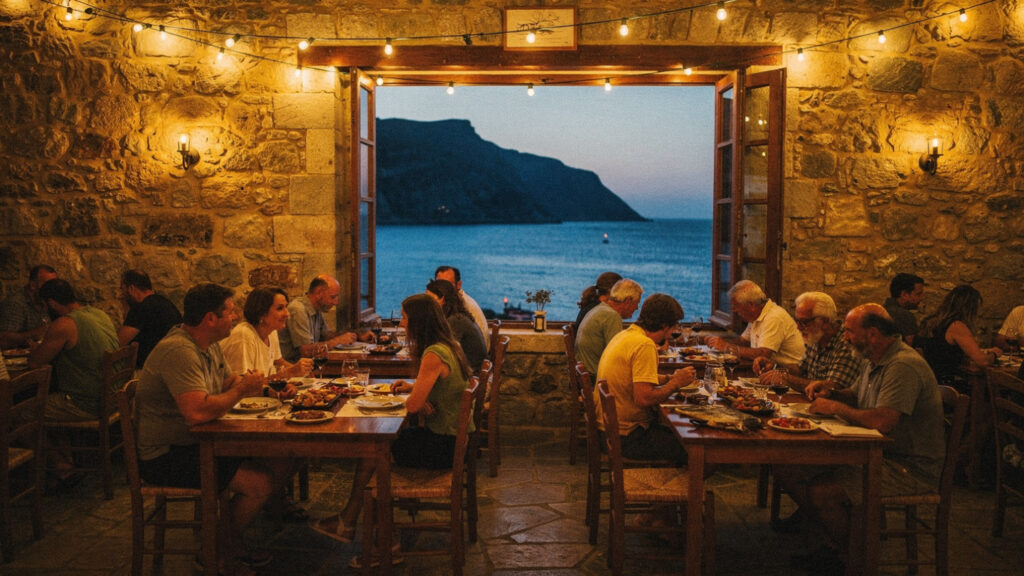
The Greek table, which this site has written about at length in the context of the mezze tradition and the food cultures of Chios, Lesbos, and the Peloponnese, is not simply a culinary category. It is the social architecture of daily life. The kafeneion and the taverna and the volta and the siesta are not quaint customs maintained for tourist appeal. They are the functioning daily rhythm of a culture that has been arranging its time differently from the northern European model for as long as the two models have been in contact, and that the incoming buyer who is looking to live differently, rather than simply to live somewhere different, finds them worth more than any number of swimming pools.
The Greek language is spoken by eleven million people, but English penetration across the country is high enough that a new resident without Greek can conduct daily life and professional dealings without significant friction. Healthcare provision at the major urban centres is European standard. The educational system provides schooling in Greek and in several international curricula through the international schools operating in Athens and Thessaloniki.
The crime rate across Greece remains among the lowest in Europe. The combination of community density that the Greek village and island environment produces, a social fabric in which anonymity is structurally difficult and neighbourhood accountability is structurally natural, contributes to a security environment that statistics confirm and residents consistently report as a defining quality of the lived experience.
The Regulatory Landscape
The Greek government has spent the past decade systematically reducing the regulatory friction that historically made property acquisition and ownership more complicated than the underlying fundamentals of the market warranted.
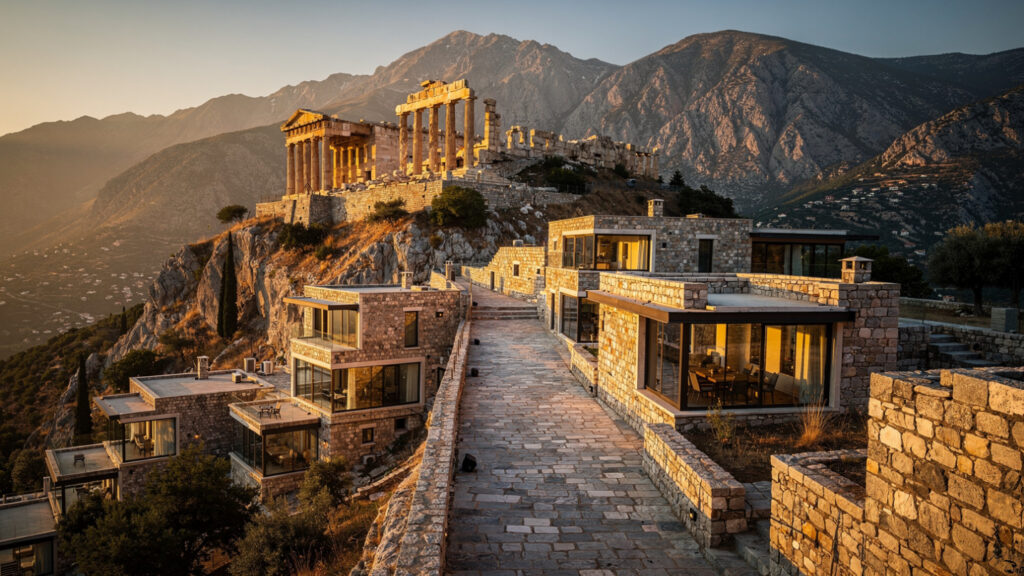
Property transfer tax was reduced from ten percent to three percent, a change that alone represents a significant reduction in acquisition cost on any meaningful property transaction. The digital cadastre programme, which has been mapping and digitising the national land registry across the country, has significantly improved title clarity and reduced the time and cost required for due diligence on property purchases in areas that previously relied on incomplete or fragmented local records.
The Golden Visa programme, which grants a renewable five-year residence permit to non-EU nationals and their immediate families in exchange for a qualifying property investment, was restructured in 2026 with thresholds that reflect the market segmentation of different regions and property types. The programme continues to offer one of the most straightforward residency pathways in the European Union, with a qualifying threshold that, in the regions not subject to the higher urban and island rates, remains accessible relative to comparable programmes in Portugal, Spain, and Malta.
The non-domicile tax residency programme, introduced in 2020 and subsequently developed, offers qualifying individuals a flat annual tax on foreign-sourced income. Combined with the Golden Visa residence right, it creates a regulatory framework for the international buyer or remote worker that is among the most specifically designed for their circumstances in the EU.
The Landscape That Does Not Replicate
Every practical argument for Greek property, the climate, the accessibility, the cost, the regulatory framework, is real and measurable and worth making on its own terms.
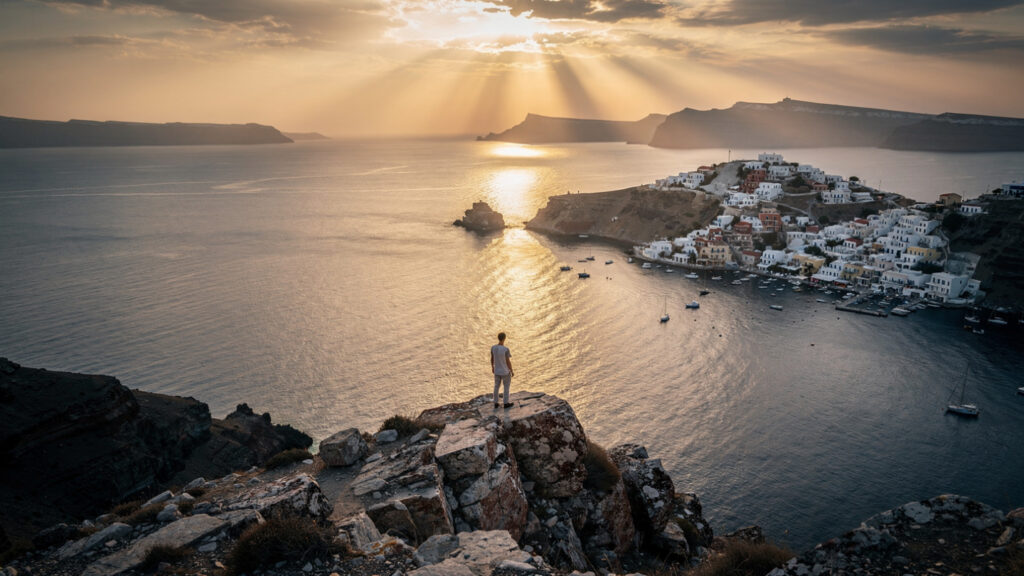
The argument that no spreadsheet captures is the one that brings people back after the first visit and converts visitors into buyers.
Greece is a landscape whose depth is not exhausted by familiarity. The island that reveals something new on a third visit that was not visible on the first. The mountain village whose architecture takes three seasons to fully read. The harbour town whose social life belongs to a rhythm so different from the origin culture of most incoming buyers that the difference itself is the attraction rather than an obstacle to it.
The ancient world placed the home of the gods at the summit of the highest mountain in this landscape, and the oracle at the centre of the earth at a hillside in central Greece, and the most significant athletic and religious festivals at locations chosen for reasons that included but exceeded the practical. These were acts of geographical attention: the identification of places whose qualities, of light, of acoustic, of relation to sky and water and rock, exceeded what the surrounding landscape generally provided.
The buyers who find Greece in this moment, the kairos, are making an act of geographical attention of their own. The quality is evident. The price has not yet caught up with the quality. The infrastructure is improving. The regulatory framework has been made genuinely workable.
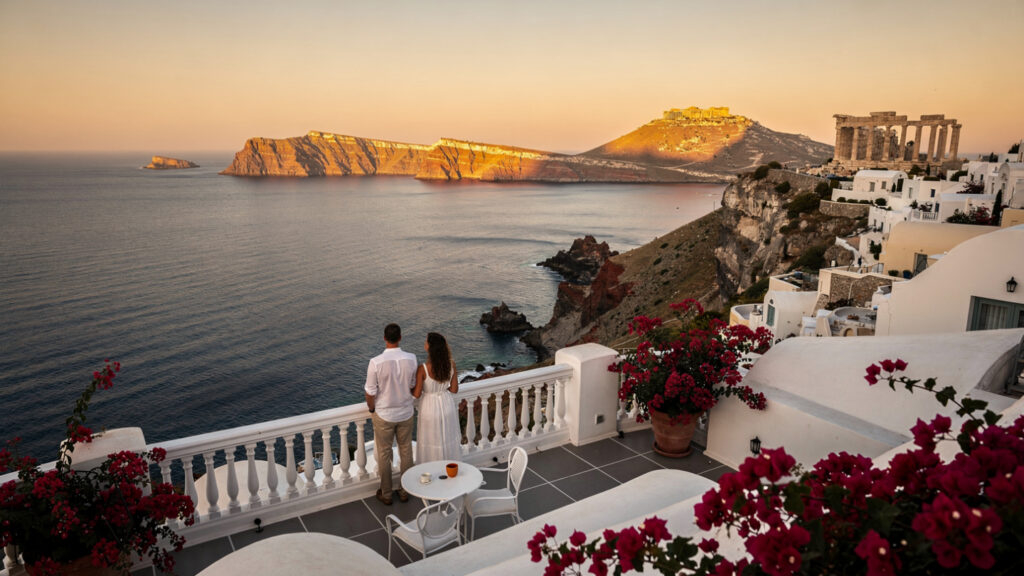
The window between these conditions and the moment when the valuation catches the fundamentals is measurable.
It is not permanent.
At Olympus Estate, Property Pantheon examines the Greek property market through the lens of the cultural, historical, and geographical depth that makes Greece worth owning rather than simply visiting. The investment case is real. The case beneath the investment case is what this site was built to make.