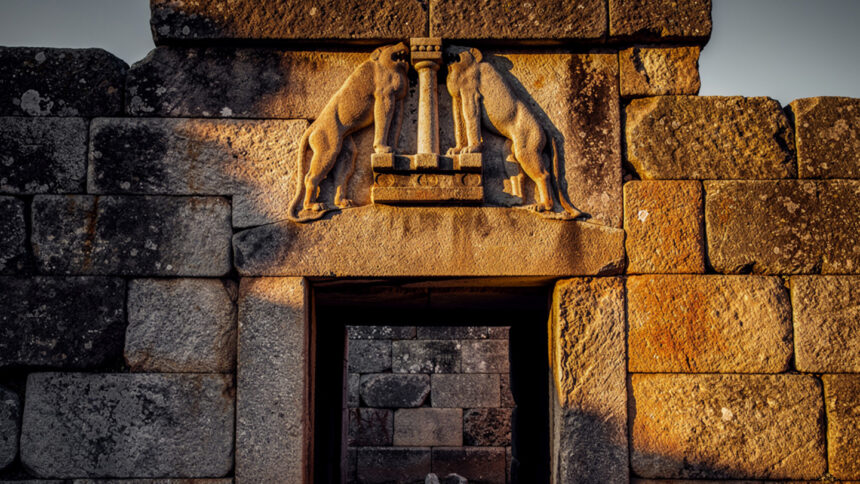






Among the many institutions attributed to Lycurgus, the legendary lawgiver of Sparta, few have drawn as much curiosity from later generations as the austere diet of the Spartan citizen. At the center of this reputation was the Melas Zomos, the so-called black broth, a preparation that ancient writers described with a mixture of fascination and unease. Visitors from other Greek cities tasted it and recoiled. Within Laconia, however, it occupied a place of quiet authority, woven into a broader system of order, restraint, and collective life that shaped the Spartan citizen from youth to old age.
Sparta was a city that organized itself around a single conviction: that the strength of the community depended on the discipline of its individual members, and that discipline required daily practice in every domain of life, including what was eaten, with whom, and in what spirit. The agoge, the rigorous system of civic and military education that shaped Spartan boys from the age of seven, was the most visible expression of this conviction. The communal meal was another, less spectacular but no less deliberate. In Lacedaemon, the table was an institution of the state.
Ingredients and Preparation
Ancient sources describe the black broth as a preparation of boiled pig’s blood, vinegar, and salt, sometimes accompanied by barley. Its color and intensity set it apart from the richer, oil-based dishes common elsewhere in Greece. Where the cooking traditions of the Aegean islands or Classical Athens reflected access to abundance, olive oil, fresh fish, wine, and a range of cultivated vegetables, Spartan fare reflected a landscape of calculated restraint.

The composition was functional in every element. Blood, rich in protein and iron, provided concentrated sustenance for a population engaged in constant physical training. Vinegar, widely used across the ancient Mediterranean, aided preservation and digestion in a climate where food spoiled quickly and the body was expected to perform reliably. Salt maintained the balance that sustained endurance, and barley, the staple grain of the Greek world since the Bronze Age, offered steady nourishment without the refinements associated with wealthier city-states.
The Greek historian and soldier Xenophon, who lived among the Spartans and sent his own sons to be educated under their system, recorded that Spartan citizens were deliberately kept lean on rations calculated to leave them wanting rather than satisfied, on the theory that hunger sharpened rather than weakened a soldier’s resolve. This was not privation for its own sake. It was a calculated shortfall, precise enough that a citizen who wished to eat more freely could do so only by hunting or foraging, activities that kept the body active even outside formal training. The diet and the military education were a single system, not two separate policies that happened to coexist.
The Syssitia and the Politics of the Shared Table
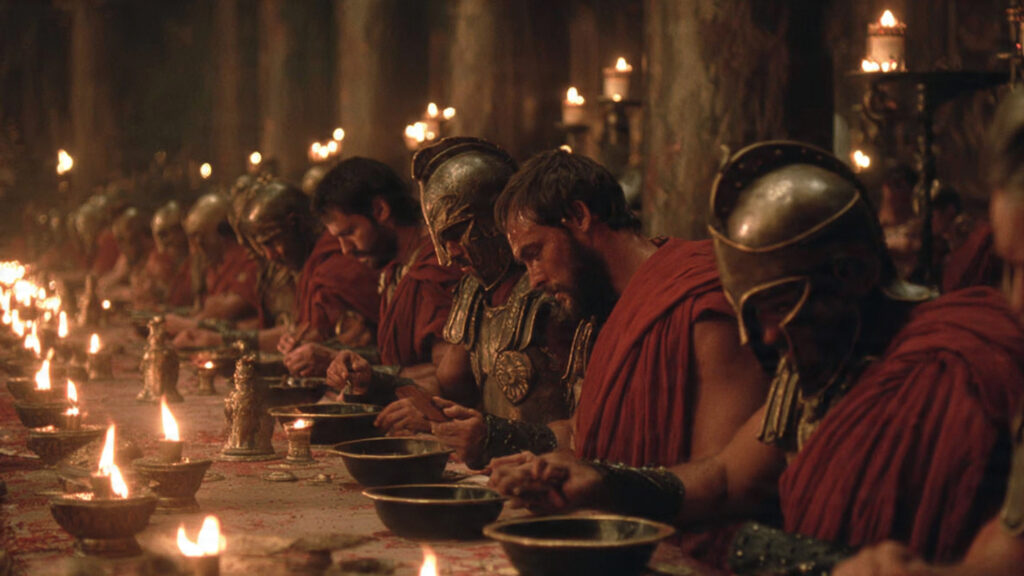
The Melas Zomos gained its fullest meaning within the institution of the syssitia, the compulsory common mess in which adult male citizens of Sparta dined together each day. Membership was obligatory. Each participant contributed a fixed portion of provisions from his own holdings, barley, wine, cheese, figs, and a small sum for additional purchases. Failure to contribute, or failure to attend, carried consequences. A man who could not meet his obligations to the common table lost his standing as a full citizen.
Within the syssitia, social rank was flattened in a way that distinguished Spartan civic life from the hierarchies visible elsewhere in the Greek world. The general and the young soldier ate the same food from the same bowls. Conversation at the table was part of the education of younger members, who were expected to listen, observe, and absorb the values of their elders through the rhythm of shared meals rather than formal instruction alone.

Even the physical setting of the syssitia reinforced its leveling function. Each mess, or phiditia, numbered around fifteen men, small enough that admission required unanimous approval by the existing members, cast by dropping bread pellets into a jar rather than by open vote, so that a single objection, delivered anonymously, could bar a candidate for life. This gave the institution a quiet, almost domestic authority quite different from the public spectacle of the assembly. A man’s standing in Sparta was determined as much by whether fourteen other men wanted to eat beside him every day as by any battlefield record.
The meal was not a moment of relaxation. It was a continuation of civic life by other means. The syssitia reinforced cohesion, reminded participants that private appetite was subordinate to collective stability, and created the daily conditions in which loyalty was maintained not through ceremony but through repetition. The Melas Zomos carried symbolic weight beyond its nutritional function. It was a reminder, served in a bowl, that the body belonged to something larger than the individual who inhabited it.
Endurance, Restraint, and Civic Simplicity
Later writers sometimes portrayed the black broth as evidence of an almost perverse severity, a society that had disciplined itself beyond the point of ordinary human pleasure. This reading misses the internal logic of Spartan life. The Melas Zomos was not intended to be unpleasant. It was intended to be sufficient. The distinction mattered enormously in a culture that measured character by the capacity to function without excess.
Spartan identity was grounded in the cultivation of resilience, and resilience was understood as a practice requiring daily renewal. By regulating culinary life, the community reinforced habits of self-control that carried directly into military conduct, political decision-making, and the management of fear. The soldier who could eat simply without resentment was the same soldier who could hold a position in the Taygetan passes without faltering.
The association of Lycurgus with dietary regulation reflects a broader pattern in Greek political thought, one in which the lawgiver shaped not only formal institutions but the texture of daily conduct. In the ancient Greek understanding of civic life, the body was a political object. What it consumed, how it trained, and in what company it rested were all matters of collective concern. The black broth belonged to the architecture of Spartan life as fully as its training grounds and its assembly halls. The Stoic philosophical tradition, emerging formally in Athens several centuries after the height of Spartan power, would later articulate as doctrine what Sparta had already embedded in daily practice: that ungoverned desire erodes both individual character and collective order, and that the cultivation of sufficiency is a form of freedom rather than a deprivation of it.
What the Broth Required
In the history of Greek civilization, food consistently occupied a position of social and moral significance that went well beyond nutrition. The table was where hierarchy was displayed or deliberately dismantled, where the values of a community were enacted in the most ordinary way possible, and where the character of individuals became legible to those who shared their company.
The Spartan syssitia took this understanding to its logical conclusion. By making communal eating obligatory, by standardizing its contents, and by tying participation directly to civic standing, Lycurgus transformed the act of nourishment into a constitutional practice. The Melas Zomos was the most concentrated expression of this transformation, a dish so deliberately stripped of pleasure that its consumption became, in itself, a statement of allegiance to the values of the city.
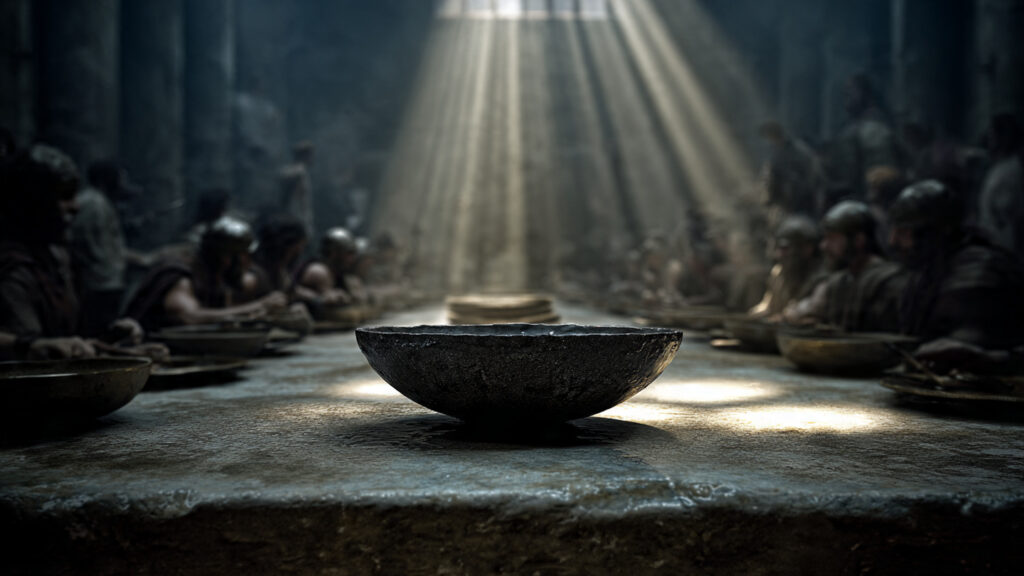
Ancient accounts record that a king of Pontus, having heard of the famous black broth, arranged for a Spartan cook to prepare it for his own table. Upon tasting it, he found it deeply unpleasant. The cook, it is said, replied that the broth could only be properly appreciated after a long swim in the Eurotas and a full day’s training under the Laconian sun. The story may or may not be historical, but it captures something true that no description of ingredients alone can: the meaning of Spartan food was inseparable from the conditions in which it was eaten, the shared labor, the physical exhaustion, the presence of equals rather than servants, the total absence of any competing luxury at the table. The king of Pontus had the recipe. He did not have the life that made the recipe make sense.
At Olympus Estate, Cultural Chronicles traces the institutions, practices, and daily disciplines that shaped Greek civilization. The Melas Zomos, the black broth eaten in Sparta’s compulsory syssitia, was never meant to be pleasant. It was meant to be sufficient, a daily reminder that the body belonged to the city before it belonged to the individual. Admission to a mess required the unanimous approval of its existing members, cast in secret by dropping bread into a jar. A king of Pontus once had the recipe prepared for his own table and could not understand why anyone would eat it. He had never trained in the Taygetan passes. He had never earned the broth.