




“We do not inherit the earth from our ancestors; we borrow it from our children.” — Native American proverb (used as a guiding principle in architectural preservation)
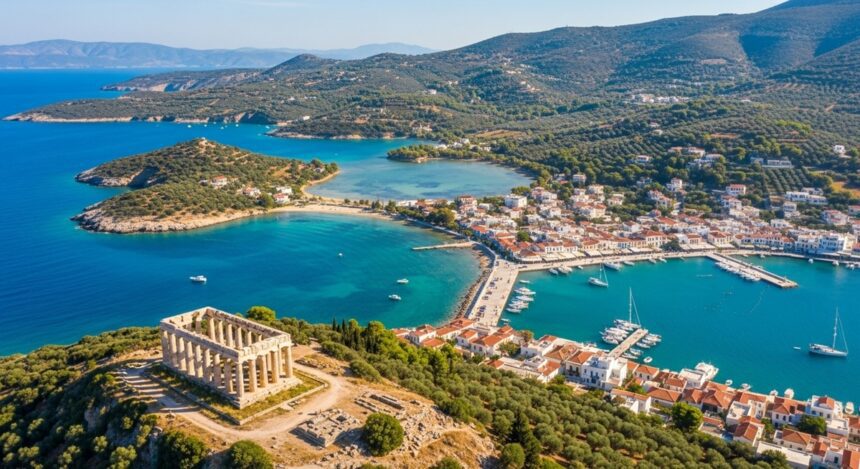
Imagine standing atop the ancient ramparts of a medieval fortress, the warm Mediterranean breeze carrying whispers of centuries past, while below, the bustling streets pulse with life that feels both eternal and urgently contemporary. This is Greece, a cradle of civilization where history doesn’t just echo; it evolves. With 19 UNESCO World Heritage sites scattered across its sun-drenched landscapes and island archipelagos, Greece offers more than picturesque ruins for tourists to snap selfies with. These sites are dynamic blueprints, fueling a renaissance in modern architecture that blends timeless wisdom with cutting-edge innovation.
In an era dominated by glass skyscrapers and cookie-cutter developments, Greek architects are turning inward, drawing profound inspiration from their architectural heritage. Sites like the imposing Medieval City of Rhodes, the elegant Old Town of Corfu, and the terraced wonders of Mystras aren’t frozen in time; they’re active influencers, teaching lessons in sustainable urbanism, resilience against the elements, and harmonious integration with nature.
The Unbroken Chain of Greek Design
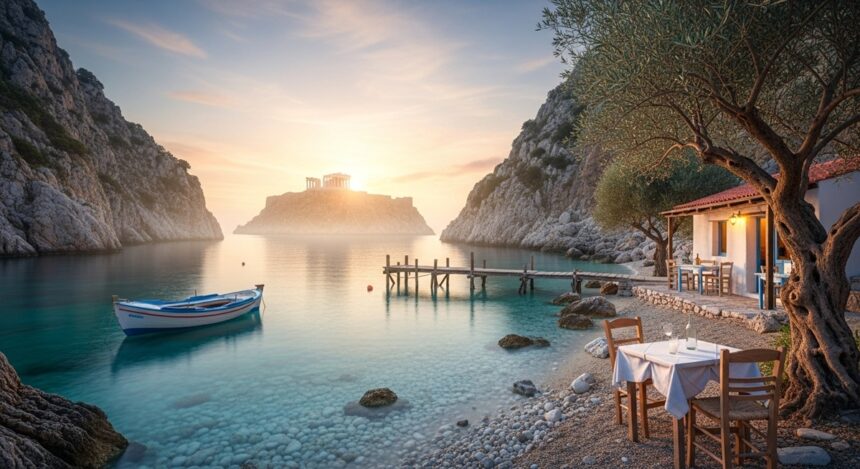
Greece’s architectural narrative isn’t a patchwork of isolated epochs; it’s a seamless tapestry woven through millennia. From the majestic columns of the Acropolis in Athens to the vaulted Byzantine churches dotting the Peloponnese, each layer builds upon the previous, adapting to societal shifts while honoring the land’s inherent character. This ethos of continuity, where new constructions dialogue with the old, forms the core of today’s Greek architecture movement. Architects are extending a dialogue that began with the ancients, incorporating traditional methods like stone masonry and passive cooling techniques into contemporary projects.
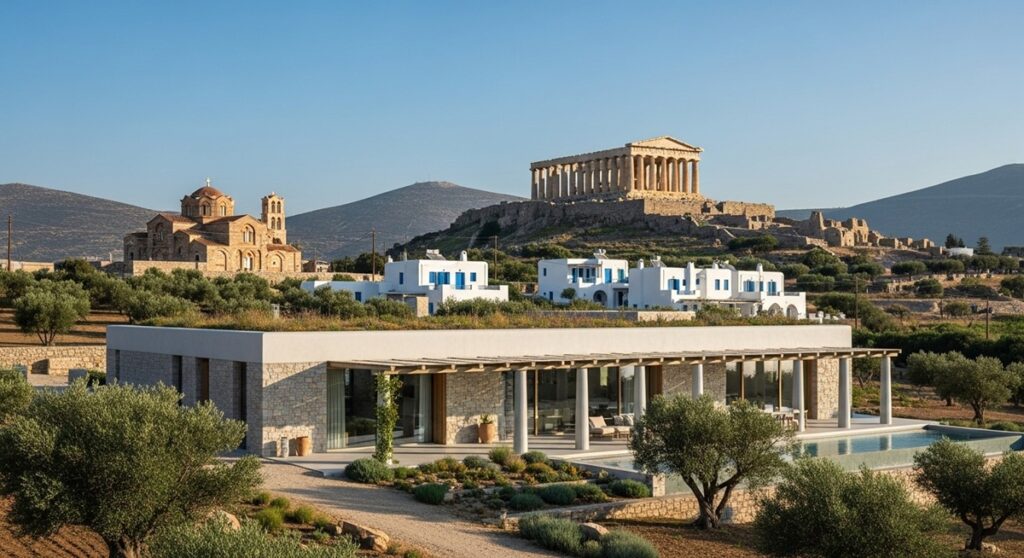
Contrast this with the global surge of anonymous modernism, where steel and concrete often erase local identity. In Greece, however, the past serves as a boundless source of creativity. For instance, the principles of proportion and symmetry from classical eras are being reimagined in eco-friendly housing developments, ensuring structures that are not only aesthetically pleasing but also environmentally attuned. This approach addresses modern challenges like climate change and urbanization head-on, using local materials such as porous limestone to create buildings that naturally regulate temperature, reducing reliance on energy-intensive systems.
What makes this chain unbroken is the deliberate respect for context. Greek designers study how ancient builders navigated seismic activity—common in this tectonically active region—through flexible foundations and strategic site placement. Today, this translates to resilient designs in earthquake-prone areas, blending heritage wisdom with advanced engineering. It’s a philosophy that champions authenticity over imitation, fostering spaces that feel rooted yet refreshingly innovative.
Case Studies in Living Heritage
To truly grasp the impact, one must explore the sites themselves. Greece’s UNESCO World Heritage sites aren’t museums under glass; they’re open-air academies where architects glean practical insights. Let’s examine several standout examples, from fortified islands to mountainous enclaves, and see how they’re informing modern design.
The Medieval City of Rhodes: A Fortress of Urban Planning
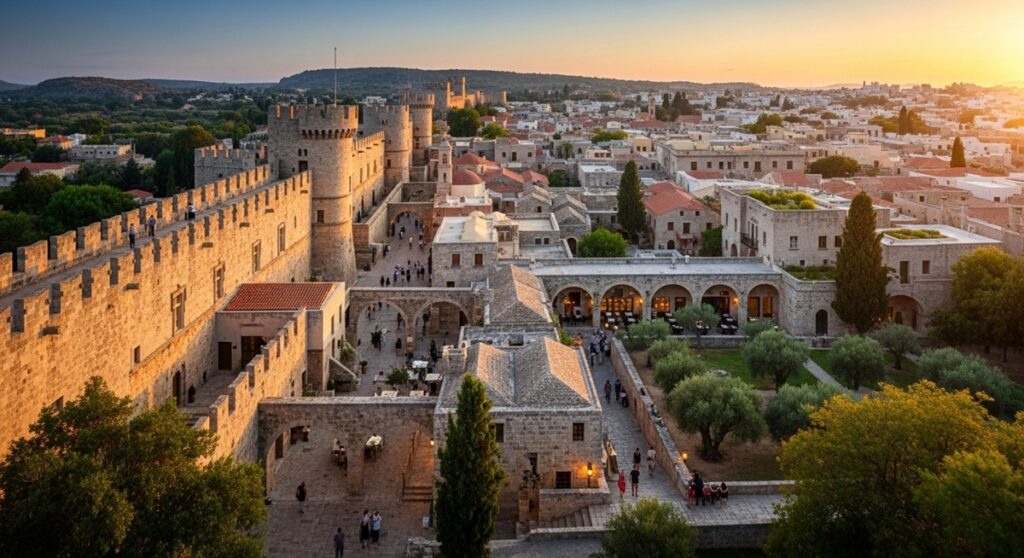
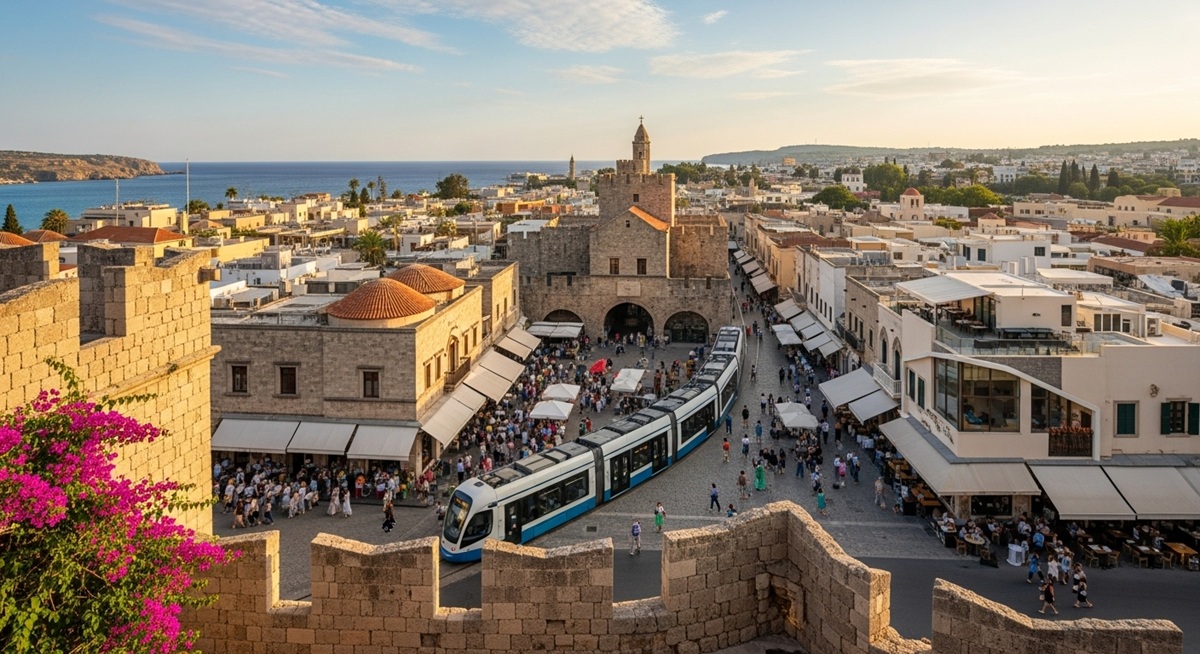
Nestled on the Dodecanese island of Rhodes, the Medieval City of Rhodes stands as a testament to fortified brilliance. Constructed by the Knights of St. John in the 14th century, this UNESCO site encompasses a sprawling network of walls, towers, and winding alleys that once defended against invasions. But beyond its defensive prowess, it’s a masterclass in human-scale urban planning. The pedestrian-oriented layout, with courtyards linking homes and public spaces, promotes community interaction while shielding inhabitants from harsh winds and sun.
Modern Greek architects are captivated by this model’s efficiency. The use of local stone—breathable and durable—allows for natural ventilation, a boon in an age of rising temperatures. Projects inspired by Rhodes include new residential complexes on nearby islands, where designers replicate the intimate scale to encourage walkability and reduce car dependency. One notable example is the redevelopment of coastal neighborhoods in Rhodes itself, where contemporary additions mimic the site’s organic flow, integrating green spaces that echo medieval gardens. This not only preserves cultural identity but also enhances sustainable urbanism, cutting energy costs and fostering social cohesion.



The Old Town of Corfu: Venetian Elegance Meets Sustainable Urbanism
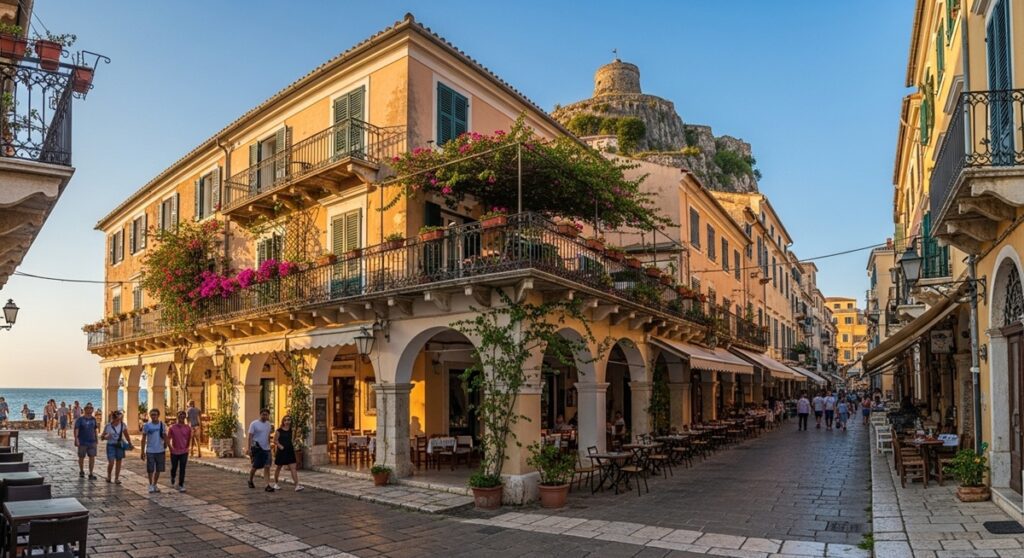
Shifting to the Ionian Sea, the Old Town of Corfu exudes a cosmopolitan charm born from centuries of Venetian, French, and British rule. This UNESCO World Heritage site features graceful arcades, pastel-hued mansions, and narrow “kantounia” streets that weave through a compact urban core. What sets it apart is its innate sustainability: the dense configuration creates shaded microclimates, minimizing heat gain in summer and retaining warmth in winter.
For today’s architects, Corfu exemplifies how architectural heritage can inform energy-efficient cities. The porticoes—covered walkways that double as social hubs—inspire modern mixed-use developments, where ground floors host shops and cafes under protective overhangs. In Athens and Thessaloniki, urban renewal projects draw from this, using similar shading techniques to combat urban heat islands. Moreover, the site’s fusion of styles encourages adaptive reuse, turning historic buildings into boutique hotels or cultural centers without losing their soul. This blend of elegance and practicality is steering Greece toward greener, more livable metropolises.
The Byzantine Marvel of Mystras: Landscaping and Light
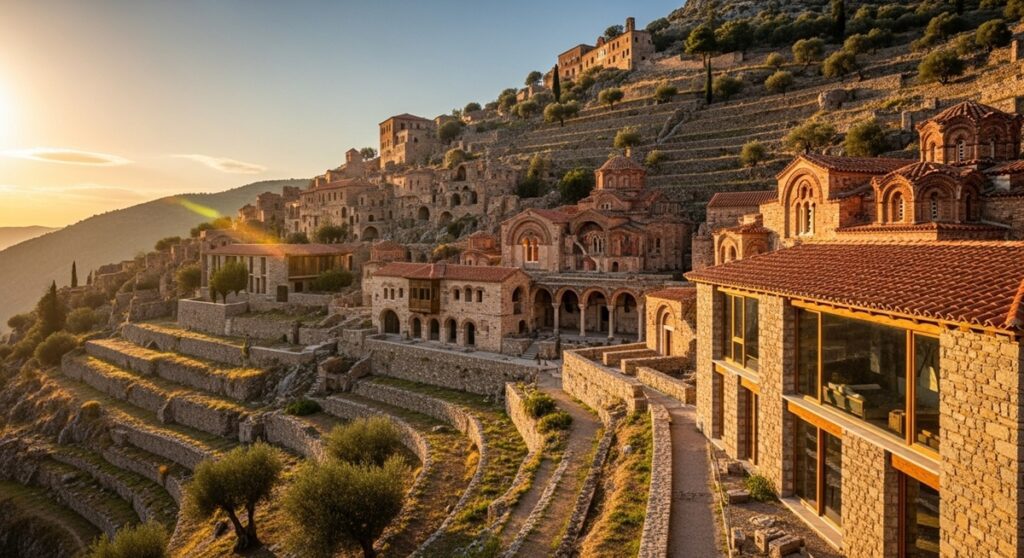
Perched on the slopes of Mount Taygetos in the Peloponnese, Mystras is a ghostly yet glorious Byzantine city-state, abandoned yet alive in its lessons. This UNESCO site cascades down the hillside like a natural extension of the terrain, with palaces, monasteries, and frescoed churches harmonizing with rocky outcrops. Byzantine builders mastered site-responsive design, orienting structures to capture sunlight for illumination and warmth, while terracing minimized erosion.
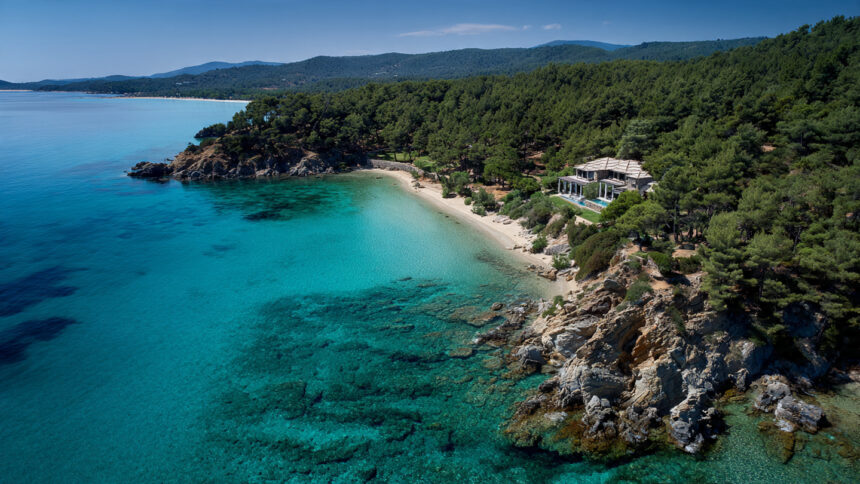
Contemporary architects flock here for guidance on ecotourism and landscape integration. Modern villas and resorts in the region adopt Mystras’ tiered approach, stepping buildings into hillsides to preserve views and ecosystems. A prime illustration is the growing trend in Peloponnesian eco-lodges, where natural light plays a starring role through strategic window placements, echoing Byzantine techniques. This not only reduces artificial lighting needs but also creates spiritually uplifting spaces, proving that Greek heritage can inspire designs that heal rather than harm the environment.
The Acropolis of Athens: Eternal Proportions in Modern Contexts
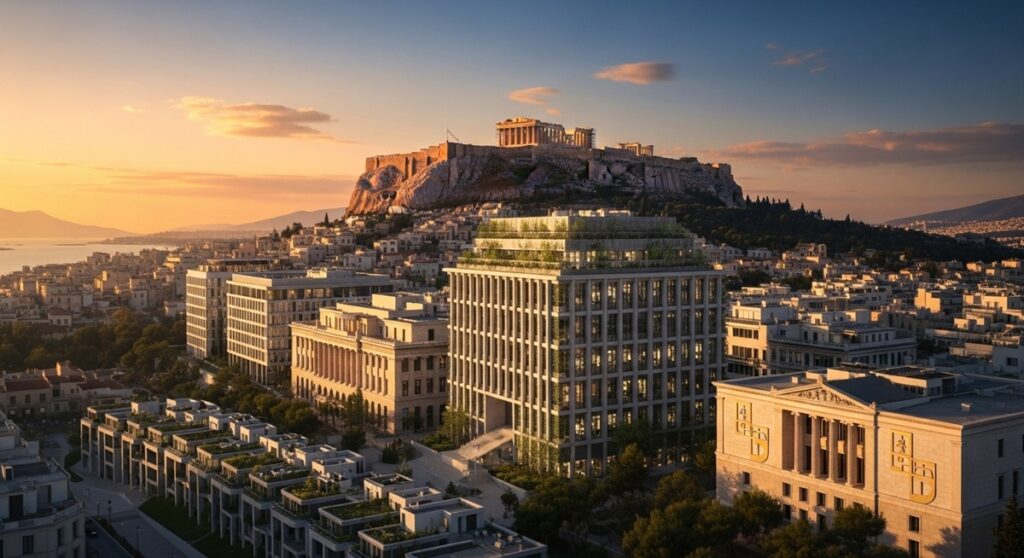
No discussion of Greek inspiration would be complete without the Acropolis, the crown jewel of Athens and a UNESCO World Heritage site since 1987. Dominated by the Parthenon, this citadel embodies classical ideals of balance, with Doric columns and entablatures that have influenced countless structures worldwide. But in Greece today, it’s sparking local innovations, from public buildings to private homes.
Architects are reinterpreting the Acropolis’ golden ratios, mathematical harmonies that create visual perfection—in sustainable office towers and cultural venues. For example, recent Athens projects incorporate columnar motifs in facades made from recycled materials, blending antiquity with green tech. The site’s hilltop placement also teaches elevation strategies for flood-prone areas, guiding coastal developments to elevate structures thoughtfully. This enduring icon reminds us that modern architecture thrives when it honors proportional elegance.
Archaeological Site of Olympia: Sporting Legacy and Spatial Harmony
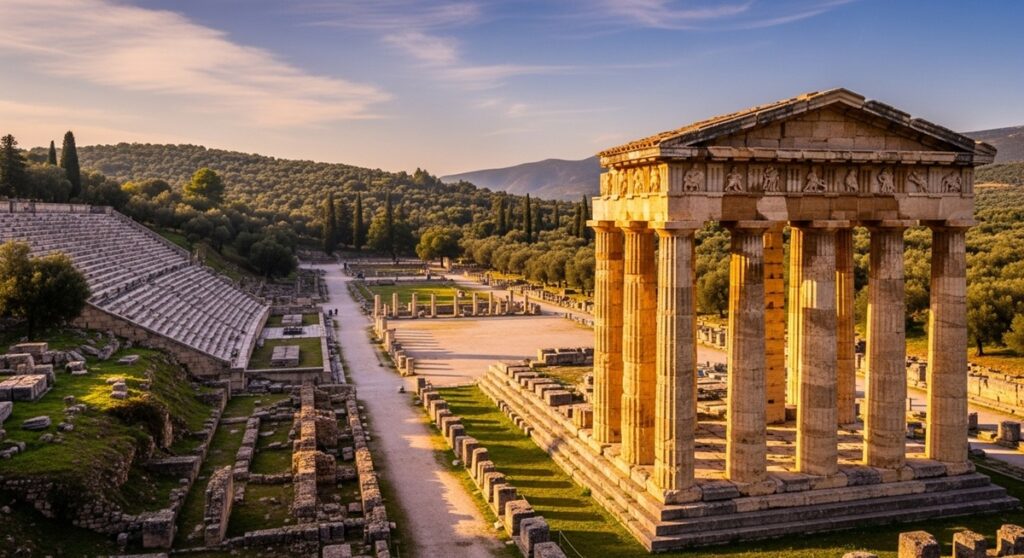
In the western Peloponnese lies Olympia, birthplace of the ancient Olympic Games and a UNESCO site rich in temples and stadiums. The Temple of Zeus, with its grand scale and intricate pediments, highlights how Greeks designed for communal gatherings, using open plazas and colonnades to facilitate movement and spectacle.
This spatial wisdom informs today’s sports facilities and public spaces in Greece. Modern stadiums, like those revamped for the 2004 Athens Olympics, draw from Olympia’s layout to create inclusive arenas that prioritize spectator flow and natural acoustics. Beyond athletics, architects apply these principles to community centers, using open-air designs that encourage social interaction while incorporating local materials for durability. Olympia’s legacy underscores how architectural heritage can foster unity in diverse societies.
Meteora: Monastic Heights and Vertical Innovation
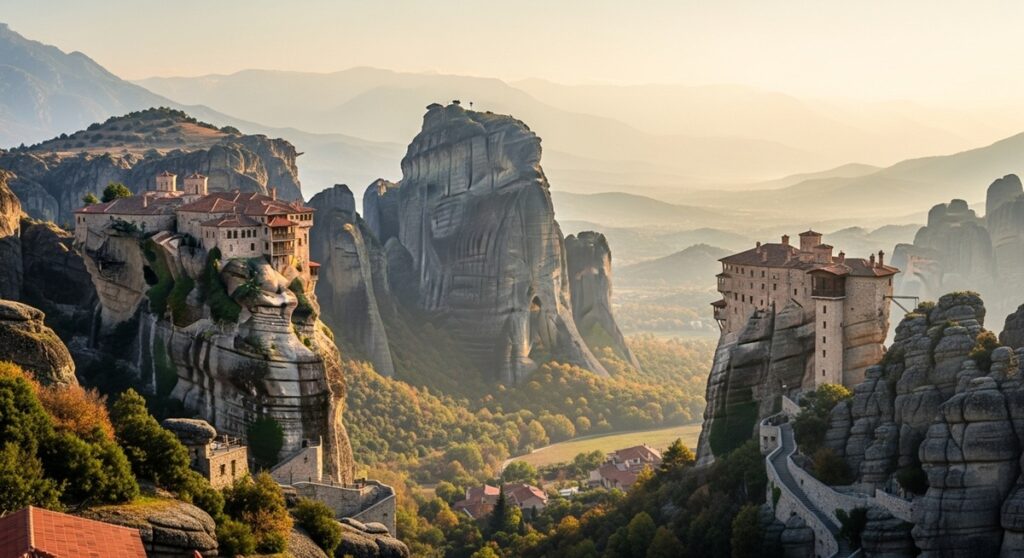
Rising dramatically from the Thessalian plain, the monasteries of Meteora perch atop towering rock pillars, a UNESCO World Heritage site that defies gravity. Built in the 14th-16th centuries, these structures showcase ingenuity in vertical construction, using ropes and nets for access before modern stairs.
Greek architects today look to Meteora for high-rise and cliffside projects, emphasizing minimal footprint and maximal views. Eco-resorts in similar terrains adopt suspended designs that minimize land disruption, while urban high-rises in Thessaloniki incorporate cantilevered elements inspired by the monasteries’ precarious balance. The frescoes and Athonite style further influence interior aesthetics, promoting serene, contemplative spaces in bustling cities. Meteora proves that bold verticality can coexist with environmental respect.
Challenges and Opportunities in Heritage-Inspired Design
While inspiring, integrating Greek heritage into modern architecture isn’t without hurdles. Preservation laws can restrict innovations, and balancing tourism with authenticity demands careful navigation. Yet, these challenges spark creativity—think adaptive reuse projects that convert derelict Ottoman-era buildings into sustainable hubs.
Opportunities abound in ecotourism, where heritage-inspired designs attract conscious travelers. Initiatives like the Olympus Estate project, drawing from mythical landscapes, exemplify this, creating luxury retreats that echo ancient harmonies while employing solar tech and rainwater harvesting. Such endeavors not only boost economies but also educate on sustainable urbanism.
Global Ripples: Greece’s Influence Beyond Borders
Greece’s model resonates worldwide. From Neoclassical revivals in Washington D.C. to minimalist villas in California, UNESCO sites like the Acropolis have seeded global trends. In Europe, cities adopt Corfu’s shading for climate adaptation, while Asia’s megacities study Rhodes for resilient planning. This cross-cultural exchange positions Greece as a leader in heritage-driven innovation.
The Future Built on the Past
Ultimately, Greece’s UNESCO World Heritage sites transcend preservation; they’re catalysts for a vibrant architectural future. By weaving ancestral insights into contemporary fabrics, Greek designers craft spaces that are resilient, beautiful, and soulful. This movement is a profound shift toward designs that honor our borrowed earth, ensuring legacies for generations. As we face global crises, Greece reminds us: the strongest foundations are those built on history’s enduring stones.