



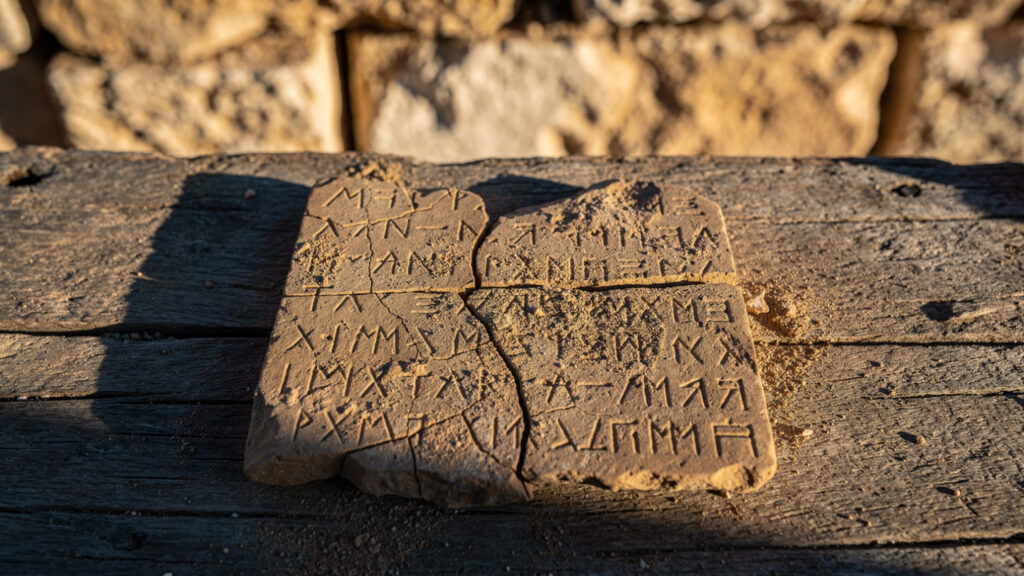
The most important fact about the Minoan civilization is the one that the scholarship consistently returns to: we cannot read their writing.
Linear A, the script that the Minoan palace administration used to record the economic activities of the Bronze Age Cretan palace system, has been studied since Arthur Evans first documented it at Knossos in the early twentieth century. It remains undeciphered. The tablets are present. The symbols are legible in the sense that they can be reproduced and counted and statistically analyzed. What they mean, what language they encode, what the Minoans called themselves, what they believed, what their literature contained if they had literature, what their administrative vocabulary was in their own terms rather than in the Mycenaean Greek terms that Linear B provided for a related but different culture: all of this remains unknown.
The civilization that produced the most sophisticated art of the Bronze Age Aegean, that maintained trade networks extending from Egypt to Sardinia, that built multi-story palace complexes with plumbing and drainage systems that the contemporary world did not replicate for fifteen centuries, is a civilization that cannot tell us its own name. The name Minoan, which Arthur Evans gave it after the mythological King Minos, is a convenience borrowed from the Greek myth that the Greeks themselves built from the Minoan memory. Whether the people who lived at Knossos recognized anything of themselves in the myth of the Minotaur and the Labyrinth is a question that will remain unanswered until the script is deciphered, if it ever is.
This silence is the foundation on which every account of the Minoan civilization must be built, and the accounts that forget it, that speak with confident authority about Minoan beliefs and Minoan social structure and Minoan political organization, are the accounts that are most likely to mislead.
The Archaeological Record and Its Limits
What the archaeology of Bronze Age Crete actually provides is the material culture: the objects, the buildings, the paintings, and the physical remains of a civilization that flourished between approximately 2700 and 1450 BCE and that reached its most developed form in the palatial period between approximately 1900 and 1450 BCE.
The palaces, of which Knossos is the largest and most completely excavated and Phaistos, Malia, and Zakros are the other principal examples, were the organizational centers of the palatial economy: large complexes of rooms distributed across multiple stories, organized around a central court, with storage magazines for the agricultural surpluses that the palace administration managed, workshops for the craft production that the palace controlled, spaces that appear to have served ritual functions, and administrative archives where the Linear A tablets recording the palace’s economic activities were kept.
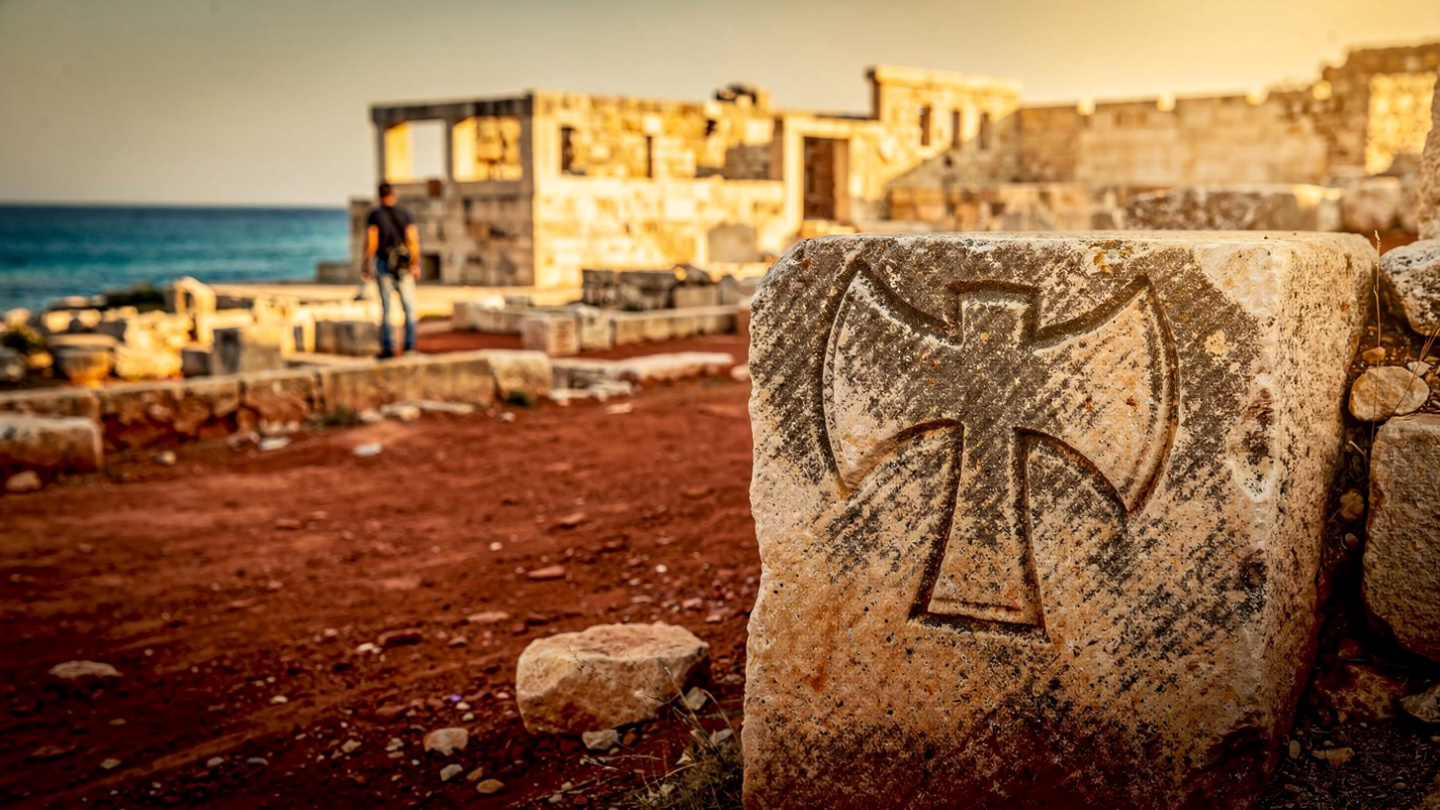
The architecture of the Knossos palace, with its irregular plan developed across multiple construction phases and its complex system of interconnecting corridors and courts, provides the material basis for the myth of the Labyrinth. Whether the word labyrinth derives from the Minoan term labrys, the double axe that appears repeatedly in Minoan iconography as a sacred symbol, effectively making the labyrinth the house of the double axe, is a linguistic hypothesis considered reasonable by many scholars although it is not definitively confirmed. The palace’s genuine structural complexity, which an unfamiliar visitor would find disorienting, is sufficient to explain the emergence of the legend without requiring the existence of a literal, subterranean maze.
The absence of external city walls at the major Minoan palace sites has been consistently cited as evidence for a peaceful society, and the inference is reasonable but not conclusive. The island location of Crete is itself a defensive advantage: a maritime power capable of projecting force at sea does not necessarily need walls to protect its coastal centers. The evidence for what Minoan naval power actually consisted of is limited by the organic nature of the ships, which have not survived, but the trade networks documented in the distribution of Minoan pottery and the representations of ships in Minoan art confirm a seafaring culture of considerable maritime reach. Whether the absence of walls reflects peaceful intent or maritime confidence or simply a different understanding of defensive strategy is a question the material record does not definitively answer.
The Frescoes and What They Show
The painted plaster frescoes preserved from Knossos and from the Minoan-influenced settlement at Akrotiri on the island of Thera are the dimension of the Minoan material culture that has most completely captured the modern imagination, and their extraordinary visual quality justifies the attention they have received.
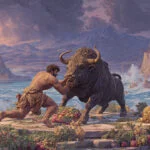
The bull-leaping fresco from Knossos, the most famous single image from the Minoan world, shows three figures in relation to a bull: one gripping the horns at the front, one in apparent mid-air over the bull’s back, one standing behind the bull’s hindquarters. The three figures are rendered in the Minoan convention of pale skin for female figures and darker skin for male figures, which gives the fresco its gendered reading: the front and back figures are female, the leaping figure is male. The activity depicted has been interpreted as an athletic ritual performance, a coming-of-age ceremony, a religious rite directed at the bull as a divine or sacred animal, and a variety of other possibilities. What it clearly is, whatever its function, is the representation of an extraordinary physical feat performed with a very large and dangerous animal, rendered with a visual dynamism that the two-dimensional conventions of Minoan painting do not typically achieve.
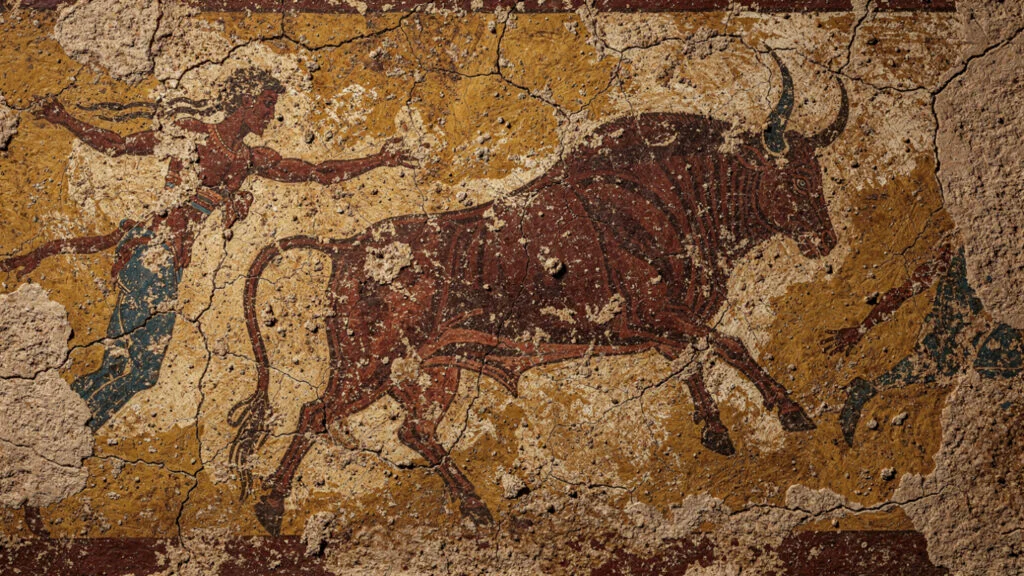
The Akrotiri frescoes, recovered from the settlement that the Thera eruption buried in approximately 1600 BCE in a preservation that the volcanic ash produced, show the Minoan visual tradition in its most complete available context: the flotilla fresco showing a Minoan sea procession between two settlements, the spring fresco with its swallows and flowering lilies and seasonal landscape, the boxing children fresco, and the fisherman frescoes showing figures with abundant catches. The Akrotiri material is particularly valuable because it was preserved by the eruption rather than being selectively preserved by later use: it is a more complete sample of what the full decorative program of a Minoan or Minoan-influenced building looked like than the Knossos frescoes, which are complicated by Evans’s reconstructions.
The subject matter of the frescoes, the animals and the landscape and the sea and the ritual performances, is consistently interpreted as evidence for the character of the Minoan relationship with the natural world. The flora and fauna that appear, the crocuses and lilies, the dolphins and octopuses, the swallows and hoopoes, are the flora and fauna of the Aegean spring and summer, rendered with the observational quality of a tradition that paid sustained attention to the natural world rather than representing it through schematic conventions. Whether this natural attention reflects a religious orientation toward the natural world or simply an aesthetic preference is a question the frescoes cannot answer directly.
Gender and Religious Life
The Minoan religious tradition is the dimension of the civilization about which the scholarship is most cautious and most divided, because the evidence is both rich and difficult to interpret.
The figurines that the Minoan sites have produced, including the famous faience snake goddess figurines from the Temple Repositories at Knossos, show female figures in the dress and posture that Evans interpreted as priestly or divine. The bare-breasted figure with snakes in raised hands, the combination of visual elements that the Knossos figurines display, appears in multiple versions and at multiple sites, which suggests that it represents a recognized type in the Minoan visual tradition rather than a single unique object.
The interpretation of this figure as a Great Goddess, or as the representation of a matriarchal divine order, is a conceptual leap beyond what the objects themselves demonstrate. They show that the Minoan religious sphere included female figures of evident importance, depicted with attributes that suggest ritual roles, and produced with enough consistency to indicate a recognized iconographic style. Whether this implies a matriarchal religion, a female-dominated priesthood, a pantheon in which goddesses were primary, or simply a ritual framework that assigned significant functions to female participants, the material evidence does not conclusively determine.
The same caution applies to the broader claim of Minoan gender equality or matriarchy. The visual record shows women in prominent roles in fresco compositions, as participants in ritual activities, as figures of evident social importance. It does not provide the comparative data needed to assess what the full range of gender roles in Minoan society was, what the legal and economic positions of women were, or how gender structured the social hierarchy. These are questions that require the kind of administrative and legal record that the undeciphered Linear A tablets might eventually provide, and that cannot be answered from the visual record alone.
Arthur Evans and the Reconstruction Problem
Any honest account of the Minoan civilization must address the problem of Arthur Evans and his reconstruction of the Knossos palace, because the Evans reconstruction is what most visitors to Knossos actually encounter, and it is not the same thing as the Bronze Age palace.
Evans excavated Knossos from 1900 onward with the resources and the interpretive framework of his time, and the reconstruction that he oversaw, using reinforced concrete to restore the upper stories and painted reproductions of the frescoes in situ while the originals were moved to the Heraklion Archaeological Museum, was conducted with the assumptions about the palace’s function and appearance that his interpretation of the evidence produced. Some of these assumptions have been supported by subsequent scholarship. Others have been revised or contested.
The reconstructed features that subsequent scholarship has most questioned include the Throne Room and its ceremonial throne, which Evans interpreted as the seat of a priest‑king and which some scholars now read as a later Mycenaean addition to the palace rather than a Minoan feature, and the overall reconstruction of the palace’s upper stories, whose form Evans determined from the surviving lower courses and from his interpretation of fresco fragments that showed architectural elements.
The visitor to Knossos today is visiting Evans’s interpretation of the palace as much as the Bronze Age palace itself, and this is not a disqualifying problem but a condition of engagement that rewards acknowledgment. The Heraklion Archaeological Museum, which holds the original frescoes and the other major portable finds from Knossos and from the other Minoan palace sites, is the encounter with the Minoan material culture that the palace site cannot fully provide: the objects in their actual condition, contextualized by the scholarly apparatus of the museum, rather than the reconstructed environment of Evans’s vision.
The Minoan Thera Connection
The eruption of the Thera volcano, modern Santorini, at a date that the various dating methods place between approximately 1640 and 1530 BCE, was one of the most significant geological events of the Bronze Age Mediterranean and one whose consequences for the Minoan civilization have been debated since the connections between the eruption and the Minoan archaeological record were first systematically investigated.
The Akrotiri settlement on Thera was buried under volcanic ash in a preservation that suggests rapid departure rather than instantaneous destruction: the absence of human remains and most portable valuables from the site indicates that the population had warning and time to leave before the final eruption. The settlement itself, with its multi-story buildings, frescoes, and evidence of an affluent Minoan-influenced urban life, provides the most completely preserved example of what a Bronze Age Aegean urban settlement looked like.
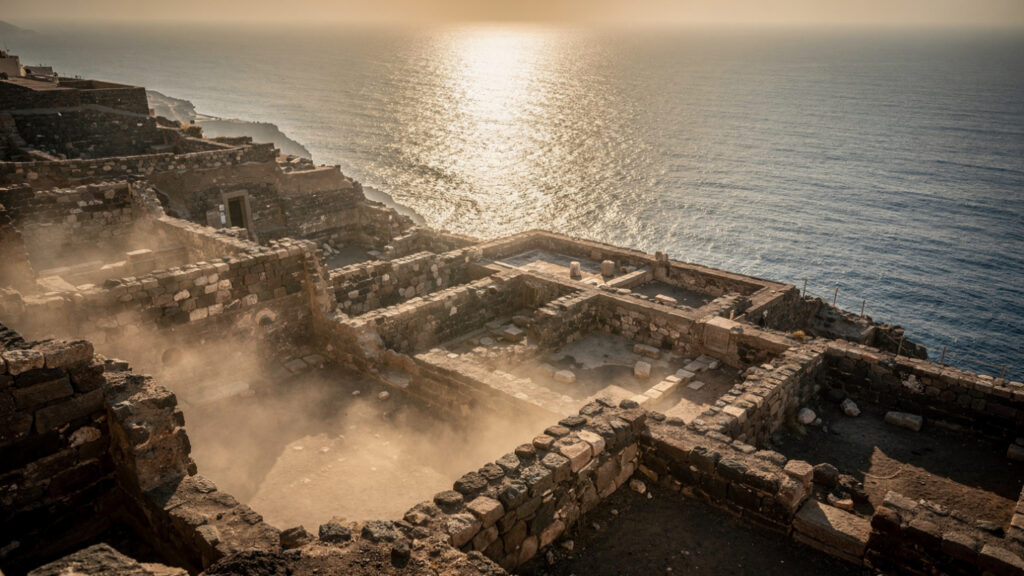
The relationship between the Thera eruption and the decline of the Minoan palace civilization is the question that the archaeology has not fully resolved. The palace destructions that occurred across Crete around 1450 BCE, approximately a century after the most commonly cited date for the eruption, are separated from the eruption by too long an interval to be its direct physical consequence. The most likely explanation for the 1450 BCE palace destructions is the Mycenaean Greek expansion into the Aegean that the Linear B tablets at Knossos document: the tablets show Mycenaean Greek administration operating from Knossos in the period after the major palace destructions, which is consistent with a Mycenaean conquest or takeover of the island rather than a natural catastrophe.
The connection between the Thera eruption and Plato’s Atlantis narrative is a hypothesis that has attracted popular interest since the mid-twentieth century. The principal argument is that the Minoan civilization’s sudden disruption by volcanic catastrophe, filtered through centuries of oral tradition, might have reached Plato as a distorted memory that he incorporated into the Atlantis story. The principal problems with the hypothesis are Plato’s own placement of Atlantis in the Atlantic beyond the Pillars of Heracles rather than in the Aegean, and the absence of any ancient source connecting the Atlantis story to Crete or Thera specifically. Most classical scholars treat the Atlantis narrative as a Platonic philosophical construction rather than a geographical memory.
What the Minoans Left Behind
The Minoan legacy in Greek lore is extensive and geographically specific, which reveals how the Hellenic world processed its memory of the civilization that preceded it in the Aegean.
The tales of Crete, including the Labyrinth, the Minotaur, the flight of Daedalus and Icarus, the quest of Theseus and Ariadne, and the arrival of Europa to establish the Cretan royal line, are all narratives the mainland set explicitly on Crete. These stories drew upon features of the actual Minoan archaeological reality: the sprawling palace complex that a mainland visitor would experience as a labyrinth, the bull that Minoan ritual placed at the center of its most dramatic performances, the prominent female divine figures of the Minoan pantheon, and the vast maritime reach of the Minoan world, which the myth encoded as Europa’s journey from Phoenicia to Crete on the back of a divine bull.
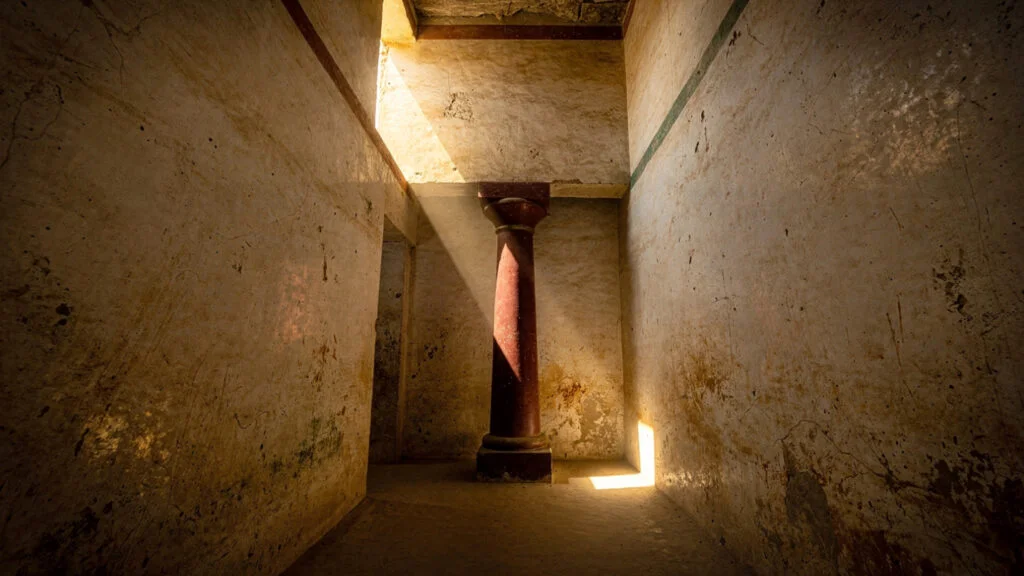
The myths are not precise historical accounts of the Minoan civilization. Instead, they represent the way the mainland Greek mindset processed the memory of a culture that Linear B evidence confirms was known to and influential upon the Mycenaean world. These stories encode authentic features of Minoan material culture in the manner that ancient lore often preserves historical memory. The Labyrinth serves as an archetype of the complex palace structure, the Minotaur mirrors the bull of Minoan ritual, the divine craftsman Daedalus functions as a Hellenic acknowledgement of Minoan technical achievement, and the tribute of Athenian youth to Minos acts as a narrative encoding of the political or economic hegemony that once defined the relationship between the Mycenaean and Minoan spheres.
The Potnia, known as the Lady or Mistress, appears in the Linear B tablets as a central divine figure within the Knossos palace administration. This figure offers the closest available approach to the Minoan feminine ideal from within a deciphered source. The Mycenaean administrative records, which name her as a recipient of offerings, confirm that the prominent female deity of the Minoan world survived the Mycenaean transition. She evolved into a figure whom the new administration recognized and continued to honor as part of their own developing religious framework.
Why Knossos Still Matters
Knossos and the other Minoan sites are not the ruins of a civilization that was waiting to be discovered. They are the material evidence of a civilization that had been incorporated into the Greek mythological tradition so completely that its archaeological reality was not recognized as archaeological reality until the twentieth century.
The shock of the Minoan discovery, which Arthur Evans experienced and which every subsequent encounter with the Minoan material at the Heraklion museum repeats, is the shock of recognizing that the material sophistication of the Bronze Age Aegean exceeded the expectations that the Greek mythological tradition, which the Western world had treated as the origin of European civilization, had prepared the discoverer for. The civilization that produced the Minotaur myth was, in its original form, a civilization of comparable sophistication to the Egyptian and Mesopotamian cultures that the nineteenth century had already recognized as ancient and complex.
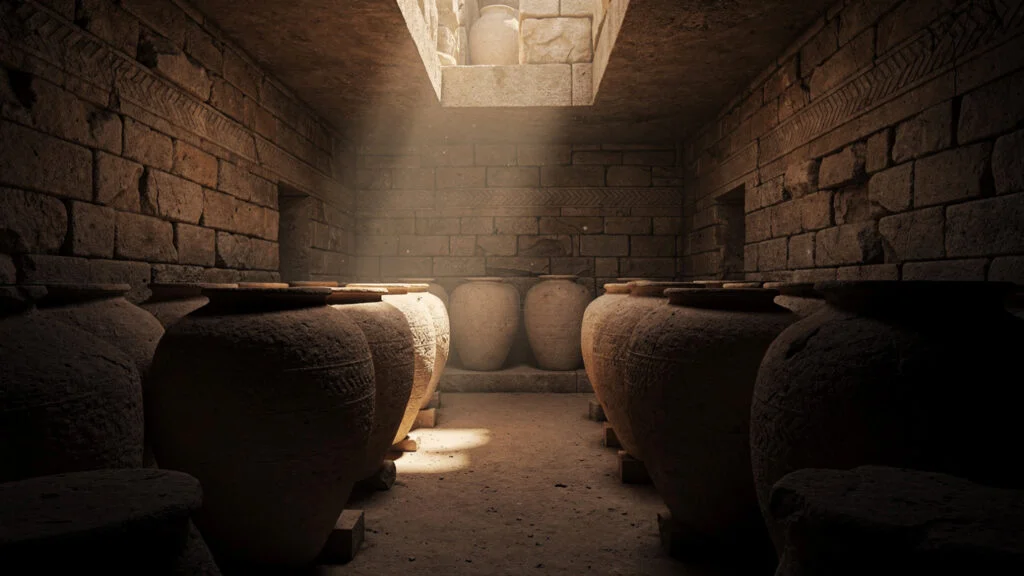
The features of Knossos that produce this recognition in the visitor who walks through the site with sufficient attention: the storage magazines with their rows of pithoi capable of holding thousands of liters of oil or grain, the drainage channels that the palace builders constructed to manage water flow through the multi-story complex, the light wells that brought natural light to interior rooms in the absence of artificial lighting of equivalent power, and the administrative complexity implied by the archive of Linear A tablets, whose content the tablets’ organization as systematic records reveals even if their language cannot yet be read.
These are the features of a civilization that was solving the problems of complex urban administration with considerable intelligence and considerable material resources, in the same millennium that the Pyramids of Giza were being built and in the same millennium that the Linear B tablets at Pylos and Mycenae would later document as the world of Homeric heroism. The Minoans were the civilization behind the civilization that the Greek tradition remembered as the heroic age, and their anonymity, their continued muteness in their own language, is the most striking fact about them.
At Olympus Estate, Archaeology and Ancient Sites treats no ruin as a relic and no silence as emptiness. The Minoans cannot speak for themselves because their writing cannot yet be read. What they left behind in the palaces and the frescoes and the objects in the Heraklion museum speaks with extraordinary clarity about the material sophistication of the civilization that produced it. The question of what the civilization believed and how it organized its social life awaits the decipherment of Linear A. Until then, the objects speak and the writing is silent.