




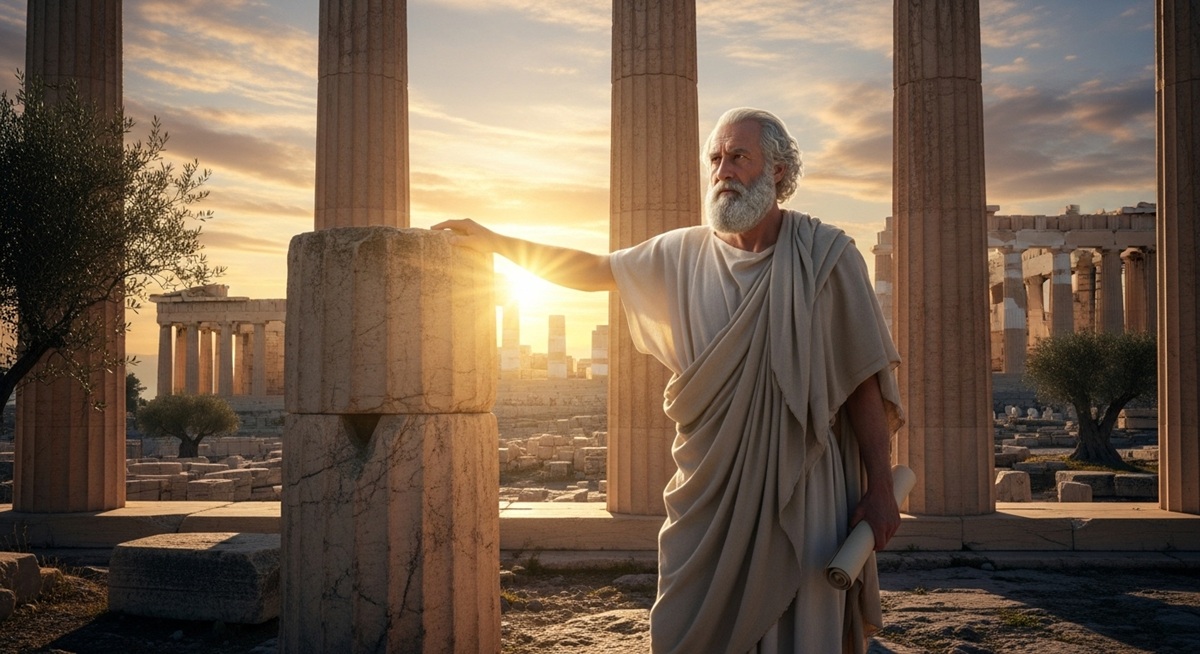
Ancient Greece stands as a beacon of human achievement, where philosophy, mythology, and daily life intertwined to produce timeless wisdom. The ancient Greek quotes that have survived millennia aren’t just clever sayings; they are profound insights into the human condition, born from thinkers who wandered the sun-drenched hills of Athens, pondered in the shadow of sacred temples, and debated in bustling marketplaces. These words have shaped Western thought, influencing everything from modern psychology to ethical debates. But to truly grasp their power, one must visit the landscapes that inspired them—places like Delphi‘s oracle or Athens‘ ancient ruins, where history feels alive and philosophy whispers through the olive groves.
In a world racing toward the future, revisiting these ancient Greek quotes offers a grounding force. They remind us of enduring truths: self-reflection, moderation, courage, and the pursuit of happiness. Greece travel enthusiasts flock to these sites not just for stunning views but for a deeper connection to ideas that defined civilization. Whether you’re a history buff, a philosophy student, or simply seeking inspiration, exploring these destinations transforms abstract wisdom into tangible experiences.
1. “Know Thyself” – Delphi
The Wisdom Behind the Words
The phrase Know Thyself (Gnothi Seauton in Greek) is one of the most enduring ancient Greek quotes, inscribed prominently on the Temple of Apollo at Delphi. This maxim, often attributed to the Seven Sages of Greece or philosophers like Thales, served as a cornerstone of Greek thought. It urged individuals to pursue self-awareness, recognizing personal limits in the face of divine mysteries. In ancient times, pilgrims sought oracles at Delphi, and this inscription acted as a humbling reminder: true wisdom begins with understanding oneself, not just the gods.
Historians trace its roots to the Delphic maxims, a set of 147 sayings carved into the temple around the 6th century BC. Socrates later championed it, using the phrase to fuel his Socratic method of questioning assumptions. For the Greeks, self-knowledge was key to virtue, preventing hubris—the excessive pride that invited downfall. Today, it echoes in psychology and self-help, encouraging introspection amid life’s chaos.
Where to Experience It Today
To feel the power of Know Thyself, head to Delphi on Mount Parnassus, a UNESCO World Heritage site overlooking dramatic valleys. The archaeological park includes the Temple of Apollo’s ruins, where the Pythia oracle once delivered prophecies. Start your visit early to avoid crowds—aim for spring or fall when wildflowers bloom and temperatures are mild. Wear comfortable shoes for the uphill paths, and carry water as the site can be strenuous.
Hike the Sacred Way, lined with ancient treasuries, and pause at the temple entrance to imagine the inscription’s impact on visitors. Nearby, the Delphi Archaeological Museum houses artifacts like the Charioteer statue, adding context. For modern tips, combine it with a guided tour focusing on philosophy; many include discussions of the maxims. Stay in nearby Arachova for cozy tavernas serving local lamb and views that inspire reflection. In 2025, with sustainable tourism initiatives, Delphi remains a serene spot to ponder personal growth.
2. “The Unexamined Life is Not Worth Living” – Athens
The Wisdom Behind the Words
Uttered by Socrates during his trial in 399 BC, as recorded in Plato’s Apology, this quote captures the essence of philosophical inquiry. Socrates argued that a life without reflection—devoid of questioning beliefs, ethics, and society—lacks true value. Facing charges of corrupting youth and impiety, he defended his relentless pursuit of truth, even at the cost of his life.
This ancient Greek quote highlights the Socratic ideal: wisdom comes from admitting ignorance and constant examination. It influenced later thinkers like Plato and Aristotle, shaping Western philosophy’s emphasis on critical thinking. In today’s fast-paced world, it challenges us to pause amid distractions, fostering mindfulness and personal development.



Where to Experience It Today
Immerse yourself in Socrates‘ world at the Ancient Agora in Athens, the civic heart where he debated citizens. This sprawling site, beneath the Acropolis, includes the Stoa of Attalos (rebuilt as a museum) and the Temple of Hephaestus. Wander the paths where Socrates roamed, imagining his dialogues on justice and virtue.
Visit in the cooler months; tickets often bundle with the Acropolis for efficiency. Join a philosophy-themed walking tour—many start here and discuss the trial. Nearby Plaka offers cafes for reflection over Greek coffee. With Athens‘ ongoing restorations in 2025, the Agora feels more accessible, inviting visitors to examine their own lives amid ancient stones.
3. “Nothing in Excess” – Delphi
The Wisdom Behind the Words
Carved alongside Know Thyself at Delphi‘s Temple of Apollo, Nothing in Excess (Meden Agan) promotes moderation as a path to harmony. Attributed to sages like Solon or Chilon, it warned against extremes in behavior, politics, and pleasures, viewing excess as an affront to the gods and a source of ruin.
Aristotle later echoed this in his “golden mean,” balancing virtues like courage between recklessness and cowardice. For ancient Greeks, it guided daily life, from diet to governance. In modern contexts, it resonates in wellness practices, urging balance in work, relationships, and consumption.
Where to Experience It Today
Return to Delphi for this maxim, exploring the site’s theater and stadium for a fuller sense of ancient rituals. Hike the ancient paths to the Castalian Spring, where pilgrims purified themselves— a metaphor for moderation.
Opt for eco-friendly stays in the area, and time your visit with local festivals. The site’s panoramic views encourage contemplation of life’s equilibria, making Delphi a must for balanced Greece travel.
4. “I Am a Citizen of the World” – Athens
The Wisdom Behind the Words
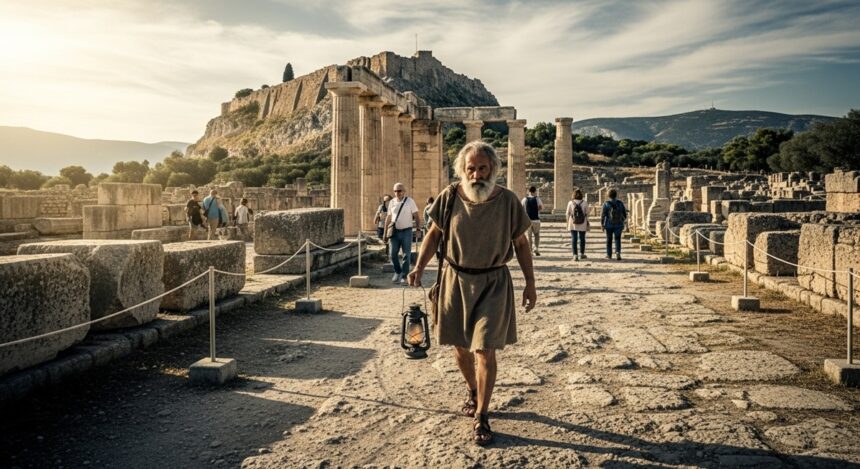
Diogenes the Cynic, a radical philosopher, coined this as “I am a kosmopolites,” rejecting narrow loyalties to city-states in favor of universal humanity. Living simply in a barrel, he critiqued societal norms, searching for honesty with his lantern.
This ancient Greek quote birthed cosmopolitanism, influencing Stoics like Marcus Aurelius and modern globalism. It challenges tribalism, promoting empathy across borders in our interconnected era.
Where to Experience It Today
Trace Diogenes in Athens‘ Kerameikos cemetery and Agora, evoking his wandering life. These sites offer quiet reflection on global citizenship. Philosophy tours here delve into Cynic ideas. With Athens‘ vibrant multicultural scene in 2025, it’s ideal for feeling this timeless call to unity.
5. “Character is Destiny” – Ephesus
The Wisdom Behind the Words
Heraclitus of Ephesus proclaimed Character is Destiny, suggesting inner traits shape one’s fate more than external forces. Known for cryptic sayings, he viewed life as flux, with character as the steady guide.
This quote underscores personal responsibility, influencing ethics from Stoicism to psychology. It reminds us that habits and virtues forge paths, a potent message for self-improvement.
Where to Experience It Today
Though Ephesus is in Turkey, nearby Greek islands like Samos echo Heraclitus‘ philosophy. Visit Samos’ ruins and beaches for contemplation. Ferry from Athens for a multi-island hop, blending history with relaxation in Greece‘s Aegean gems.
6. “Time is a Child Playing a Game” – Samos
The Wisdom Behind the Words
Another from Heraclitus, this likens time to a playful child, emphasizing its unpredictability and cyclical nature. It portrays existence as dynamic, urging adaptability.
Influencing existentialism, it invites embracing change. In today’s uncertain world, it fosters resilience.
Where to Experience It Today
Samos, Heraclitus‘ possible influence spot and Pythagoras’ birthplace, offers Pythagoreion ruins and serene shores. Hike trails or relax on beaches to muse on time’s flow. Island-hopping tours make it accessible for philosophical Greece travel.
7. “Freedom is the Possession of Those Alone Who Have the Courage to Defend It” – Sparta
The Wisdom Behind the Words
This Spartan ethos highlights freedom earned through bravery, reflecting their militaristic society. Embodied by Leonidas at Thermopylae, it valorizes sacrifice for liberty.
It inspires modern freedom fights, emphasizing courage’s role.
Where to Experience It Today
In Sparta, visit Leonidas‘ statue and Mount Taygetus trails, site of Agoge training. Guided hikes evoke warrior spirit. Peloponnese road trips pair it with other sites for immersive history.
8. “Education is the Ornament of Prosperity and the Refuge of Adversity” – Aristotle, Chalkidiki
The Wisdom Behind the Words
Aristotle saw education as essential for flourishing, adorning good times and sheltering bad. It builds character and resilience.
Timeless in today’s knowledge economy, it advocates lifelong learning.
Where to Experience It Today
Stageira in Chalkidiki, Aristotle‘s birthplace, features ruins with sea views. Trails and museums inspire inquiry. Beachside stays blend intellect with leisure.
9. “Hope is the Only Good That Remains” – Hesiod, Boeotia
The Wisdom Behind the Words
In Hesiod‘s Works and Days, Pandora’s jar releases evils, leaving hope. It symbolizes resilience amid suffering.
Influencing literature, it affirms hope’s enduring power.
Where to Experience It Today
Ascra in Boeotia, Hesiod‘s homeland, offers rugged hills for reflection. Visit nearby Thespiae; day trips from Athens explore poetic landscapes.
10. “At the Touch of Love, Everyone Becomes a Poet” – Plato, Athens
The Wisdom Behind the Words
From Plato’s Symposium, this celebrates love’s creative spark. Love awakens artistry and beauty.
It endures in romantic ideals, linking emotion to inspiration.
Where to Experience It Today
Plato’s Academy site in Athens hosts ruins where such discussions occurred. Peaceful parks invite poetic musings; seminars revive ancient dialogues.
11. “Happiness Depends Upon Ourselves” – Aristotle, Athens
The Wisdom Behind the Words
Aristotle defined happiness (eudaimonia) as virtuous activity, self-determined. It’s cultivated through ethics, not chance.
Central to positive psychology, it empowers personal agency.
Where to Experience It Today
Aristotle‘s Lyceum in Athens offers open-air ruins for reflection. Nearby museums enhance visits; it’s a quiet haven in bustling Athens.
12. “The Strongest Man Is He Who Overcomes Himself” – Athens/Delphi
The Wisdom Behind the Words
Echoed by Socrates and Stoics, this prizes self-mastery over external conquests. It aligns with Delphic ideals of self-knowledge.
Relevant in self-discipline practices, it champions inner strength.
Where to Experience It Today
Split between Athens‘ Agora and Delphi, these sites embody the quote. Multi-site tours connect them, fostering personal triumphs.
Traveling Through Wisdom: Greece as a Living Philosophy
These 12 ancient Greek quotes construct a mixture of wisdom, each tied to Greece‘s evocative landscapes. From Delphi‘s mystical heights to Sparta‘s rugged fields, visiting these places is a dialogue with history, philosophy, and self. With enhanced accessibility and eco-initiatives, Greece travel promises transformative journeys. Walk where giants thought, and let their words ignite your own immortal insights.