





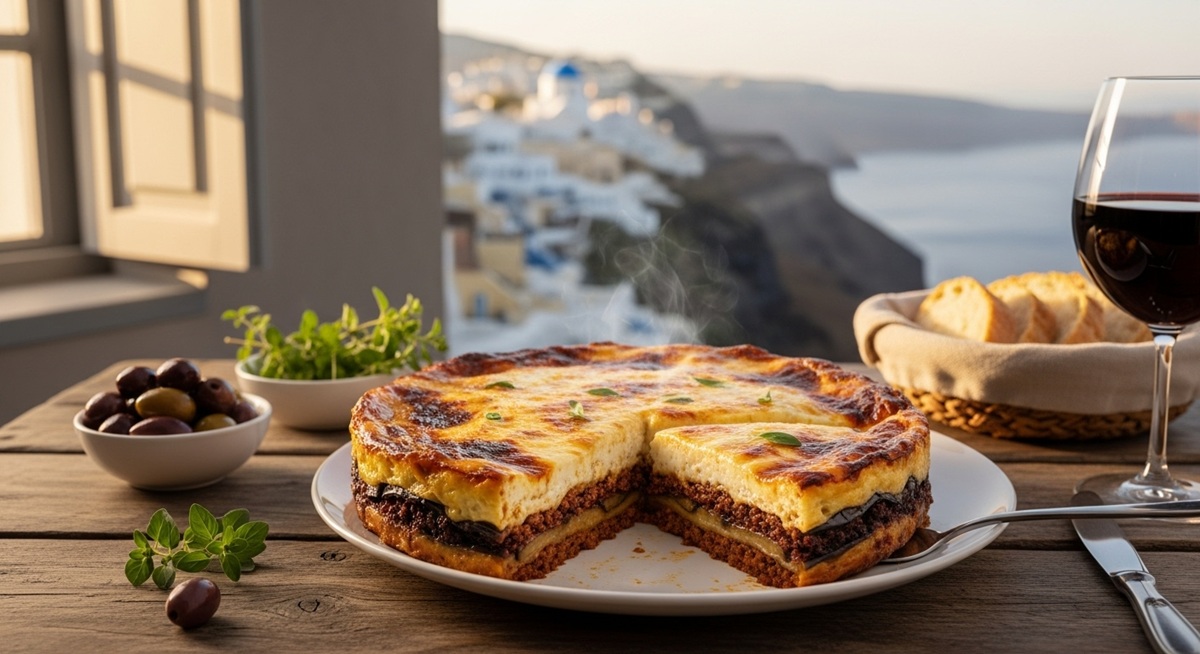
Greek moussaka, a layered symphony of eggplant, minced lamb, and creamy béchamel sauce, is more than a dish—it’s a portal to Greece’s soul. Rooted in ancient mythology and shaped by centuries of cultural exchange, moussaka embodies the warmth of Mediterranean hospitality and the richness of Greece’s landscapes. From the sun-drenched cliffs of Santorini to the bustling tavernas of Athens, this iconic casserole tells a story of gods, heroes, and culinary artistry.
The Mythic Roots of Greek Moussaka
In ancient Greece, food was a sacred offering to the gods. Demeter, goddess of the harvest, blessed the earth with eggplant, tomatoes, and olive oil, while Dionysus, god of wine, inspired the libations that paired with feasts. Moussaka, with its layered complexity, mirrors the divine order of Olympus—each ingredient a carefully placed element in a cosmic balance. Just as Zeus wove thunder into the skies, Greek chefs layer eggplant, meat, and béchamel to create harmony on the plate.
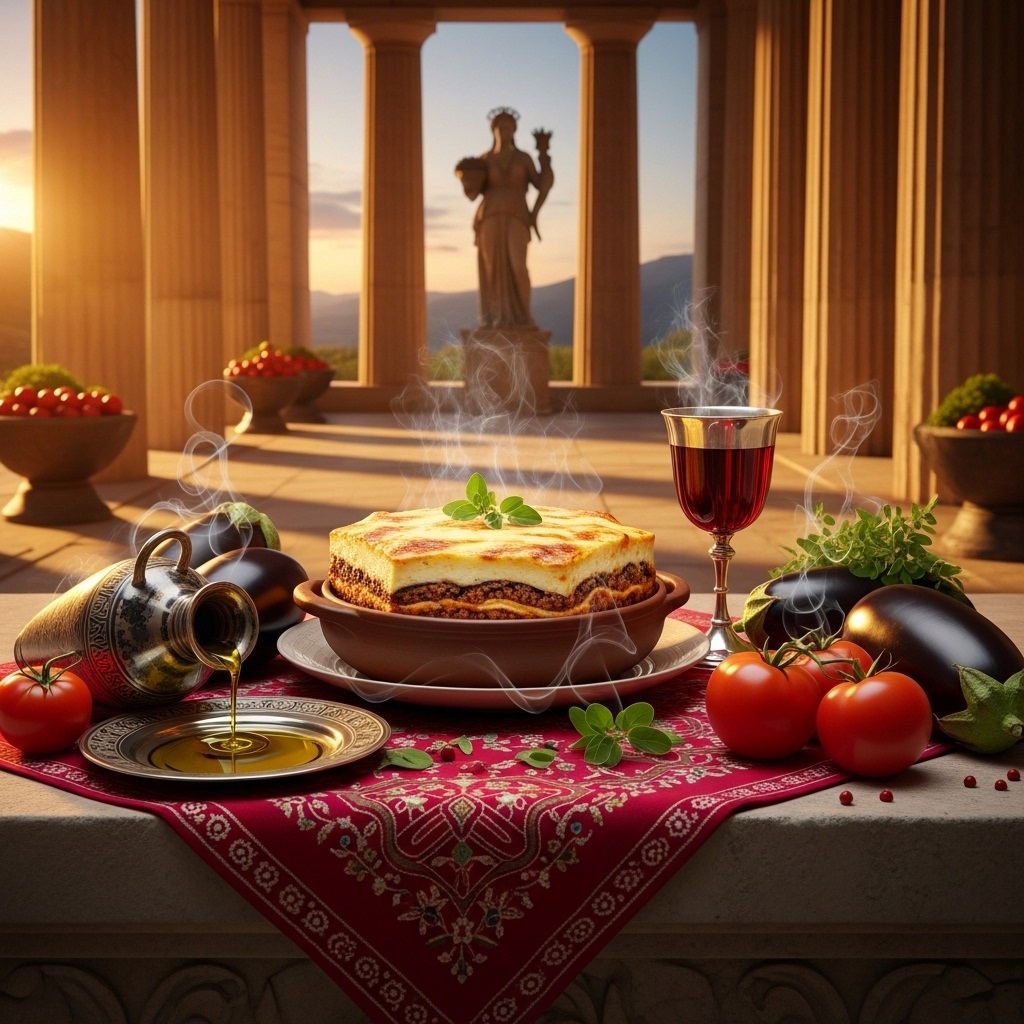
The dish’s origins are as layered as its ingredients. While moussaka as we know it today emerged in the early 20th century, its roots trace back to the Byzantine Empire and the Ottoman influence, which introduced eggplant and exotic spices like cinnamon and nutmeg. The French-trained Greek chef Nikolaos Tselementes elevated moussaka by adding the luxurious béchamel sauce, blending Mediterranean tradition with European flair. This fusion makes moussaka a culinary bridge between past and present, myth and modernity.
Where to Savor Moussaka in Greece
To truly understand Greek moussaka, you must taste it where mythology and geography intertwine. Greece’s iconic destinations offer not only breathtaking views but also unforgettable culinary experiences. Here are the best places to enjoy moussaka while soaking in the country’s mythic heritage.
Athens: A Culinary Ode to Athena
In the shadow of the Acropolis, where Athena gifted the olive tree to humanity, Athens’ Plaka district buzzes with tavernas serving classic Greek moussaka. Picture yourself at a candlelit table, the aroma of eggplant and lamb mingling with the crisp notes of a Greek red wine. Restaurants like Psaras Tavern layer moussaka with precision, offering a taste as timeless as the Parthenon. After dining, stroll through the Ancient Agora, where philosophers once debated, and feel the pulse of Greece’s mythic past.
Crete: Rustic Flavors of Minos
On the island of Crete, where King Minos ruled and the Minotaur roamed the labyrinth, moussaka takes on a rugged charm. Local chefs often add zucchini alongside eggplant, creating a dish as earthy as the island’s olive groves. After hiking the Samaria Gorge, refuel at a taverna in Chania, where moussaka is served with warm Cretan bread and a view of the Venetian harbor. The island’s rustic cuisine reflects Demeter’s agricultural bounty, making every bite a connection to Crete’s ancient soul.
Santorini: A Volcanic Feast for Hephaestus
In Santorini, where volcanic eruptions shaped the dramatic caldera, moussaka is as bold as the landscape. Savor it at a cliffside taverna in Oia, where the dish’s golden béchamel mirrors the island’s sunset. Local variations might include feta or local cheeses, adding a tangy twist. As you dine, imagine Hephaestus, god of fire, forging the island’s rugged beauty, and let the flavors of moussaka transport you to a mythic realm.
Thessaloniki: A Modern Muse for Calliope
Thessaloniki, Greece’s culinary capital, reimagines moussaka with innovative flair, much like Calliope, the muse of epic poetry. Chefs here experiment with seasonal vegetables or local cheeses, creating versions that honor tradition while embracing modernity. Visit Ouzeri Aristotelous for a moussaka that blends eggplant, minced lamb, and a hint of smoked cheese, paired with a view of the White Tower. This city, where East meets West, is a testament to moussaka’s ability to evolve while staying rooted in heritage.


Delphi: A Culinary Oracle
At Delphi, where the Oracle once channeled Apollo’s wisdom, moussaka feels like a divine revelation. Tavernas near the ancient ruins serve hearty versions with potatoes and lamb, perfect for fueling a day of exploring the Temple of Apollo. The dish’s layers echo the stacked stones of Delphi’s ruins, each bite a reminder of Greece’s sacred connection to the land.
The Classic Greek Moussaka Recipe with Eggplant
Creating moussaka at home is a ritual akin to an ancient Greek feast, where every step honors tradition. Below is the classic Greek moussaka recipe with eggplant and potatoes, followed by six variations to suit every palate.

Ingredients for Classic Moussaka
- Eggplant: 1 kg, sliced into 1 cm rounds
- Potatoes: 500 g, sliced thinly
- Minced lamb: 700 g (or beef for a milder flavor)
- Onions: 2, finely chopped
- Tomatoes: 3, peeled and diced
- Olive oil: 3 tbsp
- Dry white wine: 150 ml
- Cheese: 100 g, grated (preferably Kefalotyri or Parmesan)
- Spices: Cinnamon (1 tsp), nutmeg (½ tsp), oregano (1 tsp), salt, black pepper
- Béchamel sauce:
- Milk: 500 ml
- Butter: 90 g
- Flour: 2 tbsp
- Eggs: 2
- Cheese: 150 g, grated
- Nutmeg: A pinch
- Salt: To taste
General Cooking Principles
Preparing moussaka is a labor of love, requiring patience and precision. Here’s a step-by-step guide to ensure your dish captures the essence of Greece.
- Preparing Eggplant: Slice eggplant into rounds and soak in a salt bath (2 tbsp salt per 1 liter water) for 20–30 minutes to remove bitterness. Pat dry with paper towels.
- Preparing Tomatoes: Blanch tomatoes in boiling water for 1 minute, then transfer to cold water to peel easily. Dice finely.
- Cooking Meat Sauce: Sauté onions in olive oil until golden. Add minced lamb, cook until browned, then add tomatoes, wine, and spices. Simmer until the liquid evaporates.
- Frying Vegetables: Fry eggplant and potatoes in olive oil over high heat for 1 minute per side until golden.
- Making Béchamel: Melt butter, stir in flour, and cook until golden. Gradually add milk, stirring to avoid lumps. Remove from heat, add beaten eggs, cheese, nutmeg, and salt.
- Assembling Layers: In a baking dish, layer: potatoes, eggplant (half), meat sauce (half), tomatoes, eggplant, meat sauce, béchamel, and top with cheese.
- Baking: Bake at 180°C (350°F) for 40–50 minutes until golden. Let rest for 15–20 minutes before serving.
Six Moussaka Variations to Explore
1. Greek Moussaka with Eggplant and Potatoes

This hearty variation adds potatoes for extra texture. Slice and fry potatoes alongside eggplant, then layer as follows: potatoes, eggplant, minced lamb, tomatoes, eggplant, minced lamb, béchamel, cheese. Bake for 60–80 minutes at 180°C for a robust, crowd-pleasing dish.
2. Vegetarian (Lenten) Moussaka
For a lighter, meat-free option, this vegetarian moussaka swaps minced lamb for vegetables. Use:
- Carrots: 2, grated
- Potatoes: 5, grated
- Celery: 100 g, grated
- Green beans: 500 g, chopped
- Rice: ½ cup, cooked
- Onions: 2, chopped
- Milk: 200 ml
- Eggs: 4
- Olive oil: 50 ml
Fry onions, carrots, and celery. Boil beans and rice. Layer: potatoes, fried vegetables, rice, beans, then top with a milk–egg sauce or béchamel. Bake for 20 minutes at 180°C.
3. Greek Moussaka with Eggplant and Zucchini
Adding zucchini makes this moussaka juicier. Slice zucchini like eggplant and fry together. Layer with minced lamb or beef, tomatoes, and béchamel. Bake for 40–50 minutes. No soaking is needed for zucchini, as they retain their texture naturally.
4. Moussaka with Eggplant and Rice
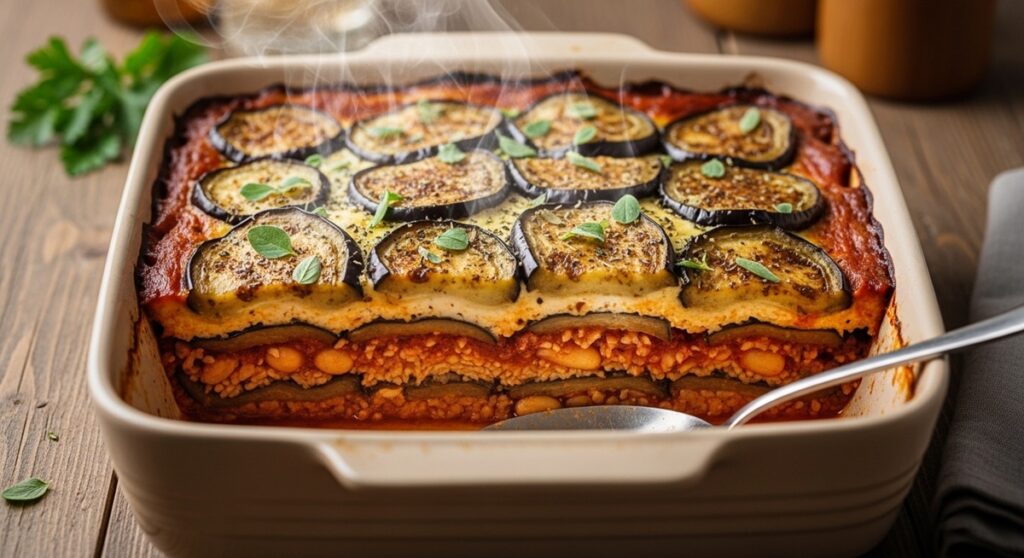
This meat-free version combines eggplant and rice for a lighter dish. Fry eggplant slices, boil rice (150 g) and white beans (300 g), and sauté tomatoes with herbs. Layer: eggplant, tomatoes, rice and beans, tomatoes, eggplant. Bake for 30 minutes at 180°C, garnished with fresh herbs instead of béchamel.
5. Greek Moussaka in a Slow Cooker
For a modern twist, use a slow cooker for a tender moussaka. Use:
- Eggplant: 2, sliced
- Onion: 1, chopped
- Minced lamb: 500 g
- Eggs: 2
- Cheese: 150 g
- Sour cream: 2 tbsp
- Flour: 2 tbsp
- Tomato paste: 1 tbsp
- Butter: 1 tbsp
- Garlic: 1 clove
Fry onion, garlic, and minced lamb in the slow cooker’s sauté mode. Add tomato paste and simmer. Layer eggplant, pour over a cheese–egg–sour cream sauce, and cook for 20 minutes until browned.
6. Moussaka with Chicken and Eggplant
Swap minced lamb for chicken for a lighter, budget-friendly option. Finely chop chicken fillet, fry with onions and spices, then layer with eggplant, tomatoes, and béchamel. Bake for 40–50 minutes for a dish that’s just as comforting as the classic.
Why Moussaka is Greece’s Culinary Crown Jewel
Greek moussaka is a narrative of resilience, creativity, and hospitality. Its layers reflect the strata of Greece’s history, from Byzantine spices to Ottoman influences and French finesse. Each bite carries the warmth of the Mediterranean sun, the depth of Greek olive oil, and the love of families gathered around the table. Whether savored in a Cretan taverna or your own kitchen, moussaka invites you to a mythic feast where gods and mortals dine as one.
A Dish for Every Traveler
From the oracle’s wisdom at Delphi to the volcanic vistas of Santorini, Greek moussaka is a culinary gem that shines through Greece’s mythic and modern landscapes. Its versatility—whether layered with potatoes, zucchini, or rice—makes it a dish for every traveler and home cook. As you savor moussaka, you’re tasting Greece’s heart, shaped by Demeter’s harvest and Athena’s wisdom. Recreate this dish at home or seek it out in Greece’s tavernas, and let every bite transport you to a land where mythology and flavor intertwine.