

Nature itself is the best physician. Hippocrates of Kos understood that the human body is not a machine to be fixed but an ecosystem to be balanced. He recognized that the air of the mountains, the minerals in the earth, and the salt of the sea were the primary tools of the healer. In 2026, as we move further away from the artificial noise of the digital age, we find ourselves returning to these fundamental truths. Greece has always been a sanctuary for those seeking to mend the rift between spirit and flesh. This is a land where the geography is inseparable from the mythology, and where the act of walking through a forest or soaking in a warm spring is a conversation with the past. We are seeing a profound shift in how people approach travel. It is no longer about the checklist of monuments or the consumption of luxury for its own sake. Instead, there is a growing desire for restorative travel that offers a deep, quiet connection to the elements.
The concept of wellness in Greece is rooted in the idea of eudaemonia, a state of being where one is in harmony with their inner daimon or spirit. To achieve this, the ancients looked to the landscape. They built their healing centers, the Asclepieia, in places of immense natural beauty, usually near running water and thick groves of trees. They knew that the environment dictates the internal state. Today, this wisdom is being rediscovered under new names like forest bathing or thermalism, but the essence remains unchanged. The stones of the Peloponnese and the waters of the Aegean carry the same charge they did three thousand years ago. In our search for clarity, we look toward the mountains of Pelion and the hidden valleys of Arcadia, seeking the same stillness that the philosophers once prized. This journey is about the reclamation of the self through the slow, deliberate engagement with the physical world.
The Ancient Rhythms of Pelion and the Centaur Path
Mount Pelion rises from the Pagasetic Gulf like a green wall, a place where the humidity of the sea meets the cool air of the high peaks. This is the fabled home of the Centaurs, most notably Chiron, who was the tutor to heroes and the father of medicine. When you walk beneath the dense canopy of chestnut and beech trees in Pelion, you are participating in a form of forest bathing that feels ancient and heavy with meaning. The air here is thick with the scent of damp earth and wild herbs. It is a sensory landscape that demands your full attention. The paths, or kalderimia, are made of hand laid stone, winding through villages that seem to have grown out of the mountainside.
In 2026, Pelion stands as a primary destination for those seeking nature immersion without the artifice of modern resorts. There is a specific kind of silence here, broken only by the sound of hidden springs or the rustle of leaves. This is where the practice of shinrin-yoku finds its Greek counterpart in the simple act of wandering. You do not need a guide to tell you how to breathe in these woods. The trees do the work for you. The high oxygen levels and the phytoncides released by the forest act as a natural sedative for the nervous system. The forest does not judge or demand; it simply exists, inviting you to do the same.

The villages of Tsagarada and Milies serve as anchors for this experience. In Tsagarada, a thousand year old plane tree stands in the central square, its roots reaching deep into the mountain’s veins. Sitting beneath its branches, one feels the weight of time in a way that is grounding rather than overwhelming. The local culture in Pelion is one of quiet hospitality. There is no rush to serve, no frantic pace to maintain. The food is simple and medicinal, focusing on wild greens, mountain tea, and honey. This is the lifestyle we celebrate, one where the aesthetic beauty of a place is matched by its functional ability to heal. To spend a week in Pelion is to strip away the unnecessary layers of modern life until only the essential remains.
Arcadia and the Wild Peace of the Peloponnese
Deep in the heart of the Peloponnese lies Arcadia, a region so synonymous with pastoral beauty that its name became a literary trope for paradise. Yet the real Arcadia is rugged, mountainous, and fiercely beautiful. It was the domain of Pan, the god of the wild, and the landscape reflects that untamed energy. For the traveler in 2026, Arcadia offers a type of spiritual storytelling that is written into the very topography. The Lousios Gorge, with its hanging monasteries and rushing water, is a place where the physical and the metaphysical overlap.
Walking the trails of Arcadia is an exercise in endurance and contemplation. The terrain is challenging, forcing a rhythm that is dictated by the incline and the breath. This is the slow travel movement in its most authentic form. You cannot rush through Arcadia. The mountains will not allow it. As you move through forests of fir and oak, you encounter a landscape that has remained largely unchanged for centuries. The stone villages like Stemnitsa and Dimitsana provide a sanctuary after a day of hiking, offering a warmth that is both literal and communal.

The healing power of Arcadia lies in its isolation. It is a place where you can go days without hearing the sound of a combustion engine. The focus here is on the internal landscape. We must understand the cyclical nature of existence to find peace, and in the seasonal shifts of Arcadia, this cycle is visible and tangible. The winter snows give way to a spring of explosive color, followed by a dry, golden summer and a melancholic, misty autumn. To witness these changes is to reconnect with the natural order of things. This is not a vacation; it is a realignment.


The Living Waters of Loutraki and the Legacy of Heracles
Thermalism is perhaps the oldest form of wellness in Greece. The earth here is geologically active, and where there is seismic tension, there is often healing water. Loutraki, situated on the Gulf of Corinth, has been known for its medicinal springs since antiquity. Legend says that Heracles came here to recover his strength after his labors, bathing in the warm, mineral rich waters to soothe his aching muscles and spirit. Even today, the waters of Loutraki are recognized for their high magnesium and sodium content, making them ideal for treating physical exhaustion and circulatory issues.
In 2026, Loutraki is moving away from the clinical atmosphere of the mid-century spa and returning to a more elemental approach. The focus is on the thermal springs as a natural resource rather than a medical treatment. There is something profoundly humbling about floating in water that has been heated by the very core of the planet. It is a reminder of our connection to the earth. The modern traveler uses these waters not just for physical ailments but as a means of nervous system regulation. The heat forces the body to relax, while the minerals provide the chemical components for recovery.

The architecture of Loutraki also tells a story. You see the transition from the grand, neoclassical bathhouses of the past to the more integrated, sustainable structures of the present. This evolution mirrors our changing relationship with health. We no longer see it as something to be managed in a sterile environment but as a continuous process that involves our surroundings. A morning spent in the springs followed by an afternoon looking out over the blue expanse of the Corinthian Gulf creates a sense of spatial awareness that is vital for mental clarity. The water is a bridge between the fire of the earth and the coolness of the sea.
Edipsos and the Renaissance of the Northern Aegean
If Loutraki is the gateway to thermal healing, Edipsos on the island of Evia is its heart. This town has been a destination for seekers of health for over two thousand years. Aristotle mentioned these springs in his writings, and Roman emperors like Sulla sought relief here. The unique feature of Edipsos is the way the thermal water cascades directly into the sea from the rocks. You can stand at the edge of the Aegean and feel the hot, sulfurous water mixing with the cool salt spray of the waves.

The mythic wellness of Edipsos is not something that is performed for tourists; it is a way of life. In 2026, the town is seeing a resurgence as younger generations look for authentic, evergreen content in their travel experiences. They are drawn to the raw, unpolished nature of the springs. There are luxury facilities available, but the true magic happens on the public beaches where the water bubbles up through the sand. Here, you see people of all ages sitting in the shallow pools, participating in a ritual that has remained constant through empires and revolutions.
The Northern Aegean has a different energy than the Cyclades. It is greener, more shadowed, and less crowded. This allows for a deeper sense of privacy and introspection. The local economy in Edipsos is built around the springs, but it also encompasses the olive groves and vineyards of northern Evia. The integration of Greek healing traditions with the local diet and landscape creates a holistic experience that is hard to find elsewhere. It is a place where the steam rising from the ground feels like the breath of the earth itself, a constant reminder of the vitality that lies just beneath the surface.
Delphi and the Purification of the Spirit
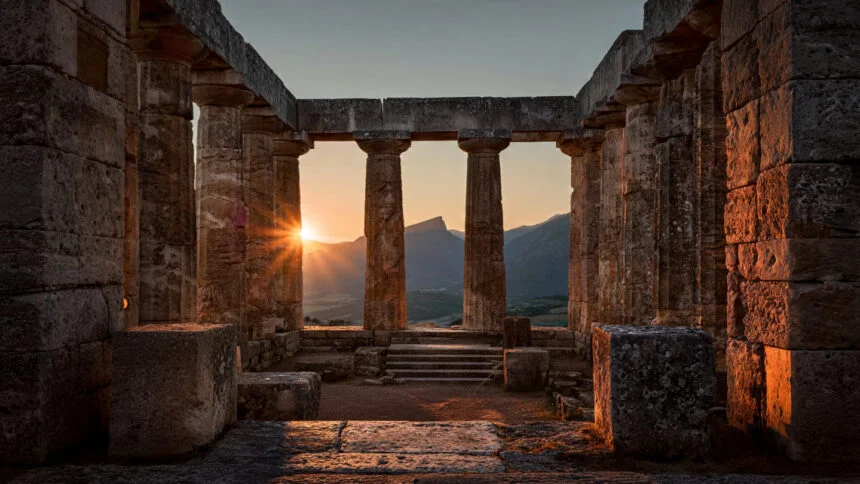
While many associate Delphi with the Oracle and the prophetic vapors, it was also a place of physical and spiritual cleansing. Before any seeker could consult the Pythia, they had to undergo purification at the Castalian Spring. The water of Delphi was considered sacred, not because of its mineral content, but because of its origin and its role in the ritual process. Even today, the site of Delphi possesses an energetic quality that is difficult to ignore. The way the light hits the Phaedriades rocks at dawn creates an atmosphere of intense clarity.

For the wellness traveler in 2026, Delphi offers a landscape for mindfulness retreats that are grounded in history rather than modern trends. It is a place for silence. Walking the Sacred Way toward the Temple of Apollo, one is struck by the proportion and the harmony of the ruins against the mountain backdrop. This is the architectural manifestation of the Delphic maxims: Know Thyself and Nothing in Excess. These are the pillars of what we now call mental wellness.
The surrounding olive groves in the Pleistos Valley are among the oldest in Greece. Walking through this “sea of olives” toward the port of Itea provides a different kind of restoration. The silver-green leaves shimmer in the wind, creating a rhythmic visual that is incredibly soothing. This is a place to practice the art of being present. The connection between the high mountain air and the deep valley below encourages a sense of perspective. It reminds us that our problems are small in the face of the mountains, yet our capacity for wisdom is great.
Lake Vouliagmeni and the Urban Sanctuary
Even within the reach of the capital, Greece offers sanctuaries that feel world’s away from the urban sprawl. Lake Vouliagmeni, on the outskirts of Athens, is a geological marvel. Fed by underground thermal currents and connected to the sea through a series of caves, the lake maintains a constant, warm temperature year round. The towering limestone cliffs that surround the water create a natural amphitheater, shielding the lake from the wind and noise.

In 2026, Vouliagmeni serves as a vital resource for urban wellness. It proves that we do not always have to travel to the furthest reaches of the map to find restoration. The lake is home to small organisms that provide a natural exfoliation for the skin, making the act of swimming a dual experience of relaxation and renewal. The water is brackish, a perfect blend of fresh and salt, which many find more buoyant and restorative than the open sea.
This is a place where the modern Athenian comes to breathe. It represents the successful integration of natural wonders into a contemporary lifestyle. It is a reminder that the earth provides everything we need, provided we treat it with the respect it deserves. The lake is a living ecosystem, and to swim in it is to become a part of that system for a brief, beautiful moment. It is the bridge between the ancient world of nymph worship and the modern need for a lunch break sanctuary.
A New Paradigm of Restoration
The shift we are seeing in 2026 toward mythic wellness is not a rejection of the modern world, but an integration of it with the wisdom of the old. We are learning that the most effective way to heal is to stop fighting against our nature and start working with it. Greece, with its unique combination of geography and history, is the ideal laboratory for this new way of living. Whether it is the forest bathing in the shadows of Pelion, the high energy of the Arcadian mountains, or the soothing heat of the thermal springs in Edipsos and Loutraki, the goal is the same: a return to the source.

We are finding that the most profound experiences are often the simplest. A glass of cold water from a mountain spring, the feel of sun warmed stone against the skin, the smell of wild thyme on the wind; these are the things that truly restore us.
As we look toward the future, the fabled wellness escapes of Greece offer a blueprint for a more sustainable and meaningful way of moving through the world. They invite us to slow down, to listen, and to remember what it feels like to be fully alive. The landscape is waiting, as it has been for millennia, offering its gifts to anyone with the patience to receive them. The path is carved in stone and water, and it leads back to the self.