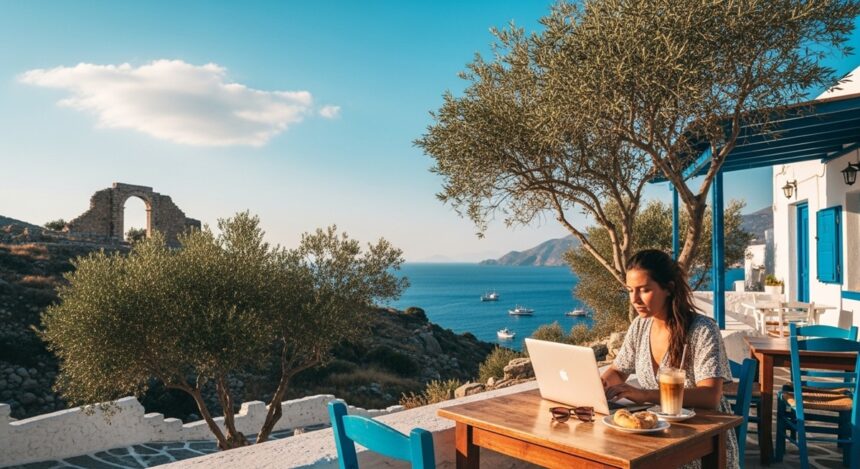





In winter, when the Aegean winds sharpen and the labyrinthine streets of Chora fall quiet, something almost magical happens. The island returns to its ancient pulse. Fishermen sit by the harbor patching their nets with rhythmic patience. Whitewashed homes glow with a stark, beautiful resilience against storm-dark seas. And in kitchens across the inland villages, families prepare a dessert so vivid, so symbolic, that it feels like a jewel placed at the center of the season.
They call it The Mykonian Ruby. It is a pomegranate cake Greece has cherished for generations, a dessert whose deep garnet glaze evokes the mythical fruit of Persephone, the queen of the underworld. It is a dish shaped by Cycladic desserts traditions, ancient storytelling, and the island’s own culinary rhythms. And like much of Greek culture, its roots run far deeper than the recipe itself. This is the story of a winter dessert that bridges mythology, island heritage, and the warm hearthside rituals of the Cyclades.
The Mythic Heart of the Mykonian Ruby
The pomegranate has always been the beating heart of Greek winter traditions. In myth, Hades offered Persephone the jewel-like seeds that bound her to the underworld for part of each year. Each seed symbolized winter’s descent, a season of inwardness, reflection, and quiet strength. But the Cyclades give this myth their own interpretation. On islands like Mykonos, winter was never simply a darker chapter. It was a precious pause in the year, a time when seafarers stayed close to home, and households leaned into hearth, craft, and storytelling. The Persephone myth food connection became an emblem not only of the underworld but of seasonal renewal, a reminder that spring is already hidden within winter’s core.

Almond Trees and the Blossoms of Hope
Complementing the dark ruby of the pomegranate is the pale, fragrant almond. According to local lore, the almond tree was a symbol of eternal love and promise, tied to myths of Phyllis and Demophon. Its early blossoming, often occurring in the first weeks of February while the air is still cold, made almonds a hopeful ingredient for Greek winter recipes throughout the region. It was only natural that the almond Greek cake base and the pomegranate topping, the two great symbols of winter and hope, would eventually fuse into one unforgettable creation.
Mykonos in Winter A Landscape Transformed
Summer Mykonos is dazzling, defined by windmills, nightlife, and countless visitors. However, Mykonos winter is something else entirely. Locals refer to it as the island’s true season. The air is crisp, the light softer, and the sea turns a deeper, more moody cobalt. It is during these quiet months that ancestral recipes resurface, including the pomegranate winter cake prepared for family gatherings, winter feasts, and New Year celebrations.
Where the Tradition Lives Today

You will find this dessert in the kitchens of Ano Mera, where village ovens are still fired with old Cycladic methods. It exists in the backstreets of Chora, where grandmothers soak almonds overnight before grinding them into fine meal. It is shared in Marathi and Ornos, where families still exchange sweet dishes after Epiphany. It is a dish that speaks more of heritage than tourism, serving as a pillar of Mykonos culinary heritage and island identity rather than summer spectacle.
Crafting The Mykonian Ruby
To understand this cake, one must look at its components not as a grocery list, but as a collection of symbols. The base requires ground almonds, the seeds of large pomegranates, and thick Greek honey. It relies on eggs, light and fruity olive oil, and the zest of Cycladic lemons. The spice profile is simple yet profound, utilizing cinnamon and a splash of local rakómelo or tsipouro. Finally, a handful of whole almonds is reserved for decoration.
Slow Fire and Island Patience
The method of creation is a lesson in patience. It begins by whisking olive oil, honey, and eggs until the mixture becomes velvety. The baker then folds in the ground almonds, lemon zest, and cinnamon, creating a dense, aromatic batter that smells of the holidays. Half of the pomegranate seeds are stirred directly into the mix, reserving the brightest ones for the final glaze.



The baking process is slow, allowing the traditional Greek sweets to firm up without drying out, an island technique perfected over centuries of wood-fired oven usage. While the cake bakes, the remaining pomegranate seeds are heated with honey and a touch of rakómelo until they burst into a ruby glaze. This is poured over the cake while it is still warm, letting the glaze seep deep into the almond crumb. The final touch involves arranging whole almonds in a sun pattern, an ancient Cycladic motif representing the return of the light. The result is fragrant with almond, glowing with pomegranate, and carrying a flavor profile that feels festive, ancient, and deeply Greek.
Where to Experience This Dessert in Greece

While this is a home-style dessert, determined travelers can find it during Cyclades travel winter excursions. Look for village bakeries or winter-only cafes in Mykonos that cater to locals rather than tourists. Some families still prepare it during Podariko, the New Year’s first-foot tradition, offering slices for good luck to anyone who crosses their threshold.
Influence Across the Archipelago
Though the recipe is distinctly Mykonian, the almond-forward flavor resonates strongly in nearby Naxos, where almond-based sweets flourish. Similarly, on Tinos, a pilgrimage island with a love for pomegranates, you can find variations of pomegranate desserts inspired by regional customs during winter feasts and Epiphany. This shared love for Aegean seasonal cuisine binds the islands together during the colder months.
Symbolism of the Mykonian Ruby

This is a cake of blessings. The pomegranate glaze symbolizes life returning, even in winter’s depth. The almonds represent hope blossoming early against the cold. The honey stands for sweet fortune. And the fruit’s deep color, the ruby itself, invokes the myth of Persephone’s promise that darkness is temporary, and renewal is inevitable.
Every slice is a reminder that the Cyclades are not only islands of sun but islands of myth, ritual, and winter traditions that survive quietly until rediscovered. The Mykonian Ruby is far more than a cake. It is a culinary relic, a mythological echo, and a seasonal ritual that embodies the Cycladic winter spirit. It reflects how Greece allows its ancient stories to seep naturally into everyday life, into food, hospitality, and seasonal customs. To taste it is to experience the island not as tourists do, but as the island breathes in its truest, quietest months.