
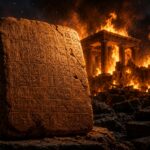
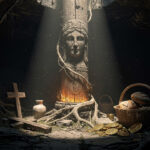

Winter in Greece may whisper with cold winds, but its villages and islands blaze with firelit rituals, ancient customs, and a communal glow that feels older than the Olympian gods themselves. This is not the passive hibernation of the north; it is a season of defiant celebration, where the darkness is fought back by flames and feasting. At the heart of these luminous traditions stands Hephaestus, the divine blacksmith of myth, a god whose fiery domain shaped heroes, forged destinies, and inspired some of Greece’s most fascinating winter festivals.
The limping god of the forge, the one Hera flung from Olympus, never left Greece. He simply moved underground, into the volcanoes, into the hearths, into the very bones of winter itself. While Zeus gets the thunder and Poseidon the sea, Hephaestus claimed the coldest season, because only fire can fight darkness, and only a master craftsman knows how to keep a flame alive when the world wants it dead.

Every January, when the nights are longest, Greeks prove they never forgot their volcanic god. They light the sky in his name.
Today, his powerful legacy flickers through torchlit parades, charcoal feasts, mountain bonfires, and dramatic rites of renewal that transform the darkest months into vibrant celebrations of heat, hope, and human connection.
Hephaestus: The God Who Tamed Fire and Sparked Tradition
Before diving into the festivals themselves, the land of Greece asks us to understand the spark behind them. In mythology, Hephaestus (Ήφαιστος) was the often-overlooked god of fire, metalwork, craftsmanship, and volcanic flame. Exiled from Mount Olympus by his own mother, Hera, he made his home in blazing forges—some say beneath volcanoes, others on islands—where he hammered wonders that drove the classical world: Achilles’ impenetrable shield, the armor of Heracles, the golden thrones of the gods, and mechanical wonders like talking golden automatons.
He represents both destruction and creation, embodying the dual nature of fire that warms homes as surely as it shapes bronze. In the ancient world, the home hearth was sacred, the central point of a family’s existence. It is no wonder that winter—the season of hearths, communal warmth, and the desperate need for light—became a canvas for centuries of rituals tied to Hephaestus’ eternal flame. His mastery over the most vital and destructive element made him the ultimate patron of protection and ingenuity when the world turned cold and dark.
The Greek Winter Fire Festivals That Keep the God’s Spirit Alive

The spirit of the forge and the flame lives on robustly in the coldest corners of the Hellenic world, defying the modern assumption that Greek folklore has faded. These winter fire festivals are not spectacles for tourists; they are ancestral customs, carrying the warmth of memory and myth.
The “Ragoutsaria” of Kastoria – Dionysian Flame in the Snow
In early January, in the northern lakeside town of Kastoria, the community erupts into a dramatic, three-day festival rooted in deep history. The Ragoutsaria is a chaotic, joyous event featuring blazing bonfires, raucous music, costumed revelers, and ancient echoes of Hephaestus’ fiery craft.


This festival is deeply rooted in ancient Dionysian winter rites, where fire was used as a powerful tool. It was meant to symbolically chase away the malicious spirits of the old year and welcome the rebirth of the sun after the solstice, an act of cosmic renewal. Villagers parade under torchlight wearing dramatic fur masks, clanging bells, and vibrant folkloric costumes, moving from neighborhood to neighborhood. The bonfires burn late into the night, symbolizing cleansing, protection, and renewal—the very powers attributed to Hephaestus’ sacred flame as it purified metal.
The “Momogeroi” of Pontic Tradition – Fire Against the Darkness
In the villages of Kozani and throughout Northern Greece, the ancient Pontic ritual of the Momogeroi surfaces each winter. These performances feature costumed, often humorous figures who enact small plays and dances that carry deep mythic weight.

The Momogeroi, often dressed as warriors or tricksters, travel from home to home, performing their choreographed dramas beside bonfires or the flickering light of braziers. Their use of fire is a conscious, active symbol of protection against misfortune and a blessing for the household. The fire represents the enduring light and industrious spirit of Hephaestus, ensuring the hearth remains warm and the family safe until spring. It is a powerful affirmation of the victory of light over shadow in the darkest time of the year.
The “Babougera” of Drama – Fiery Masks of the Underworld
In the region of Drama, notably in villages like Monastiraki and Kali Vrisi, the Babougera festival offers a spectacular and primal display. It is characterized by dancers wearing demonic and animalistic masks, clanging giant cowbells, and roaring, central bonfires.

This ritual is intrinsically linked to agricultural rebirth, mirroring the ancient belief that the land must be actively awakened from its winter sleep. Fire is deployed to cleanse the earth and drive away the cold, lingering demons of winter, much like Hephaestus used flame to purify raw metal, tempering it into strength. The flames are allowed to burn late into the earliest hours, mirroring the persistence and endurance required in the god’s forge.
Volcanic Islands Where Hephaestus Still Works
If you want to feel Hephaestus’ presence in the physical world, Greece offers stunning, tangible landscapes that preserve his volcanic legacy. The god’s association with fire and volcanoes means that even a simple winter visit to these regions becomes a pilgrimage to the forge of the divine.

- Lemnos – The Island of Hephaestus: According to myth, this is the island where Hephaestus crash-landed after being thrown from Olympus. It is filled with volcanic rock formations, rust-red earth, and hot springs. A winter visit feels like exploring the god’s workshop, especially in the geothermal fields and the ancient ruins of Hephaistia, where the ground still holds the heat of the past.
- Nisyros – A Volcano That Still Breathes: The colossal crater of Nisyros is an island where steam rises constantly from sulfur vents. In the winter mist, the active volcano becomes utterly otherworldly, reminding travelers of the power of the god whose hammer shaped the physical world itself.
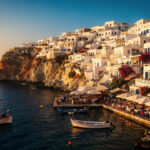
- Santorini – The Eternal Caldera of Creation: The volcanic caldera of Santorini is the most dramatic example of fire’s duality: destructive eruptions created one of the most breathtaking islands on earth. Its winter sunsets, less crowded and more serene, echo the idea of creation born from flame, a signature of the god of fire.
The Meaning of Fire in Greek Culture

For the ancient Greeks, fire was not merely a source of heat; it was a philosophical concept representing warmth, community, purification, and a direct link to the divine. The eternal flame of a city or a home was treated with utmost respect.
For modern Greeks, the survival of these winter fire festivals is a testament to cultural resilience. They are powerful, living artifacts that carry the warmth of memory and myth. To join a Ragoutsaria parade or watch the coals of the Momogeroi burn is to step into a lineage where Hephaestus’ flame, the flame of human ingenuity and spiritual protection, never died. It is a primal and profoundly moving form of slow travel that connects the visitor not to a historical date, but to an ancient feeling.

Where to Experience Greece’s Fire Festivals Today
To embrace the warmth of Greece’s dark season, focus your travel plans on these regions:
- Kastoria – Ragoutsaria festival, traditionally held in the first week of January.
- Drama Region – Babougera and other mask festivals occur throughout the mid-winter period.
- Kozani – Home to the Momogeroi celebrations.
- Volcanic Islands – Lemnos, Nisyros, and Santorini offer profound connections to Hephaestus and incredible winter travel photography opportunities.

While summer brings the sun, it is winter that reveals Greece’s soul: ritual, storytelling, community, and fire, the oldest companion of humankind. The fires of Hephaestus burn in every torchlit parade, every mountain bonfire, and every volcanic breath. For those willing to travel in the dark season, Greece offers a radiant truth: Winter is when the gods come closest to the fire.