
The modern winter holiday season is universally recognized as a time of glittering lights, communal feasting, and the promise of renewal. We wrap ourselves in warmth against the encroaching cold, exchanging gifts and seeking comfort in tradition. But beneath the surface of our contemporary celebrations lie ancient echoes, profound mythological narratives that speak to humanity’s most primal fears and hopes. In the landscape of ancient Greece, no deity embodies this dramatic cycle of death and rebirth, of despair followed by ecstatic hope, quite like Dionysus.
While often reduced in popular culture to a mere figure of drunken revelry, Dionysus is a far more complex and enigmatic entity. He is the god of wine, yes, but also of madness, religious ecstasy, and crucially, resurrection. For the discerning traveler planning a travel to Greece during the quieter, atmospheric months, understanding the myth of the dying and rising god offers a captivating lens through which to view the season. It reveals not just the depth of Greek heritage, but the very genesis of the enduring optimism that fuels our modern holidays.
The Paradox of the Vine: A God of Contradictions
Unlike the stable, statuesque Olympians such as Apollo or Athena, Dionysus is a deity defined by flux and paradox. He represents the borderland between the civilized and the wild. He is the source of intoxicating joy and terrifying madness, the spark of creativity and the chaos of destruction. Most significantly, his mythology is deeply intertwined with the brutal, cyclical patterns of the natural world.
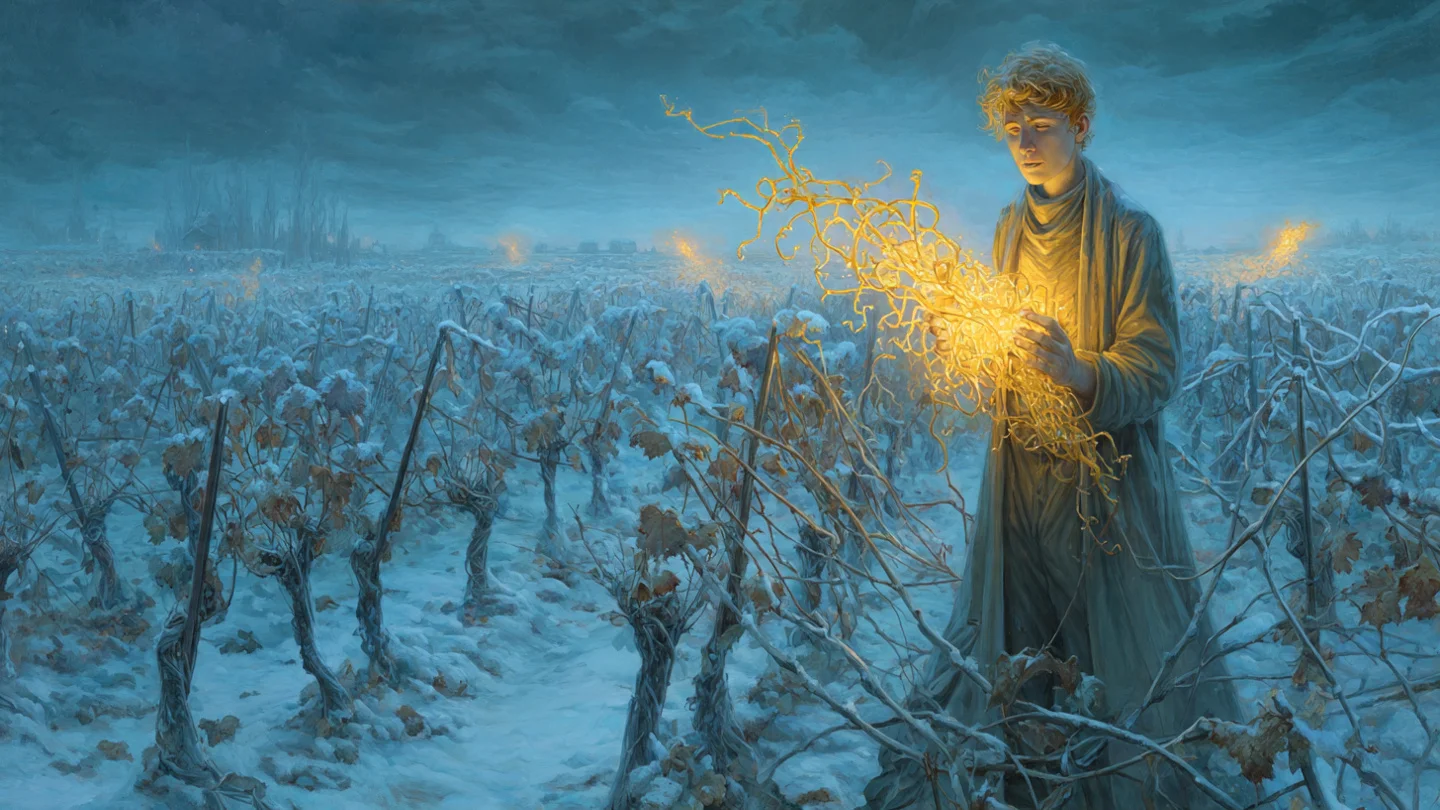
He is the spiritual embodiment of the vine itself. To produce fruit, the vine must look as if it has died. It is cut back, pruned, and left bare and twisted in the frost of winter, only to blossom miraculously anew when the earth warms. This narrative of seasonal myths, the harvest that must be cut down to nourish the future—is central to his identity. His story is one of relentless persecution, fragmentation, and miraculous restoration. It is a narrative that resonates deeply with the natural world’s response to the winter solstice and humanity’s perennial hope for spring.
The Winter of Disintegration
To understand the hope Dionysus offers, one must first understand the darkness he endures. Several myths detail the god’s suffering and dismemberment, a symbolic “death” that resonates powerfully with the barrenness of the winter landscape.
The Attack of the Titans
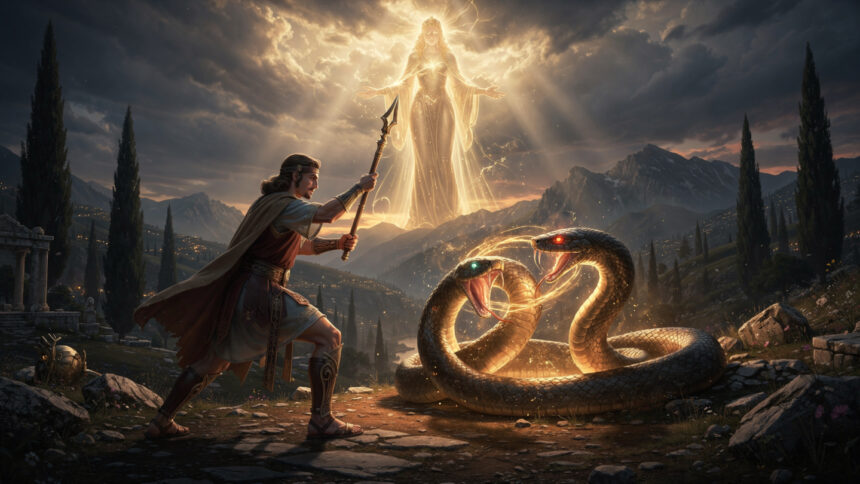
In the esoteric Orphic traditions of Greek mythology, the narrative takes a dark, visceral turn. The infant Dionysus was tragically lured away with toys and then torn apart and devoured by the monstrous Titans at the behest of a jealous Hera. This act of sparagmos, or ritual dismemberment, is shocking, but it holds a kernel of salvation.
According to the myth, only his heart was saved. In some versions, it was rescued by Athena; in others, by Demeter, the goddess of the grain. This preserved heart was given to Zeus, the king of the gods. From this single salvaged organ, Zeus was able to orchestrate the resurrection of his son. He either implanted it into the womb of Semele, leading to Dionysus’s second birth, or ground it into a potion for her to consume.

This graphic tale of destruction and restoration directly mirrors the observable world during the deepest part of winter. The earth, like the torn body of the god, appears to disintegrate. The vines are skeletal, the fields lie fallow, and the sun itself seems diminished and weak. Yet, hidden beneath this apparent death—like the heart saved by Zeus—lies the indestructible seed of life, the promise of renewal and rebirth.

The Solstice Birth: Promise Amidst the Darkness
Despite the narratives of suffering, the winter solstice was not merely a time for mourning the light; it was a time for celebrating the inevitable return of the sun. The connection between Dionysus and the solstice is profound and offers a fascinating parallel to later religious traditions.
The Divine Infant and the Return of Light
In many ancient cults, Dionysus was revered specifically as the “divine infant” during the dark days of winter. Hymns and rituals focused on his miraculous emergence, symbolizing the rebirth of light and the return of vitality to the dormant earth. This celebration of a divine birth occurring during the longest, darkest night of the year strikes a compelling chord when considering the Christian hope found in the Nativity, celebrated just a few days later.

The Haloa festival, celebrated around the time of the solstice in Attica, further cemented this connection. Dedicated to both Demeter and Dionysus, the Haloa was a festival of “threshing floors.” It was a time of feasting, wine-drinking, and communal joy that explicitly linked the dormant seeds sleeping in the frozen earth with the promise of future abundance, overseen by the god of eternal return.
The Seed of Hope: An Enduring Legacy
The mythological arc of Dionysus, his death at the hands of Titans, his descent into darkness, and his miraculous return to life, provided the ancient Greeks with a powerful allegory. It was a mechanism for coping with the harshness of winter and the fear that the sun might never return.
His victory over death offered solace and a spiritual promise to initiates in his mysteries, suggesting that life is resilient and will always overcome decay. It taught that even in the midst of suffering, there is a place for ecstasy and revelry. It was a reminder to embrace life’s joys despite its inevitable sorrows.

For the modern winter traveler, encountering Dionysus is not just about visiting the ancient theatres or the ruins of his temples. It is about feeling the pulse of the cycles he represents. When you walk through a quiet Greek vineyard in January, you are witnessing the pause before the miracle. The story of the dying and rising god is a timeless narrative of resilience, proving that the seed of spring is always waiting, even in the heart of winter.