

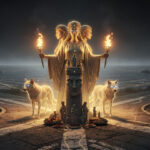
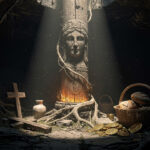

In the rugged heart of Greece, nature has never been silent. Long before the first marble temples rose toward the clouds and before the great philosophies were ever written, the water spoke, the trees listened, and the mountains were worshipped. The Ancient Greeks did not view the divine as something separate from the physical world. Instead, they believed the gods lived inside the very fabric of the landscape. They saw a spirit in every spring and a deity in every peak.
Today, if you follow the ancient paths through the springs, rivers, and forests of the Peloponnese or the heights of Epirus, you will still feel that heavy, sacred presence. Some of these locations remain protected by modern law, but many more are guarded by something much stronger: tradition, memory, and a quiet reverence passed down through the generations. This is a journey into the Sacred Greek Landscapes where mythology, geography, and living belief still intertwine in the modern day.
Where Water Was Divine and the Sacred Springs of Antiquity
The Castalian Spring in Delphi is perhaps the most famous example of how water was used to bridge the gap between the mortal and the divine. Flowing beneath the massive cliffs of the Phaedriades, this spring was believed to purify the soul before a person could receive a prophecy. Pilgrims, poets, and high priests alike were required to wash here before they could approach the Oracle of Apollo.
Even today, when visitors stand by the cold, clear waters of Delphi, their voices instinctively soften and their movements slow. There is a weight in the air that suggests the ancient belief still holds true. The water continues to flow as it did thousands of years ago, carrying the eternal message that truth requires a quiet mind and a cleansed spirit. Delphi was never chosen at random; the Greeks believed that powerful places revealed themselves to humanity, and flowing water was often the first divine sign.

Further west on the legendary island of Ithaca, the Arethusa Spring tells a different story of transformation. According to myth, the nymph Arethusa was transformed into a spring by the goddess Artemis to protect her from pursuit. Homer himself places this spring on the homeland of Odysseus, marking it as a vital landmark of return and survival. Even now, locals speak of the spring as something alive. In antiquity, springs like this were considered offerings to the Nymphs, the protectors of fertility, travel, and the unpredictable nature of fate.
Rivers as Living Deities and the Power of Flowing Spirits
In the complex tapestry of Greek Mythology, rivers were not merely bodies of water. They were male gods, powerful, emotional, and capable of both deep love and terrifying rage. The River Alpheios in the Peloponnese was one of the greatest of these river deities. He was worshipped with specific offerings and prayers, and the temples built near his banks were placed there because the god was already present in the current.
Today, the Alpheios continues to shape the farmland and the villages of the region. Modern farmers often speak of the river with a distinct sense of respect that echoes the ancient rituals of gratitude. They understand that the river provides life but must be handled with caution. This relationship is a direct descendant of the Nature Worship that once defined the ancient world, proving that the spirit of the river is still very much a part of the local consciousness.

However, no body of water carried more weight than the River Styx in the mountains of Arcadia. This was the most feared and sacred river of antiquity, the dark water upon which the gods themselves swore unbreakable oaths. Ancient Greeks believed that these waters remembered every promise made and would eventually punish any betrayal of the soul. Even now, hikers who reach the steep cliffs where the Styx flows tend to approach with a careful, somber attitude. The atmosphere remains heavy with the gravity of those ancient, divine contracts.

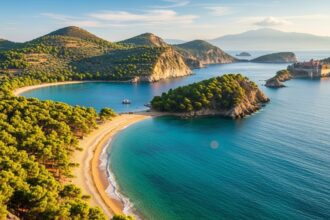

Forests of the Nymphs and the Whispering Trees of Epirus
The lush forests of Mount Pelion were once said to be the home of centaurs and nymphs, a place where healing herbs grew that were known only to the gods. It was here that Chiron, the wise centaur, taught the greatest heroes of myth. These forests remain unusually dense and vibrant, looking much like they did in the time of the legends.
Locals still gather herbs in Pelion with a level of respect that borders on the religious. They repeat gestures passed down from their grandmothers, never taking more than they need and always offering a silent word of thanks to the mountain. In the ancient world, cutting down a sacred tree without permission was an act that brought divine anger. While the legal consequences have changed, the cultural taboo remains, keeping the Nymph Forests of Pelion healthy and mysterious.

Deep in the region of Epirus, the Dodona Sacred Oaks provided a different kind of connection. Long before the temple at Delphi was built, there was Dodona. Here, the god Zeus did not speak through a priestess but through the rustling of the oak leaves. People traveled from across the known world to have the wind interpreted as divine speech. Some of these ancient oaks or their direct descendants still stand today. Visitors instinctively lower their voices when they walk among them, as the forest teaches the same lesson it always has: the gods do not need to shout to be heard.
Mountains as Living Altars and the Boundaries of the Divine
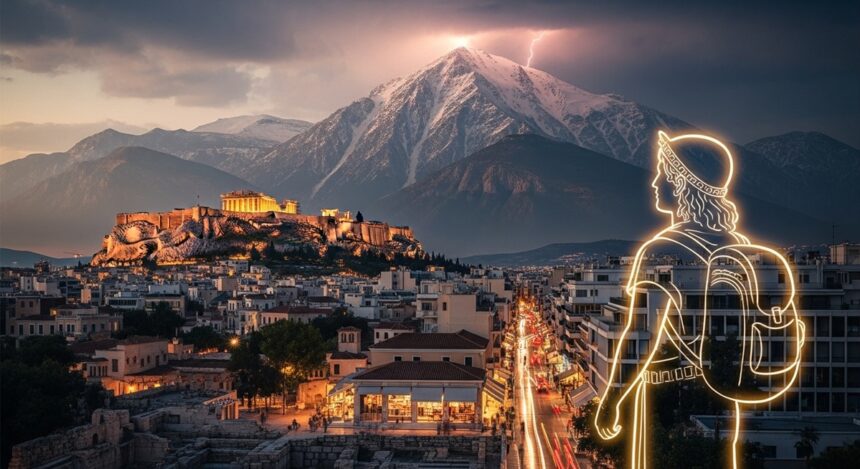
Mount Olympus was never actually climbed in antiquity. Instead, it was observed from below with a sense of distance and awe. The peak belonged exclusively to the gods, and humans respected those boundaries with absolute devotion. Even today, the sudden fogs, dramatic storms, and shifting light of the mountain remind visitors why it inspired such profound wonder. At Olympus Estate, we recognize that the mountain remains a cultural threshold between the mortal and the divine, protected not just as a natural park but as a living monument to human history.
In the wild landscape of Arcadia, Mount Lykaion served as a different kind of altar. Dedicated to Zeus in his earliest, most primal form, the mountain hosted prehistoric rituals and athletic games long before the Olympics were formalized. Archaeologists continue to uncover ancient altars at the summit, and locals still speak carefully about the mountain after dark. Some beliefs are never truly forgotten; they are simply kept quiet to protect their power.
Why These Sacred Landscapes Still Define the Greek Soul
Greece never fully abandoned its ancient worldview. While Christianity eventually layered itself over the older beliefs, it did not erase the underlying spiritual connection to the land. Springs are still blessed with holy water, forests are still avoided during certain nights of the year, and mountains are still treated as entities with their own will. Travelers who visit these sites often report a shared sensation: a pause, a sudden stillness, and a feeling of being acknowledged by the environment itself.
These landscapes were not considered mythic simply because stories were written about them. On the contrary, the stories were written because these places already felt mythic to anyone who stood within them. To visit Greece through this lens is to experience a deeper form of travel. It is an opportunity to walk temple paths that follow the natural flow of water and to sit beneath trees that were once believed to house the very spirits of the earth.
In the end, the divine did not ascend into the sky and leave Greece behind. It stayed in the earth. It remained in the springs that whisper, in the forests that breathe, and on the mountain peaks that demand our silence. To trace these ancient roots is not to look backward into a dead past. Instead, it is a way to remember how deeply humans once listened to the world, and a reminder that perhaps we should start listening again.