

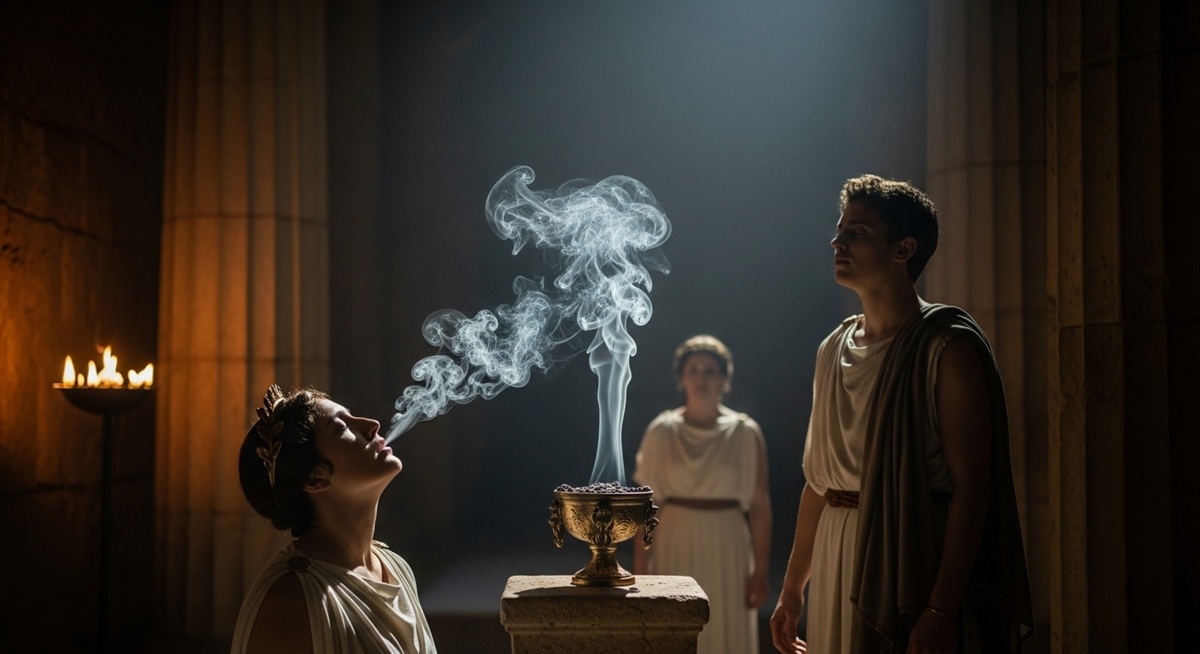
When we picture the ancient Greeks, grand visions of marble statues, philosophical debates under olive trees, and heroic tales from the Iliad spring to mind. Yet, beneath this polished facade lies a lesser-known aspect of their culture: the pursuit of altered states of consciousness through inhalation, ingestion, and ritualistic practices. Far from the modern notion of recreational smoking, the ancient Greeks engaged with vapors, fumes, and herbal concoctions in ways deeply intertwined with spirituality, medicine, and mythology. This was a sacred bridge to the divine, a tool for prophecy, healing, and enlightenment.
Puzzling Vapors of the Delphi Oracle
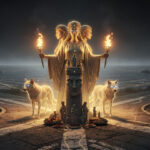
Close to the slopes of Mount Parnassus, the Delphi Oracle stood as the spiritual epicenter of the ancient Greek world. For over a millennium, pilgrims from across the Mediterranean flocked here seeking guidance on everything from wars to marriages. At the heart of this sanctuary was the Pythia, the high priestess whose cryptic utterances shaped empires. But how did she achieve her prophetic trance? Ancient accounts suggest it wasn’t divine intervention alone, natural gases played a pivotal role.
Geological Secrets Beneath the Temple
Historical records from writers like Plutarch describe the Pythia seated on a tripod over a chasm, inhaling sweet-smelling vapors that induced her ecstatic state. For centuries, skeptics dismissed this as myth, but modern geology has revived the theory. In the early 2000s, researchers including geologist Jelle Zeilinga de Boer and archaeologist John Hale examined the site. They discovered active fault lines beneath the temple, capable of releasing hydrocarbon gases like ethylene, methane, and ethane. Ethylene, in particular, is a psychoactive substance once used as an anesthetic, known to cause euphoria, hallucinations, and altered consciousness at low concentrations.
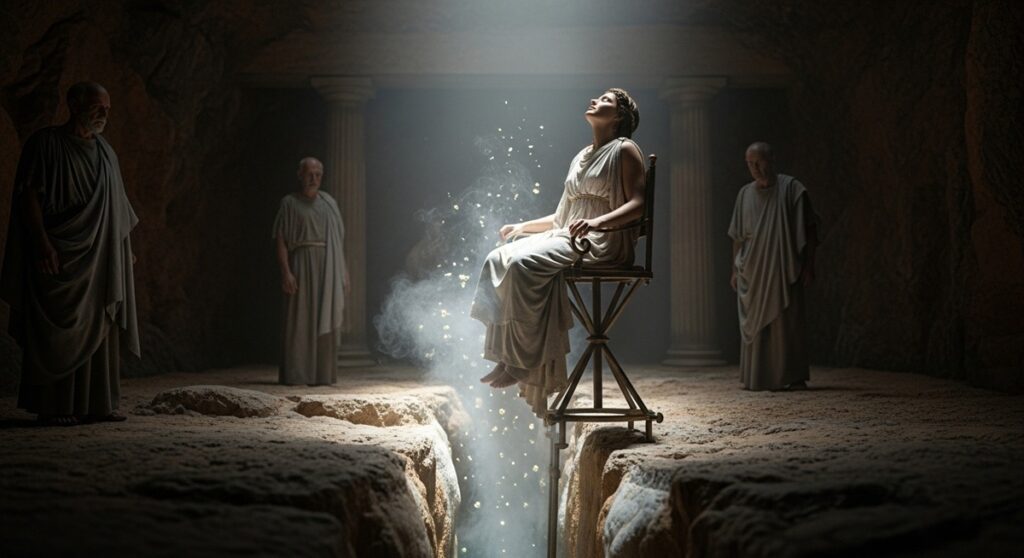
These findings align with ancient descriptions: the vapors were fragrant, like perfume, and didn’t cause harm but rather a temporary shift in awareness. Imagine the scene—the Pythia breathing deeply, her body relaxing into a trance as the gas unlocked visions from the gods. This wasn’t random; it was a controlled ritual, with priests interpreting her words for the masses. Archaeological evidence, such as travertine deposits indicating past groundwater and gas flows, further supports that the site’s activity was more pronounced in antiquity.
Mythological Ties to Divine Inspiration
In Greek mythology, the Delphi Oracle was the mouthpiece of Apollo, the god of prophecy, music, and healing. Legend holds that Apollo slew the serpent Python at Delphi, claiming the site and its vapors as his own. The inhalation ritual symbolized communion with the divine, where mortal limits dissolved, allowing glimpses of fate. This practice underscores how the ancient Greeks viewed altered states not as escapism but as a pathway to wisdom. Apollo‘s dual nature—rational yet ecstatic—mirrors the balance between everyday logic and transcendent insight.
Critics of the gas theory point out potential flaws, like ethylene’s flammability and the lack of recorded explosions. Alternatives include oleander fumes or even psychological suggestion, but the ethylene hypothesis remains compelling, backed by interdisciplinary studies. Today, as we explore mindfulness and psychedelics, the Delphi Oracle reminds us that seeking altered consciousness is an age-old human endeavor.
The Mystical Brew of the Eleusinian Mysteries
Shifting from vapors to liquids, we arrive at one of the most secretive rites in ancient Greek history: the Eleusinian Mysteries. Held annually near Athens for nearly two millennia, these ceremonies honored Demeter and her daughter Persephone, promising initiates eternal bliss and profound spiritual revelations. Central to the experience was the kykeon, a mysterious drink that propelled participants into visionary states.
Unraveling the Ingredients of Kykeon
The kykeon was described in ancient hymns as a simple mix of barley, water, and mint or pennyroyal. Yet, the intense, life-changing visions reported by figures like Plato and Cicero suggest something more potent. In the 1970s, scholars R. Gordon Wasson, Albert Hofmann (the discoverer of LSD), and Carl Ruck proposed a groundbreaking theory: the barley was infested with ergot, a fungus containing lysergic acid derivatives similar to LSD. This psychoactive substance could induce hallucinations, euphoria, and a sense of unity with the divine.


Ergot alkaloids, found in fungi on grains like rye and barley, have been linked to historical outbreaks of ergotism, but in controlled doses, they mimic psychedelic effects. Archaeological finds, including ergot remnants at a temple dedicated to Demeter, bolster this idea. The kykeon wasn’t just a beverage; it was an entheogen— a substance generating the divine within. Participants fasted beforehand, heightening its impact, and the ritual reenacted Persephone‘s abduction to the underworld, symbolizing death and rebirth.
Symbolic Journey Through Myth and Vision
Greek mythology blends the Eleusinian Mysteries into the tale of Demeter‘s grief over Persephone‘s kidnapping by Hades. The kykeon mirrored Demeter‘s own drink in the myth, refusing food but accepting this brew. Initiates experienced a metaphorical descent into darkness, emerging enlightened—a precursor to modern psychedelic therapy. Unlike recreational use, this was communal and sacred, fostering bonds and personal transformation.
Debates persist: some argue the visions stemmed from ritual drama alone, not drugs, citing the difficulty of extracting LSD-like compounds from ergot. However, the theory’s endurance, supported by chemical analyses and ethnographic parallels, highlights the ancient Greeks‘ sophisticated use of psychoactive substances in religion.
Herbal Incense and Aromatic Rituals in Daily Life
Beyond grand oracles and mysteries, the ancient Greeks incorporated smoking and inhalation into everyday and ceremonial life through burning herbs and resins. While tobacco was unknown, aromatic plants created atmospheres of purity and reverence.
The Power of Incense in Temples and Homes
Incense like frankincense and myrrh was burned in temples to honor gods, during funerals to mask odors, and in homes for purification. These resins, imported from Arabia and Africa, emitted woody, citrusy scents that elevated the senses. In rituals, smoke symbolized prayers rising to the heavens, connecting mortals to deities like Apollo or Demeter.
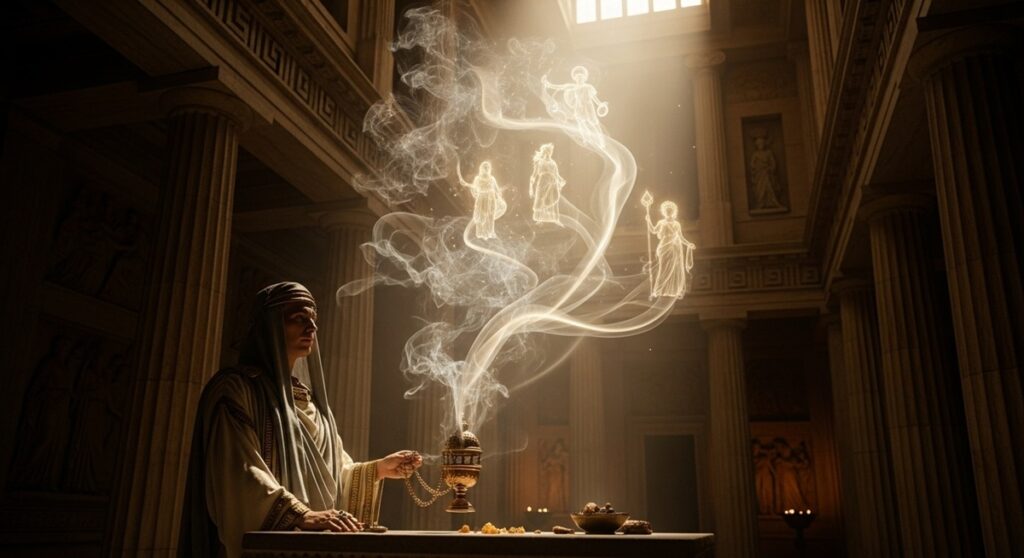
Frankincense, derived from Boswellia trees, was associated with divinity and healing, while myrrh aided embalming and wound care. Greek soldiers carried myrrh oil for battle wounds, blending practical and spiritual uses. This practice influenced later traditions, seen in Orthodox Christianity’s use of livani (incense) today.
Influence from the Scythians: Cannabis Vapors
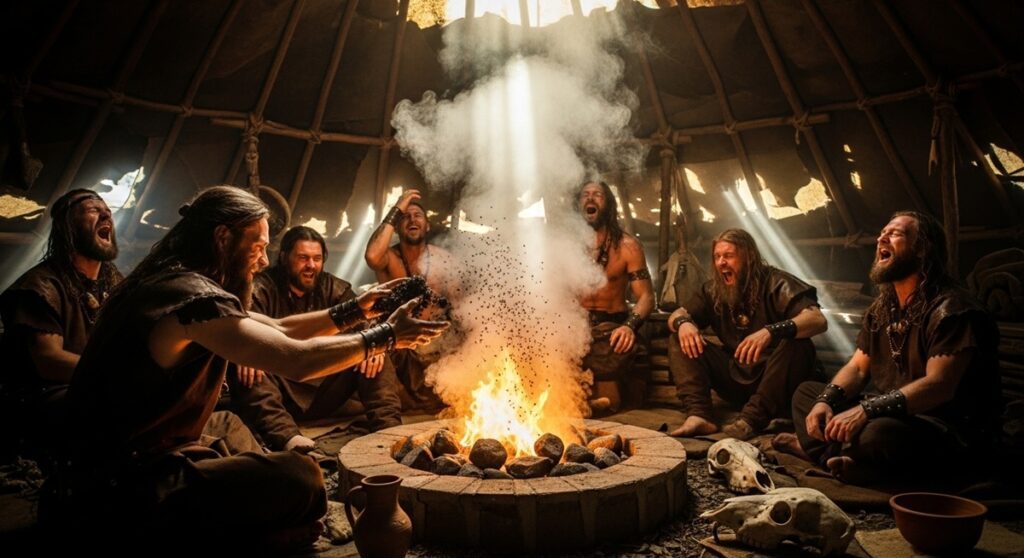
The historian Herodotus provides a vivid account of the Scythians, nomadic neighbors of the Greeks, who inhaled cannabis vapors in tent-like saunas. Throwing seeds onto hot stones, they “howled with joy” from the psychoactive effects. While not core to Greek culture, this knowledge permeated through trade and philosophy, Pythagoras may have encountered similar rituals. Ancient Greeks used cannabis medicinally for inflammation and pain, hinting at broader awareness.
Other Psychoactive Plants and Their Sacred Roles
The ancient Greeks‘ pharmacopeia extended beyond vapors and brews to a variety of herbs inducing altered states.
Mandrake, Henbane, and Hemlock in Medicine and Magic
Plants like mandrake (with atropine-like effects) and henbane were used in potions for pain relief and visions, often in rituals or executions. Hemlock, famously fatal to Socrates, altered consciousness before death. Dioscorides documented these in his herbal texts, blending botany with mysticism.
Dionysus: God of Ecstasy and Altered States

Dionysus, god of wine and madness, epitomized altered consciousness. His rituals involved frenzy (mania), linking to broader Greek mythology where gods like Hypnos (sleep) and Morpheus (dreams) governed subconscious realms.
Modern Perspectives and Archaeological Insights
Recent digs reveal limited direct evidence of smoking pipes in Greece, but inhalation via incense burners is well-documented. Parallels in nearby cultures, like cannabis in ancient tombs, suggest cultural exchange. Today, these practices inform psychedelic research, echoing the ancient Greeks‘ sacred approach.
As we reflect on these ruins, the ancient Greeks teach us that “smoke” was a metaphor for transformation—guided by ritual, not recreation.