




The island of Zakynthos, often referred to as Zante, is globally recognized for its cinematic coastlines. The sheer white cliffs bounding Navagio Beach and the electric turquoise waters of the Ionian Sea draw millions of visitors annually, all seeking the quintessential Greek summer experience. However, beyond the crowded beaches and sun-drenched resorts lies the true, beating heart of the island: its deep-rooted culinary heritage. Zakynthian cuisine is a fascinating cultural hybrid, distinct from much of mainland Greece, offering flavors that tell the story of its unique history.
Among the island’s most cherished traditions is a dessert that perfectly embodies this historical fusion, a dish that comforts the soul during the cooler, humid island winters and refreshes the palate in the summer heat. This is the Zakynthian Apple Stew with Cinnamon, known locally to islanders by the evocative name Rodozacho. For the culinary traveler, looking past the standard tourist fare to find this aromatic sweet preparation offers a genuine taste of Ionian domestic life.
The Venetian Connection: A Unique Ionian Heritage
To understand why food in the Ionian Islands—encompassing Corfu, Kefalonia, Ithaca, and Zakynthos—tastes different, one must look at history. Unlike the vast majority of modern Greece, these islands never fully fell under centuries of Ottoman rule. Instead, their culture, architecture, and, crucially, their kitchens, were profoundly shaped by hundreds of years under the dominion of the Venetian Republic.
This long period of Western influence fostered a sophisticated gastronomy that blended rustic Greek ingredients with refined Italian techniques and global trade goods. Venetian influence is perhaps most evident in the Ionian islanders’ penchant for richer sauces, sweet-and-savory flavor profiles, and a notably generous hand with warming, aromatic spices that were once symbols of immense wealth and status transported by Venetian merchants.

Spices of the Serenissima
While apples grow readily across the varied terrain of Greece, the Zakynthian approach to preparing them is distinctively sophisticated. The local method elevates humble orchard fruit into something luxurious through the liberal application of exotic spices. The defining characteristic of authentic Rodozacho is the dominant presence of cinnamon.
Historically, spices like cinnamon sticks and cloves flowed through Venetian ports, eventually finding their way into the everyday cooking of their island territories. In Zakynthos, these spices are not mere background notes; they are central protagonists in sweet dishes, providing a deep, amber warmth that defines the island’s dessert repertoire.
Defining Rodozacho: The Sweet Heart of the Island
The name itself gives a clue to the nature of the dish. Rodozacho is a linguistic blend echoing the Greek words for rose (rodo) and sugar (zacharo). It suggests an intensely sweet, almost floral aromatic quality that transcends a simple stewed fruit dish. It is a preparation that bridges the gap between a spoon sweet (glyko tou koutaliou) and a comforting compote.
Authentic Ionian Islands food often relies on this balance of intense sweetness and robust spice. The dish is designed to be comforting and heavily scented, a bowl of warmth that fills a traditional island kitchen with the fragrance of autumn and winter, regardless of the season it is served.


The Anatomy of an Authentic Zakynthian Apple Stew
The beauty of this traditional dessert lies not in complex culinary fireworks, but in the patient alchemy of simple, high-quality ingredients. The philosophy of this Greek dessert is one of slow transformation, allowing the fruit to absorb the surrounding flavors without losing its integrity.
Selecting the Soul of the Dish
The foundation of a successful apple stew is, naturally, the fruit itself. Traditional island recipes eschew modern, overly sweet eating apples that turn to mush upon heating. Instead, cooks seek out firmer, tarter varieties of local apples that possess enough structural integrity to withstand a long, gentle simmer. These apples must yield to the heat, becoming tender to the fork, yet retain their shape, suspended in the rich syrup they help create.
The Slow Simmering Alchemy
The magic happens in the pot. The apples are peeled and cored, then introduced to a simmering liquid that is far more than just sugared water. The liquid is often enriched with a splash of local, intensely flavored wine, such as Mavrodaphne, which adds dried-fruit notes and a deeper color to the final product.
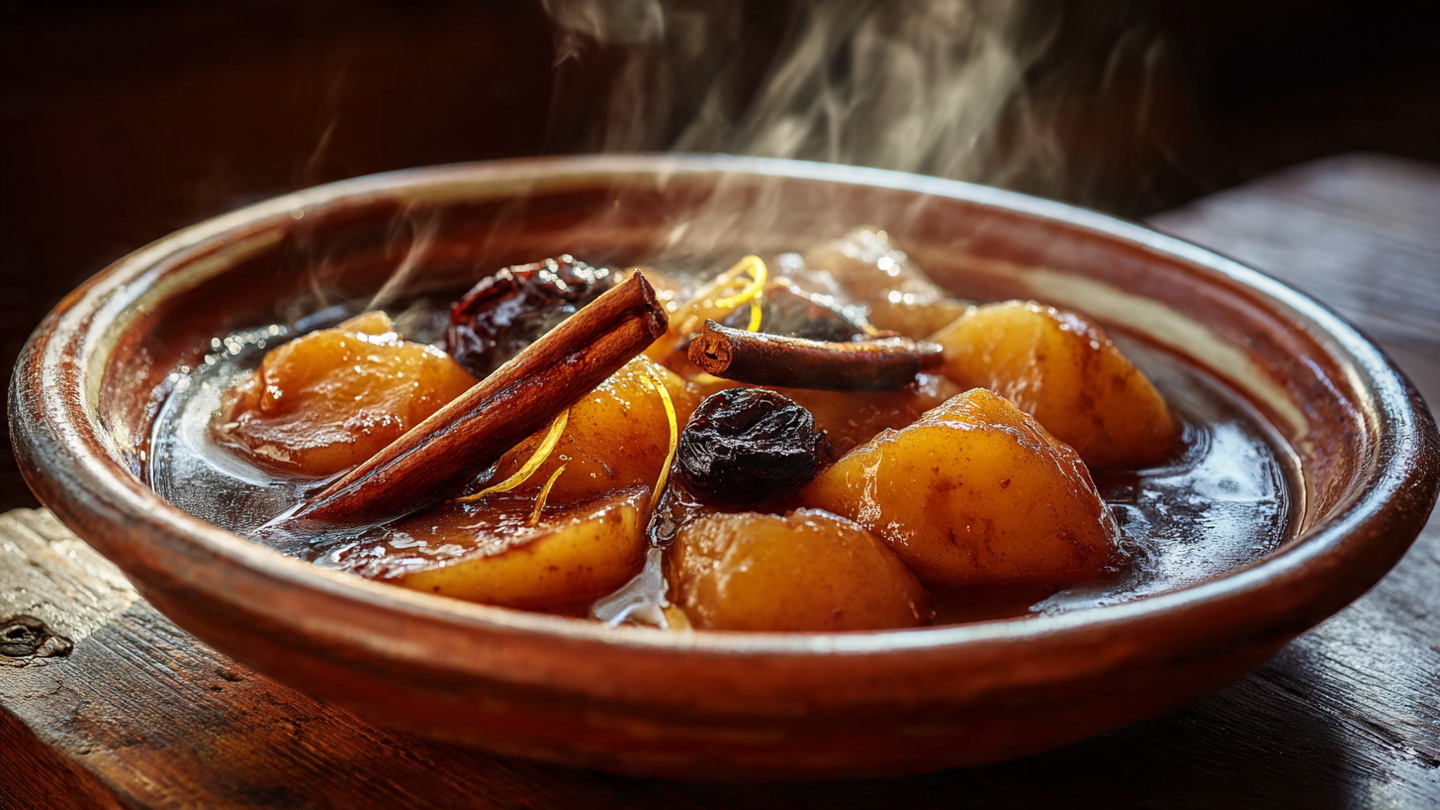
Into this bath go substantial lengths of cinnamon sticks and a judicious handful of whole cloves. The crucial counterpoint to this intense sweetness and spice is acidity. Generous amounts of fresh lemon juice and bright strips of lemon zest are essential to prevent the dish from becoming cloying, keeping the flavors bright and preventing the apples from oxidizing into an unappetizing brown. The mixture is left to simmer gently until the liquid reduces to a jewel-toned syrup that clings lovingly to the tender fruit.
How and Where to Savor this Ionian Treasure

Because Rodozacho is fundamentally a home-style dish, it is not always advertised on the glossy picture menus of tourist-facing restaurants in main hubs like Laganas or Tsilivi. Finding it requires a slightly more adventurous culinary spirit, leading the traveler deeper into the island’s culture.
The Taverna Experience vs. The Sweet Shop
For the most authentic experience, particularly during the shoulder seasons of spring and autumn, travelers should head to the interior villages or the mountainous regions in the north, near Volimes. Here, family-run, traditional Greek tavernas are more likely to serve seasonal specialties. In these rustic settings, the stew is often served warm, perhaps at the end of a long Sunday lunch, acting as a comforting digestive.
Alternatively, one can explore the island’s numerous Zacharoplasteia (pastry and sweet shops) in Zakynthos Town. In these establishments, you are more likely to encounter the chilled version of the stew. It is widely agreed among locals that the finest way to enjoy chilled Zakynthian Apple Stew is served alongside a generous dollop of thick, tangy Greek yogurt or a scoop of high-quality vanilla ice cream. The cold creaminess provides the perfect foil to the spiced, syrupy intensity of the apples.
Seasonal Rhythms
While available year-round, Rodozacho holds a special place at the winter table. It is a staple Greek heritage dish during the Christmas and New Year holidays, where its warming spice profile perfectly matches the festive atmosphere. Yet, enjoyed ice-cold from the fridge on a hot August afternoon, it is surprisingly refreshing.
To taste Zakynthian Apple Stew with Cinnamon is to take a momentary step back in time, experiencing a flavor profile born from the crossroads of Mediterranean history. It is a humble yet profoundly satisfying reminder that the true treasures of Zante travel are often found on a plate, rather than just on a beach.